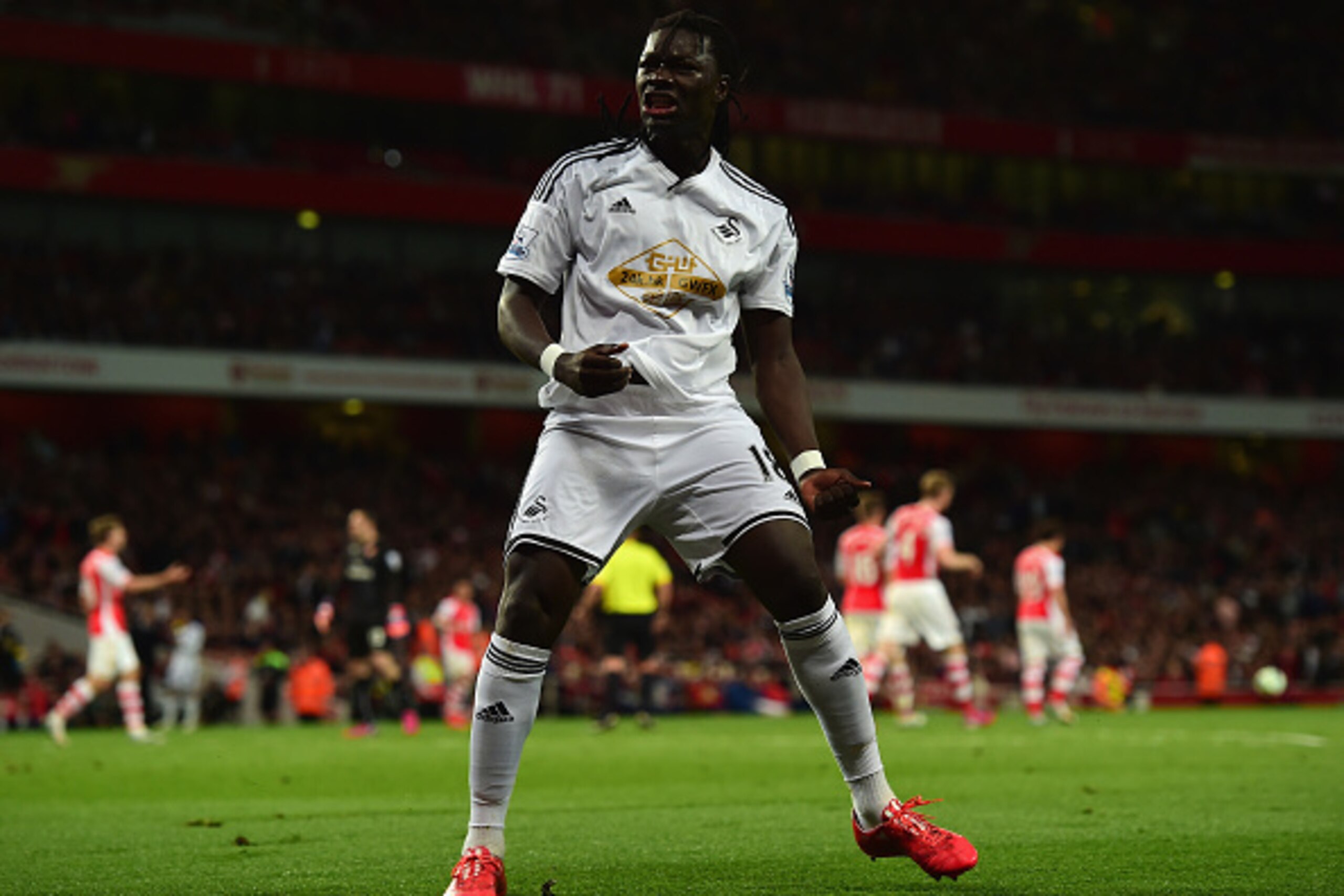

Arsenal vs. Swansea: Winners and Losers from Premier League
Arsenal's hopes of a second-place finish in the Premier League took a dent as the Gunners lost 1-0 at home to Swansea City on Monday evening.
The hosts dominated possession but could not find a way past Swansea's organized defense, with former Arsenal goalkeeper Lukasz Fabianski starring for the visitors.
Just like the reverse fixture in November, Bafetimbi Gomis scored the winner for Swansea, nodding in a header at the near post in the 85th minute. The ball initially appeared to strike the upright, but goal-line technology correctly awarded the visitors the winning goal.
Here are our choices for the winners and losers from the match.
Winner: Bafetimbi Gomis
1 of 6
Bafetimbi Gomis spent just 16 minutes on the pitch Monday night against Arsenal, coming on as a 74th-minute substitute for Ki Sung-Yeung. Eleven minutes later, he headed in the winner.
If that sounds familiar, it should.
Back in November, when Swansea came from behind to defeat Arsenal 2-1 at the Liberty Stadium, Gomis entered the match as a 76th-minute substitute. The only difference is that the French striker needed only three minutes that day, heading in a cross for the winner.
Something about Arsenal brings out the best in Gomis, who was once again the decisive force against the Gunners.
Losers: Arsenal
2 of 6
Arsenal entered the match in full control of the race for second place. Trailing Manchester City by three points with two games in hand, the Gunners simply had to win all four remaining games to claim second spot behind champions Chelsea.
After Monday's defeat, that is no longer the case. Even with a victory in their next fixture—a daunting trip to Old Trafford—Arsenal would still have to make up a considerable deficit in goal differential in order to overtake City.
What's more, even third place is now not secure. A loss at Old Trafford, where Arsenal have failed to win a league match since 2006, would send United one point above the Gunners. Arsene Wenger's side would still have a match in hand, but the momentum would be against them at that point.
Finishing third should be a major objective for Arsenal. Doing so would ensure the Gunners avoid a potentially tricky qualifying tie for the UEFA Champions League group stage. It would be best to claim third place—at least—and avoid the playoffs, but recent history suggests it might be a struggle.
Winner: Lukasz Fabianski
3 of 6
Monday's match represented a homecoming of sorts for Swansea goalkeeper Lukasz Fabianski, who played for Arsenal from 2007-14 and manned the net for the Gunners in last season's FA Cup final.
The Pole's first trip back to the Emirates was memorable. After seeing little action in the first half, Fabianski made a series of key saves to deny Arsenal and keep Swansea level long enough for Bafetimbi Gomis to score the winner.
Fabianski never had to make a truly difficult save as Arsenal repeatedly shot straight at their former reserve goalkeeper. But Fabianski deserves credit for his excellent positioning, as well as his calm demeanour under pressure.


Loser: David Ospina
4 of 6
While Lukasz Fabianski excelled for Swansea, David Ospina was surely disappointed with the way Arsenal conceded the winning goal.
Jefferson Montero created the chance with a cross from Swansea's left flank, and Bafetimbi Gomis rose highest at the opposite post to head the ball down into the bottom corner.
Gomis' header was well placed, but Ospina really ought to have kept the ball out. Whether it was positioning or poor reflexes, the Arsenal goalkeeper was too slow to save what appeared to be a stoppable shot.
Though Ospina has seized his chance well in Arsenal's goal, keeping former No. 1 Wojciech Szczesny on the bench for long periods, it remains likely that the Gunners will enter the transfer market for a top-class goalkeeper.
Winner: Garry Monk
5 of 6
In three matches against Arsenal and Arsene Wenger, Swansea manager Garry Monk has won twice, drawn once and lost none. That's not quite as eye-catching as Jose Mourinho's much-publicised record against Wenger, but it's impressive nonetheless for the Swans' young, promising manager.
Appointed in February 2014 following the sacking of Michael Laudrup, Monk has excelled in his position. The facts speak for themselves. With 56 points, Swansea have smashed the previous club record (47) for points in a Premier League season. With Monday's win, the Swans completed a first league double over Arsenal since 1981-82.
And, as noted by ESPN's Richard Jolly, Swansea are the first side to beat both Arsenal and Manchester United home and away in the same season since Chelsea did it in 2009-10. Chelsea won the title that season, and while Swansea are nowhere near that level at present, it's impossible to ignore the fine work Monk has done in Wales.
Against Arsenal, the former defender got his tactics right. Generally known for their flowing, attractive football, Swansea maintained an excellent defensive shape to frustrate Arsenal throughout the night. Sensing an opportunity to nick a win, Monk made the right substitution at the right time, introducing match-winner Bafetimbi Gomis in the 74th minute.
"We could've gone toe-to-toe, but we set up that way and the players were magnificent," Monk told the Premier League's website. "I knew if we got a chance or two at the end we'd take one, and thankfully we did."
Monk added: "I've tried to make us adaptable—we had to give Arsenal respect, and sometimes you have to play a different way. Today showed exactly what we're about."
The plan worked to perfection, and it only helped Monk's reputation grow. Perhaps even Wenger could learn something from his counterpart.
Winner: Goal-Line Technology
6 of 6
Few in attendance at the Emirates Stadium initially thought Bafetimbi Gomis had scored the winner. And that probably included Gomis himself.
Upon first viewing, Gomis' header appeared to strike the base of the upright and bounce away before Arsenal hacked the ball clear. But moments later, referee Kevin Friend blew his whistle and awarded a goal, to much confusion around the stadium.
It seemed as if the moment had arrived that goal-line technology would prove fallible. Surely Gomis hadn't really scored. Human eyes had seen it clearly in real time. Except they hadn't. Replays proved conclusively that the ball had indeed crossed the line before Arsenal goalkeeper David Ospina pushed it away.
And so, Friend had been correct to award the goal, and goal-line technology proved its value again. Without it, Swansea likely would have been denied a clear goal, and the match likely would have ended in a scoreless draw.
.jpg?w=2560 "Rams Raiders Football")



.jpg?w=2560 "Rodgers Iced Out on Plane 💎")
.jpg?w=2560 "🚨 Week 8 AP Top 25 Poll")
.jpg?w=2560 "Packers Safety Slams Refs 🤬")