


It was the great philosopher/psychologist Yogi Berra who once said, "90 percent of this game is half-mental," which is why today you often can find Boston pitcher Clay Buchholz between starts staring at numbers on a grid while listening to random sounds on his earphones.
It is why the San Francisco Giants consulted with their trusted "sleep doctor" before planning travel while winning three World Series in the past five seasons.
And it is why you could find the Seattle Mariners gathered in their spring clubhouse early one March morning, listening to the presentation, "Fatigue Science: Unlock the Advantage of Competitive Sleep."
TOP NEWS
Brewers Closer Blasts Tropicana Field Roof

Latest MLB Trade Rumors 👂

Next MLB Players to Sign $200M Contracts 💰
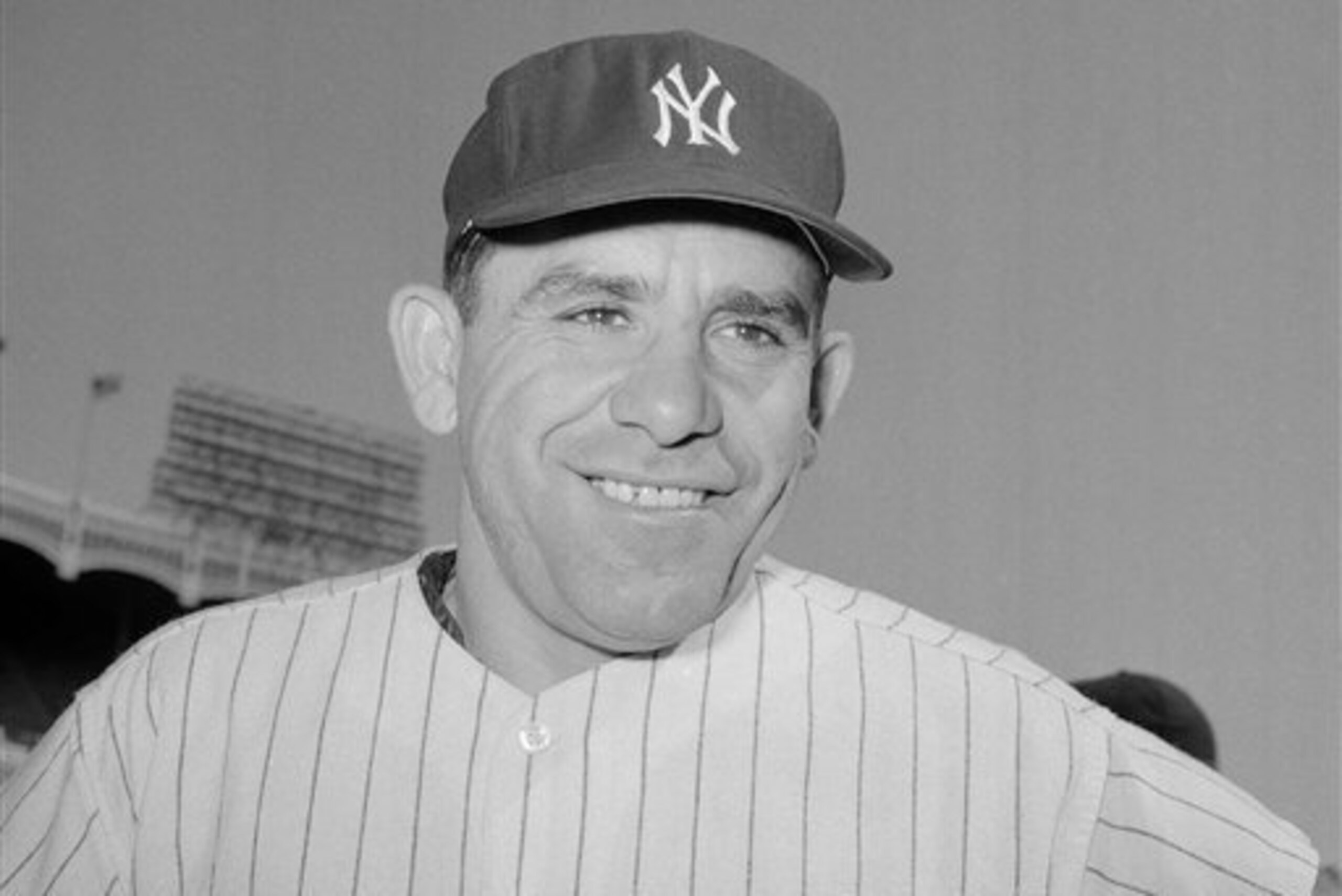
Decades after Berra's prescient pronouncement, major league ballclubs are paying more than just lip service to the science of behavior. As things become ever more competitive, there has been a rise in what could be called the Arms Race for the Brain.
The Boston Red Sox this season created a new "Department of Behavioral Health" designed to help their players stay as sharp mentally as they are physically. Former pitcher Bob Tewksbury, who obtained a master's degree in sport psychology and counseling from Boston University in 2004, is one of four men listed in the Red Sox media guide under "Additional Sports Medicine Service Staff."
The Chicago Cubs this season established their own "Mental Skills Program," which, according to the February press release issued by the club, is "designed to assist major and minor league players with the mental aspects of baseball."
And while those are the most high-profile new developments in the sport, they are far from alone.
"We've had a sports psychologist for 20 years," Cleveland Indians president Mark Shapiro says, referring to Dr. Charles Maher. "Now, it's a department with multiple people, and it probably will continue to get bigger.
"For us, it's just a matter of, we believe in developing the complete player, mentally, physically and fundamentally.
"I think you can look at the mental side two ways. One, just to deal with problems. Or, two, it can be a competitive advantage. And so you want to have a strong mental foundation, as well as physical and fundamental foundations. That's why we bring in resources, and our job as an organization is to bring in the best resources for our players. Our mental skills coach is one resource for the mental side of the game."
As everything else about the game changes with the times, from advanced analysis of statistics to cutting-edge nutrition, it makes perfect sense that enlightened clubs take steps to ensure the health of their players' minds, too.
"Teams are competing on the field. It's intense competition, so teams are trying to find any area for advantage in that competition," Red Sox general manager Ben Cherington says. "Obviously, A No. 1 is always going to be: How talented are the players on the field? That's going to drive your success more than anything. It always has, and it always will. But teams aren't stopping there. You can find smaller areas, even a fraction of a percentage-point advantage in some area that might give you an advantage.
"Even if it's just one win a year, wins are valuable. I think teams are looking for any area of advantage they can get.
"To that extent, there's been a change in society as well. Years ago, there was more of a taboo on it. To the average Joe working in a factory, a psychologist would be a stigma. Baseball, as well, has evolved."
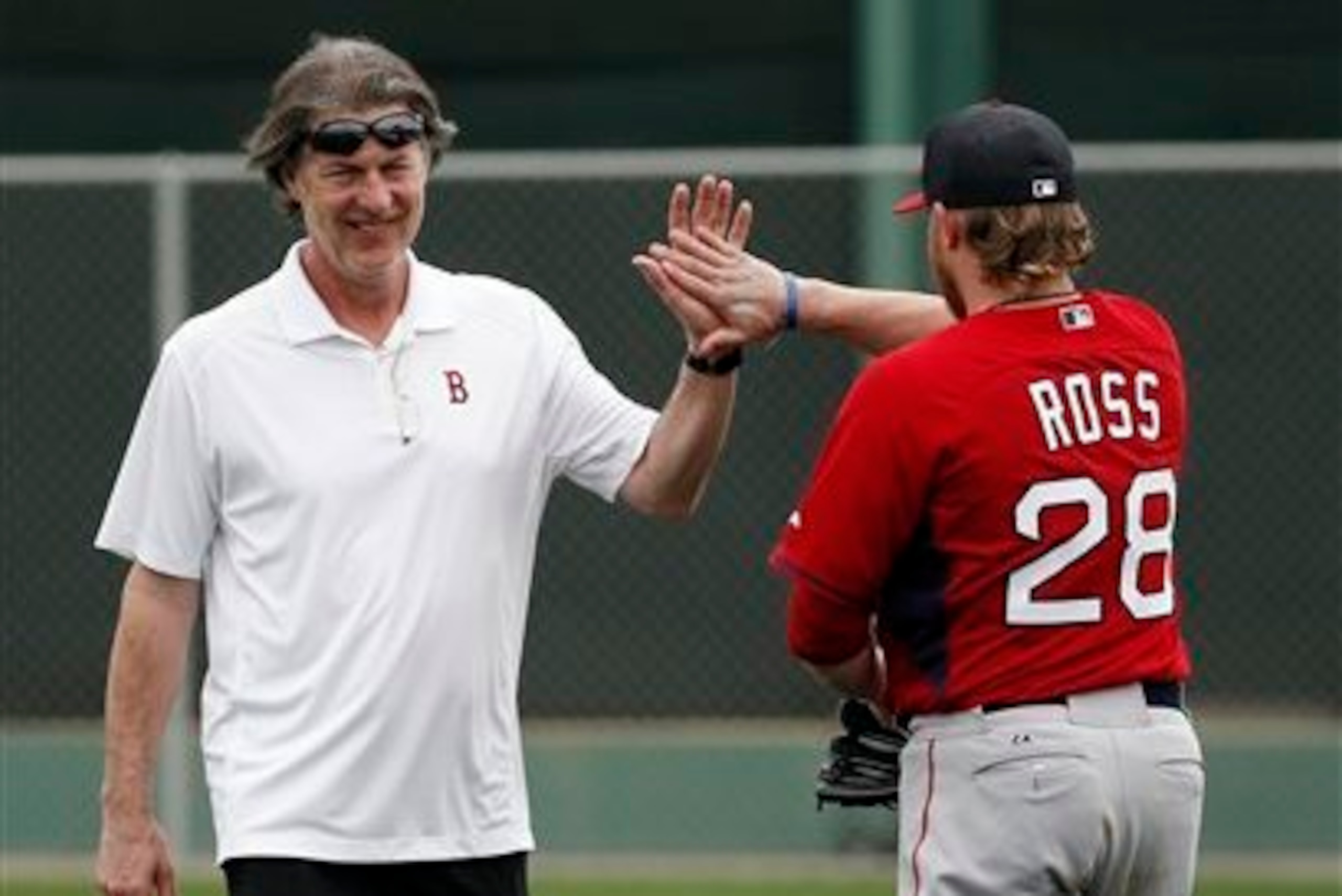
Tewksbury, a New England native who pitched for six teams during a 13-year career spanning from 1986 to 1998, is the most high-profile member of a four-man Red Sox staff headed by Dr. Richard Ginsburg, who also serves as co-director of the Massachusetts General Hospital PACES Institute of Sport Psychology, and including Laz Gutierrez and Justin Su'a.
Tewksbury was Boston's mental skills coach from 2005 to 2013 before working for the Major League Baseball Players Association last year. After a one-year absence, the Red Sox brought him back this season.
"We really missed Tewks last year," manager John Farrell says.
"I think more for the young guys coming up, just knowing what to do and how to do it," Buchholz says. "Spur of the moment stuff, if Tewks needs to walk you through something or talk you down from a ledge..."
Buchholz says Tewksbury and Co. have several different mental skills drills they put some players through daily. The right-hander reached into his locker and pulled out a piece of paper with numbers on a grid that looked much like a crossword puzzle. The numbers ran from zero through 99, and while listening to audiotapes, the trick is to find numbers counting backward from 99 and see how many you can get.
Next week, the numbers on the grid will be different.
"It's for concentration," Buchholz says. "As you go through it, [the audio tape] adds sounds. Train horns, people talking, things like that that are designed to break concentration.
"It's pretty neat."

Point is, concentration can be a learned behavior, and the more you learn and can take to the mound with you, the better armed you are against a bad call by the umpire or the roar of an opposing crowd. Plus, it's a competitive exercise.
"I was told from early on that baseball is 90 percent mental," Buchholz says. "So to be at a level we're at, you're going to be approached by different situations in a game or in life because of the lifestyle we have, and you have to cope with it.
"I've known Tewks since the day I was drafted (42nd overall in 2005), and he's helped me a lot."
Different practitioners work differently, depending on the club. Tewksbury tries not to go more than five or six days without physically being with the Red Sox. He also works with their Triple-A affiliate in Pawtucket, Rhode Island, so balancing the schedule is crucial for him.
When Tewksbury played, the field did not exist.
"Oh, it could have helped a lot," he says. "First of all, I definitely have an interest in it. It's not for everybody, and some players either don't need it or are uncomfortable talking about it. I wasn't one of those guys.
"I definitely believe it would have been good to have someone to talk to being a rookie and being overwhelmed in New York (with the Yankees in 1986), wondering if I would be sent down, how to perform under pressure being a young player in New York, not letting outside distractions affect on-field performance.
"In St. Louis (where Tewksbury played from 1989 to 1994), I had great support with [manager] Joe Torre and [pitching coach] Joe Coleman. I was in a good spot in my career.
"In Minnesota my last two years (1997-98), I was getting older and dealing with injuries and being away from the family. There's a spectrum of services that can be provided over the course of a playing career by having someone in place as a mental skills coach."
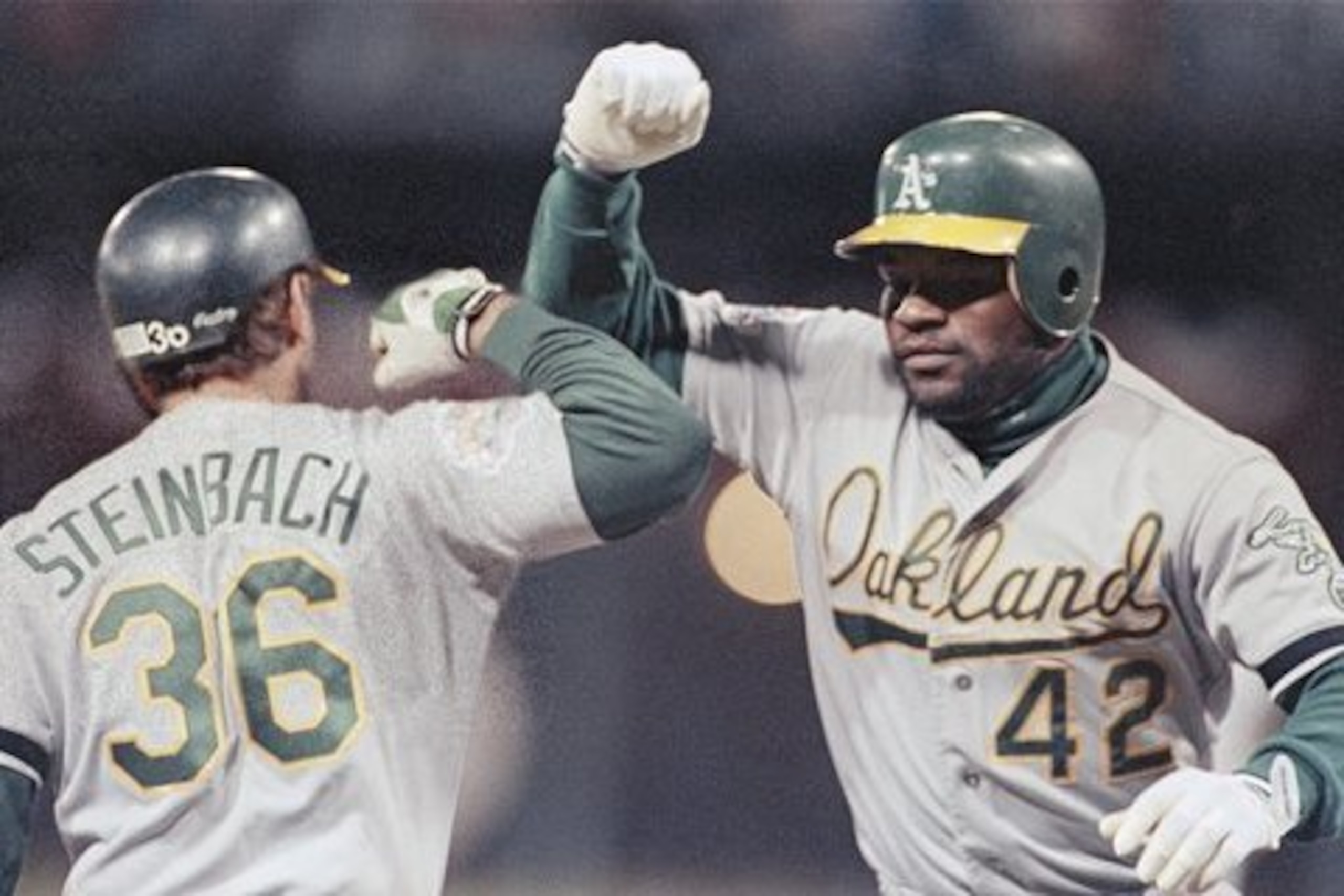
In the 1980s, strength and conditioning programs were just moving to the forefront in the game. Then the late Harvey Dorfman, with Karl Kuehl, published The Mental Game of Baseball: A Guide to Peak Performance in 1989, and Dorfman became a Pied Piper of sorts to a small group of players—Roy Halladay, for one—over the years. Working as a mental skills coach for the A's, Dorfman earned a World Series ring in 1989.
"Oakland was probably the first team to use a mental skills coach," Tewksbury says. "And if Harvey was still alive, he'd probably tell you it was a tough nut to crack because of how baseball can be."
Says Seattle third-base coach Rich Donnelly, who has coached for seven different big league clubs since 1980: "Back in the day, you probably wouldn't have gotten in the clubhouse. Harvey Dorfman was a great motivational speaker, but when he came into the game the first time, we thought, 'Who is this freak?'
"Think of all the stuff we missed."
It is impossible to know, of course, exactly how some of the hard-charging, hard-living players of the past—guys like Mickey Mantle and Billy Martin—would have reacted had a club brought in folks to discuss mental health.
But you can hazard a pretty good guess.
"It would have been viewed as a weakness," says Indians manager Terry Francona, who played in the majors from 1981 to 1990 and who grew up around ballparks while his father, Terry Sr., played from 1956 to 1970. "I think the way we view it, we work our fielding, our throwing and our hitting, but the mental side might be the most important tool.
"If you view it as a weakness, that's silly."
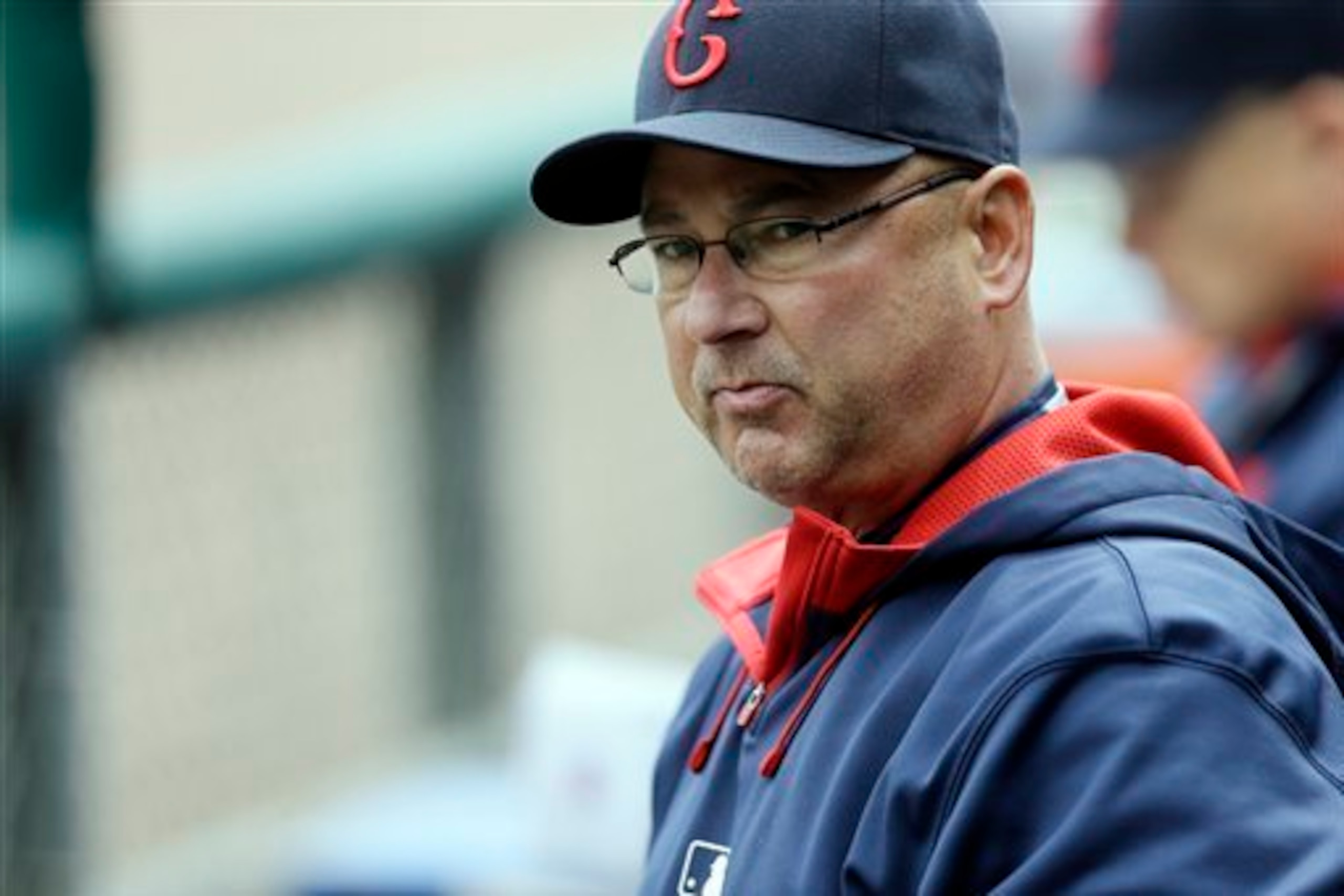
As bench coach with the Texas Rangers in 2002, Francona saw its value from the work of a man named Don Kalkstein, whom the club employed at the time. Francona liked him so much he took Kalkstein to Boston with him, where their partnership ran from 2005 to 2011. Today, Kalkstein is the director of sport psychology for the NBA's Dallas Mavericks and a consultant for the Rangers.
"He kind of taught me the value of having someone around," Francona says. "He was phenomenal. When I was with the Rangers and he was doing it, I was probably a little skeptical.
"Then I watched him work, man, and I was like, 'Wow!' He could connect with everybody. He'd call b------t on you. He made you accountable. He was special.
"The players trusted him because they knew even though he was a friend of mine, if something wasn't supposed to get back to me, it wasn't getting back to me. He had a way of pulling that off, man. He was really valuable."
Says Tewksbury: "There are basic techniques and strategies. It's not rocket science. Empirical data...talking as a group versus individually, there's relaxation, visualization, self-talk—that little voice in our head and concentration. Those are the four things all practitioners try to help players with, or some combination of that that can help performance in any given area."
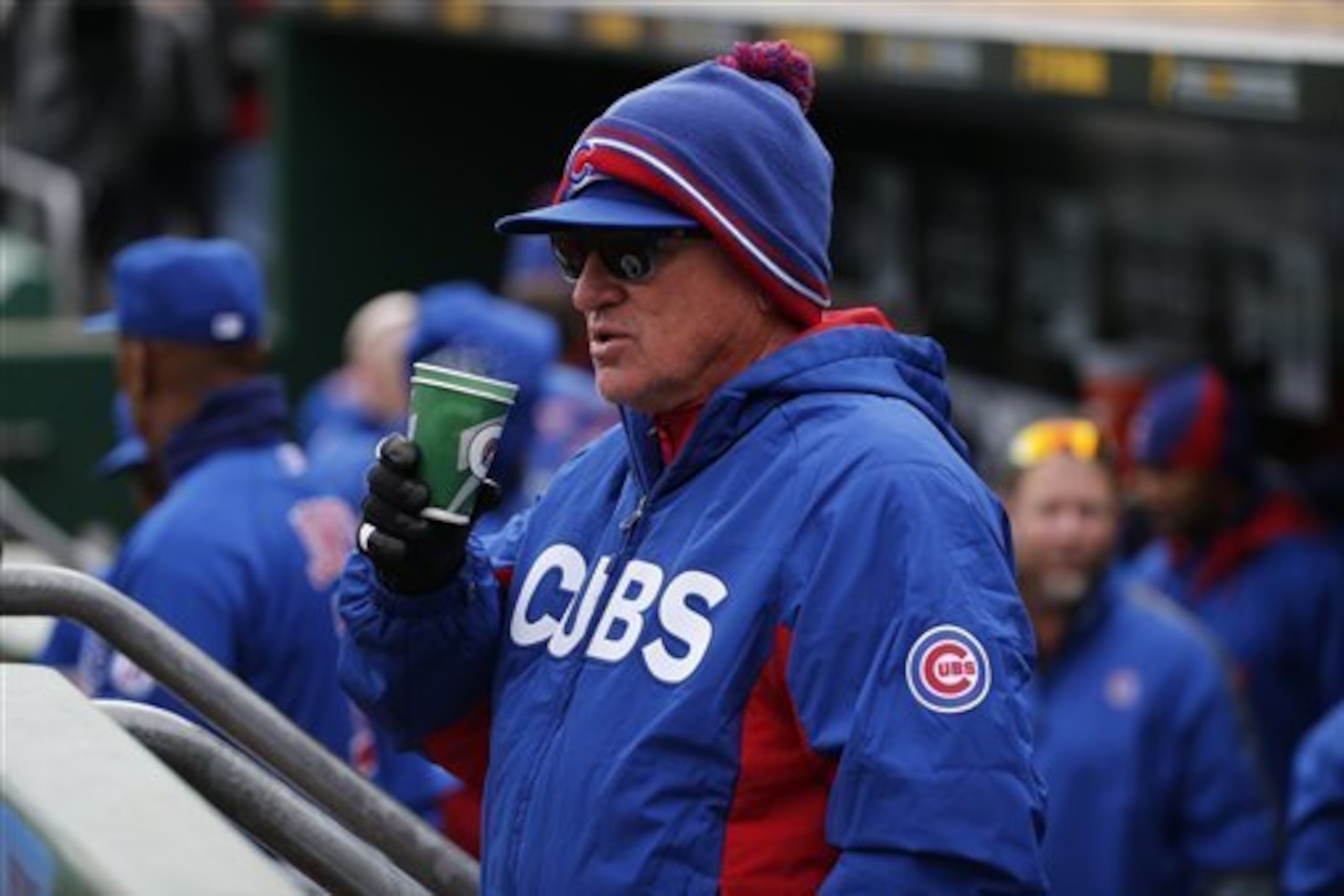
The newly created four-person mental skills program in Chicago includes Dr. Ken Ravizza, who has worked with new Cubs manager Joe Maddon since the 1980s. Ravizza also is a professor of applied sport psychology at Cal State Fullerton and has served as a consultant to the United States Olympics team for more than 20 years.
As Cubs president Theo Epstein says, the manager must be all-in on a mental skills program for it to work, and Maddon—and most other postmodern managers—absolutely is. Increasingly in recent years, so are today's players.
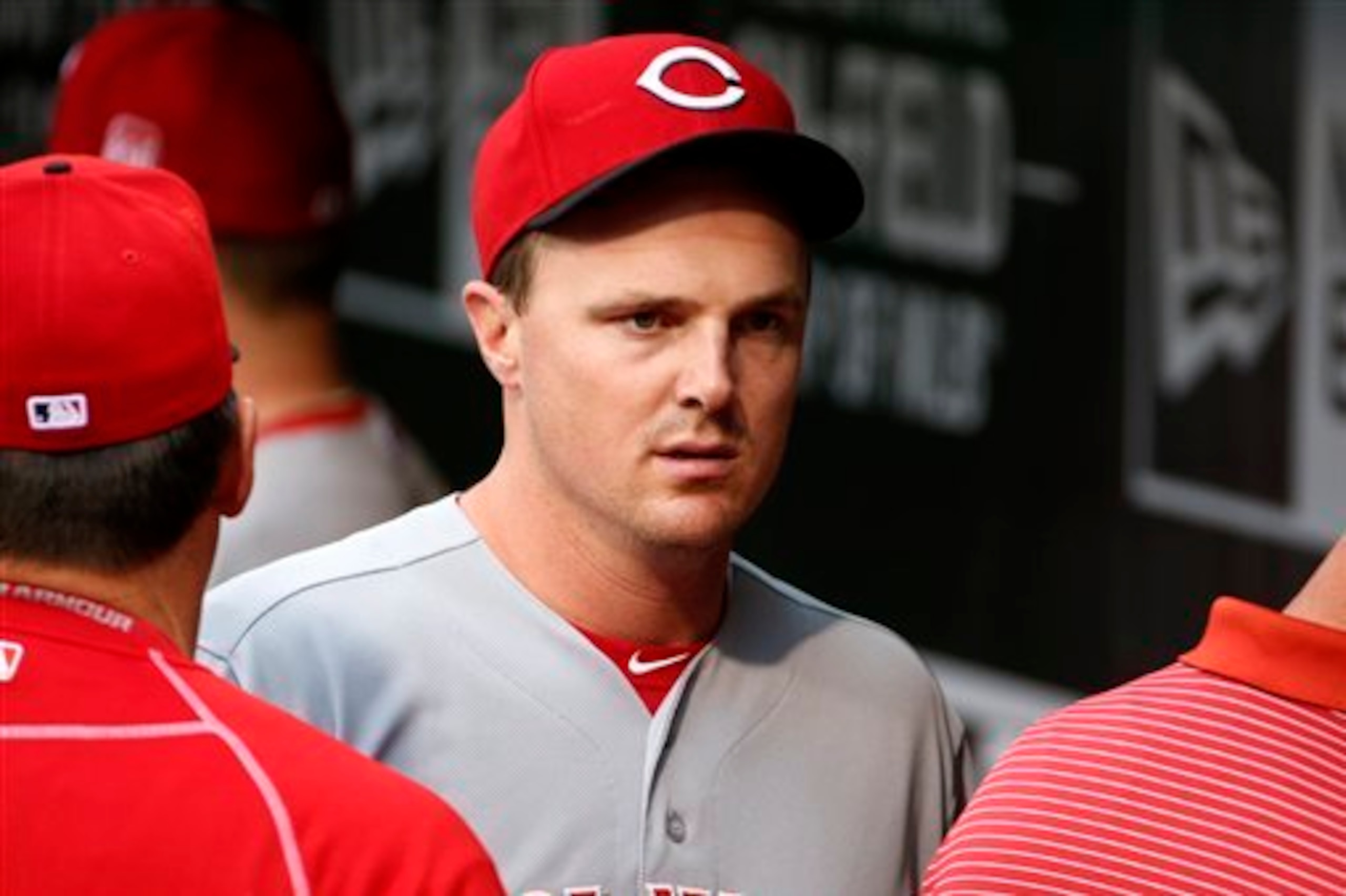
"I believe in that stuff, for sure," Reds outfielder Jay Bruce says. "It's different for everyone. For me, it's divorcing the results chase from the rest of it.
"It's such a results-driven game, but the process is what's important. You have to have things you can rely on when you look in the mirror at night."
One of those, of course, is what should happen after you look in that mirror at night: sleep, the lack of which can take a toll on cognitive and mental health.
Since their run to the World Series title in 2010, the San Francisco Giants have consulted with their "sleep doctor," Dr. Chris Winter, medical director of the Martha Jefferson Hospital Sleep Medicine Center in Charlottesville, Virginia.
Traditionally, with their chartered jets, baseball clubs will fly home immediately after the last game of a trip, the theory being that getting home as soon as possible and into your own bed is the best way to go—even if that means, during the postseason, a team like San Francisco flies all night and arrives home at 5 or 6 a.m.
That changed with their divisional series against Cincinnati in 2012 and the consultation with Winter. The Giants opted to stay the night in Cincinnati and then fly home later the next day—the scheduled travel day—after a good night's sleep.
They kept that routine through last October, when they remained in Kansas City following Game 2, slept in and flew home the next day. Same for their travel back to Kansas City following Game 5. And they won their third World Series title in five years.
The Indians, Pirates and other clubs had Winter, who is on Twitter (@SportSleepDoc), speak this spring. The Mariners, who annually fly more air miles than any team in the majors because of their location in the Pacific Northwest (43,281 miles this year, according to the club's media guide), brought in a different sleep expert—and purchased a new charter plane last year that is outfitted with all first-class seats.

"I think it was huge," Mariners GM Jack Zduriencik says. "Players can now have a first-class plane throughout the whole plane. They can walk up and down, they've got a place in the back and a place in the middle where if they want to stretch out, they can. If they want to play cards, they can play cards.
"And I think it was necessary. You travel the amount of miles we travel and the distance we travel, if you can take care of your players on a really nice plane, that gives you a big advantage."
The sleep presentation this spring was, shall we say, an awakening to Mariners center fielder Austin Jackson.
"Eight to 10 hours of sleep a night, that's kind of tough," Jackson says. "They talked about with our schedule, things we can do.
"TV and electronics are the big thing. When you're sitting or laying in bed, turn them off and give yourself a good amount of time to wind down without electronics. I bet 95 percent of us are on our phones or watching TV and wondering why we can't fall asleep."
It is education, all of it, from sleep to concentration. It will not—and does not—take off with all players, but with millions of dollars at stake today in individual player contracts and for winning championships, it would be irresponsible for a club not to search for every competitive advantage it can obtain.

"It's a very hard thing to train," Cherington says. "The training is not visible. If the shortstop needs to work on his back end, while there are very specific physical exercises he can do, a matter of reps, he can do it.
"I think the people that are working to help players with on-field mental skills, that group has evolved over time. That group is better trained and that group has a better understanding of what a baseball player might need as opposed to what a downhill skier might need. The specifics of this particular game.
"It's a little bit that the field has evolved, and a little bit that players hopefully recognize this is their progression, and if they want to excel at it and have a long career, they have an obligation to do whatever they can to put themselves in [the] best position to be successful. For some players, it might mean getting in better shape. For some it might mean working on a particular skill. For others, it might mean working with some on-field psychology. Or, it could be all of those things."
Cut through it all, and everything relates back to one overriding bottom line.
"At 7 o'clock on a typical weekday in the Major League Baseball season, the better a player feels, his full body, everything about it, you'd think the better chance he has to perform," Cherington says. "Ultimately, players are responsible for that. And teams are responsible for trying to provide resources so that at 7, when the game starts, players are feeling good physically, fundamentally because of the right coaching and skills development, and in their minds, too.
"It seems to me it's sort of simple. If a player is feeling that way in all of those areas, he has a better chance to perform."
Or, as Francona says, "It's like, you can do better. So we're trying. If you don't, you're kind of missing the boat. There are ways to get better."
Scott Miller covers Major League Baseball as a national columnist for Bleacher Report.
Follow Scott on Twitter and talk baseball.


.jpg?w=2560 "Raiders Could Start Mendoza")


.jpg?w=2560 "Rodgers Iced Out on Plane 💎")

.jpg?w=2560 "Packers Safety Slams Refs 🤬")
.jpg?w=2560 "🚨 Week 8 AP Top 25 Poll")
