

NBA Mock Draft 2015: 1st-Round Projections and Top Sleeper Prospects
When just taking a quick glance at the NBA draft and its process, things seem pretty straightforward in comparison to the drafts in other sports.
Players are evaluated, and based on those evaluations, they will go up and down on teams' boards until the day of the draft itself comes. It's pretty standard stuff.
But unlike in other sports, where you can see players such as Tom Brady come from the sixth round of the draft and turn into one of the greatest players of all time, there isn’t much value outside of the lottery picks in the NBA.



Since 1970, only three players have won the MVP who were taken outside of the top 10 in the draft: Julius Erving, who went at No. 12, Karl Malone, who went at No. 13 and Steve Nash, who went at No. 15.
That’s it.
It is why the story of a player who develops from a low first-round pick into a superstar captures the attention of the media like it does. It just doesn’t happen every year.
If it is going to happen in 2015, these are the players most likely to prove the teams that will be selecting in the lottery wrong.
| Pick | Team | Player |
| 1 | Minnesota Timberwolves | Karl-Anthony Towns, PF, Kentucky |
| 2 | New York Knicks | Jahlil Okafor, C, Duke |
| 3 | Philadelphia 76ers | Emmanuel Mudiay, PG, China |
| 4 | Los Angeles Lakers | D'Angelo Russell, PG/SG, Ohio State |
| 5 | Orlando Magic | Justise Winslow, SF, Duke |
| 6 | Sacramento Kings | Kristaps Porzingis, PF, Latvia |
| 7 | Denver Nuggets | Mario Hezonja, SF, Croatia |
| 8 | Detroit Pistons | Stanley Johnson, SF, Arizona |
| 9 | Charlotte Hornets | Willie Trill Cauley-Stein, C, Kentucky |
| 10 | Miami Heat | Frank Kaminsky, C, Wisconsin |
| 11 | Indiana Pacers | Myles Turner, C, Texas |
| 12 | Utah Jazz | Sam Dekker, SF, Wisconsin |
| 13 | Phoenix Suns | Kelly Oubre, SF, Kansas |
| 14 | Oklahoma City Thunder | Jerian Grant, PG, Notre Dame |
| 15 | Atlanta Hawks (via Nets) | Devin Booker, SG, Kentucky |
| 16 | Boston Celtics | Trey Lyes, PF, Kentucky |
| 17 | Milwaukee Bucks | Bobby Portis, PF, Arkansas |
| 18 | Houston Rockets (via Pelicans) | Tyus Jones, PG, Duke |
| 19 | Washington Wizards | Kevon Looney, PF, UCLA |
| 20 | Toronto Raptors | Montrezl Harrell, PF, Louisville |
| 21 | Dallas Mavericks | Cameron Payne, PG, Murray State |
| 22 | Chicago Bulls | Rondae Hollis-Jefferson, SG/SF, Arizona |
| 23 | Portland Trail Blazers | Christian Wood, PF, UNLV |
| 24 | Cleveland Cavaliers | R.J. Hunter, SG, Georgia State |
| 25 | Memphis Grizzlies | Cliff Alexander, PF, Kansas |
| 26 | San Antonio Spurs | Delon Wright, PG, Utah |
| 27 | Los Angeles Lakers (via Rockets) | Robert Upshaw, C, Washington |
| 28 | Boston Celtics (via Clippers) | Terry Rozier, PG, Louisville |
| 29 | Brooklyn Nets (via Hawks) | Jarell Martin, PF, LSU |
| 30 | Golden State Warriors | Dakari Johnson, C, Kentucky |
Montrezl Harrell, PF, Louisville
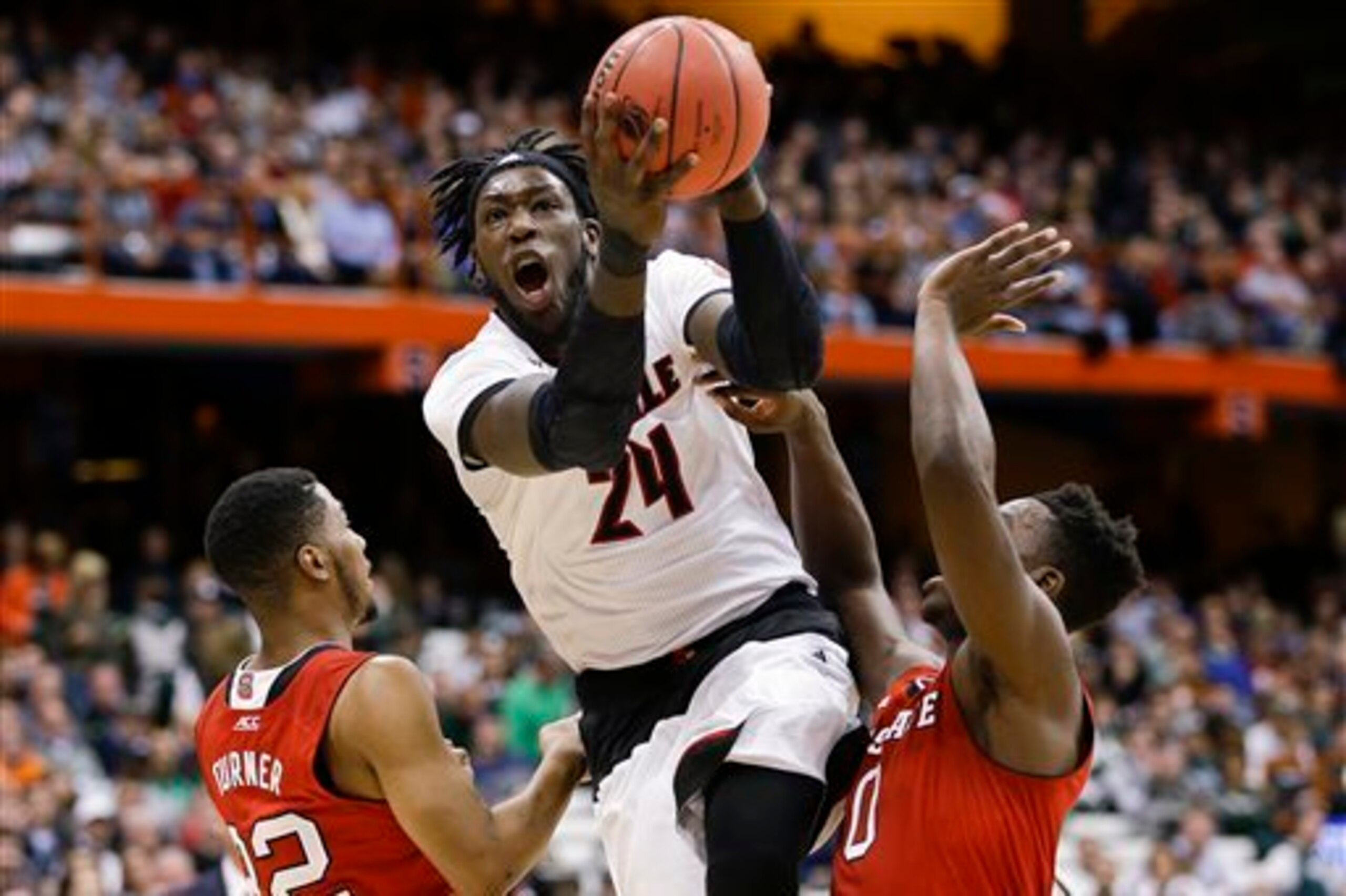
It’s unfortunate that the way basketball changes from level to level leaves players like Montrezl Harrell out in the cold.
Harrell, a 6'8" power forward from Louisville, Kentucky, was one of the most physically dominant players in college basketball last season, especially on defense, and would strike fear into the hearts of his opponents with thundering dunks every time he stepped on the court.
The issue, though, is he can’t be that player in the league. He is just too short to be a strong post presence and isn’t enough of a shooter to fit in as a wing either.
So Harrell has only a couple paths for him moving forward in his NBA career. He can flounder by trying to stick with what he knows and attempt to bully players who are bigger than him. Or he can adapt.
Whether it be with an outside shot he showed flashes of developing in the early stages of 2014 or as a defensive-minded beast such as Kawhi Leonard or Draymond Green—both of whom are an inch shorter than Harrell—a slight tweak here or there could be the difference between success and failure.
But if the drive and desire he showed in college is any indication of a willingness to put in the work, Harrell should be just fine and could be one of the more undervalued players in the draft class.
Tyus Jones, PG, Duke
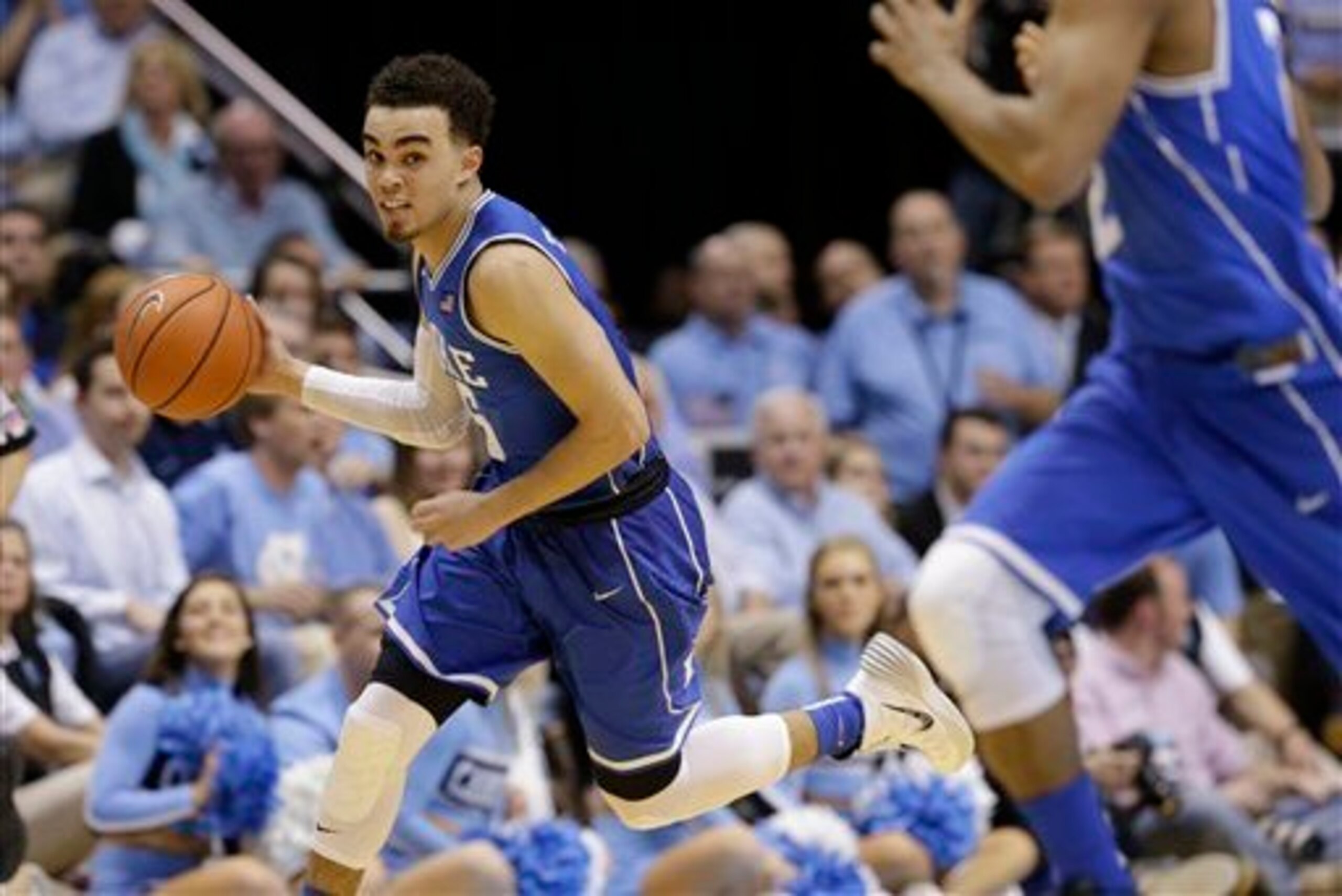
Go back and watch every one of Duke’s big games from last season. Who stands out?
Sure, Jahlil Okafor had his moments, and Justise Winslow is the closest thing humanity will ever see to a real-life Looney Tunes Tasmanian Devil, but on the biggest stage, time and time again, it was Tyus Jones who stepped up his game.
Considered the third—maybe even fourth depending on your opinion on Quinn Cook—option for the eventual national champs, Jones didn’t have the most impressive season, but he showed flashes of brilliance when the team needed him most.
In four games against North Carolina and Wisconsin, Jones averaged 22.8 points per game—nearly twice his season average—and put up 23 points in the title game when the Blue Devils were struggling.
When he wants to, Jones can get to the bucket with the best of them and is able to find shooters with ease if the lane doesn’t open up for him.
If the consistency can increase and Jones can capture his big-game play for a whole season, he has a chance to be the biggest steal in the draft.
Delon Wright, PG, Utah
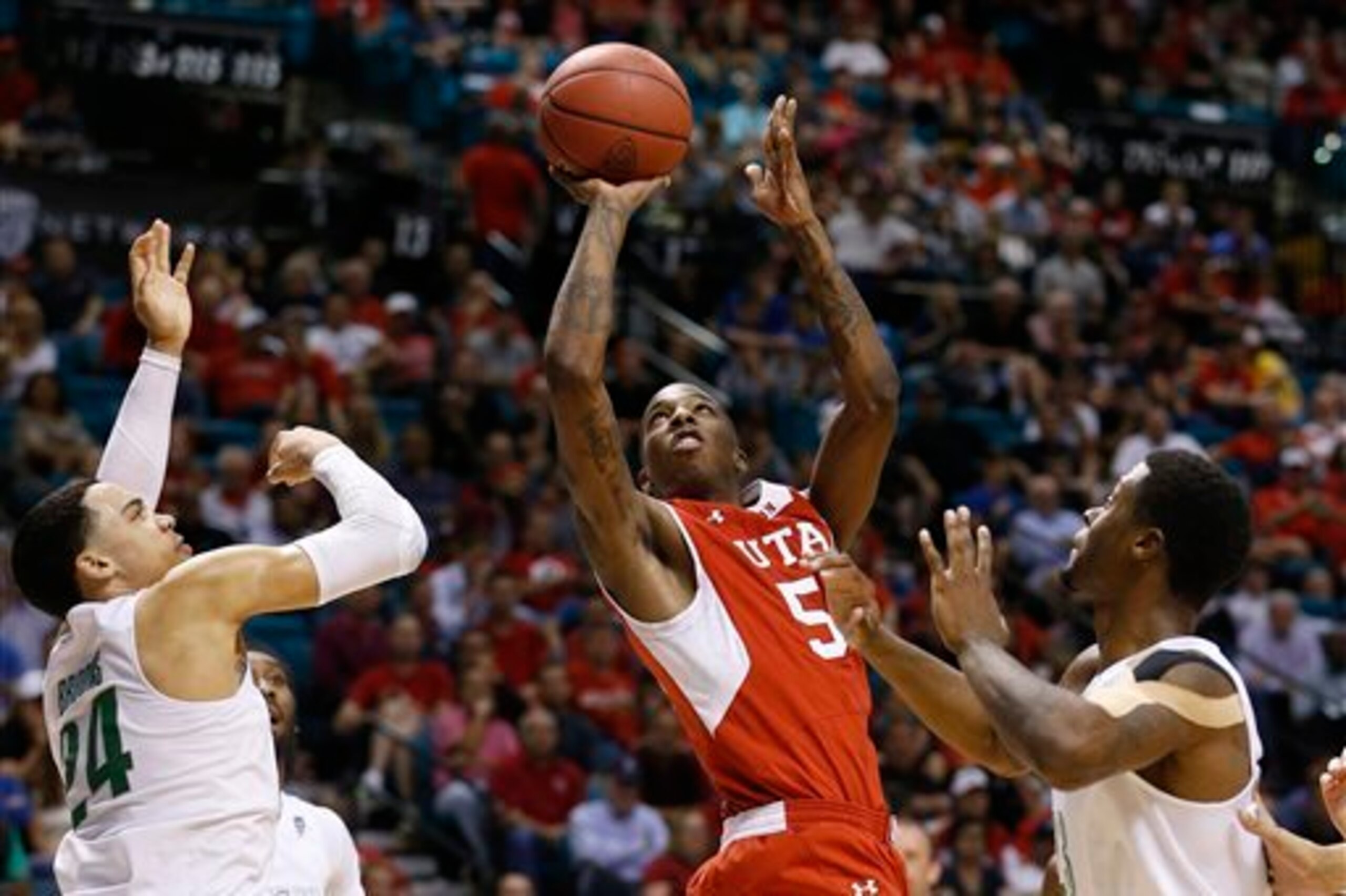
Say hello to Delon Wright, the best player in the draft—who spent the last season on domestic soil, of course—you might have never heard of.
Unlike some of the other point guards in the draft, Wright climbed up draft boards without much exposure while plying his trade for the Utah Utes, eventually earning himself second-team All-American honors.
During the year, he averaged 14.5 points, 4.9 rebounds and 5.1 assists on a team that prided itself on defense, and Wright was at the center of it all. He might not be able to shut down some of the top guards in the league in one-on-one situations, but he should be able to hold his own on defense, a valuable asset many players don’t have coming out of college.
He brings a ton of value offensively as well, with an ability to create his own scoring and make open shots for others—although an improvement is needed in finishing contested shots if he is going to the next step in the NBA.
But for a player who isn’t projected to go much higher than No. 20 in the draft, Wright will probably head to a team where he can come off the bench instead of having to start right away, which should give him a chance to craft his game to the level it needs to be in the modern, point guard-centric NBA.

.jpg?w=2560 "Raiders Could Start Mendoza")

.jpg?w=2560 "Rodgers Iced Out on Plane 💎")
.jpg?w=2560 "Packers Safety Slams Refs 🤬")

.jpg?w=2560 "🚨 Week 8 AP Top 25 Poll")
