NBA Draft 100 Series: Ranking the Top Shooting Guards of the 2015 Class

The shooting guard prospects in the 2015 NBA draft class consist of high-flyers, takeover scorers and lights-out shooters. With half of the league's teams in need of a starting 2-guard upgrade or additional depth at the position, such players should be in high demand on June 25.
Unfortunately, there won't be too many can't-miss shooting guards to choose from in the 2015 draft. Croatia's Mario Hezonja and Kentucky's Devin Booker headline the position, with UNLV's Rashad Vaughn making a late rise in the mid-first-round conversation.
The NBA Draft 100 metric measures each prospect based on a number of factors that account for everything from athleticism to room for growth. Each position has different criteria related to the traditional responsibilities tied to it. We measured shooting guards in five separate categories:
- Size for Position/Athleticism
- Scoring
- Shooting
- Playmaking
- Upside
Though some prospects played multiple positions, we assigned each prospect to the position we project him to play most at the next level.
On the next slide, we address how we chose which categories to evaluate for each position, as well as how we came up with each individual score.
Scoring Guide
1 of 21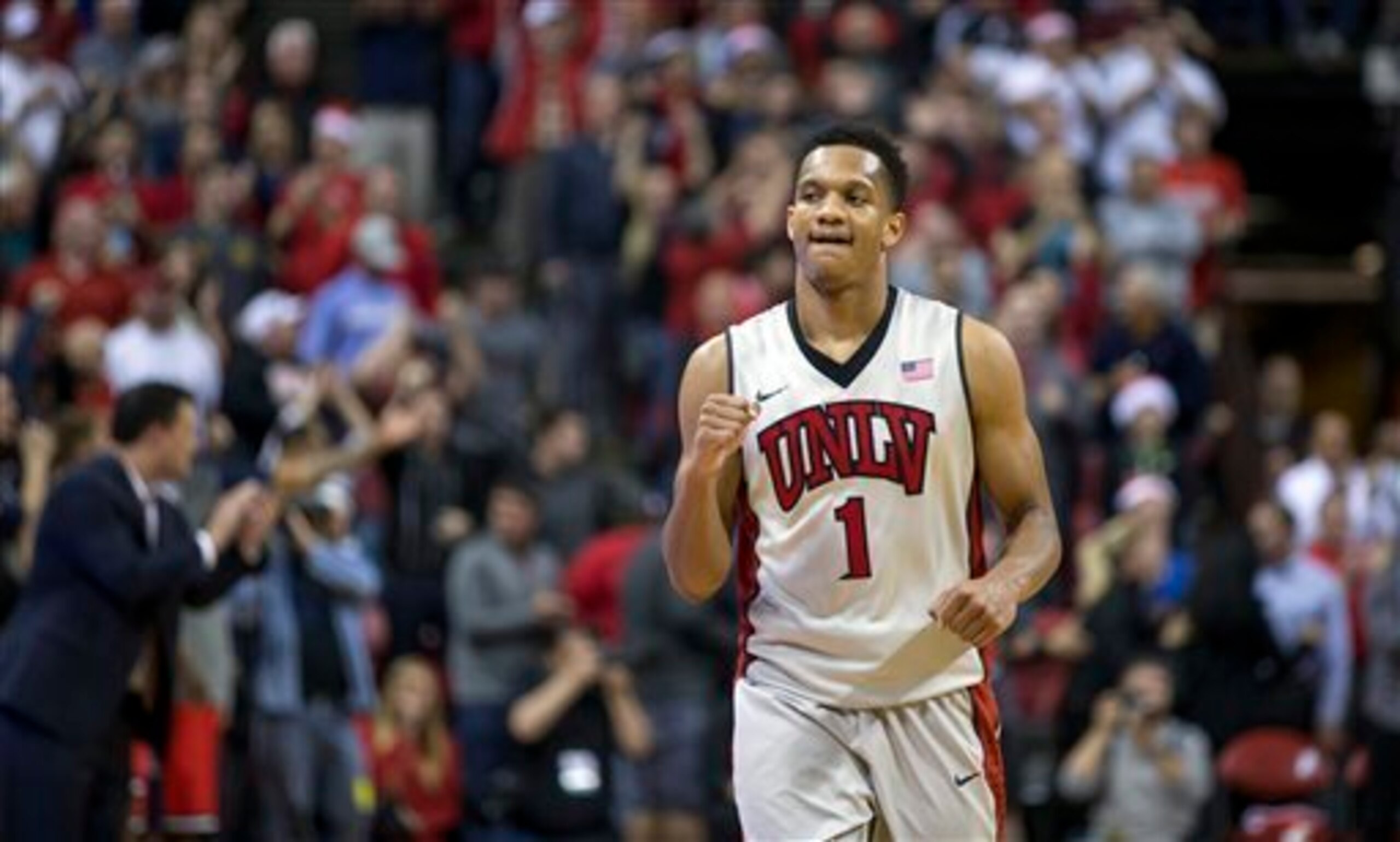
We used five categories to evaluate the shooting guards. Each category was also assigned a different weight based on significance.
We created a formula to reflect each prospect's performance in a particular category. For scoring, shooting and playmaking, the weights are listed below in percentage points.
Size for Position/Athleticism (25 points)
Even the most skilled shooting guards out of college will struggle in the NBA if they don't have the proper athleticism or size for the position.
Size for Position (10)
With most NBA 2-guards being above-the-rim athletes in the 6'5" to 6'7" range, being 6'4" and average athletically could make it difficult for a prospect to thrive in the Association.
We weighed athleticism slightly more than size, as there is a bigger difference between an above-average athlete and an average athlete than an inch-or-two difference in height.
We also took strength into consideration. We considered any guard under 200 pounds to have a "weak body", and consequently docked such players using the scale below.
For size, any shooting guard 6'4" or under typically merits a red flag. Those prospects weren't able to receive a score higher than four out of 10.
10 = 6'6" Strong body
9 = 6'6" Skinny body
8 = 6'5" Strong body
7 = 6'5" Skinny body
4 = 6'4"
3 = 6'3"
2 = 6'2"
1 = 6'1"
Athleticism (15)
Athleticism allows shooting guards to separate from defenders for jumpers and layups off drives. It also plays a big role in a player's ability to finish at the rim. Physically, athleticism is more important than meeting the traditional height requirements. Above-average athletes were subjectively scored in the 11-15 range. Average athletes were subjectively scored in the 6-10 range. Below-average athletes were subjectively scored in the 1-5 range.
15-11 = Above-average athlete
10-6 = Average athlete
1-5 = Below-average athlete
Shooting (30)
To no surprise, the most important skill for a shooting guard is shooting, and that's how we weighted it. You just won't find many NBA 2-guards who can't shoot playing regular minutes.
To be an above-average scorer, a 2-guard must be able to shoot. If he can score around the rim but can't knock down a perimeter shot consistently, he isn't likely to compete for a starting position.
Shooting percentage reflects consistency, which is most important. But some players' percentage is high due to small sample size. It's important that a player shows he can make threes with regularity as well, which is why we included three-pointers made per 40 minutes. This is for players like North Carolina's J.P. Tokoto, who shot 37.5 percent from downtown but only made 12 threes all year.
60 percent: three-point percentage
40 percent: three-pointers made per 40 minutes
Scoring (25)
Shooting guards don't need to score prolifically in today's NBA, but it's an obvious plus if they can create and make shots.
Points per 40 minutes is a strong indicator of how good of a scorer a player is. However, it's also important for a prospect not just to be picking up points as a volume three-point shooter, which many college scorers are. Scorers must be able to make shots inside the arc, and do so efficiently.
60 percent: points per 40 minutes
20 percent: two-point field-goal percentage
20 percent: two-pointers made per 40 minutes
Playmaking (10)
Though shooting guards aren't point guards, they're still members of the backcourt. That means they should be able to handle the ball and make plays off the dribble. It's usually a bad sign when a shooting guard averages fewer than one assist per game in college. Many of the game's premier shooting guards, such as James Harden, Dwyane Wade and Kobe Bryant, are playmakers who can score and pass. Playmaking isn't as important as shooting or scoring for a 2-guard, but it should affect a prospect's draft value.
80 percent: assist percentage
20 percent: turnover percentage
Upside (10)
The upside score projects a player's ceiling or best-case possible outlook. The projections were set based on Jonathan Wasserman's scouting and collective opinions from scouts and other draft analysts.
10 = MVP
9 = Superstar
8 = Perennial All-Star
7 = All-Star potential
6 = High-end starter
5 = Low-end starter
4 = High-end reserve
3 = Low-end reserve
2 = High-end benchwarmer
1 = Low-end benchwarmer
Please note that slight adjustments were made for international and mid-major prospects.
If two players received the same total score, we used "Upside" as the tiebreaker. If there was still a tie, we chose the player higher on Jonathan Wasserman's big board.
20. Aaron Harrison, Kentucky, 6'6", Sophomore
2 of 21
Size for Position/Athleticism
Aaron Harrison has the 6'6" size and body of a prototypical NBA 2-guard, but he isn't athletic, quick or explosive. He also doesn't get to the basket or charity stripe often, having averaged just 4.0 free-throw attempts per 40 minutes with Kentucky as a sophomore.
Scoring
Harrison is a perimeter scorer who has done a great deal of offensive damage in the half court off spot-ups and pull-ups. He isn't a threatening shot-creator, but he can complement his playmaker and post men as a shot-maker and cutter. On the down side, most of his looks are low-percentage shots. His 42.3 percent field-goal clip as a freshman dipped to just 39.5 percent as a sophomore.
Shooting
Despite taking 187 threes and 106 two-point jumpers to just 77 shots at the rim, per Hoop-Math.com, Harrison has been an erratic shooter. He hit just 31.6 percent of his looks from downtown and finished the year with a disappointing .514 true shooting percentage.
Playmaking
Harrison can handle the ball and pass, but his inability to lose defenders off the dribble limits his playmaking ability. He averaged 2.2 assists per 40 minutes.
Upside
With questionable athleticism, no real one-on-one game and an unreliable jumper, Harrison is facing tough odds to become a star in the NBA. He'll have a chance at making a roster and sticking if he can start hitting threes more consistently, though.
Overall
Harrison struggled at the combine, and it could have knocked him off draft boards. He'll be hoping for someone to pull the trigger in the 45-60 range. Expect to see him in the D-League next season.
19. Norman Powell, UCLA, 6'4", Senior
3 of 21
Size for Position/Athleticism
At 6'4", Norman Powell is undersized for a shooting guard who can't play the point or a combo guard role. However, a 6'11" wingspan and explosive athleticism help make up for that inch or two in height. While his ability to get up above the rim shines in transition, his strength, length and foot speed also translate to lockdown defensive potential.
Scoring
Powell has continued to expand his offensive game, having raised his scoring average with each successive season at UCLA. This year, he put up 19.0 points per 40 minutes, thanks to an electric attack game and developing mid-range arsenal. Still, he isn't a sharp enough one-on-one player, which makes his jumper even more important.
Shooting
Unfortunately, he hasn't found a consistent rhythm from behind the arc, where he shot 31.9 percent as a senior. Sadly, that was his best three-point shooting year since his freshman season. He finished with a so-so .540 true shooting percentage—significantly lower than the .611 percent he put up as a role-playing junior.
Passing/Playmaking
Powell averaged 2.4 assists per 40 minutes this past season with the Bruins. He can make plays as a passer, but he's not a playmaker.
Upside
Powell's offensive upside is limited, given his size, struggles with creating shots and shaky jumper. However, he has terrific defensive tools and instincts. He will have the chance to earn the reputation as a specialist like Memphis Grizzlies 2-guard Tony Allen did.
Overall
His defense doesn't show up in the NBA Draft 100 score, but it's something that will get him drafted. He's a second-round option anywhere from No. 31 to No. 60.

18. J.P. Tokoto, North Carolina, 6'6", Junior
4 of 21
Size for Position/Athleticism
J.P. Tokoto has average 6'6" size, but he possesses next-level athletic ability. He's a bouncy above-the-rim leaper and is exceptionally quick laterally, which could allow him to guard both wings and ball-handlers in the pros.
Scoring
Tokoto isn't much of a scorer, having never averaged in double figures through three years at North Carolina. He struggles to create and make shots away from the basket, doing most of his work off the ball by making plays with his athleticism. His field-goal percentage of 42.8 and .484 true shooting percentage reflect his offensive inefficiency.
Shooting
Having no jumper limited him in college, and if he doesn't add one quickly, it could keep him out of the pros. Tokoto made just 12 threes all year, after making eight as a sophomore and one as a freshman.
Playmaking
Tokoto has terrific passing instincts, which might be his best offensive attribute. He averaged a career-high 5.9 assists per 40 minutes as a junior. However, his 20.7 turnover percentage is far too high. He can be frustrating to watch with his occasionally careless decision-making.
Upside
Without much of a scoring game or shooting stroke, Tokoto's upside is minimal. His ability to defend and pass (4.3 assists per game) could hold some value, but unless he becomes a bigger spot-up threat from outside, his chances won't be great.
Overall
Tokoto's poor shooting and scoring numbers destroyed his NBA Draft 100 grade. However, some of those subpar numbers were due to his role in North Carolina's offense. If he can convince teams his jumper isn't broken in workouts, his athleticism, defense and offensive potential may land him in the 30-45 draft range.
17. D.J. Newbill, Penn State, 6'4", Senior
5 of 21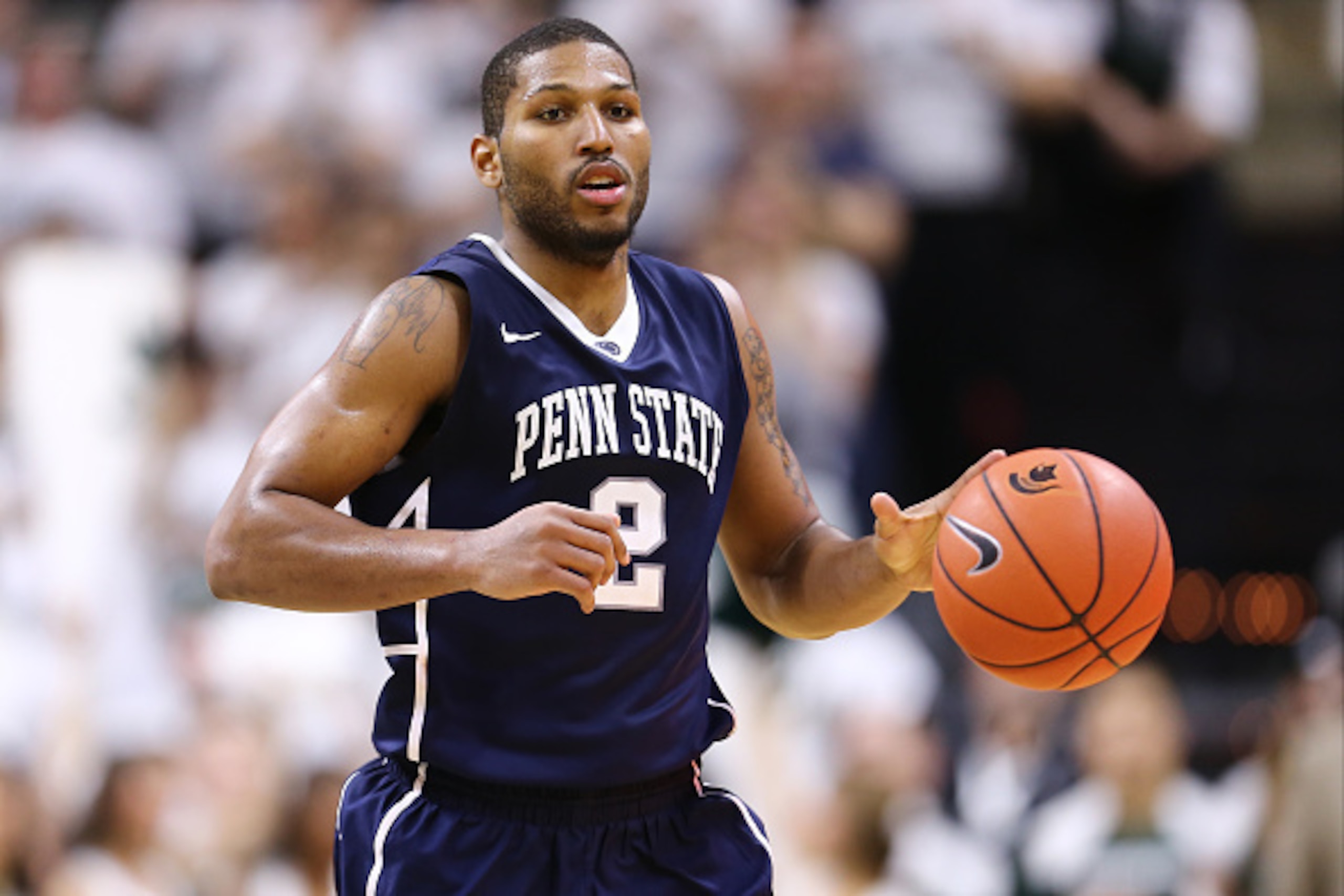
Size for Position/Athleticism
D.J. Newbill doesn't fare too well in the physical tools and athleticism department, where his 6'4" frame and lack of explosiveness are can't-miss flaws. Without size, length (6'6" wingspan) or burst, he's never been much of a factor in the draft conversation despite having such a productive college career.
Scoring
He's become more potent from one year to the next, having averaged 22.3 points per 40 minutes as a senior. Newbill has a tight handle that allows him to change direction, shake defenders and create shots for himself. He made 90 two-point jumpers at an efficient 41.3 percent clip, per Hoop-Math.com. However, he shot just 58.6 percent at the rim, a result of limited springs.
Shooting
Newbill shot 37.0 percent from three and made 1.9 triples per game. He can knock them down off the catch or dribble, but he's never done so at a standout rate.
Passing
Newbill frequently had the ball in his hands, but he did more than just score. His 3.3 assists per 40 minutes is an above-average number for a 2-guard.
Upside
The big question is whether he can separate as a 6'4" below-the-rim shooting guard. If he can get his shot off, he'll have a chance at landing a role as a backup scoring specialist.
Overall
Newbill's uninspiring physical tools raise questions as to whether his game will work in the pros. He'll get looks in the second round or as an undrafted free agent, but he will likely have a better shot at making money overseas.
16. Corey Hawkins, UC Davis, 6'2", Senior
6 of 21
Size for Position/Athleticism
Nothing about Corey Hawkins' physical attributes is particularly appealing from an NBA standpoint. At 6'2", he's extremely undersized for a 2-guard, while his athletic ability appears average at best. He lacks quickness attacking north and south and explosiveness around the rim.
Scoring
Hawkins put up giant numbers in the Big West conference, having averaged 25.1 points per 40 minutes while shooting 51.4 percent on his two-point attempts. He can knock down shots in a variety of different ways. Hawkins spent time spotting up around the arc, handling the ball and generating offense with his pull-up jumper and floater.
Shooting
After making just 32.2 percent of his threes as a junior, Hawkins emerged as one of the country's deadliest snipers in 2014-15. He shot a sensational 48.8 percent from downtown and hit 3.5 triples per 40 minutes.
Passing/Playmaking
Hawkins' 25.3 assist percentage was strong for a 2-guard. However, it's worth noting he had the ball in his hands a ton, using 32.2 percent of his team's available possessions when he was on the floor. He also averaged 3.6 turnovers per 40 minutes. Still, his ability to handle the ball and make things happen off ball screens plays to his combo guard potential.
Upside
Hawkins' upside is limited due to below-average physical tools and athleticism. He'll also be 24 years old in August. His best shot to succeed will be as a shot-maker off the bench.
Overall
Hawkins received an invite to the NBA combine, which means that scouts and teams are aware of his senior-year production. He will have a chance of being drafted in the 45-60 range, but he's likely to spend the next year overseas or in the D-League.
15. Wesley Saunders, Harvard, 6'6", Senior
7 of 21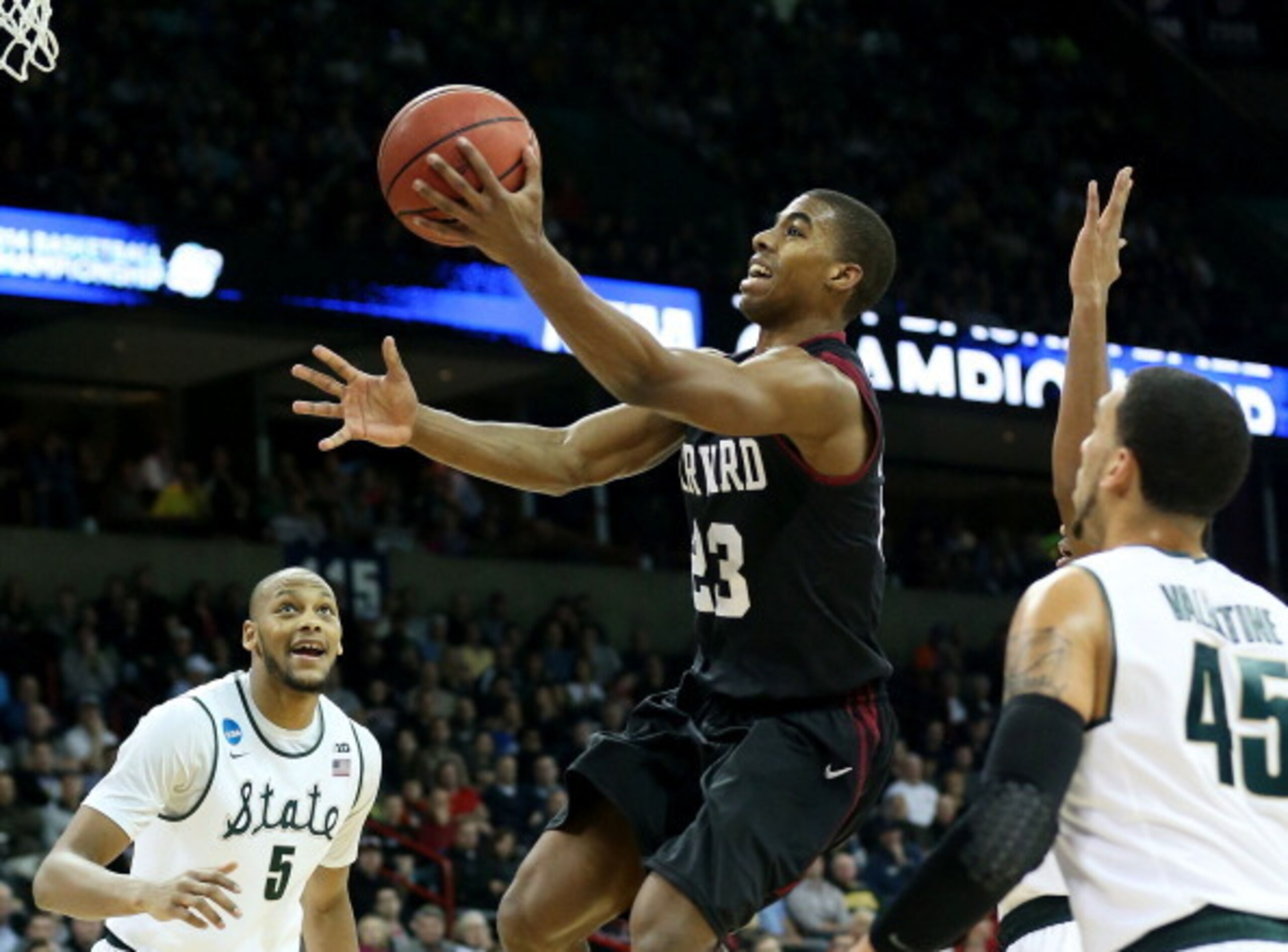
Size for Position/Athleticism
At 6'5", 215 pounds, Wesley Saunders has a strong NBA body. However, his athleticism and explosiveness are below-average compared to most successful 2-guards in the Association.
Scoring
Saunders can handle the ball and create shots, both for teammates and himself. With a sound mid-range pull-up and floater game, he averaged 19.3 points per 40 minutes on a respectable 45.3 percent clip.
Shooting
He made a huge jump as a shooter in 2014-15, having hit 42.5 percent of his threes after making just 10 of 34 triples as a sophomore. The 31 threes he made this year were more than he hit his first three seasons combined. However, Saunders doesn't get much elevation on his jumper. It will be worth monitoring, specifically whether it affects his ability to get his shot off moving forward.
Playmaking
Saunders' 31.7 assist percentage was the highest among 2-guards. He's developed into a legitimate threat as a passer and playmaker, having averaged 5.0 assists per game 40 minutes as a senior, which helps differentiate him from the pack.
Upside
He'll be 22 years old to start his rookie year, but if his jumper is for real, Saunders would have intriguing shot-making and playmaking versatility. He'll get offers from Europe if he doesn't attract interest from NBA teams.
Overall
Saunders hasn't generated much draft buzz over the past few months. He'll likely receive offers to play overseas if he chooses not to go the D-League route.
14. Michael Frazier II, Florida, 6'4", Junior
8 of 21
Size for Position/Athleticism
Michael Frazier II possesses adequate athleticism, though his 6'4" size is a potential issue. If he were a few inches taller, his NBA outlook would likely be brighter.
Scoring
Frazier averaged just 12.1 points and 16.5 per 40 minutes as a junior while only making 1.6 two-point field goals and 2.3 free throws per game. He showed little ability to create or get to the basket, though he's athletic enough to finish off cuts, one-dribble pull-ups and open-floor opportunities.
Shooting
If Frazier makes it to the NBA, his jumper will carry him there. He made 3.0 three-pointers per 40 minutes at a solid 38.0 percent, which was actually a career-low clip. Frazier shot above 44 percent from deep during each of his first two seasons. He's an elite sharpshooter.
Playmaking
Frazier averaged 2.4 turnovers to 1.9 assists per 40 minutes. He's not a good passer or threatening playmaker, which clouds his role-player potential.
Upside
His upside tops out as a shooting specialist. Every team could use another shooter, but Frazier will have little margin for error without the ability to offer anything else.
Overall
As a shooting specialist, Frazier could go anywhere from the late first round to the late second round. It all depends on just how good of a shooter teams think he'll be. If he can light it up in summer league, he may have a chance at making a roster in need of his specialty.
13. Dez Wells, Maryland, 6'4", Senior
9 of 21
Size for Position/Athleticism
Dez Wells measured 6'4" at the combine, so there are questions concerning his size. But he makes up for an inch or two in height with a strong build and explosive athleticism. He's tough to stop around the basket and is quick off the bounce.
Scoring
Wells didn't improve too much offensively as a senior. Still, he put up 19.8 points per 40 minutes, and he remains at his best attacking the rim, where he can play through or over contact. However, he only shot 31.6 percent on two-point jumpers, per Hoop-Math.com. His in-between game and perimeter-scoring ability are both limited.
Shooting
Wells only took 49 threes as a senior, but he made an impressive 25 of them. When he has the time and room to set his feet, he's shown he can knock them down. But that 51.0 percent mark from downtown is from a tiny sample size. He struggled in the mid-range and shot below 35 percent on threes as a sophomore and junior, suggesting this past season was likely an anomaly rather than a sign of things to come.
Playmaking
An underrated passer, Wells' 23.7 assist percentage was one of the better marks among the 2-guards in this year's draft class. He has strong vision for a wing player.
Upside
Wells is already 23 years old, and there are still significant holes in his offensive game. However, he has intriguing defensive tools and slashing potential on offense. It's not out of the question that a coach believes in his shooting potential and values his energy, athleticism and toughness.
Overall
Wells will be on second-round radars, though an unproven jumper and shaky decision-making for a 23-year-old could turn scouts away. He'll most likely start next year in the D-League or Europe.
12. Marcus Thornton, William & Mary, 6'3", Senior
10 of 21
Size for Position/Athleticism
At 6'3", Marcus Thornton is more of a combo guard than a 2-guard, where he's severely undersized. Though he did get up for a wild 43" max vertical at the combine, you don't see many 177-pounders succeed off the ball in the pros.
Scoring
Thornton was a scoring machine in the CAA, where he averaged 20 points per game as a senior. It marked the third year in a row he averaged at least 18 points. He has a tight handle, as well as the ability to create and make shots from all three levels. He even shot an efficient 51.8 percent inside the arc, where he made shots on the move or separated into jumpers. However, more than half of his field-goal attempts came from behind the arc.
Shooting
He drained a whopping 102 threes at an excellent 40.2 percent clip—the third consecutive season he's made at least 90 threes and finished above 40 percent from deep. Those numbers are up there with some of the best shooters in the country.
Playmaking/Passing
Thornton's role was to score, so we didn't get to see much passing and playmaking from him. That poses a problem to evaluators who don't believe he's big enough to play shooting guard. He averaged just 2.9 assists to 2.3 turnovers per game.
Upside
Though a super athlete who can light it up from deep, Thornton is stuck between positions, without the size for a 2 or the facilitating instincts of a 1. He also failed to stand out in five-on-fives at the combine. Still, his ability to make shots and generate offense could earn him training-camp invites this summer.
Overall
Despite all his production, Thornton could be a long shot to get drafted. You just don't see many 6'3" scorers with no point guard skills find roles in the Association. Look for him in the D-League or overseas next season.
11. Terran Petteway, Nebraska, 6'6", Junior
11 of 21
Size for Position/Athleticism
At 6'6", 209 pounds, Terran Petteway passes the eye test with good size for a projected 2-guard. Athletically, he's average at best in terms of his quickness and explosiveness. He also isn't great when it comes to finishing after contact.
Scoring
Petteway didn't make the improvements that a draft-stock boost would have required in 2015. After averaging 22.8 points per 40 minutes as a sophomore, he put up 20.8 as a junior, failing to become more consistent and efficient. He shot just 39.6 percent from the floor and registered a below-average .512 true shooting percentage. However, his skill set is sharp. He can create his own shot moving north, south, east and west off drives, step-backs and pull-ups. Unfortunately, many of the looks he creates for himself are difficult to make with regularity.
Shooting
He shot just 31.3 percent from downtown, which marked the third straight year he finished below 33 percent. It hasn't stopped him from launching bombs—Petteway attempted 8.0 triples per 40 minutes. He did make 68 threes in 31 games, so there is no denying his range and shot-making ability. But again—we haven't seen the convincing consistency.
Playmaking
Petteway is a better passer than he's given credit for, partly because of the questionable shots he takes. But he averaged 3.2 assists per 40 minutes and showed he can create out of pick-and-roll situations.
Upside
If Petteway can ever turn his streaky shooting into consistent scoring, he could have a chance of carving out a spot on a roster. But there isn't much margin of error for high-volume, low-efficiency shooters like him.
Overall
He'll receive second-round looks, but Petteway's shot selection and inefficiency can be a major turnoff. However, teams in Europe might value his offensive skills. If he chooses to pass on the D-League, he should be able to find a job overseas.
10. Pat Connaughton, Notre Dame, 6'5", Senior
12 of 21
Size for Position/Athleticism
Pat Connaughton has standard 6'5" size for a 2-guard, but his 215-pound frame is strong. He stole the show during athletic testing at the NBA combine, when he jumped up for a ridiculous 44" max vertical. An incredible athlete, he was even taken in the fourth round in the 2014 MLB draft as a pitcher.
Scoring
Connaughton is more of a spot-up threat than a scorer, though he has the body control to finish runners around the key. He did almost all of his work finishing plays off the ball, whether it was as a cutter or perimeter shooter. He averaged 14.1 points per 40 minutes on 53.7 percent shooting inside the arc.
Shooting
Connaughton's stroke is as pure as it gets. With perfect mechanics, he made 2.8 threes per 40 minutes at a 42.3 percent clip. Between his athleticism and jumper, he offers shooting specialist potential.
Passing/Playmaking
He's a high-IQ wing who makes the right plays, but he isn't much of a threat off the dribble. He's a ball-mover, not a playmaker, having averaged just 1.7 dimes per 40 minutes as a senior.
Upside
If Connaughton sticks in the NBA, his jumper and athleticism will make it happen. He doesn't have any significant upside, but as a sniper to bring off the bench, he'll have a chance to carve out a minor role.
Overall
Connaughton was off the radar until the combine, where he improved his chances of getting drafted. Teams that view him as a specialist could target him anywhere in the second round.
9. Tyler Harvey, Eastern Washington, 6'4", Sophomore
13 of 21
Size for Position/Athleticism
Tyler Harvey's 6'4", 181-pound frame and average athleticism have held him back in the NBA draft conversation. He's undersized for a natural shooting guard and lacks the ability to handle the point.
Scoring
Questionable physical tools from an NBA perspective didn't prevent Harvey from leading the country in scoring this past season. The Eastern Washington product averaged 23.1 points per game (25.0 points per 40 minutes) on an outstanding .643 true shooting percentage. He was flat-out unstoppable on the perimeter, where he showed the ability to create shots and separate from defenders for makable jumpers out to 28 feet. Though he didn't get to the rack much, he made 46.7 percent of his two-point jumpers, per Hoop-Math.com, consisting of pull-ups, step-backs and runners.
Shooting
Harvey also led the country in three-pointers made, hitting 128 of them on the year. And he did so efficiently, shooting 43.1 percent from downtown. With a sweet lefty stroke and plenty of range, his touch is reminiscent of Michael Redd's.
Playmaking
Harvey only averaged 2.8 assists per 40 minutes, though it's worth noting his job was to put the ball in the hole. Still, he doesn't project as a player who'll be setting up teammates for buckets.
Upside
With limited size and strength for a perimeter-oriented scorer, there are questions as to how well his game will translate to the pros. But it's just impossible to ignore his shot-making skills. Harvey could be one of the biggest sleepers in this draft if he's able to overcome the physical transition. He has the potential to become an instant-offense spark off a bench.
Overall
Harvey struggled badly in five-on-fives at the combine, where for the first time in two years, he wasn't featured in the offense. He'll need to shoot well in workouts to maximize his chances of getting drafted. Regardless, he'll be able to continue his career in the D-League or overseas.
8. Josh Richardson, Tennessee, 6'6", Senior
14 of 21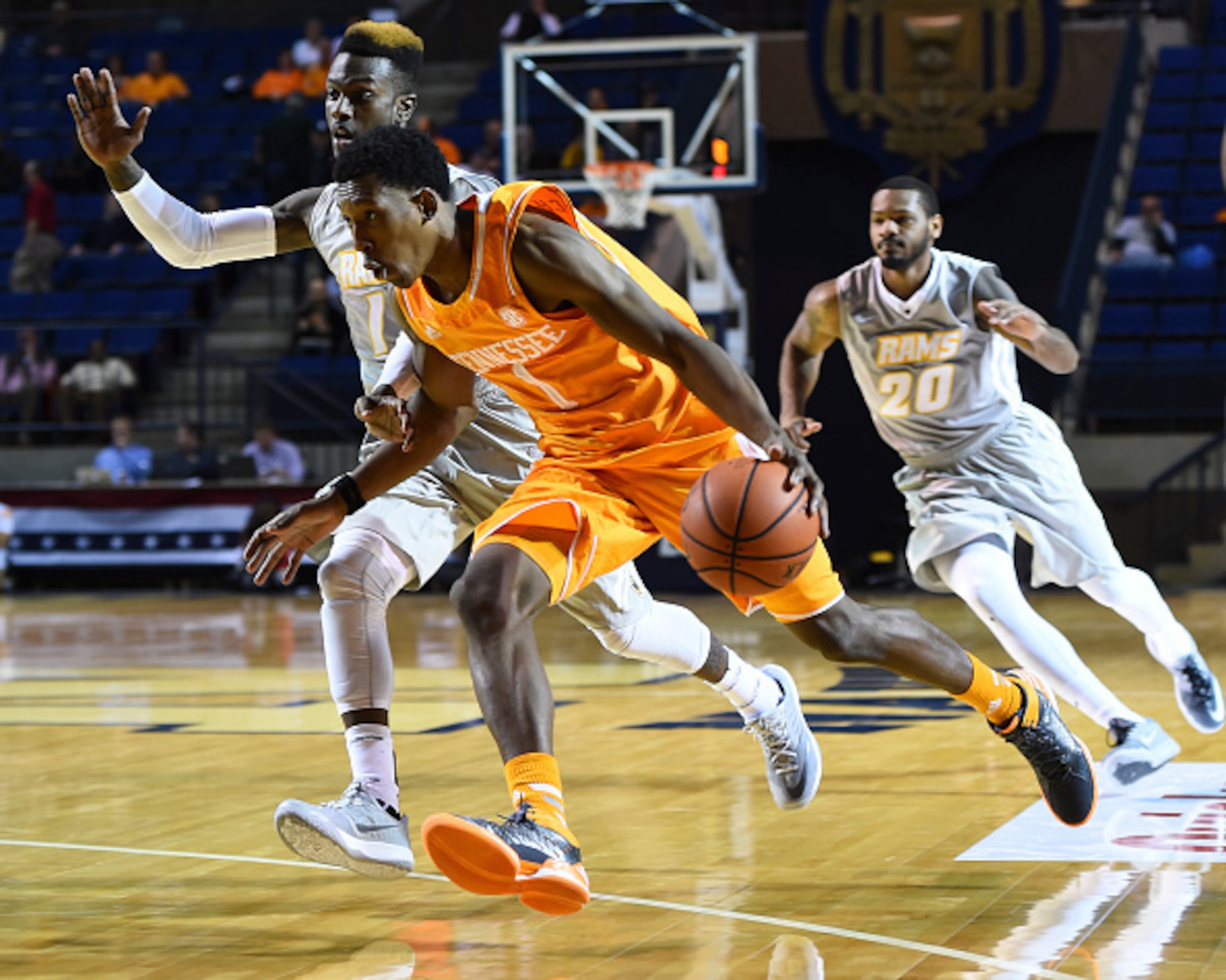
Size for Position/Athleticism
Josh Richardson looks likes a prototypical 2-guard with 6'6" size and a nice bounce to his step. He can get up above the rim for big-time finishes and slice to the rack in the half court or open floor. His skinny 200-pound frame would be the only concern physically.
Scoring
A threatening mid- and long-range scorer, Richardson averaged 17.7 points per 40 minutes as a senior. He can knock down shots off curls, pull-ups and spot-ups, and he flashed slashing potential from the wings. Richardson only took 18.8 percent of his shots at the rim, though, per Hoop-Math.com. He doesn't get there often off the dribble and averaged just 3.9 free-throw attempts in 36.3 minutes.
Shooting
Richardson can shoot, though he hasn't been consistent enough to earn the reputation as a shooter. After making 34 percent of his threes as a junior, he shot 35.9 percent as a senior. He hit 1.6 threes per 40 minutes, which was fairly average among 2-guards.
Playmaking
He averaged an impressive 4.0 assists per 40 minutes, showing the ability to find teammates off the dribble. Tennessee actually used Richardson as one of its primary ball-handlers this past season.
Upside
Richardson is a late bloomer whose game continues to improve. However, he had trouble playing after contact, and if he doesn't improve his shooting consistency, he could have a tough time standing out.
Overall
Somehow, Richardson didn't receive an invite to the NBA combine. However, between his size, scoring and playmaking, he'll certainly get second-round looks. If not, he'd be one of the top rookie free-agent candidates after going undrafted.
7. Cedi Osman, Macedonia, 6'8", 1995
15 of 21Size for Position/Athleticism
Cedi Osman has excellent 6'8" size and smooth athleticism for a wing who can handle the ball. He isn't particularly explosive around the rim, though his body control translates to pretty finishes in the open floor. He could stand to put on some muscle, but he's held his own against pros in Euroleague.
Scoring
Osman is a versatile scorer who can make set shots off two feet and runners off one. Playing at a high level overseas, he averaged 15.1 points per 40 minutes, though it's come on 41.9 percent shooting from the floor.
Shooting
He has shooting potential, having made 54 threes in 63 games. Despite his 34.2 percent mark from downtown, Osman has a convincing stroke that should only improve.
Playmaking
Osman is actually a better passer than his assist numbers (63 assists in 63 games) suggest. He shows strong vision in the open floor and on the move, though he hasn't had much of a chance to create.
Upside
Osman's upside is limited, but his versatility could work well off an NBA bench. Though he doesn't excel in any one area, he has the potential to become a jack-of-all-trades role player.
Overall
He's an ideal draft-and-stash candidate, given his role for Anadolu Efes and the quality of competition he'll face. Osman should be in line for big minutes over the next few years in Euroleague. He'll be an option anywhere outside the top 20.
6. Michael Qualls, Arkansas, 6'5", Junior
16 of 21
Size for Position/Athleticism
At 6'5", 210 pounds with a wingspan that stretches beyond 7'0", Michael Qualls has an NBA 2-guard body to go with elite-level athleticism. His ability to elevate high above the rim and hang in the air has led to dozens of jaw-dropping highlights.
Scoring
Qualls made significant offensive strides as a junior, having raised his scoring average to 21.1 points per 40 minutes and his true shooting percentage up to .562. He still has to improve his in-between game, as he shot just 28.0 percent on two-point jumpers, per Hoop-Math.com. But he's tough to stop when given a lane to hit, and he made 5.8 free throws per 40 minutes.
Shooting
He regressed slightly as a shooter in 2014-15, which is one of the reasons he hasn't generated much draft buzz. Qualls' three-point percentage dipped from 35 percent as a sophomore to 33.3 percent this past season. Still, the fact that he made two threes per 40 minutes highlights his shot-making ability. He's capable of knocking down long-range bombs, but he'll have to become consistently threatening to make a mark in the pros.
Passing/Playmaking
He averaged fewer than two assists per game while playing 30.2 minutes. Qualls isn't a playmaker.
Upside
Qualls continues to make gradual progress, and with superhero-like athleticism and textbook 2-guard physical tools, there is upside for coaches to tap into. However, he'll need to become a more reliable shooter to maximize his chances.
Overall
Unfortunately, Qualls tore his ACL during a pre-draft workout, per ESPN's Jeff Goodman, which could really hurt his chances of being drafted. He'll have his work cut out for him over the next two years, but after a full recovery, I'd expect his name to resurface on NBA radars.
5. Joseph Young, Oregon, 6'2", Senior
17 of 21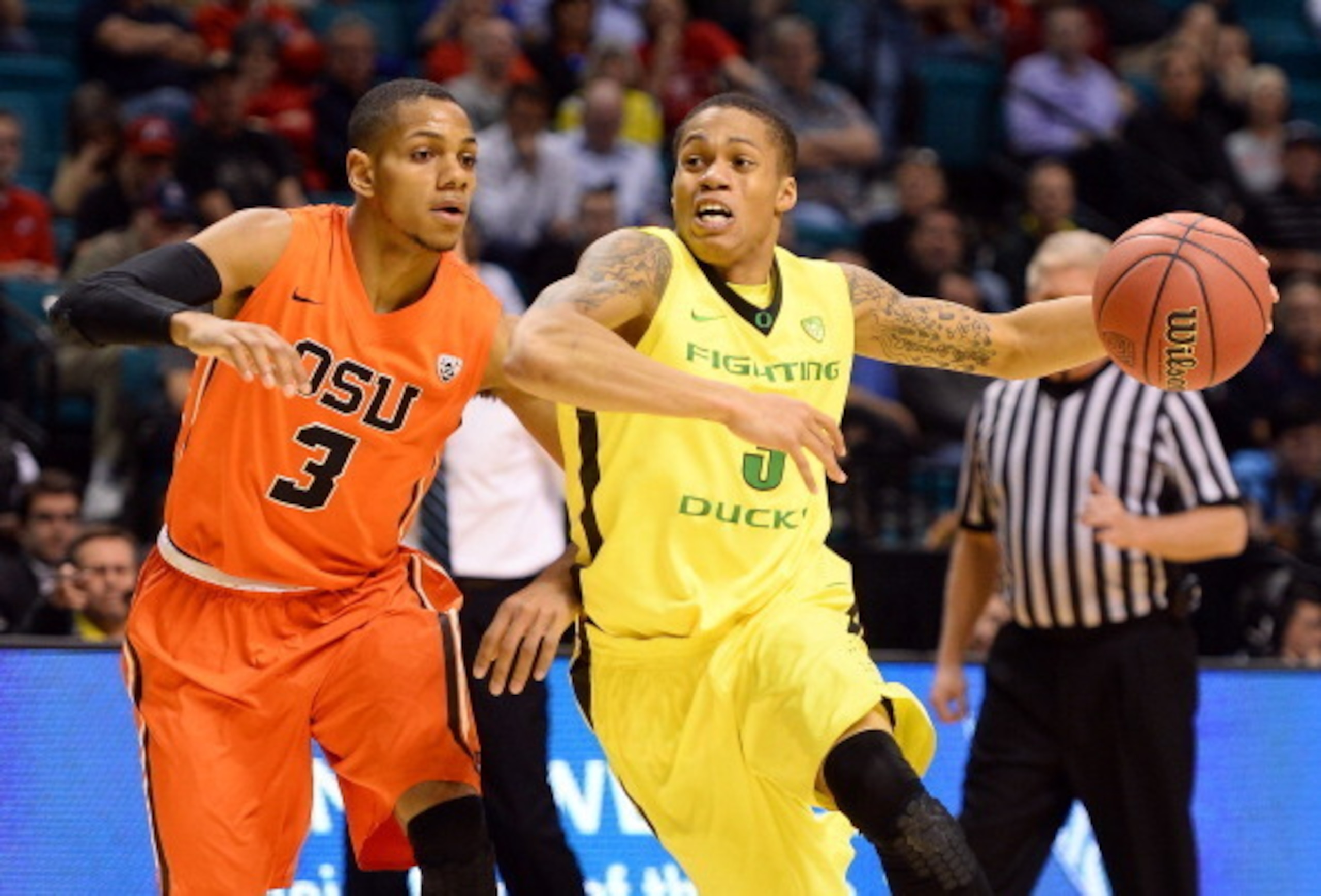
Size for Position/Athleticism
The obvious obstacle for Joseph Young to overcome as a shooting guard will be his 6'2" size. Though he can handle the ball, he lacks the traditional facilitating instincts to run the point. However, he is an excellent athlete who can get up above the rim and blow by defenders.
Scoring
This marked the third consecutive year Young averaged at least 18 points per game. He can generate offense at will, with the ability to create and make shots from all over the floor. It's made him unstoppable for stretches in the college game. Nobody could guard him in this year's NCAA tournament.
Shooting
Young knocked down 2.5 threes per 40 minutes, and though his 35.7 percent three-point shooting percentage this year was average, his career 39.0 percent mark on 739 attempts is convincing. The fact that he shot 92.5 percent from the charity stripe as a senior only enhances his credibility as a shooter.
Playmaking
Young's ability to handle the ball and create off the dribble leads to assists on the move. He dished out 4.1 assists per 40 minutes as a senior.
Upside
As a 6'2" scorer who is turning 23 years old two days after the draft, Young's upside remains limited. The hope for him will be to carve out a career as an offensive spark off a bench.
Overall
There is no doubting Young's talent or skills—just his place in the NBA. A team that is willing to overlook his questionable position could take a chance on him in the late first round. Otherwise, he should be locked into Round 2's top 20. Bet on him making an NBA appearance at some point within the next two years.
4. R.J. Hunter, Georgia State, 6'6", Junior
18 of 21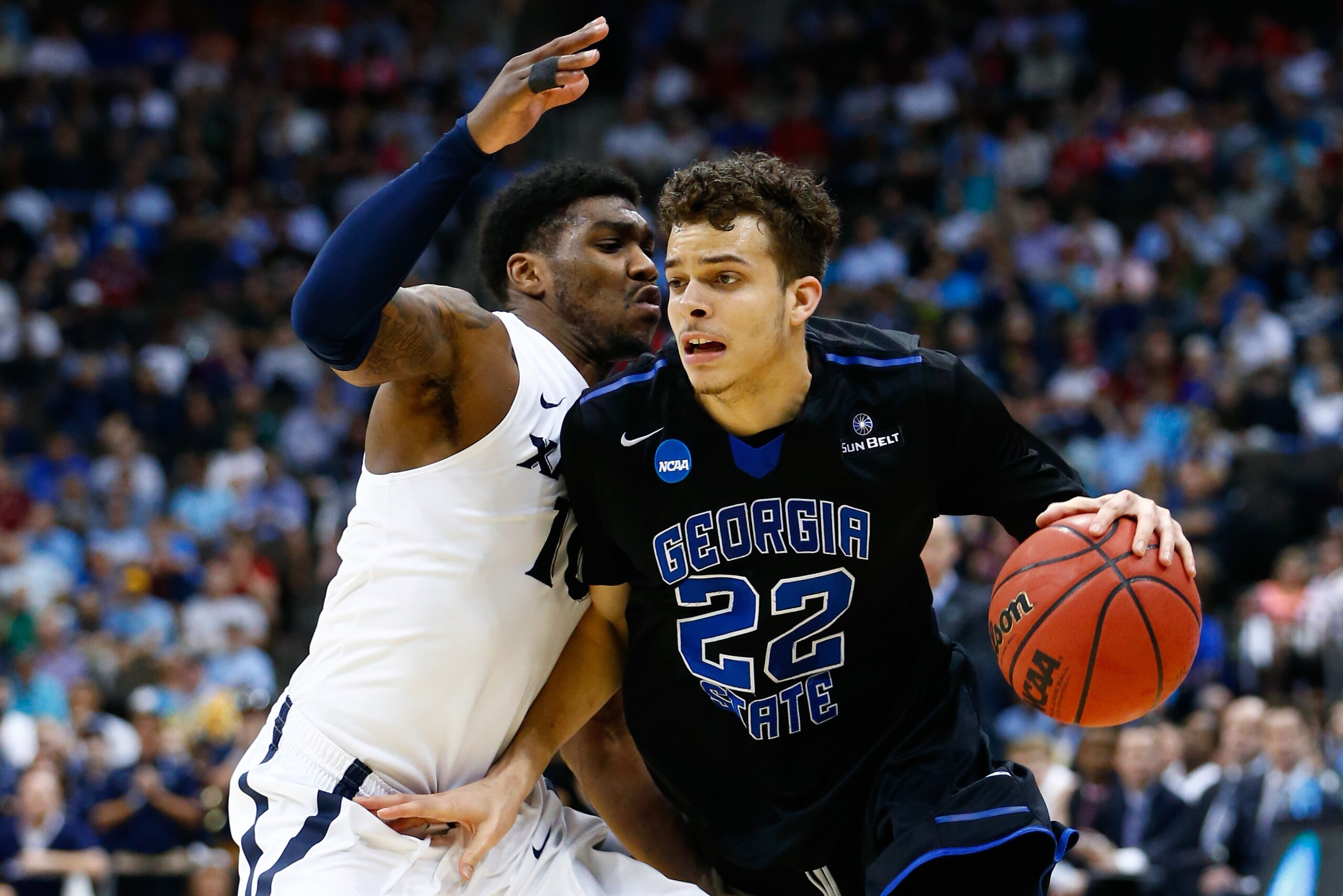
Size for Position/Athleticism
R.J. Hunter has good 6'6" size for a 2-guard, but he isn't overly explosive. And at 185 pounds, a lack of bulk and strength is evident.
Scoring
Hunter averaged 21.3 points per 40 minutes—the third year in a row he's finished above 20 points per 40. He can put the ball in the basket from every spot and angle on the floor. He doesn't create much one-on-one separation, but he doesn't need to. Hunter has that coveted ability to knock down contested jumpers. He also made 60 more free throws as a junior than he did as a sophomore. However, he shot just 39.5 percent from the floor, his worst mark in college. He takes a lot of difficult shots, though he was the focus of every opposing defense he faced in the Sun Belt Conference.
Shooting
He had an off-shooting year, making just 30.5 percent of his threes. However, Hunter knocked down at least 70 triples for the third straight season. He has beautiful mechanics, unlimited range and tough shot-making skills. He's a better shooter than his numbers from this past year might suggest.
Playmaking
Hunter made strides as a playmaker in 2014-15, having dished out more assists (126) than he did his first two years combined. He averaged 3.9 assists per 40 minutes, thanks to a high IQ and strong feel for the game.
Upside
Hunter's NBA value lies in his ability to make jumpers off movement. A skinny frame may limit his ability to take contact, which hurts his chances of developing into a featured starter. But he still offers starter potential as a complementary scorer and shooter. He projects more as a third, fourth or fifth offensive option than a first or second.
Overall
Hunter could end up going anywhere from the late lottery to late first round. He should be highlighted on draft boards of teams that are looking to add shooting and complementary offense.
3. Rashad Vaughn, UNLV, 6'5", Freshman
19 of 21
Size for Position/Athleticism
Rashad Vaughn has the 6'5" size working for him. Unfortunately, he's an average athlete with limited explosiveness. He shot just 47.1 percent at the rim in the half court, per Hoop-Math.com. His 6'6" wingspan is also underwhelming.
Scoring
Vaughn lived up to his reputation as a pure scorer out of high school, having averaged 22.1 points per 40 minutes in his first year at UNLV. He finished second among freshmen in per-game scoring, trailing only Ohio State's D'Angelo Russell. Vaughn is a threat to create his own shot from all over the floor, though he does most of his work on the perimeter. On the downside, many of his shots are of the low-percentage variety. He finished with an uninspiring .547 true shooting percentage.
Shooting
He was fairly inconsistent, but it's tough to argue against his 2.9 three-pointers per game on 38.3 percent shooting. Vaughn has NBA-caliber range and shot-making ability.
Passing/Playmaking
He averaged 1.9 assists per 40 minutes, doing little to sell himself as a playmaker.
Upside
A lack of burst, which prevents him from blowing by defenders or finishing at the rim, limits his upside. On the bright side, he's still just 18 years old. And his 6'6" size and high offensive skill level are encouraging. Gary Neal would be a good baseline comparison for Vaughn, who projects as a scorer off the bench.
Overall
Vaughn's stock should rise during workouts, where he'll showcase his infinite range and silky-smooth jumper. Look for him to generate interest starting at the back end of the lottery.
2. Devin Booker, Kentucky, 6'6", Freshman
20 of 21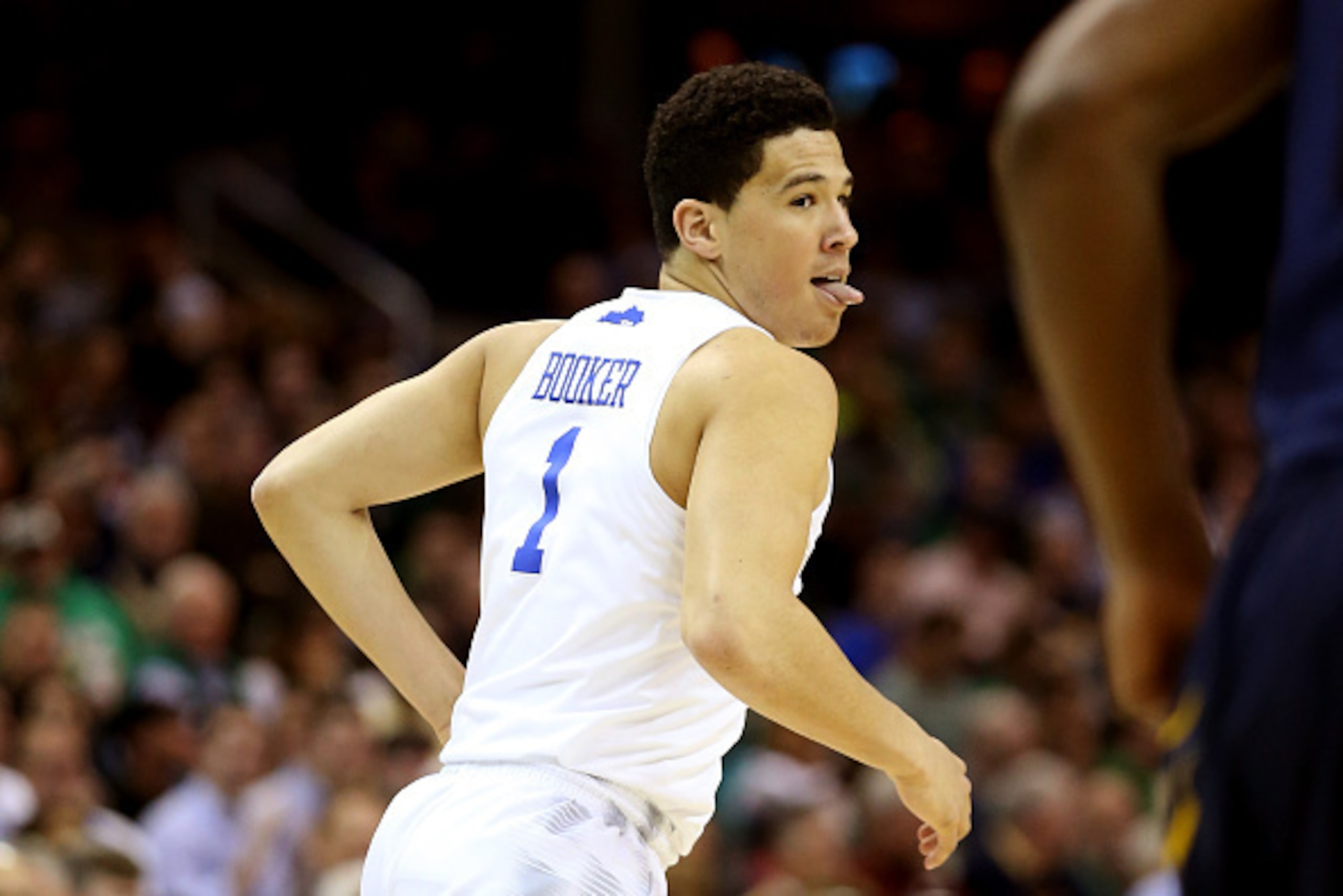
Size for Position/Athleticism
Devin Booker has a solid 2-guard body at 6'6", 206 pounds. He's a decent athlete with better lateral quickness than vertical explosiveness. Booker had the fastest lane agility and shuttle-run times at the combine, though he only got up for a 34½" max vertical. However, his body control on the move allows him to finish below the rim.
Scoring
Booker doesn't create his own shot well in the half court. He can take a dribble or two and pull up, but he rarely gets to the basket. He averaged just 1.7 free-throw attempts in 21.5 minutes, and he only made 13 shots at the rim in the half court all season, per Hoop-Math.com. However, he averaged 18.7 points per 40 minutes. Booker is proficient as an off-ball scorer, with the ability to make shots off curls, cuts, fast breaks and spot-ups.
Shooting
With clean shooting mechanics, Booker hit 2.8 threes per 40 minutes on 41.1 percent shooting. He gets strong elevation and balance, and he'll have the size to get his shot off in the pros. His jumper will be his go-to weapon in the NBA.
Playmaking
Booker's inability to beat defenders off the dribble limits his playmaking ability. He totaled just 42 assists in 38 games.
Upside
The inability to create against a set defense keeps his ceiling in check. However, Booker has complementary-scoring potential in the form of J.J. Redick.
Overall
Plenty of teams are looking for shooting, starting with the Detroit Pistons at No. 8. Don't expect Booker to fall past the Boston Celtics at No. 16. He'll have the best chance of succeeding if he winds up on a playoff team surrounded by playmakers and scorers.
1. Mario Hezonja, Croatia, 6'8", 1995
21 of 21Size for Position/Athleticism
Mario Hezonja possesses a near flawless blend of 6'8" size, a strong frame, long arms and explosive athleticism. And it shows up at both ends of the floor, whether it's on a driving dunk in the half court or a chase-down block on defense. He projects as the ultimate mismatch at the 2-guard position, which he should be able to play based on his versatile skill set.
Scoring
Playing at a high level against pros and quality competition, Hezonja, 20 years old, doesn't get the opportunity that most prospects received in college. Still, he's showcased the ability to create shots off the dribble. He has even been used as a pick-and-roll ball-handler, given his ability to drive, pull up or pass. He's averaging 15.2 points per 40 minutes with limited touches. And he's managed to register a strong .570 true shooting percentage, per RealGM.
Shooting
Even without the opportunity to gain much shooting rhythm, Hezonja shoots 37.3 percent from downtown on 2.8 threes made per 40 minutes. He even shot 8-of-8 from downtown in a game back in February. He has deep range, and he's more than just a spot-up threat, as he has the ability to shoot off step-backs and off-ball movement.
Playmaking
Hezonja's 3.04 assists per 40 minutes don't tell the whole story. He's an excellent ball-handler with good vision and passing instincts.
Upside
Perfect physical tools, spectacular athleticism, a dangerous jumper and versatile scoring attack fuel some can't-miss upside. If Hezonja continues polishing up his one-on-one game, we could eventually be talking about the top wing from the class.
Overall
He's a top-five talent in the 2015 draft. Whether he actually goes top five will come down to how much the New York Knicks at No. 4 and Orlando Magic at No. 5 think he'll fit into their plans. Otherwise, expect the Sacramento Kings, Denver Nuggets or Detroit Pistons to take him in the top eight.
.jpg?w=2560 "Chiefs, Steelers Eye WR Trades")