Manchester United's 4-3-3: What Are the Concerns, What Needs to Be Added?
After months of fiddling and flapping, and after a season of talk regarding "philosophy" and whatnot, Louis van Gaal's men have ended up in a 4-3-3 formation. It's his bread and butter—the formation he has always claimed to be strictly allied to—and while the journey to it has taken several twists and turns, there's a certain feeling of inevitability to the fact that Manchester United have played their best football operating out of it.
A four-game win streak ended abruptly with a loss to Chelsea, where a Michael Carrick-less United fumbled and flailed in midfield, dominating possession but not really doing a lot with it. The following week, Everton played the same trick, sat deep and counter-attacked at pace, securing an even more emphatic 3-0 victory.
TOP NEWS

Final Men's Ballon d'Or Rankings 📊
Highlights and Viral Moments 🍿

J-Dub Suffers Gruesome Injury
The six-game span, where wins over Tottenham Hotspur, Liverpool, Aston Villa and Manchester City occurred before the two dampening recent losses, gives us a decent enough sample size to assess where improvements need to be made. It's as stable as United have been this season, and that gives us the rare opportunity to actually look at the system with a forensic eye.

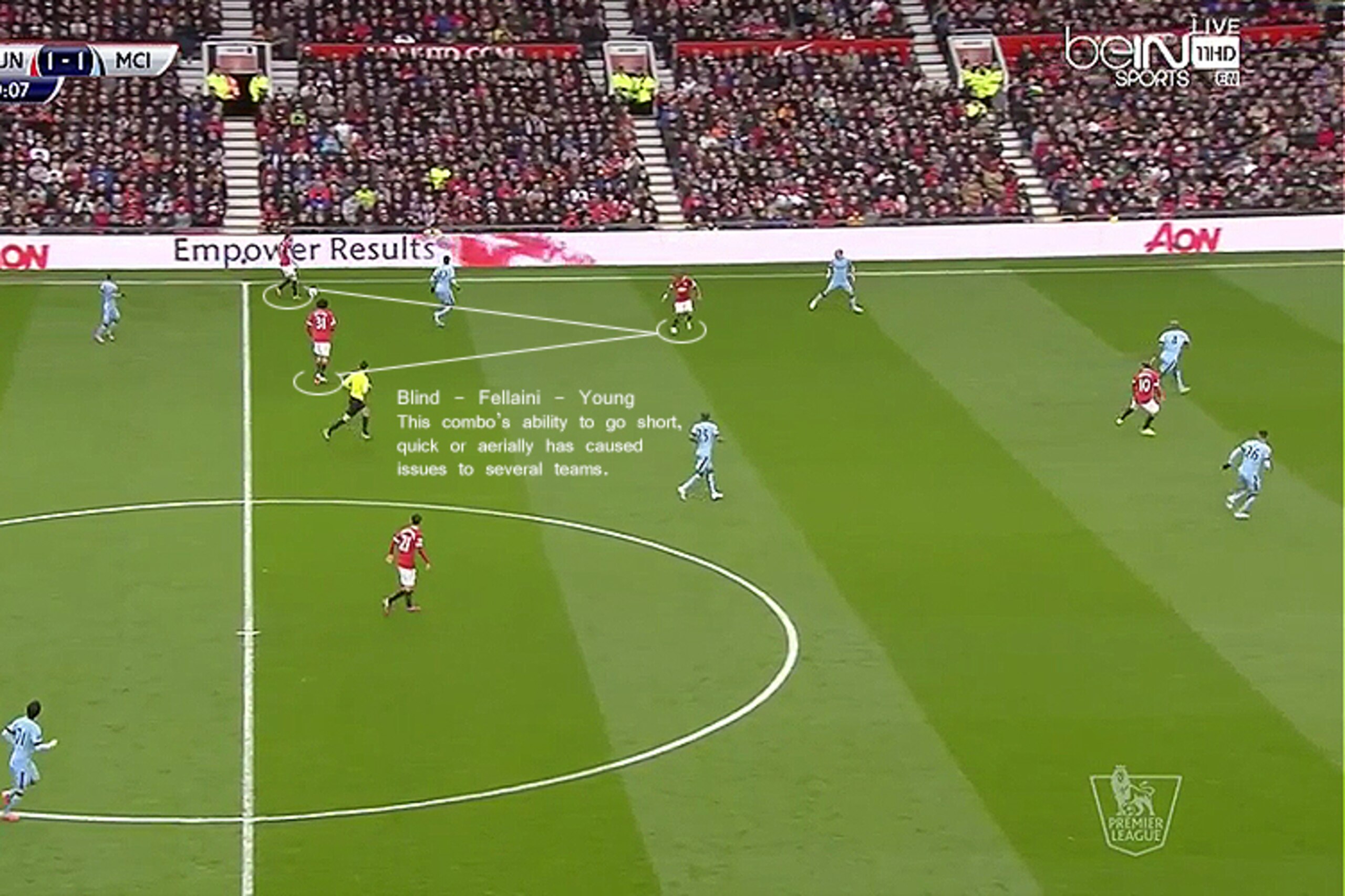
The strengths are obvious: Free-flowing football and quick switches of play have left opponents flummoxed at times. Van Gaal has fostered a brilliant relationship between Daley Blind, Ashley Young and Marouane Fellaini, allowing United to build down the left via ground and air. As opponents swarm, they switch play to Ander Herrera and Juan Mata—the Spanish connection—and they weave their mercurial magic in space.
Wayne Rooney actually hasn't played too well, even since moving back to the central striker role, but does enough to create space for others. If the left side can hold onto the ball and then cross, it allows Fellaini to move into the box, find a good aerial matchup to beat and head home.
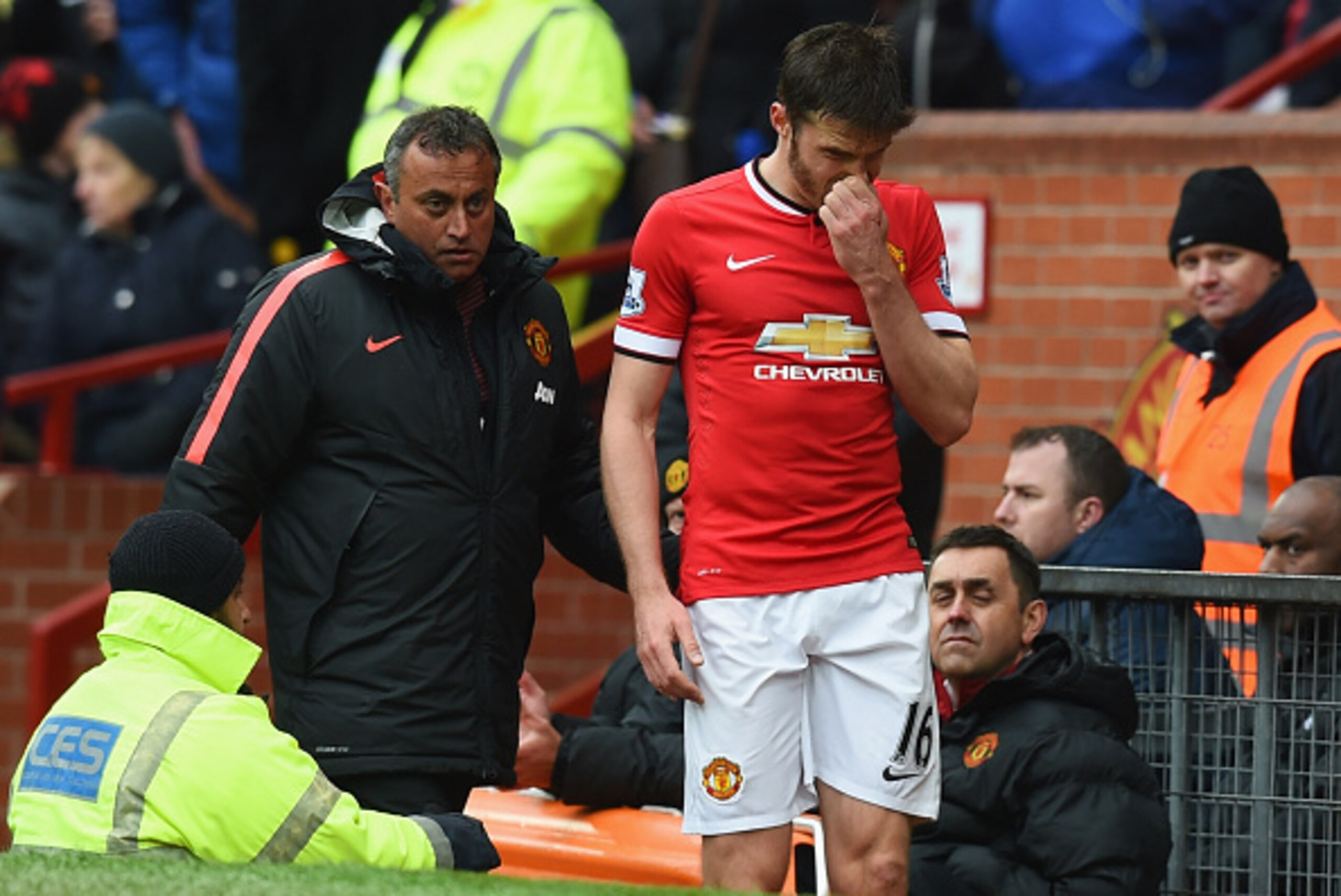
But United's frightening reliance on Carrick has jumped off the pitch at us in the last two weeks. The losses to Chelsea and Everton weren't solely down to his absence, but Van Gaal has always built through a central figure in midfield, and losing his hurt.
His reaction to Kevin Strootman's ACL injury ahead of the FIFA World Cup 2014 was to entirely reconfigure his formation, playing a 3-5-2 instead, rather than a fruitless attempt to find another Strootman in a shallow national pool.
Van Gaal tried that at the start of this season, switching United to a 3-5-2 after Carrick sustained an injury in pre-season, but the 4-0 loss to MK Dons more or less placed a nail in that coffin. Recently, he's asked both Ander Herrera and Blind to replace Carrick while sticking with the 4-3-3. That didn't work either.
So the question becomes: Should United look to find a player who can replicate what Carrick does, or transition to a system that does not rely on such a player? Van Gaal has tried on two separate occasions inside the past 12 months to deviate from his tried and trusted, and said occasions have offered mixed results. It was thought at one stage the 3-5-2 was used to mask defensive inefficiencies, but in hindsight, it may well have been due to Carrick's injury.
If Van Gaal is unable to craft an alternate—i.e., move away from a controller-dependent system—he best purchase one or two more. Carrick turns 34 ahead of the new season in 2015-16 and hasn't even started half of United's games this season.
So expect the Kevin Strootman links to resurface despite his debilitating knee injury. The Dutchman is one of few known quantites when it comes to picking a Carrick successor; Morgan Schneiderlin of Southampton could be another.
The other ingredients needed? A revamp up front (send Radamel Falcao packing and consider a Robin van Persie sale), while buying younger, more durable talent to replace. Alexandre Lacazette and Christian Benteke would be good starting points.
They would also need a centre-back, perhaps in the leadership mould. Aymeric Laporte would be ideal but a risk in the short-term; Nicolas Otamendi would be very expensive; but Mateo Musacchio or Toby Alderweireld are ideal middle-grounds of the requisite quality.
And finally, a right-back. Antonio Valencia is honest and serviceable, but he is not in the top tier. With Rafael injury-prone, red card-prone and out of the picture, Van Gaal should be checking in on Nathaniel Clyne's contractual situation on the south coast.
This 4-3-3 is close to being set, and Van Gaal will be able to rotate Fellaini in and out depending on circumstances, use Blind in multiple positions and re-integrate Angel Di Maria properly. The system is taking shape and there's more goodness to come from it.
Once Van Gaal fixes his own Achilles' heel in the form of a Carrick deputy, Manchester United will be all set to wreak havoc on Europe once again.
.jpg?w=2560 "Rams Raiders Football")


.jpg?w=2560 "Rodgers Iced Out on Plane 💎")

.jpg?w=2560 "Packers Safety Slams Refs 🤬")
.jpg?w=2560 "🚨 Week 8 AP Top 25 Poll")