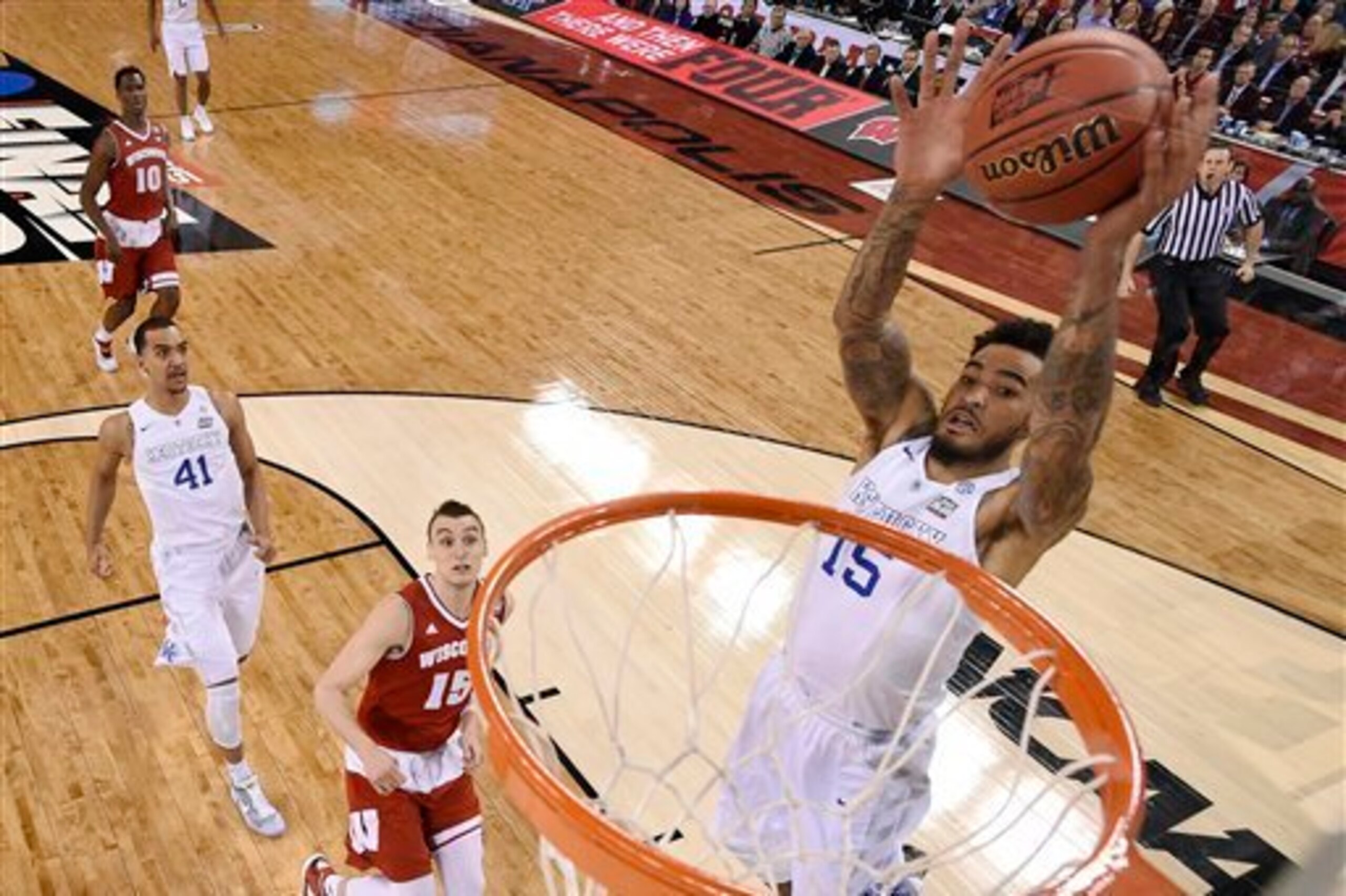

The 10 Best Upperclassmen in the 2015 NBA Draft
There's something unsexy about upperclassmen in the NBA draft. They lack the untapped potential of one-and-done freshmen and the air of mystery surrounding international prospects. They're just so boring.
If only that were true.
Players drafted as upperclassmen continue to make their mark on the league, and not just as role players. In fact, we may be in the midst of a kind of upperclassman renaissance.
Here are some of the upperclassmen drafted in the past four years: Klay Thompson, Jimmy Butler, Damian Lillard, Kemba Walker, Draymond Green and Victor Oladipo. And that's a pared-down list.
Coming up, I give you the names of 10 players who have a chance to join those names and become significant contributors at the NBA level.
What am I looking for?
Being a significant contributor at the NBA level is not just about putting up empty stats on a bad team. I'm looking for players who will have a direct impact on their team's ability to win games.
Players like Milwaukee's Khris Middleton, who puts up modest numbers but ranks among the top 10 in ESPN's real plus-minus tracker, impress me a lot more than Nikola Vucevic, who averages a double-double but ranks 209th in real plus-minus.
Who are the 10 upperclassmen to keep an eye on in the upcoming draft?
Honorable Mentions
1 of 11
These three players couldn't crack my top 10, but they still warrant consideration during draft season.
Brandon Ashley, PF, Arizona (Jr.)
Height: 6'8"
Weight: 223 lbs
A high-profile recruit, Ashley hasn't taken the next step in his development. He does a lot of things well, but you can't help wonder why he doesn't stand out.
Ashley has the frame and athleticism to compete physically at the next level, and he's skilled inside and out. Still, his modest averages of 12.2 points and 5.2 rebounds per game make you think he's missing the fire needed to succeed.
Measurements at the combine could prove crucial to Ashley's draft stock. If he's big enough to play power forward, maybe he can convince a team he's a poor man's David West.
J.P. Tokoto, SF, North Carolina (Jr.)
Height: 6'7"
Weight: 200 lbs
Tokoto surprised a lot of people by declaring for the draft. He's an intriguing talent, but he doesn't scream NBA-ready. An NBA general manager summed him up the best when speaking to ESPN Insider Chad Ford (Insider): "He's the best passer on North Carolina, I just wish he had a jump shot or a handle. He's got an unusual game. Great athlete, great passer, not much else. Not sure where he fits."
A team will draft Tokoto in the second round based on his potential as a defensive stopper. From there, can he develop a reliable enough jumper to stay on the floor? The answer to that question will determine Tokoto's long-term NBA value.
Joseph Young, SG, Oregon (Sr.)
Height: 6'3"
Weight: 185 lbs
Young is the anti-Tokoto. In college, he's proved to be two things: an elite scorer and a deadly shooter. The problem is he doesn't do anything else.
Too small to play shooting guard and decidedly not a point guard, Young will have to carve out a niche as a bench scorer in the NBA. Thanks to the insatiable need for shooting, he will find a home and probably be a crowd favorite.
Still, can he fit in with four other players who are just as talented as he is?
10. Anthony Brown, SF, Stanford (Sr.)
2 of 11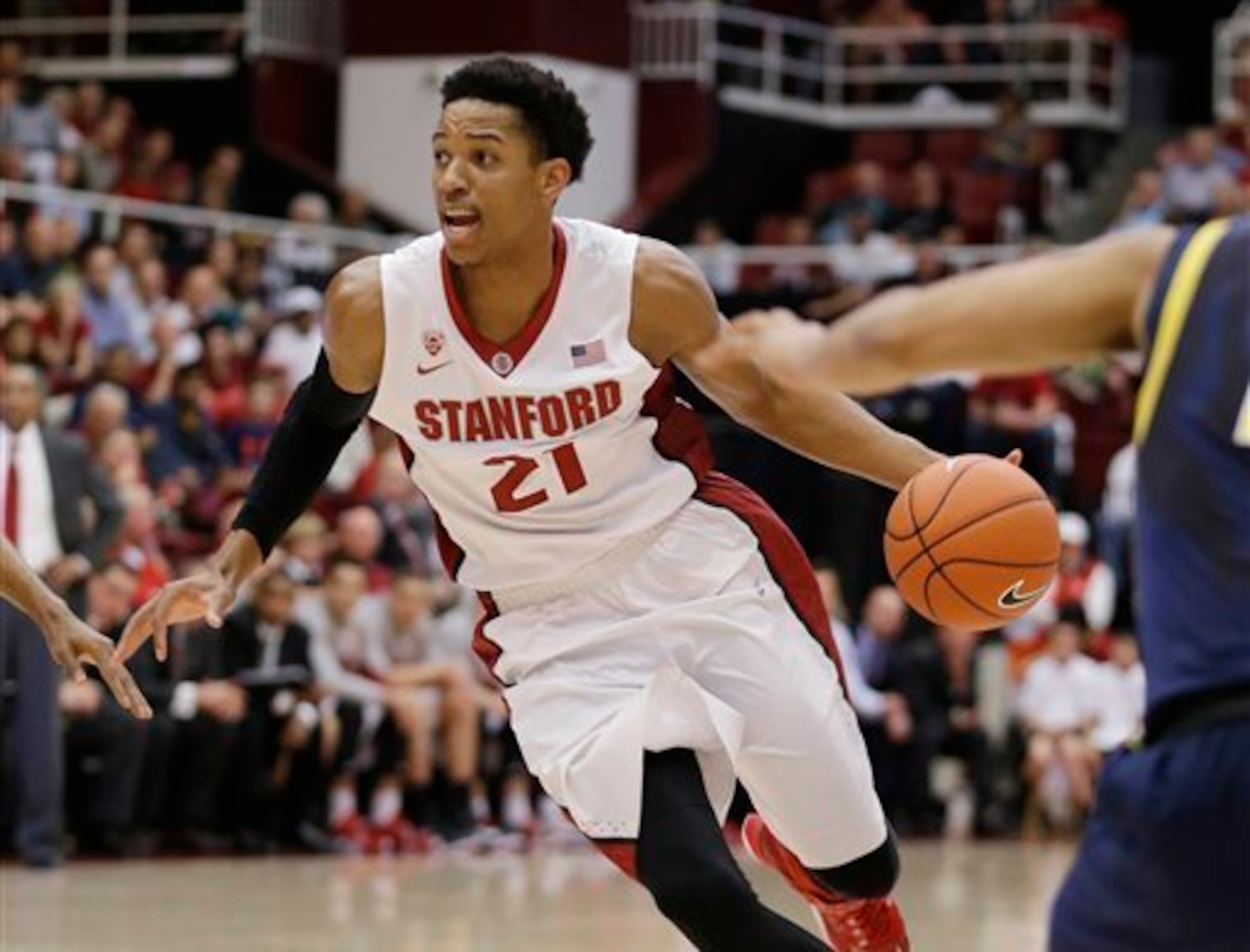
Height: 6'7" (in shoes)
Weight: 207 lbs
Like Tokoto, Brown profiles physically as a typical small forward. He has good size and length (6'9 ½" wingspan) to go along with above-average athleticism. Where he stands out as a prospect is beyond the arc.
Following a hip injury that derailed his junior season, Brown returned in 2013-14 as a lethal shooter. After hovering around 35 percent from three-point range as a freshman and sophomore, he knocked down 45.6 percent of his threes as a redshirt junior. That continued this year, with the senior making 44.1 percent of his threes on 4.8 attempts per game.
Brown's shooting prowess is more than just a product of his smooth stroke, as he excels at reading the game and finding open space. He does an excellent job of taking advantage of lax defending on the perimeter.
John Krolik's "three-and-D" moniker is more than just a cute nickname for a role given to wings—it has increasingly defined the position. There just aren't many small forwards with a diverse game, and Brown is no exception, as he lacks the quickness and advanced ball-handling ability to create his own shots.
If Brown is going to succeed in the NBA, it will have to be in a three-and-D role. While his length and activity level made him passable as a defender in college, Brown must improve his fundamentals to stick with better athletes in the NBA.
9. Montrezl Harrell, PF, Louisville (Jr.)
3 of 11
Height: 6'8"
Weight: 230 lbs
Harrell is the first of three players on this list I seem to like less than most draft experts. Why?
According to DraftExpress, he measured only 6'6 ½" in shoes while with USA Basketball in 2013, and he struggles shooting the ball. There aren't many guys in the NBA who are 6'7" and can't shoot. Prospect projection guru Layne Vashro has a similarly bleak outlook for Harrell.
That isn't to say Harrell doesn't have his positives. He possesses tremendous strength and athleticism, and few players can match his motor.
So where does he fit?
While his length helps—he recorded a ridiculous 7'3" wingspan at USA Basketball—unless he's grown in the past two years, Harrell will be considered undersized as a power forward in the NBA. He was able to overwhelm opponents in college, but that won't translate into the pros.
Unfortunately for Harrell, his lack of perimeter skill means a transition to small forward is unlikely. He shot 59.7 percent at the line and 24.3 percent from three-point range as a junior, so it's not as if his jumper is just waiting to blossom.
Harrell does have a place in the league, though. He averaged nearly a quarter of his team's rebounds while he was on the floor, via DraftExpress, and his energy and athleticism will earn him minutes.
Harrell will get drafted in the first round, but he may not develop into anything more than a role player off the bench.


8. Richaun Holmes, PF, Bowling Green (Sr.)
4 of 11
Height: 6'10"
Weight: 236 lbs
In a matter of two weeks, Holmes has become my favorite prospect in this year's draft class. He won't turn into the best player selected, but from a scouting standpoint, there's a ton to love.
Just watch the big man move.
Making Holmes' athleticism all the more impressive is his size. At the Portsmouth Invitational earlier in April, he measured 6'8 ½" in socks and posted a standing vertical of 34". Only five players in DraftExpress' expansive database have a better combination of height and standing vertical.
Holmes has been largely off the draft radar up until this point due to playing his college ball largely off the radar. He started his career at Moraine Valley Community College before transferring to Bowling Green as a sophomore.
The MAC defensive player of the year, Holmes' ability to impact the game on that end of the court will pique the NBA's interest. He averaged better than two blocks per game all three seasons with Bowling Green while also managing to grab 11.1 rebounds per 40 minutes as a senior.
You're not sold yet, and that's OK.
"Holmes is big, athletic and can defend," you say. "Why should I be excited about the next Festus Ezeli?"
As a senior, Holmes shot 41.9 percent...from three-point range. While 43 attempts represent a small sample size, it's still large enough to submit as evidence of a useful and developing jumper. Power forwards who can stretch the floor are in hot demand in today's NBA, and few players can protect the rim on defense and knock down a three on offense.
The big hole in Holmes' game is as a back-to-the-basket player on offense. He doesn't have much feel in the post and rarely does much damage from that position. For now, he's strictly a face-up player.
Holmes is flying under the radar, but expect that to change after the combine in Chicago. I'm not saying he's going to turn into Marreese Speights, but I'm also not saying that's impossible, either.
7. Delon Wright, PG, Utah (Sr.)
5 of 11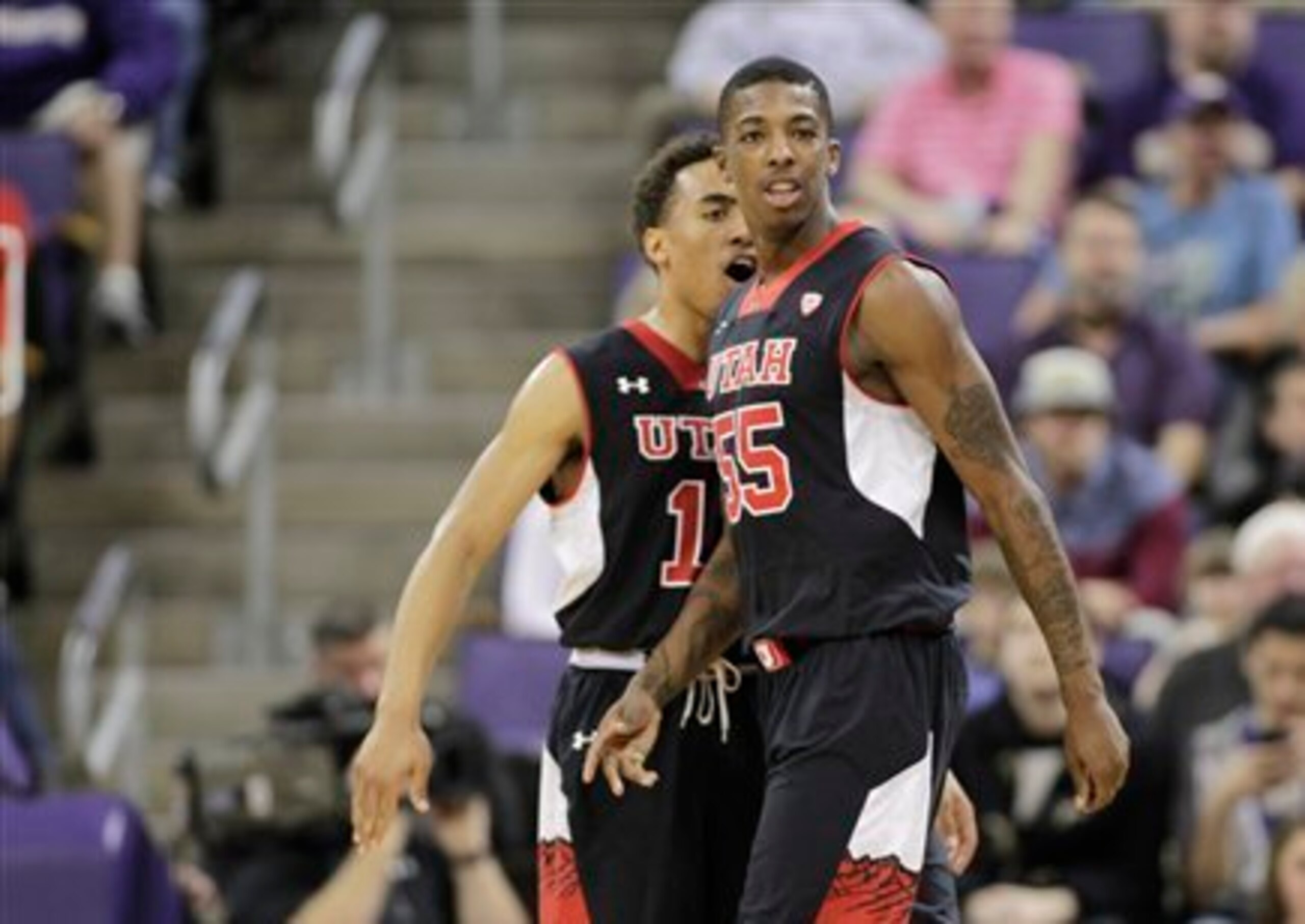
Height: 6'5"
Weight: 179 lbs
Wright's draft stock gets a modest bump due to the success of Orlando's Elfrid Payton and the Lakers' Jordan Clarkson. The rookie duo proved that bigger point guards with limited shooting range can succeed in the NBA.
To take it a step further, Wright's NBA comparisons can start with Payton and Clarkson.
Like Payton, Wright's size and versatility help him stand out as a player. His height feeds his excellent court vision and allows him to contribute as a rebounder (five per game as a senior) and defender (2.1 steals and one block per game).
The knock against bigger point guards is that they struggle to penetrate in the NBA. Wright is no exception to this rule. However, like Clarkson, he knows how to use guile and craft to create his own shots and break down a defense. The question is, can he do enough to keep defenses honest?
On the other end of the floor, Wright will need to prove he can keep quicker point guards out of the paint. His relative length and activity level made him a disruptive force in college (he averaged better than one block and two steals per game as a junior and senior), but he'll need to carry those traits to the NBA.
While Wright has the size and intelligence to stick in the NBA, a lack of elite tools keeps him from joining Notre Dame's Jerian Grant higher up this list.
6. Sam Dekker, F, Wisconsin (Jr.)
6 of 11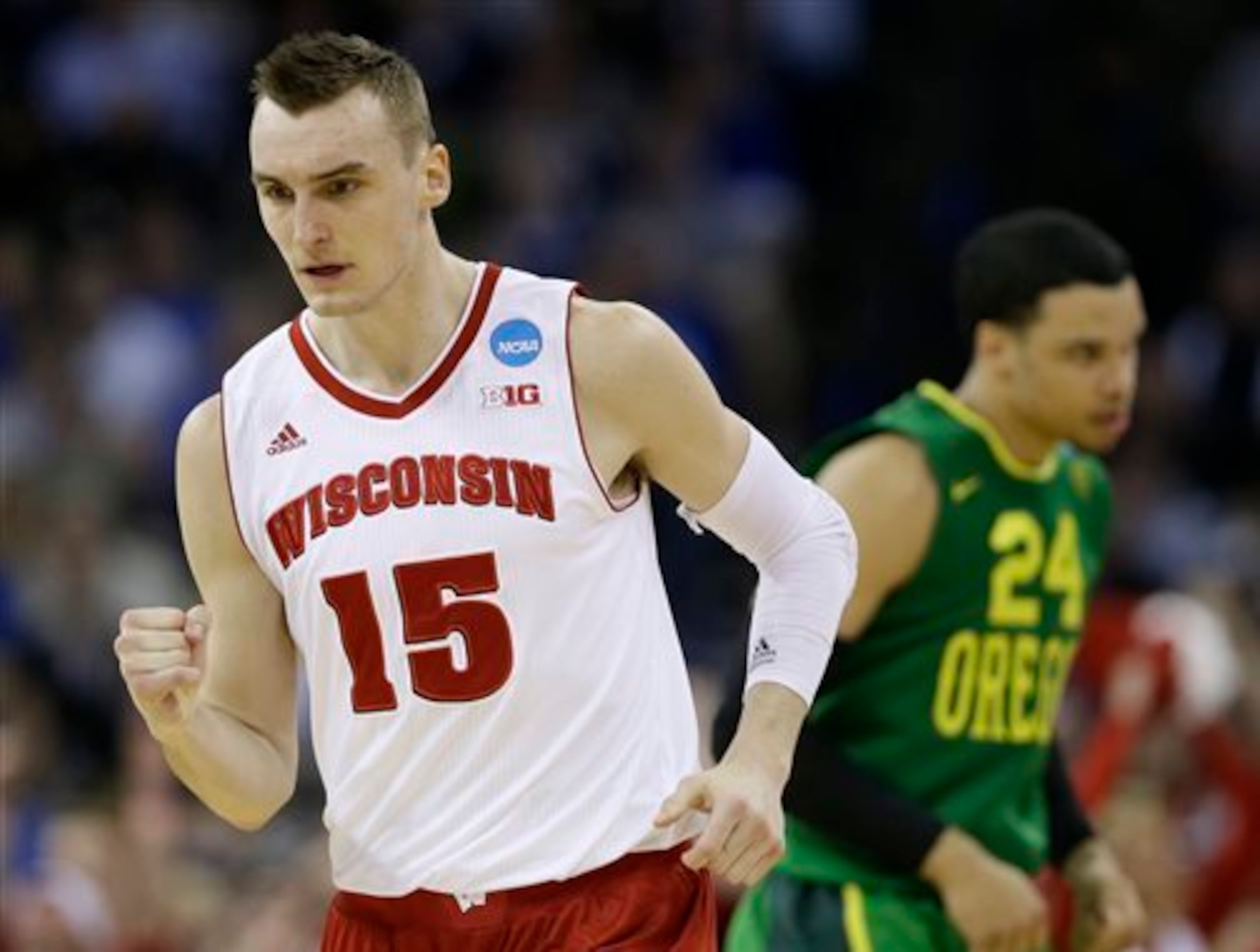
Height: 6'9"
Weight: 229 lbs
Dekker is the second of three prospects on this list I'm less excited about than most people. That said, there's a lot to like about his game, starting with his willingness to tell Frank Kaminsky to stop chirping to the refs.
Dekker possesses the size and athleticism to play either forward position. He won't overwhelm anyone physically, but he's big and quick enough to handle either spot in a variety of situations.
Beyond versatility, coaches will love his high IQ. He knows where to be on the floor and understands exactly what's expected of him. While capable and confident, Dekker doesn't pretend he's LeBron James on the court.
So why the doubt?
Dekker does a lot of things well, but he does nothing great. Despite a brilliant performance against Arizona in the Elite Eight, he is not a great shooter, knocking down only 33.1 percent of his three-point attempts as a junior.
There's no question Dekker can play in the NBA, but can he be the type of player who helps his team win playoff games? I question his ability to defend the league's best forwards, and he needs to become a much better shooter to keep opposing defenses honest.
If he's not a plus defender or efficient as a volume scorer, how will he make his impact?
5. Justin Anderson, SF, Virginia (Jr.)
7 of 11
Height: 6'6"
Weight: 222 lbs
If Tokoto and Brown hope to become "typical" three-and-D wings, Anderson should aim to become the latest prototype for the role.
Possessing an NBA-ready frame, Anderson's combination of a 6'11" wingspan and plus athleticism gives him the potential to be a lockdown defender on the perimeter.
The reason he has risen up draft boards this year is the stark improvement in his jump shot. He's not nearly as smooth as Anthony Brown on that end of the floor, but he managed to turn himself into a credible three-point threat, knocking down 45.2 percent from deep on 104 attempts as a junior.
Is his success a fluke? After taking an in-depth look at Anderson's jumper, CBSSports.com's Sam Vecenie argues the lefty's success is sustainable:
"And these veritable improvements in his mechanics make me believe that Anderson's sharp-shooting is not an aberration. Sure, he might not be a 50 percent shooter from deep. But with that fluid, simple movement and a confident release, I don't see any reason why he couldn't be a 40-percent 3-point shooter on the college level, and maybe even eventually reach that level in the NBA.
"
Thanks to his length, athleticism and improved shooting, Anderson appears to be the most well-rounded three-and-D prospect among upperclassmen in the draft.
4. R.J. Hunter, SG, Georgia State (Jr.)
8 of 11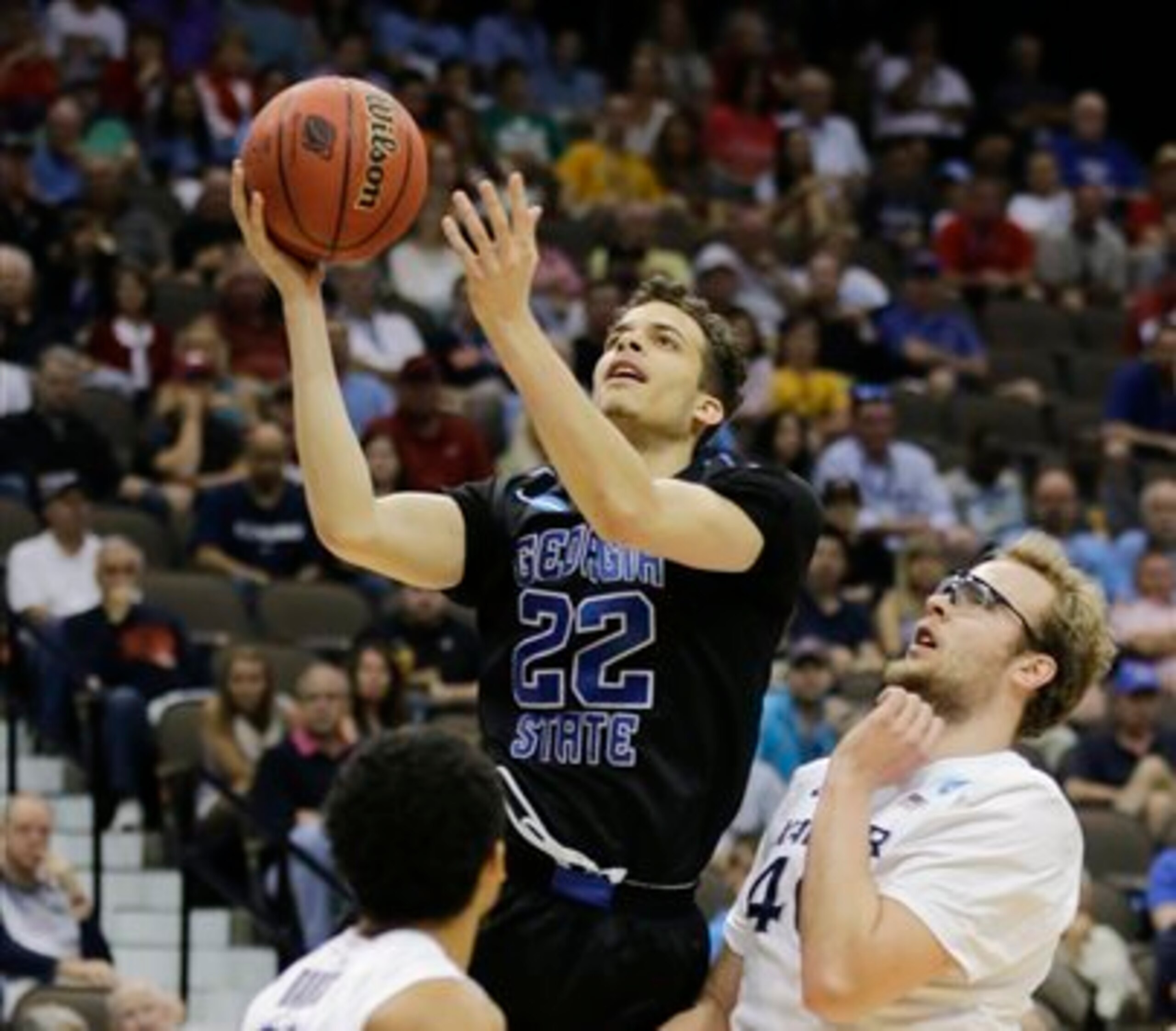
Height: 6'5"
Weight: 180 lbs
Hunter is perhaps best known for making his dad, Georgia State head coach Ron Hunter, fall off his stool following an upset over Baylor in the first round of the NCAA tournament.
It led to the much-replayed moment that will cause NBA scouts to fall in love with the younger Hunter. Trailing by two with seconds remaining, he buried a deep three to give Georgia State the lead and the win.
And that was after scoring nine of the Panthers' previous 10 points to cut into Baylor's double-digit lead.
In the simplest of terms, Hunter is a shooter who wants the ball with the game on the line. He plays the game as if his entire existence revolves around burying as many shots over as many defenders as humanly possible.
Hunter is more than just an indiscriminate chucker, though. Although forced into that role by the lack of talent surrounding him, he has proved to be a reliable catch-and-shoot player, which is where he'll fit in at the next level.
While not an elite athlete, he has enough quickness to defend NBA guards, and his 6'9 ½" wingspan will prove bothersome.
There's always a place on the floor for someone who can shoot, and that's what Hunter does best.
3. Frank Kaminsky, C, Wisconsin (Sr.)
9 of 11
Height: 7'0"
Weight: 242 lbs
Kaminsky is the third player on this list I wish I liked more.
As a college player, he had few flaws. He scored inside and out, rebounded well and held his own as a defender. Many of those traits will translate to the NBA.
Here's the problem: Kaminsky is going to have to play center in the NBA, and you can't build a good defense around him. It's impossible to build a good defense in the NBA if your center can't anchor the paint.
Although he's fluid for his size and possesses the frame to get stronger, Kaminsky just doesn't have the explosiveness to protect the rim. He did average 1.5 blocks per game as a senior, but NBA players won't hesitate to drive around and jump over him. It's a problem.
On the plus side, his skilled offensive game and extensive shooting range will cause opponents fits. It wouldn't be a surprise to see him produce to the level of Nikola Vucevic in a few years.
Still, I'm not sold Kaminsky can be a key cog on a playoff contender. For that reason, he sits third on this list.
2. Jerian Grant, PG, Notre Dame (Sr.)
10 of 11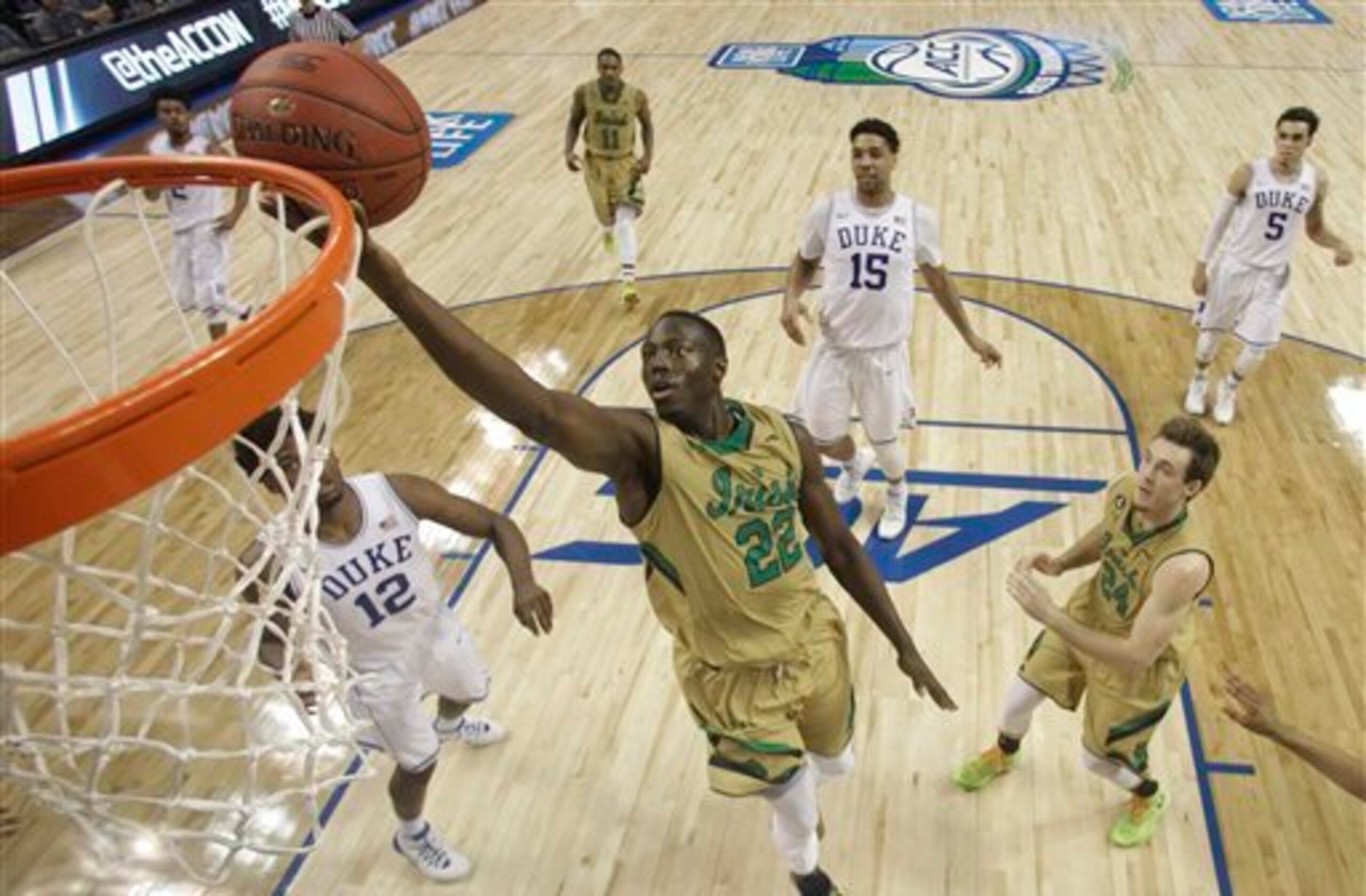
Height: 6'5"
Weight: 204 lbs
Of all the point guards in this year's draft class, Grant is the most ready to contribute right away. Notre Dame head coach Mike Brey runs a sophisticated offense that incorporates many NBA concepts, and Grant flourished in the system.
While his size stands out, Grant's court vision and passing ability separate him from most college point guards. Unselfish almost to a fault, he has the patience to let plays develop and the talent to deliver the ball where it needs to be on the floor. Even by NBA standards, his playmaking ability is excellent.
Grant won't lead his team in scoring, but he does flash the potential to be a third option on a good team. Although his shooting percentages regressed as a senior, he has a good stroke and enough quickness to pressure the defense.
His size will bother opposing point guards on defense, and he possesses the instincts to be a top-notch ball hawk, averaging 1.7 steals per game a senior.
If he can improve his jumper, there's nothing stopping Grant from becoming a good starting point guard in the NBA.
1. Willie Cauley-Stein, C, Kentucky (Jr.)
11 of 11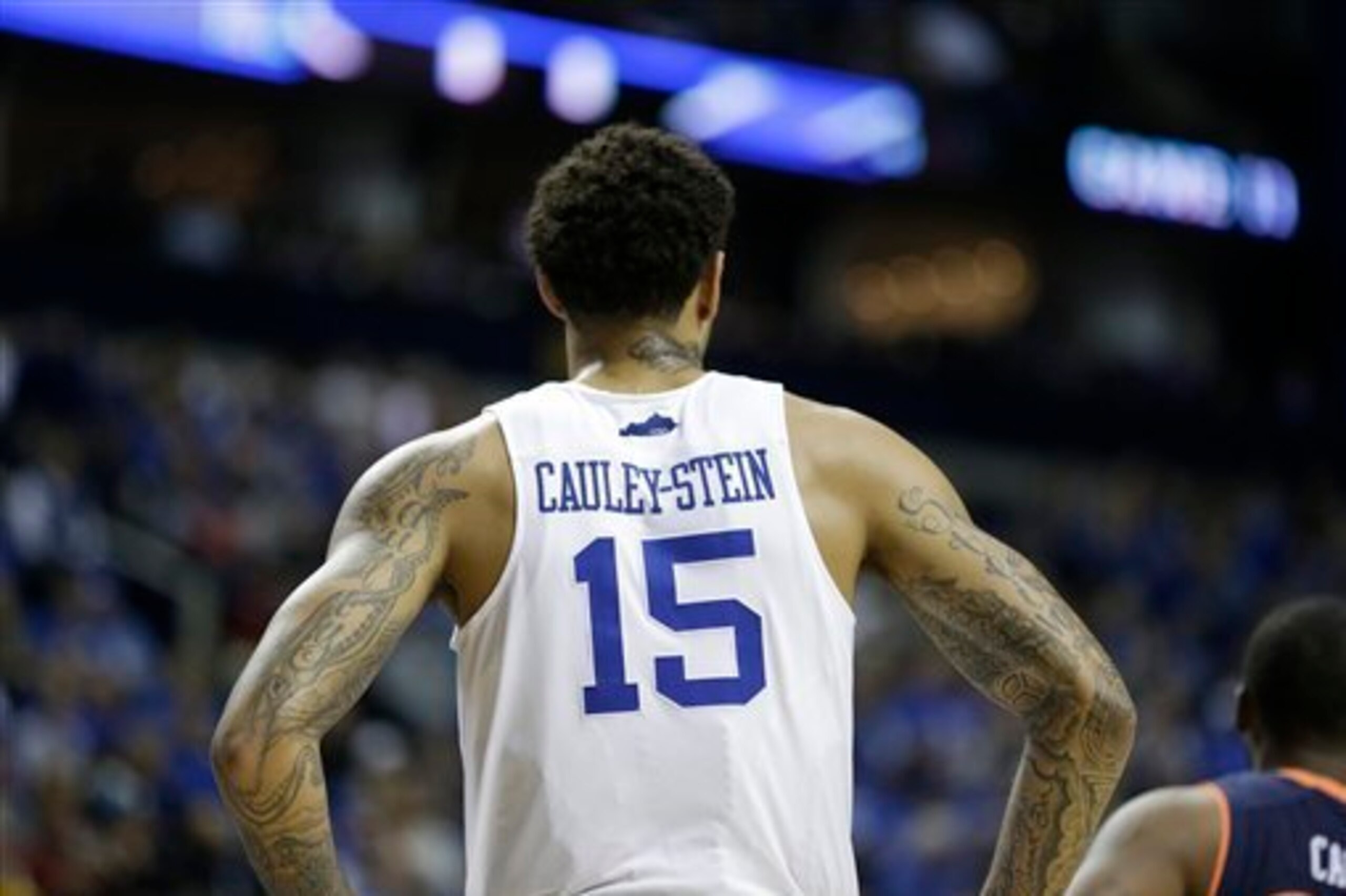
Height: 7'0"
Weight: 242 lbs
Cauley-Stein is the type of prospect who makes NBA scouts drool. He's huge, athletic and utterly destructive on defense.
The toughest thing for NBA teams to find is a center who can defend the pick-and-roll. Seven-footers are the people who are least likely to have the quickness necessary to shut down the play, which is why it's so effective.
Cauley-Stein is one of the few big men who are nimble enough to effectively stifle the pick-and-roll. In fact, his athleticism often allows him to defend players out on the perimeter, which is obscene for a center. He needs to add some strength to his frame, but once he does, he's going to be the type of player an NBA team can build an elite defense around.
On the other side of the court, things are less promising for the Kentucky center. He'll struggle to score on anything other than putbacks and dunks, although he did boost his free-throw shooting to 61.1 percent as a junior, escaping DeAndre Jordan territory.
Thanks to his elite shot-blocking and defense, Cauley-Stein ranks among the draft's best prospects, regardless of class. While Grant and Kaminsky have the ability to develop into solid NBA starters, Cauley-Stein could contend for the Defensive Player of the Year award someday.


.jpg?w=2560 "5 Teams Eyeing Jonathan Taylor")
.jpg?w=2560 "Mahomes Told Teammate to Leave Meeting")


.jpg?w=2560 "Jonathan Taylor Landing Spots 📍")
