

Emerging as Celtics' New Rising Star, Brad Stevens Can't Lose, Even If He Does
It was a Tuesday night in Cleveland, but if you closed your eyes as Brad Stevens spoke, you could have easily imagined this being a Friday night in West Texas. The second-year Celtics coach, who could be cast as the not-so-older brother of a star prep quarterback, the one back for a week from a college break, was explaining why he had canceled shootaround prior to Game 2 of Boston's first-round series against the Cavaliers.
"I'm big on fresh legs, clear mind," Stevens said.
Not to be confused with the battle cry of the football team for the fictional West Dillon High.
TOP NEWS

Brown with an all-time summary of relationship with Tatum

Heat, Giannis were down by 20+ in each of their 3 losses
Worst NBA Predictions 🫣
"Clear eyes, full hearts. ...
"Can't lose."
The school's slogan, however, certainly applies to these Celtics.
That last part certainly applies to Stevens.
He can't lose, even if he will undoubtedly lose this series at some point, even if that happens as soon as Sunday in a four-game sweep, even if the Game 3 and 4 losses are more lopsided than the two that the Celtics just lost in Cleveland by a combined 21 points.
He can't lose because he's already won too much respect, from inside and outside the Celtics organization, from those inside and outside the league. He can't lose because, after LeBron James and Kyrie Irving, he's the third-biggest star of this series simply by somehow getting his undermanned, overachieving team into it.
Many in the Cavaliers organization were touting his work prior to this series, as the Celtics compiled the NBA's fourth-best record since Feb. 2, long after their two most established players—Rajon Rondo and Jeff Green—had been traded mostly to add to Danny Ainge's impressive draft stash.

Though Rondo has been more proficient at pouting than passing since the Mavericks acquired him, it's still quite the testament to Stevens' team-building talent that Boston, without a traditional starting point guard, was fourth in the NBA in assist percentage from Rondo's Dec. 19 departure forward, behind only Atlanta, Golden State and Milwaukee. It's a testament to Stevens' communication skills and patience that he and Rondo ostensibly coexisted comfortably for as long as they did considering how Rondo has since rebelled against a much more veteran (and NBA champion) coach in Rick Carlisle.
But put aside Rondo for a second—or the rest of the playoffs, as the Mavericks now have.
And downplay, if you must, Stevens' feat of taking a squad of seventh men to the seventh seed in the Eastern Conference on the basis that the Celtics still finished shy of .500.
You still can't help but be impressed by what you've seen against Cleveland, a team with title aspirations.
Certainly, the Cavaliers can't.
In preparation for, and in the midst of, the series, several Cavaliers veterans have gushed about Stevens in formal interviews and in casual conversation, showing unusual respect for someone who, at age 38, is barely their senior. In his on-court interview with TNT following Game 2, LeBron James, unprompted, called the Celtics "a very well-coached team," a plaudit he usually reserves for matchups with the likes of Gregg Popovich, Tom Thibodeau and, more recently, Popovich protege Mike Budenholzer. Then in the locker room, James Jones raved not only about how swiftly Stevens adjusts, but how his sets keep everyone involved in a way that suits each player, highlighting strengths while hiding weaknesses.
Stevens' weaknesses aren't all that easy to identify. He projects calmness on the sideline and mastery behind a microphone, coming off as comfortable in his own skin, confident but not arrogant. He has a self-effacing side, such as when he said he didn't deserve consideration for Coach of the Year and then when asked about finishing fourth, ahead of Popovich, called it "bad voting."
He seems to have an answer for everything without seeming like a know-it-all and is capable of simplifying strategy for reporters without talking down to them, as was the case Tuesday when he was asked about double-teaming James less in the fourth quarter: "He wasn't on the block. He was more on the top and sometimes isolated on the wing, but he wasn't on the deep block."
It was not condescending. It also, upon review, happened to be correct, illustrating one of his attributes—he, like James, is known to have something of a photographic memory for even the smallest details of the game.
Forget the media, though.
It's more important for him to endear himself to players, and his public approach of critiquing collectively but praising individually, finding some silver lining rather than scapegoating, is one that players typically prefer. After Tuesday's loss, he didn't sugarcoat where the Celtics came up short—defensive rebounding, transition defense—but he always added some caveats. He always offered some optimism.
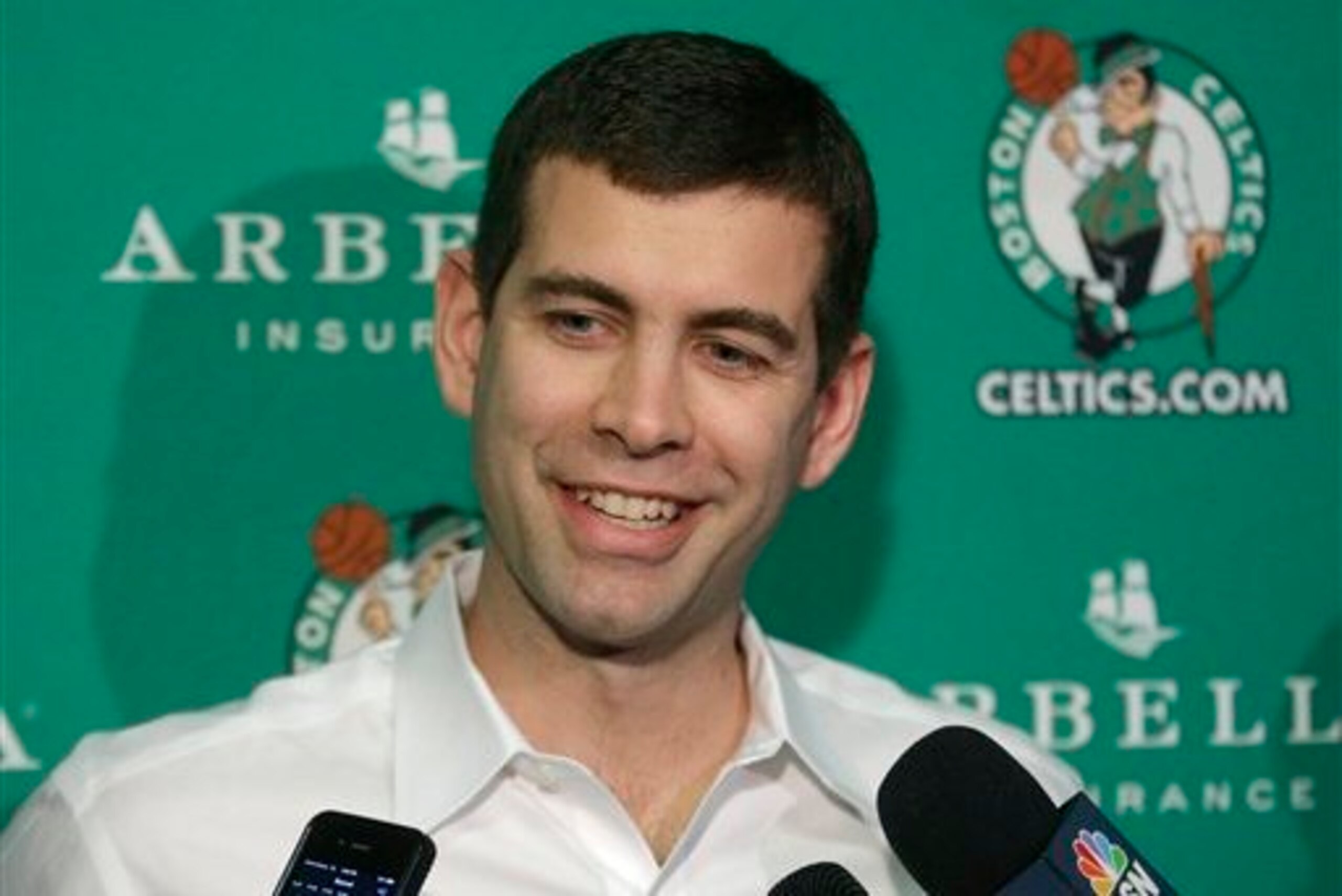
"Nobody has ever played a perfect basketball game, right?" Stevens asked. "But you have to be on a quest to play perfect in what you can control. And we were good. But weren't near good enough. But we did play better in a lot of ways."
And...
"I also think that we were in a three-possession game and we shot 38 percent," Stevens said. "So that's not bad. You hold them to 99, you like your chances if you can knock a few of those in."
And...
"You ask the question of how this team is going to get back up and get ready to compete," Stevens said. "This team will compete. I feel pretty comfortable saying we will compete. We just got to be a little bit tighter. Again, because the game demands that, and because our opponent is awfully good."
All of this matters not just for the guys in the locker room, but also for those who may be someday.
Let's start with his current charges, who appear, based not just on their words but, more importantly, their play, to have bought into the former coach of the Butler Bulldogs. Is it somewhat easier that Stevens has a roster of hungry guys without airs of entitlement? Sure. But he's done plenty to win them over and keep them connected.
How has he managed that considering that he never played professionally, not after a modest collegiate career at DePauw—not DePaul—University?
How does a coach earn credibility?
"I don't know," Stevens said. "Listen, some people can walk in the building and have it automatically for what they achieved. But the only way that I know to go about those things is just to be yourself and work. I think that's what I've tried to do. I don't know if I've got it or not. You can ask them that. But I think that, at the end of the day, I don't want this not to work because I haven't been me."
We did ask them.
What we found is that he's done it, at least in part, by suppressing the temptation to always show them how smart he is, thus avoiding a common mistake that coaches make at this level.
He's made no secret of his appreciation for analytics.
And yet when asked about his players taking some shots from just inside the arc, he said Tuesday that while he would prefer otherwise, "I'm not going to lose sleep over it. I've heard people say that the long two is the worst shot in basketball. If it goes in, it's better than any miss. How's that for analytics?"
How's his offense for his players?
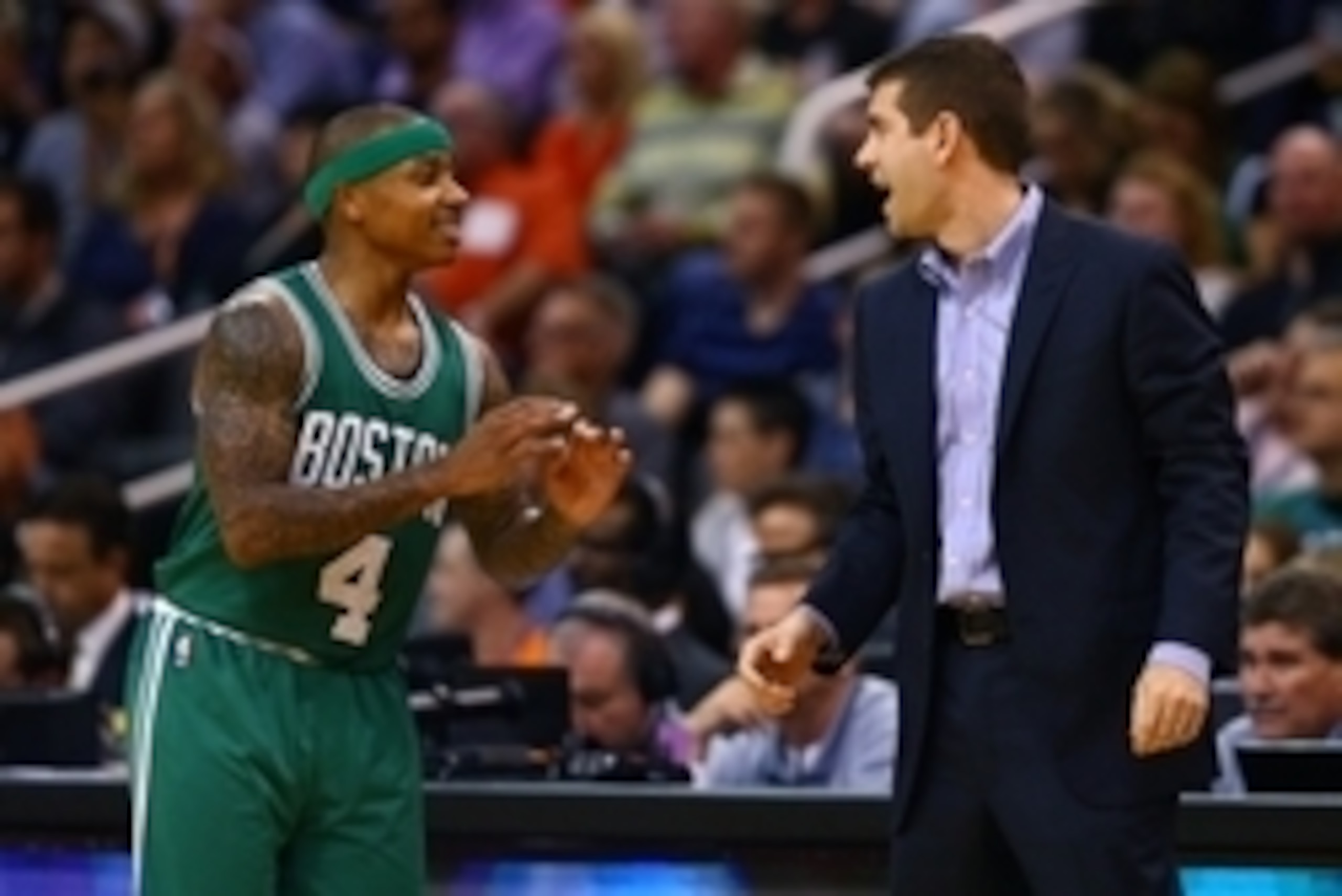
"I just think, for the most part, he lets you play basketball," said sixth man Isaiah Thomas, who thrived in 21 games after his acquisition from Phoenix and is leading the Celtics with averages of 22.0 points and 8.5 assists in this series. "He gives you a lot of freedom to just play and see the game as a basketball player on the floor. The system is friendly to everybody. It's kind of like catch, drive it, shoot it or pass it. There's only a few times he's got on people for really bad shots, but for the most part, he's a player's coach. He's definitely a player's coach, somebody that you love to play for because he lets you be yourself."
The media tend to see complex sets as a sign of a coach's competence.
But some freedom is better?
"Yeah, yeah," Thomas said. "That's what makes it easier as a basketball player, you've just got to be able to go out there and do your job. And do it at a high level. That's what he always says about people's role. Whatever your role is, do it at a high level."
Thomas said Stevens' modest playing background doesn't matter because "if you can relate to him and he relates to his players to where he is putting you in position to be successful, it's your job and you do your job. And he puts everybody in position to be successful. That goes from him and the assistant coaches and the staff below him. He knows his stuff. I mean, when in doubt, when we do need a bucket or something close to the end of the games, you can tell he's been a college coach because he knows his X's and O's."
College coaches are different?
"No doubt," Thomas said. "An NBA coach is more like, they let you figure it out. I mean, you're good enough to figure it out. ... But when he wants a play, he's got one. When he wants to execute a play, he's definitely got a good one."
Thomas laughed. His teammate, starting center Tyler Zeller, did too when asked about Stevens' intelligence.
"We've seen him, as far as basketball goes, he can be a genius and know everything about it," Zeller said. "But he does a great job of kind of relating to us, being able to tell us, trying to keep things simple. Even our defensive stuff doesn't get overly complicated. We will have small things that we will tweak game to game. But for the most part, we have a base foundation of what we do."
As Stevens put it, "It's a simple game that I don't want to make overly difficult."
The respect he's earned in less than two seasons, while following in the footsteps of the popular Doc Rivers, is making the Celtics' rebuild much easier than expected. It should aid their return to serious contention, too.
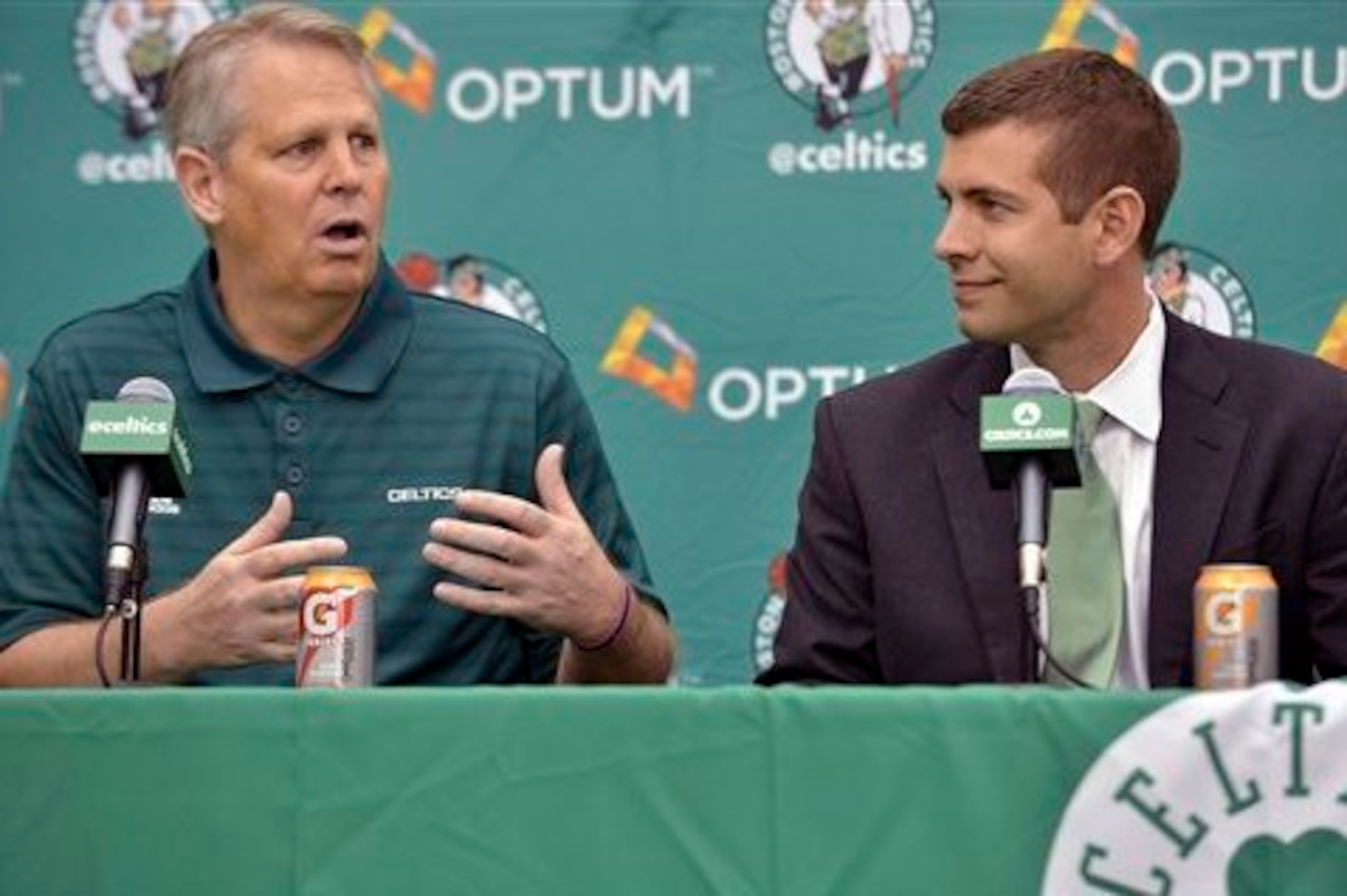
Ainge has assembled quite the arsenal—as many as 10 first-round picks in the next four seasons, a slew of early second-rounders and a nearly clean salary cap for the cash and free-agent flood of 2016 (only $14.9 million currently on the books for the 2016-17 season).
Still, you need stars to want to take your money, which hasn't been all that easy for Boston, or sometimes even to agree to a trade, which took some time before Kevin Garnett relented in 2007. Some of that has been due to the city's sometimes chilly reception toward black athletes, dating back to Bill Russell's day, though the recent embrace of Garnett and David Ortiz, among others, may have thawed that some.
If players with wandering eyes are watching this series, watching the green Celtics compete, seeing them exceed their skill sets, hearing them continually commend their coach—hearing even James commend their coach—they might begin to take Beantown seriously as a landing spot after they bounce.
That's true even if the Celtics get swept. A revival appears on the horizon though it may not come this week or weekend in Boston.
"We have another game to play, we have another game to prepare for," Stevens said following Game 2 and before returning home. "We have been in a collective mindset of the only day that matters is today, and we move on to what's next. I know that gets a little old to hear, but I think it's the only way to live and certainly the only way to live in this business, it allows you to keep your focus on the task at hand."
His task Thursday is to win a single game with his undeterred underdogs.
Yet even if clear eyes and full hearts aren't enough, he can't lose.
Stats via NBA.com unless otherwise noted.
Ethan Skolnick covers the NBA for Bleacher Report and is a co-host of NBA Sunday Tip, 9-11 a.m. ET on SiriusXM Bleacher Report Radio. Follow him on Twitter, @EthanJSkolnick.




.jpg?w=2560 "Mahomes Asked OT to Leave Meeting")
.jpg?w=2560 "Jonathan Taylor Landing Spots 📍")
.jpg?w=2560 "5 Teams Eyeing Jonathan Taylor")
