

Phil Jones vs. Chris Smalling: Breaking Down the Manchester Utd Defender Battle
Chris Smalling has been rewarded for his excellent recent form with a new contract at Manchester United, but how do his performances compare to his centre-back partner Phil Jones?
Louis van Gaal made it very clear that he sees Smalling as a key part of his team going forward. When Smalling signed his new deal Tuesday, Van Gaal said, per the BBC:
TOP NEWS

Final Men's Ballon d'Or Rankings 📊
Live Highlights and Viral Moments 🍿
Most to Blame at Man Utd? 😡
"He's improved and developed immensely in the short time I have been at the club and become an integral part of the squad.
"
His words were matched by his evident enthusiasm at the beginning of this video on the club's official website.
It would be intriguing to hear what the manager makes of Phil Jones after a season working with him.
Jones has had more time on the pitch than Smalling during Van Gaal's tenure to date. His numbers look good, too, as he is averaging more tackles, more interceptions and more clearances per game than Smalling.
However, statistics in football are a useful indicator of performance sometimes, but rarely tell the whole story. Defensive numbers, in particular, can lack nuance. After all, did a player make more tackles because he was a better defender, or because his positioning made it necessary?
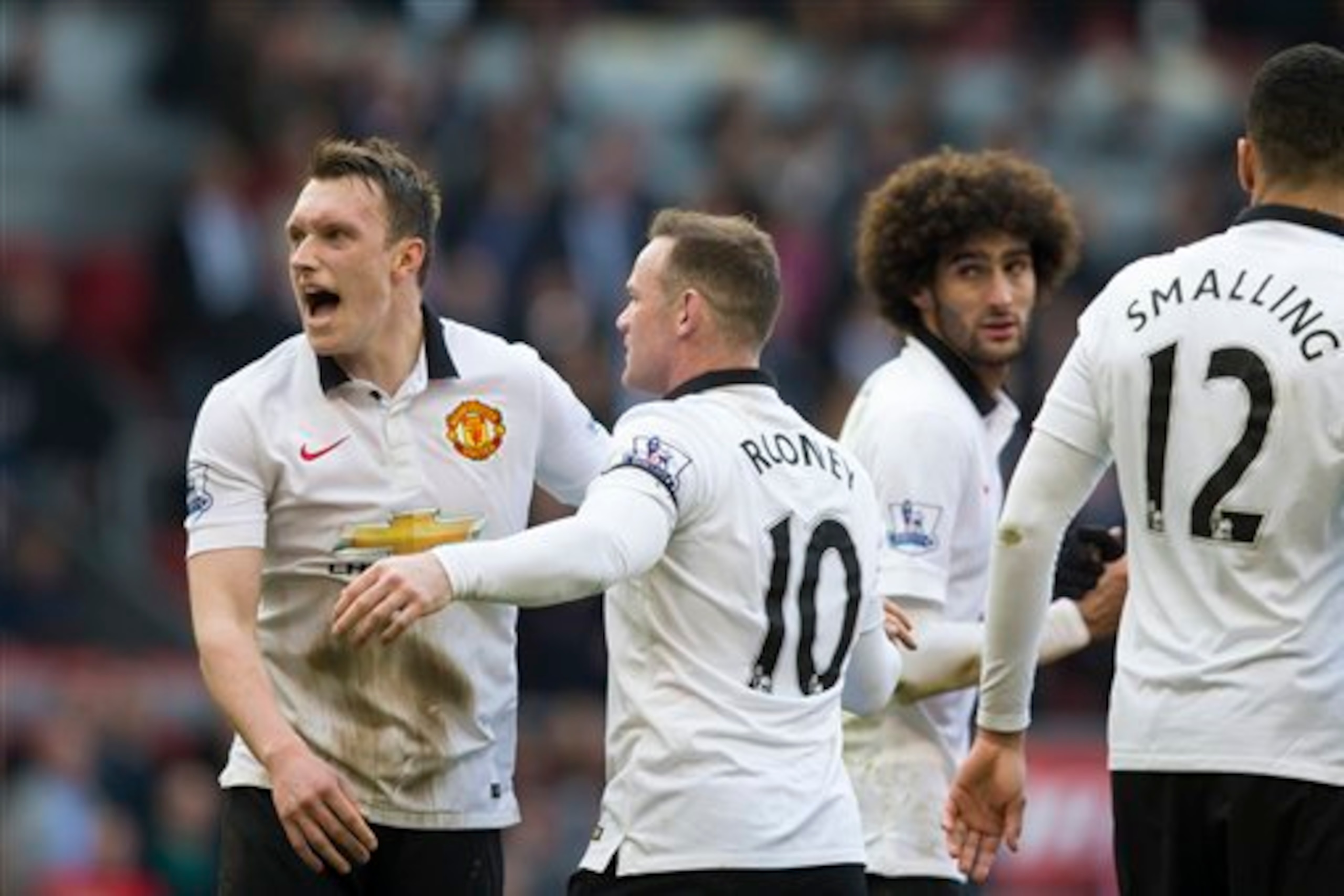
So much of defending is stylistic too. Jones is a bombastic player, always prepared to dive in to a challenge. Smalling, when on form, is a calmer defender, more likely to use positioning and reading of the game to avoid the need for the challenge.
It is worth saying, though, that Jones should not be reduced to a stereotype. He also has some finesse to his game, both in terms of his ability as a defender and on the ball. His interception statistics speak to his ability to read the game, and he is second only to Daley Blind in terms of average interceptions per game in the United squad.
Indeed, on average so far this season, he has made the fourth most interceptions per game of any Premier League player.
Smalling has the edge over Jones in the air, which tells both in terms of the number of aerial duels won—2.7 per game for Smalling to 2.2 for Jones—and in their goal tally. Smalling's four goals this season means he has scored as many as Radamel Falcao.
It has not all been good news for the two centre-halves, though.
Both players have had their rash moments this season. When Van Gaal was in the mode of switching from a back four to a back three on a fairly regular basis, United's defence took on a distinctly jittery quality.
In Smalling's case this was perhaps exemplified by his sending off against Manchester City.
He received two bookings in that game. The first was for trying to impede a goal kick being taken. It is notable that he was concerned enough about the possibility of a counter-attack, and United's potential difficulties defending it that he took a booking.
The second yellow came from a poorly timed tackle, but he was put under pressure by Antonio Valencia's poor positioning during that attack. While Smalling's decision-making was highly questionable, there were nonetheless systemic, team-wide problems at work too.
Jones' rashness has tended to come in those moments where he has needed to compensate for an error in positioning with a last-ditch tackle or block. This can look impressive, but increases his risk of injury.
Describing United's latest raft of injuries to MUTV (h/t ManUtd.com), Van Gaal said after the more recent Manchester derby, "Jones, I took him off the pitch already because he injured himself in the second half."
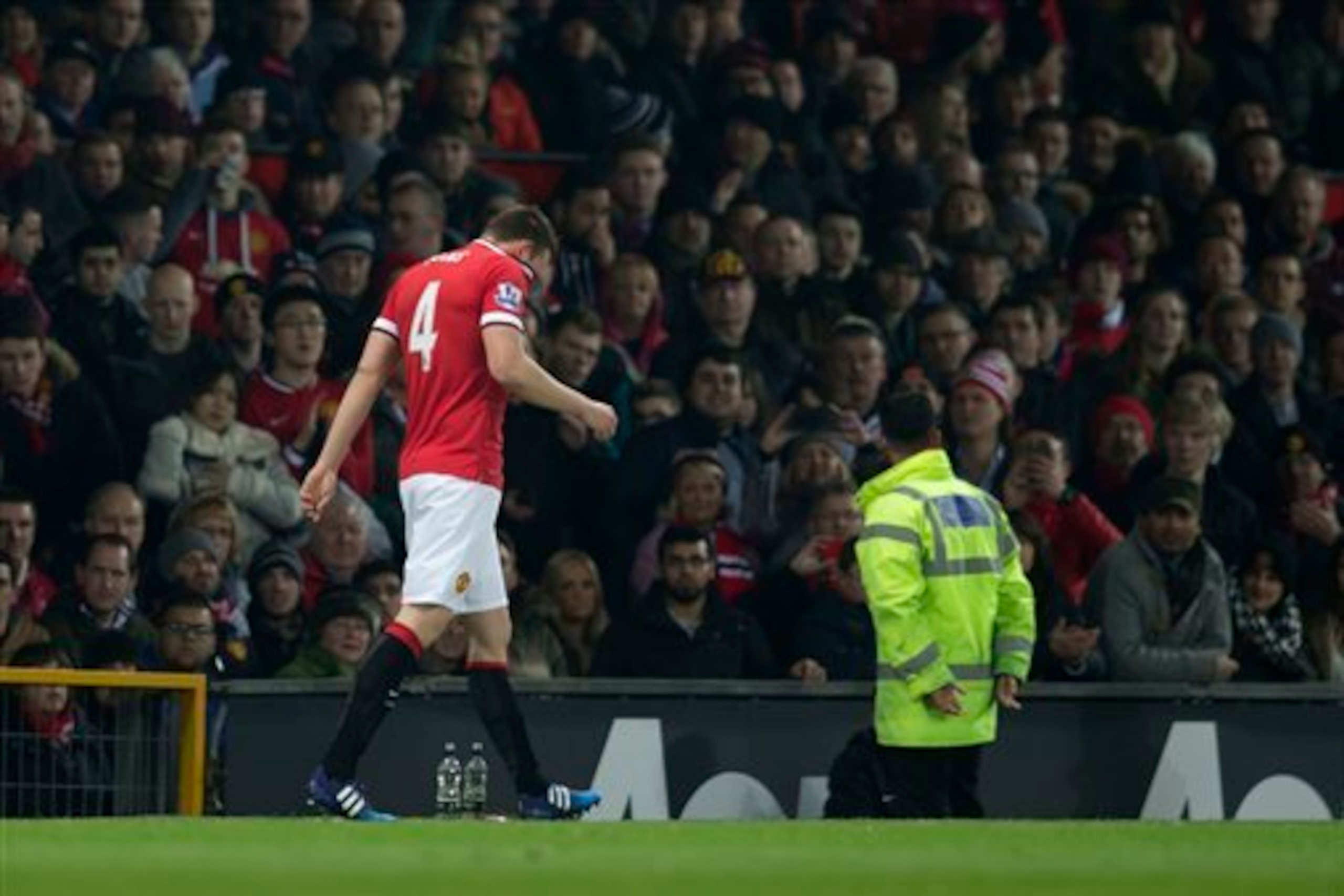
Of course, that could be a "Van Gaalism," a product of the language barrier, but it is oddly appropriate for Jones. His apparent disregard for his own physical well-being is writ large in his every last-ditch, fully committed tackle.
An interesting side note in this discussion is that both of these players have played almost all their football this season at centre-back. Last season, David Moyes often used Smalling as a right-back. Jones has been shuffled all over the pitch during his United career, and it is only this season that he has been given a clearly defined role in the team.
In playing consistently at centre-back, both players have been able to develop.
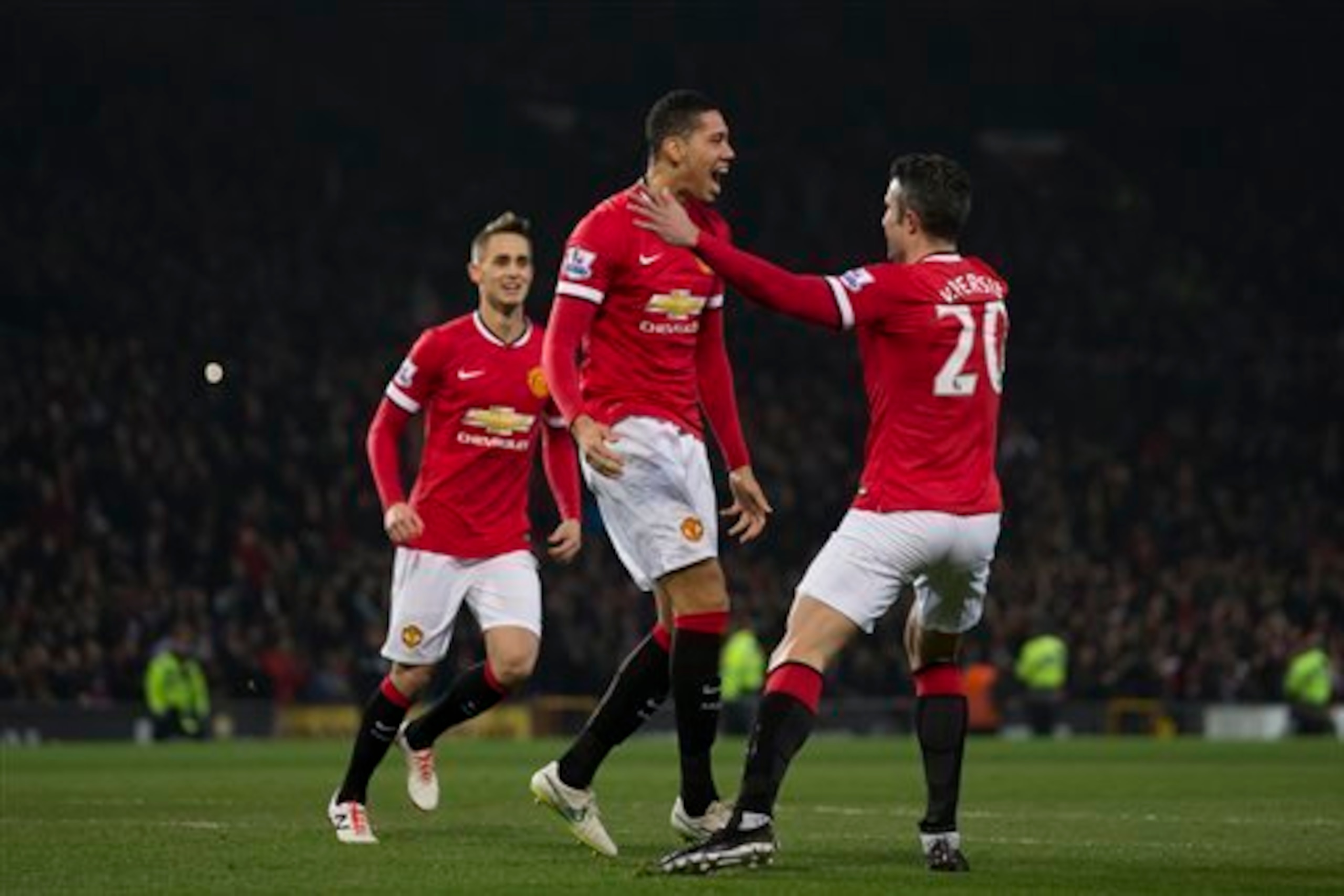
Jamie Carragher, speaking on Sky Sports' Monday Night Football back on 13 April (h/t Squawka.com) noted that Smalling was developing leadership qualities. Carragher said, "I think he’s becoming the leader at the back, Chris Smalling, he’s pushing people up, he’s getting onto his midfielders."
Instinctively, it feels as though Smalling is currently a little ahead of Jones in the pecking order, given Van Gaal's effusiveness at the contract signing. However, as I wrote back in August 2014, whatever the relative merits of the two players, they have a complementary skill set.
The battle between them is much less important than their collective contribution to United's cause.
All statistics per WhoScored.com.
.jpg?w=2560 "Chiefs Giants Football")

.jpg?w=2560 "5 Teams Eyeing Jonathan Taylor")



.jpg?w=2560 "NFL investigating Eagles")
.jpg?w=2560 "Jonathan Taylor Landing Spots 📍")