


As more players have announced their intention to declare for the 2015 NBA draft or return to school, things have started to become much clearer. The major item left to be decided at this point is where teams will be picking, which will be determined in the lottery on May 19.
After the lottery, the debate will be about whether Duke's Jahlil Okafor or Kentucky's Karl-Anthony Towns will be the No. 1 pick. The good news for teams that don't get the top selection is that this appears to be a deep draft class, with quality talent to be found late in the first round and into the second round.
TOP NEWS

Brown with an all-time summary of relationship with Tatum

Heat, Giannis were down by 20+ in each of their 3 losses
Worst NBA Predictions 🫣
With many players still riding the wave of momentum from the NCAA tournament, as well as non-playoff teams having more eyeballs to analyze things, there are a number of names who will see their stock rise or fall.
Taking a look at the first round in this latest mock draft, there are certain rising stars whose game warrants special attention for better or worse.
| Pos. | Team | Pick |
| 1 | Minnesota Timberwolves | Jahlil Okafor, C, Duke |
| 2 | New York Knicks | Karl-Anthony Towns, C, Kentucky |
| 3 | Philadelphia 76ers | D'Angelo Russell, PG, Ohio State |
| 4 | Los Angeles Lakers | Emmanuel Mudiay, PG, China |
| 5 | Orlando Magic | Kristaps Porzingis, PF, Latvia |
| 6 | Sacramento Kings | Justise Winslow, SF, Duke |
| 7 | Denver Nuggets | Mario Hezonja, SF, Croatia |
| 8 | Detroit Pistons | Kelly Oubre, SF, Kansas |
| 9 | Charlotte Hornets | Devin Booker, SG, Kentucky |
| 10 | Miami Heat | Willie Cauley-Stein, C, Kentucky |
| 11 | Indiana Pacers | Myles Turner, PF, Texas |
| 12 | Utah Jazz | Frank Kaminsky, C, Wisconsin |
| 13 | Phoenix Suns | Stanley Johnson, SF, Arizona |
| 14 | Oklahoma City Thunder | Kelly Oubre, SF, Kansas |
| 15 | Atlanta Hawks (via Brooklyn Nets) | Sam Dekker, SF, Wisconsin |
| 16 | Boston Celtics | Kevon Looney, PF, UCLA |
| 17 | Milwaukee Bucks | Devin Booker, SG, Kentucky |
| 18 | Houston Rockets (via New Orleans Pelicans) | Jerian Grant, PG, Notre Dame |
| 19 | Washington Wizards | Trey Lyles, PF, Kentucky |
| 20 | Toronto Raptors | Tyus Jones, PG, Duke |
| 21 | Dallas Mavericks | Cameron Payne, PG, Murray State |
| 22 | Chicago Bulls | Bobby Portis, PF, Arkansas |
| 23 | Portland Trail Blazers | Rondae Hollis-Jefferson, PF, Arizona |
| 24 | Cleveland Cavaliers | R.J. Hunter, SG, Georgia State |
| 25 | Memphis Grizzlies | Justin Anderson, SF, Virginia |
| 26 | San Antonio Spurs | Delon Wright, PG, Utah |
| 27 | Los Angeles Lakers (via Houston Rockets) | Dakari Johnson, C, Kentucky |
| 28 | Boston Celtics (via Los Angeles Clippers) | Montrezl Harrell, PF, Louisville |
| 29 | Brooklyn Nets (via Atlanta Hawks) | Terry Rozier, PG, Louisville |
| 30 | Golden State Warriors | Christian Wood, PF, UNLV |
Willie Cauley-Stein, C, Kentucky
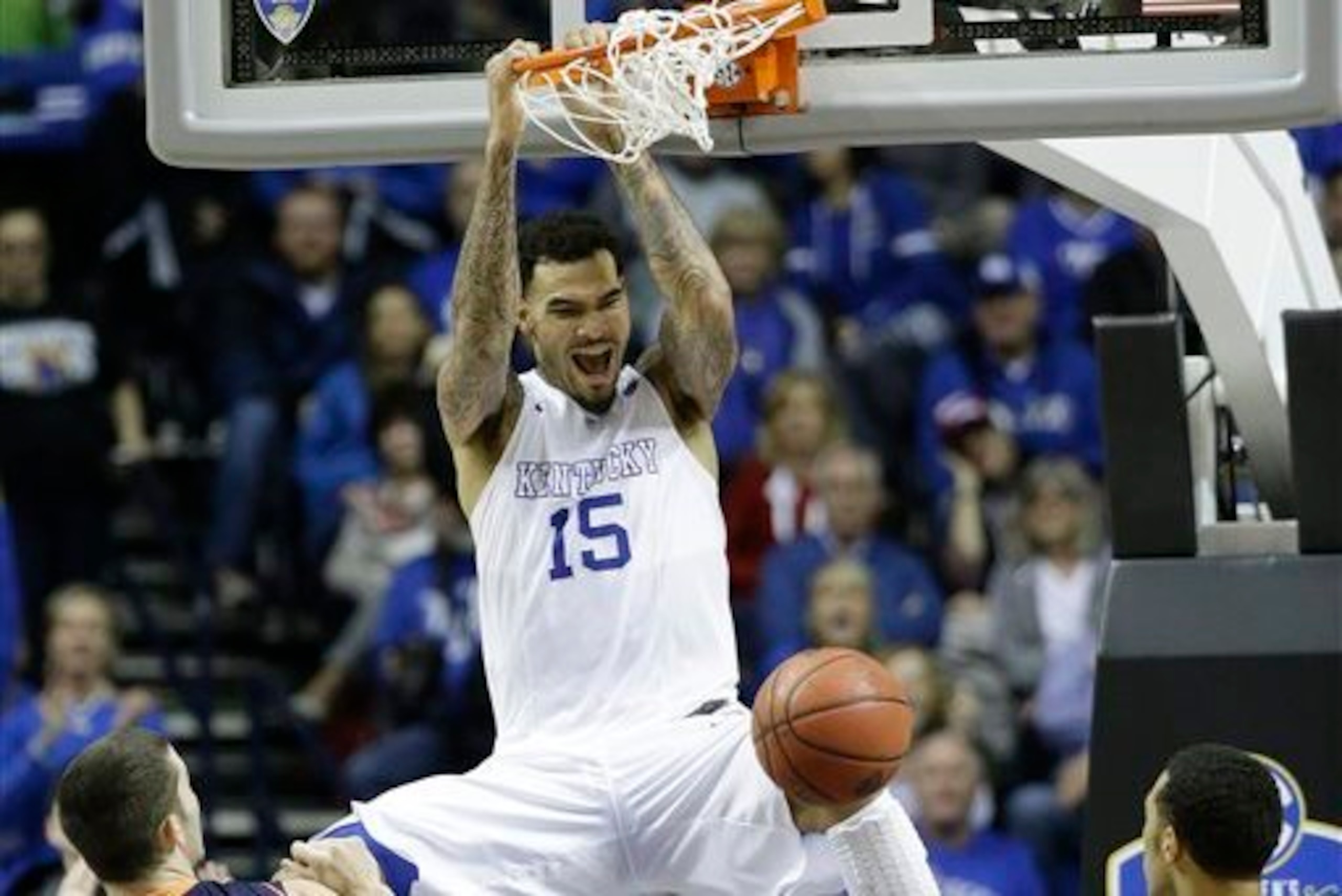
There may not be a more divisive talent in the 2015 draft than Willie Cauley-Stein. Chris Mannix of Sports Illustrated wrote in his first mock draft that the Kentucky star's ultimate ceiling may be that of a decent role player: "Cauley-Stein is limited offensively but he is a versatile defender who can slide between both frontcourt spots. He may never be more than a good role player, but he’s a low risk choice in this spot," Mannix wrote.
Mannix still had Cauley-Stein going in the lottery, No. 12 to Utah, but he sounds lukewarm about the 7-footer.
Contrast that opinion with ESPN's Chad Ford, who had Cauley-Stein going sixth overall to Sacramento in his fourth mock draft:
"The Kings need a rim protector to pair in the frontcourt with DeMarcus Cousins, and Cauley-Stein is the best on the board. But rim protection is just part of his appeal. Cauley-Stein doesn't need the ball to impact the game (a great thing on a team filled with guys who do need the ball) and he can guard all five positions on the floor. If the Kings are going to have an identity as a defensive team, it starts with Cauley-Stein.
"
The consensus opinion is Cauley-Stein will be an impact defensive player in the NBA. No one disputes that, nor should they, but being able to find a consistent offensive game will determine how high he climbs in the NBA.
Andrew Sharp of Grantland did rightfully point out the best thing Cauley-Stein could have done for his development was return to Kentucky after last season when he probably would have been a lottery pick:
"Had he gone to the NBA last season, there was a chance he would have developed into a dependable pro starter. Someone in the lottery would’ve taken that bet.
But it would’ve been a long shot. Big men like Cauley-Stein disappoint all the time. Most NBA teams — especially lottery teams — don’t have the patience or practice time to weed out players’ worst habits, so those problems fester and keep them from hitting the next level.
"
The 2014-15 season certainly wasn't an offensive explosion for Cauley-Stein. He averaged 8.9 points per game, which was a career high, but shot a career-low 57.2 percent from the floor and was invisible with two points against Wisconsin in the NCAA tournament.
There's always value for a strong defensive big man, but starting with a foundation of defense and not much offensive polish is a dangerous bet for a team in the top 10. Picking that high means you need to be getting a player with superstar potential, regardless of whether it works out or not.
Cauley-Stein is also an anomaly among potential Kentucky draftees in that he stayed three years and will be 22 when the 2015-16 NBA season starts. He's not young by draft standards, so if the offensive potential never came through at Kentucky, it likely won't happen against professional competition.
Sam Dekker, SF, Wisconsin
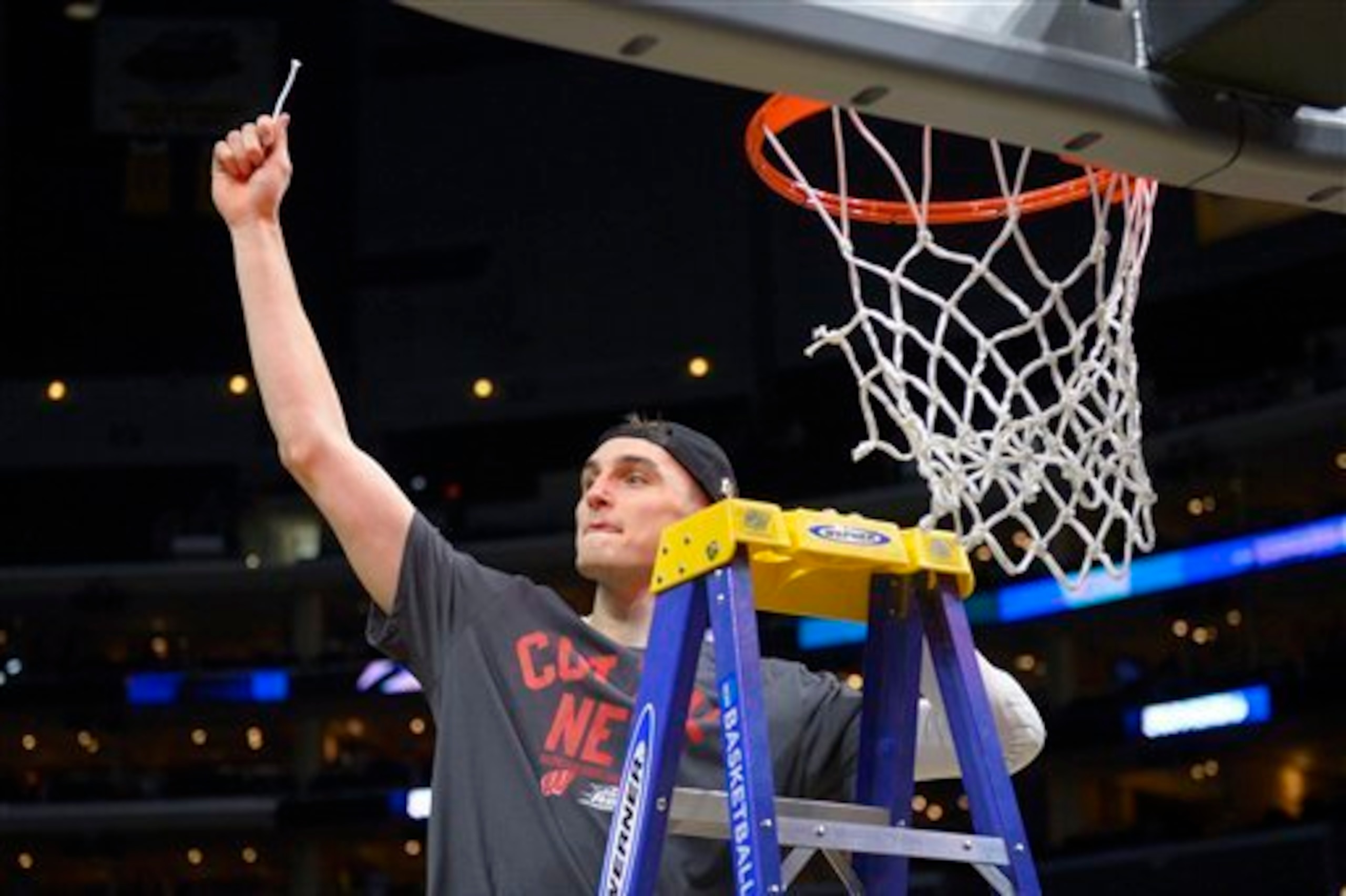
With the possible exception of Duke's Justise Winslow, no player benefited more from a deep tournament run than Wisconsin's Sam Dekker. He went from being a borderline first-round talent to possibly a lottery pick thanks to his shooting display in March.
Jason McIntyre of The Big Lead compared Dekker in a February mock draft to Utah's Gordon Hayward. That would certainly make the Wisconsin star worthy of a lottery pick, as Hayward has developed into a star for the Jazz.
The knock on Dekker, as noted by Derek Bodner of USA Today in a recent mock draft, is finding "consistency in his outside shot." You wouldn't have known that in the NCAA tournament, at least through the Final Four when he went 15-of-30 from behind the arc.
Unfortunately for Dekker, his worst performance in the tournament was in the national title game against Duke with 12 points (0-of-6 from three-point range).
Despite that inconsistency, Dekker will deserve his spot as a borderline lottery pick. Tom Oates of the Wisconsin State Journal did make a compelling case for the Badgers star as an even better NBA player than he was in college:
"The NBA is enamored with athleticism and length, and Dekker has both. And though his outside shot remains suspect, he is an unselfish player who has developed the ability to finish at the rim and create shots for himself (who can forget that step-back 3 against Kentucky?).
Finally, he might be one of those players who is a better pro than collegian because his style fits the NBA game better.
"
Some players never find their full niche in college, which is a good thing because it shows just how much the development process at the NBA works. Dekker is certainly a project who has shown the ability to be a star-level player at various points during his college career.
Dekker's inconsistencies do limit his ceiling in the NBA. He's not going to be a star, but he has the size at 6'9" and athleticism to be a very good No. 2 on a playoff team. That sounds like his tenure at Wisconsin this past year with Frank Kaminsky. It took the Badgers to the NCAA title game.
With the right No. 1, Dekker can help lead his future NBA team to the finals in the next three years.
R.J. Hunter, SG, Georgia State
If Dekker was the breakout star of the NCAA tournament, R.J. Hunter was the heartbeat of the opening weekend. He got the highlight-reel moment with a game-winning shot against Baylor, and he played well with 20 points on 6-of-15 shooting in the loss against Xavier.
Upon declaring for the draft after Georgia State's season ended, Hunter said (via ESPN's Jeff Goodman) he never envisioned leaving school early:
"The plan was always for me to be a four-year guy. For all this to happen, it's almost like a dream. I felt like the time was right. I did everything possible I wanted to do. The way it ended with the NCAA tournament was a storybook. It was like it happened for a reason.
"
It's hard to fault Hunter for making this decision because his stock was never going to be higher. When you have the opportunity to strike, ride that wave as long as you can.
However, as noted in Goodman's report, Hunter claims NBA teams view him as going from anywhere between No. 15 and 35. That's a wide gap between a late lottery pick and the second round, though a lot will be determined by how he looks at the predraft workout.
Per Doug Roberson of The Atlanta Journal-Constitution, one NBA scout pointed out some of the dings against Hunter as he prepares to go to the next level:
"The guy shot 30 percent from 3. If his real strength is shooting and he didn’t shoot well, what do you say? That he’s going to have a better year next again much tougher competition? The other thing is he’s shooting 30 percent in a conference that’s not very good. They say mid-major, it’s low-major to me. It’s not in the same league as Missouri Valley.
"
The scout also told Roberson that "NBA teams can see through" the smoke and mirrors in the NCAA tournament.
There will certainly be some teams who see the way Hunter performed in crunch time against Baylor, noting it was fearless and exactly what you want from a shooter. All it takes is one franchise to decide he's right for its roster to make him a lottery or late first-round pick.
Based on the scout's report, noting Hunter lacks explosiveness, his best path to success in the NBA may be as a catch-and-shoot player on a good team. There's certainly value in that, but he has to shoot closer to the 39.5 percent from three-point range he did two years ago than the 30.5 percent from last season to make it in the league.
Considering Hunter also shot 36.5 percent from three-point range as a freshman in 2012-13, it's not unreasonable to chalk up last year's low shooting percentage to one of those outlier seasons every player seems to have.
Stats via ESPN.com unless otherwise noted


.jpg?w=2560 "5 Teams Eyeing Jonathan Taylor")
.jpg?w=2560 "Mahomes Told Teammate to Leave Meeting")


.jpg?w=2560 "Jonathan Taylor Landing Spots 📍")
