
7 NBA Legacy Assumptions You Need to Rethink
If you followed the NBA Legends 100 series from start to finish, you probably have some gripes about the order, whether that came during the positional rankings or the overall top 100. Historical hierarchies are always going to cause a stir, especially because everyone analyzes players in different ways.
Plenty of you left comments expressing your opinions about the biggest standouts in the far-reaching history of the Association, especially when they happened to disagree with the order you had in front of you. Don't worry.
We read them all, and it's now time to address some of the common trends.
These seven arguments might not change your mind, and they don't have to. While I strongly believe the Legends 100 is a definitive set of rankings with solid—and unique—statistical backing, your criteria is probably different than mine. For example, I'm well aware that I value efficiency more than most, and that would be true whether I was ranking historical players, putting current studs in order or even running my own NBA squad.
But at the very least, allow these to make you think more about assumptions that are made far too casually in some cases. It's hard to reconceptualize how you feel about legends in any sport, but sometimes, incorrect or misleading information becomes so ingrained as gospel that it takes on a life of its own.
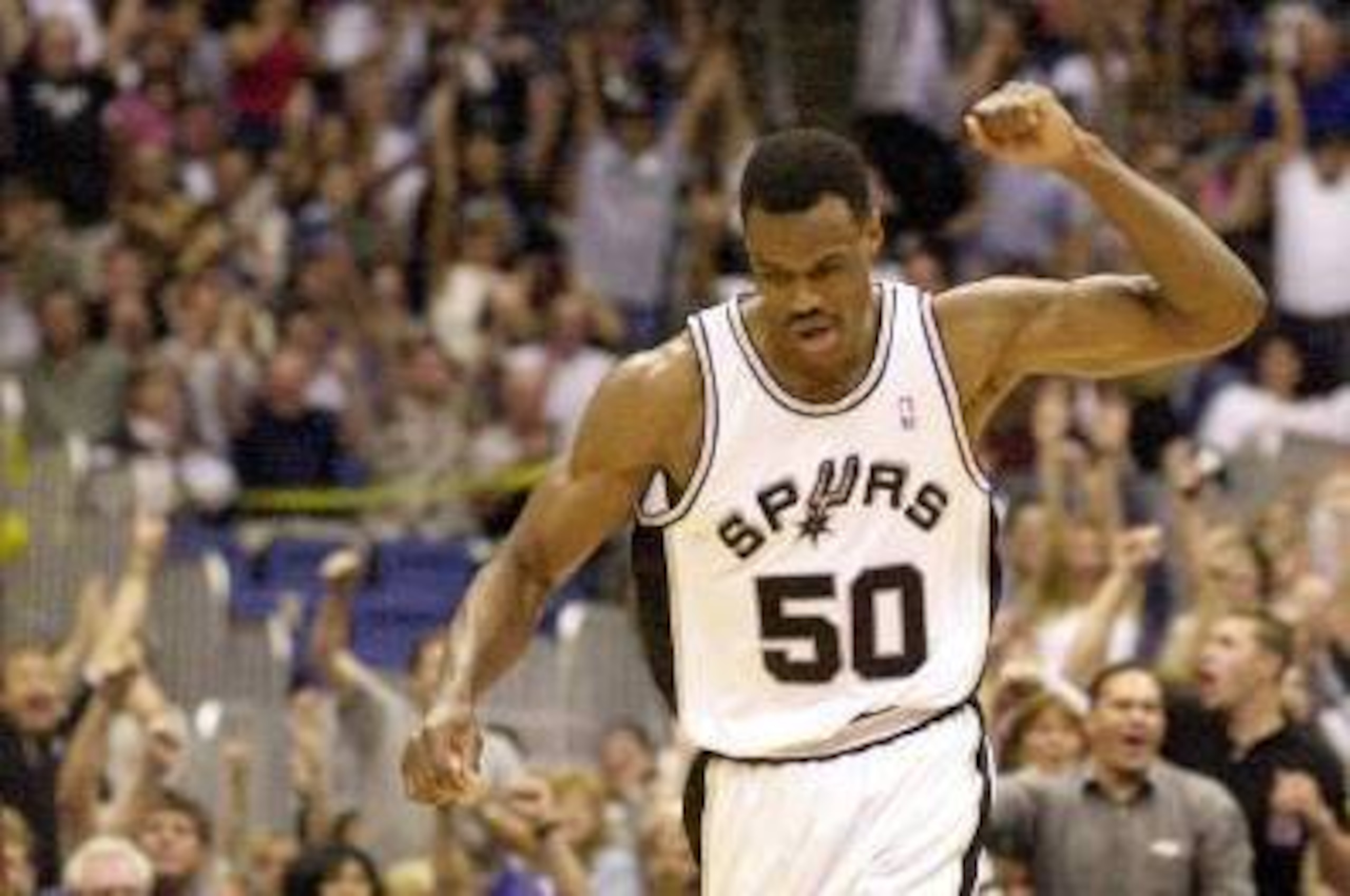
David Robinson's Underratedness
1 of 7
The Issue: David Robinson ranked as the No. 5 center, one spot ahead of the infamous Hakeem Olajuwon
It's easy to assume that Hakeem Olajuwon was superior to David Robinson, especially because the Houston Rockets big man tore apart the San Antonio Spurs center when they went head-to-head in the 1995 NBA playoffs. But basing two legacies on just a single series is foolish, even when it swung so firmly in one direction.
Why does the much larger sample over the course of their regular-season careers not matter?
Robinson and Olajuwon met 42 times before the playoffs throughout their mutual playing days, and the Spurs went 30-12 in those meetings. It also sure seemed as if the man fondly known as The Admiral compiled a slightly superior line:
| David Robinson | 37.7 | 7.0 | 14.3 | .488 | 5.5 | 7.7 | .717 | 3.3 | 7.9 | 11.2 | 2.9 | 2.2 | 3.3 | 3.0 | 3.4 | 19.6 |
| Hakeem Olajuwon | 37.7 | 8.8 | 20.0 | .441 | 4.2 | 5.4 | .768 | 3.4 | 7.8 | 11.2 | 2.8 | 1.9 | 3.4 | 2.9 | 4.0 | 21.9 |
But this isn't just about what happened when they squared off against one another.
Robinson was simply the better player when they both reached their respective primes, if only by a similarly narrow margin. And the rationale boils down to something that was so often overlooked until recent years—efficiency.
The Spurs legend was a scoring machine who rarely missed more shots than he made, but he also spent plenty of time working his way to the charity stripe. His career true shooting percentage of 58.3 is superior to Olajuwon's career mark (55.3), and so too is his peak season's: 61.5 in 1990-91 for Robinson, 57.7 in 1992-93 for Olajuwon. In fact, that best season for The Dream would tie Robinson's No. 7 true shooting percentage.
There are many other retroactive pieces of evidence as well, including the fact that Robinson was the better player in 1993-94 (his best season ever), losing the MVP to Olajuwon largely because his teammates were inferior.
That season, the 55-win Spurs were paced in win shares by Robinson (20), a 32-year-old Dennis Rodman (8.7), a 33-year-old Dale Ellis (7.6), Vinny Del Negro (5.7) and Willie Anderson (5.6). Meanwhile, the Rockets had Olajuwon (14.3), Otis Thorpe (9.8), Kenny Smith (6.1), Robert Horry (5.9) and Mario Ellie (4.2).
Olajuwon played the more glamorous game and won the individual battle on the biggest stage. Since when is that supposed to make him the superior player?
Dwyane Wade vs. Allen Iverson
2 of 7
The Issue: Dwyane Wade checked in as the No. 3 shooting guard; Allen Iverson was at No. 5
There are far too many false narratives in play here.
First, let's get rid of the notion that Dwyane Wade's inability to win a title without the help of superstars should be held against him. As Kobe Bryant wrote while defending LeBron James on Twitter, "Lbj doesn't need to prove that @PaulBrahan I had Shaq + Pau Mj had Pip Magic had Worthy + Kareem etc AND we all had great teammates."
That wasn't said in defense of Wade, but the same sentiment applies. Sure, his first title came while he was playing alongside Shaquille O'Neal, and the latter two were won alongside James and Chris Bosh. But there's never been a one-man championship team, and there likely never will be.
Wade was the clear-cut alpha dog during the 2005-06 title run, averaging 28.4 points, 5.9 rebounds and 5.7 assists while shooting 49.7 percent from the field. The Miami Heat were his team, not Shaq's. And while it's easy to point to O'Neal's departure leading the Heat into a huge downward spiral that resulted in just 15 wins during the 2007-08 season, that still doesn't mean Wade should suddenly be overrated because he couldn't carry that roster into the playoffs.
Not only was Wade healthy for just 51 games that season, but no one could stay on the court for very long, there was extremely limited talent, and it's not like things were too much better with O'Neal present. When the big man was traded with 33 games under his belt, the Heat were already winners of only eight contests and were embroiled in a 14-game skid.
But enough about Wade. Iverson is important here too.
The lack of help he received throughout his prime is slightly overblown, especially in 2000-01 when the Philadelphia 76ers claimed the MVP (Iverson), Defensive Player of the Year (Dikembe Mutombo), Sixth Man of the Year (Aaron McKie) and Coach of the Year (Larry Brown). Sure, he never played with another true superstar during his best days, but he at least had some semblance of talent around him. That point has been remarkably overstated after the fact.
More than anything else, however, defense holds Iverson back from reaching Wade's level. In his prime, the latter was a stellar stopper; the former was never anything but porous, despite what his misleading steals numbers might have you believe.
Iverson's defensive box plus/minus during his career? Minus-1.0, indicating that his teams would have been better off with league-average players on defense. He was only in the positives once (0.2 in 2001-02).
Both shooting guards deserve to be called legends of the sport, but misleading narratives have made it seem as if there's a competition between these two. There's really not.
LeBron James Is Already There
3 of 7
The Issue: LeBron James (No. 1 small forward) ranked higher than Larry Bird (No. 2)
Anyone who watched Larry Bird in his prime is going to have a tough time accepting that he's no longer the greatest small forward of all time. The Boston Celtics legend made far too many ridiculous plays and willed his team to victory so often that he's always going to inspire that type of fervent belief.
And in a few decades, you'll be able to say the the exact same about those who watched prime LeBron James, so long as you replace "Boston Celtics" with "Cleveland Cavaliers and Miami Heat."
Bird's mythologized status is by no means overblown, though it certainly doesn't work to his advantage that back injuries slowed him down toward the end of his career and forced him into a premature retirement. After all, that's allowed James—crazy as this may seem—to already have more games played than the former placeholder at the 3.
When Bird retired in 1992, he did so with 897 regular-season outings on his resume and another 164 in the playoffs. Heading into this postseason, James was at 911 and 158, respectively. So even though the current superstar is only 30 years old, we can already make a reasonable direct comparison.
That's not good news for Bird, despite the legendary stories that are told about him and that passionate belief possessed by those who maintain that the best small forward in the '80s will forever be superior. Sure, Bird has more titles than James (only by one, despite spending so much time in the company of other Hall of Famers). What else works in his advantage?
Scoring? Bird averaged 24.3 points per game with a 56.4 true shooting percentage, while James is at 27.3 and 58.1. Rebounding? Larry Legend has the advantage here, and it isn't particularly close. But the same can be said about passing, where James has left Bird in the dust, despite Bird's praiseworthy feeds throughout his career.
Defense is notoriously harder to measure, especially since both players excelled on this end in their primes. However, it's interesting that Bird never so much as sniffed a Defensive Player of the Year selection, failing to garner even a single vote throughout his career, while James has appeared on ballots during six seasons, received first-place votes during five different years and boasts two second-place finishes.
And if we look at any number of advanced metrics, the two are no longer even close, not to mention the fact that James has one more MVP.
MVP Shares? LeBron (6.1) is ahead of Bird (5.693), and that doesn't even include the results from this season's not-yet-revealed selection. Win shares? It's James (178.89) beating out the Boston icon (145.83). Win shares per 48 minutes? James' 0.2401 is better than Bird's 0.2032.
Player efficiency rating? James (27.66) is behind only one player in NBA history, and that's Michael Jordan; Bird (23.5) trails 16 others. Box plus/minus? James is the all-time leader at 9.21, while Bird and his 7.17 mark are at No. 7. Value over replacement player? Only Jordan and Karl Malone are ahead of James' 101.02, while Bird falls in at No. 9 with a score of 79.74.
Get the point yet?
You can hold onto the belief that Bird was legendary and often infallible while still accepting that James has become the premier player (by a wide margin). Those aren't mutually exclusive ideas.


Pace-Inflated Statistics of Yesteryears
4 of 7
The Issue: Among others with the old-timers, Oscar Robertson didn't find himself in the top 10 overall.
Per-game statistics can only tell you so much.
Nowadays, they're mostly misleading because they don't factor in how much playing time someone received (averaging 20 points per game is more impressive from someone who spends 25 minutes on the court than someone who takes 35 minutes to post the same numbers), nor do they give any hint about efficiency. Analyzing players through only that lens is a dangerous path to travel down.
But doing the same with standouts from the pre-merger portion of league history is more perilous still. Now, those who are doing so are making conclusions without factoring in how much the sport has changed, largely because of a slowed-down pace in modern days.
In 2014-15, the average team used 93.9 possessions per 48 minutes. Go back to 1961-62, when teams would get shots off with less hesitance and do everything possible to play at a breakneck pace, and that number rises all the way to 126.2.
Of course it was easier to compile per-game numbers when there were so many opportunities to rack up stats in that one-contest setting. And that's why the reputations of a few historical standouts have become a bit greater than they should be.
Yes, we're talking about Oscar Robertson and his triple-double season, as that's often the first thing cited in arguments that claim he's unquestionably one of the 10 best players in NBA history. This applies to Wilt Chamberlain's jaw-dropping statistics too, at least for those who think he's the best center of all time, as well as Elgin Baylor's impressive point totals. We'll focus on those three, but keep in mind the same line of thought applies to others from the same era.
This isn't to say that those aforementioned players are massively overrated. Nothing could be further from the truth. But when you put their gaudy per-game achievements into a modern-day context—after all, we frame those numbers against what current legends are producing—they lose a bit of their luster.
After running a pace adjustment to 2014-15, Robertson's triple-double season (30.8 points, 12.5 rebounds and 11.4 assists per game) becomes the equivalent of 22.7 points, 9.2 rebounds and 8.4 assists this year. Those are still remarkable numbers, but they don't jump off the page enough to serve as a primary piece of evidence in the quest for a coveted top-10 spot.
Chamberlain averaged 50.4 points and 25.7 rebounds in 1961-62, but a similar adjustment shows that those are the equivalent of 39 and 19.9 during the season that just ended. Those are still untouchable numbers, but they're no longer unbreakable marks. They actually lose a bit more luster if we take playing time out of the equation, since Chamberlain played 48.5 minutes per game in '61-62. Adjust that to 35 minutes per contest, and you're looking at 28 points and 14.4 boards.
The same goes for Baylor's top season, which not so coincidentally came during the same fast-paced 1961-62 campaign. Rather than thinking about his actual averages of 38.3 points, 18.6 rebounds and 4.6 assists, ponder his adjusted-to-2015 marks of 27.8 points, 13.5 rebounds and 3.3 assists. Make that same minutes adjustment from 44.4 minutes to 35, and you're looking at 21.9 points, 10.6 boards and 2.6 dimes—numbers that were actually matched by DeMarcus Cousins this season.
Context, as always, matters far more than the extent to which it's usually utilized.
The Irrelevance of "Pure" Point Guards
5 of 7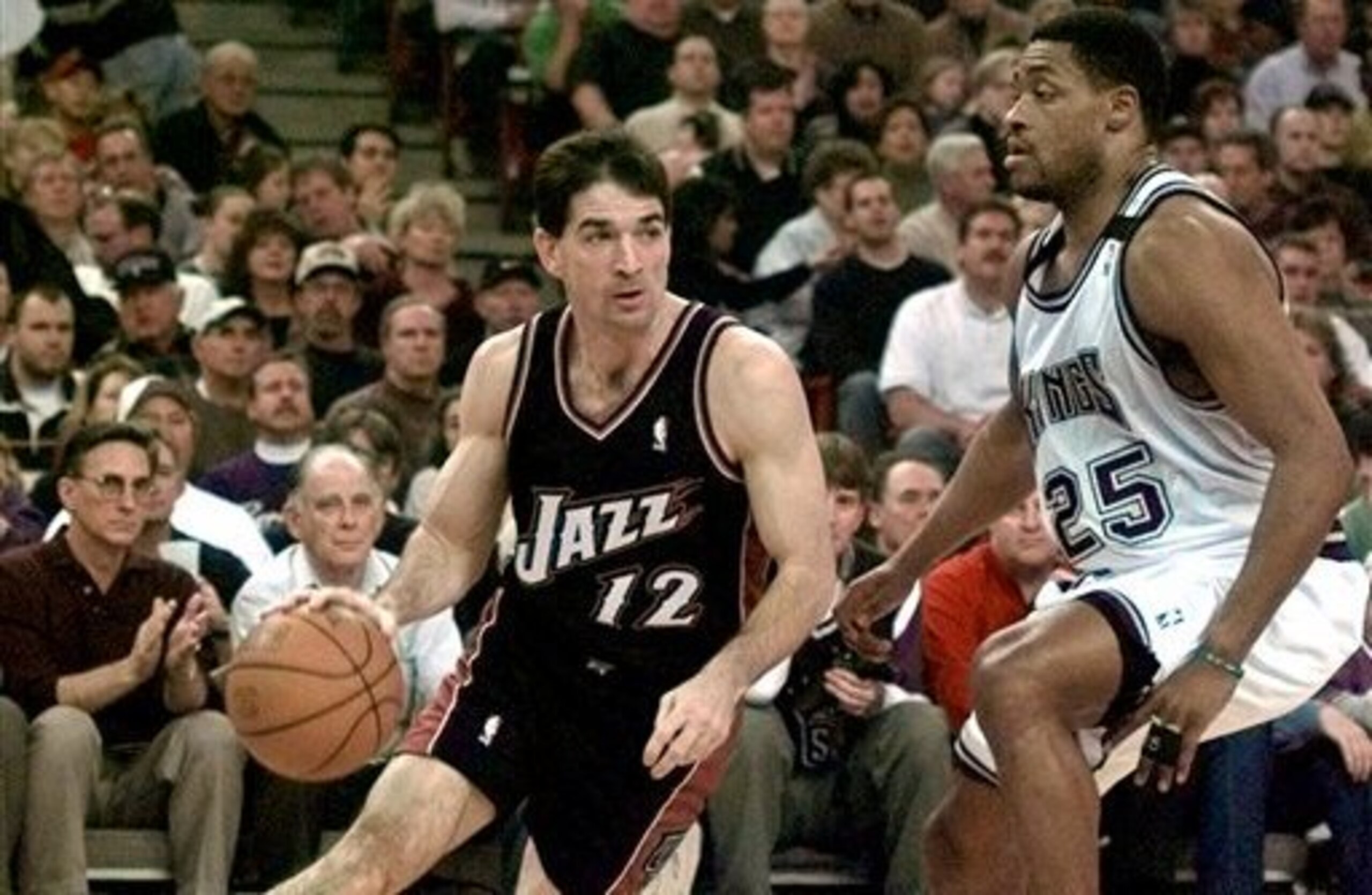
The Issue: John Stockton was listed as the No. 4 point guard
John Stockton's biggest achievement is certainly finishing at No. 1 on the career assist leaderboard by such a substantial margin that it's considered one of the unbreakable records in sports.
To put it in context, Chris Paul currently sits at No. 16 in the same set of standings and trails only Andre Miller among active players. He could play in the NBA for another decade without missing a single game, and he'd still need to average 10.8 assists to match Stockton's mark. Obviously, that's not going to happen.
John Wall, one of the league's brightest young assist accumulators, finished his fifth professional season at 2,990 career dimes. He could throw up 10 assists per game for the rest of his career, and he'd still need to play another 16 fully healthy campaigns to pass Stockton.
This clear-cut superiority in the stat point guards are best known for leads some to falsely believe that Stockton belongs as either the top player at his position, or at least at No. 2, trailing only the great Magic Johnson. But believing that involves falsely subscribing to the notion that "pure" or "true" point guards are superior to ones who provide non-traditional production.
Bleacher Report's Zach Buckley addressed that earlier this year while discussing the resumes of Stephen Curry and Russell Westbrook:
"Traditional labels have a way of overstaying their welcome, particularly in the constantly evolving world of the NBA.
If basketball elders don't see Stephen Curry or Russell Westbrook as being "pure" point guards, that speaks to a problem with the definition, not with the players themselves.
The NBA game has gone contemporary, yet archaic views still warp some of the perceptions surrounding it. Placing today's players into one of five boxes based on their oversimplified position designations is an exercise in futility.
"
The same is true when looking into the past.
Assists are only one of many facets in professional basketball, and it's possible to make just as large an impact by functioning in many different ways. And that's what hurts Stockton, who averaged only 13.1 points throughout his career, topping out at a mere 17.2 in both 1989-90 and '90-91.
Pigeonholing a point guard into one specific role is often problematic, not beneficial. It's far better for players to play to their strengths and help their teams as much as possible, even if that means some 1-guards are going to do more scoring than passing.
The fact that Stockton's top strength aligned with the traditional definition of his position shouldn't elevate him into a spot in the rankings that he doesn't have a legitimate claim to.
The Short Primes
6 of 7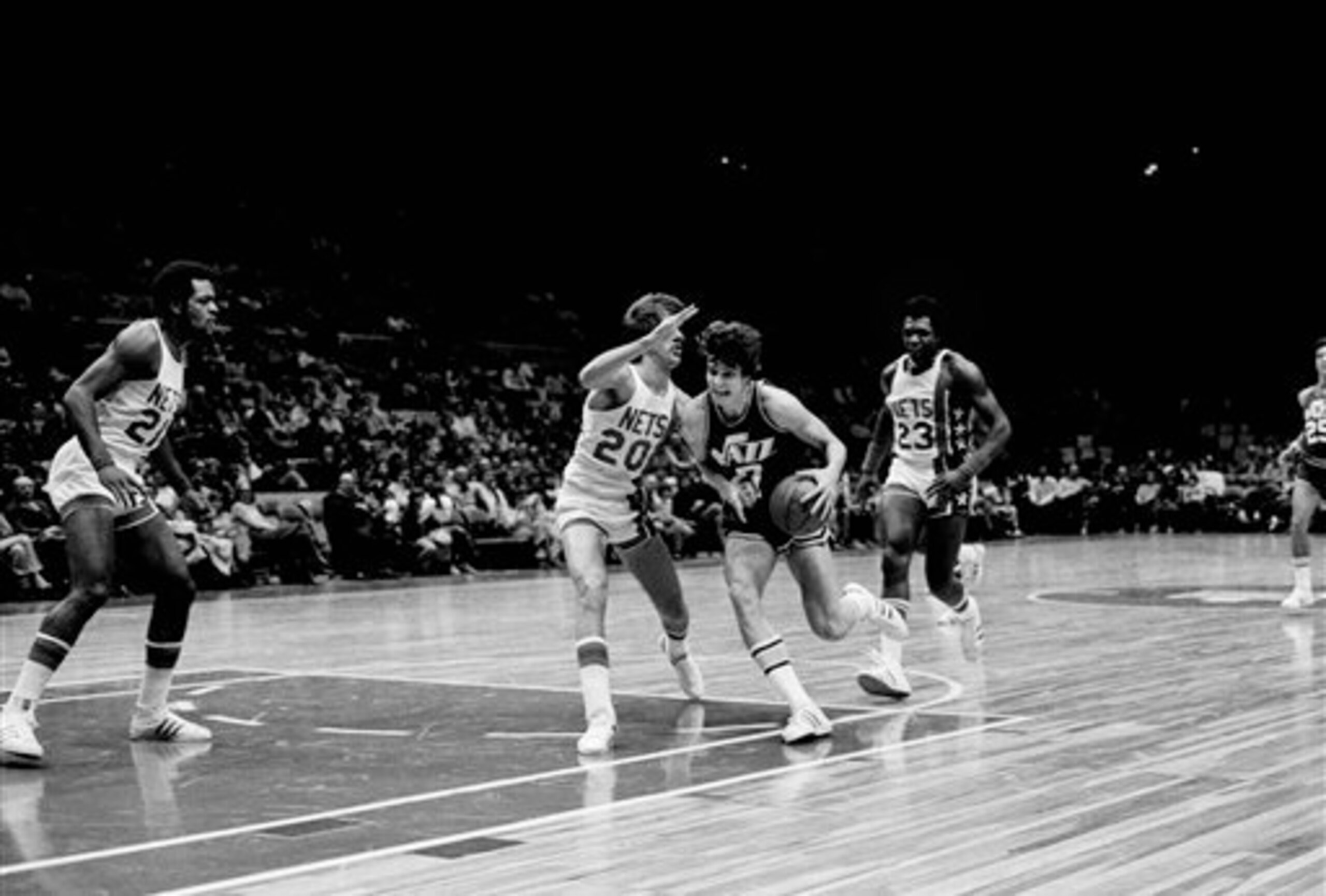
The Issue: Legends with short peaks weren't given lofty rankings
In 1976-77, Bill Walton submitted one of the greatest seasons of all time. The Portland Trail Blazers center averaged an astonishing 18.6 points, 14.4 rebounds, 3.8 assists, 1.0 steals and 3.2 blocks while shooting 52.8 percent from the field, then he carried Rip City through the playoff field en route to a title.
During that same season (which is merely a coincidence), Pete Maravich won the scoring title. While playing some of the most entertaining basketball to ever grace an NBA court, he averaged 31.1 points for the New Orleans Jazz, incredibly doing so without the aid of a three-point line but still firing away from far outside the paint with plenty of frequency.
In 1994-95, a 23-year-old Anfernee "Penny" Hardaway arrived as a superstar for the Orlando Magic. He posted 20.9 points, 4.4 rebounds, 7.2 assists and 1.7 steals during his typical outing, thriving as a positionless matchup nightmare. The world was his oyster back then, and it seemed a certainty that he and Shaquille O'Neal would dominate for years to come.
In 2003-04, also for the Magic, Tracy McGrady put together a season so special that it stands on par with any of Larry Bird's best go-rounds. That's not an exaggeration, as the swingman averaged 32.1 points, 6.5 rebounds and 5.5 assists while posting a 30.3 PER.
Those are but four of many examples who all have one thing in common.
They peaked in historic fashion, looking like—at the very least—top-50 players in NBA history. They left indelible impressions on their fans with those noteworthy submissions into the archives of the Association, and those have been allowed to completely trump everything else that happened over the course of their respective careers.
Walton played in only 209 games with the Blazers, posting a PER of 22.1 and earning just 26 win shares. Throughout the rest of his career, spent with the San Diego/Los Angeles Clippers and the Boston Celtics, he played in 257 games, earning a PER of 17.7 to go along with his mere 13.2 win shares. That's how short his peak was.
Maravich was in a similar boat, quickly declining and retiring with only 658 regular-season games on his resume. So too were Hardaway and McGrady, as injuries ruined the remarkable promise they displayed in their youth.
Everyone who falls into this category—and someone like Derrick Rose may one day—deserves to be considered a legend of the sport, but clarification is needed. At their best, they were some of the most talented, most exciting, most impactful basketball players in the league's history. That just doesn't mean their careers are on par with others who went down the route of sustained excellence with a lesser peak.
2 Present-Day Stars Already Legends, Only Moving Up
7 of 7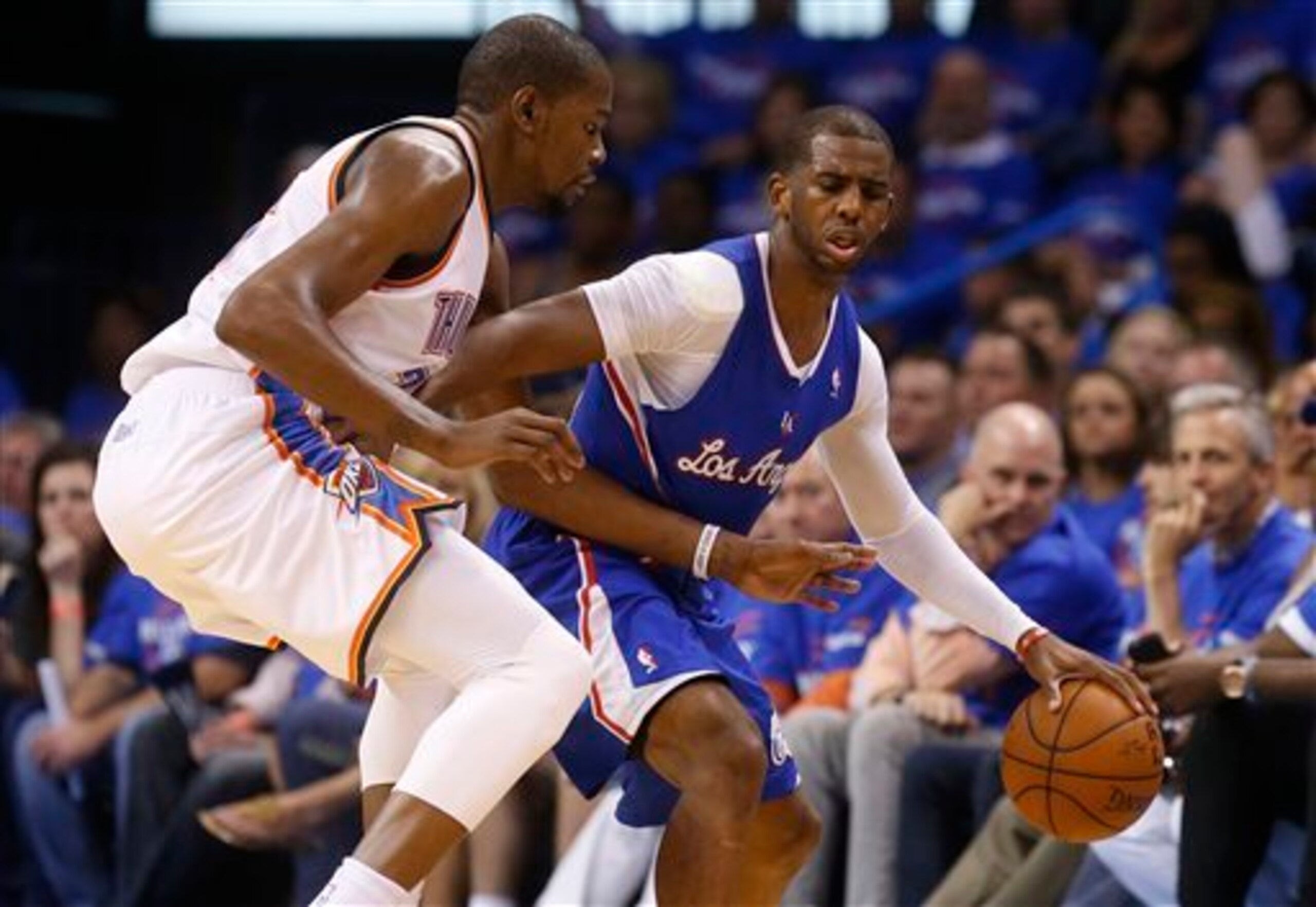
The Issue: Chris Paul (No. 46 overall) and Kevin Durant (No. 42 overall) are already being called top-50 players
Sometimes, it's remarkably difficult to accept that current players are already superior to retired greats and Hall of Famers. Such is the case for Chris Paul, who's still going strong for the Los Angeles Clippers and is only about to turn 30 years old, as well as the 26-year-old Kevin Durant, whose eighth professional season was cut short by injuries to such an extent that he may as well only have seven years under his belt.
In Paul's case, it's the lack of a glowing postseason resume that holds him back in the minds of some, while Durant is limited by his age and lower amounts of experience at the sport's highest level.
Both are ridiculous.
We don't need to wax poetic about how insanely good Paul is at running the show for his teams. Not after he spearheaded the injured and shallow Clippers to the No. 1 offensive rating in the league this year, further proving that he's on pace—during the regular season, at least—to be a top-two point guard if his career continues on a typical trajectory.
It's just all about the playoffs.
However, the narrative that this point guard flops during the most important part of the year is a silly one. Maybe it's valid if we're using the definition that refers to his penchant for exaggerating contact, but not if we're discussing his ability to live up to the expectations.
It's true that Paul has never been to the Western Conference Finals even once in his career. But how much of that is on the man who's averaged 20.8 points, 4.9 rebounds, 9.6 assists and 2.4 steals during his postseason history? How much can be blamed on a 1-guard with a career playoff PER of 25.26 (trailing only Michael Jordan, George Mikan, LeBron James, Shaquille O'Neal and Hakeem Olajuwon), especially when he's paced the league in that stat three times?
Sure, Paul has failed to shine during some big moments, most notably last year against the Oklahoma City Thunder. But it's worth remembering that his teams wouldn't even be in close games if it weren't for him.
"What would it mean for Paul's legacy if the Clippers lose in the first or second round again this season?" Grantland's Zach Lowe wrote before last year's postseason, and I'd be willing to bet he's thinking the same thing this year. "I don't know. It depends on how Paul plays. What if the answer should be, 'It means nothing, because Chris Paul is awesome, and this entire discussion is sort of loud and silly'?"
One last stat before moving on to Durant: Even before his fantastic showing in Game 1 against the San Antonio Spurs, Paul's career game score in the playoffs was 19.77, and that's a number surpassed by only 17 players in NBA history.
As for Durant, the argument is much simpler. His age shouldn't be held against him, as he's accomplished so much more than most players in NBA history. Four scoring titles, an MVP award, six All-Star selections and a trip to the Finals are nothing to sniff at, especially since he's spent the last few years competing for the "best player in the world" title.
If he's not already one of the top 50 players in the annals, what more does he have to do?
Note: All stats, unless otherwise indicated, come from Basketball-Reference.com.



.jpg?w=2560 "5 Teams Eyeing Jonathan Taylor")
.jpg?w=2560 "Mahomes Told Teammate to Leave Meeting")


.jpg?w=2560 "Jonathan Taylor Landing Spots 📍")
