

Shakhtar Donetsk's Darijo Srna and CEO Sergei Palkin Reflect on War-Torn Season
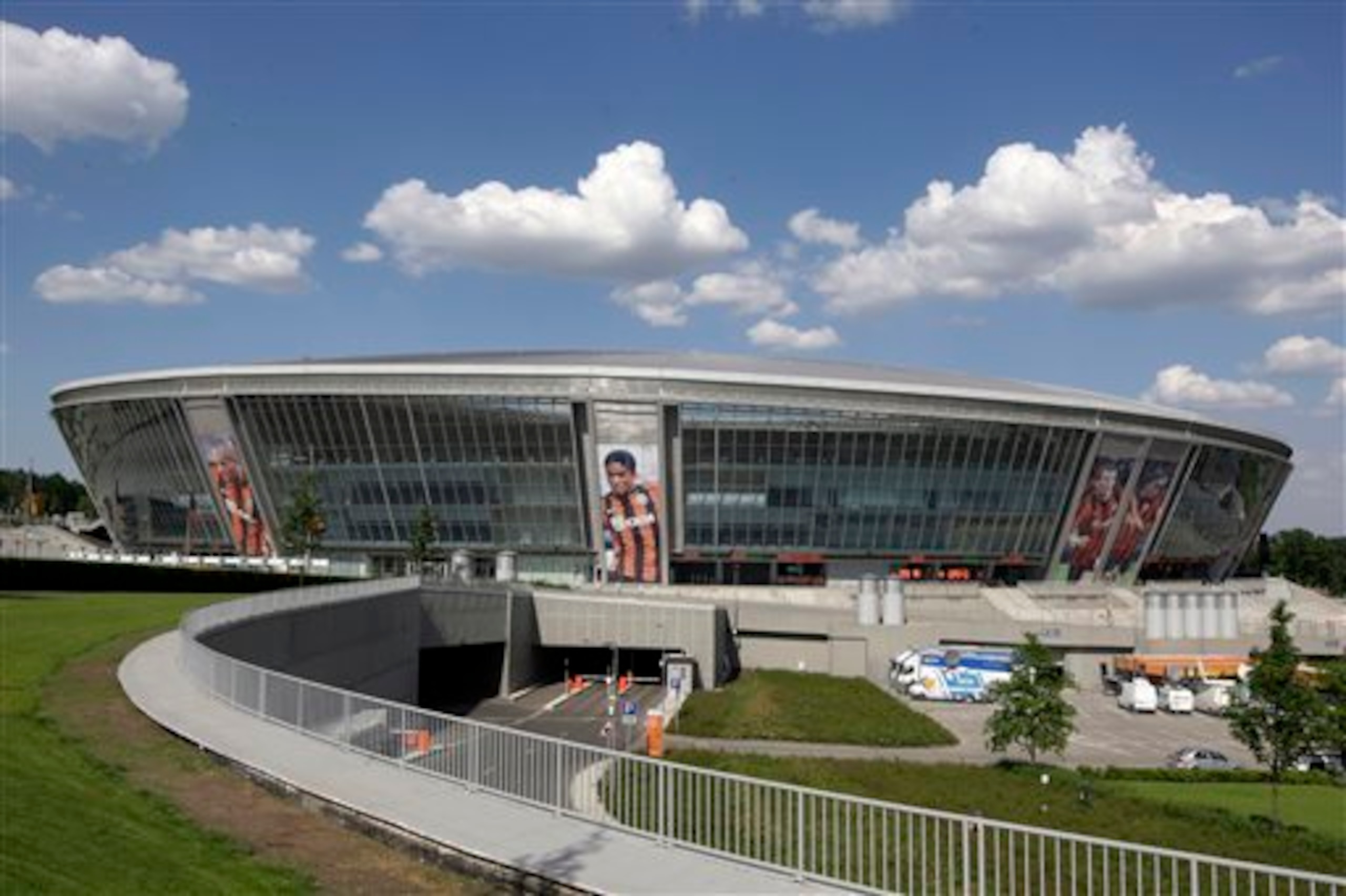
The Donbass Arena is just a short walk along Artema, Donetsk’s main street. On your left you pass a statue of Vladimir Lenin, standing tall in the square that bears his name. Should your legs be tired, the No. 6 tram will take you most of the way, passing buildings old and new; monuments of the city’s past and symbols of the future.
When Shakhtar Donetsk play, the streets are packed with fans wearing orange and black, and fathers and sons hold hands heading to the £242-million, 52,000-capacity stadium. It’s a far cry from the old days at the old Shakhtyor Stadium, when miners would climb the slag heaps that surrounded it to watch for free and thousands crammed into the typically Soviet-style bowl—a stadium vacated since 2009.
TOP NEWS

Final Men's Ballon d'Or Rankings 📊
Live Highlights and Viral Moments 🍿
Most to Blame at Man Utd? 😡
The venues and stadiums differ, but the method is the same anywhere on earth; fans converging to watch their team in action. But this typical scene no longer happens in Donetsk.
The fierce fighting with Russian rebels in the east of Ukraine has seen thousands flee, and Shakhtar, the team representing over a million people, have been forced to move, offices and all.
In July last year, the first-team moved to the capital Kiev, a nine-hour, 700-kilometre drive north-west, while the academy is based east of the capital in Poltava.
The Donbass Arena remains empty, the glass exterior damaged by shelling during the fighting.
"Today, all our thoughts are about when we can go back to Donetsk," says the club's chief executive officer Sergei Palkin.
Despite settling in Kiev, home of Shakhtar’s great rivals Dynamo, the team plays their home games in Lviv, a further 540 kilometres west of the capital. The situation is far from ideal, but when I spoke to Palkin, he told me the side are performing admirably given the circumstances.
"We saw a situation developing in Donetsk and understood it would be impossible to return there. We focused on Kiev as a place of residence and training. These events happened in the summer, before the training camps. We were lucky the team were not in the midst of training at the time."
Moving computers and footballs is one thing—finding homes for dozens of people and their families in new cities is quite another.
Palkin explained just how this was done: "There is an adaptation department at our club, whose priority is to create comfortable conditions for players and coaching staff. This department helps them regarding everyday issues, from schools to housing. Of course, us having a hotel in Kiev has helped a lot; now it is serving as our base, removing many questions."
Shakhtar’s club captain is Croatian full-back Darijo Srna, a man in his 12th year in Ukraine, and the only member of the first-team who isn't Ukrainian or Brazilian. He explained to me that despite the troubles, life is comfortable in Kiev.
"We received a warm welcome in here, with people showing their respect. Even fans of Dynamo applauded us after our game, so I cannot say anything bad about Kiev."
What does become evident however, is Srna’s strong desire to return back to his adopted home city.
“I wanted to travel to Donetsk, but the club did not allow me, and I understand why. The most important thing is that at least some peace has been brought to Donbas; people are no longer dying. It shows that everything will be fine, with Shakhtar returning to Donetsk."
Though it must be extremely difficult for Shakhtar’s players to leave home and move across the country, that feeling of anxiety must surely increase for the academy youngsters.
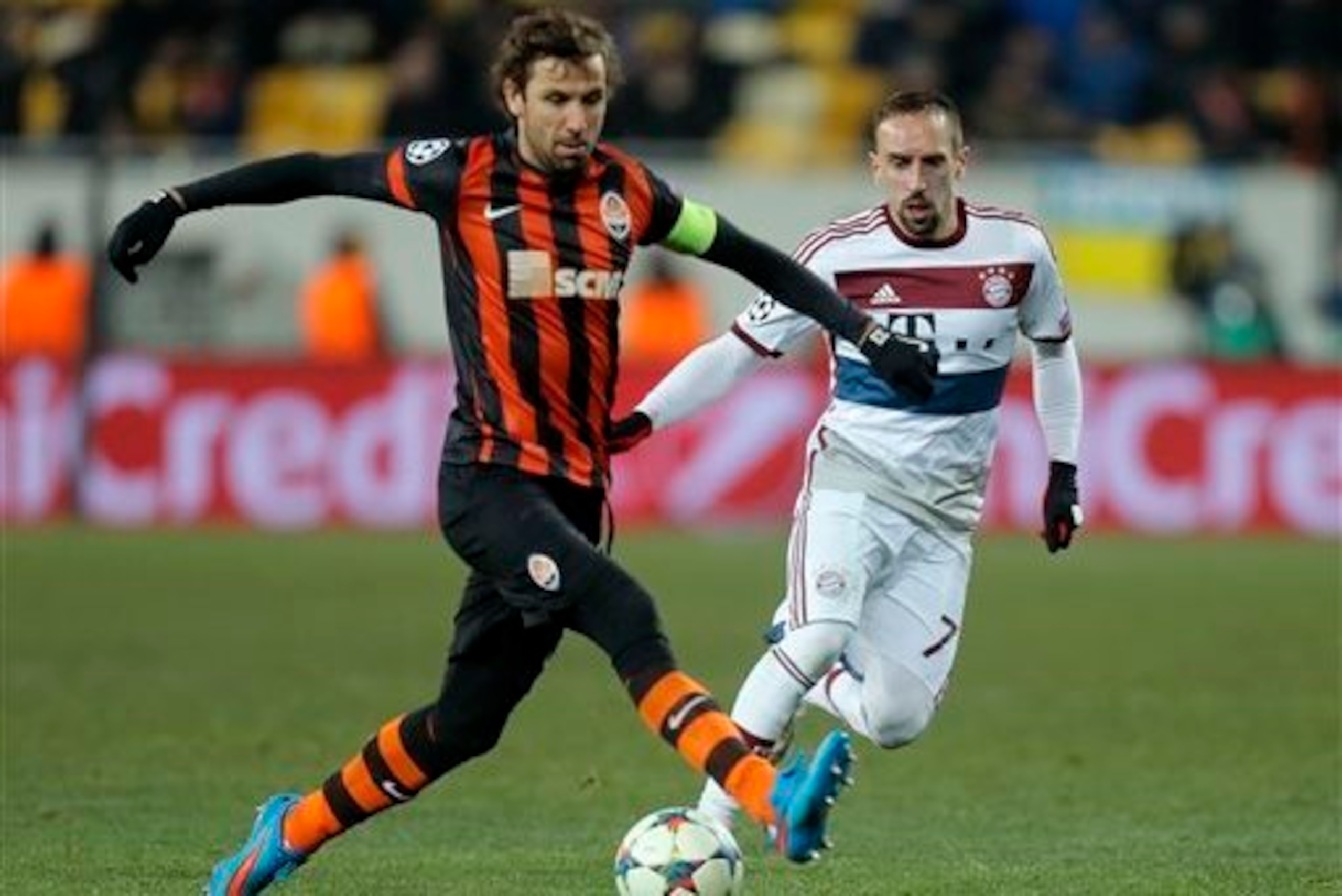
Despite the turmoil, Shakhtar’s under-19 side finished as runners-up in the UEFA Youth League, losing narrowly to Chelsea in the final. Striker Oleksandr Zubkov joined the rest of the youth sector in relocating to Poltava, and the 18-year-old told me about the move away from his family.
"I moved alone. My parents stayed in Donetsk and they reacted calmly, though my mother was upset. I am missing my family a lot, and I talk to them on the phone or via Skype every day."
Though he explained that he missed Donetsk and, unlike Srna, did return east during the winter break, he admits the club has created ideal conditions in its adopted city. "We can develop here without obstacles with the necessary infrastructure," he said.
Palkin, however, feels that the move has impacted on the club, in all aspects. "There are no such precedents, when a club moves from its homeland to another part of the country. It has a very serious impact on our sports performance. Naturally, also, there are additional costs: paying for rented fields, offices, constant flights."
As the club CEO alluded to, it has been a tough campaign on the pitch. Sitting five points behind rivals Dynamo (who allowed Shakhtar to use their training pitches and stadium for a time while they adjusted to life in the west) in the Premier League, the side were eliminated from the Champions League first knockout round 7-0 on aggregate by Bayern Munich, despite holding the German side 0-0 in Lviv in the first-leg.
The return game at the Allianz Arena saw defender Olexandr Kucher sent-off after just three minutes, giving away a penalty in the process. Srna explained his grievances about the game in Munich, highlighting the referee’s nationality.
"The first-leg was an evenly matched game, and the second one began and ended in the third minute. The game was refereed by a Scotsman, whom I respect, but the Scottish league is no better than the Ukrainian or Croatian leagues. Yes there was a penalty, but a red card?"
On the domestic front, I asked Srna if he felt Shakhtar would be ahead of Dynamo if they were playing at Donbass Arena.
“When we play at home, it’s difficult to lose," he said. "I believe we would be champions for a sixth time in a row. But we should not look for excuses now, and we must show respect for each other, the president, the coach and the fans, because they deserve a good result and performance from Shakhtar.”
The Croatian, who can cover all positions on the right of the pitch, was optimistic for Shakhtar’s chances of clawing back a five-point lead at the top.
"I’ve seen a lot in football. Until it’s mathematical, we will fight to the end. Everything depends on Shakhtar, our team is strong but we lack Donbass Arena. There will also be a fight with Dnipro for second place. The club cannot afford to miss out on the Champions League."
There have been reports that 69-year-old coach Mircea Lucescu, coach of Shakhtar for 11 years, was looking to leave the club at the end of the season, though it’s something Srna doesn’t see happening. "If all our players had such character as Mister, it would be much easier," he told me.
"I have known Mister for a very long time. For him, Shakhtar is not his work, it is his family, and I’m sure in such a situation, he would never leave the club. I expect in the next season, Shakhtar will be putting in a lot of effort to become champions."
Despite the country having been at war for many months, both Srna and Palkin were keen for there to be changes to the championship. Palkin explained how he hopes the newly appointed Ukrainian FA president, Andriy Pavelko, will fulfil his promise to make reforms to the game and start a new chapter in Ukrainian football.

"I hope it will change for the better," said the Shakhtar CEO. "Before the start of this season, most clubs agreed to change the format of the championship. Unfortunately, it’s not easy to get your points across to them (the FA), so today we have matches attended by only 500 fans. These are the echoes of short-sighted decisions that have been taken in due time."
At the start of the season, Shakhtar suggested changing the format of the league by having a play-off system to decide the winners of the championship after a regular league season, though this was rejected by the Ukrainian FA.
Cutting the number of teams in the Premier League has been another suggestion to help boost competitiveness, with the current number of 14 deemed too many and diluting the quality of the division.
"We do not want the number of teams to decrease, but we all know today that we must definitely change the format of the competition for attendance and TV ratings to increase, because today we are getting close to the bottom."
Srna hinted that it should be the clubs that decide the format of the league, not the FA. "For me, the presidents of Illichivets, Shakhtar, Metalurh Donetsk, Zorya and Olimpik are great people. They saved Ukrainian football, a big thanks to them for that.
"Therefore, I believe that it is necessary to understand who is in a position to finance everything and decide the format of the league."
When the discussion turns to limiting the number of foreign players, Srna again was sceptical.
"I am not speaking on behalf of the club; I’m expressing my personal opinion. Limit of foreign players does not benefit. These limits have lasted for about nine years and Ukraine has reached only one World Cup. A good Ukrainian will always play, limit or not. How can one not field Yaroslav Rakitskiy, Kucher, Andriy Yarmolenko, Yevgen Konoplyanka, Ruslan Rotan, Roman Zozulya, Yevgen Seleznyov in the starting lineup?"
Despite the troubles, it has been a very successful season for Ukrainian football on the pitch. Both Dynamo Kiev and Dnipro have made it to the last eight of the Europa League, while Shakhtar’s qualification for the knockout stages of the Champions League was a minor miracle given their circumstances.
Football provides a welcome distraction for many people throughout the world during difficult times, and the people of Donetsk are no different. Shakhtar’s orange shirts represent the light that hits the coal miners' faces when emerging from the dark depths underground, yet it now symbolises a hope for a brighter future.
Championships and trophies are nice, but the pilgrimage from Donetsk’s suburbs to the Donbass Arena are what the fans, players and staff of Shakhtar really want.
All quotes in this piece were gathered firsthand.


.jpg?w=2560 "5 Teams Eyeing Jonathan Taylor")
.jpg?w=2560 "Mahomes Told Teammate to Leave Meeting")



.jpg?w=2560 "NFL investigating Eagles")
.jpg?w=2560 "Jonathan Taylor Landing Spots 📍")
