

Lewis Hamilton Bounces Back Strongly in 2015 Chinese Grand Prix Qualifying
It was at the Shanghai International Circuit back in 2008 where Lewis Hamilton confirmed his status as a Formula One world champion in waiting.
There had, of course, been several of flashes of brilliance over his opening season-and-a-half in the sport, which made it clear that Hamilton would soon emerge as a title winner.
His podium finish on debut in Australia, his maiden victory in Canada in just his sixth grand prix and his walk-on-water acts at Japan '07 and Silverstone '08 were just a few examples of his divine, natural talent.
TOP NEWS

Unranked CFB teams cause chaos in Week 8

Brown with an all-time summary of relationship with Tatum

More top teams upset and more takeaways from CFB Week 8
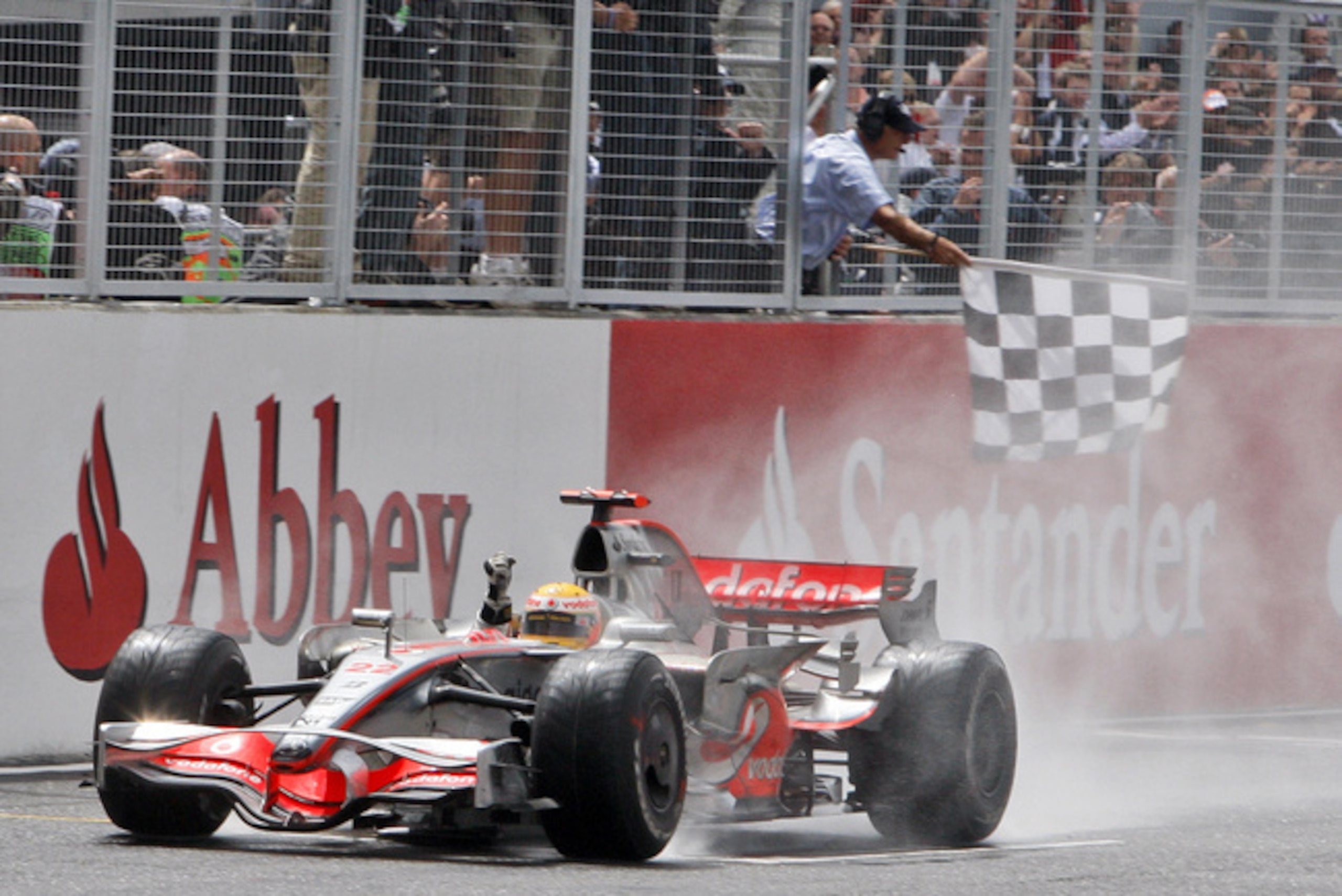
But it was the Chinese Grand Prix, the penultimate round of the 2008 season, that made it obvious Hamilton had the grit, the resolve and the nerve to make the leap from mere mortal to world champion.
At the previous round at Fuji Speedway, a venue where he had won so convincingly in the wet in 2007, Hamilton, the championship leader, made a poor getaway from pole position.
And in his attempt to reclaim the lead from Kimi Raikkonen at the first corner he completely missed his braking point, sending himself, the Ferrari and almost half the field wide.
After rejoining in third, behind the BMW-Sauber of Robert Kubica and eventual winner Fernando Alonso, Hamilton ran wide once again at the very next braking zone, Turn 3, losing four more positions before being spun by Felipe Massa, his title rival, on the following lap.
To add insult to injury, the British driver—after stopping for fuel and tyres—was handed a drive-through penalty for the Turn 1 incident, from which he could only recover to finish 12th, almost a lap behind Alonso.
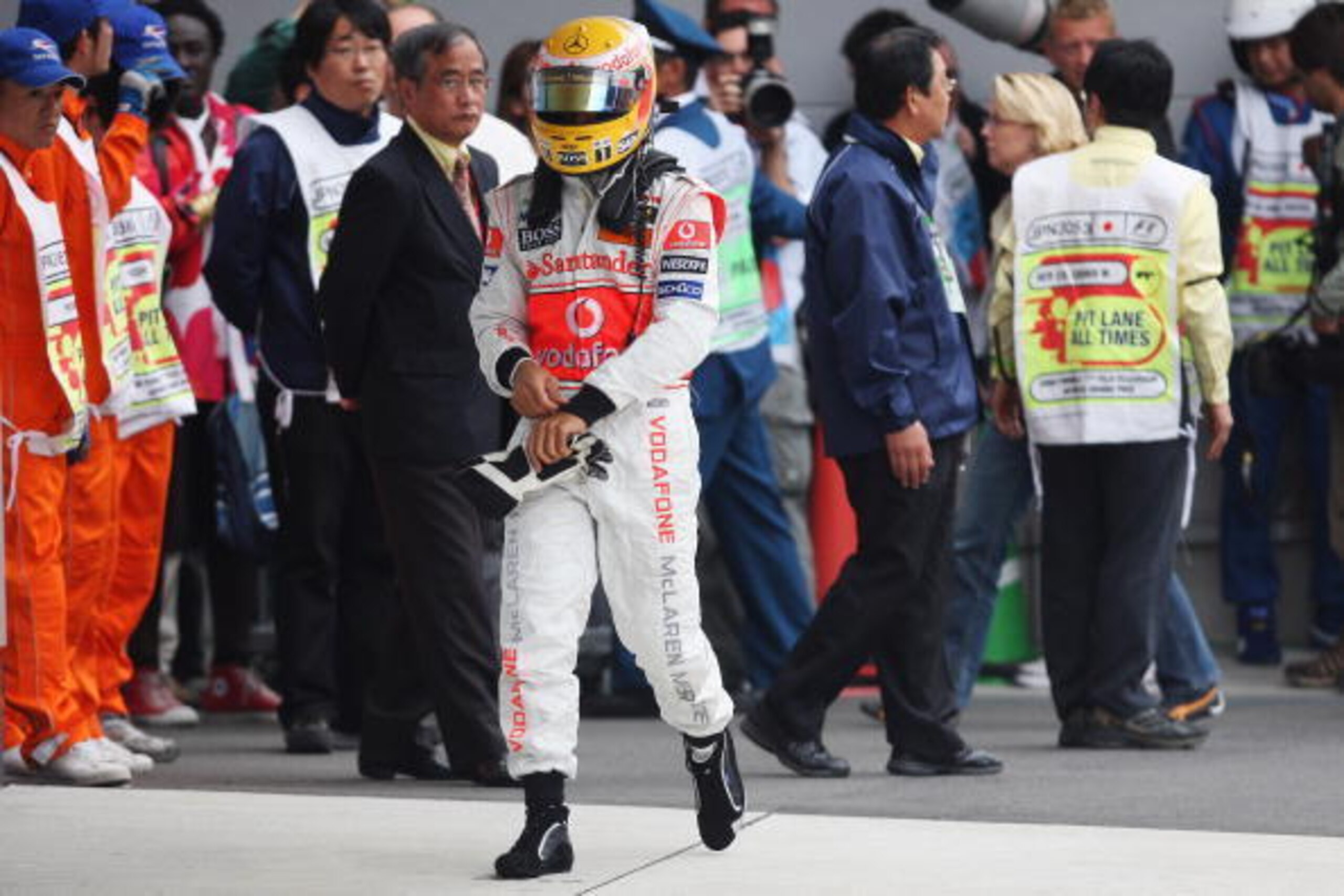
What should have been a routine pole-to-flag win, a crucial step toward his first world championship, was an implosion as Hamilton came down with a bad case of the yips, losing all sense of focus and concentration, dazzled by the very thought of the title.
So when, just seven days later, Hamilton arrived in China with just a five-point advantage over Massa in the drivers' standings, the British driver was under a huge amount of pressure.
Was it happening again? Twelve months after gifting a Ferrari driver the championship in a race at Shanghai, was the title once again slipping away at the crucial time?
Could he handle the pressure? Would his highly emotional nature and inexperience, seemingly his biggest strengths when all was well, be his greatest weaknesses in times of difficulty?
Any concerns over how Hamilton would deal with the very vivid memories of Fuji and the previous year, however, were proved to be unjustified as he converted a simple pole into what to this day remains one of his most glorious victories.
There was no slow start, no running wide, no out-of-shape moments and no reliability worries as a disciplined Hamilton oozed complete control, crossing the line 15 seconds ahead of Massa and placing one hand on the championship.
Most significantly, it proved to everyone—himself and his McLaren team included—that Hamilton was ready to join the elite.
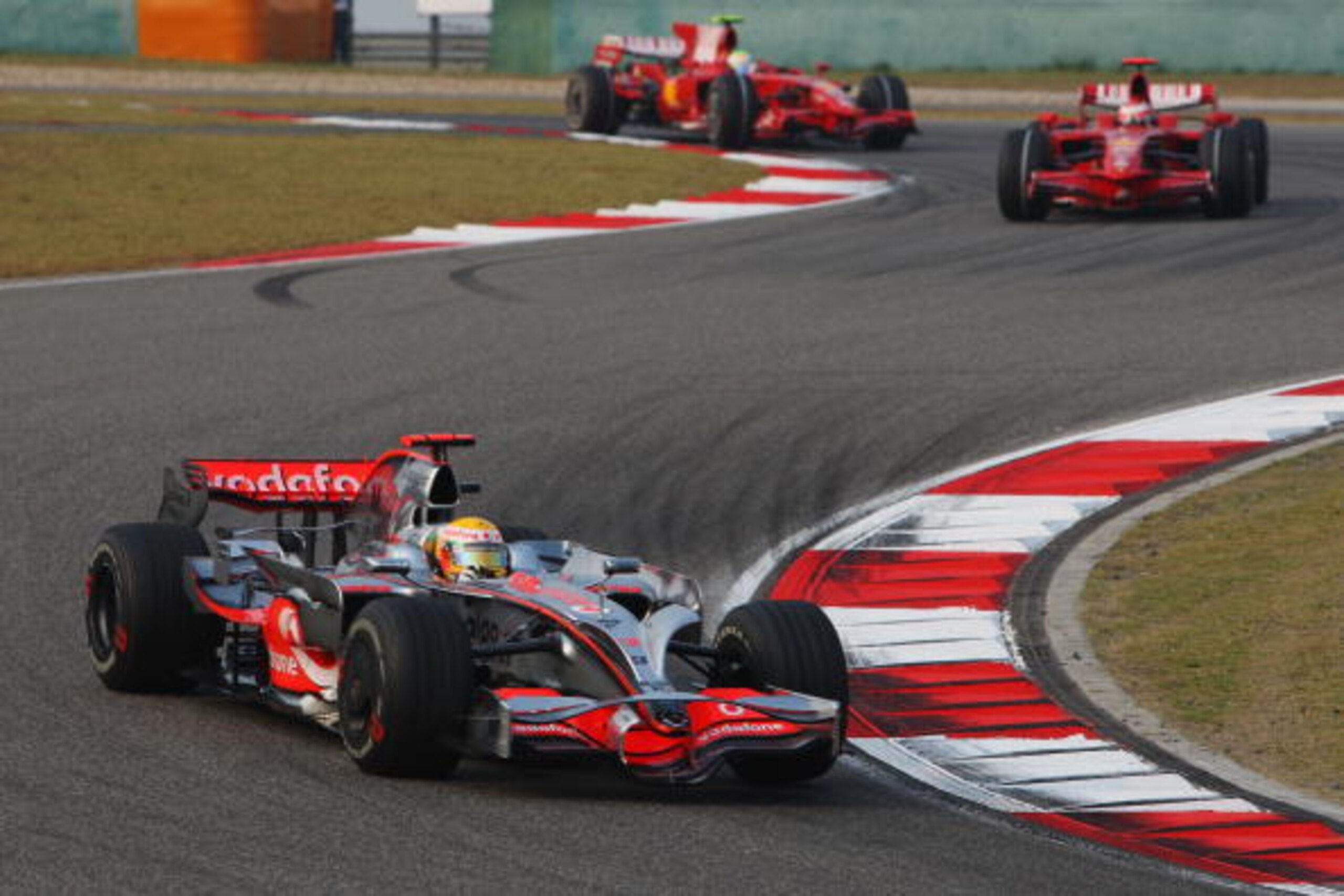
Since that hazy afternoon in October 2008, Hamilton has always tended to produce a major performance when required and, particularly over the last 12 months, whenever his qualities have been questioned and his superiority threatened.
There was a certain inevitably, then, that after his Mercedes outfit's winning streak of eight races came to an end at the Malaysian GP a fortnight ago, it would be Hamilton leading the retaliation in China.

While this weekend's grand prix doesn't compare to the '08 Shanghai event in terms of its wider importance, it is arguably the most significant race for Mercedes since the Silver Arrows emerged as F1's dominant force at the beginning of 2014.
After winning the opening race of the season in Australia by over 30 seconds, the team were humbled in Malaysia as Hamilton and his team-mate, Nico Rosberg, were beaten on equal ground for the first time since 2013 by Ferrari and Sebastian Vettel.
It was a race in which neither team nor driver covered themselves in glory as Mercedes made strategic mistakes—sacrificing track position by pitting both cars during the early safety car period and later fitting the two-time world champion with the hard, rather than medium, tyres—and Hamilton handled himself poorly, berating the team over the pit-to-car radio as the win slipped away.
After that "wake-up call," as Mercedes team principal Toto Wolff put it to Sky Sports' James Galloway, there was plenty of pressure on the reigning world champions to provide an instant response this weekend and restore their advantage.
In a difficult qualifying session in which drivers of the calibre of Raikkonen and Valtteri Bottas noticeably struggled to keep their cars—which, let's remember, have been the best of the rest behind Mercedes so far this season—on the circuit, Hamilton was immaculate, calm and commanding, just as he was in 2008.
Fastest in Q2, Hamilton needed just the one attempt to secure pole in Q3, with his first lap of one minute, 35.782 seconds, as per the official F1 website, good enough for top spot despite his main rivals all improving their times with the aid of ever-improving track conditions.
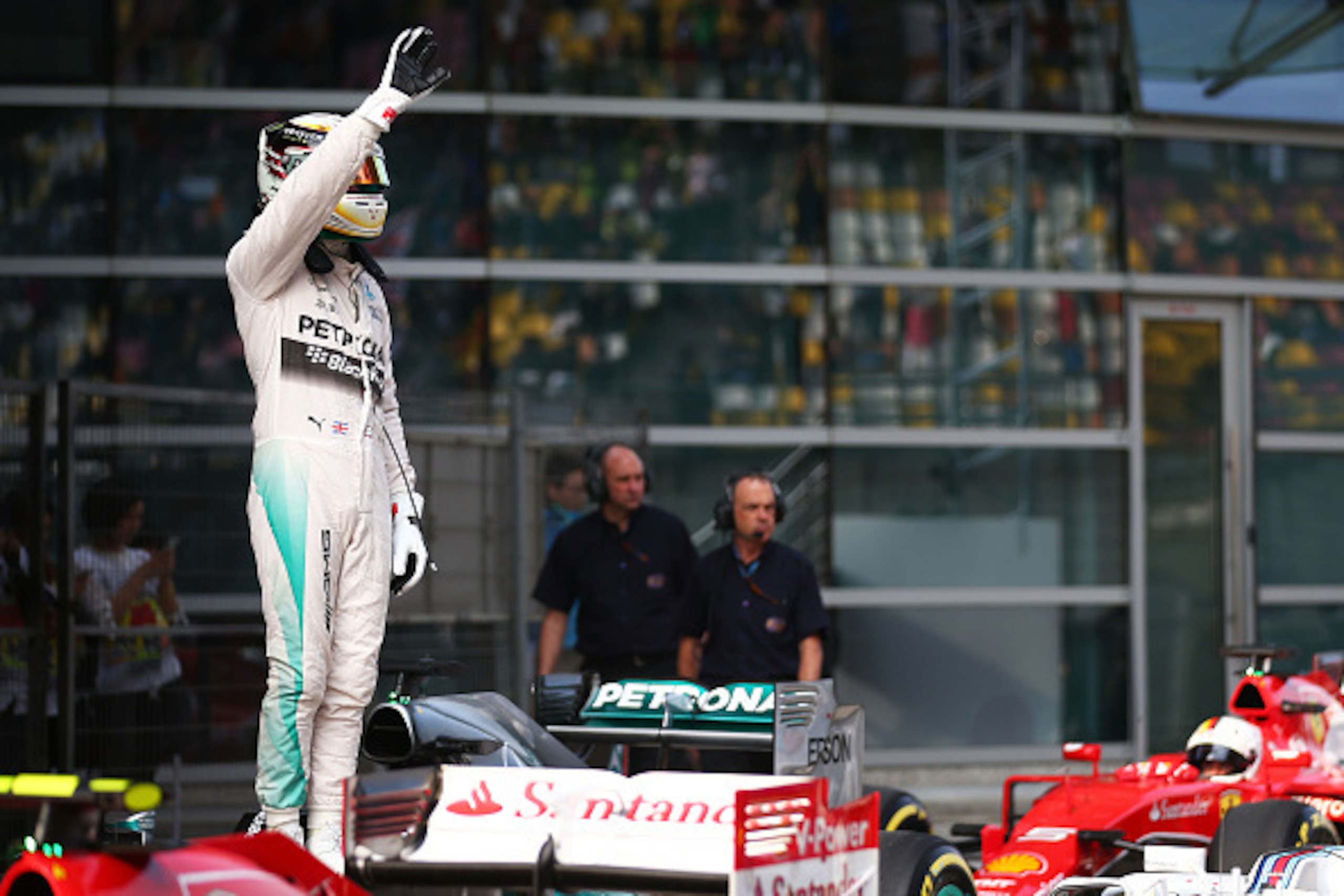
With a gap of 0.905 seconds to third-placed Vettel, according to the official F1 website, the Silver Arrows have undoubtedly re-established their authority at the front of the grid.
Hamilton's ability to bounce back strongly from disappointment and missed opportunities has been one of his most impressive traits over the last year, with his retirement from the opening race of 2014 and that collision with Rosberg in Belgium sparking career-best winning streaks.
And after Vettel's win in Malaysia appeared to blow the 2015 title race wide open, expect a composed Hamilton, once again ready to right the wrongs of the previous race, to close it firmly with victory in China.

.jpg?w=2560 "Chiefs Giants Football")
.jpg?w=2560 "Jonathan Taylor Landing Spots 📍")

.jpg?w=2560 "5 Teams Eyeing Jonathan Taylor")

