


For most NBA players, their season before free agency is the proverbial fork in the road of their playing careers.
Millions of dollars can be won or lost over the course of a contract year.
This 82-game date with destiny is equal parts alluring and terrifying. Pass this test, and players can score themselves a lifetime of riches. Fail it—through sagging statistics, personality problems, injury issues or any combination of the three—and the economic impact of that loss can be staggering.
Players rarely, if ever, admit to its significance, but fans and analysts preach its importance ad nauseam. Both actions are justified in their own way. The more players can ignore the financial security at stake, the better chance they have of not letting it affect their game. But the weight of these one-year auditions is every bit as heavy as the public and the media say it is.
With this campaign's finish line in sight, there's enough data available to tell which players helped and hurt themselves most over the last six months.
Honorable Mention
1 of 9
Players Who Helped Themselves
DeMarre Carroll, SF, Atlanta Hawks
Casual fans might know Carroll as Atlanta's other starter: the only one of the five who missed this season's All-Star festivities. But they may not realize how much the 28-year-old boosted his bank account. The Hawks' defensive stopper has also thrived at the opposite end, posting personal bests in points, field-goal percentage and three-point accuracy.
Danny Green, SG, San Antonio Spurs
Kawhi Leonard isn't the only two-way swingman shining in the Alamo City. Green has tested the limits of his "three-and-D" label. While he continues dazzling in both areas, he's also posting personal bests nearly across the board: points, boards, assists, steals and blocks. He'll face his share of "system player" questions, but every club could use a lockdown defender, knockdown shooter and selfless contributor.
Players Who Hurt Themselves
Wesley Matthews, SG, Portland Trail Blazers
Matthews was well on his way to joining the other category, improving what was already a solid two-way foundation. He was a consistent scoring threat, a defensive stopper and a quantity-plus-quality perimeter shooter. Then, a torn Achilles brought everything to a screeching halt. The Blazers could still bring him back in unrestricted free agency—they've clearly missed his defense and emotional leadership—but they might dial back the years or the money (or both) that they were willing to give him.
Mirza Teletovic, PF, Brooklyn Nets
It's not Teletovic's fault that he's on this list. He's been sidelined since late January, when tests revealed blood clots in his lungs. He'll still get his fair share of looks in free agency, but potential suitors were hoping to see more of him this season. In two of his three NBA campaigns, he's had a field-goal percentage below 38.5 and a three-point success rate under 35 percent.
Pero Antic, C, Atlanta Hawks
Antic mildly impressed as a rookie last season, but he's either spent this year trapped in a sophomore slump...or he's just not talented. His per-36-minute marks, via Basketball-Reference.com, are uninspiring (12.4 points, 6.4 rebounds, 0.5 blocks), and his woeful shooting percentages (36.4 from the field, 29.5 from three) make it impossible to tout him as a stretch big. At 32 years old, he can't sell teams on his ceiling. He can only hope they don't notice his free-falling basement.
Helped: Khris Middleton, SG, Milwaukee Bucks
2 of 9
Raise your hand if you saw Milwaukee Bucks forward Khris Middleton ranking inside the top 10 of ESPN.com's real plus-minus. If you have your hand raised, you're either Middleton himself, a close relative of his or you're lying.
Just two seasons back, Middleton averaged only 17.6 minutes per game as a rookie for the Detroit Pistons. After being attached to the July 2013 trade that sent Brandon Jennings to Motown and brought Brandon Knight to Milwaukee, Middleton emerged as a solid complementary player. He went for 12.1 points per game, connected on 41.4 percent of his three-point attempts and defended pretty well last season.
It was promising to see, but it was hardly the evidence of an impending meteoric rise.
What Middleton's story lacks in logic, it replaces with two-way production.
He's been a 17-points-per-game scorer since the All-Star break, feasting on catch-and-shoot chances and post-up opportunities. At the opposite end—where his length and athleticism allow him to defend multiple positions—he's held his matchups 4.7 percentage points below their field-goal average.
"He's accepted the challenge to get better," Bucks coach Jason Kidd said, per Charles F. Gardner of the Milwaukee Journal Sentinel. "He's gotten better in all phases of his game—not just being known as a shooter, but defensively. And he's starting to be more vocal."
Just 23 years old, Middleton's future looks blindingly bright. It will take several armored trucks to monetize that potential when he reaches restricted free agency in a few months.
Hurt: Jimmer Fredette, PG, New Orleans Pelicans
3 of 9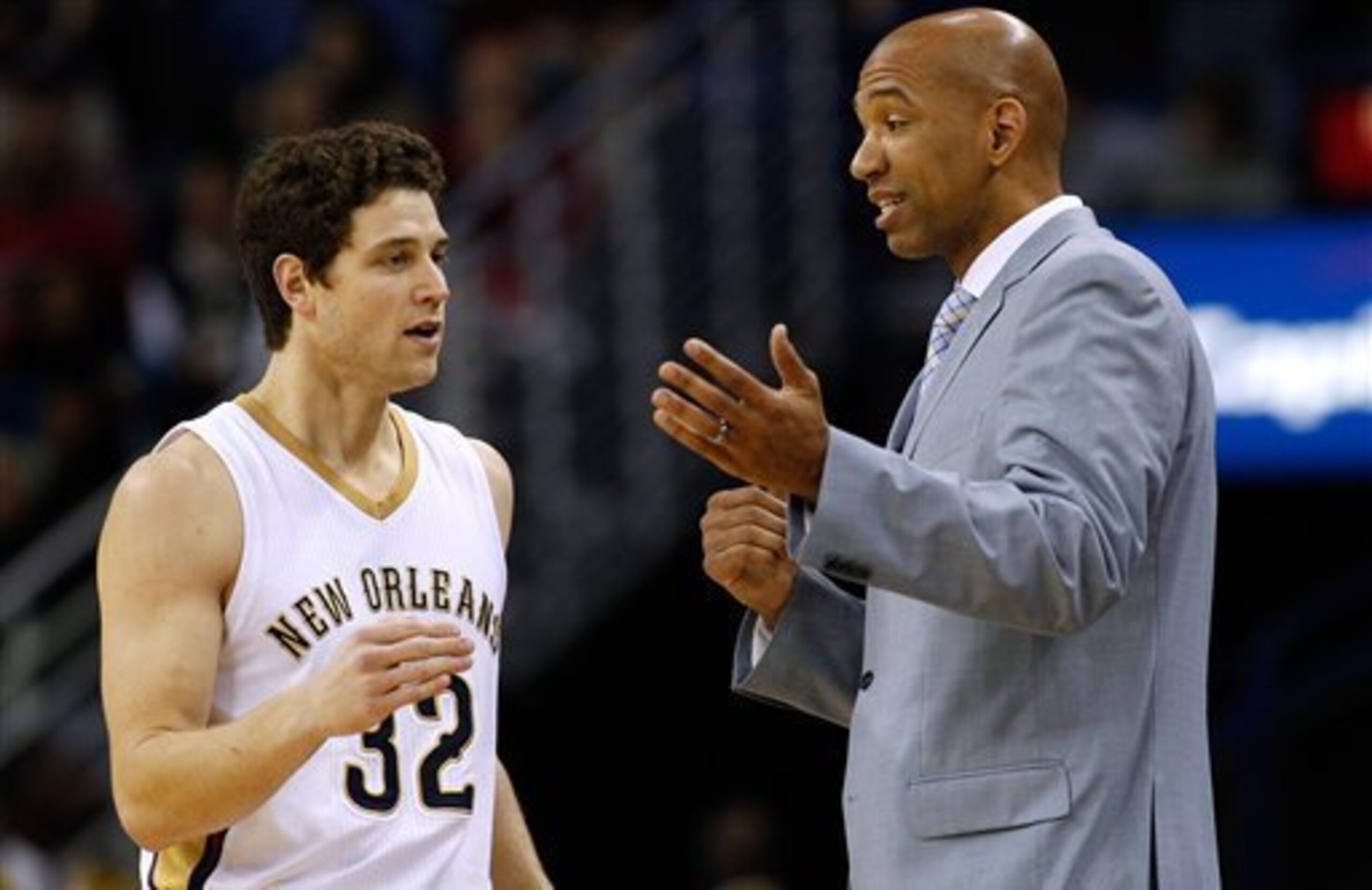
Remember him?
With the hype Jimmer Fredette created during his college days at BYU, he isn't the easiest guy to forget. But given his struggles at the NBA level, it's OK if you lost track of the former collegiate sensation.
It's been a downward spiral since Fredette was taken with the 10th overall pick in the 2011 draft. He didn't make a ton of noise with the Sacramento Kings during his first season (7.6 points in 18.6 minutes per game), but it's more than he's generated since.
His playing time and production have both fallen in each of the last three seasons. Teams might be willing to look past a reduction in raw numbers, but Fredette has now lost his efficiency, too.
The Pelicans have kept him on a short leash (10.2 minutes per game), and he's done nothing to warrant extending it. His field-goal percentage has plummeted to a career-worst 38.0. Even more troubling is his sinking three-point accuracy rate, which has bottomed out at an atrocious 18.8 percent.
He has yet to answer the questions scouts originally raised about his defense. He plays like a shooting guard, but he has the size of a point (6'2"). Shooting was the only thing Fredette could really sell to potential employers, and now he's left hoping they'll ignore his numbers in that department.


Helped: Brook Lopez, C, Brooklyn Nets
4 of 9
Brook Lopez's return to relevance has brought good and bad news to the Brooklyn Nets.
On the positive side, they should be approaching the end of their eight-figure commitment to a 7-footer with a history of injury problems and rebounding issues. He holds a $16.7 million player option for 2015-16, but "most execs expect Lopez to opt out and enter free agency," according to Grantland's Zach Lowe.
This is where things get a little dicey for Brooklyn and potentially very lucrative for Lopez.
He hasn't missed a game since late December, and he's been scorching hot since rejoining the starting lineup on March 8. Over his last 20 outings, he's put up 22.2 points on 56.4 percent shooting, 9.7 rebounds and 2.1 blocks.
Any idea how many 22/9/2 guys there have been this season? One—the single-browed superhero known as Anthony Davis.
That's the kind of statistical company Lopez has kept over the past four weeks. He's been even better than the player Brooklyn signed to a four-year, $60 million deal in 2012.
"He's screening as if he were a starving man who can only fuel himself with picks," wrote Bleacher Report's Fred Katz. "He's finding space on the inside and showing off a bevy of floaters and hook shots, picking apart defenses with his craftiness in the paint. He's grabbing offensive boards at a rate he hasn't before."
Lopez is ringing the register every time he takes the floor. What's the bad news for Brooklyn? The Nets face the prospect of either giving Lopez a longer, richer contract than the one has, or they risk losing their best player to a team that will.
Hurt: Gerald Green, SF, Phoenix Suns
5 of 9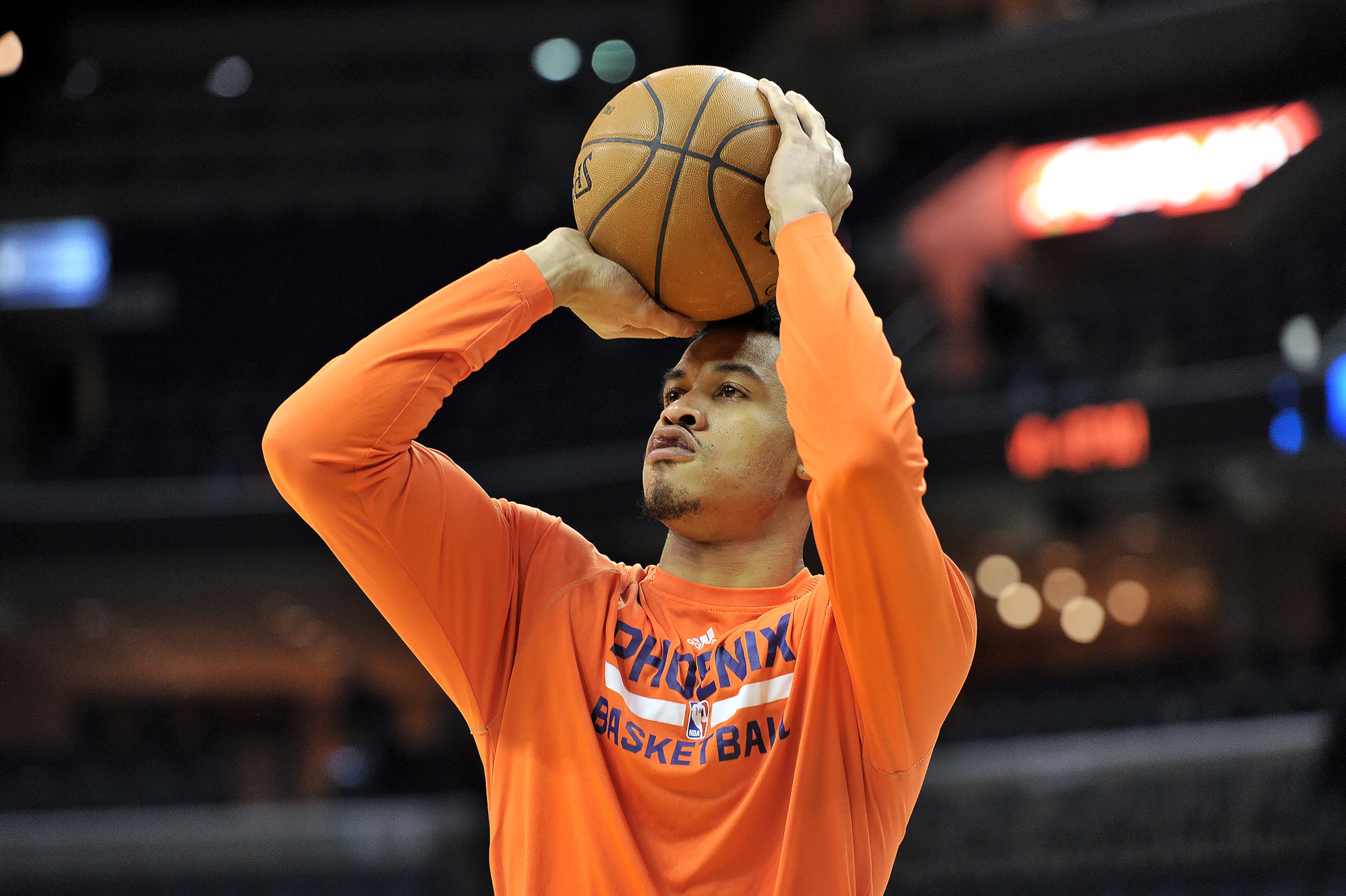
Timing can be everything for NBA free agents.
While it gives some guys the chance to strike when the iron is hot, it floats others into free agency when their stock is on a downturn. Phoenix Suns swingman Gerald Green is a part of that frustrating second group.
Teams in need of a spark plug would have flocked quickly to Green last summer if they had the chance. The high-flying former lottery pick had just come off a career season in which he posted 15.8 points on 44.5 percent shooting from the field and 40.0 percent from three.
But his market may have thinned considerably since. His scoring average has slipped to 11.7 points per game, and his shooting rates have dropped across the board (.412/.348/.832 slash line).
Never the greatest defender, he's not someone who can afford to have offensive struggles. When they surfaced this season, Suns coach Jeff Hornacek sliced into Green's playing time and even held him out of a few games.
"It comes to the point where, if you're not scoring and if your defense isn't picking up, it's hard to stay in the game," Hornacek explained of Green's demotion, per Paul Coro of The Arizona Republic.
Green's agent, Kevin Bradbury, called Hornacek's criticisms "nonsense," via Sean Deveney of Sporting News, but the damage might already be done. Even if Green's suitors don't agree with Hornacek's assessment, they'll have to figure out why the Suns felt their best chance at winning came from limiting Green's role.
Helped: Draymond Green, PF, Golden State Warriors
6 of 9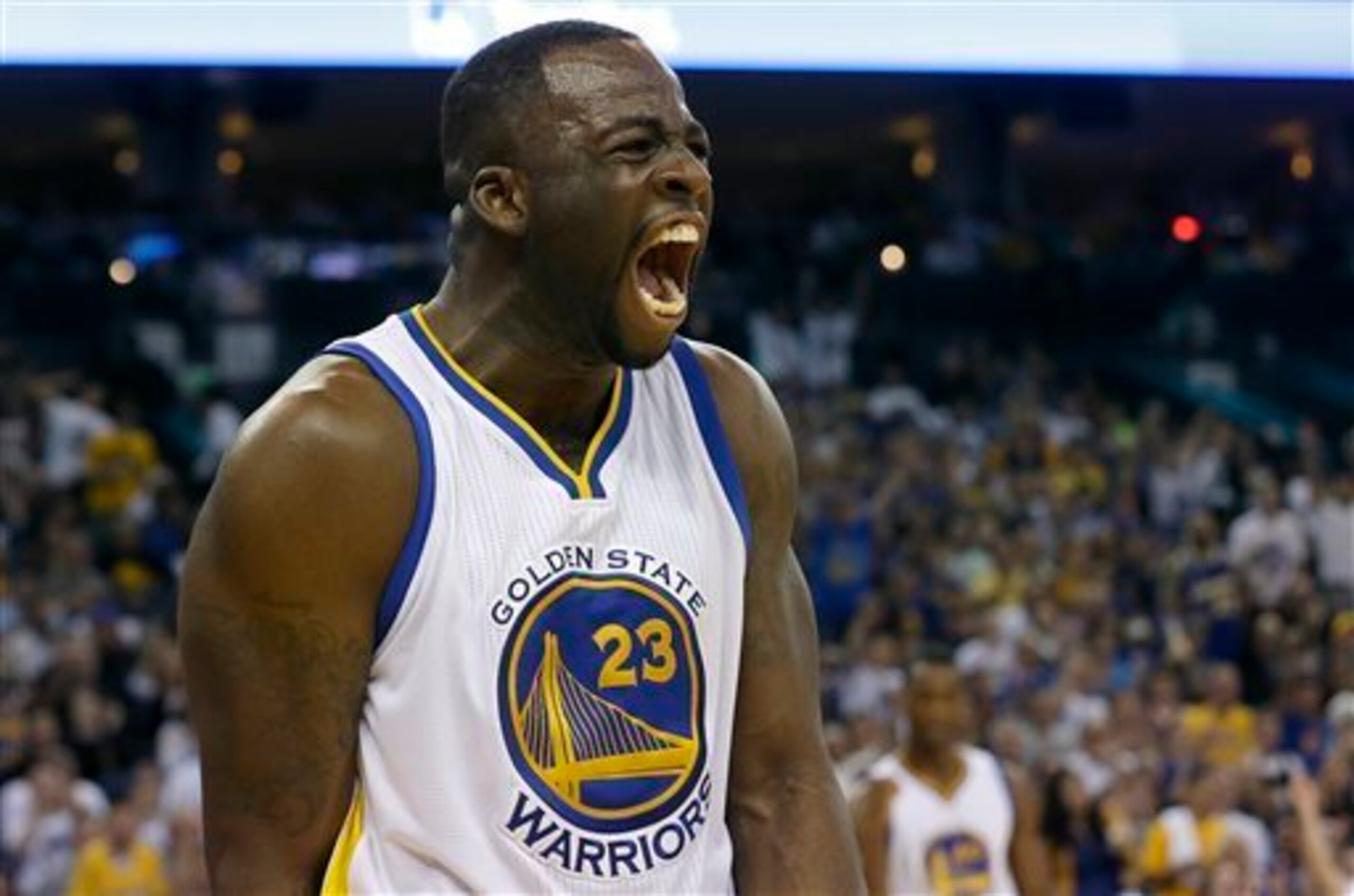
Draymond Green is the heart and soul of the Golden State Warriorsbetter known as the NBA's top team. If that image above didn't paint the complete picture, he is the emotional leader of Bay Area basketball.
"We need that brashness that he has," Warriors coach Steve Kerr told Grantland's Jonathan Abrams. "We have a very quiet team. We’re confident, but he gives us an edge that I love."
Green's intensity and genius-level hoops intelligence are two of his biggest gifts to Golden State. He's one of those needs-to-be-seen-to-be-appreciated types: a guy whose value extends well beyond the box score.
But his statistical strides alone would've netted him a major payday this summer. He's a disruptive defensive presence, a great passer, a relentless rebounder, a solid complementary scorer and a steadily improving shooter.
In other words, the guy does everything. Put that under the "skills" section of your resume, and potential employers will overwhelm you with attention.
Green's about to attract that type of interest. He's a candidate for both Defensive Player of the Year and the Most Improved Player award. He can guard all five positions and fill in wherever he's needed at the offensive end.
In the summer of 2012, he fell to the 35th pick of the draft. Just three years later, he has a shot at joining the NBA's max-contract club.
Hurt: JaVale McGee, C, Free Agent
7 of 9
This wasn't supposed to be a contract year for athletic, erratic center JaVale McGee.
He should be finishing up the third season of the four-year, $44 million pact he signed with the Denver Nuggets in July 2012. But the Shaqtin' A Fool star never settled into the Mile High City. Injuries and inconsistencies ultimately defined his Denver days.
The Nuggets wound up trading McGee and a protected first-round pick to the Philadelphia 76ers in exchange for...the draft rights to Cenk Akyol—the 59th selection of the 2005 draft. Philly waived McGee shortly thereafter, presumably so he'd have a chance to latch on with a contender.
He almost landed with the Boston Celtics, but the two sides could not come to terms on a contract. There hasn't been any real NBA buzz around him since.
That should be shocking, given his unique physical abilities and absurd athleticism. But natural gifts need to be cultivated. His were tossed in a dumpster, set on fire and pushed over a cliff.
He can block a ton of shots, but he's not a good defender. His offensive range extends as far as he can dunk a basketball—and only if a post move isn't required to set up the slam. Even teams that are desperate for size won't take on a 27-year-old project.
"All that's left now is a player without a jump shot who can dunk while contributing almost nothing defensively," wrote The Washington Post's Neil Greenberg.
How's that for a sales pitch?
Helped: Jimmy Butler, SG, Chicago Bulls
8 of 9
No matter what Jimmy Butler paid for his crystal ball, it was worth the investment.
By trusting his talents—"deciding that I want to bet on myself" as he put it, per Yahoo Sports' Adrian Wojnarowski—the Chicago Bulls swingman shattered all projections for his potential earnings.
The Bulls reportedly offered Butler a four-year, $40 million deal at the start of the season, a source told Joe Cowley of the Chicago Sun-Times. His next contract could be worth more than twice that amount. Chicago is now prepared to give him the max before another team extends an offer to the restricted free agent-to-be, according to David Haugh of the Chicago Tribune (h/t NBA.com's Fran Blinebury).
Butler booked his first All-Star trip this season, while pushing nearly his entire stat sheet to career heights.
He was an All-Defensive second-teamer last season, and he has maintained that standard again this year. What's different now is that he's making a similar impact on the other end.
He leads the Bulls in scoring at 20.1 points per game. His 58.3 true shooting percentage ranks sixth among the 19 players averaging 20-plus points. He's never had a higher usage rate or assist percentage, and his turnover percentage has never been lower.
"He's grown every year," Bulls coach Tom Thibodeau said, per Andrew Seligman of The Associated Press. "He's a primary scorer. He's a great two-way player. He's a great defender."
He's about to get paid beaucoup bucks. Butler gambled on himself, and it soon will yield a jackpot prize.
Hurt: Rajon Rondo, PG, Dallas Mavericks
9 of 9
It didn't sound crazy when Rajon Rondo said he sees himself as a max-contract player at the Boston Celtics media day, per ESPN.com's Baxter Holmes. But it's starting to look that way now.
"Rondo is 29 and just 6'1" in the first place. He doesn't have the same athleticism (or desire to defend) that he did before his January 2013 ACL tear," wrote Bleacher Report's Kevin Ding. "He is a mind-bogglingly bad shooter."
What part of that scathing review screams—or even whispers—max-contract candidate? It sounds more like that of a player who would be fortunate to sniff out any kind of deal.
Rondo's stock obviously hasn't fallen that far. But encouraging signs have been nearly impossible to find.
The two-time assist champ has averaged only 6.5 dimes per game since joining the Dallas Mavericks in December. He's putting up single-digit points a night (8.8) for the first time since his rookie year. He's shooting a forgettable 42.4 percent from the field, a frightening 33.2 percent outside of five feet and an unforgivable 35.7 percent at the foul line.
He earned a one-game suspension for a shouting match with Mavs coach Rick Carlisle, and that might only qualify as one of Rondo's minor problems. Dallas had a .704 winning percentage before Rondo arrived and owns just a .558 mark since his Dec. 20 debut. The Mavs have been 3.1 points per 100 possessions better when he doesn't play.
Someone is going to pick him up this summer. But the difference between the value of that contract and the max money he originally envisioned might be astronomical.
Unless otherwise noted, statistics used courtesy of Basketball-Reference.com and NBA.com.

.jpg?w=2560 "Mahomes Told Teammate to Leave Meeting")
.jpg?w=2560 "5 Teams Eyeing Jonathan Taylor")

.jpg?w=2560 "NFL investigating Eagles")
.jpg?w=2560 "Jonathan Taylor Landing Spots 📍")

