Moves Minnesota Vikings Will Regret Not Making This Offseason
No offseason is perfect, and the Minnesota Vikings are no different from the other 31 teams when it comes to free agency and the regrets they’ll have.
Evaluating free agency isn’t easy, either, and moves that look good at the time may turn out to be duds, while others that look like regrets turn out to be lucky moves. The Vikings looked to be big winners, for example, when they signed Madieu Williams—a contract that turned out to be a big-money albatross for the Vikings.
On the other hand, signings can work out well. Going after an old and broken Brett Favre prior to the 2009 season was well criticized, but it certainly created wins.
For what it’s worth, figuring out which moves the Vikings will regret not having made is a fool's errand, but we’ll do our best; after all, the front office needs to be held accountable.
Not Fielding a More Competitive Offer for Guard Clint Boling
1 of 5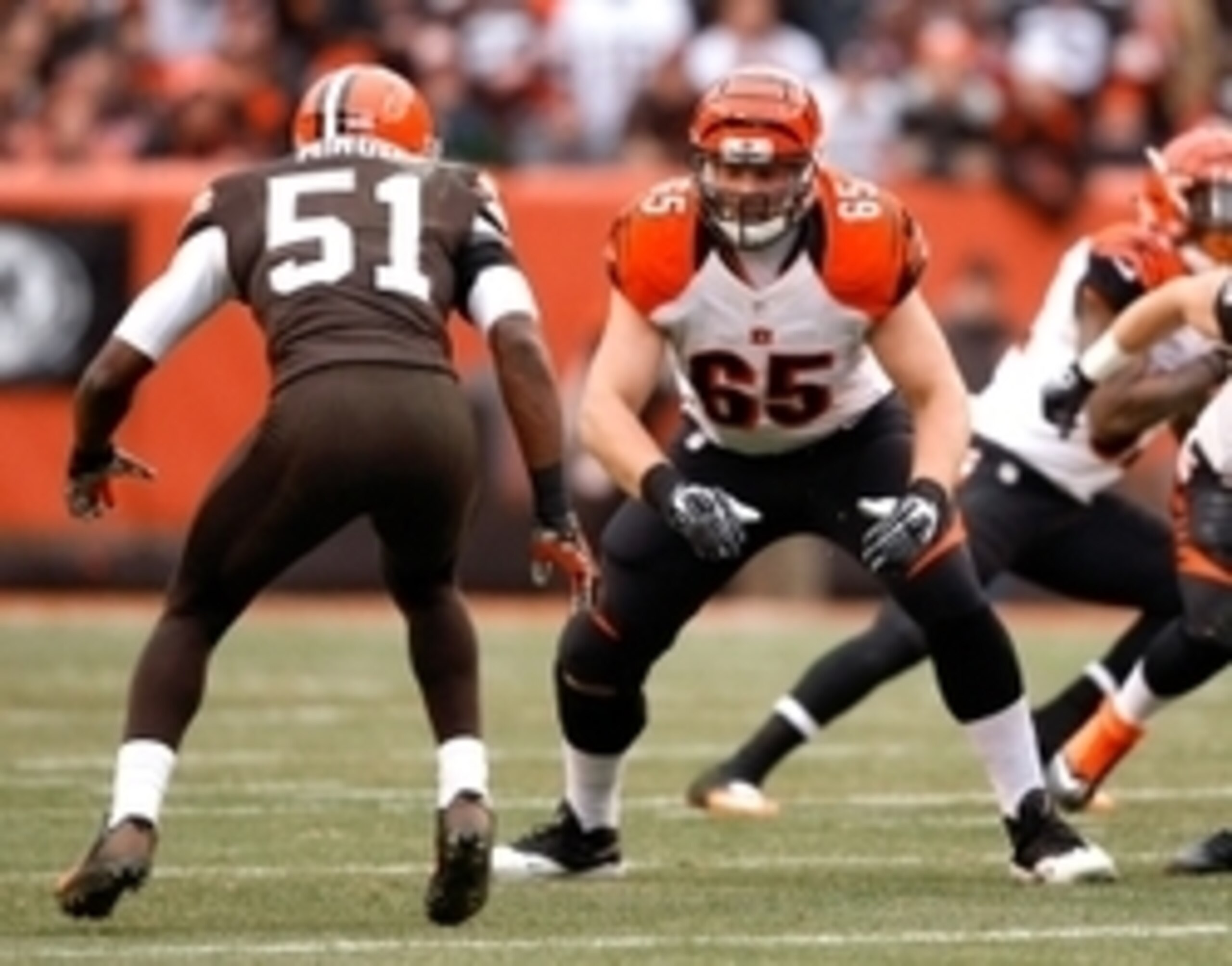
The Vikings may not think they have a problem at guard, but even with what looks to be some confidence in the position, they were willing to pursue Clint Boling, per Chris Tomasson at the St. Paul Pioneer Press.
It’s easy (and perhaps correct) to interpret their slow movement on the guard market—with nary a word on any potential pursuit of Orlando Franklin or Mike Iupati—as confidence that they have a starter somewhere on their roster, be it Joe Berger (who took some time to re-sign), David Yankey, Michael Harris or Austin Wentworth.
That may seem like an underwhelming group of names to an outsider, but it is true that Berger played far better than his reputation suggests he has over the last few years.
But to imagine that the Vikings will have average guard play over this next year as they still try to figure out if the left tackle position can improve is asking a bit much.
They could have grabbed a cheap guard used to versatile running schemes by pursuing Boling more aggressively, and he would have likely been an instant upgrade in pass protection over any of the options.
The Vikings have made a habit of developing late-round talent for interior offensive linemen, and John Sullivan and Brandon Fusco are outstanding examples of what that kind of development can bring. On the other hand, Jeff Baca, Travis Bond and Chris DeGeare aren’t taking the world by storm. More often than not, those late-round picks don’t amount to much.
Even if they do, there’s substantial risk being brought to bear against the quarterback. Brandon Fusco is the most recent example of a guard held out of play his rookie year despite injuries and talent concerns ahead of him on the line, but it’s easy to forget he didn’t just struggle his first year as a starter; he floundered.
With an offensive line that has some of the most difficult assignments in the NFL, trusting a developmental player or undrafted free agent may pay out in the long run but could endanger the quarterback.
As Teddy Bridgewater continues to develop, it may behoove the Vikings to spend a little extra on a young guard who has proven excellent play more than rely on one who is cheaper but has no track record.
Not Offering Safety Rahim Moore More Money
2 of 5
Houston Texans safety Rahim Moore, formerly of the Denver Broncos, is a high-level free safety who, though somewhat one-dimensional, represents an immediate upgrade over what the Minnesota Vikings have on the roster.
The Vikings evidently thought Moore was worth pursuing, as they had an offer on the table for him, per Darren Wolfson at KSTP.
That kind of analysis needs to be backstopped with a disclaimer that it is difficult to evaluate players like second-year Antone Exum or potential position convert Shaun Prater, but for the most part, it is difficult to find players who can play at a high level like Moore, even if the Vikings are optimistic about the players they have on the roster.
Moore has exceptional range despite being knocked for his speed, and a lot of it has to do with his high-level awareness and anticipation. Though not the strongest hitter at the position, finding deep safeties who can man center field in Cover-1 and Cover-3 situations is difficult.
With Harrison Smith dropping more into the box this year and having improved his tackling angles and run support over the course of his career with the Vikings, making him a strong safety who drops back on Cover-2 plays may be ideal.
Versatility is good, but talent is better. The Seahawks rarely switch up their free safety/strong safety combination in part because of the talent they have there. Moore, who is worth much more than the $4 million average per-year salary he signed in Houston, could be an ideal free safety for the Vikings, especially at his age—one of the youngest free agents to hit the market, having turned 25 years old this year.
It could be the case that Moore, for whatever reason, had his heart set on Houston. But there’s also a good chance that the Vikings could have offered a hefty offer worth more than his desire to live in Texas while still holding true to Moore’s value.
Not Finding Punter Competition
3 of 5
The Vikings have gone some way in resolving inconsistencies on special teams by bringing in Jeff Locke’s former long snapper from UCLA, Kevin McDermott. Young and having played the last two years with more consistency than Loeffler, McDermott’s two-year deal could prove advantageous for the Vikings even as they have to deal with Cullen Loeffler’s guarantee (a small $300,000).
Fixing the timing and consistency of those snaps may be a big part of improving Locke’s play as a punter, but to diagnose all of his problems in the past three years as problems coming from the long snapper is a little simplistic and hopeful.
While not trying to undersell the importance of that relationship, Locke has still been a big problem for the Vikings special teams unit, one that doesn’t see the field often but is immensely impactful when it does.
The difference between a great punt and a poor punt can be up to 20 yards, which is two free first downs for an offense that may otherwise have struggled. Poor punters like Locke will much more often give away those first downs, making special teams plays that much more valuable than any typical play from scrimmage.
Locke’s inability to avoid poor punting, whether it be an issue of hang-time, length or an inability to pin the ball inside the 20, has led to offensive revivals from other squads.
Finding a punter isn’t necessarily easy, but the Vikings should be willing to experiment at such an underperforming position. With a bevy of free-agent punter options out there, taking a flier on one and consuming another training-camp roster spot really is worth the price.
.jpg?w=2560 "Chiefs Giants Football")
.jpg?w=2560 "Titans Colts Football")
.jpg?w=2560 "Eagles Jaguars Football")
Not Signing a Starting Option at Linebacker
4 of 5
The Vikings may have signed Casey Matthews, but they haven’t really signed a linebacker worth starting, unless they want to make permanent the experimental looks they were giving Taylor Mays late in his tenure with the Cincinnati Bengals.
Minnesota has shown promise at both linebacker positions with Gerald Hodges and Audie Cole, but there’s a good likelihood that both are not up to par, given that their good performances have been sporadic. The likelihood that at least one of those players is a liability is high, even if there’s a good chance that they are quality players.
Think of it this way: If there’s a 75 percent chance for either player that they are starting quality, then there’s only a 56 percent chance that both are. Those are high odds for a pair of backups who have had their fair share of concerns coming in, and the Vikings should have bolstered that linebacker corps with at least one starting option.
With only Anthony Barr, the “Sam” linebacker in the screen who plays over the uncovered bubble of the defense (the one not covered by the 3-technique defensive tackle), as a settled player at the position, the Vikings need to figure out if Chad Greenway is really the player to continue at the “Will” spot.
His decline has been obvious for years, and it’s taken a further tumble with injury and continued poor play at the position. He shouldn’t be a starter again this year, and his pay cut is reflective of that possibility. They let their middle linebacker walk in free agency, which means they should treat the roster spot as if they have two holes at the position.
Given all the holes the team has—outside linebacker, middle linebacker, safety, cornerback, receiver, guard and so on—it will be difficult to grab starting-quality players at all of them in one draft. Even if they grab a great linebacker early on, chances are they will have to settle at the other position.
Because of that, the Vikings’ lackluster movement in the linebacker market—one that included cheap and undervalued options like Akeem Ayers, Brandon Spikes and possibly Rolando McClain—may come back to bite them.
Not Standing Pat on the Mike Wallace Trade
5 of 5
The Vikings abstractly got a good deal in the Mike Wallace trade, as it is difficult to find players of Wallace’s quality in the fifth round.
But the true cost of the trade was a roster spot and eventually cutting Greg Jennings. Wallace may be a better receiver than Jennings man-for-man, but Greg Jennings at $11 million (his cap hit) is worth more than Mike Wallace at $15.9 million (his cap hit plus the dead money from cutting Jennings), especially after adding the value of a fifth-round pick onto Jennings’ side of the scale.
More importantly, it is unlikely there is someone on the roster who can evolve into Greg Jennings’ role as a possession receiver, as almost all the receivers currently on the roster (and certainly the presumptive top four—Mike Wallace, Charles Johnson, Jarius Wright and Cordarrelle Patterson) show a development pattern much closer to Wallace’s than Jennings'.
Wallace may be one of the best players to perform his role, but the upgrade from a player on the Vikings’ roster attempting to fulfill that role to Wallace himself is much smaller than the downgrade from Greg Jennings to whoever can fulfill that function.
The speedster from Miami is one of the best at what he does when his game is on point, but that doesn’t make his skill set unique among the players on the roster, just better at what they do.
Those diverse talents would otherwise open up the Vikings playbook to a wider variety of options, and though Jennings was underperforming in Minnesota, the idea of grabbing a rich man’s version of the receiver profile already on the roster—also massively underperforming in a different city—is ridiculous.
With no receivers capable of running real routes on the roster—especially intermediate ones that should serve to be crucial on third down—the Vikings offense remains one note.
And that’s before accounting for the fact that Jennings is potentially a better receiver, even without the deep-ball upside Wallace has.
.jpg?w=2560 "Colts Football")
.jpg?w=2560 "Bills Rams Football")