

NBA Draft 2015: Jonathan Wasserman's Top 30 Big Board, Post-NCAA Tournament

NBA scouts got their money's worth during the NCAA tournament. The Final Four and championship game featured plenty of quality prospects projected to declare for the 2015 draft.
And there is no question some of those prospects used the bright lights and platform to improve their stock.
Quite frankly, the 2015 draft class appears to be a lot stronger than we initially anticipated.
For the following big board, we considered every prospect in the country who's yet to announce they're returning to school. Rankings are based on each prospect's NBA potential—not necessarily their impact in college.
Moving forward, we're looking at the NBA combine on May 12-17 and the NBA lottery on May 19. Let the predraft process begin.
30. Chris McCullough, Syracuse, 6'10", PF, Freshman
1 of 30
Chris McCullough opened some eyes before going down early with a torn ACL.
At 6'10" with a 7'3" wingspan and above-the-rim bounce, he quickly stood out under the NBA lens.
McCullough's athleticism and length translated to easy buckets, 2.4 steals and 2.9 blocks per 40 minutes.
He looked comfortable shooting in the mid-range. And though not particularly strong, he was excellent around the hoop, where he showcased the body control and instincts to finish at awkward angles.
Given the traditional recovery timetable for his particular injury as well as an overall lack of polish, McCullough is a few years away from offering anything. But so are most late first-round picks. The risk should be worth the potential reward after the talent drops off around No. 26.
29. Tyus Jones, Duke, 6'1", PG, Freshman
2 of 30
The Most Outstanding Player of the Final Four was Tyus Jones, who took over for Duke down the stretch against Wisconsin in the championship game.
More than anything, Jones' big-time shot-making highlighted his toughness and poise for a freshman. He nailed a number of clutch jumpers en route to 23 points.
Jones is ultimately a highly skilled natural point guard whose outlook is clouded by below-the-rim burst and a lack of strength. He's going to have trouble finishing at the rim and fighting through screens on defense.
But Jones' ability to set the table for teammates and shoot off the dribble could work long term in a backup ball-handling role. He certainly helped himself this postseason.
28. Jarell Martin, LSU, 6'10", PF, Sophomore
3 of 30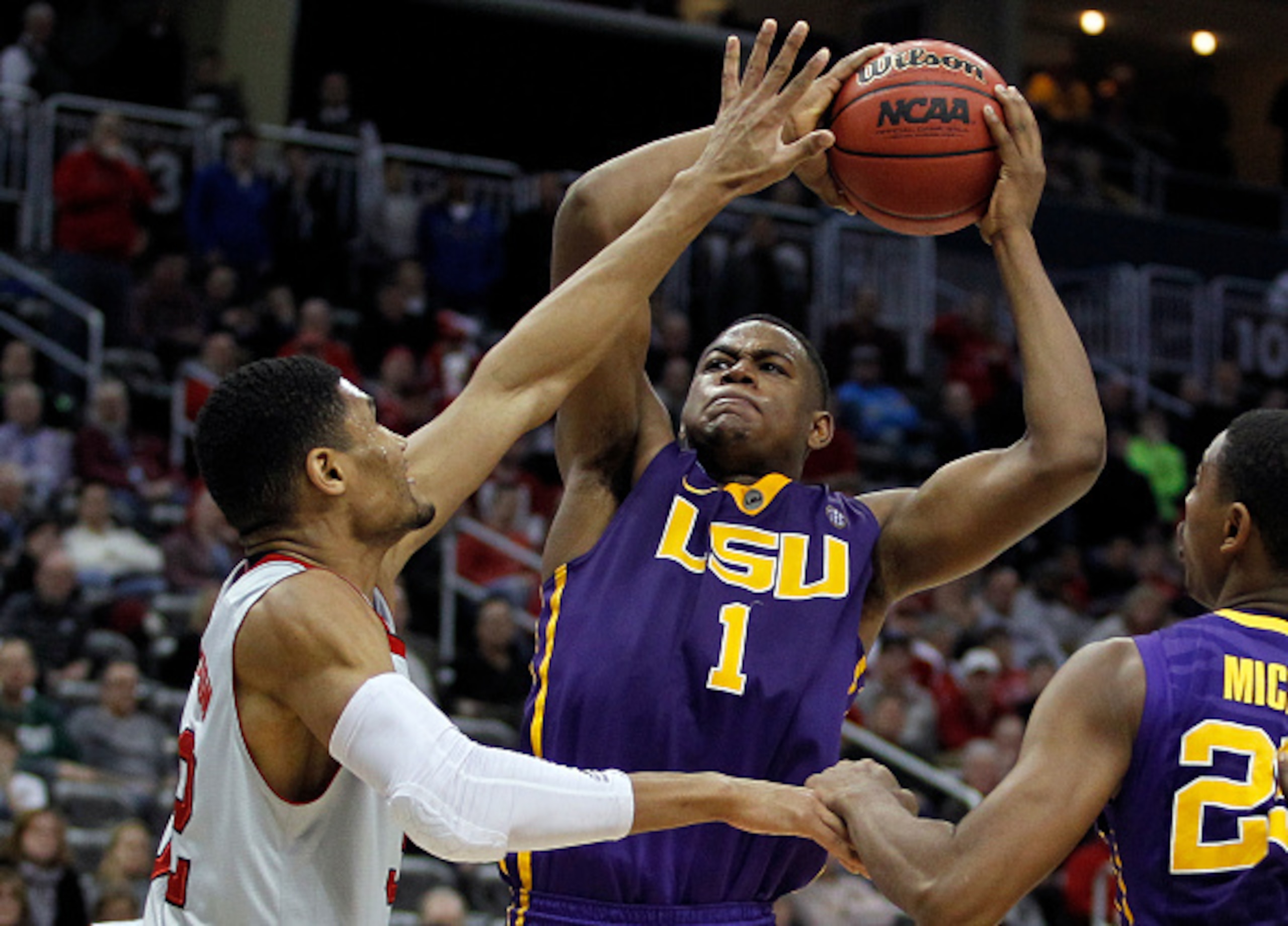
If Jarell Martin is anywhere near the 6'10", 235 pounds LSU lists him at (measured 6'7 ½" this past summer at the LeBron James Nike skills camp, per DraftExpress), his ability to face up and attack could cause problems in the NBA.
Martin averaged 16.9 points per game as a sophomore. He's strong, quick and athletic for a power forward. Martin isn't a particularly skilled post player, but he's a versatile one-on-one scorer, a tough shot-maker and a terrific open-floor finisher.
At this stage, Martin is capable of shooting in the mid-range. Taking his jumper out to the arc (14-of-52 from three in 2014-15) would ultimately do wonders for his NBA outlook—especially if he measures shorter than 6'10" or 6'9".


27. Rondae Hollis-Jefferson, Arizona, 6'7", SF, Sophomore
4 of 30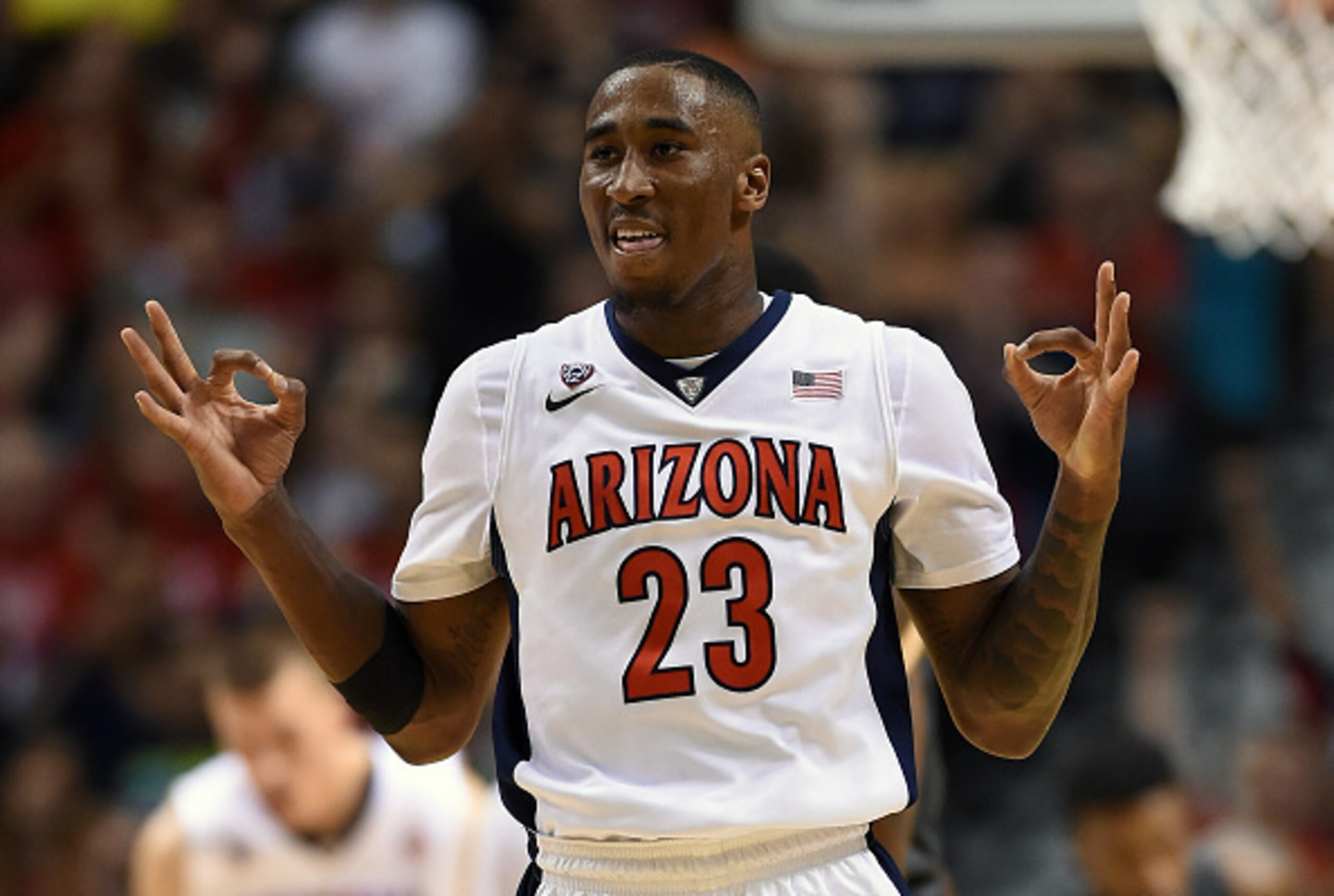
Rondae Hollis-Jefferson's NBA value lies within his lockdown potential and defensive versatility. At 6'7" with a 7'0 ½" wingspan, quick feet and bouncy athleticism, he projects as a wing who can legitimately guard three positions.
But Hollis-Jefferson even had a few impressive offensive games in the NCAA tournament. He had 23 points against Texas Southern and 17 points against Wisconsin in the Elite Eight.
He's dynamite in the open floor and a threat to face up and blow by off a quick first step. Hollis-Jefferson would ultimately be a lot higher on the board if he made more than eight of 39 threes in two years at Arizona.
He'll be a steal if he ever learns how to shoot. Until then, Hollis-Jefferson will be viewed as a defensive specialist.
26. Montrezl Harrell, Louisville, 6'8", PF, Junior
5 of 30
Minimal improvement from Montrezl Harrell's sophomore to junior years is somewhat unsettling. He shot below 60 percent from the free-throw line and made just nine of 37 three-pointers in 2014-15.
Per 40 minutes, his scoring, rebounding and block averages each took a hit.
Harrell's game is ultimately predicated on athleticism and activity around the rim, where he's a powerful finisher and a live body under the boards. However, he's 6'8" and lacks post skills, a troublesome combination for an interior-oriented player.
Still, Harrell projects as an energizer and physical frontcourt presence—something half the league could use. Just don't expect his offensive numbers to translate.
25. R.J. Hunter, Georgia State, 6'5", SG, Junior
6 of 30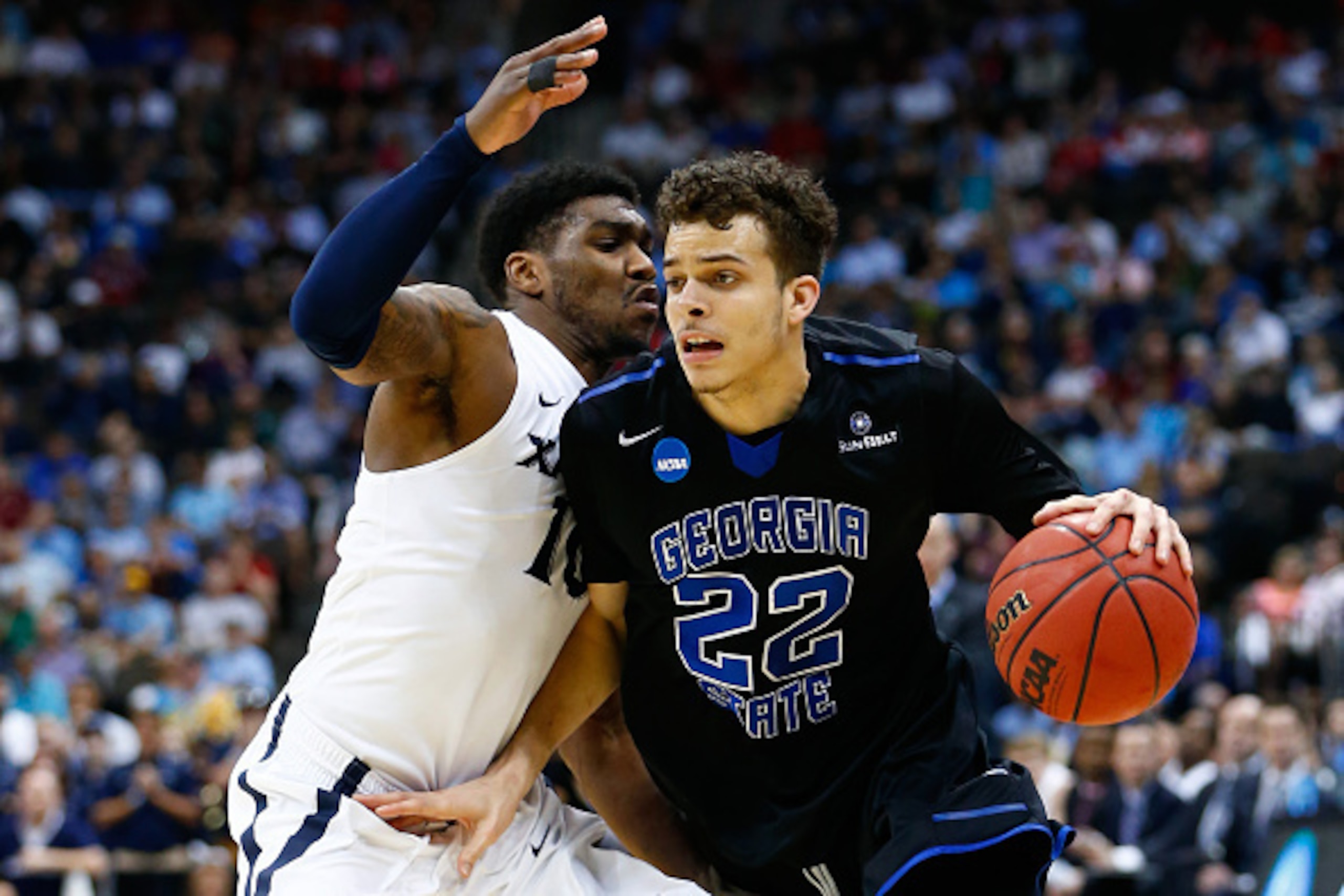
R.J. Hunter has averaged at least 17 points per game in each of his three years at Georgia State, where he's totaled 253 threes.
At 190 pounds, Hunter may have a tough time scoring one-on-one in the NBA. However, his ability to make shots off movement is where his NBA value lies.
Though Hunter's long-range accuracy fell off this past season, he took 69 more free throws and doubled his assist average from a year ago.
I wouldn't peg Hunter in the pros as the scorer he was in college, but he's a dangerous enough shooter and smart enough passer to find a role and last.
24. Caris LeVert, Michigan, 6'7", SG, Junior
7 of 30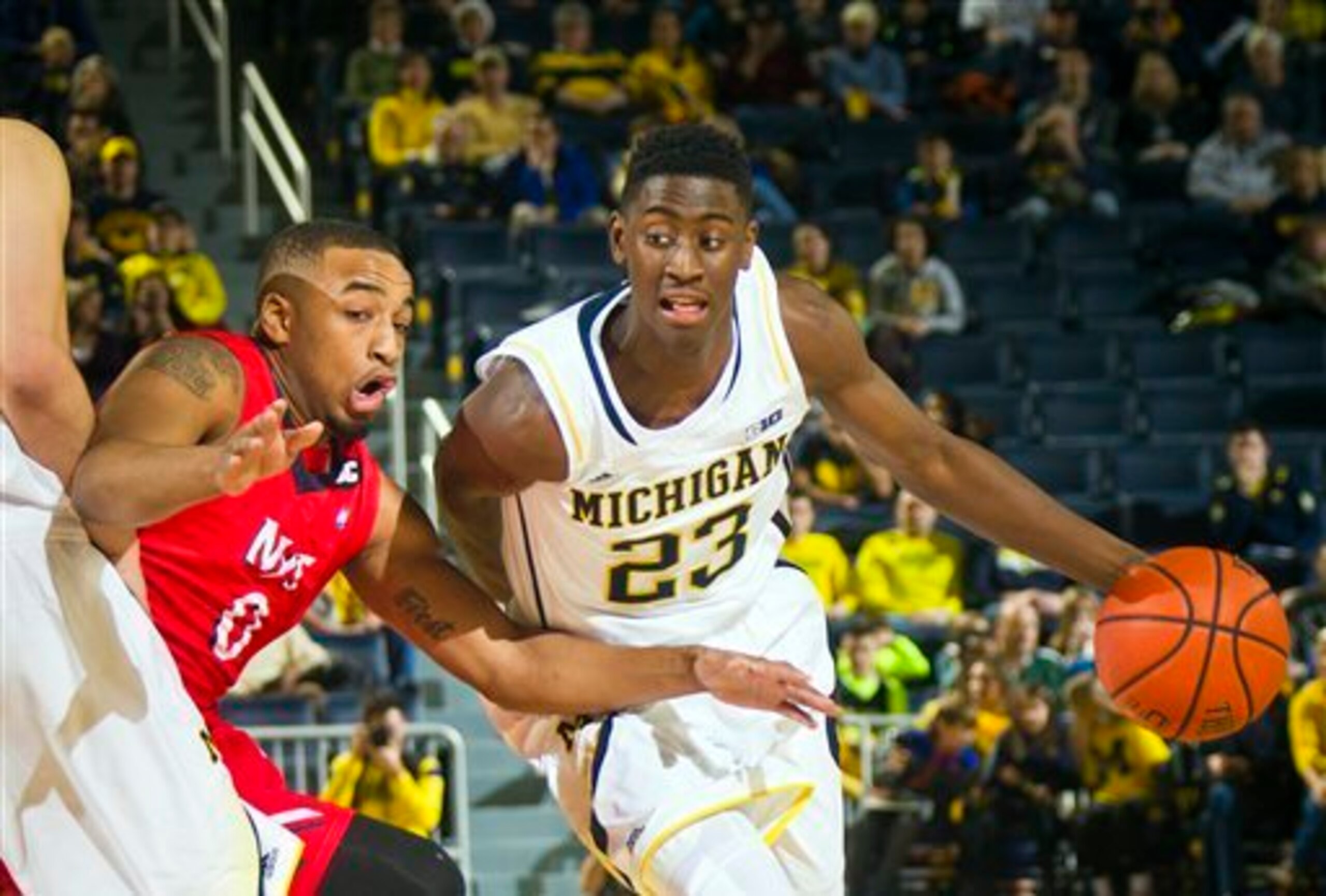
Caris LeVert looked like first-round material before suffering a season-ending foot injury back in January. Questions over his durability might make him a risk to take in the top 20, but the gamble is worth it after that.
He's a legitimate 6'7" 2-guard whom Michigan used as a pick-and-roll ball-handler. LeVert was actually leading the team in assists prior to going down.
And he was hitting at least 40 percent of his threes for the second straight year.
There has to be some concern over the fact LeVert has had two surgeries on the same foot. But his shot-making ability and playmaking versatility could be dangerous offensively.
According to MLive.com's Brendan Quinn, LeVert is still weighing his decision on whether to declare or return.
23. Bobby Portis, Arkansas, 6'11", PF, Sophomore
8 of 30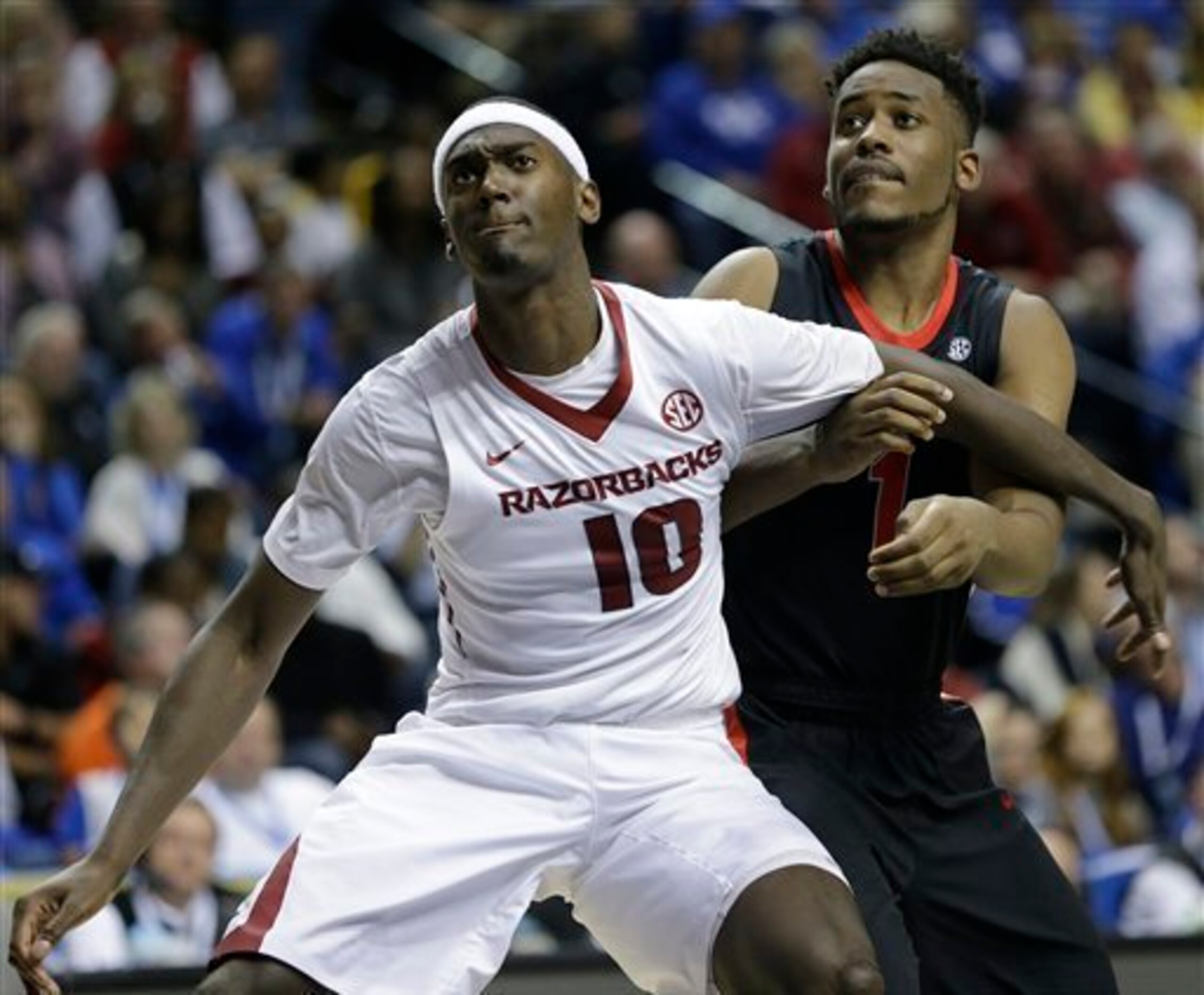
Bobby Portis did what he needed to do individually as a sophomore. He averaged 17.5 points and grabbed 2.1 more rebounds per game than he did last season. And Portis remained efficient, shooting 53.6 percent from the floor and an impressive 14-of-30 from downtown.
Portis certainly looks the part of an NBA power forward, with 6'11" size, a sharp post game and a pure mid-range stroke.
However, a lack of explosiveness, both off the dribble and around the basket, raises questions as to just how effective he'll be as a pro. He doesn't get off the ground very high, nor is he much of a threat to blow by his defender.
Either way, between Portis' physical tools, jumper and fundamentals, odds are he'll find some way to offer something offensively.
22. Christian Wood, UNLV, 6'11", PF, Sophomore
9 of 30
Christian Wood flashed some major upside as a sophomore, but there is no hiding the risk attached to his skinny 220-pound frame.
For a big man, he's had trouble finishing after contact and gaining position down low.
However, the main draw to Wood stems from his offensive versatility. With the measurements of a center, he's comfortable facing up on the perimeter, where he can spin off line drives or knock down jumpers. Wood wasn't particularly accurate from outside, but he made 25 threes and proved he can make shots away from the basket.
And though Wood lacks strength, his above-the-rim athleticism and bounce translated to 10 rebounds and 2.7 blocks per game.
Wood ultimately has some intriguing inside-out potential if he can improve his shooting touch and build his body.
21. Kevon Looney, UCLA, 6'9", PF, Freshman
10 of 30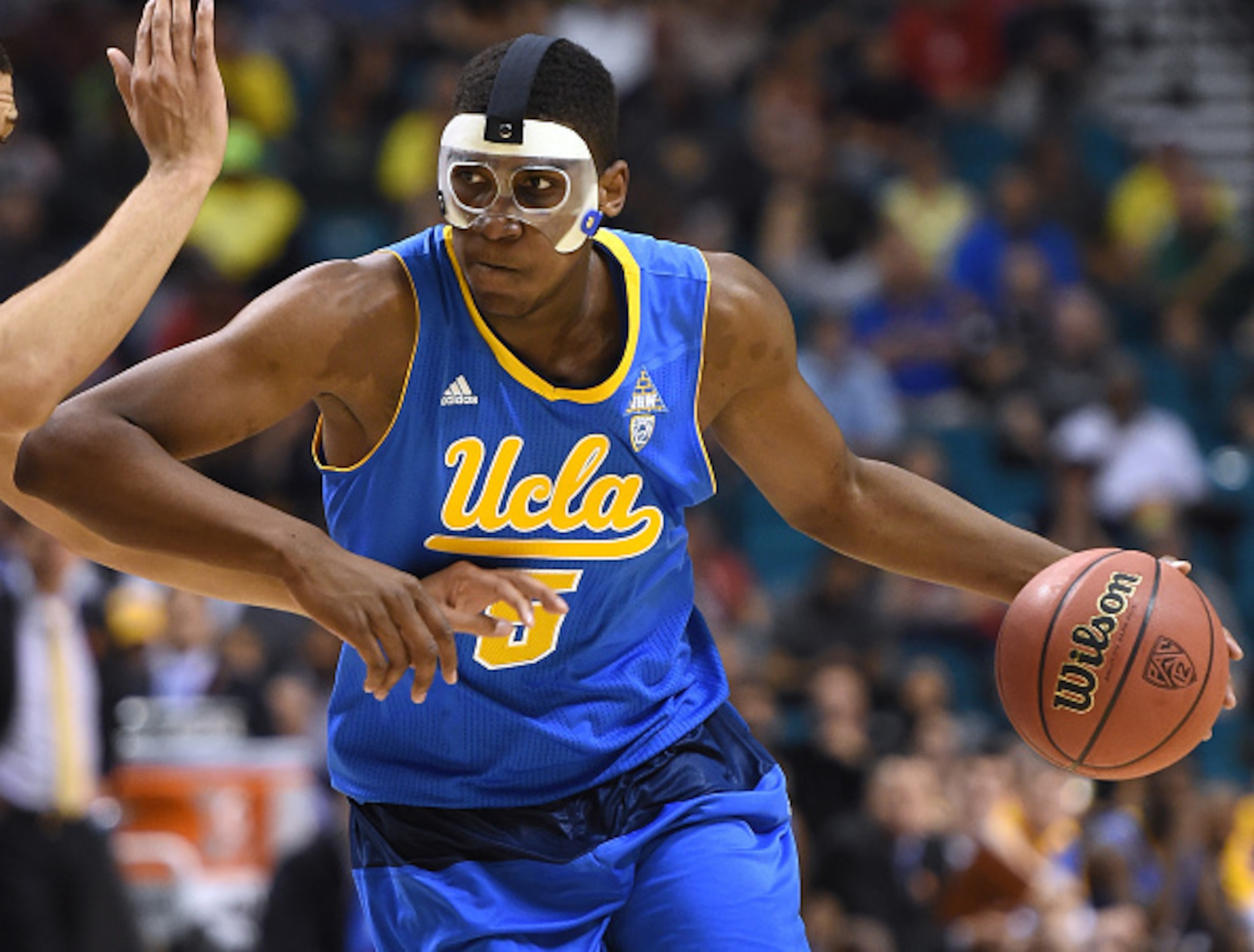
Kevon Looney represents a bit of a risk-reward gamble in the 2015 draft. He's flashed some intriguing perimeter ball skills for a 6'9" forward, shooting 22-of-53 from downtown and looking capable facing up in the mid-range.
But Looney plays a little too straight up and down for a wing. He isn't quick or sharp off the dribble. Looney projects more as a power forward, only he weighs 220 pounds and isn't much of a back-to-the-basket scorer.
He'll have to get stronger and more threatening in one-on-one situations. If he does, defenders could have a tough time matching up with his inside-out versatility.
20. Demetrius Jackson, Notre Dame, 6'1", PG, Sophomore
11 of 30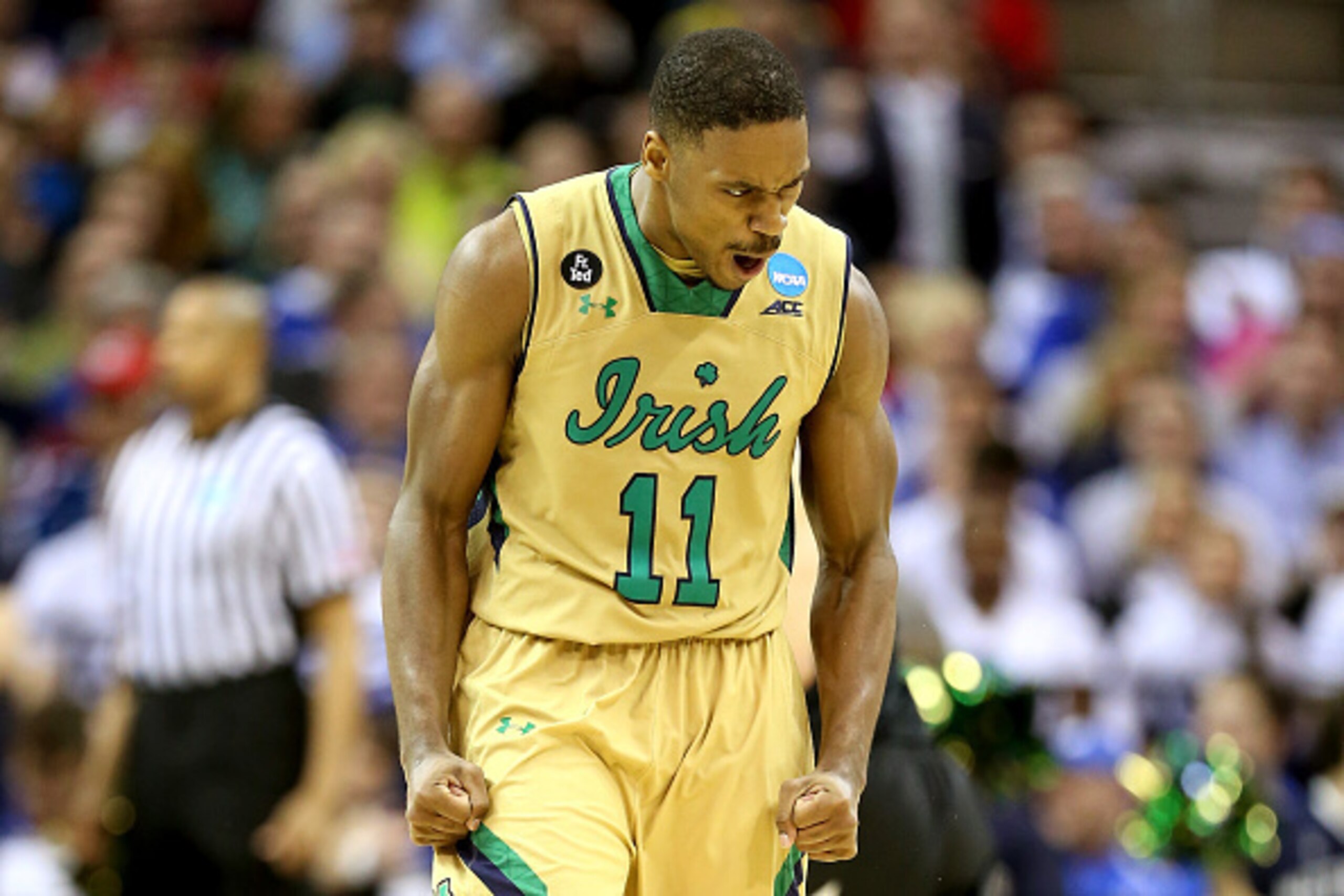
I wouldn't bet on him declaring in 2015, but Demetrius Jackson has emerged as a legitimate first-round prospect regardless of what draft he enters.
Though slightly undersized, Jackson has a diesel 195-pound frame along with some blazing quickness and explosive athleticism.
He's a breakdown point guard who can penetrate tiny gaps in a defense and elevate above the rim. It's hard not to think about Eric Bledsoe when watching Jackson slice to the hoop, bounce off contact and finish.
Jackson also happens to be an excellent shooter, having shot at least 41 percent from downtown in each of his two seasons at Notre Dame.
He'd have a chance to really make some noise in 2016 as Notre Dame's primary playmaker.
19. Kelly Oubre, Kansas, 6'7", SF, Freshman
12 of 30
Questions concerning his motor and inconsistency have Kelly Oubre lower on the board than where he started. He also did little to show he's a player who makes his teammates better. Oubre totaled just 28 assists through 36 games.
But the upside tied to his above-the-rim athleticism and shot-making ability remains intact. At 6'7", he has excellent size and burst for a wing who can handle the ball. And though he was a bit streaky from outside, Oubre made 34 threes playing 21 minutes a game.
He also flashed intriguing defensive potential thanks to his quickness and length. But he'll have to build up his energy and awareness. And he must improve his shot selection and one-on-one game offensively in the half court.
18. Jerian Grant, Notre Dame, 6'5", PG/SG, Senior
13 of 30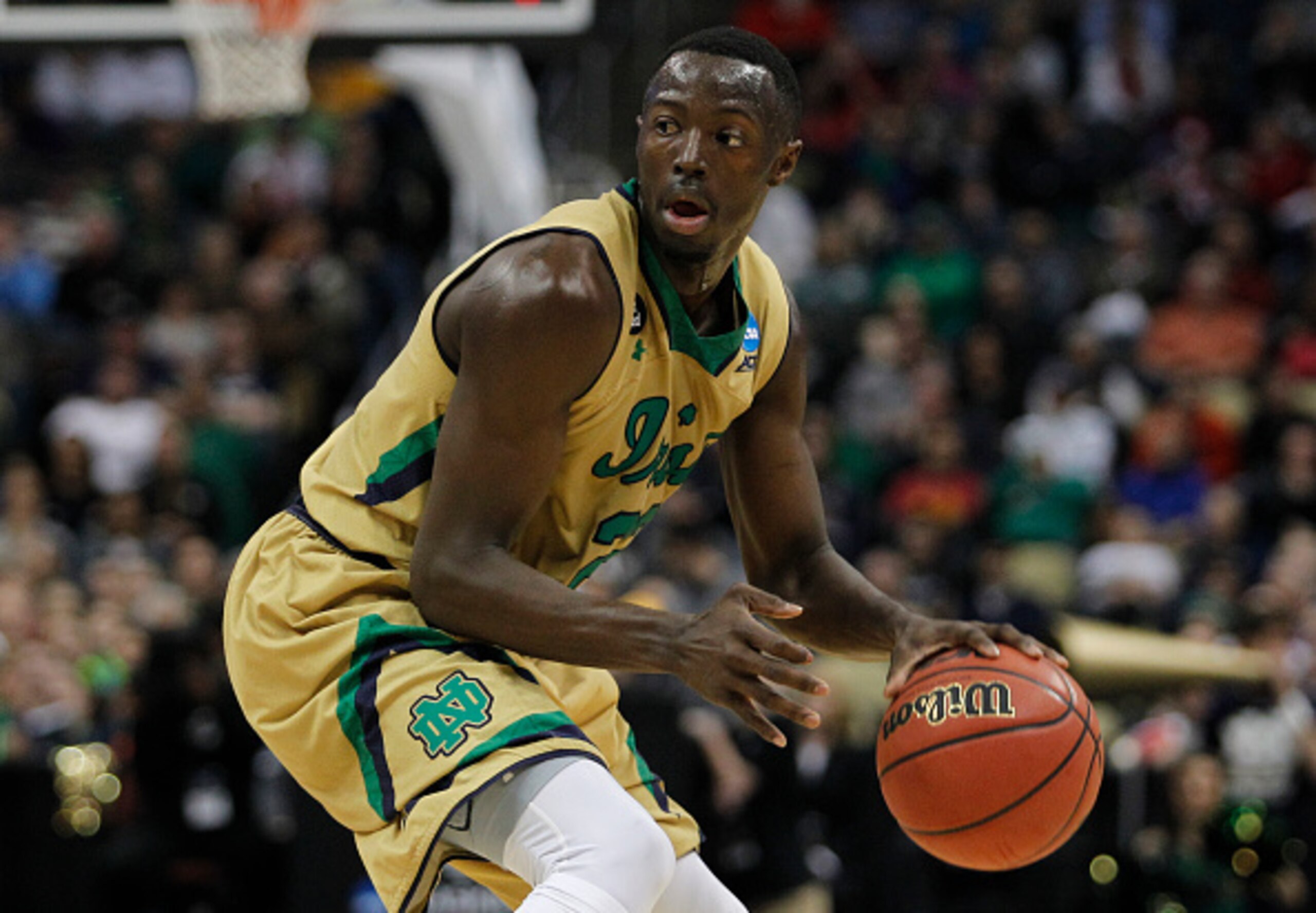
More than anything, it was Jerian Grant's passing and playmaking that stood out this past season.
He averaged 6.7 assists to just 2.2 turnovers a game, showing terrific instincts and vision off drives and ball screens.
Grant dished out at least five assists in 32 of Notre Dame's 38 games. But he also averaged 16.5 points, shooting 57.2 percent inside the arc. Grant finishes around the rim (73.1 percent, according to Hoop-Math.com), and he's developed a mean step-back jumper.
He'll be 23 years old next season, so it's reasonable to question just how much room there is left for growth. But at 6'5" with point guard skills and scoring ability, it's tough not to buy into Grant's breakout senior year.
17. Devin Booker, Kentucky, 6'6", SG, Freshman
14 of 30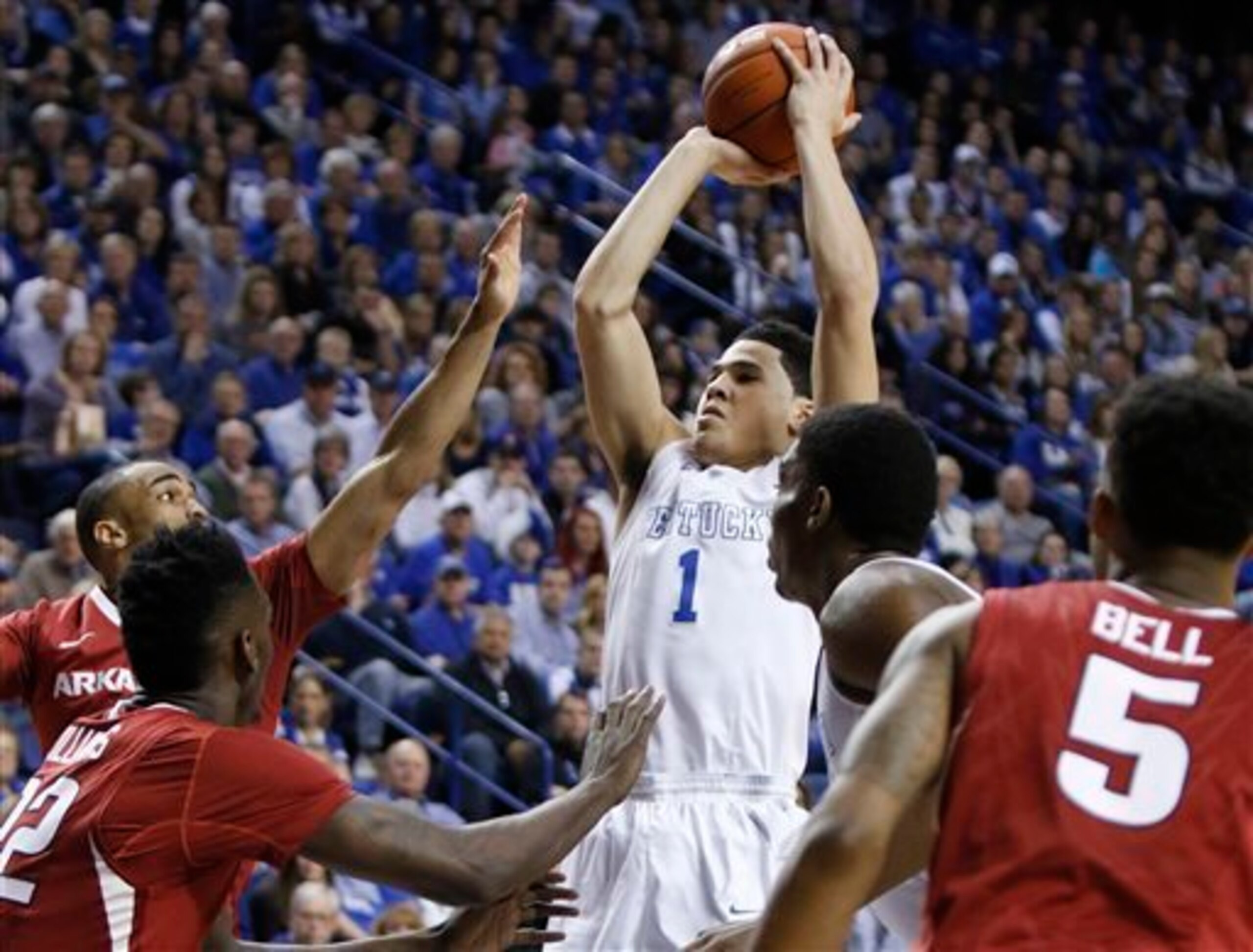
Devin Booker's impact wasn't felt as much for Kentucky over the last month of the season. He averaged just seven points per game in March.
It should have been a reminder of Booker's limitations as a shot-creator. He hasn't been a threat to beat his man off the dribble—Booker averaged only 1.7 free-throw attempts per game and made just 13 shots at the rim in the half court, according to Hoop-Math.com.
As good as Booker is from outside (41.1 percent on threes)—when the jumper isn't falling, he's struggled to find other ways to score.
However, Booker's jumper has been lights out for most of the year. With picturesque mechanics and solid 6'6" size, you get the impression his shooting can carry over.
And though not a threatening one-on-one player, he's flashed the body control and instincts to catch and finish on the move.
At this point, his inability to get his own shot has to lower his ceiling. But Booker's ability to make them is enough to hold mid-first-round value.
16. Cameron Payne, Murray State, 6'2", PG, Sophomore
15 of 30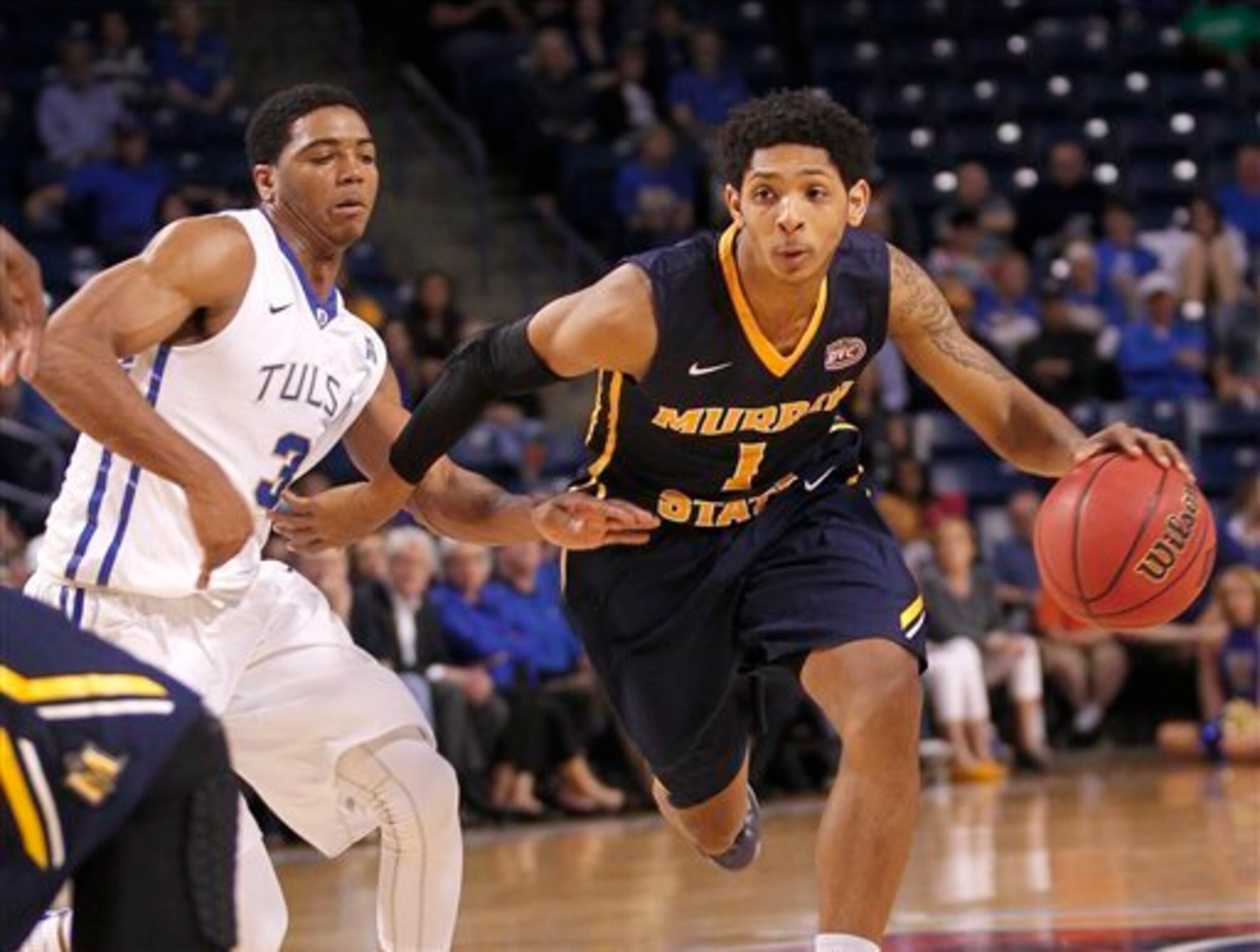
Cameron Payne remains the most slept-on prospect in America, having gotten little national love despite averaging 20.2 points and six assists.
He was only three seconds away from an NCAA tournament appearance until Belmont sunk a game-winning three in the Ohio Valley Conference tournament final. Bad luck struck the Racers again in the NIT when they lost on a deep buzzer-beater to Old Dominion.
Still, through five postseason games, Payne averaged 20.4 points and 7.4 assists to cap off a breakout year that caught scouts' attention.
He's a nifty playmaker and scorer capable of taking over stretches of a game. Payne is dangerous in the open floor and off ball screens in the half court, where he can hit the roll or pop man and shoot off the dribble. He's made 156 threes in two seasons.
For Payne, the only question heading into the draft will be the competition he faced. But there is no taking away from the production he put up—or the skills and intangibles he showcased throughout the year.
15. Sam Dekker, Wisconsin, 6'9", SF, Junior
16 of 30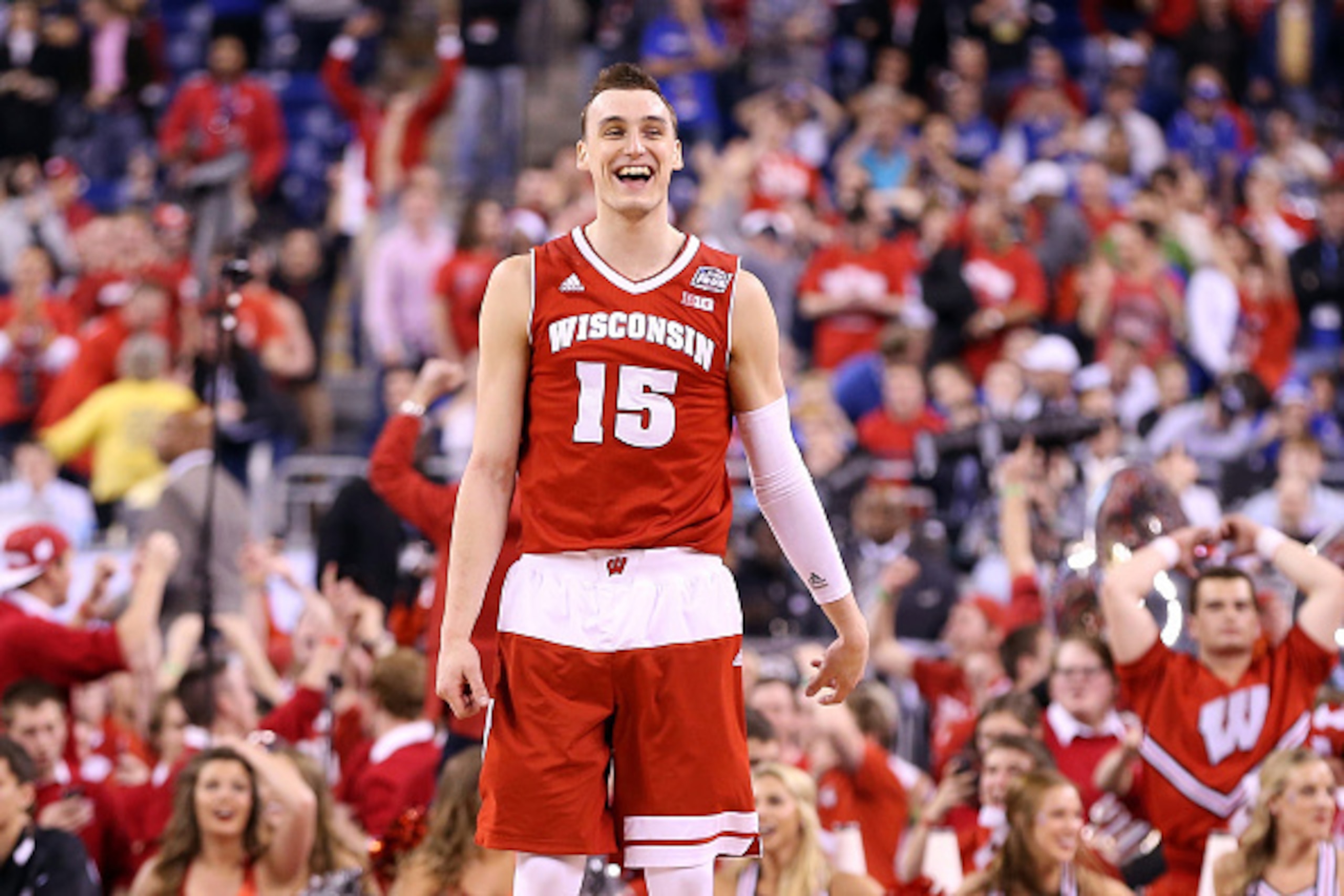
Sam Dekker was one of the breakout stars during March and April, but his shaky jumper haunted him during the championship game. Dekker finished 0-of-6 from deep against Duke, a reminder he was a 30.4 percent three-point shooter prior to the tournament.
However, Dekker's athleticism and versatility have stood out throughout his three years at Wisconsin. And most of it came together over the past couple of weeks.
He's terrific off the ball, where he picks up buckets off drives, cuts, slashes and spot-ups. And Dekker has shown the size, quickness and IQ to effectively guard multiple positions.
If Dekker lands on a team that surrounds him with talent, he'll have the chance to be a trustworthy do-it-all role player right from the start. Improving that jumper would ultimately take his game to a whole new level.
14. Frank Kaminsky, Wisconsin, 7'0", PF/C, Senior
17 of 30
Frank Kaminsky might have lost the war to Duke, but he won the battle against Jahlil Okafor in the championship game. Kaminsky went for 21 points and 12 rebounds after putting up 20 points and 11 rebounds against Kentucky and 29 points against Arizona.
If there was any ever doubt regarding his skill level or ability to play against next-level talent, there shouldn't be anymore.
From his three-ball to his off-the-dribble game, Kaminsky's footwork and shot-making capability should allow him to last a long time in the NBA.
I doubt he dominates as a pro the way he did at Wisconsin, but he'll fit right in as a stretch 4 or 5.
13. Jakob Poeltl, Utah, 7'0", C, Freshman
18 of 30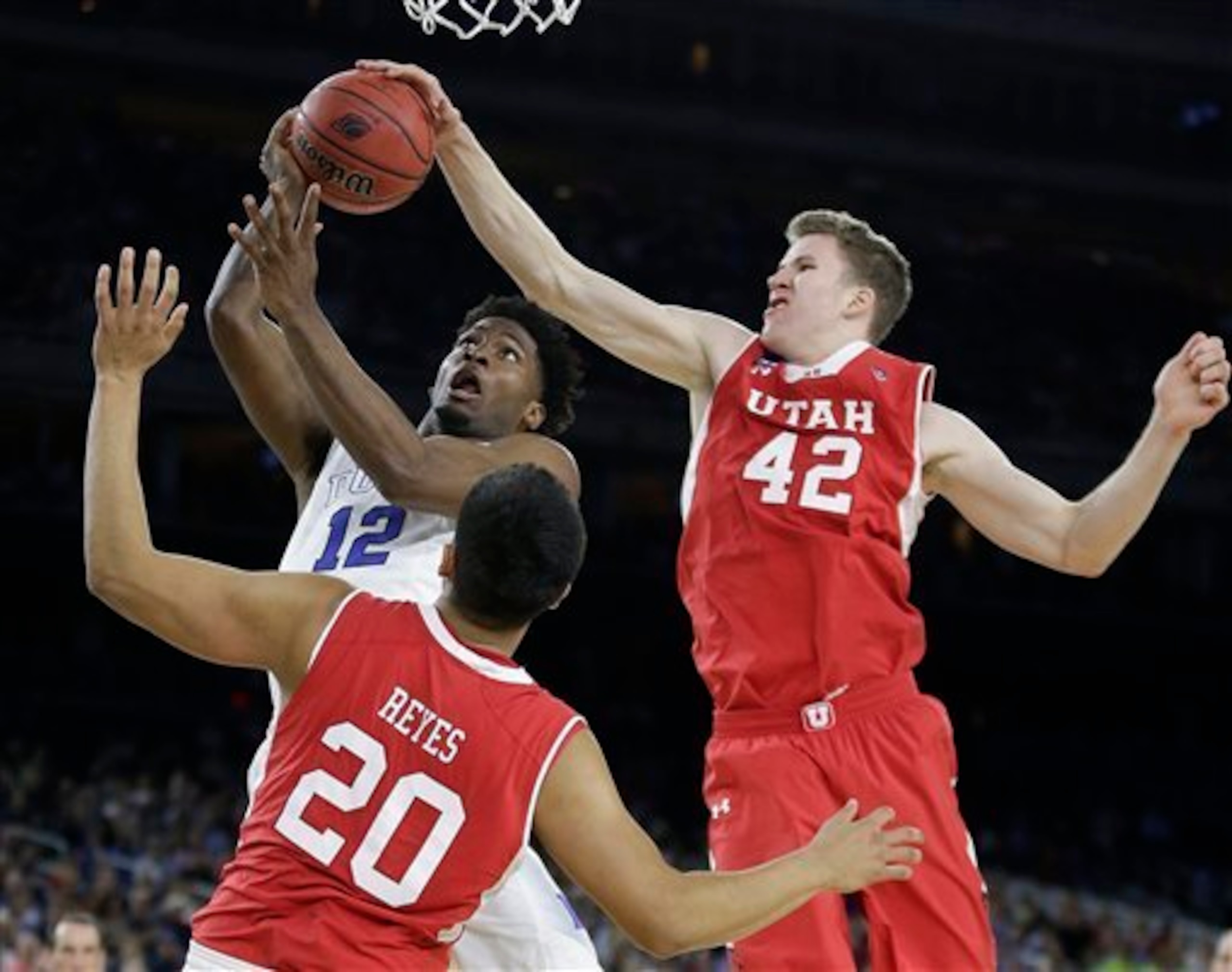
Though his upside might not jump off the screen, there is no doubting the value tied to Jakob Poeltl's strengths.
At 7'0", he holds down the paint as both a rebounder (18.2 percent rebound percentage) and rim protector (8.6 percent block percentage, per Sports-Reference.com).
He also projects as a strong post defender. Nobody played Duke's Jahlil Okafor better than Poeltl, who held the potential No. 1 pick to six points and eight rebounds in the Sweet 16.
Poeltl isn't a particularly polished scorer, but he has a good feel for positioning himself for finishes off dump passes, pick-and-rolls and low-block touches.
The Omer Asik comparison seems pretty spot-on when you take into account his interior presence and offensive limitations.
12. Myles Turner, Texas, 6'11", PF/C, Freshman
19 of 30
You just don't see many rim protectors who can also step out and knock down jumpers. Myles Turner blocked 2.6 shots in just 22.2 minutes per game this season thanks to some impressive defensive instincts and a disruptive 7'4" wingspan.
He also made 17 threes and frequently hit incontestable shots on the perimeter. Turner shows sound mechanics and fluidity on his stroke. An 83.9 percent clip from the free-throw line highlights his touch.
However, Turner isn't overly mobile. He made just six shots at the rim in transition all year, according to Hoop-Math.com. You won't see Turner put the ball on the floor much, either. And a lack of both strength and explosiveness limit his effectiveness on the interior.
He'd likely offer lottery value if he does happen to become a reliable knock-down shooter. But it's no sure thing—despite demonstrating shot-making ability, he only hit 27.4 percent of his threes.
Turner still appears to be worth the gamble outside the top 10, but he'll have some adjustments to make, both physically and fundamentally, for that gamble to eventually pay off.
11. Kris Dunn, Providence, 6'3", PG, Sophomore
20 of 30
Decision-making remains the only red flag for Kris Dunn, whose physical tools, athleticism and playmaking are all pro-worthy.
At 6'3", 205 pounds, he looks the part of an NBA point guard. Dunn also led the country in assist percentage, per Sports-Reference.com, a tribute to his ability to create for teammates and a willingness to get them involved. He also averaged 15.6 points, showcasing a dangerous attack game and a threatening mid-range scoring arsenal.
With a 6'8" wingspan, quick hands and excellent lateral foot speed, Dunn even stood out as an impact perimeter defender, racking up 2.7 steals a game.
Unfortunately, nobody in the country turned the ball over more than Dunn. He'll have to learn to pick his spots a little better, but Dunn has starter potential if he can figure it out.
10. Trey Lyles, Kentucky, 6'10", PF, Freshman
21 of 30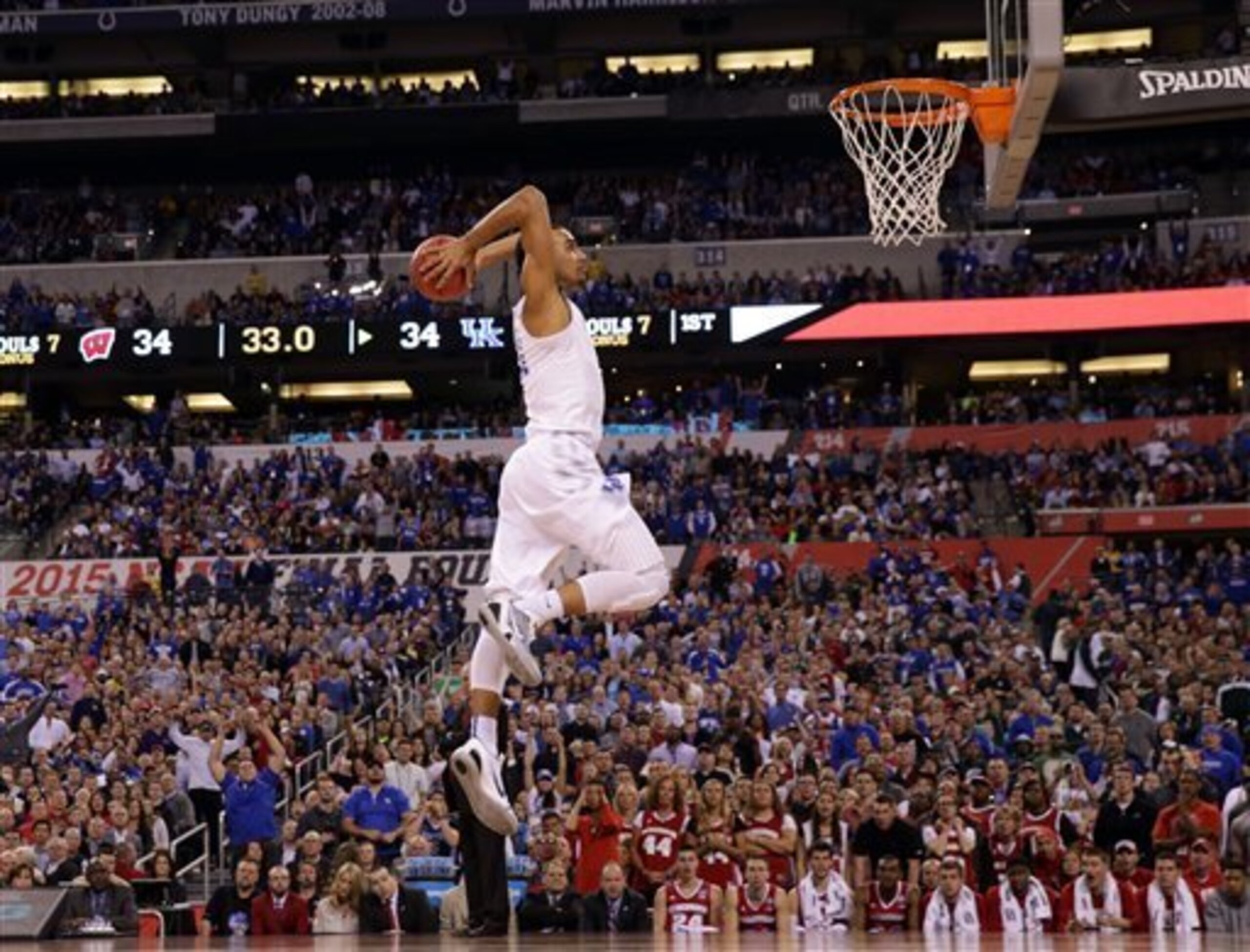
Surrounded by weapons in a 23-minute-per-game role, Trey Lyles never really had the chance to blow up offensively. But Lyles managed to showcase convincing skills and fundamentals without needing to score in volume.
He consistently flashed promising mid-range shooting touch (39.2 percent mid-range jumpers, according to Hoop-Math.com) as well as sharp footwork in the post and a threatening face-up game against slower bigs.
Lyles also has strong instincts and body control around the basket, where he finished at a strong 74.4 percent clip at the rim.
Limited explosiveness keeps his ceiling in check, but between Lyles' polished inside-out offense and basketball IQ, he projects as a fairly safe bet with starter potential.
9. Kristaps Porzingis, Latvia, 7'0", PF, 1995
22 of 30It didn't all come at once, but throughout the year, Kristaps Porzingis flashed the upside that generated so much buzz before last year's draft (before he pulled out).
We just saw it March 28 against Barcelona, when he went for 18 points and five rebounds. Porzingis, a true 7-footer, nailed a pair of threes, had a few nice drives and a couple of big-time finishes above the rim.
And according to ESPN's Chad Ford, there were a number of general managers and scouts there to see it.
Porzingis' blend of athleticism, physical tools and face-up offense on the perimeter is what ultimately fuels his mismatch potential.
There is a little risk tied to his skinny 220-pound frame. But if Porzingis, 19, fills out or adds some muscle, we could be talking about one of the tougher inside-out covers in the league one day.
8. Mario Hezonja, Croatia, 6'8", SF, 1995
23 of 30After playing just six minutes against Kristaps Porzingis and Sevilla on March 28, Mario Hezonja got 16 minutes against Real Madrid on Thursday and capitalized with 15 points on five three-pointers.
He's now shooting 41.4 percent from downtown on the year despite having little chance to build rhythm given his unpredictable playing time.
Hezonja is a spectacular athlete with mismatch 6'8" size for the position. And he has a beautiful shooting stroke. Hezonja really steps into his jumpers and gets textbook rotation on the ball.
Though he doesn't have the chance to create much, he's also a solid ball-handler who can separate one-on-one into makable shots.
Hezonja ultimately has as much upside as any wing in this year's field. The question is whether to buy into it considering he's averaged fewer than 16 minutes per game in each of his last two years.
7. Willie Cauley-Stein, Kentucky, 7'0", C, Junior
24 of 30
Without the ability to create shots in the post or knock down jumpers, Willie Cauley-Stein is going to have games like the one he had against Wisconsin on Saturday night. He finished with just two points in 33 minutes.
But Cauley-Stein's value in the NBA ultimately lies within his defensive versatility—the ability to protect the rim, switch onto guards in pick-and-roll coverage and pressure full court. His blend of athleticism and foot speed is one of a kind for a 7-footer.
Even if his ball skills never improve, Cauley-Stein projects as a big man who can impact games without needing the ball in his hands.
6. Stanley Johnson, Arizona, 6'7", SF, Freshman
25 of 30
A rough last three games of the NCAA tournament (7-of-26 shooting) shouldn't put a cloud over Stanley Johnson's year or outlook.
He led one of the top programs in scoring, and quite frankly, Johnson even looked more polished offensively than he did last summer.
Johnson hit a respectable 37.1 percent of his threes and a terrific 49 percent of his pull-up jumpers in the half court, per DraftExpress' Jonathan Givony. While we saw he can stretch the floor as a shooter, Johnson's ability to put the ball on the floor and knock down shots in the mid-range is a highly valued NBA skill.
He also projects as a plus defender capable of guarding three positions. At 6'7", 245 pounds, Johnson, 18, would have an extra 46 pounds of muscle on a kid like Andrew Wiggins.
The red flag with Johnson has been finishing at the rim, where he's inexplicably only converting at a 52.7 percent clip, per Hoop-Math.com. But I'm not going to let it move the needle too much on his overall evaluation.
Johnson looks like one of the safer bets in the field outside the top four. According to CBS Sports' Jon Rothstein, Johnson remains "torn" on whether to declare.
5. Justise Winslow, Duke, 6'6", SF, Freshman
26 of 30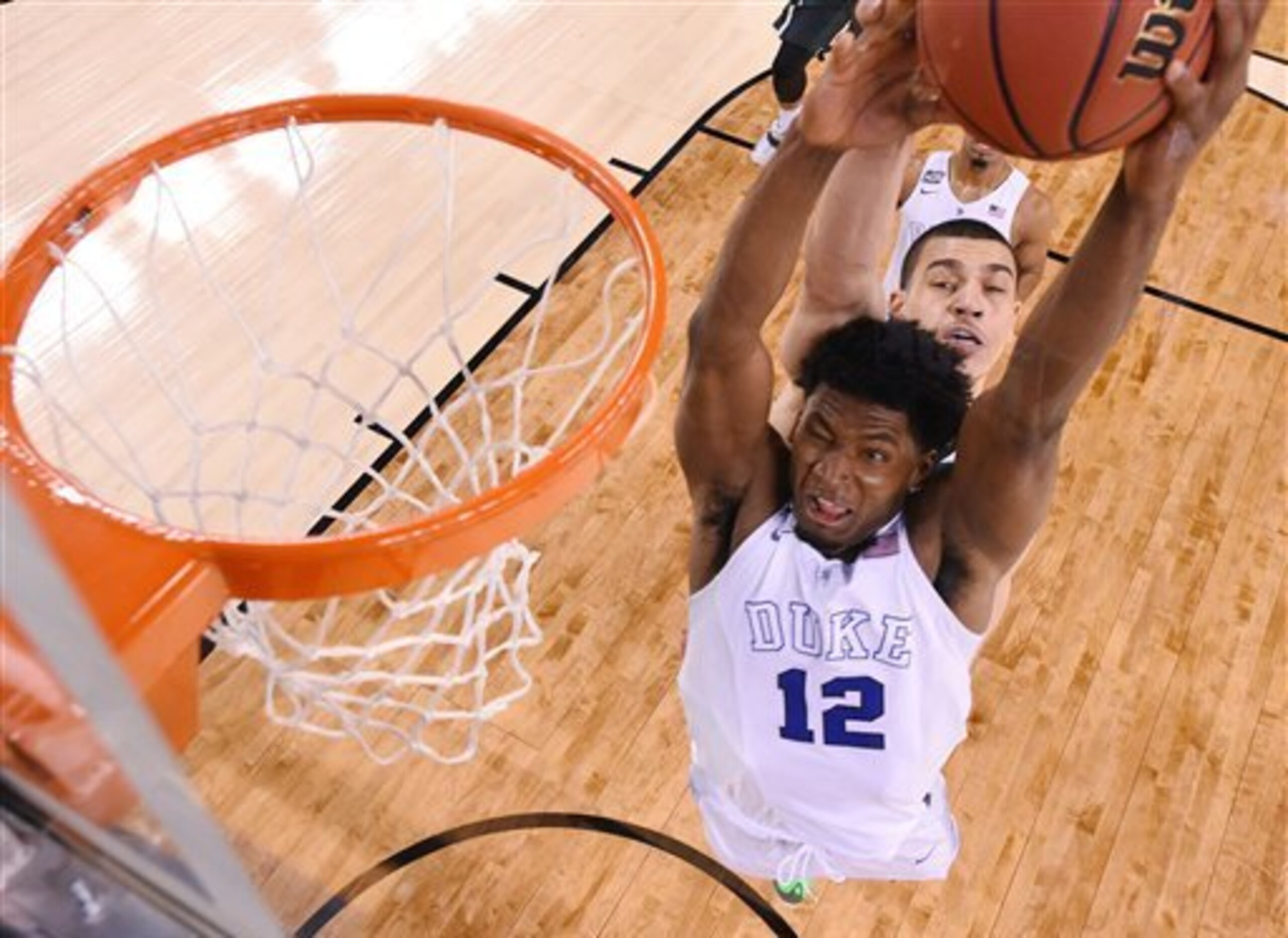
Justise Winslow moved the needle for himself during the NCAA tournament, and though his offense fell off against Wisconsin in the championship game, his toughness and motor contributed to the win.
He finished the year having hit a three in 33 of Duke's 39 games. And as the season progressed, so did his off-the-dribble attack. Winslow did a better job of putting the ball on the floor and picking up buckets off drives and layups.
Even when his jumper or scoring attack wasn't working, he still found ways to convert energy and athleticism into defense and points.
He's emerged as arguably the safest bet in the field once the top four are off the board. Winslow ultimately has a high floor as well as a high NBA ceiling.
4. Emmanuel Mudiay, China, 6'5", PG, 1996
27 of 30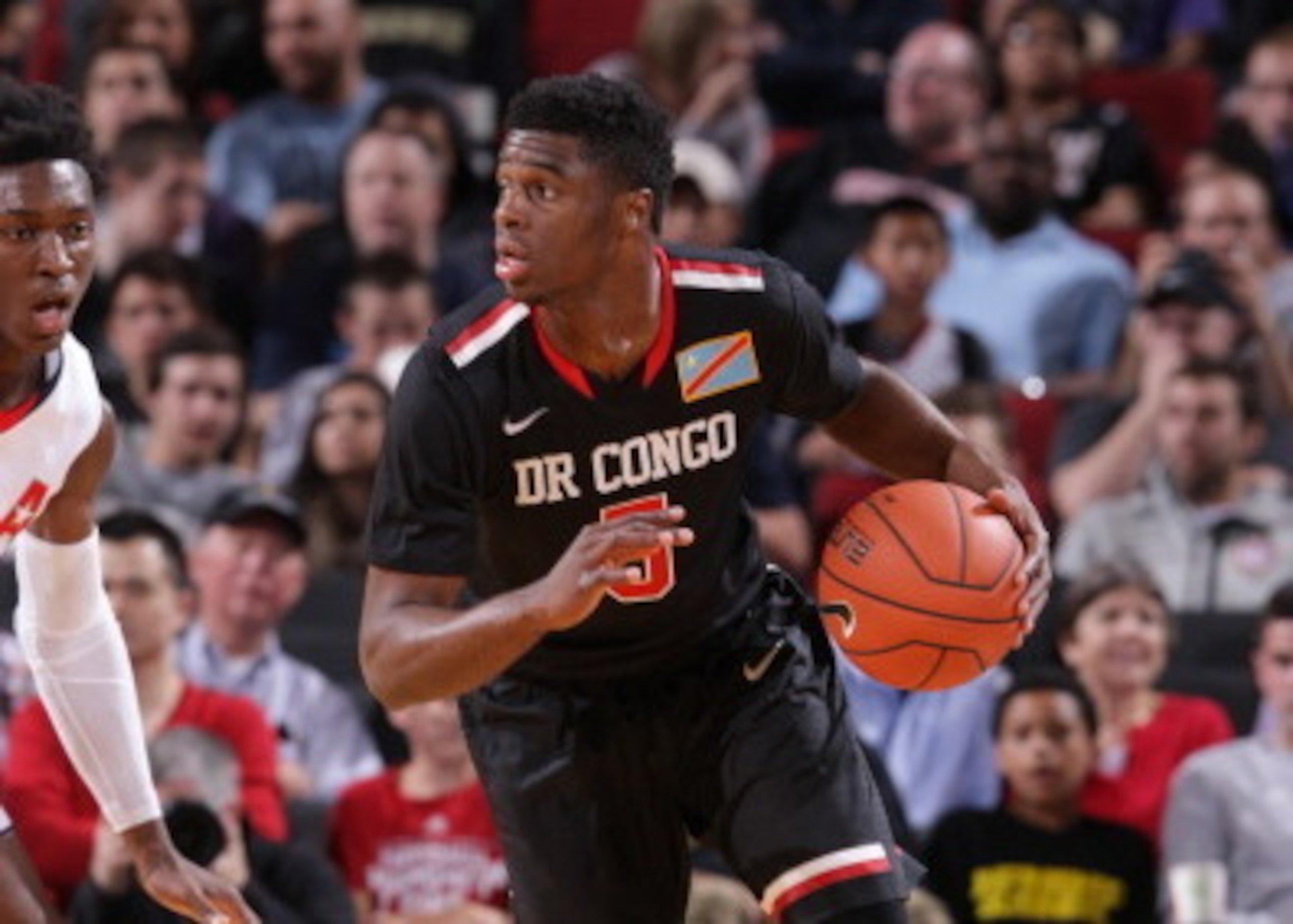
Though we should take his statistics in China lightly (18 points, 6.2 rebounds and 5.9 assists on 47.8 percent shooting), Emmanuel Mudiay looks like the same star prospect he looked like as a McDonald's All-American.
With 6'5" size, a 200-pound frame, a 6'8 ½" wingspan and above-the-rim burst, Mudiay aces the NBA point guard eye test.
He's demonstrated a good feel passing and scoring out of pick-and-rolls. And he's exceptionally tough to slow down when attacking the basket, both in the half court and transition, where he shows strong vision on the move and excellent finishing ability at the rim.
Decision-making (3.3 turnovers per game) and shooting (34.2 percent from three, 57.4 percent from the line) represent the two glaring holes in Mudiay's game, but at 19 years old, neither have to be permanent.
3. D'Angelo Russell, Ohio State, 6'5", PG/SG, Freshman
28 of 30
D'Angelo Russell really didn't give scouts much to question after one college season. He led all freshmen in scoring with 19.3 points per game. And though he showed the tendency to get trigger-happy, the Buckeyes didn't have many other options to turn to for offense.
Russell's one-on-one game is highly advanced. Step-backs, stop-and-pops, floaters, post-ups, nifty drives—he can create his own shot from every angle on the floor.
But we also saw the vision and passing instincts (five assists per game) that suggest he has point guard potential in the pros. And scoring point guards are in these days.
Regardless of what label you want to give him—point guard, shooting guard, combo guard—at 6'5" with a 41.1 percent three-point stroke, he'll be fine playing on or off the ball.
If there is a concern, it's that he isn't explosive turning the corner or elevating off the ground.
But that's where I'm banking on his skill level to come into play—particularly his ability to consistently knock down contested shots.
2. Jahlil Okafor, Duke, 6'11", C, Freshman
29 of 30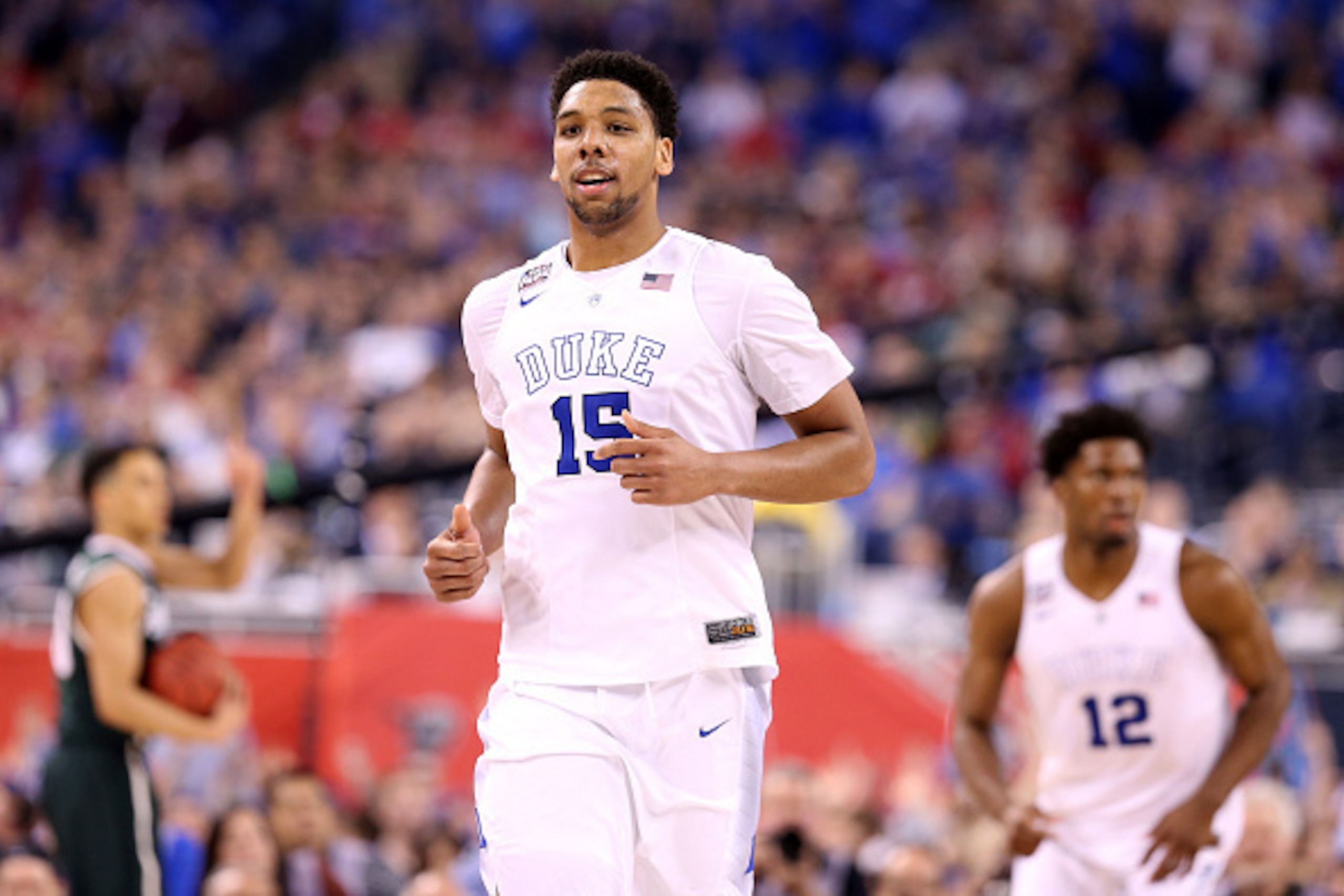
The championship game wasn't Jahlil Okafor's finest. Foul trouble hurt him, as did the versatile Frank Kaminsky, who beat him a number of times out on the perimeter.
But one rough outing doesn't negate Okafor's dominant freshman year in which he averaged 17.3 points on 66.4 percent shooting.
There is no doubt Okafor will need to work on his rim protection, pick-and-roll coverage and free throws moving forward. But the value tied to his post game is just too great.
Okafor projects as an option coaches can feature—a player you can go to for a bucket against a set half-court defense.
Without that standout athleticism or shooting touch, his ceiling falls short of that of Kentucky's Karl-Anthony Towns. But chances are it won't be long before Okafor is commanding NBA double-teams.
1. Karl-Anthony Towns, Kentucky, 6'11", PF/C, Freshman
30 of 30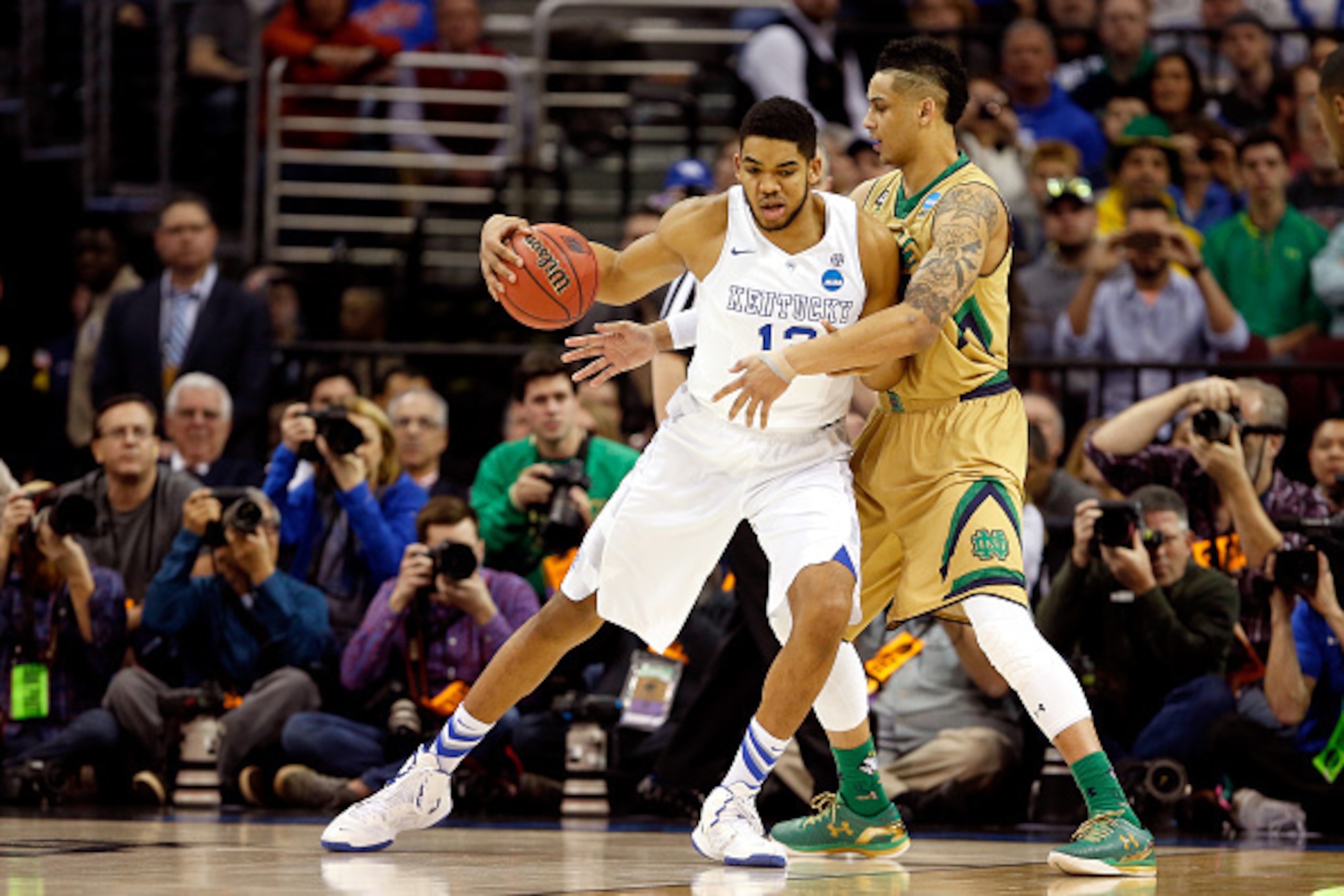
There was never any doubt regarding the towering height of Karl-Anthony Towns' ceiling. With NBA center size and plenty of athleticism, Towns has flashed everything from a low-post game and outside touch to rim protection and dominant rebounding.
But for the first two months, he just didn't have the production to back it up in Kentucky's loaded frontcourt. His stats made it hard to believe he'd be the No. 1 pick.
The final two months were different for Towns, who averaged 20.9 points per 40 minutes over his final 19 games.
Towns' jump hook has gotten better and better, and he finished the season shooting an outstanding 81.3 percent from the line and blocking 4.3 shots per 40 minutes. Compared to Duke's Jahlil Okafor, he made 10 more free throws and blocked 34 more shots in 321 fewer minutes.
He needs to work on his footwork, develop counters and learn to defend (5.6 fouls per 40 minutes), but the gradual improvement Towns displayed made it easier to buy his upside as reachable.
If he puts it all together, we'll be talking about the top two-way player from this class.
Statistics courtesy of Hoop-Math.com unless otherwise noted.



.jpg?w=2560 "5 Teams Eyeing Jonathan Taylor")
.jpg?w=2560 "Mahomes Told Teammate to Leave Meeting")


.jpg?w=2560 "Jonathan Taylor Landing Spots 📍")
