
San Francisco 49ers: Matching Needs to Value in the 2015 NFL Draft
The problem with doing a mock draft of more than just one round is the fact that each team’s needs are highly dependent on who they draft with previous picks, and getting just one wrong can cause a cascade effect to go down the rest of the mock.
Take the San Francisco 49ers, for example. Their biggest position of need is probably wide receiver at this point, which means many mock drafts have them taking someone like Louisville’s DeVante Parker or UCF’s Breshad Perriman in the first round and then going with a cornerback or inside linebacker in the second round. However, if they went a different direction with that first pick, that means they’d likely take a receiver in the second round, which would push their next biggest need down, and so on and so forth.
Getting that first pick incorrect damages the integrity of the mock draft.
With that in mind, I thought I’d try something a little different and look at which rounds, if any, are more likely to see the 49ers go with a specific position.
Is the offensive guard class, for instance, particularly heavily weighted toward the end of the draft? Are there any first-round inside linebackers worth considering? When could the 49ers find value at the tight end position?
Several factors went into making these decisions. First and foremost, of course, it’s a question of need—the 49ers need receivers and inside linebackers more than, say, running backs or offensive tackles. I also looked at the distribution of talent, based on the ratings at CBS Sports and other consensus mock draft boards, to see if there was an unusual grouping of talent in one specific round, or if it was more generally spread out.
Finally, I took into account the rough odds of the 49ers using an earlier pick on the position; the 49ers are likely to draft, in some order and combination, a wide receiver, defensive end, offensive guard, inside linebacker, cornerback and tight end, so if one of those particular positions end up weighted heavily toward a specific round, it would decrease the odds of taking anyone else in that round.
For some positions, I was able to narrow down the 49ers' interest to one specific round. For others, no narrowing was possible, which means that the team could choose to address the need at any point in the draft. For a few positions, such as quarterback or center, the amount of talent or need wasn’t even enough to pinpoint any round where the 49ers could find good value.
Here is a position-by-position rundown of how the 49ers could use their picks.
Running Back: Round 6
1 of 11
The signing of Reggie Bush pretty much takes running back out of consideration for the 49ers when it comes to a need standpoint. The 49ers seem fairly set with a three-headed backfield of Carlos Hyde, Bush and Kendall Hunter. The combination of Bush’s NFL experience, Hunter’s system experience and Hyde’s potential has the 49ers fairly comfortable at the position.
That being said, they were fairly comfortable at the position going into training camp last year, but an ACL tear for Hunter, the failed recuperation of Marcus Lattimore and the release of LaMichael James had the 49ers thin at the position by the end of the year. The need isn’t there to waste a high draft pick on a running back, but they could use a late-round flier for depth and insurance purposes.
Back in 2010, general manager Trent Baalke used a sixth-round pick on Anthony Dixon, who served as a solid depth player for several seasons before heading to Buffalo, and a similar pick could be used this year. CBS Sports lists six running backs as potential picks in the sixth round, which makes it a rather deep class.
Matt Jones of Florida is my favorite of the backs listed at this point in the draft. At 6’2” and 231 pounds, he’s one of the biggest running backs in this year’s draft, but he still managed a 4.61 40-yard dash at the combine. He’s not going to become an NFL superstar, but he has the potential to be a chain-mover, smashing into the pile and plowing forward. He’s not going to be stopped for a loss most of the time.
He reminds me of what Leroy Hoard used to say about his own particular talents: “If you need one yard, I'll get you three. If you need five yards, I'll get you three.”
I doubt the 49ers will use a pick on a running back due to the lack of need, but if they’re interested, the sixth round wouldn’t be a bad place to go at all.
Wide Receiver: Any Time
2 of 11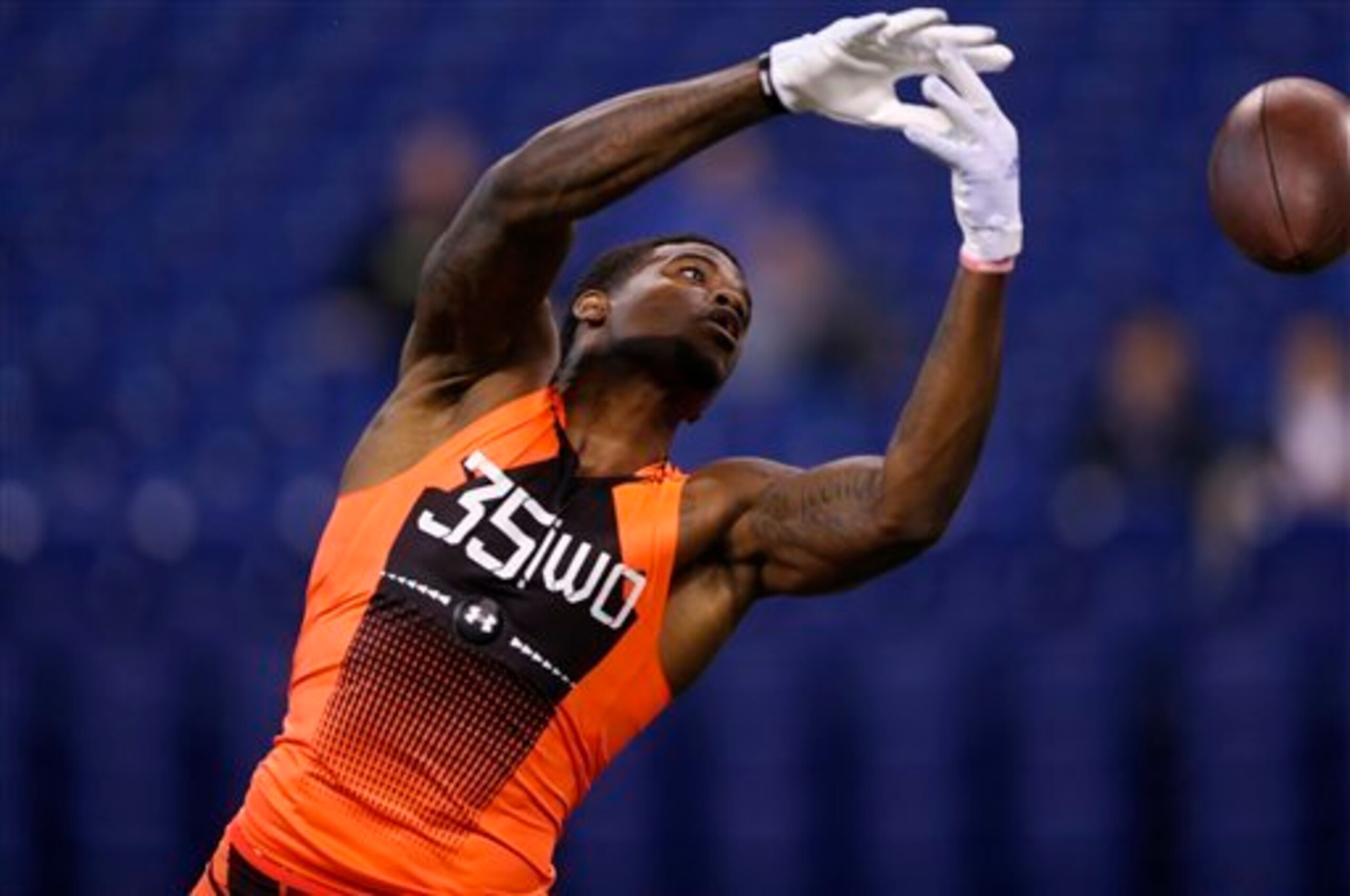
I went into this exercise hoping to find a particular round or set of rounds that made wide receiver particularly tempting for the team, but I came up empty. The 49ers’ need at the position is so great, and the draft is so deep, that the 49ers can find a solid player in almost any round they choose.
Essentially, until the 49ers actually do grab a receiver in the draft, receiver should be considered the most likely position to be picked every time they are on the clock. Yes, they need a couple of inside linebackers to make up for the departures of Patrick Willis and Chris Borland, as well as a defensive end to make up for the potential retirement of Justin Smith, but the 49ers have shown the willingness and ability to rely on their depth on defense before.
They simply do not have enough talent at the receiver position yet, so a high draft pick should be used. They shouldn’t feel locked in to take a receiver with their first pick, but any time they don’t take one, they will have to justify why the player they did take was more useful than the top receiver left on the board.
Because that’s not specific, here’s one receiver at each round (as projected by CBS Sports) who stands out to me:
Round 1: DeVante Parker, Louisville: With Kevin White and Amari Cooper almost certainly gone by the time the 49ers get on the clock on draft day, Parker is my favorite realistic pick for the 49ers in the first round. Parker uses his height and big arms to dominate the ball when it’s in the air and put up fantastic yards-per-reception numbers as a four-year player in Louisville.
Round 2: Sammie Coates, Auburn: Coates averaged 20.9 yards per reception in his career, which is phenomenal. He dominated the combine with a 41-inch vertical jump and a 131-inch broad jump, and that translates on the field as a player who takes the top off the defense. If his hands were better, he’d be a first-round pick, and his ceiling is high.
Round 3: Tre McBride, William & Mary: McBride is the inverse of Coates—fantastic receiving ability without the game-changing speed to get open downfield. He’s great with the ball in his hands after the catch, so maybe he’s a big, 210-pound slot receiver who fights for balls over the middle in the NFL.
Round 4: Chris Conley, Georgia: On tape, Conley doesn’t have great top-end speed, but he gets going in a hurry. At the combine, he was among the leaders in the 40-yard dash, bench press, vertical and broad jumps, so you know he has the raw physical tools to be productive. He needs more polish, because Georgia was a run-first offense, but there’s intrigue here.
Round 5: Darren Waller, Georgia Tech: Waller is the biggest receiver in the class at 6’6” and 238 pounds, but h still can truck downfield with surprising speed. If all you had to go by was the workouts at pro day and the combine, he’d be the top receiver in the draft. In pads, he’s a late bloomer who had little experience in college, catching just 51 passes for 971 yards in his career at Georgia Tech. He’s a project who could develop into a great player.
Round 6: Antwan Goodley, Baylor: Goodley, on the other hand, is one of the smallest receivers in the class at just 5’10”. He’s basically a running back who splits out wide all the time, with great ability once the ball gets into his hands. He would be best-used on bubble screens and short routes; that's not something the 49ers use much of at the moment, but he's an intriguing player.
Round 7: Devante Davis, UNLV: Davis has great body control in the air and can adjust to inaccurate throws in mid-flight. He’s adept at tracking deep balls and being aware of where the sideline is for contested catches. He’s not a spectacular athlete, and his hands aren’t special, but there’s enough there to be worth a late-round flier.
At the end of the day, the 49ers will likely use their first-round pick on a receiver.
Tight End: Round 4
3 of 11
With Vernon Davis apparently staying on the roster for 2015, the 49ers are actually getting pretty full when it comes to tight ends. Behind Davis, they have Vance McDonald, Derek Carrier and Garrett Celek already on the roster. That’s a fine complement for 2015.
Davis won’t be around forever, however—he had a terrible season last year, and this is the last year of his contract. A mid-round pick could be used to provide some insurance in case McDonald doesn’t take another step forward this season.
It’s not a top-heavy class at tight end this year, but CBS Sports lists five tight ends who could go in the fourth round. With the 49ers having two picks in the round thanks to their compensatory selection, that would be the ideal time for them to jump on the tight end train.
Tyler Kroft of Rutgers is a name to watch out for here; he’s a former high school receiver who has shown the ability to play both in the slot and in-line. He’s solid in run blocking as well, which is normally an issue for a player who has more receiving instincts. With the lack of top-end tight ends, someone is going to be drafted too early, but with five potential fourth-round targets, the odds that one would fall to the 49ers is quite high. I think the 49ers ultimately go elsewhere, but the fourth round is their best chance to grab a tight end.
.jpg?w=2560 "Titans Colts Football")
.jpg?w=2560 "Chiefs Giants Football")
.jpg?w=2560 "Eagles Jaguars Football")
Offensive Tackle: Rounds 1 or 5-7
4 of 11
Offensive tackle has a weird distribution of talent this year. There’s a lot of potential first-round talent in the class, with six players listed by CBS Sports as potential first-round picks. It’s definitely one of the deeper Day 1 positions, and Trent Baalke has shown a willingness to use first-round picks on tackles before, having taken Anthony Davis with his first-ever draft pick.
If you include Brandon Scherff as a tackle, even though he’d probably play guard for the 49ers, it’s an even stronger class.
Then the draft class drops off a bit, without a ton of depth in the middle rounds. That is, historically, where you’d be more likely to find interior linemen, but the extent of the drop-off in 2015 is a bit extreme. If the 49ers don’t use a Day 1 pick on the position, and it would be hard to justify doing so with Davis and Joe Staley still under contract, they’d be best off skipping Day 2 entirely.
On Day 3, however, the linemen come back into play, with CBS Sports listing 13 possible picks in Rounds 5 through 7. Considering the 49ers just released last year’s swing tackle Jonathan Martin, I could definitely see them grabbing someone like Sean Hickey from Syracuse in the fifth round to compete with Erik Pears for a reserve role. By this point, anyway, the 49ers should have addressed most of their more pressing needs, so shoring up the offensive line on Day 3 makes a lot of sense.
Offensive Guard: Rounds 6-7
5 of 11
With Mike Iupati’s departure, guard is a bigger need for the 49ers than tackle is. Yes, last year’s third-round pick Brandon Thomas is likely to step into the role this season, with either Marcus Martin or Daniel Kilgore backing him up, but that’s a one-year solution. Alex Boone’s contract expires after 2015, so the 49ers could use another prospect at the guard position.
You can always find good offensive linemen late in the draft, however. Solid guards like Minnesota’s Charlie Johnson and Seattle’s J.R. Sweezy both were picked in the last two rounds of the draft.
This year, CBS Sports has no guards listed as potential first-round picks but 11 as possible selections in the sixth and seventh rounds. That’s the advantage of an exercise like this—we can see that there are a lot of players at the position who will be available late, which allows the 49ers to concentrate their earlier picks on other positions of need.
The 49ers should address the guard position in the sixth round, going for a player like Ben Beckwith of Mississippi State, to serve as depth for now. That would give them quite a few options to potentially replace Boone in 2016—the loser of the Martin/Kilgore battle at center, career backup Joe Looney, free agent acquisition Erik Pears or this draft choice. That seems like the safest way to address the position in 2015.
Defensive End: Any Time
6 of 11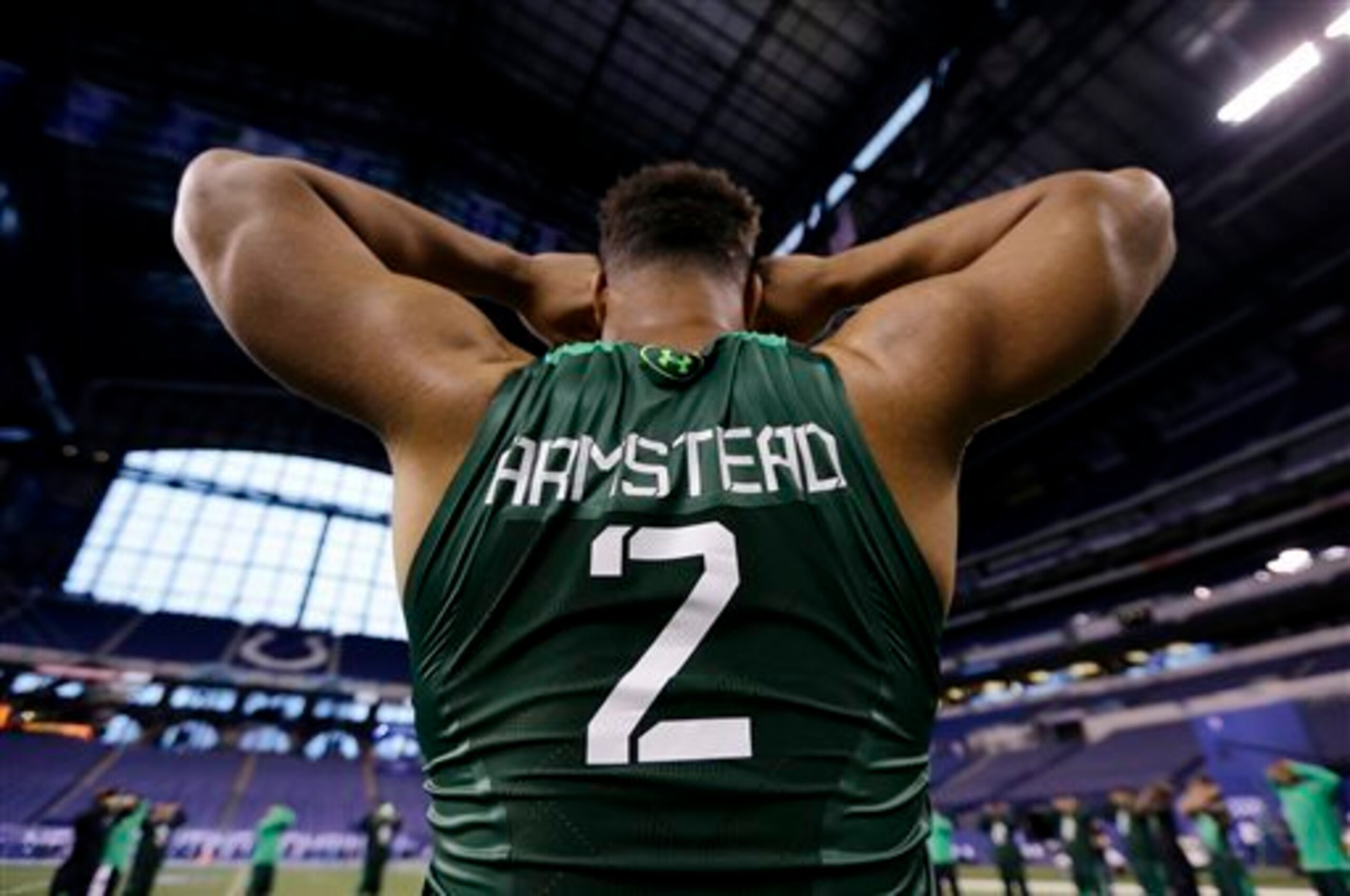
Like wide receiver, the 49ers’ potential need at defensive end combines with a relatively deep class to result in a position that can be addressed whenever it’s convenient. The 49ers could be justified using a first-round pick to immediately replace the potentially retiring Justin Smith, or they could wait and add a rotational player to split the role with Darnell Dockett and Quinton Dial. The free agent-acquisition of Dockett gives the 49ers more leeway here.
In addition, if you’re going to promote a defensive line coach to head coach, you might as well take advantage of his experience by giving him players to coach up. Jim Tomsula’s expertise comes with getting defensive linemen to play better than expected, so the 49ers could get more value than expected out of a mid-round pick, rather than going with a first-rounder.
All that being said, getting big talents like Arik Armstead of Oregon and Carl Davis of Iowa in the first two rounds is an enticing proposition; they could help anchor the team for years alongside Tank Carradine. It would allow a clean break from the Ray McDonald/Justin Smith era and give the 49ers two high draft picks to build around. That would be quite the start for a front seven.
Before Patrick Willis and Chris Borland retired, in fact, I think that would have been the plan—using the second-round pick to shore up the defensive line. Now, however, inside linebacker becomes much more of a trouble spot, so the relative depth at defensive end probably causes the 49ers to wait.
This sounds like the job of the compensatory selection—waiting until the end of the fourth round for a Brian Mihalik of Boston College or B.J. Dubose of Louisville. The 49ers could justify using any pick on a defensive end, but a fourth-rounder would likely provide a player who could contribute in 2015, if not start outright.
Inside Linebacker: Not Round 1
7 of 11
While deep positions like wide receiver and defensive end have potential draft picks in every round, the inside linebacking class is weak at the top before picking up steam starting on the second day of the draft. CBS Sports only lists UCLA’s Eric Kendricks as a potential first-round pick, and he’s borderline as the 35th-ranked player on its draft board.
If the 49ers didn’t have such a big need at the position, it would probably be worth leaving it for another year—there’s not a ton of depth to be had even after Round 1. Round 1, however, is a ghost town, and any player taken with the 15th overall pick here would be a heck of a stretch. If the 49ers are dedicated to getting an inside linebacker with their first pick, they’d be better off trading down.
Of course, the 49ers do have a big need at the position, and as it stands now, they could easily take two inside linebackers from this class without missing a beat. I think they’ll take one each on the second and third day of the draft—following up, say Clemson’s Stephone Anthony in Round 2 with Kansas’ Ben Heeney in Round 4. That’s one player to compete with Michael Wilhoite for the starting job next to NaVorro Bowman and one to compete for depth with Desmond Bishop.
Unless the 49ers sign a free agent between now and the draft, they should likely use two of their picks on the position—just not the first one.
Outside Linebacker: Round 1-2
8 of 11
If the 49ers want a pass-rusher in this year’s class, they’re going to have to get up pretty early. This year’s class is filled with edge-rushers at the top, before going into relative hibernation after that.
Could the 49ers afford to use one of their first two picks on a pass-rusher? They have three outside linebackers already for two slots, in Aldon Smith, Ahmad Brooks and Aaron Lynch. That would seem to point the finger at other positions—why would the 49ers waste a top pick when there’s already not enough snaps to go around?
Well, Aldon Smith was suspended last season, of course, and is probably one mistake away from being suspended for an entire season. Brooks was an unhappy camper last season, arguing with coaches on the sideline and benching himself, so his long-term future in town is questionable at best. Lynch was a rookie last season, so his track record is almost non-existent. If a couple of breaks go against the 49ers, they could find themselves in desperate need of a pass rusher.
If Bud Dupree of Kentucky or Shane Ray of Missouri falls to 15, the 49ers should consider adding him to the squad. Imagining one of those rookies coming from one side and Aldon Smith coming from the other should give any offensive coordinator nightmares. There’s likely to be similar depth in Round 2, with Utah’s Nate Orchard or LSU’s Danielle Hunter projected to go somewhere in that neighborhood.
After that, though, the pickings get slim. Sure, there are some intriguing names as you go down but not a large group of them at any one spot. That means that the likelihood of any one particular player falling to the 49ers in a later round is lower; it’s easier for one of six running backs to fall than one specific linebacker, for example.
With that in mind, and considering the 49ers’ needs at other positions, it’s my gut feeling that they will pass on the outside linebacker position this year.
Cornerback: Rounds 1-5
9 of 11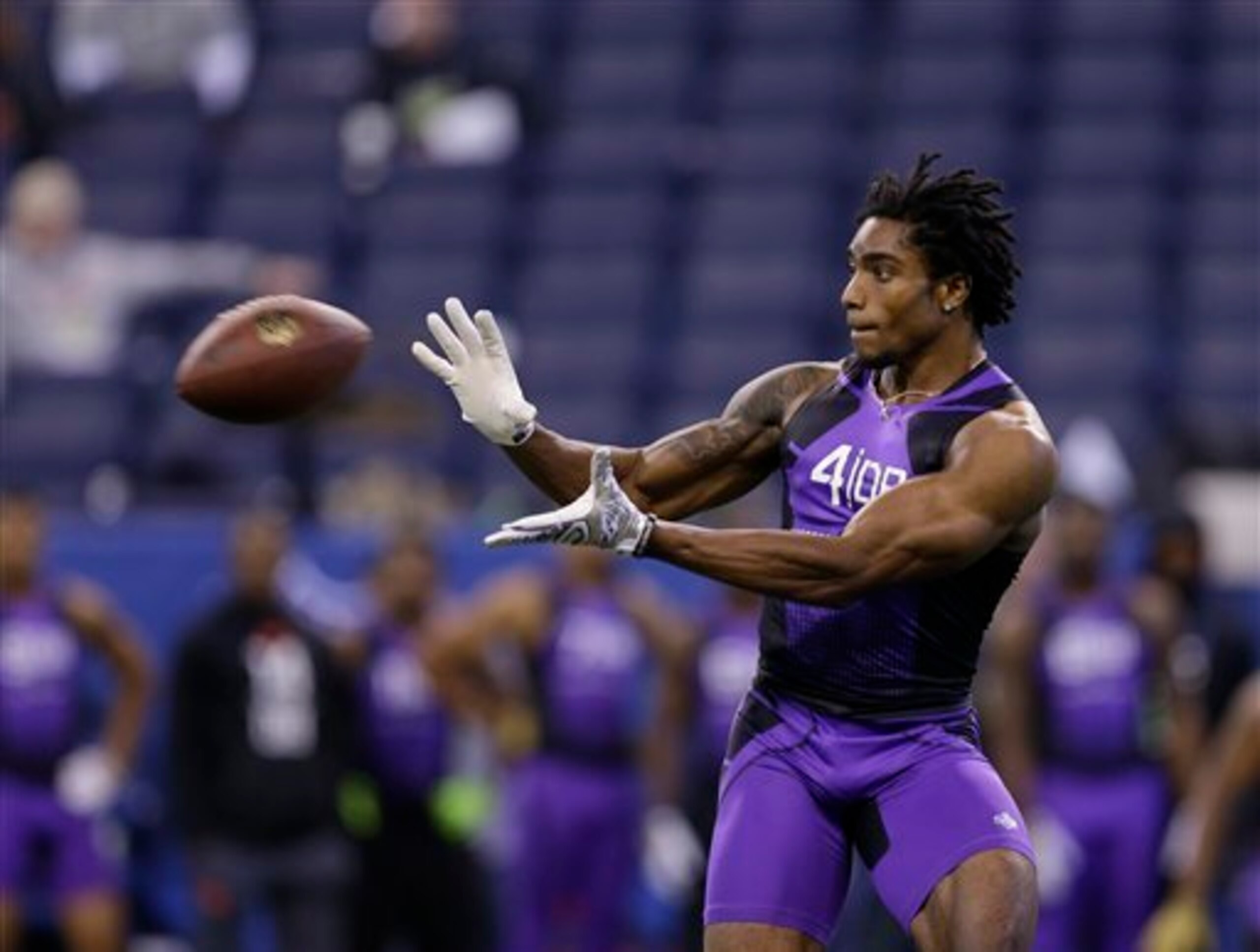
Trent Baalke does love his late-round cornerbacks. He has taken a cornerback in the sixth or seventh round every single draft since he took over as general manager. Is there any reason for that pattern to end?
Yes, actually, there are two reasons. First and foremost, the 49ers lost their top two cornerbacks in terms of 2014 snap count, according to Pro Football Focus, in Perrish Cox and Chris Culliver. That would imply the need for a greater-than-normal draft haul to replace them.
Second, the cornerback class of 2015 appears moderately top-heavy or, more accurately, bottom-light. CBS Sports lists 16 possible sixth- and seventh-round cornerbacks, which seems like a lot until you compare it to other positions. Receiver, for instance, has 19 such players, and the offensive line has 21.
Third, the 49ers already have a bunch of late-round cornerbacks on the roster. You wouldn’t expect a random sixth- or seventh-rounder to be better than, say, Keith Reaser and Kenneth Acker, who were drafted last season. The 49ers don’t really have room for another developmental player; they have room for someone who could start, at least in the nickel, right away.
Add that all together, and it seems clear that if the 49ers are going to draft a cornerback, they’d be better off doing so before the very end of the draft. There’s just only so much time available for a player is a work in progress; the 49ers need players to compete for nickel and dime roles.
The third round is really the sweet spot, with CBS Sports listing eight names in that vicinity. A physical corner like Stanford’s Alex Carter would at least compete for snaps coming out of training camp without using too much of the 49ers’ draft capital. With Tramaine Brock and a bunch of recent draft picks at the position, the 49ers have more pressing needs at other spots.
Safety: Round 3
10 of 11
With Antonie Bethea and Eric Reid already on the roster, the 49ers really don’t need a safety. If they disagree, however, there is a tempting group of players in the third round whom they could go after.
There are five safeties lurking in the third round, according to CBS Sports, which makes it surprisingly deep. If Northwestern’s Ibraheim Campbell falls to the third round, the 49ers could take him to be a punishing threat in the box and a special teams weapon, until he eventually takes over for Bethea at strong safety.
If they’re looking for a more coverage-type player, then Arizona State’s Damarious Randall might be more up their alley; he’s undersized at 5'11", 196 pounds, but he's a great athlete with explosive tackling ability. He could cover cornerback some as well, making him a likelier pick for the team overall.
It’s unlikely the 49ers would use such a high pick on a position of relatively little need, but a defensive back of some description in Round 3 seems like a solid plan.
Overview
11 of 11
Taking a look at all this, the 49ers’ best draft-day positional strategy would be something along these lines:
- Round 1: Wide Receiver (e.g., DeVante Parker, Louisville)
- Round 2: Inside Linebacker (e.g., Stephone Anthony, Clemson)
- Round 3: Cornerback (e.g., Alex Carter, Stanford)
- Round 4: Inside Linebacker and Defensive End (e.g., Ben Heeney, Kansas and Henry Anderson, Stanford)
- Round 5: Offensive Tackle (e.g., Austin Shepherd, Alabama)
- Round 6: Offensive Guard (e.g., Jeremiah Poutasi, Utah)
- Round 7: Best Player Available
Obviously, this is just a general draft strategy, based on where the team is generally going to find a decent selection of players at a position it needs without reaching too much. If a great guard falls in Round 2, the 49ers should jump on him regardless of how likely it is to find a guard later in the draft. It’s just a rough road map of value. It remains to be seen who actually will fall on draft day and how the 49ers will adjust mid-draft to potential shifts in value.
Bryan Knowles is a featured columnist for Bleacher Report, covering the San Francisco 49ers. Follow him @BryKno on Twitter.
.jpg?w=2560 "Colts Football")
.jpg?w=2560)





