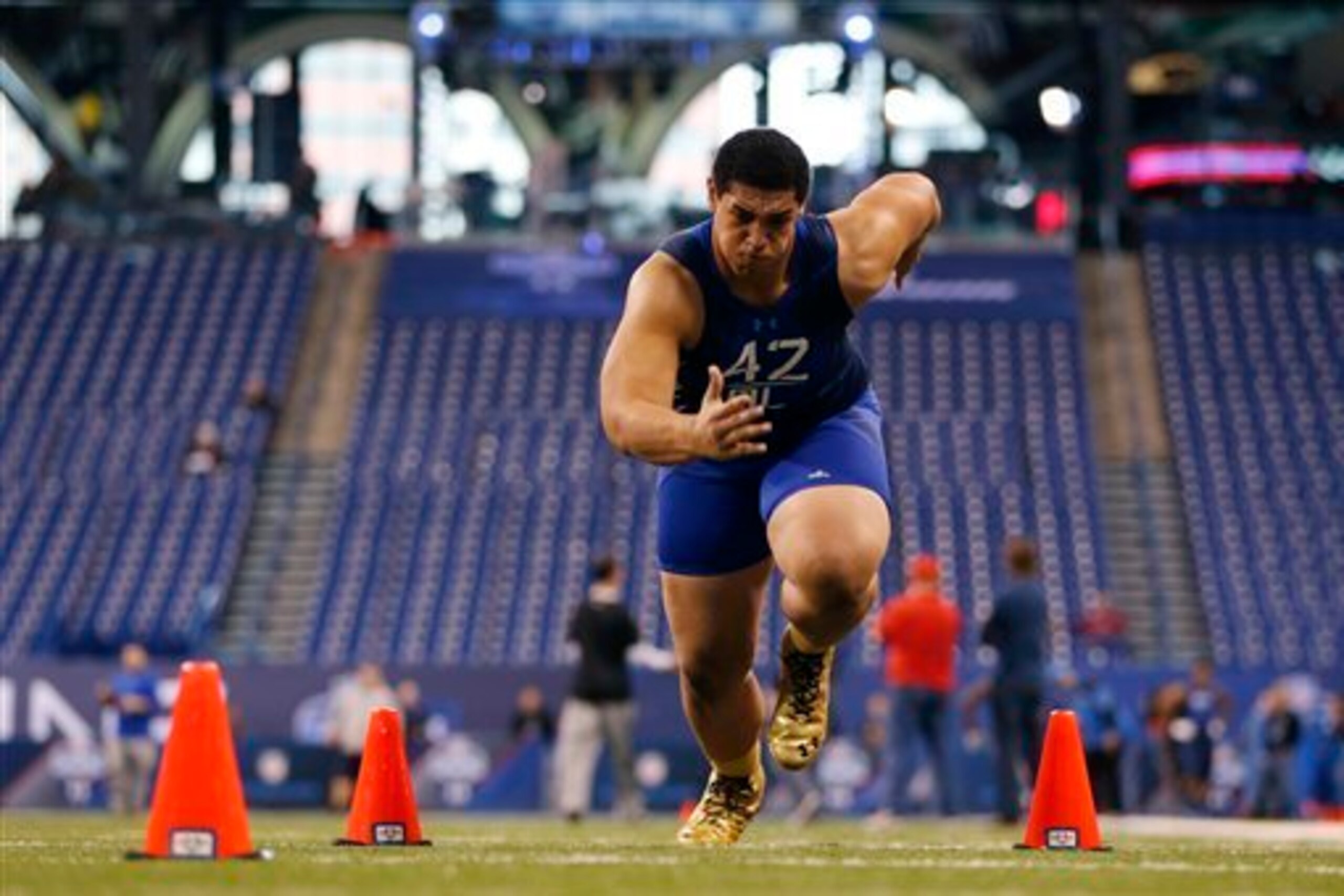

49ers Mock Draft: Instant Contributors San Francisco Can Find in Every Round
The San Francisco 49ers selected Frank Gore in the third round of the 2005 draft. Gore fell to that round because he tore both ACLs in college. Teams thought he was damaged goods, but the 49ers took a chance on him. Obviously, they were smart to take the chance.
Since drafting Gore, the Niners have been semi-obsessed with guys who have torn ACLs. Just last year, the Niners drafted three of them—guard Brandon Thomas, cornerback Keith Reaser and fullback Trey Millard. The year before, the Niners drafted two players with torn ACLs—defensive tackle Tank Carradine and running back Marcus Lattimore.
Enough is enough. The 49ers must resist the urge to draft the halt and the lame. They have too many holes in the starting lineup to draft players who spend their rookie seasons on injured reserve. The Niners need guys who can contribute right away.
Here is a complete seven-round mock draft of players who can impact the 49ers in 2015.
Round 1
1 of 7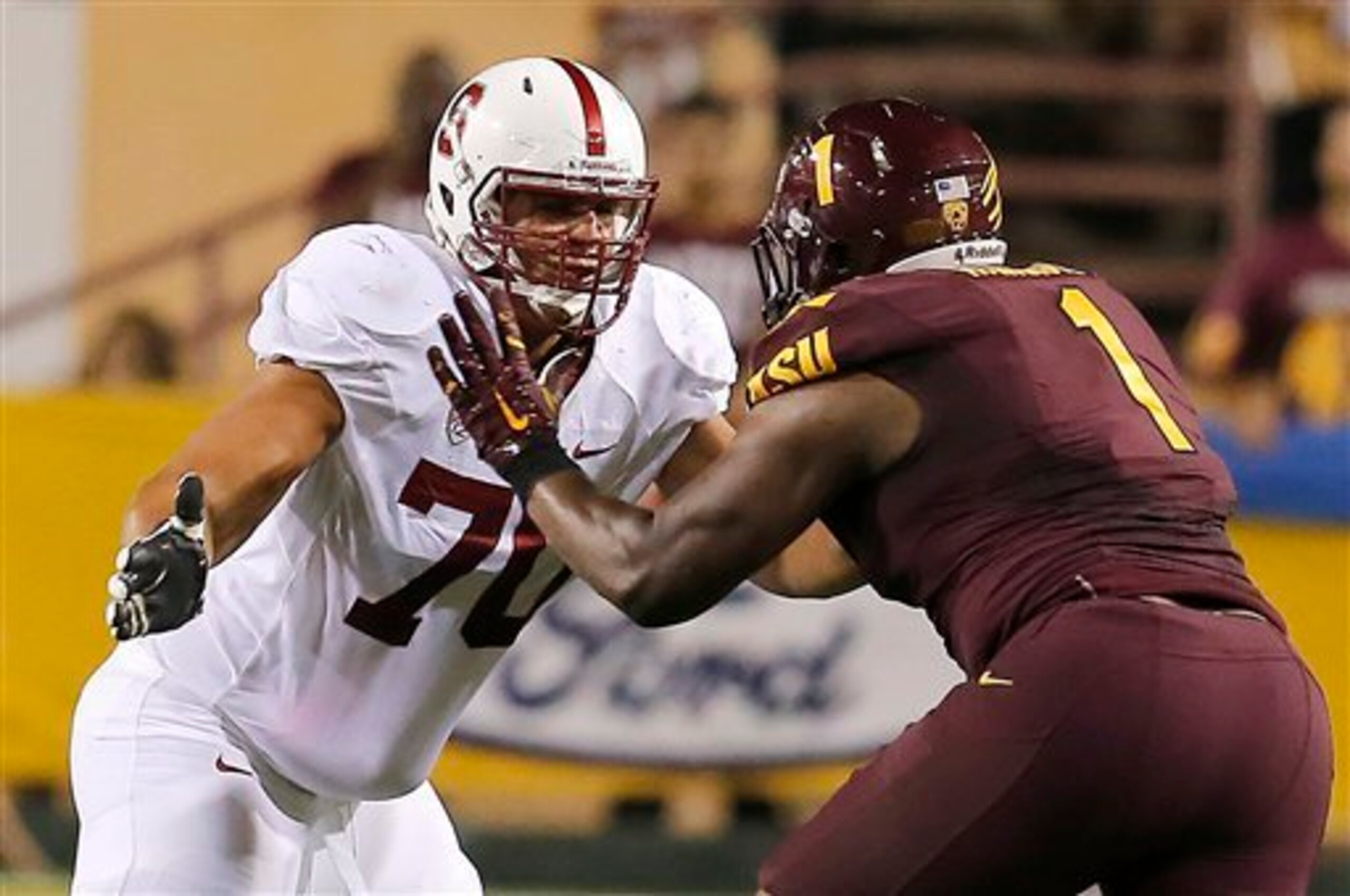
Pick No. 15, Andrus Peat, Offensive Tackle, Stanford University
The 49ers drafted guard Mike Iupati with the 17th pick in 2010. If they want to replace him with another mid-first-round pick, they have options in the upcoming draft.
The following offensive linemen should be available at pick No. 15: Brandon Scherff of Iowa, La’el Collins of LSU, Ereck Flowers of Miami (Fla.) and Andrus Peat of Stanford.
Each of those prospects would be a good left guard for the Niners and a solid replacement for Iupati. But only one of them would be a good draft pick: Peat. Let me explain.
Scherff, Collins and Flowers are guards who can’t play tackle in the NFL. The 49ers never re-sign guards to big-money extensions. They let guards walk in free agency and replace them in the draft. If the Niners draft Scherff, Collins or Flowers, they would be gone after four seasons—the duration of their rookie contract. Why spend the 15th pick on a player who has no future with the 49ers?
Peat has a future because he is not merely a guard. He is a left tackle who also can play guard. If the Niners draft him, he can play left guard early in his career (he’s only 21) and move to left tackle after Joe Staley retires.
Round 2
2 of 7
Pick No. 46, Stephone Anthony, Inside Linebacker, Clemson University
When the 49ers went to Super Bowl XLVII, inside linebackers NaVorro Bowman and Patrick Willis were the heart of the defense. They played almost every snap.
The Niners no longer have inside linebackers who can play every snap. Willis retired, and Bowman tore his ACL and MCL 15 months ago. He still is recovering. If Bowman plays next season—no guarantee—he should play only some of the time, not every play. The 49ers should re-acclimate him slowly so he doesn’t reinjure his surgically repaired knee.
The Niners must draft an inside linebacker who can play every snap, someone who can be the heart and quarterback of the defense as a rookie.
How many linebackers in the upcoming draft fit that description? Maybe two—Eric Kendricks of UCLA and Stephone Anthony of Clemson University. Draft experts expect a team to take Kendricks around the beginning of Round 2, but Anthony should be available when the 49ers pick in the middle of the round.
Round 3
3 of 7
Pick No. 79, Phillip Dorsett, Wide Receiver, University of Miami
The 49ers had the slowest offense in the NFL before this offseason.
They recently signed a scatback—Reggie Bush—and two deep-threat receivers—Torrey Smith and Jerome Simpson—and now the offense is somewhat faster.
Dorsett would make the offense electric because the Niners don’t have anyone like him.
He lines up outside or in the slot, catches passes and run reverses and end-arounds, returns punts and kicks and is a threat to score every time he has the ball.
Smith and Simpson strictly line up outside the painted numbers on the field. Anquan Boldin lines up in the slot, but he is more like a tight end than a slot receiver because he outmuscles defenders to make catches and is slow.
Dorsett is much faster than Boldin, Smith, Simpson and Bush. Dorsett ran a 4.33 40-yard dash at the combine. He is the fastest wide receiver in the draft, but he’s short—only 5’10”—so the Niners can get him in Round 3.



Round 4
4 of 7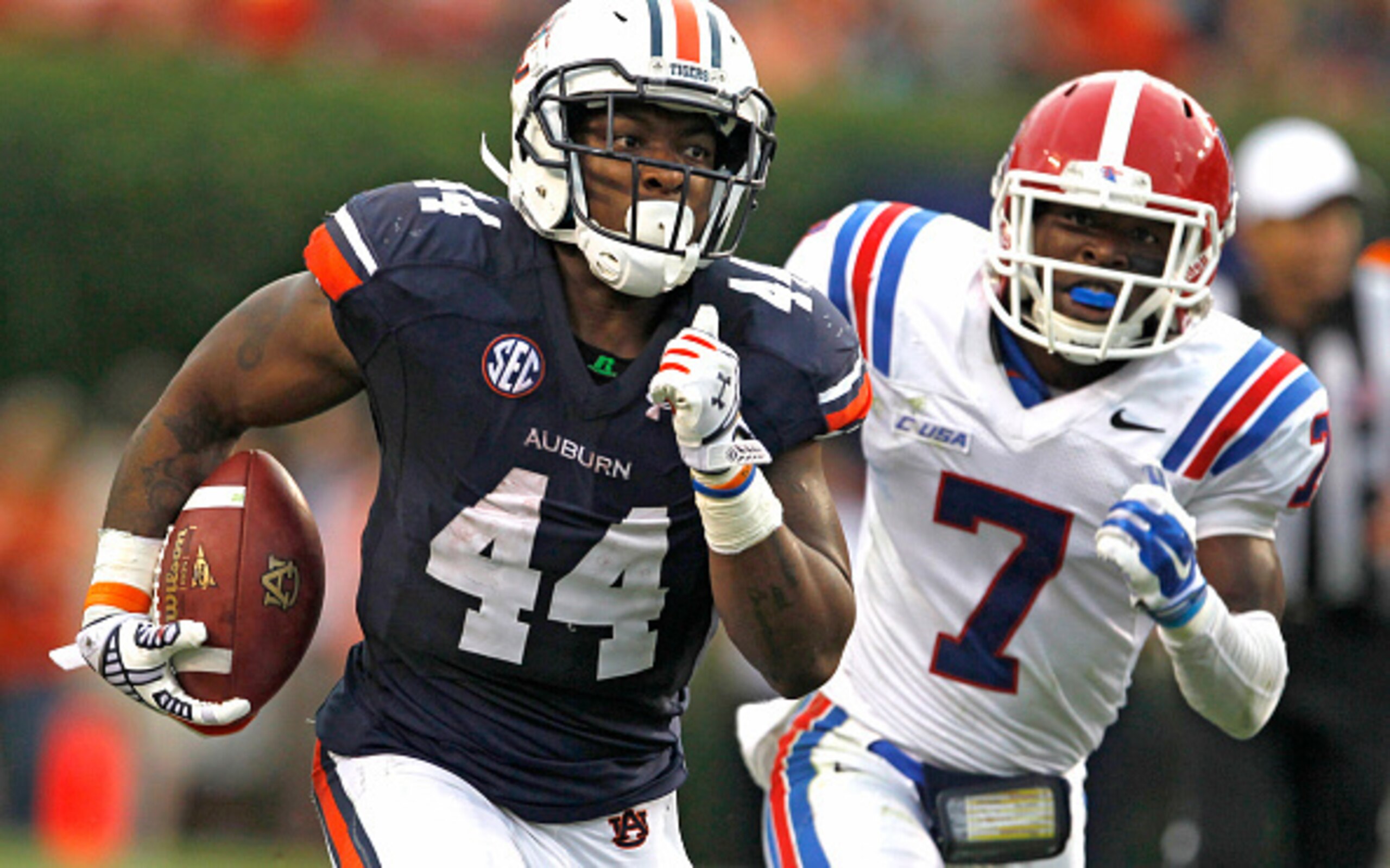
Pick No. 126, Lynden Trail, Outside Linebacker, Norfolk State University
Last season, Aldon Smith was a non-factor. Aaron Lynch was the only good pass-rusher on the team.
Who knows if Smith will bounce back next season? Let’s say he will. Even so, the 49ers would have just two quality edge-rushers, Smith and Lynch. Every defense benefits from having a third edge-rusher who comes off the bench and keeps the two starters fresh.
It’s hard to find a good edge-rusher after the fourth round. Trail is a good option, and he should be available in Round 4. He had 19.5 sacks in three seasons at Norfolk State, and he has 34 7/8-inch arms. The 49ers love pass-rushers who have long arms.
Pick No. 132, Cameron Artis-Payne, Running Back, Auburn University
The 49ers need a solid backup running back who can do everything—run inside and outside, block and catches passes—just in case Carlos Hyde gets injured.
The Niners’ current backup running backs, Kendall Hunter and Reggie Bush, are small, fast, change-of-pace backs, perfect complements for the big, powerful Hyde. But they can’t replace him if he gets hurt. They can’t run up the middle. A run-first team needs more than one running back who can run up the middle.
Auburn’s Cameron Artis-Payne can do just that—he was the SEC’s leading rusher in 2014. He is a tough, compact runner, roughly the same size as Frank Gore. Gore is 5'9", 217 pounds.; Artis-Payne is 5'10", 212 pounds.
Round 5
5 of 7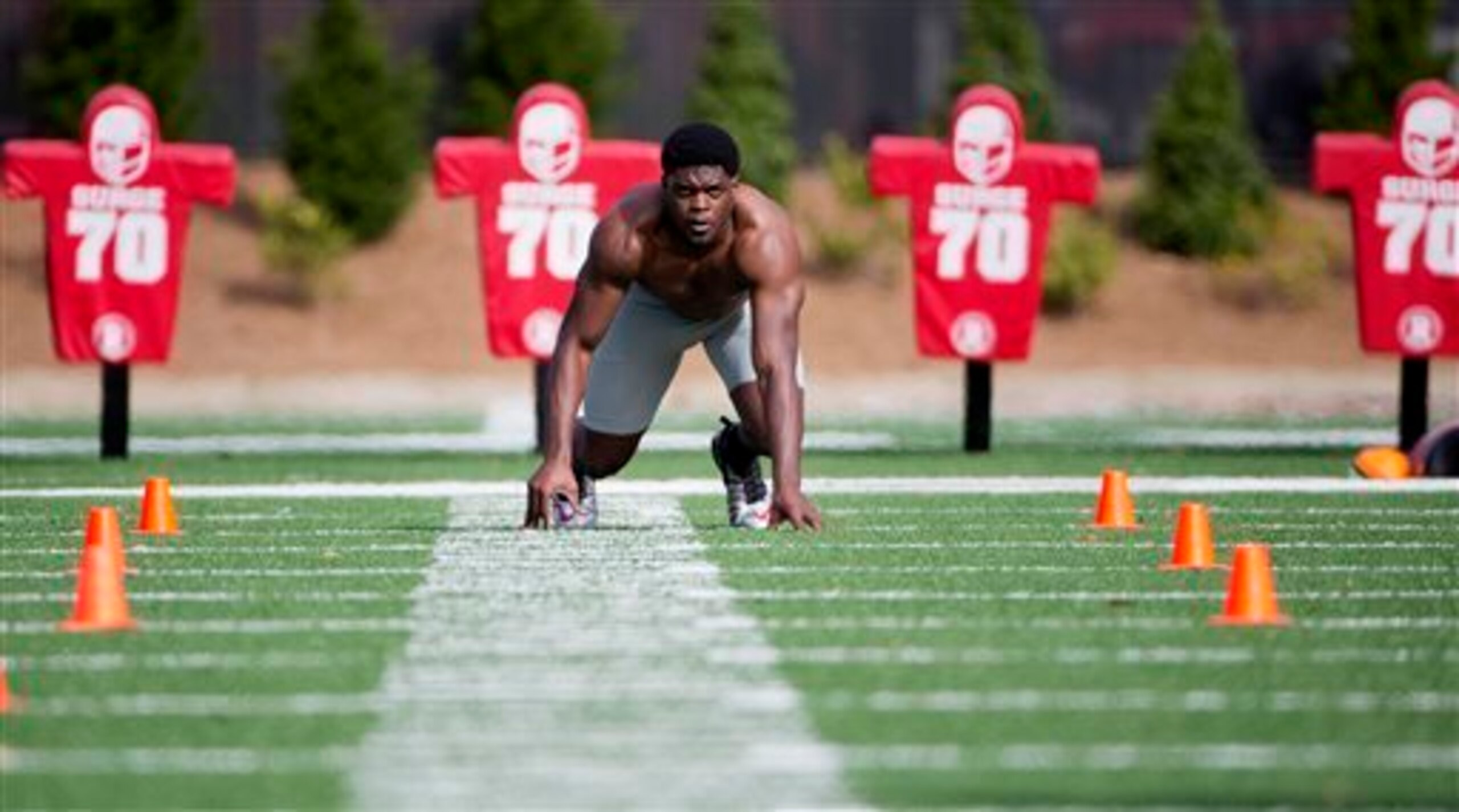
Pick No. 151, Ray Drew, Defensive End, University of Georgia
Drew was one of the top defensive ends in the country when he graduated from high school in 2011. One scouting service in particular, Rivals.com, ranked him as the No. 1 defensive end and the No. 9 prospect regardless of position.
Drew didn’t live up to the ranking. He isn’t the ferocious pass-rusher experts expected him to be—he had just 7.5 sacks in four seasons at the University of Georgia. But he is one heck of a run defender, and at his pro day, he said he can play three positions, according to D. Orlando Ledbetter of the Atlanta Journal-Constitution.
“I can play zero technique (nose tackle), 5-technique (3-4 defensive end), and everyone knows I can play with my hand off the dirt at linebacker as well,” Drew said.
The 49ers lost two key run defenders in the past four months—Ray McDonald, a 3-4 defensive end, and Dan Skuta, an outside linebacker. Drew would help make up for both losses.
Round 6
6 of 7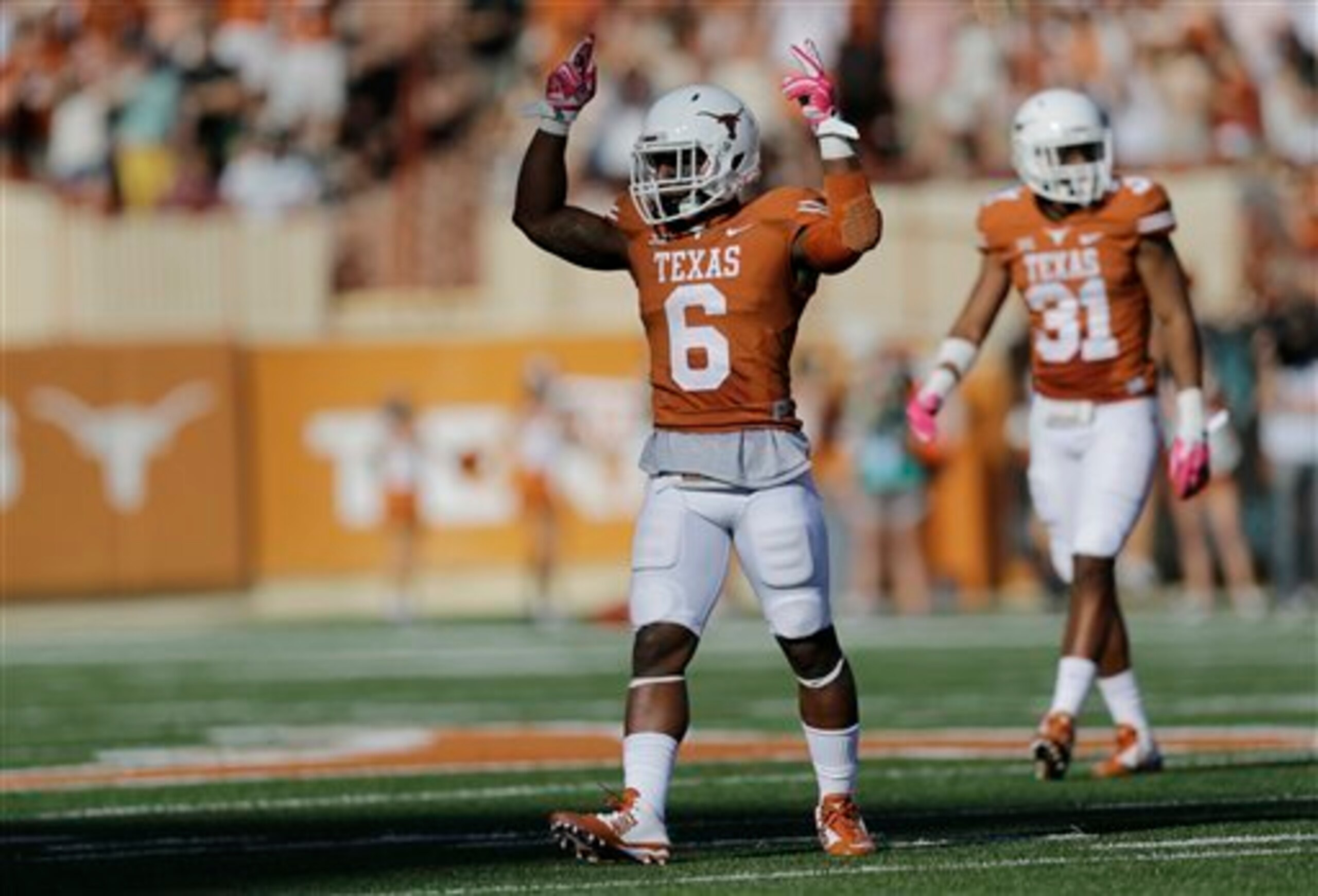
Pick No. 189, Quandre Diggs, Cornerback, University of Texas
The University of Texas produces so many good defensive backs, some people call it DBU—Defensive Backs University.
Diggs is one of the best in DBU history. He finished his collegiate career with 11 interceptions, tied for ninth-best on the school’s all-time list. He was a three-time All-Big-12 player, and in 2014 he was named a preseason second-team All-American. He can cover outside and in the slot, and he has impeccable instincts and big, soft hands for a cornerback.
Experts expect teams to wait until the sixth round to draft Diggs. He was a good college player, but some wonder if he is too short (5'9") and too slow (4.56 40-yard dash) to be an effective NFL cornerback.
The 49ers have had success with short cornerbacks (Tramaine Brock is 5’9” 3/4) and slow cornerbacks (Perrish Cox ran a 4.56). The Niners were drawn to them because they have good instincts and a knack for intercepting passes, just like Diggs.
Round 7
7 of 7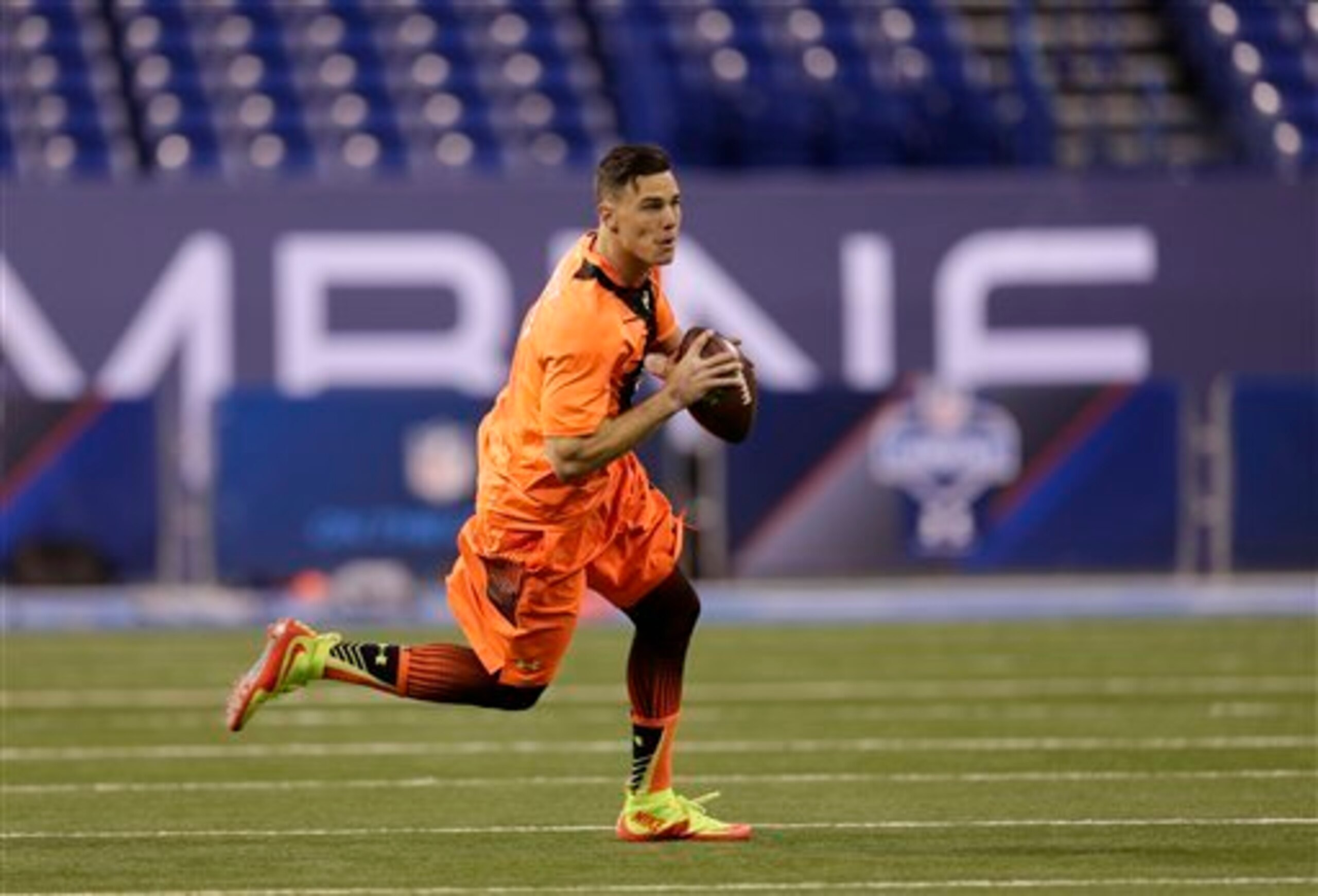
Pick No. 246, Bryan Bennett, Quarterback, Southeastern Louisiana University
The 49ers haven’t had a suitable backup for Colin Kaepernick since they traded Alex Smith.
The 49ers can’t call quarterback runs as frequently as they might like because they have to protect Kaepernick. The more he runs, the more opportunities the opposing defense has to hurt him. If he gets hurt, the 49ers are toast because they don’t have a backup quarterback who can run the offense.
Bennett has many of the same talents Kaepernick has. Bennett has a cannon, maybe the strongest arm of any quarterback in the draft. He’s also a tough, quick runner who operated a quarterback-centric read-option offense in college. He would be a perfect backup for the 49ers.
Pick No. 254, Rory “Busta” Anderson, Tight End, University of South Carolina
Delanie Walker was a key blocker and receiver for the 49ers. Vance McDonald was supposed to replace him, but he is just a partial replacement.
McDonald is an excellent blocker and bad receiver. The 49ers need a receiving tight end to complement him and fully replace what they lost when Walker signed with the Tennessee Titans in 2013.
South Carolina tight end Rory Anderson might be the guy for the job. Like Walker, Anderson is faster than most tight ends. He has the athleticism to be a third- or fourth-round pick, but he’s an injury risk. He didn’t participate at the combine because he tore his triceps. The previous spring he tore the triceps in his other arm. He also missed a game last season with an injured hamstring. Anderson’s injury history should keep teams from drafting him before Round 7.
.jpg?w=2560 "Cardinals Giants Football")
.jpg?w=2560 "Jets Dolphins Football")


.jpg?w=2560 "Mahomes' Wife Trolls Kubiak 💀")