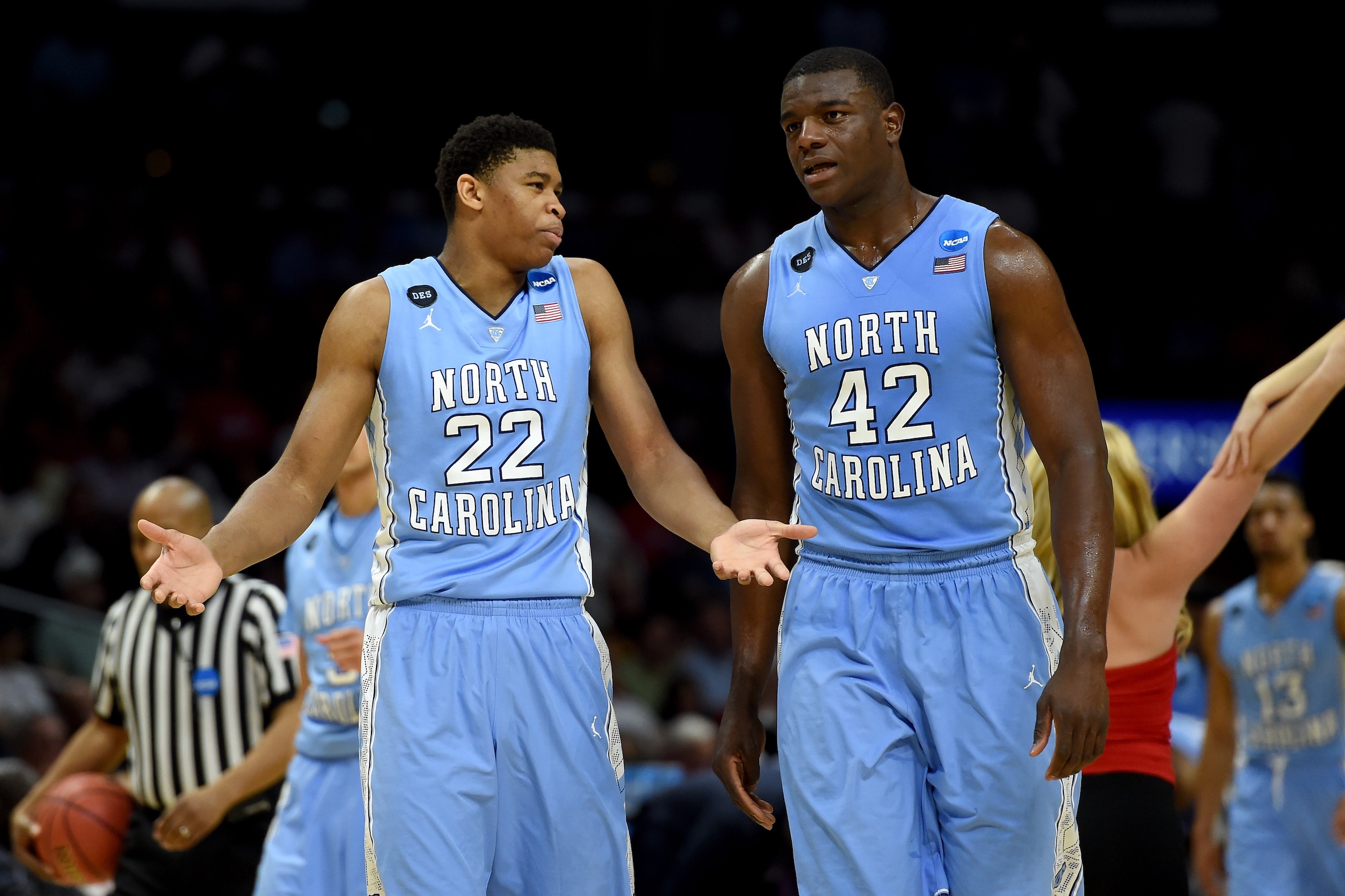

North Carolina Basketball: Final Grades for the Tar Heels' 2014-15 Season
A return to the Sweet 16 and a spot in the ACC title game highlighted what was a rather up-and-down season for North Carolina in 2014-15.
A wealth of talent, a deeper lineup than the year before and an abundance of size inside made it seem possible that the Tar Heels could go further, yet after all was said and done, their 26-12 record was the worst since 2009-10, the last time they failed to make the NCAA tourney.
Yet they were also very close to reaching the Elite Eight for the first time since 2012, leading Wisconsin with less than seven minutes remaining only to fall 79-72.
"And so they lost the way they often have: after leading, and then having a chance late only to watch that chance evaporate amid more futility," wrote Andrew Carter of the News & Observer.
UNC had plenty of highs and lows, both from a team and an individual standpoint, and now that the season is over, it's time to assess how each key player performed.
We've assigned grades to every Tar Heel who averaged at least 10 minutes per game, as well as grading coach Roy Williams and giving the team an overall mark.
Joel Berry II
1 of 12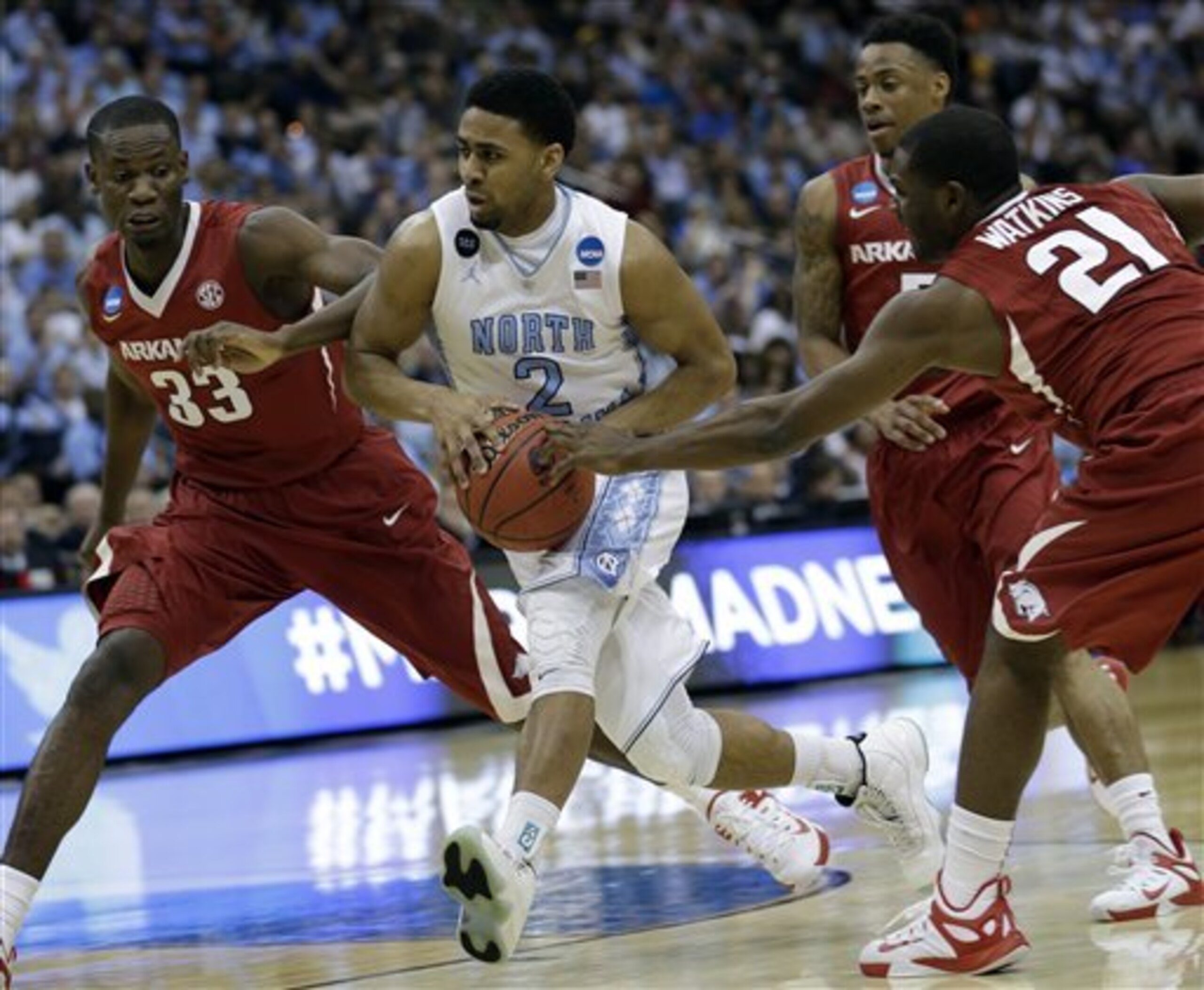
Year: Freshman
Position: Guard
Final stats: 4.2 PPG, 0.9 RPG, 1.5 APG, 0.4 SPG, 0.0 BPG, 40.4% FG, 35.4% 3PT, 75.7% FT
One of three highly touted freshmen whom UNC signed in the 2014 recruiting class, Joel Berry was hyped as the kind of player who could take pressure off of Marcus Paige in the backcourt by providing the Tar Heels with another shooter and someone who could direct the offense while Paige could play off the ball and get open for shots.
This might still be the case, but we didn't see much of this during his first season because Berry's opportunities were very limited. A midseason groin injury cost him seven games, and it took another two weeks before he could get back into a groove and make meaningful contributions.
A 15-point performance against Georgia in early March was a surprise, and it showed what Berry can accomplish when given a chance. It will be the kind of game he needs to build off in order to become more involved in 2015-16.
Final grade: B-
Nate Britt
2 of 12
Year: Sophomore
Position: Guard
Final stats: 5.5 PPG, 1.4 RPG, 1.5 APG, 0.5 SPG, 0.0 BPG, 38.4% FG, 36.6% 3PT, 88.2% FT
Much attention was paid to Nate Britt making the switch from shooting left-handed to right, and because of that, the expectation was this would lead to improved results.
Yet Britt's shooting efficiency went up slightly overall, and he actually took fewer shots per game, as his minutes dipped from 20.9 per game as a freshman to 15.3 this season.
Where Britt showed the most promise, though, was in developing into a viable three-point threat to complement Marcus Paige. He only tried a dozen threes last season, but he attempted 71 and made 26 this year, including a two-game stretch where he hit six of his 10 threes.
In other games, though, Britt hardly took any shots, as he often found himself on the court alongside Joel Berry but without Paige, and he didn't take the initiative to be an aggressive shooter.
Final grade: C
Isaiah Hicks
3 of 12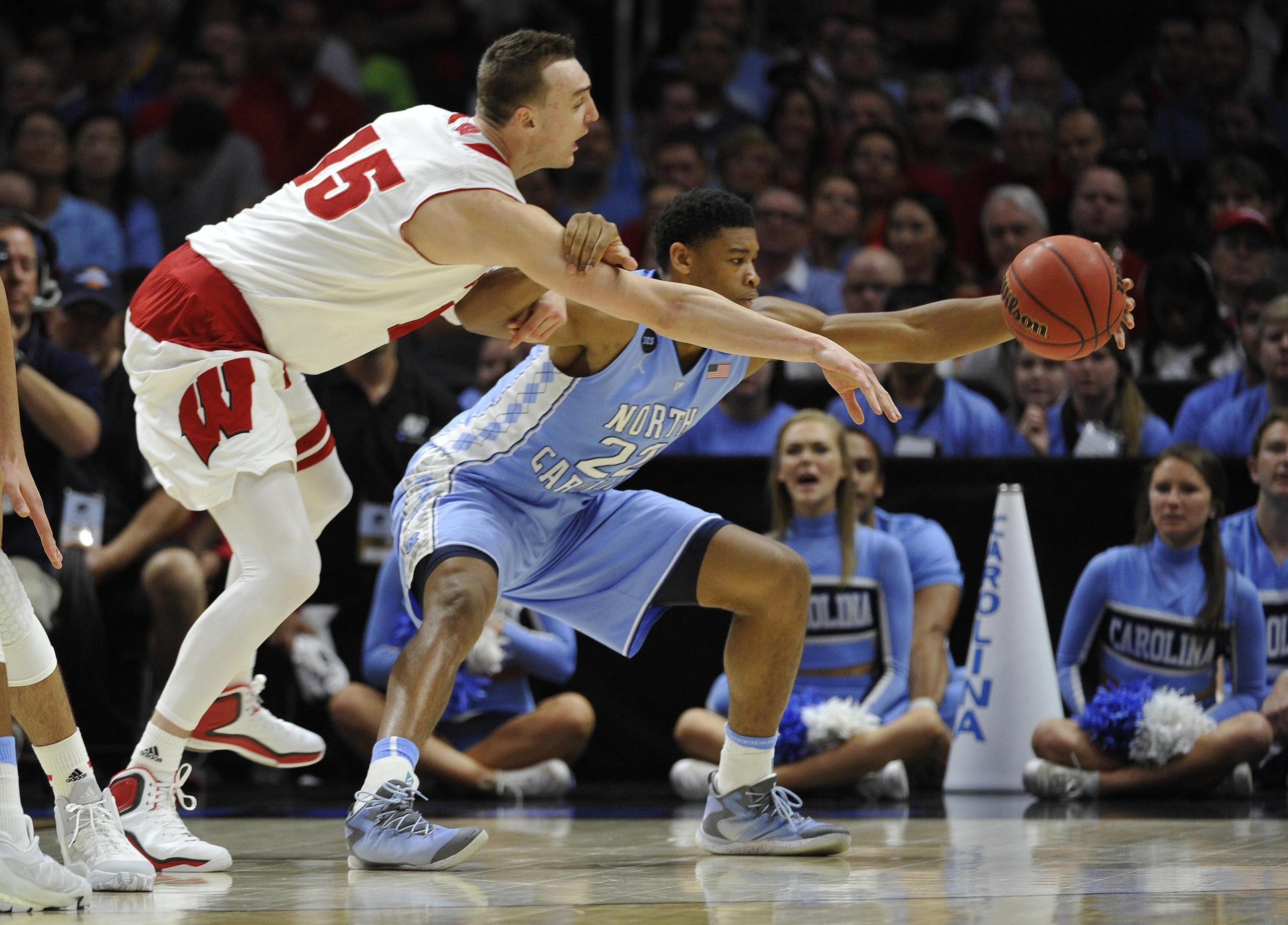
Year: Sophomore
Position: Forward
Final stats: 6.6 PPG, 3.0 RPG, 0.3 APG, 0.2 SPG, 0.4 BPG, 54.4% FG, 0.0% 3PT, 62.1% FT
Part of Carolina's second wave of frontcourt players, Isaiah Hicks made some of the biggest leaps of any player from last season to this one by more than quintupling his scoring in twice as much time on the court.
And unlike his freshman year, when Hicks seemed reluctant to shoot, he was far more aggressive in the paint in 2014-15.
As a result, Hicks had several standout games, most notably when he went for 21 points in a February win at Boston College and then consecutive 12-point performances against Duke and Georgia Tech. All of those games saw him push the action and take the ball hard inside, leading to strong scoring opportunities and trips to the free-throw line.
Improvement is still needed in foul shooting, among other areas, but with more opportunities next season, Hicks could be in line for another good year.
Final grade: A-
.jpg?w=2560 "Chiefs Giants Football")
.jpg?w=2560 "AP Poll Top Five Week 9")
Justin Jackson
4 of 12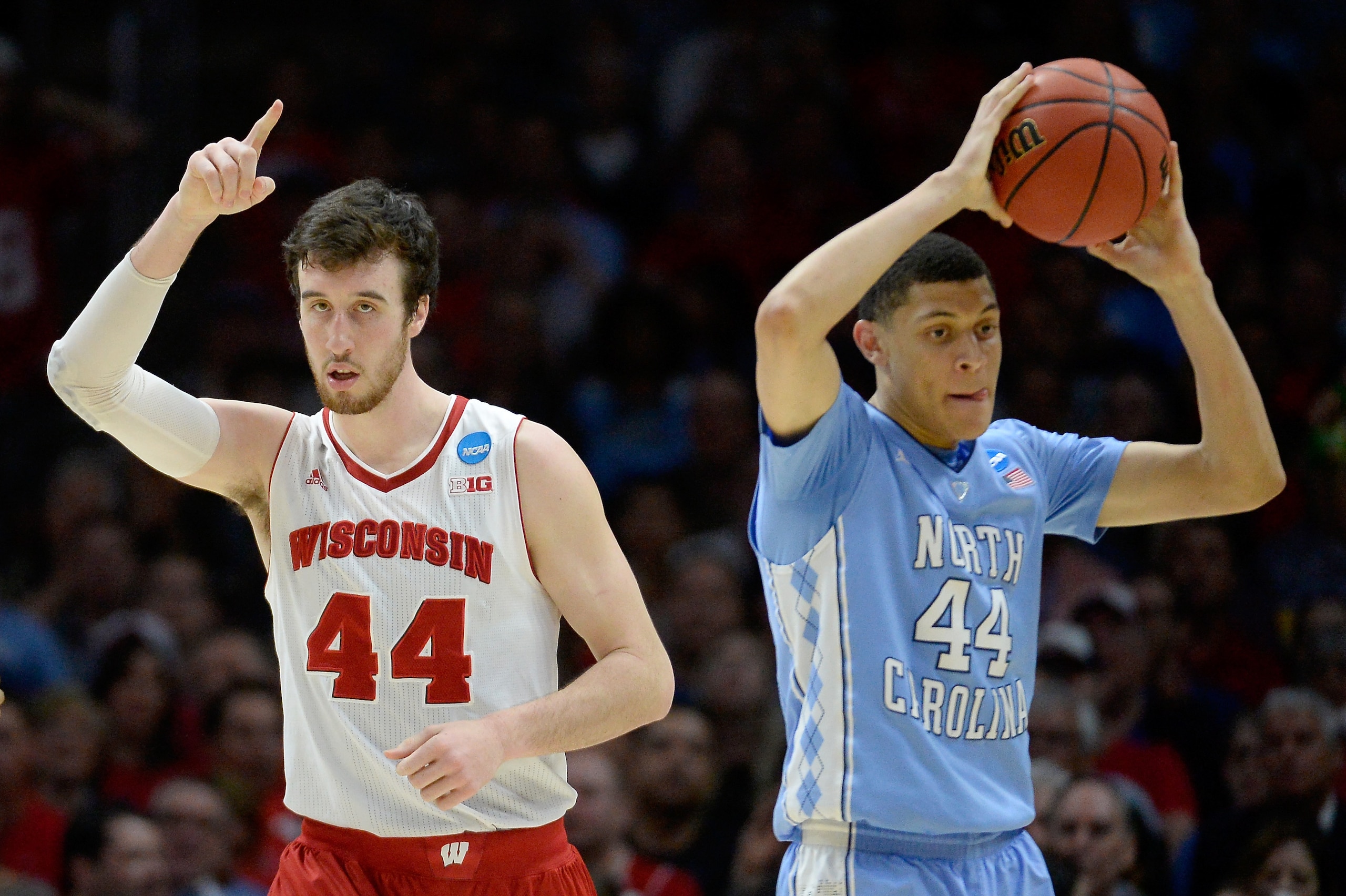
Year: Freshman
Position: Forward
Final stats: 10.7 PPG, 3.7 RPG, 2.3 APG, 0.5 SPG, 0.5 BPG, 47.7% FG, 30.4% 3PT, 71.0% FT
Justin Jackson's length made him a matchup nightmare as a small forward, yet it took a while for his shooting touch to fall in line with what was expected of this top recruit.
Had he not made all three of his three-pointers in the Sweet 16 loss to Wisconsin, Jackson would have ended his first season shooting below 30 percent from deep, which is far less than ideal.
His better shot came on mid-range jumpers, but without any bulk on his body, he wasn't able to properly contend in traffic and use his length to slash to the basket.
This also contributed to subpar rebounding numbers, but Jackson did show improvement throughout the year to give an indication that he's ready to break out as a sophomore.
Final grade: B
Joel James
5 of 12
Year: Junior
Position: Forward
Final stats: 2.5 PPG, 1.9 RPG, 0.2 APG, 0.1 SPG, 0.2 BPG
As UNC's tallest rotation player, Joel James was called on to sub in for Kennedy Meeks and Brice Johnson and try to throw his bulk around. He did this just fine, but not usually in a positive manner.
James averaged a personal foul every 7.3 minutes, which contributed to him playing just over 10 minutes per game. His offensive contributions were limited, though he had some flashes of brilliance that exceeded expectations. He still wasn't able to play the defensive role that was asked of him in a consistent manner.
Coach Roy Williams' desire to play a deep bench gave James his opportunity, and the same stands to reason for next year. But without further improvement, James could be the odd man out.
Final grade: C
Brice Johnson
6 of 12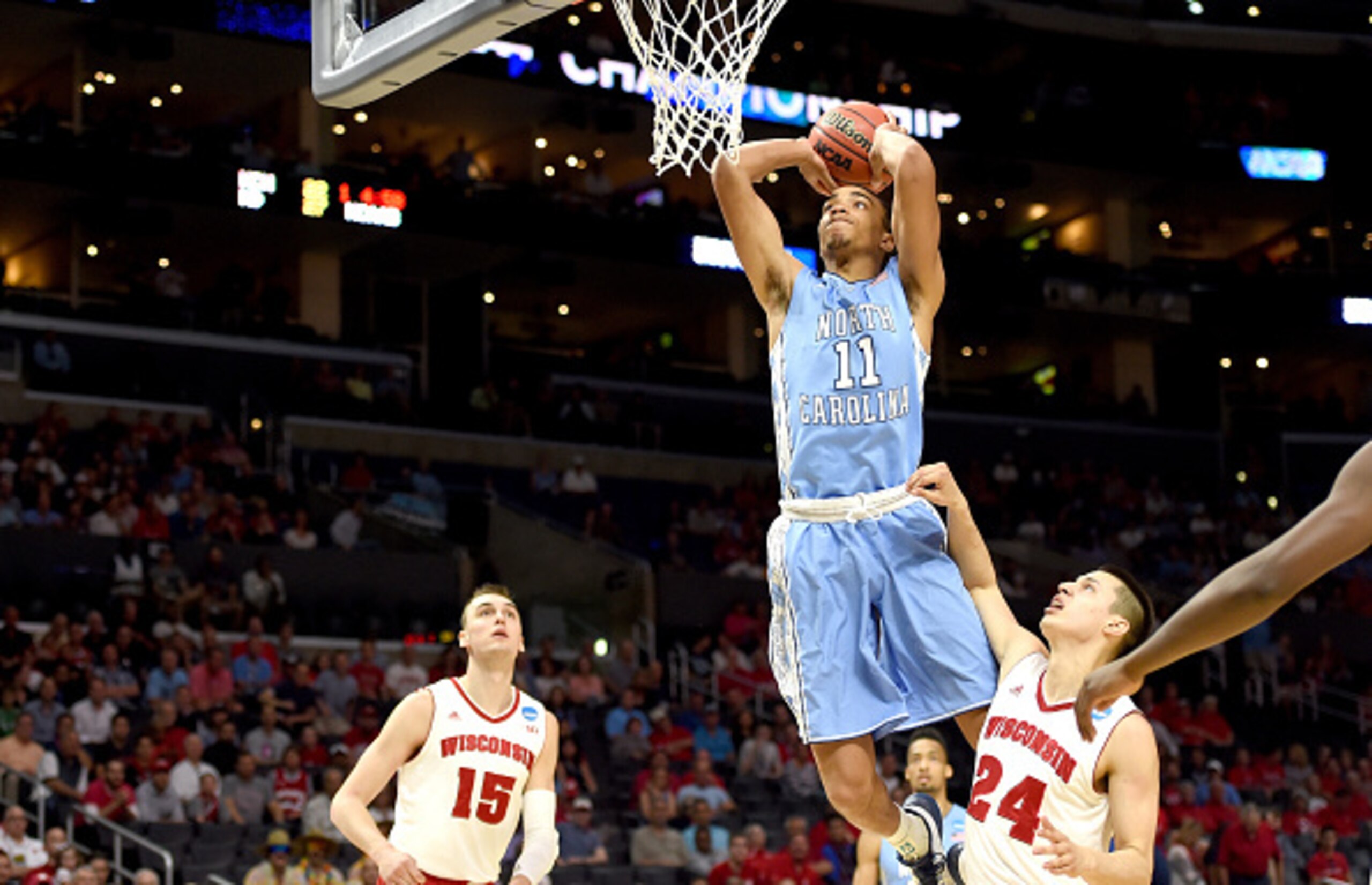
Year: Forward
Position: Junior
Final stats: 12.9 PPG, 7.8 RPG, 0.9 APG, 0.7 SPG, 1.1 BPG, 56.6% FG, 0.0% 3PT, 67.8% FT
Brice Johnson made a concerted effort in the offseason to bulk up and become stronger in order to handle the bigger players he had to defend and try to score on. This translated into a far more assertive approach when on the court—at least most of the time.
Johnson was Carolina's top rebounder, and he took more shots than anyone but Marcus Paige. Yet there were games when he wouldn't show that aggressiveness and therefore didn't contribute offensively like the Tar Heels needed.
"Johnson is arguably the most maddeningly frustrating player on the Heels roster," ESPN.com's C.L. Brown wrote prior to the NCAA tournament. "His talent and potential come through with every jump hook that swishes through the net, but his lack of focus can show on the ensuing trip down the floor."
When firing on all cylinders, Johnson was hard to stop—unless he stopped himself by playing too fast, which often led to foul trouble that took him off the court.
Final grade: B+
Kennedy Meeks
7 of 12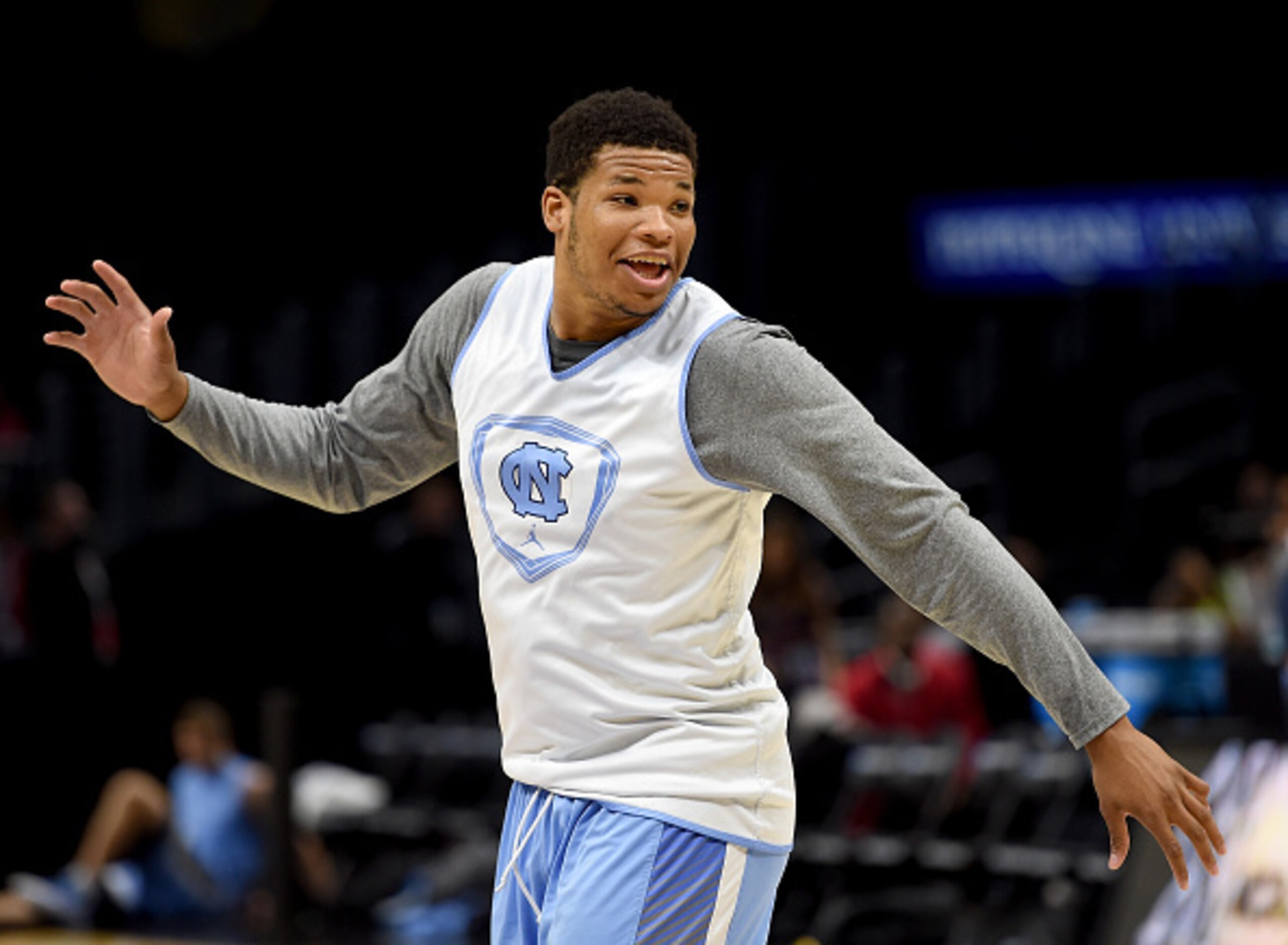
Year: Sophomore
Position: Forward
Final stats: 11.4 PPG, 7.3 RPG, 1.1 APG, 0.6 SPG, 1.2 BPG, 56.2% FG, 0.0% 3PT, 64.1% FT
With a slimmed-down body and better stamina, Kennedy Meeks made major improvements in his game on both ends of the court. He was able to play seven more minutes per game than as a freshman, increasing his scoring by 50 percent and having some monster games when he was able to stay out of foul trouble and not wear down.
But Meeks also dealt with several illnesses during the season, as well as minor injuries that limited his mobility at times. We saw what Meeks was capable of, just not for as long as hoped and not always in large bunches.
Still, it was a vast improvement and a great sign that he could be a major player in the post for the Tar Heels in 2015-16, but it will require Meeks to become meaner and more purposeful on the blocks rather than trying to play with a softness that opponents sometimes prey on.
Final grade: B+
Marcus Paige
8 of 12
Year: Junior
Position: Guard
Final stats: 14.1 PPG, 2.9 RPG, 4.5 APG, 1.7 SPG, 0.2 BPG, 41.3% FG, 39.5% 3PT, 86.5% FT
Marcus Paige's season was almost set up for failure from the beginning when you take into account that he was a near-consensus selection for preseason All-American teams. Such teams are based on what you've done the year before, when Paige was the do-everything guy who almost single-handedly carried North Carolina as far as it went.
For Paige to have matched what he did in 2013-14, it would have required the rest of the Tar Heels not to get as involved as they did. Had others not contributed this season, they wouldn't have achieved as much.
In fact, UNC's success was often in spite of Paige. For much of the year, he struggled with an inconsistent shot and confidence issues that were affected by plantar fasciitis.
Paige ended up being a third-team All-ACC pick this year, but then he turned it up in the ACC tournament and during the first weekend of the NCAA tourney by averaging 17 points and five assists.
A rough game against Wisconsin in the Sweet 16—until he hit back-to-back three-pointers late to get the Heels within a point—saw him fall back toward what he did most of the season.
Final grade: B-
Theo Pinson
9 of 12
Year: Freshman
Position: Forward
Final stats: 2.8 PPG, 3.0 RPG, 1.5 APG, 0.6 SPG, 0.2 BPG, 36.8% FG, 26.9% 3PT, 61.1% FG
A foot injury midway through his first collegiate season prevented Theo Pinson from establishing his game, yet before breaking a bone that caused him to miss 14 games over two stints, we weren't seeing much beyond someone who could provide a brief defensive spark off the bench.
Pinson played 14 minutes in UNC's three NCAA tournament games, but he amassed only one point and was 0-of-2 from the field. Though offense wasn't what his strong suit was expected to be in this initial season, when given a chance to score, he usually deferred to others.
Against Wisconsin, the Badgers left him open and dared him to shoot, but he didn't comply. That lack of confidence might not have been there had he been healthy all season, and it should serve as motivation for next season.
Final grade: C-
J.P. Tokoto
10 of 12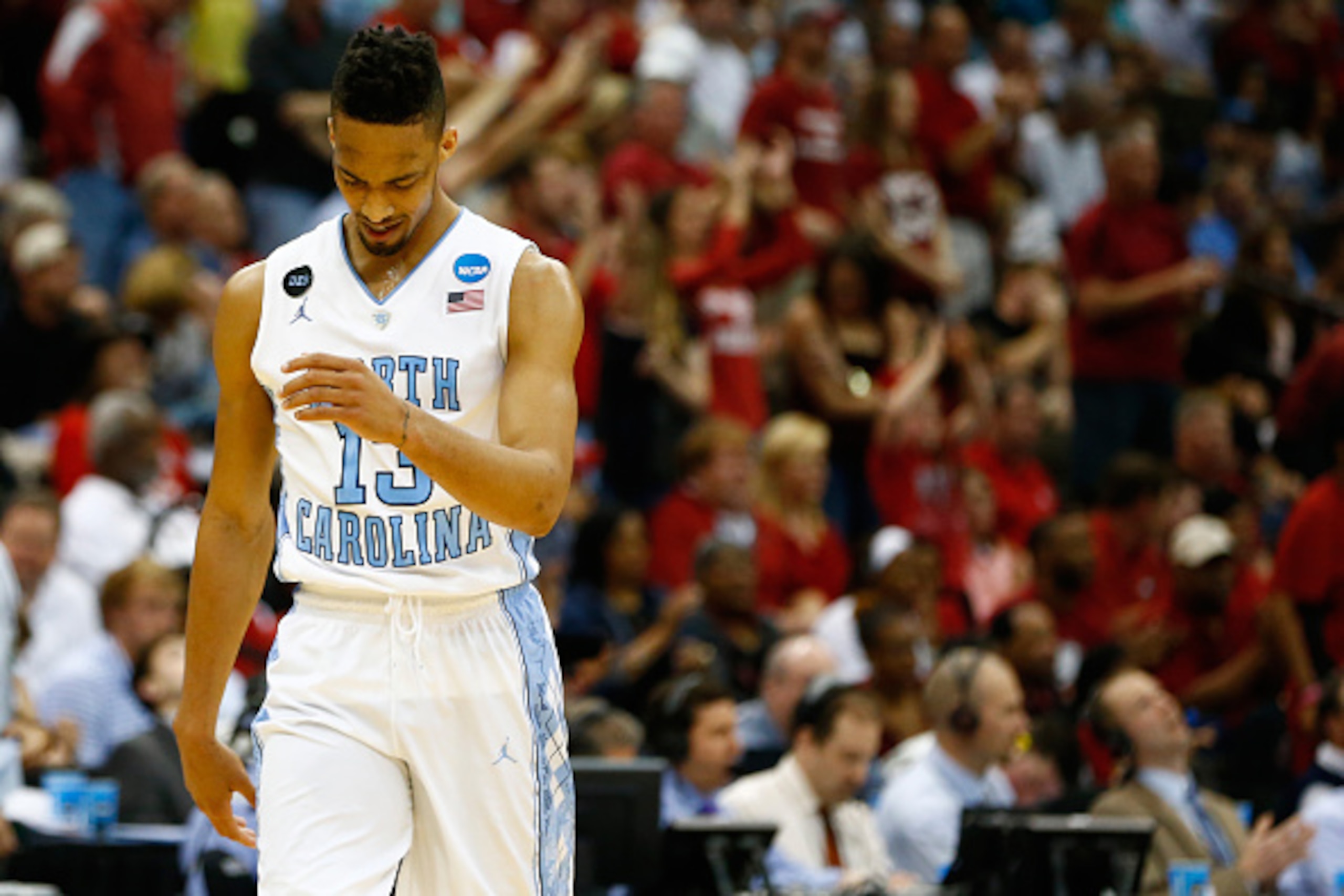
Year: Junior
Position: Forward
Final stats: 8.3 PPG, 5.6 RPG, 4.3 APG, 1.5 SPG, 0.3 BPG, 42.8% FG, 37.5% 3PT, 61.5% FT
From an overall standpoint, J.P. Tokoto was Carolina's most well-rounded and complete player this year. The athletic, acrobatic wing could play point guard, was a strong rebounder and had the kind of moves that often led to highlight-reel dunks and slashes to the basket.
All he really lacked was a consistent jump shot, despite frequently testing it when going into the paint would have worked just as well.
Tokoto's shooting percentage plummeted from 48.9 percent as a sophomore, and the breakdown between jump shots and attempts in the paint showed an even greater decrease.
With the athleticism that made him a dangerous weapon in the open court, this should have been his main focus with the ball in his hands, but Tokoto often tried to do more than what was expected of him.
As a result, Tokoto's scoring output would waver from game to game depending on what type of approach he took. If he sticks to the aerial game, he'll be a monster next season.
Final grade: B
Roy Williams
11 of 12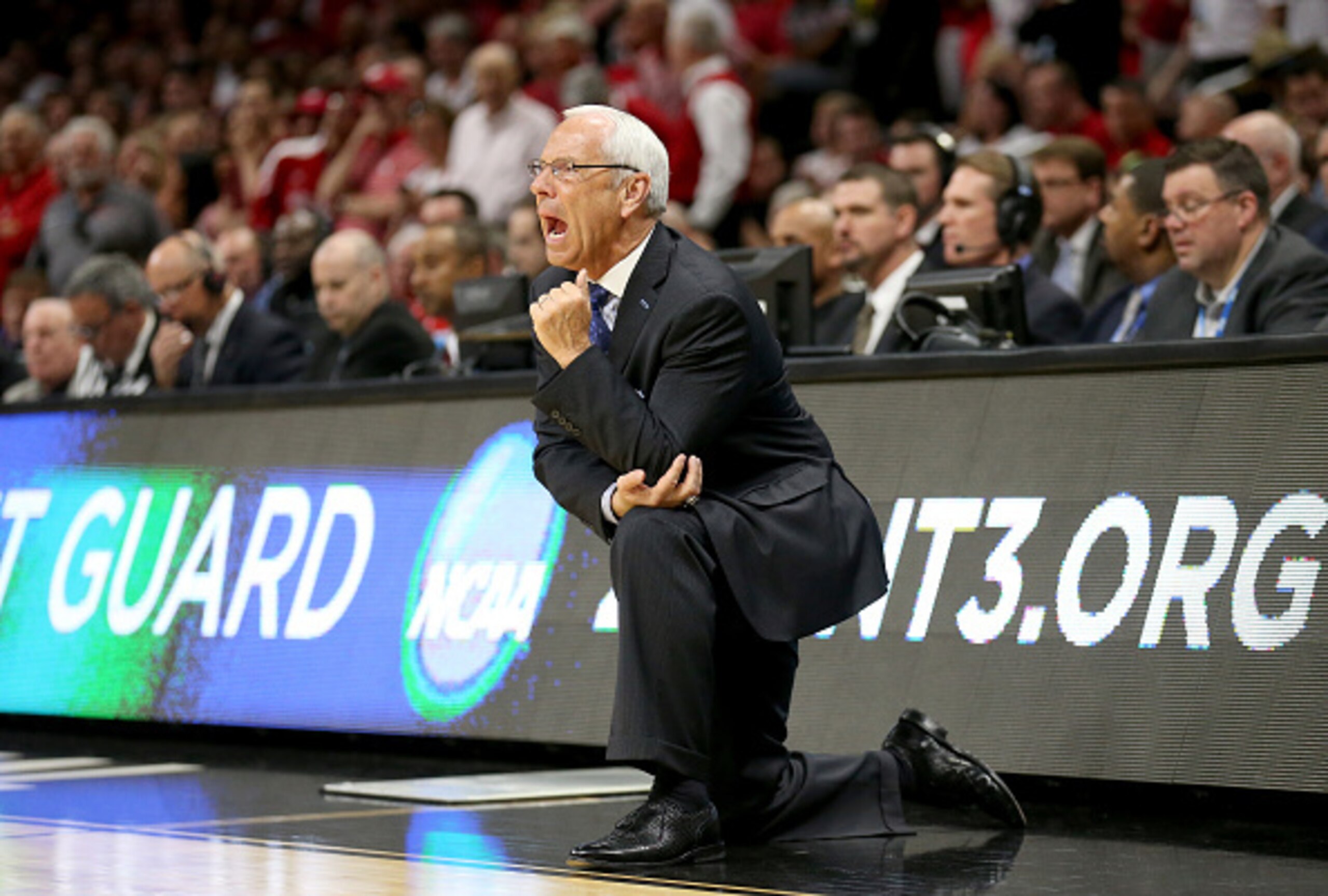
This was not Roy Williams' most talented team at North Carolina—far from it. But it also wasn't one that should have lost 12 games, not with the depth it had and the ability to rotate players in both the backcourt and the post.
Give this roster to some of the other notable coaches in college basketball, and it's still playing. But for some reason, the 2014-15 Tar Heels didn't click with Williams and his coaching style, something that star Marcus Paige alluded to in early February after they lost back-to-back games to Louisville and Virginia.
Williams never bit on the questions about whether his team bought in to what he was preaching this season, a veteran move by a great coach who has been through this before.
But Williams also failed to get the best out of this team, at least on an every-game basis, which often led to him heading into postgame press conferences with an air of defeatism hanging over him.
"I'd still coach my kids, because they've been something else," Williams said after the loss to Wisconsin, per GoHeels.com.
Final grade: C
Overall
12 of 12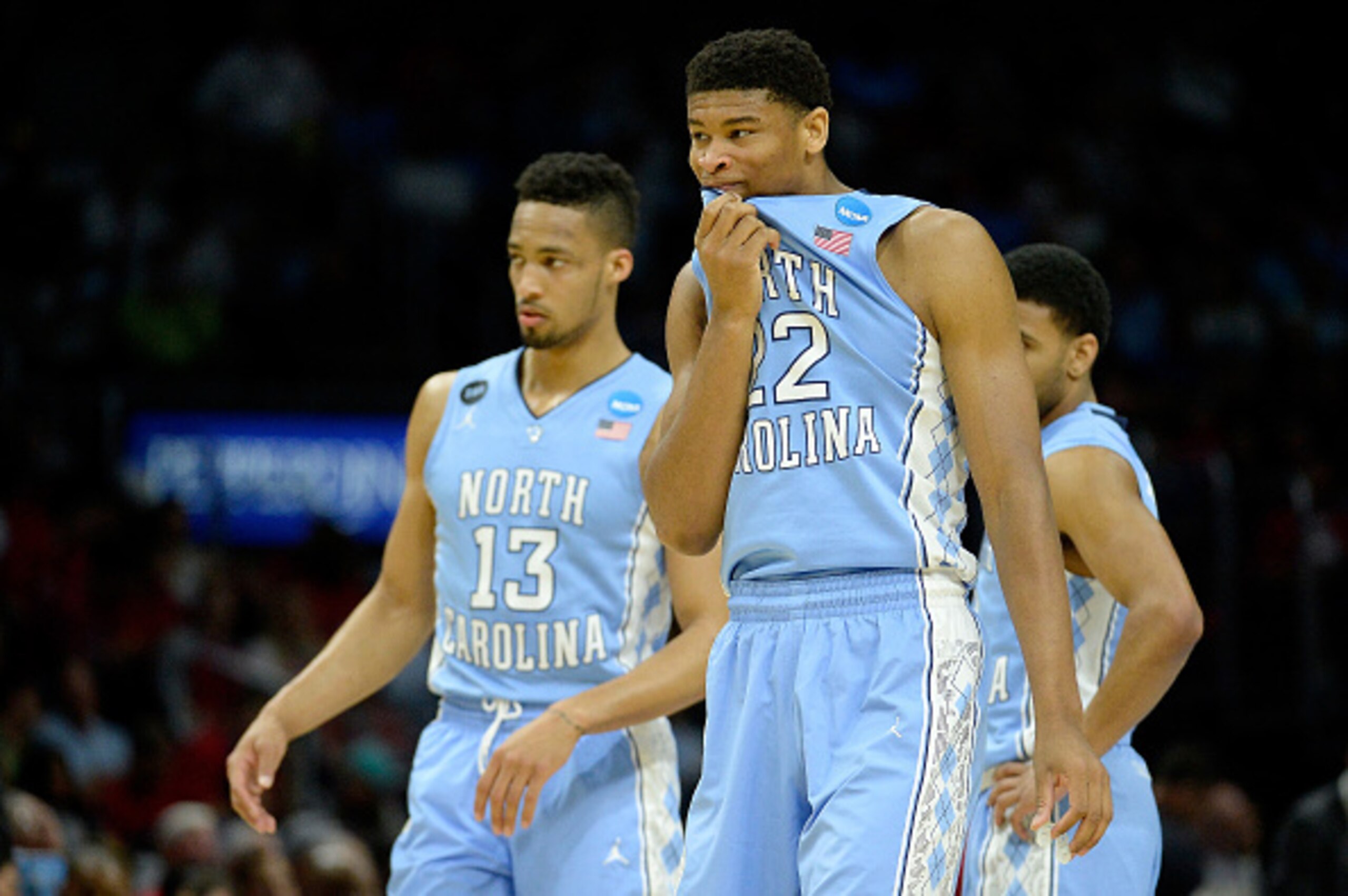
Picked to finish second in the ACC, the Tar Heels ended up in fifth place yet played their best basketball down the stretch to reach the conference tournament final and then come within a few shots of beating Wisconsin and reaching the Elite Eight.
That late push was indicative of what this team was capable of, but the Heels didn't always show it on a consistent basis—an issue that popped up throughout the season.
UNC's best run of the season was a six-game win streak in January, but after that, it failed to win more than three in a row. Much of that was due to the competition—with five Sweet 16 teams in the ACC, it's not hard to argue the league was the toughest in the country—but the Heels also contributed to the struggles by not playing to their full potential at all times.
Carolina had the looming specter of an NCAA investigation into academic fraud to deal with, then legendary coach Dean Smith passed away. Those off-the-court developments could have led to a much poorer performance, but they instead managed to not have too much of an impact on how things played out.
Rather, it all came down to not being able to play at the highest level on an every-game basis.
Final grade: B-
Follow Brian J. Pedersen on Twitter at @realBJP.
.jpg?w=2560 "Steelers Buccaneers Football")
.jpg?w=2560 "5 Teams Eyeing Jonathan Taylor")
.jpg?w=2560 "Steelers Roll Saints in Paris")
.jpg?w=2560 "NFL investigating Eagles")
