

Ranking the Top 20 Players in the Sweet 16 of the 2015 NCAA Tournament
The criticism of college basketball is often that there aren't any recognizable great players anymore because of the race to get to the NBA.
There's some truth to that, but if you pay attention to college basketball throughout the year, you know that this Sweet 16 is loaded with legit stars.
That's the big perk of this tournament going mostly chalk: Most of the game's marquee players are still around. A good number of those guys are upperclassmen you should know by now. The Player of the Year favorite is a senior (Wisconsin's Frank Kaminsky), and 13 of the top 20 on this list are upperclassmen.
That's no coincidence either. These guys aren't ranked by their pro potential, but instead based on their value as college players, particularly in a tournament setting.
This group of 16 teams left is one of the strongest in recent memory, and a big reason for that is some stars who have actually stuck around when they could have gone pro.
Honorable Mention: Trevor Lacey, North Carolina State; Juwan Staten, West Virginia; Quinn Cook, Duke; Andrew Harrison, Kentucky; Aaron Harrison, Kentucky; Nigel Hayes, Wisconsin; Brandon Ashley, Arizona; Kevin Pangos, Gonzaga; Pat Connaughton, Notre Dame; Cat Barber, North Carolina State; Denzel Valentine, Michigan State; Branden Dawson, Michigan State; Matt Stainbrook, Xavier.
20. Stanley Johnson, Arizona
1 of 20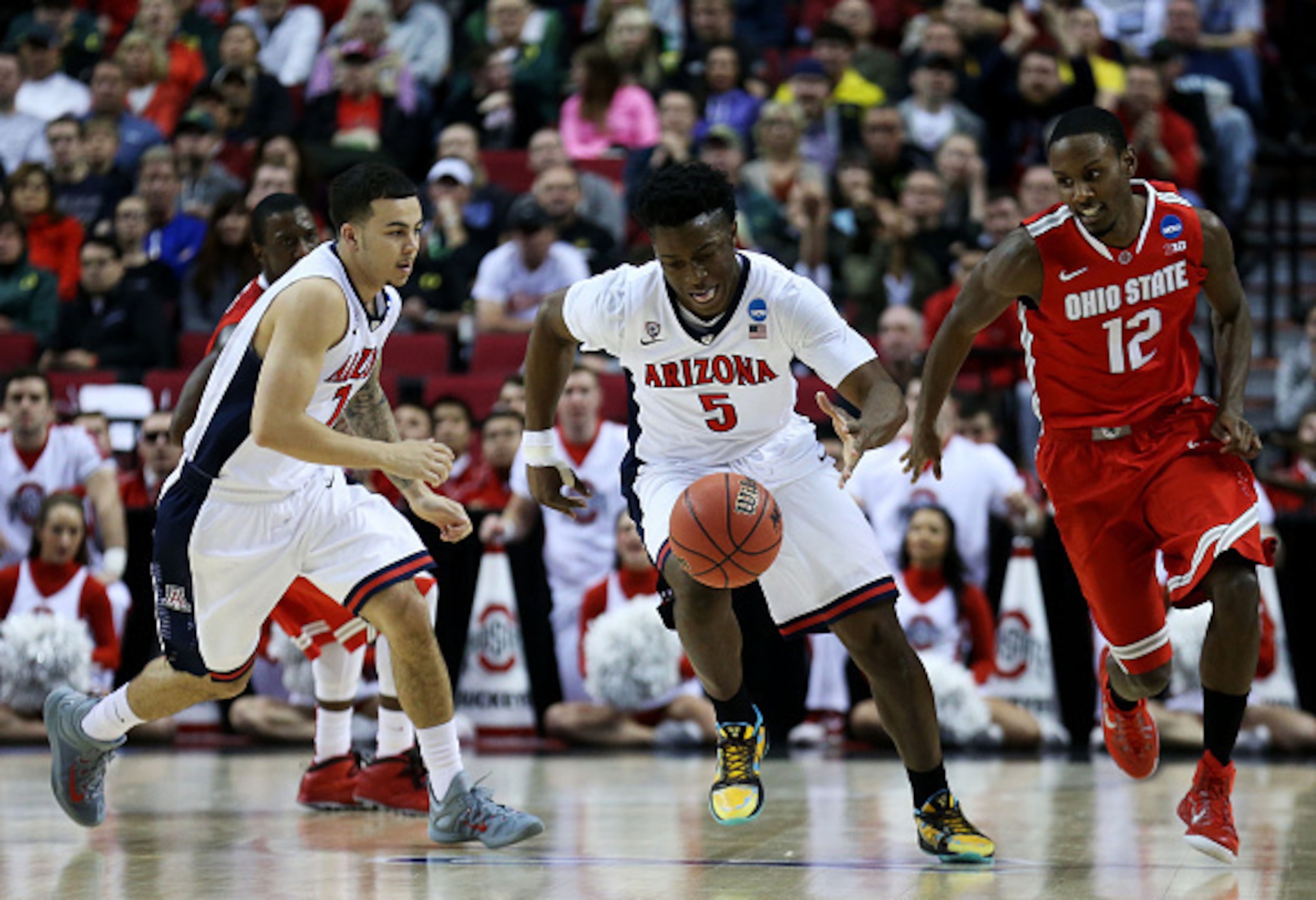
What he's done: Stanley Johnson had a terrific freshman season and is giving the Wildcats the scoring they needed from the perimeter. He's the team's leading scorer (14.0 PPG) and second-leading rebounder (6.6 RPG).
Why he's here: Johnson is a more well-rounded scorer than you'd expect looking at his body type—he looks like a banger—with the ability to not just bulldoze to the basket but also score from mid-range and the three-point line. He's been a better-than-expected three-point shooter (37.3 percent).
The reason you'll see two Arizona guys ahead of Johnson here is that he has had stretches where his energy and focus is not where it needs to be, and he'll disappear from some games. To his credit, he struggled scoring in Arizona's round-of-32 matchup against Ohio State—scoring four points on 1-of-12 shooting—but he still found a way to impact the game by grabbing 10 rebounds.
What to expect: It's hard to know what to expect from Johnson. He's one of the most gifted players left in the tournament, but he's either hot or cold. He'll need to be on for Arizona to get to Indy.
19. Travis Trice, Michigan State
2 of 20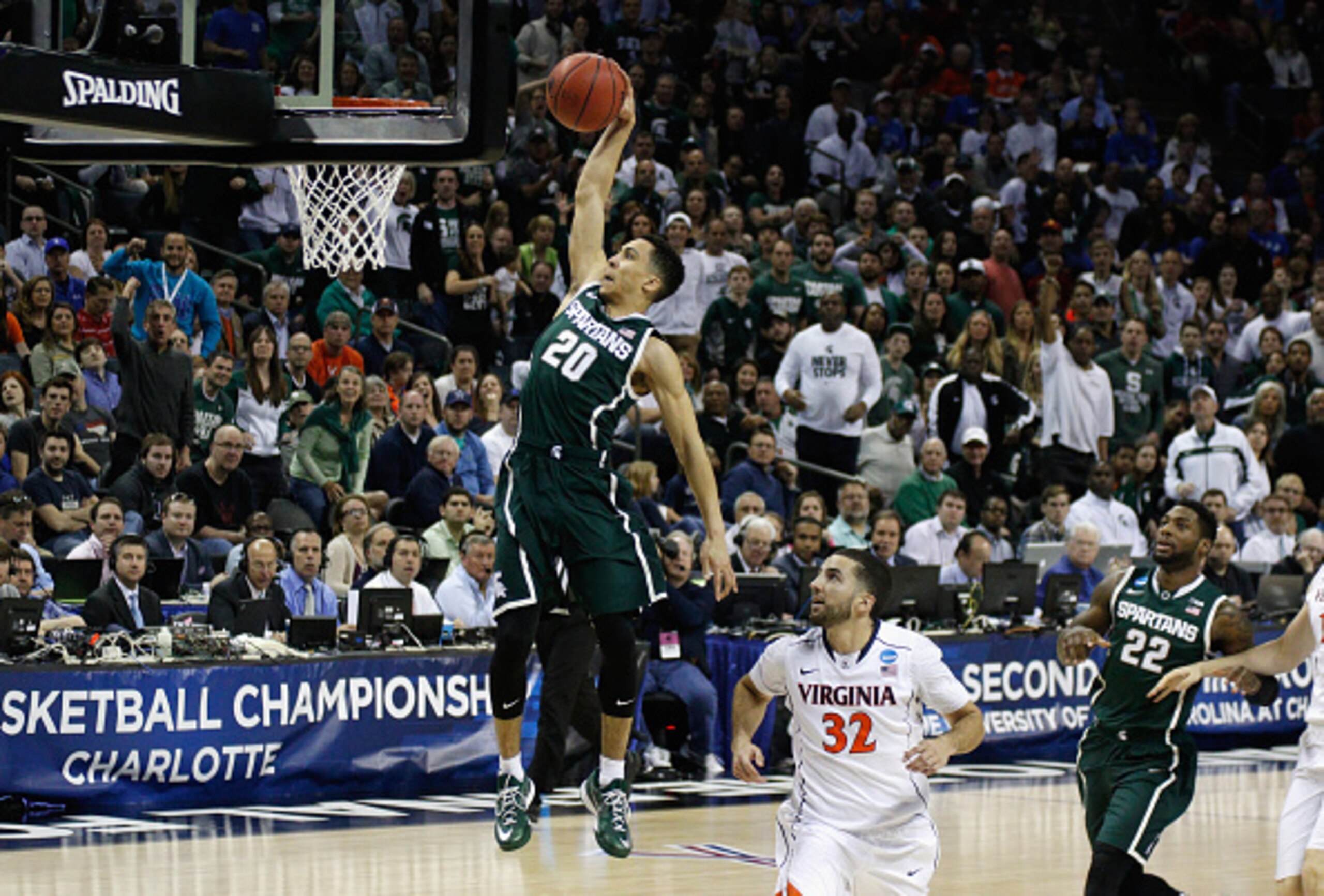
What he's done: Travis Trice is coming off the game of his life. He's scored more points before than the 23 he had against Virginia in the round of 32, but this was against a historically dominant D. Trice did a lot of it on his own, too, simply taking the ball off the dribble and burying dagger jumpers.
Why he's here: The ability to go get buckets. Trice has become such a big-time shot-maker and can carry Michigan State's offense for stretches. There are few guys in college basketball who can do what he can do.
What to expect: An old-fashioned shootout between Trice and Oklahoma's Buddy Hield. Winner goes to the Elite Eight and should be the favorite to get to the Final Four.
18. Sam Dekker, Wisconsin
3 of 20
What he's done: Sam Dekker has had a solid junior season as one of Frank Kaminsky's sidekicks. He's talented enough to be the star, and at times he morphs into that role for the Badgers. Take his scoring numbers in the tournament thus far—he scored 20 points against Coastal Carolina in the round of 64 and followed that up with 17 against Oregon in the round of 32.
Why he's here: Dekker is 6'9" with the quickness and bounce of a guard. He's great at getting to the rim and finishing, and he's an adequate three-point shooter. Much like with Kaminsky and Nigel Hayes, head coach Bo Ryan can move Dekker around on the court, making it difficult on defenses to find the right guy to match up with him.
What to expect: Look for Dekker to stay aggressive in the NCAA tournament. The Badgers don't always need him to score, but if they're going to knock off both Arizona and Kentucky, he's going to need to be a big factor.
.jpg?w=2560 "Chiefs Giants Football")
.jpg?w=2560 "Titans Colts Football")
17. Tyus Jones, Duke
4 of 20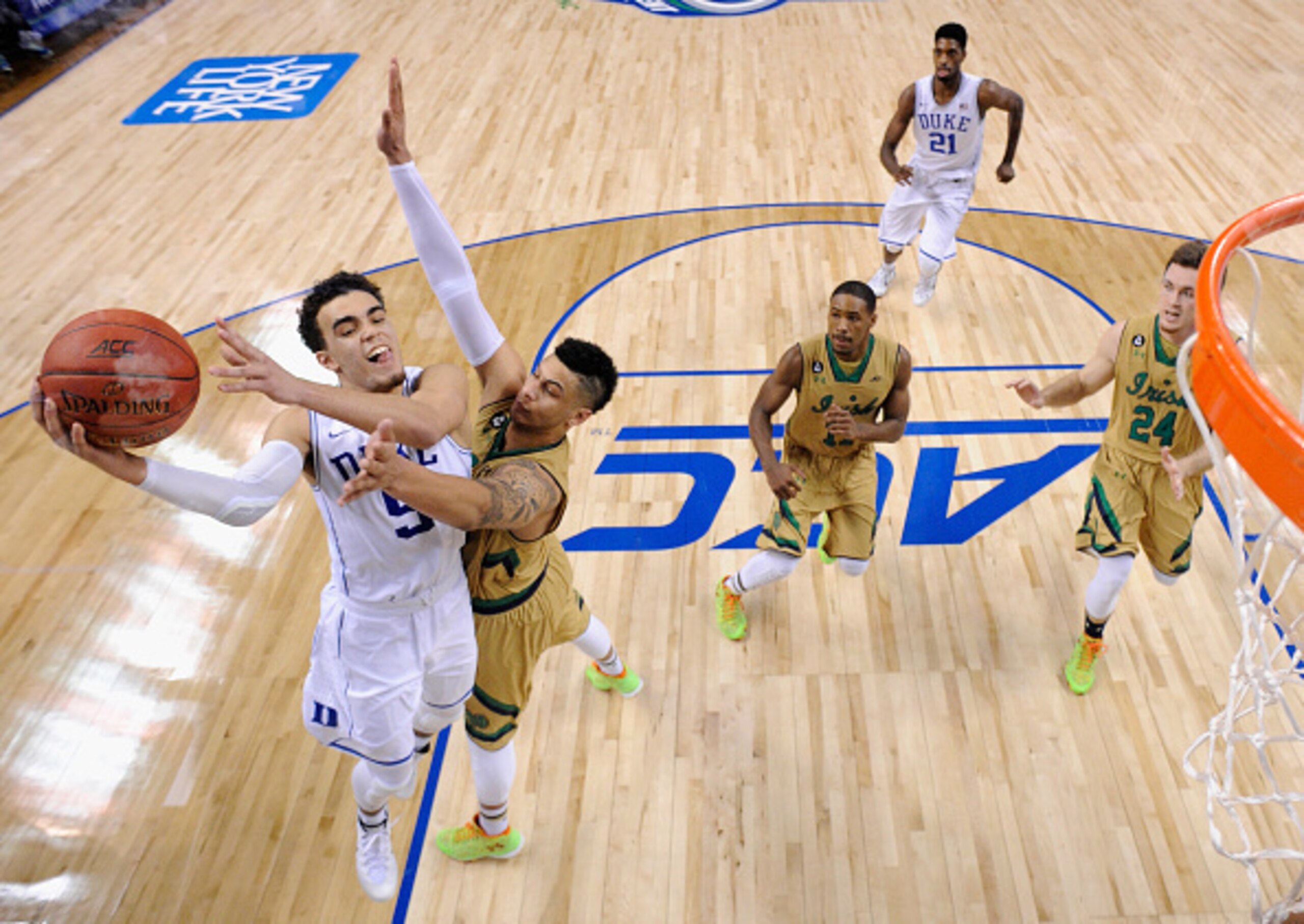
What he's done: Tyus Jones had a couple quiet performances in the tournament's first weekend, simply setting up his teammates with 13 assists in two games. Just wait until the lights get brighter.
The freshman guard has been nails in big games. He dropped 22 points in an early-season win at Wisconsin, had 22 points and six assists in the comeback win at St. John's for Mike Krzyzewski's 1,000th win, racked up 17 points in the win at Virginia and averaged 23.0 points and 7.5 assists in two wins over North Carolina.
Why he's here: Jones is not as good defensively and doesn't score as consistently as some of the other top guards in the tournament, but he's up there with anyone in his ability to distribute and get buckets in big moments.
What to expect: Big performances in big games. Once Duke gets in a tight game, look for Jones to deliver. He has big-time matchup in the Sweet 16 against Utah's Delon Wright and another potential marquee battle in the Elite Eight against Gonzaga's Kevin Pangos.
16. Montrezl Harrell, Louisville
5 of 20
What he's done: Montrezl Harrell has gotten the most out of his ability of any big man in college basketball. He's not super skilled—although he's improved his jumper and back-to-the-basket game this year—but he puts up consistent numbers (15.4 PPG, 9.2 RPG) by simply outworking and outmuscling other bigs.
Why he's here: Again, it's all about the effort. Don't take this as he's not talented. It's just his motor that makes him really special.
What to expect: Harrell struggled scoring the ball in Louisville's loss to NC State earlier this year, putting up only seven points on 1-of-5 shooting. In all likelihood, he's going to get more than five shots this time around. If the Cards are going down, Harrell will go down swinging.
15. Marcus Paige, North Carolina
6 of 20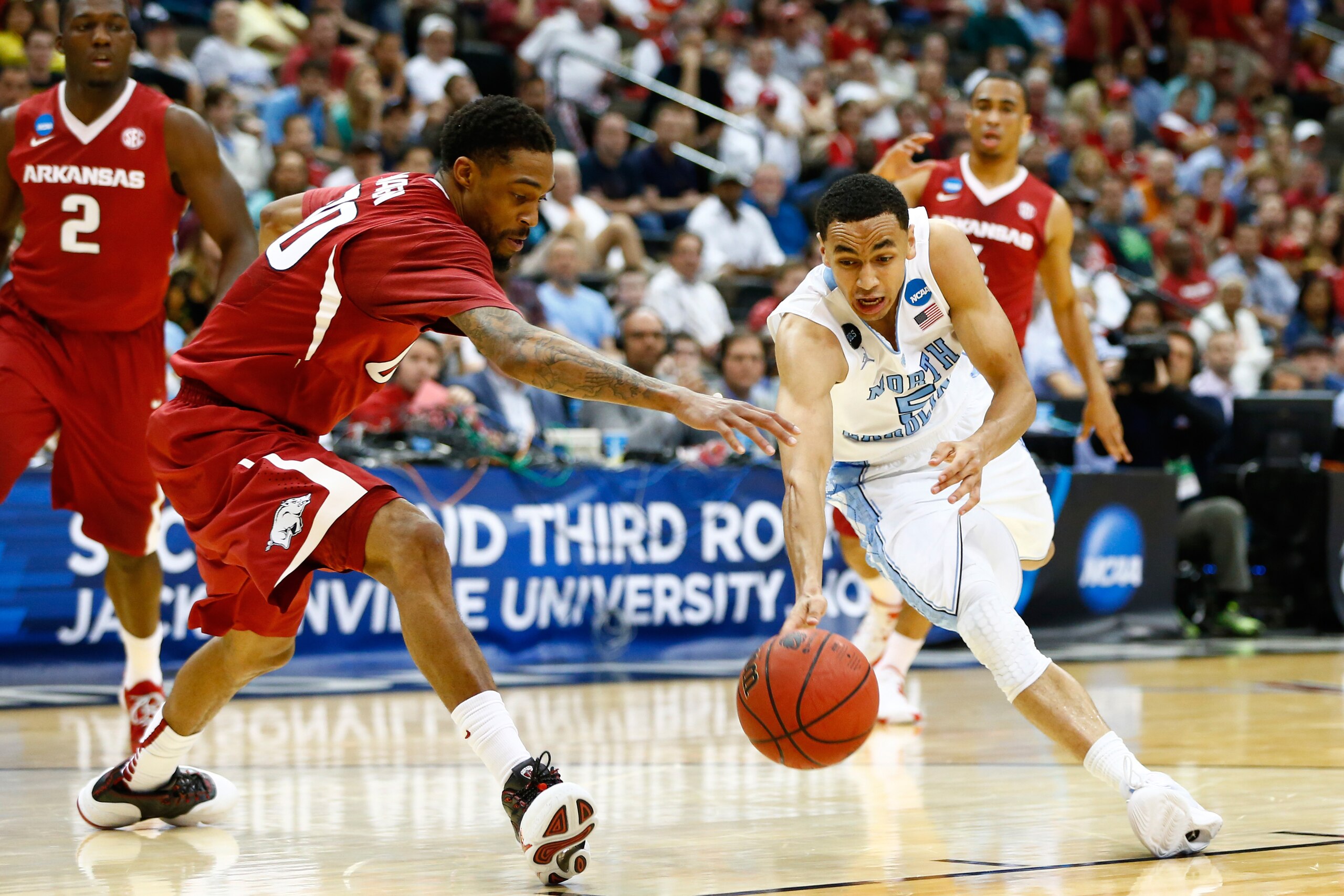
What he's done: Marcus Paige has played through plantar fasciitis all season and still managed to lead North Carolina in scoring while not missing one game.
Why he's here: Paige didn't live up to lofty expectations this year—and the foot injury is one reason why—but so far in the NCAA tournament, he's looking a lot like the clutch scorer he was last year. Paige hit several momentum-turning jumpers in the second half of UNC's round-of-32 matchup against Arkansas on his way to 22 points.
What to expect: Because Paige is playing so well and other guys around him have responded accordingly—most notably freshman Justin Jackson—the Heels have a real shot against Wisconsin. I still like the Badgers to win, but I expect it to be a tight game with Paige keeping his team in it with some clutch jumpers.
14. Buddy Hield, Oklahoma
7 of 20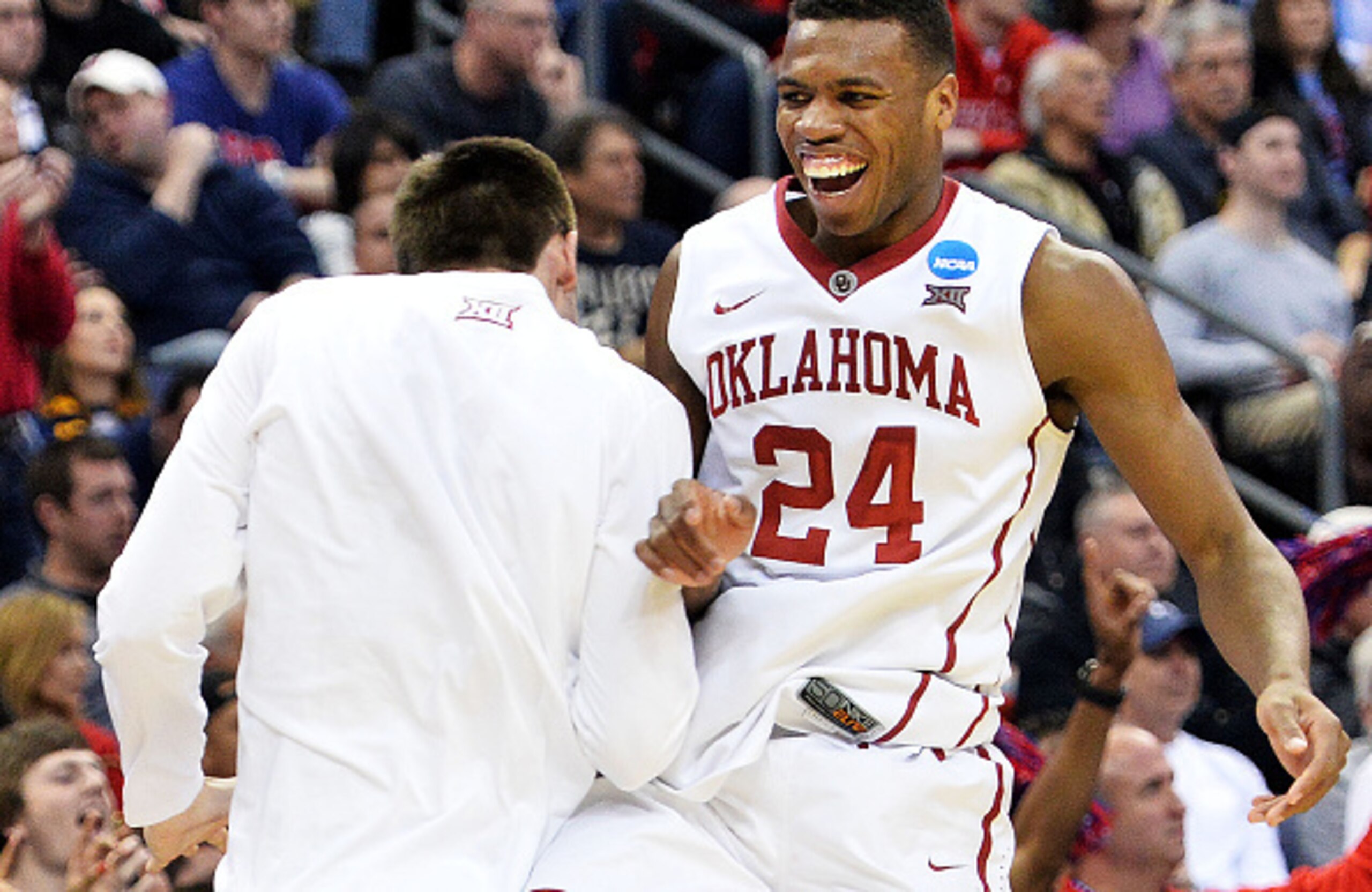
What he's done: The Big 12 Player of the Year is a shot-maker who turned into a much more complete player as a junior. Buddy Hield can score (17.3 PPG), but he's also a strong rebounder for a guard (5.4 RPG) and has improved as a defender.
Why he's here: Some guys are better shooters. But when Hield is hot, he's one of the hardest guys to guard in the country because he has a quick trigger and is excellent at finding his shots in transition.
What to expect: Hield has been cold from deep in the tournament—4-of-17 over Oklahoma's first two games. He's going to keep shooting, and if he gets hot in Syracuse, expect the Sooners to end up in Indy.
13. Rondae Hollis-Jefferson, Arizona
8 of 20
What he's done: Rondae Hollis-Jefferson is not a great shooter, but he's figured out every other way imaginable to make an impact for Arizona. He defends, rebounds, distributes and attacks the basket so well that he usually ends up on the free-throw line because he's too overpowering to stop without fouling.
Why he's here: Stanley Johnson is Arizona's leading scorer, but Hollis-Jefferson and T.J. McConnell are the more valuable 'Cats because they're more dependable and contribute in so many different ways. Hollis-Jefferson is the best defensive wing in the country and is also a clever passer.
What to expect: If Arizona knocks off Wisconsin and Kentucky on its way to a national title, Hollis-Jefferson's defense will likely be a big reason why. Head coach Sean Miller can unleash him on almost any player at any position, so expect Hollis-Jefferson's primary matchup to have one of his worst games all year.
12. Ron Baker, Wichita State
9 of 20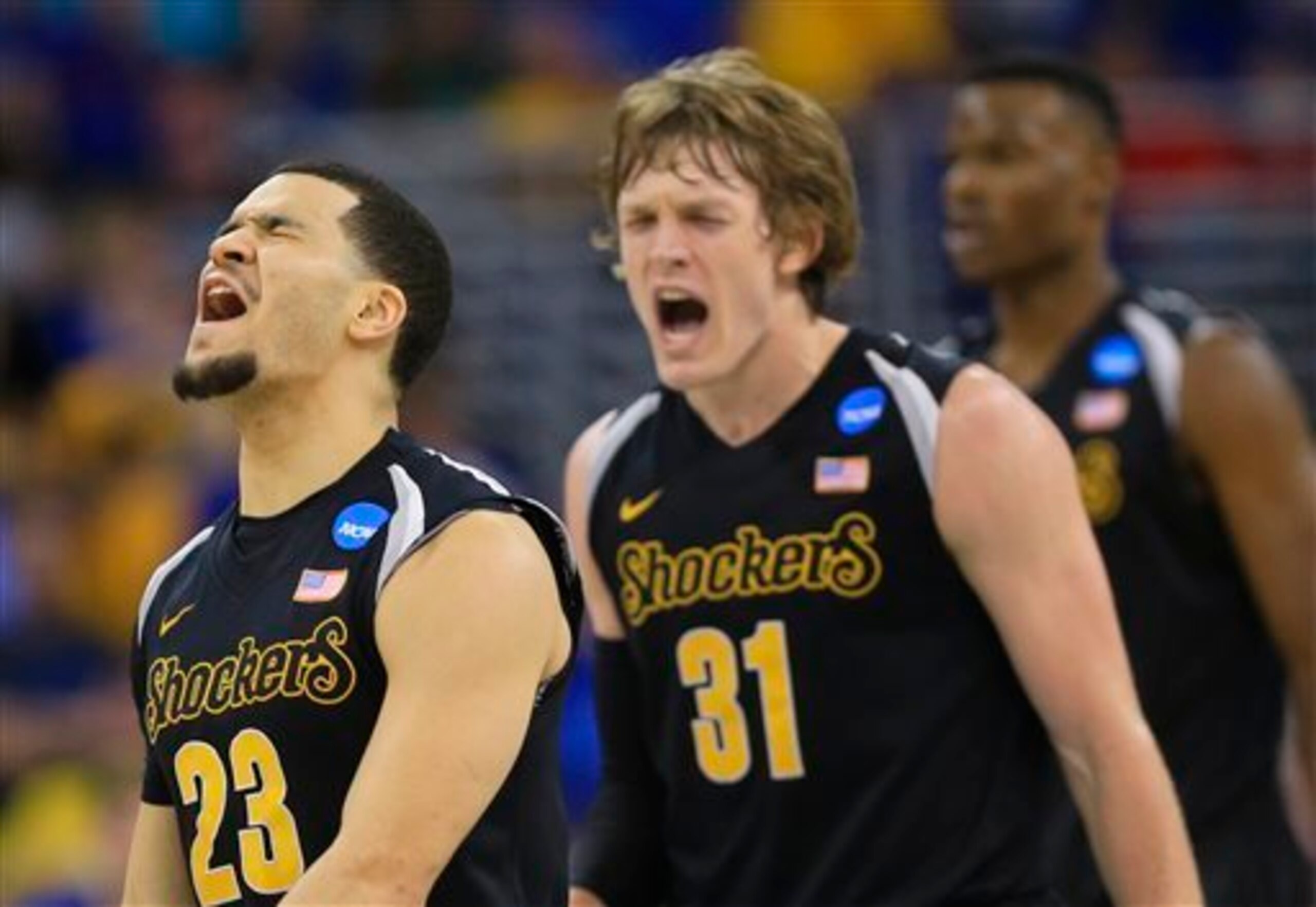
What he's done: Ron Baker has always hit big shots in big moments—see Wichita State's Final Four run in 2013—and this season, he's taken over as Wichita State's go-to scorer, averaging 14.9 points per game. His shot has been off in the tournament, but he's still making an impact. He made nine of 10 free throws against Indiana and had five steals in that game.
Why he's here: Baker does a little bit of everything for the Shockers. In addition to being the go-to scorer, he also backs up Fred VanVleet at point guard and is pretty good at creating for himself off the dribble, particularly out of ball screens. Baker is also an excellent on-ball and off-ball defender.
What to expect: Two years ago, Baker hit several big shots in the upset of top-seeded Gonzaga. Or as he explained it to me, "I pulled the Colt .45s out and started firing away." If the Shockers get in a close game the rest of the way, look for Baker to want to take the game-deciding shot.
11. Terry Rozier, Louisville
10 of 20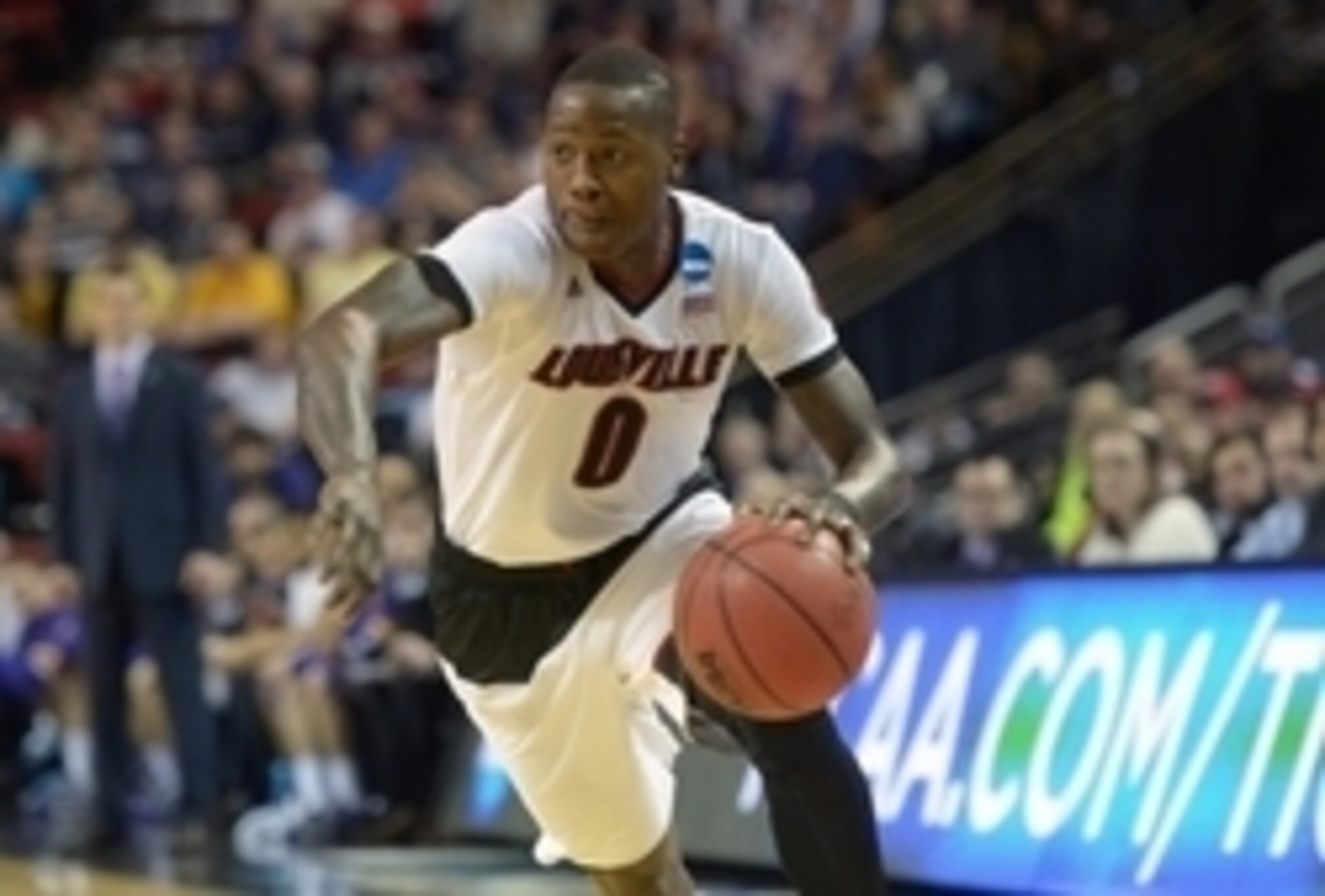
What he's done: Terry Rozier has been able to put Louisville's offense on his back at times this season. He averages a team-best 17.2 points per game, and he was awesome in the round-of-32 win over Northern Iowa with 25 points and seven assists against one of the best defenses in college basketball.
Why he's here: Rozier is the best downhill driver left in the tournament, and he may just own that title in all of college basketball. His speed and strength make him a tough cover. It's also no fun to be guarded by Rozier, as he really pressures the ball and has played a big factor in making Louisville's defense one of the best for another year.
What to expect: The battle of the guards will likely determine the winner of Louisville's Sweet 16 game against NC State. The Wolfpack also have a speed demon in Cat Barber and a big-time shot-maker in Trevor Lacey. Both just barely missed earning a spot on this list.
10. Justise Winslow, Duke
11 of 20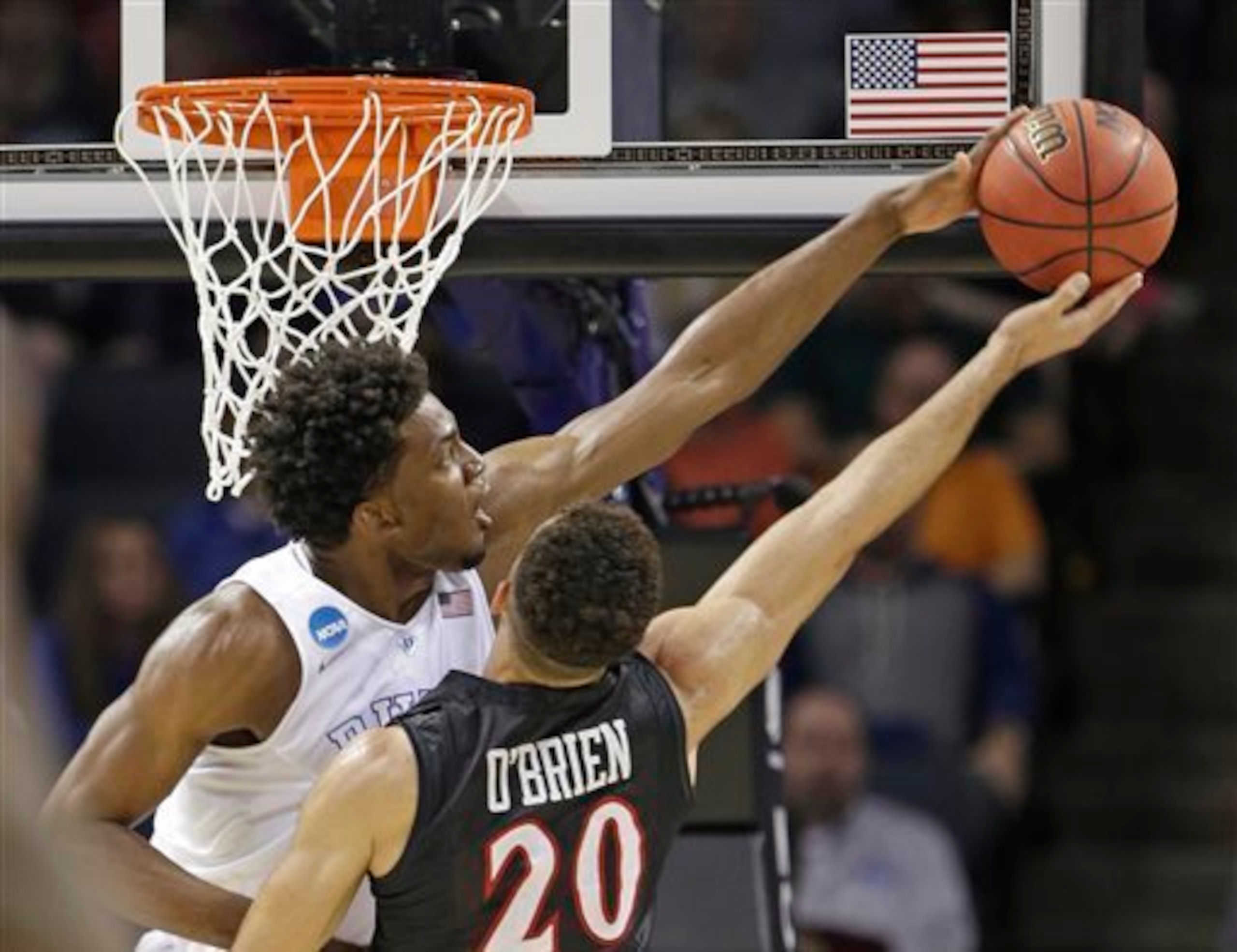
What he's done: Justise Winslow has returned to his early-season form in the NCAA tournament, terrorizing opponents on the defensive end and attacking the rim with a mean streak offensively. His shift to power forward has made teams think twice about doubling Jahlil Okafor and also made Duke more versatile defensively.
His line in the San Diego State win speaks to the all-around value he brings to the table—13 points, 12 rebounds, five assists, four steals and three blocks.
Why he's here: There are better scoring wings out there, but Winslow is the best all-around wing left in the tournament. He gives the Blue Devils a toughness and edge that they've lacked the last few years.
What to expect: Winslow is one of those guys who doesn't need to put up numbers for the opponent to feel his impact, but expect him to keep stuffing that stat sheet. The Blue Devils need him to keep rebounding, and his athleticism and energy usually lead to several steals and blocks. When he has the energy turned up, Duke is at its best.
9. T.J. McConnell, Arizona
12 of 20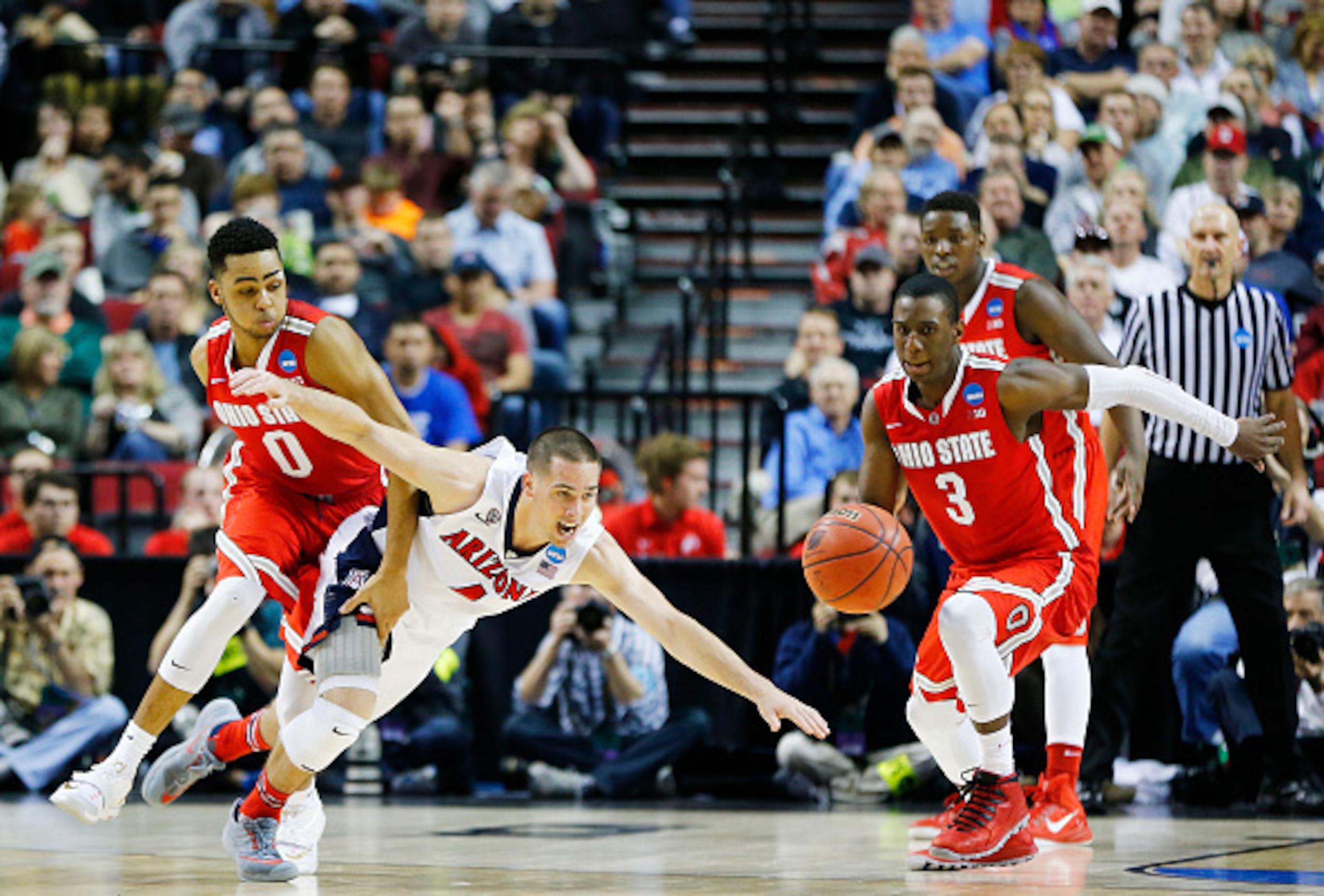
What he's done: T.J. McConnell has been the heart and soul of the Wildcats. He's not the team's best pro prospect, but no one is more valuable and has more say in their success. He's the best defensive guard in the country. Just ask Ohio State's D'Angelo Russell, whom McConnell helped hold to nine points on 3-of-19 shooting. McConnell had five steals in that game to go along with 19 points and six assists.
He doesn't put up great scoring numbers (10.1 PPG), but he'll go get points when Arizona needs it.
Why he's here: You get the feeling that there are some games when McConnell just wills the Wildcats to wins. His intensity is infectious. He's also a great setup man and puts Arizona's scorers in spots where they can be successful.
What to expect: The potential Elite Eight game against Wisconsin could be the game of the tournament. If the Wildcats end up winning that, expect McConnell to be the one making the plays down the stretch. In Arizona's signature win this year—over Gonzaga in overtime—he dominated the extra period.
8. Fred VanVleet, Wichita State
13 of 20
What he's done: Win. Win. Win.
If you judge a leader by his winning percentage, then there's probably not a better one than Fred VanVleet in college basketball. His feel for the game and basketball IQ are off the charts, and so is his ability to fire up his teammates and get them to play with supreme confidence. The round-of-32 win over Kansas is a great example.
Why he's here: VanVleet is not only a great leader; he can play too. He has been awesome thus far in the tournament, averaging 22.0 points, 5.0 assists and 3.0 steals per game.
What to expect: The Shockers are going to be a tough out, because VanVleet is going to get his teammates good shots and make sure they play with great effort. Expect the rest of WSU's games to be extremely entertaining. The Sweet 16 matchup with Notre Dame and Jerian Grant is a must-see. If the Shockers get another shot at Kentucky, they'll have a hard time matching up, but they're not going to be intimidated.
7. Kyle Wiltjer, Gonzaga
14 of 20
What he's done: Kyle Wiltjer has put together one of the most efficient seasons for a big man in recent memory. He's averaging 17.1 points by knocking down 58.3 percent of his twos and 47.9 percent of his threes. He's been even better in the NCAA tournament thus far—averaging 23.5 points per game by going 12-of-15 inside the arc, 6-of-9 outside the arc and 5-of-5 at the free-throw line.
Why he's here: Wiltjer is a fantastic fit in Gonzaga's offense, where head coach Mark Few does a really good job of moving around his versatile big men to allow them to score all over the floor. No big guy in the country can stroke it like Wiltjer—yes, that includes Wisconsin's Frank Kaminsky—and Wiltjer, like Kaminsky, can score off the dribble or with his back to the basket.
What to expect: The Zags are going to keep feeding him as long as he's hot. If Gonzaga gets to the Elite Eight and faces Duke, it bears watching how Wiltjer handles the defense of Justise Winslow. The last time he went up against a defense with someone that talented checking him—at Arizona—he scored 15 points but needed 16 shots to get there.
6. Willie Cauley-Stein, Kentucky
15 of 20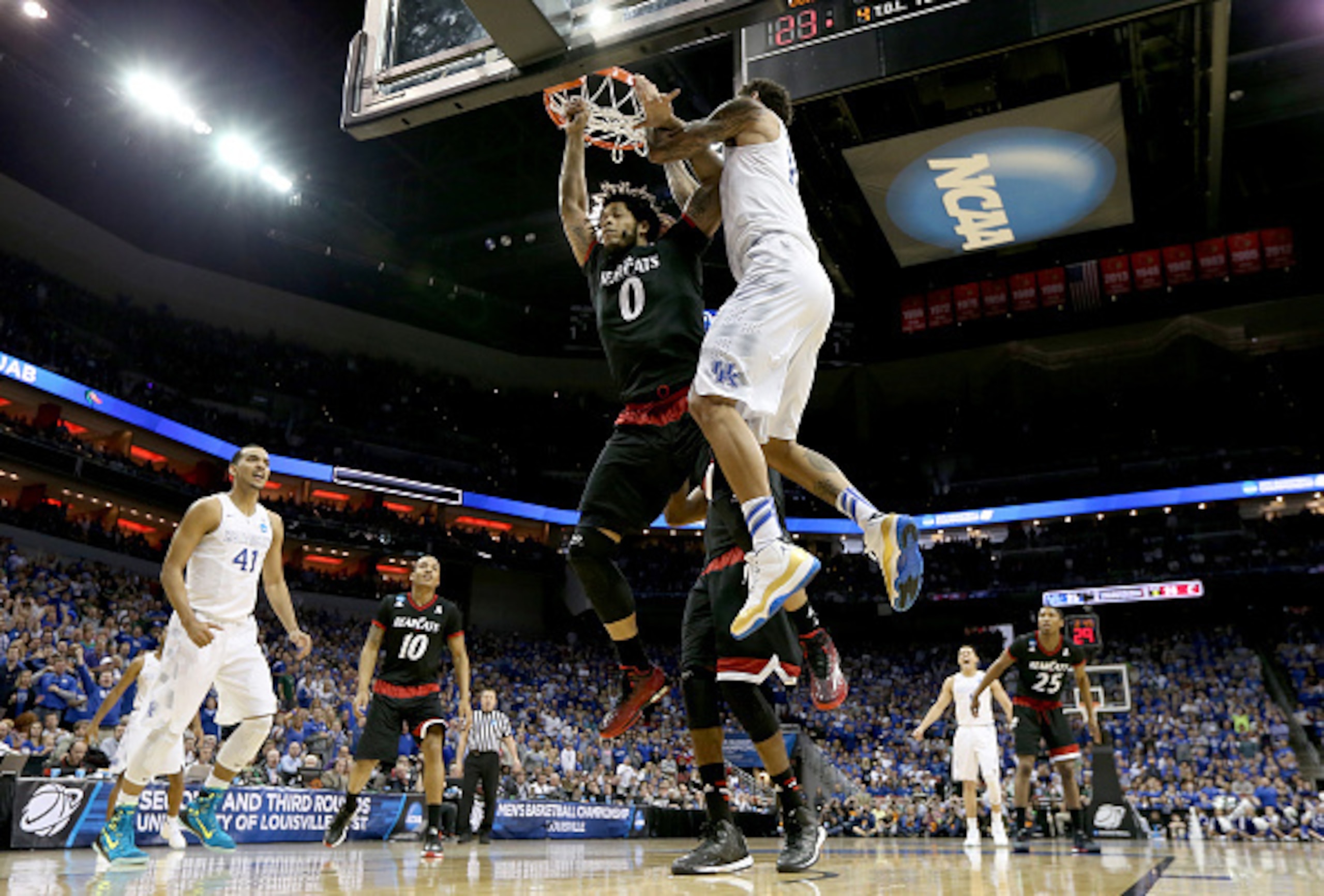
What he's done: Willie Cauley-Stein has been the best defender in college basketball this season. His statistics are decent—9.3 points, 6.4 rebounds, 1.7 blocks and 1.3 steals per game—but they don't show his value. He's the biggest reason that the Wildcats have the best defense in college basketball.
Why he's here: Cauley-Stein can defend all five spots on the floor and covers more ground in UK's defense than any other player. He allows John Calipari to do things with his defense—such as switch pick-and-rolls involving point guards—that no other coach can even dream about doing.
He's also improved his offensive game this year. Once a non-scorer, Cauley-Stein can score with his back to the basket or facing up these days. He also throws down a vicious highlight dunk almost once a game. Cincinnati's Quadri Moore was his latest victim in the round of 32.
What to expect: The big fella is motivated after missing most of the NCAA tournament last season. Expect a number of great defensive plays and more poster dunks over the next two weeks as the 'Cats go for 40-0 and a title.
5. Delon Wright, Utah
16 of 20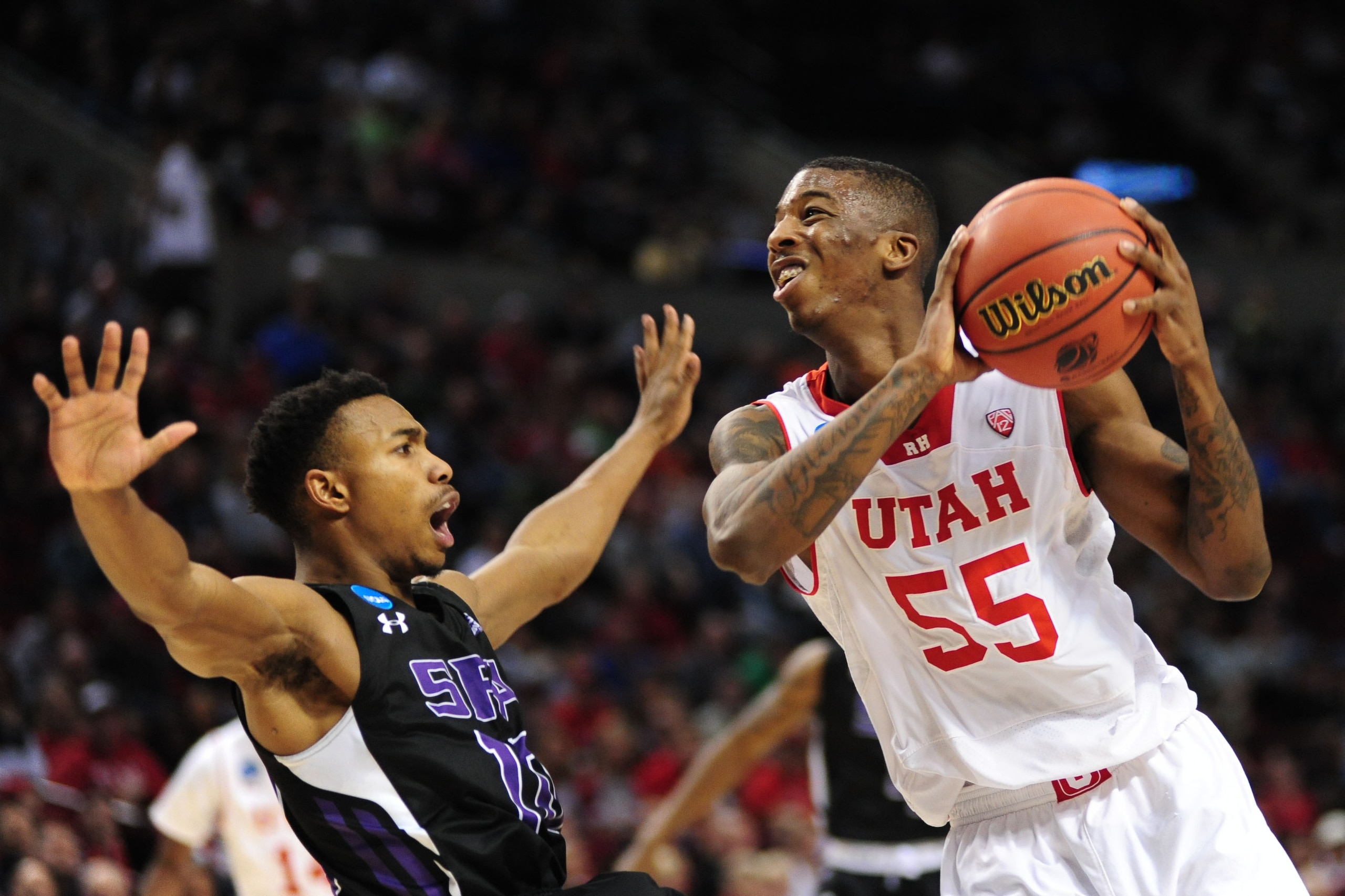
What he's done: Utah won a combined 21 games in the two seasons before Delon Wright arrived. The Utes have won 47 games (and counting) since he got to campus.
Wright has put together an All-American-caliber senior season. We had him on our Bleacher Report All-American second team, and he was the hardest guy to leave off the first team. He's a stat-stuffer, averaging 14.7 points, 5.2 assists, 4.9 rebounds and 2.1 steals per game.
Why he's here: Wright is a great college point guard and a nightmare matchup at this level because of his size (6'5") and ability to attack and distribute. He's not super quick, but he plays with great pace and is tough to keep out of the paint. The only thing he doesn't do at a high level is shoot outside, although you at least have to respect him out there as he's knocked down 36.1 percent of his threes this year.
What to expect: The Utes have yet to knock off Arizona in Wright's two years, and they're still chasing a program-defining win. Utah has that chance in the Sweet 16 against Duke. The Blue Devils are better, but it's closer than the seeding suggests. The Utes are good enough to pull off the upset and get to the Final Four. For that to happen, Wright needs to have one of the best games of his career Friday.
4. Karl-Anthony Towns, Kentucky
17 of 20
What he's done: Karl-Anthony Towns has become Kentucky's go-to guy, and we really only get to see glimpses of what he can be because John Calipari's team is so deep and balanced. He's definitely bumped up his usage over the last month, averaging 12.9 points in the month of March. He's also one of the best shot-blockers in the country, swatting 2.4 shots in only 20.9 minutes per game.
Why he's here: The attention opponents pay to Towns is close to the level of Jahlil Okafor and Frank Kaminsky. He's that good. He's the best shot-blocker left in the tournament, and if there's a favorite for Most Outstanding Player in the tournament—assuming Kentucky is the champ—it's Towns.
What to expect: In 2012, Anthony Davis was just too good for anyone to beat Kentucky. Towns might not reach Davis levels of domination, but expect him to come close if the 'Cats win the next four.
3. Jerian Grant, Notre Dame
18 of 20
What he's done: After missing the second semester last year because of an academic suspension, Jerian Grant has turned Notre Dame's offense into one of the best in college basketball and has the program in the Sweet 16 for the first time since 2003.
Why he's here: The Irish are an extremely unselfish team that shares the ball and takes good shots, and it all starts with Grant. Every player in the rotation is shooting a career-best percentage this season, and he's a big reason why. He also picks his spots to score and has been excellent in the clutch.
What to expect: Grant with the ball in his hands down the stretch of close games the rest of the way. Notre Dame-Wichita State has a chance to be the best game of the Sweet 16. If the Irish win, Grant's ability to get into the gaps of a defense with shooters all around him could be the formula to at least give Kentucky a good run.
2. Jahlil Okafor, Duke
19 of 20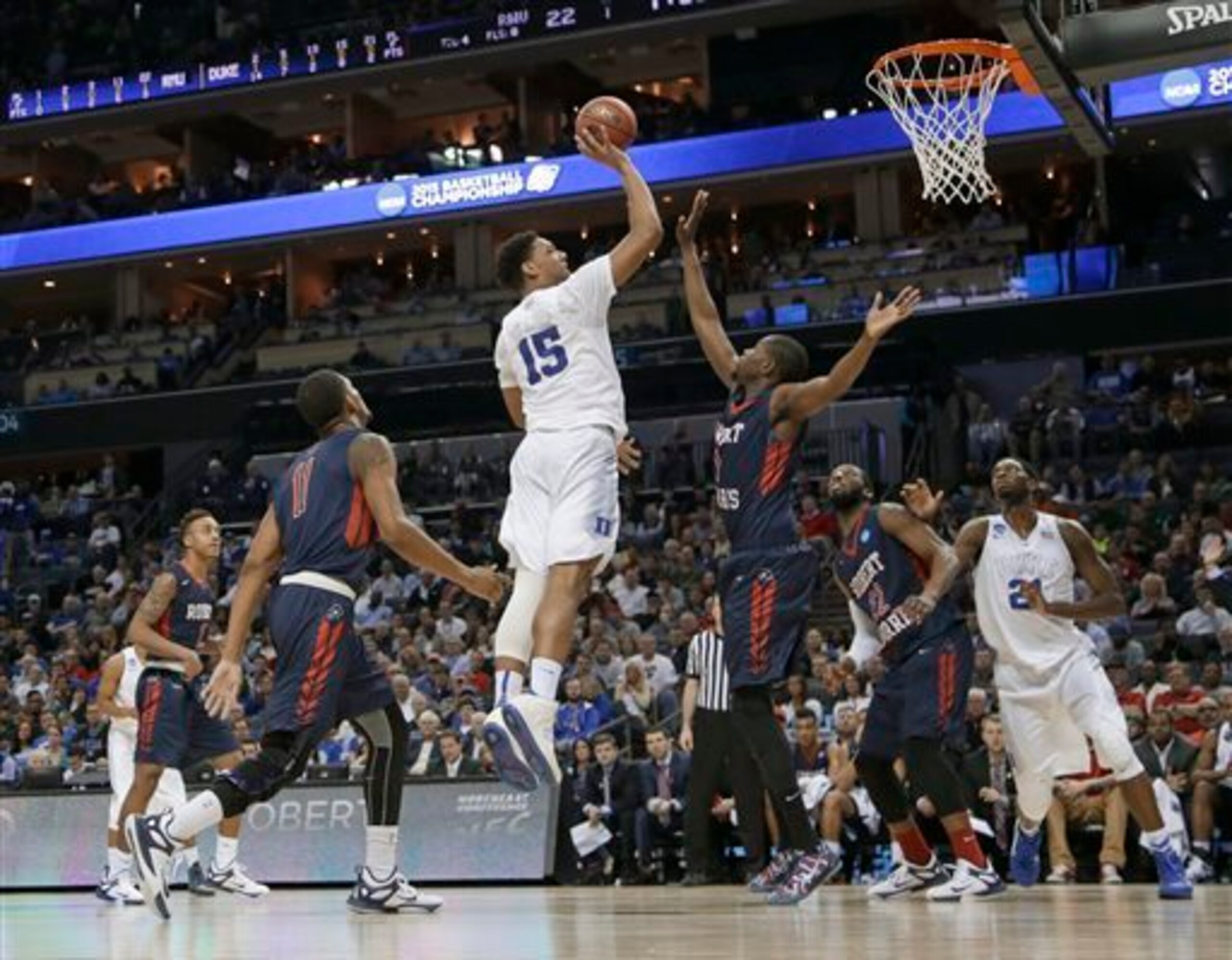
What he's done: Jahlil Okafor has had one of the best freshman seasons in recent memory already. He enters the Sweet 16 averaging 18.1 points per game on 67.7 percent shooting, and he's upped those numbers in the tourney—23.5 PPG on 77.8 percent shooting.
Why he's here: Okafor is a rare combination of footwork, feel and power from the post. He's almost impossible for college big men to handle. He's not quite as well-rounded as Wisconsin's Frank Kaminsky, but no one in college basketball is better with his back to the basket.
What to expect: Okafor has some tough tests ahead of him. Utah freshman Jakob Poeltl has the quickness and length to at least present some challenge to Okafor. Assuming Duke wins and gets Gonzaga in the Elite Eight, the Zags have plenty of big bodies to throw at him.
1. Frank Kaminsky, Wisconsin
20 of 20
What he's done: All Frank Kaminsky has done is put together a season worthy of National Player of the Year. He's averaging 18.4 points and 8.1 rebounds on a team that plays at one of the slowest paces in college basketball. The Badgers have the most efficient offense in the country, and Kaminsky is a big reason why.
Why he's here: Frank the Tank can do everything—shoot threes, score off the dribble, score with his back to the basket, pass, and he's a solid defender, too. His ability to set up his teammates when he draws so much attention is probably the most overlooked aspect of his game. Even when he's not scoring, he's still a big factor to Wisconsin's success.
What to expect: Kaminsky is going to put up numbers and give Wisconsin a shot at the national title. The Badgers have a hellacious road to get there—North Carolina, then potentially Arizona, Kentucky and Duke. But they've got the team and star to pull it off. I still like Kentucky to win the title, but the team most equipped to ruin its perfect season is Wisconsin.
All advanced stats via kenpom.com.
C.J. Moore covers college basketball for Bleacher Report. You can follow him on Twitter @CJMooreBR.
.jpg?w=2560 "Colts Football")
.jpg?w=2560 "Baker Gets Glove From Rays 🧤")

.jpg?w=2560 "NFL investigating Eagles")

