
Top Offensive Weapons and Shutdown Defenders in 2015 NBA Draft
If you had to pick one offensive weapon or one defensive stopper at each position, which 2015 NBA draft prospect would you choose?
It's not difficult to narrow down the best scorers and playmakers in the backcourt, but it's much trickier to nail down who the top defender is at the point and shooting guard spots.
At the small forward spot, the most prolific offensive threat isn't playing college hoops, and the top shutdown wing isn't named Stanley Johnson, Justise Winslow or Kelly Oubre.
The top frontcourt candidates are the usual suspects you might guess, but what exactly separates them from the rest of the pack?
We made our selections based on statistical impact, skill demonstrations and tangible potential. Who took home the honors at each spot?
Best Offensive Point Guard: Emmanuel Mudiay, Guangdong Southern Tigers
1 of 10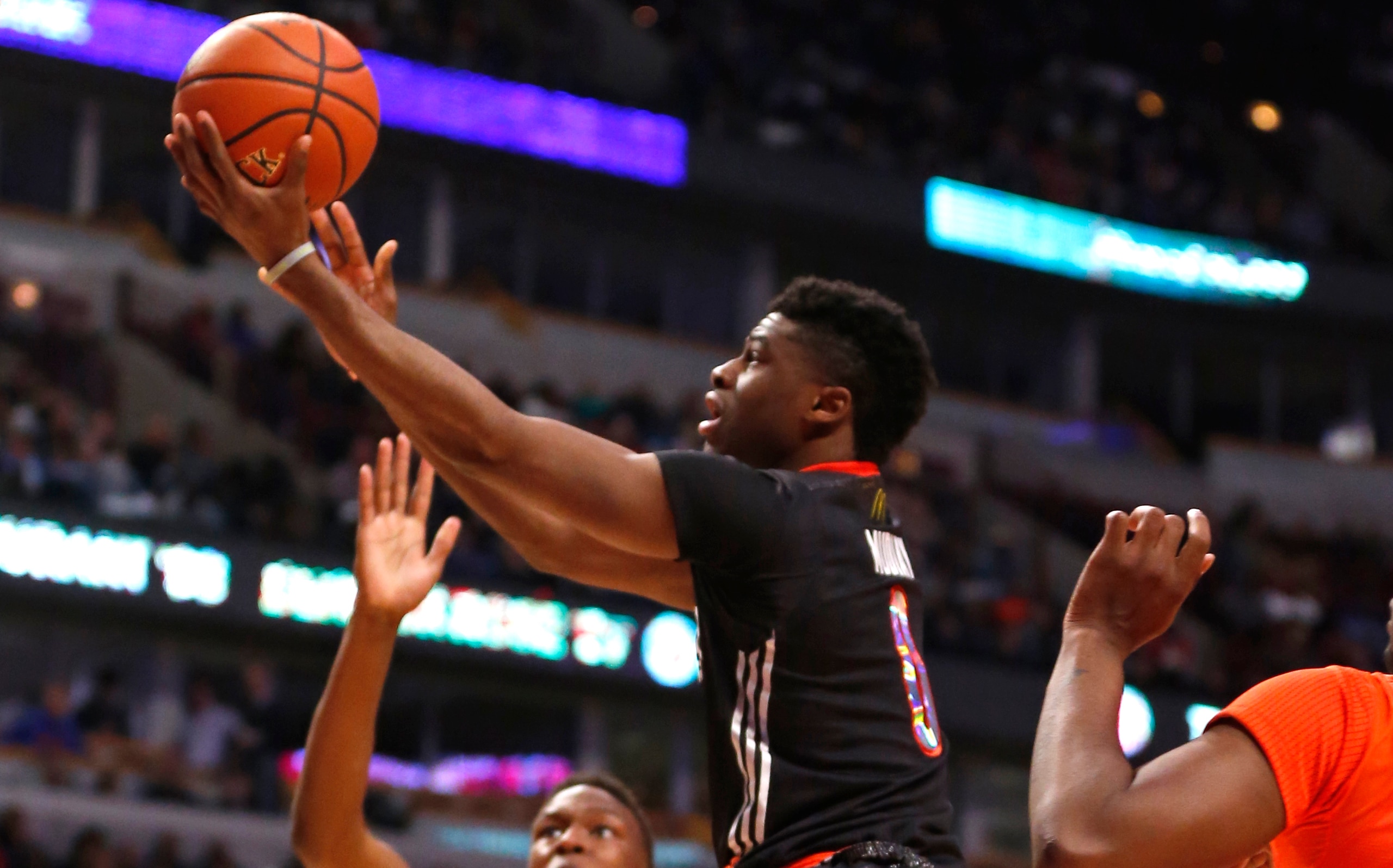
O-Stats Per 40: 22.9 PTS, 7.5 AST, .478 FG%, .342 3FG%, .574 FT%
With apologies to outstanding playmakers like Kris Dunn and Jerian Grant, the most talented offensive point guard in the 2015 draft is Emmanuel Mudiay.
During his 12-game stint with the Guangdong Southern Tigers of the Chinese Basketball Association, he showcased a boatload of the creativity and athleticism that made him a highly coveted recruit.
The 6'5" speedster can break down opponents at will, thanks to his shiftiness and next-level handles. Once he gets into the lane, his body control, scoring touch and passing vision do the rest of the work. He's such a difficult player to corral because he has a great feel for changing pace and direction.
While his agility, driving and scoring are electrifying, his distribution skills are equally impactful. Don't sleep on his passing aptitude, particularly his timing and accuracy as a quarterback.
"Mudiay's pick-and-roll passing is probably going to be his most underrated skill come draft time," said Derek Bodner of DraftExpress.
He's not a complete offensive player, that's for sure. His outside jumper needs work, and his free-throw shooting is troublesome (57.4 percent). However, he's showing progress from the perimeter and the rest of his game is so much more dangerous than the rest of the 1-guards on the board.
Best Defensive Point Guard: Delon Wright, Utah
2 of 10
D-Stats Per 40: 2.5 STL, 1.2 BLK, 86.9 D-Rating, 7.3 DBPM
When you account for tools, technique, instincts and defensive playmaking, Delon Wright emerges as the best point guard stopper in the 2015 class.
He does a marvelous job of making opposing guards uncomfortable in all the little details of the game. He cuts off drives, bothers entry passes and darts into passing lanes. Given his height and agility, Wright's skills should translate well to the NBA.
"As productive as Wright has been offensively, it's his defensive tenacity that might hold the most NBA value," said B/R's Jonathan Wasserman. "At 6'5", he's quick and awfully disruptive."
Wright not only swipes a lot of steals, he also contests shots and notches a sizable helping of rejections. He's fifth in the Pac-12 in blocks, and his career block percentage of 3.5 is well above average for a backcourt player.
He doesn't have the most expansive wingspan in the 2015 guard crop, nor is he the most explosive athlete. Down the road, a player like Mudiay will likely become a better shut-down asset, but for now he's the best defender among this year's floor generals.
Best Offensive Shooting Guard: D'Angelo Russell, Ohio State
3 of 10
O-Stats Per 40: 22.7 PTS, 5.9 AST, .449 FG%, .411 3FG%, .756 FT%, 115.7 O-Rating
It's hard to say what's more impressive: the stats D'Angelo Russell put up as a teenager this year, or the smorgasbord of eye-popping plays he made despite his inexperience.
He and Ohio State were humbled by Arizona in the round of 32, but his freshman season should be categorized as nothing short of a huge success.
The 6'5" combo guard started the year as a fringe draft prospect, not even considered a surefire one-and-done candidate. After pouring in buckets and dropping dimes all over the Big Ten, he's a top five lock and a legitimate contender for the No. 1 spot.
Russell possesses a keen awareness of opposing defenses, and he surgically dissects any weaknesses. When foes give him breathing room, he deploys a quick-release pull-up jumper. If they overplay him, he slashes into the lane and makes sparkling passes or scores.
As soon as he arrives in the NBA, he should be able to spend time as both a facilitator and an off-guard. It will take some time for him to learn the nuances of leading a pro offense, but in the meantime, his shooting skills and off-the-cuff creativity will keep him dangerous.


Best Defensive Shooting Guard: Norman Powell, UCLA
4 of 10
D-Stats Per 40: 2.2 STL, 0.4 BLK, 99.4 D-Rating, 2.3 DBPM
UCLA has not been a strong defensive program this season, but Norman Powell's tools and talent on that end were still readily apparent.
With a strong frame and a 6'11" wingspan, he effectively cuts off driving angles and denies easy shot attempts and passing lanes. He's one of the few guards with the foot speed and muscular build to play with agility and physicality at the same time.
When he's not steering slashers away from trouble or badgering ball-handlers, he does a great job of working off his man and forcing turnovers.
"(Powell) digs at the ball extremely well," noted Mike Schmitz of DraftExpress. Schmitz noted Powell's outstanding steal rate: he's fourth in the Pac-12 in both steals per game and steal percentage.
There are questions about how valuable Powell will be as an overall prospect, but he'll defend at a high level no matter how small his role is.
Best Offensive Small Forward: Mario Hezonja, Croatia
5 of 10O-Stats Per 40: 16.3 PTS, 3.0 AST, .467 FG%, .402 3FG%, .778 FT%
In his last handful of games for Barcelona, Croatian wing Mario Hezonja has cooled off from long distance. But that's partially because he's only seeing 10-15 minutes per night for the top-tier ACB club.
His three-point percentage across Spanish League and Euroleague play remains at 40 percent, and he continues to offer a nice mix of slashing and passing.
Hezonja is 6'8" and has spring-loaded athleticism, so he can raise up for jumpers or attack the rim almost anytime he wants.
If you give him room, he can bury a half-dozen triples on you in one game. But if you're overzealous on the perimeter, he can burn you with backdoor alley-oops or quick, explosive drives.
As a ball-handler, he can do much more than just attack closeouts, because he's shown some superb instincts as an isolation driver and pick-and-roll facilitator. By the time he's in his third or fourth year in the league, he'll be a problematic matchup for 90 percent of the NBA's wing defenders.
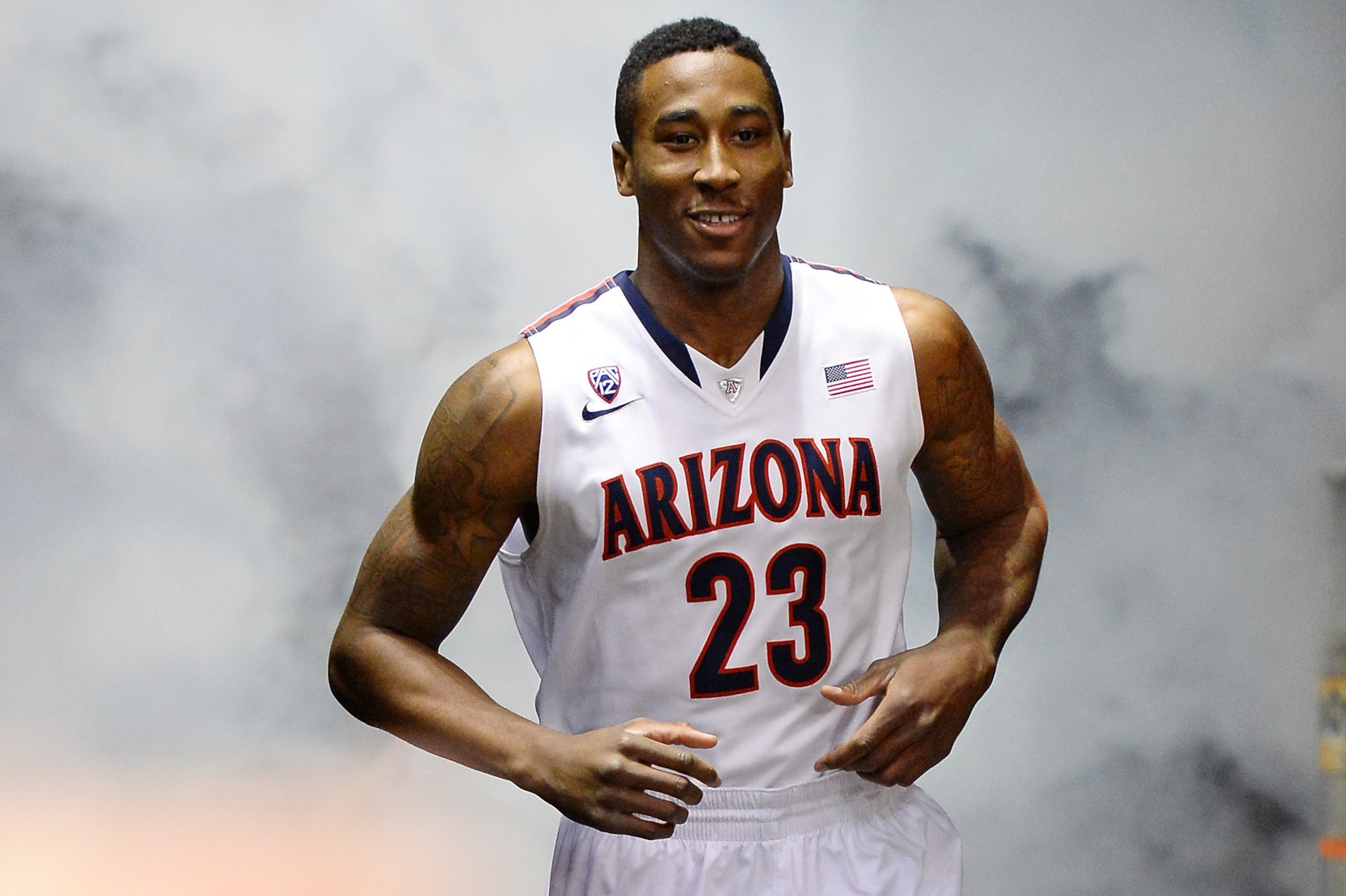
Best Defensive Small Forward: Rondae Hollis-Jefferson, Arizona
6 of 10
D-Stats Per 40: 1.6 STL, 1.3 BLK, 86.3 D-Rating, 7.1 DBPM
The 2015 small forward crop has some outstanding overall prospects and formidable defenders, including gifted stoppers like Johnson, Winslow and Justin Anderson.
As talented as those wings are, they're not better shutdown defenders than Rondae Hollis-Jefferson.
Arizona's sophomore X-factor has an abundance of length, lateral quickness and agile footwork. It enables him to cover almost every position at the college level, and he'll certainly check at least 1-3 in the NBA. He can harass guards away from the bucket and protect the rim in the paint in the same possession.
Wildcats teammate Kaleb Tarczewski noted that once Hollis Jefferson adopted the right mindset, he became a hellacious weapon:
"The stuff he does on defense, I’ve never seen anyone else do," Tarczewski told Bruce Pascoe of the Arizona Daily Star. "He doesn’t just have the body; he has the mind. That’s something that he’s really worked on since he’s been here and if he continues to work like that he’s unstoppable."
While his offensive game is growing and intriguing, Hollis-Jefferson's elite stoppage is what drives his first-round draft appeal.
Best Offensive Power Forward: Karl Towns, Kentucky
7 of 10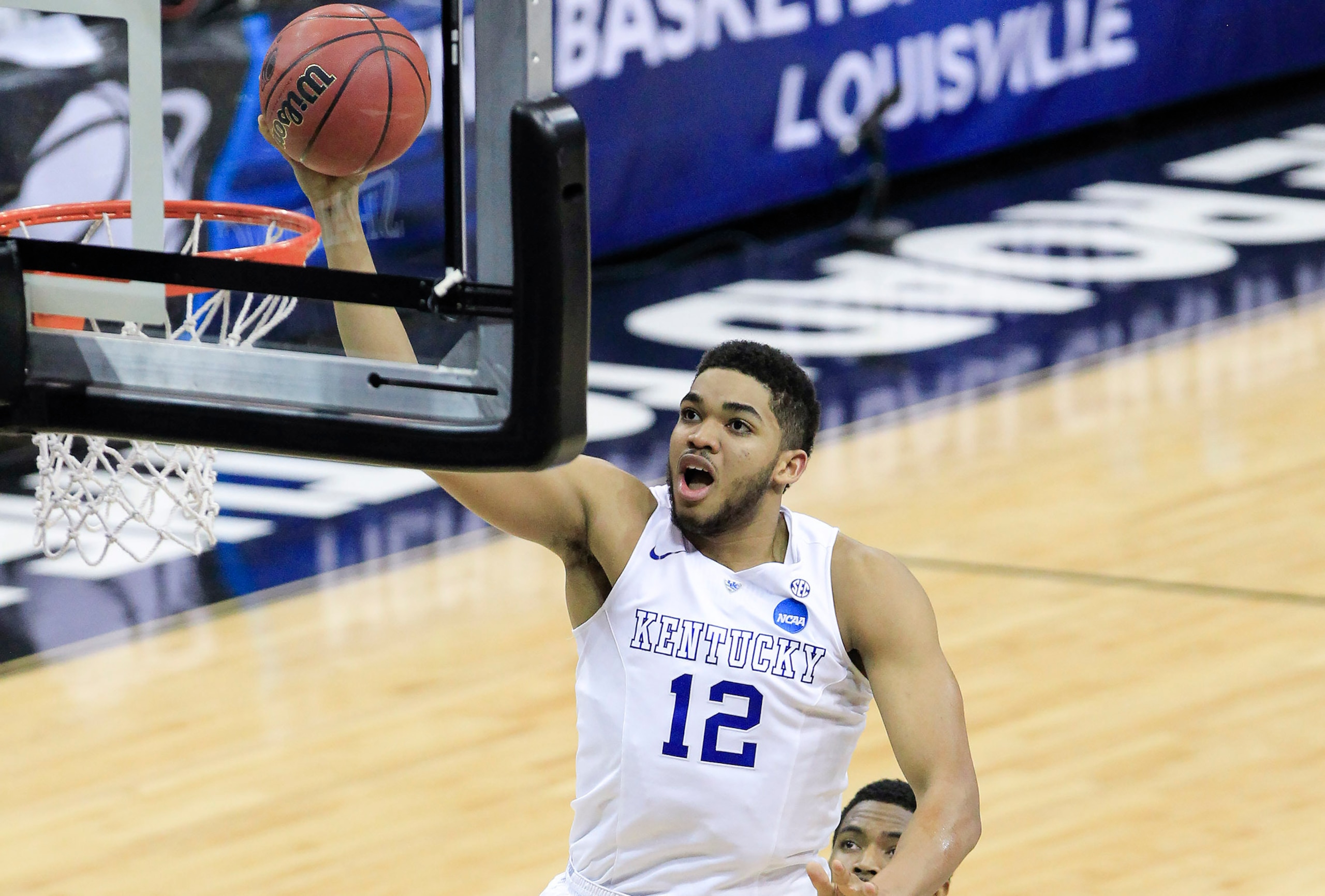
O-Stats Per 40: 19.1 PTS, 2.1 AST, .559 FG%, .821 FT%, 127.2 O-Rating
The 2015 power forward class is mostly young and raw.
Karl-Anthony Towns fits both of those descriptions, yet he stands out as the clear-cut best offensive player in the group.
His low-post game isn't remarkably polished, but he nevertheless does catastrophic damage and shows a promising blend of agility, strength and touch. You can tell he has a budding assortment of scoring moves.
Similarly, his outside shooting isn't complete (he's just 2-of-8 from three), but he's exceptionally effective away from the basket. Towns is sinking 44 percent of his two-point jumpers (per Hoop-math.com), which makes his pick-and-pop potential tempting for NBA scouts.
Despite his youth, he gradually became Kentucky's go-to scorer for many stretches late in the season. It takes a gifted defender to slow him down, because he owns the size-agility combo to go around or over most power forwards.
The Wildcats won't be able to run the tables without more of his takeover ability. His execution and decision-making as their centerpiece will heavily influence their fate.
Best Defensive Power Forward: Karl-Anthony Towns, Kentucky
8 of 10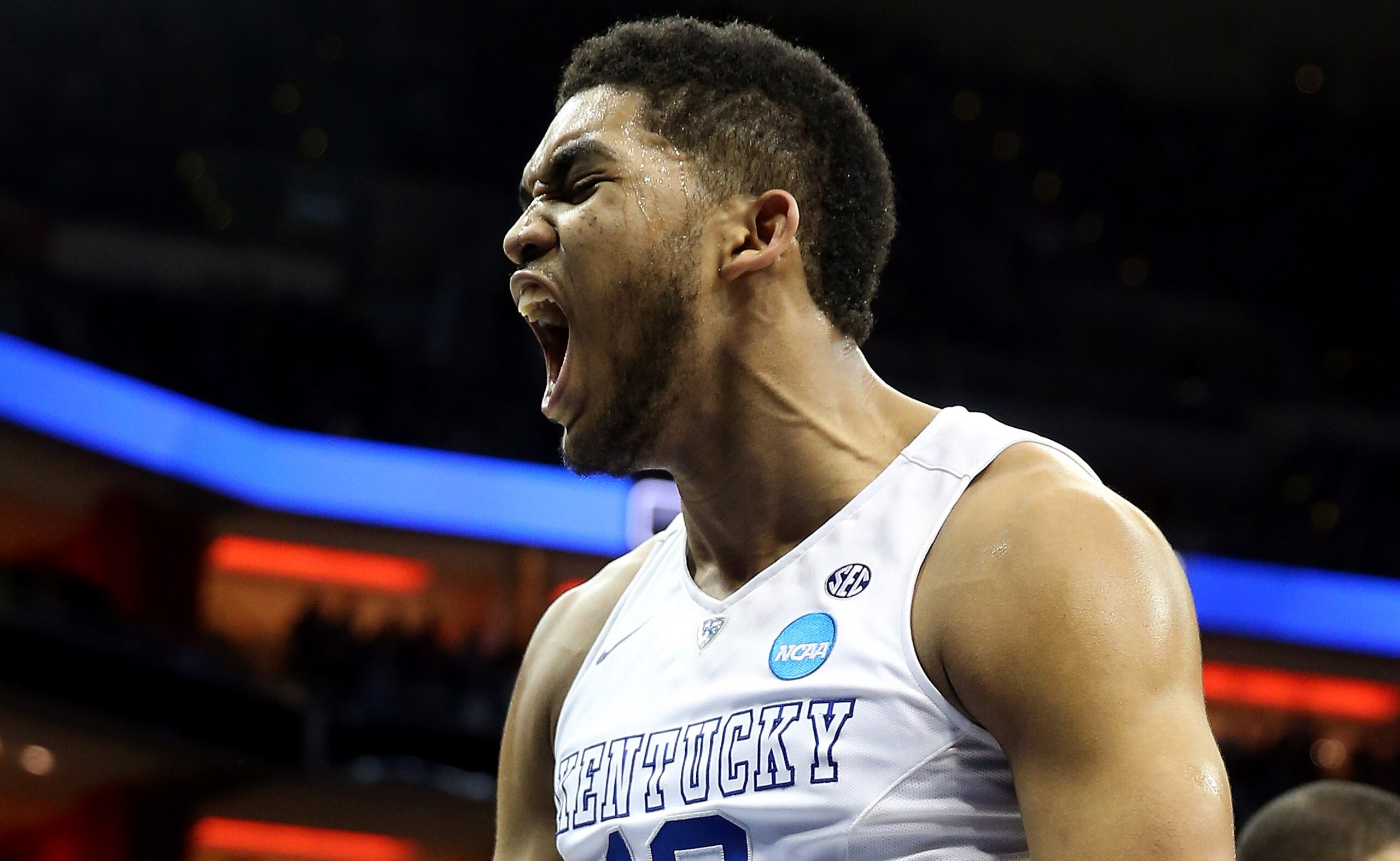
D-Stats Per 40: 0.8 STL, 4.6 BLK, 76.6 D-Rating, 11.1 DBPM
This one was a no-brainer.
Towns' on-ball coverage and rim-protection talents are several notches above any frontcourt draft prospect. Despite the high foul rate (5.6 per 40 minutes), he remains the most effective stopper among all power forwards.
He's blessed with a 7-foot frame and the fluid agility of a wing player, and when you combine that with competitive fire, it's lights out for challengers. Dakota Schmidt of Silver Screen & Roll notes how this perfect storm of defensive traits is what makes him a ridiculously productive shot-blocker:
"With all of his offensive abilities in mind, Towns work as a defender is what separates him from the pack," said Schmidt. "(He's) able to combine his tantalizing frame with ferocity. That combo has lead him to become one of the better shot-blockers in the entire nation."
The startling part is that he has substantial room for improvement. Once he sharpens his discipline and becomes more positionally sound, he'll be one of the most efficient big-man stoppers in the NBA.
Best Offensive Center: Jahlil Okafor, Duke
9 of 10
O-Stats Per 40: 23.6 PTS, 1.8 AST, .674 FG%, .511 FT%, 121.5 O-Rating
Jahlil Okafor isn't likened to Tim Duncan and Al Jefferson for no reason. Those comparisons are not a stretch, especially on the offensive end.
At 19 years old, Duke's star center has better footwork and low-post polish than most NBA centers could dream of. Throughout his freshman campaign, he's unloaded a myriad of back-to-the-basket moves, displaying his blend of strength and soft touch around the basket.
In Duke's win Sunday over San Diego State, he showed us plenty of those post-ups, but he also exhibited some of the more underrated aspects of his game. Okafor flashed some eye-popping face-up skills from the wing, and he also showed his vision and willingness to dish the ball when opponents blitz him (he's not always accurate with the passes, but his awareness is commendable).
The result was 26 points on 12-of-16 shooting, the type of game that will keep him firmly entrenched in the No. 1 overall conversation.
His NBA playing tendencies won't be those of a sexy stretch big or an above-the-rim athlete. Nevertheless, his club will be able to use him from several angles and get a wide variety of productive results.
Best Defensive Center: Willie Cauley-Stein, Kentucky
10 of 10
D-Stats Per 40: 2.0 STL, 2.6 BLK, 78.6 D-Rating, 10.0 DBPM
If you've watched college hoops at all the last couple of years, you've probably seen Kentucky's Willie Cauley-Stein flying all over the place. You know his playing style and talent for covering the ground like a 7-foot antelope.
So I'm going to skip the eye test descriptions and dive right into some of his amazing stats.
His 2.0 steals and 2.6 blocks per 40 minutes reflect a knack for foiling opponents' possessions, and they're particularly impressive when you consider he commits just 3.2 fouls in that time span.
The impact/value stats are even more striking. His defensive rating is 78.6, which means opposing teams score fewer than 80 points per 100 possessions when he's roaming the middle. And if that doesn't impress you somehow, his defensive box plus/minus is 10.0; he's 10 points better per 100 possessions than a league-average player.
Those numbers dwarf almost almost everyone in the country except for his teammate Towns. And keep in mind, Cauley-Stein exhibits more discipline than Towns, fouling 2.4 fewer times per 40 minutes.
Advanced statistics are courtesy of Sports-Reference.com.




.jpg?w=2560 "Love's Body Already 'Tired'")
.jpg?w=2560 "Tyreek Deal May Come Soon")

.jpg?w=2560 "Ward Nearly Walks Out of Presser ▶️")