

Malaysian Grand Prix 2015: 5 Key Facts About Sepang Circuit
The Sepang International Circuit hosts the second round of the 2015 Formula One World Championship, the Malaysian Grand Prix.
The Kuala Lumpur venue has been a presence on the calendar since 1999 and is generally regarded as one of the better tracks designed by Hermann Tilke, F1's resident circuit architect.
Reigning world champion Lewis Hamilton, who won last year's Malaysian GP from pole position, heads into the 2015 event with a seven-point lead over team-mate Nico Rosberg, with Mercedes expected to dominate once again after claiming a one-two finish in Australia last time out.
As race weekend approaches, here are five facts about the Sepang circuit.
Distance, Track Specification and Lap Record
1 of 5
The Sepang International Circuit has a track length of 5.543 kilometres, according to the official Formula One website, with the race distance of 56 laps seeing the cars travel 310.408 kilometres.
The track features a total of 15 corners, 10 of which are right-handers. With a minimum width of 16 metres and a maximum width of 22 metres, as per the venue's official website, Sepang encourages overtaking and contains four genuine passing spots at Turns 1, 4, 9 and 15.
The lap record, as per the official F1 website, is held by Juan Pablo Montoya, who behind the wheel of the BMW V10-powered Williams FW26 set a time of one minute, 34.223 seconds in 2004.
Montoya's record, it is safe to say, won't come under threat this weekend.
The quickest lap of the 2014 Malaysian Grand Prix, set by Lewis Hamilton, was 1:43.066 (according to the FIA's timing data), but with teams having found a chunk of downforce over the winter, expect the fastest lap of this year's event to be considerably quicker.
Most Successful Drivers, Teams
2 of 5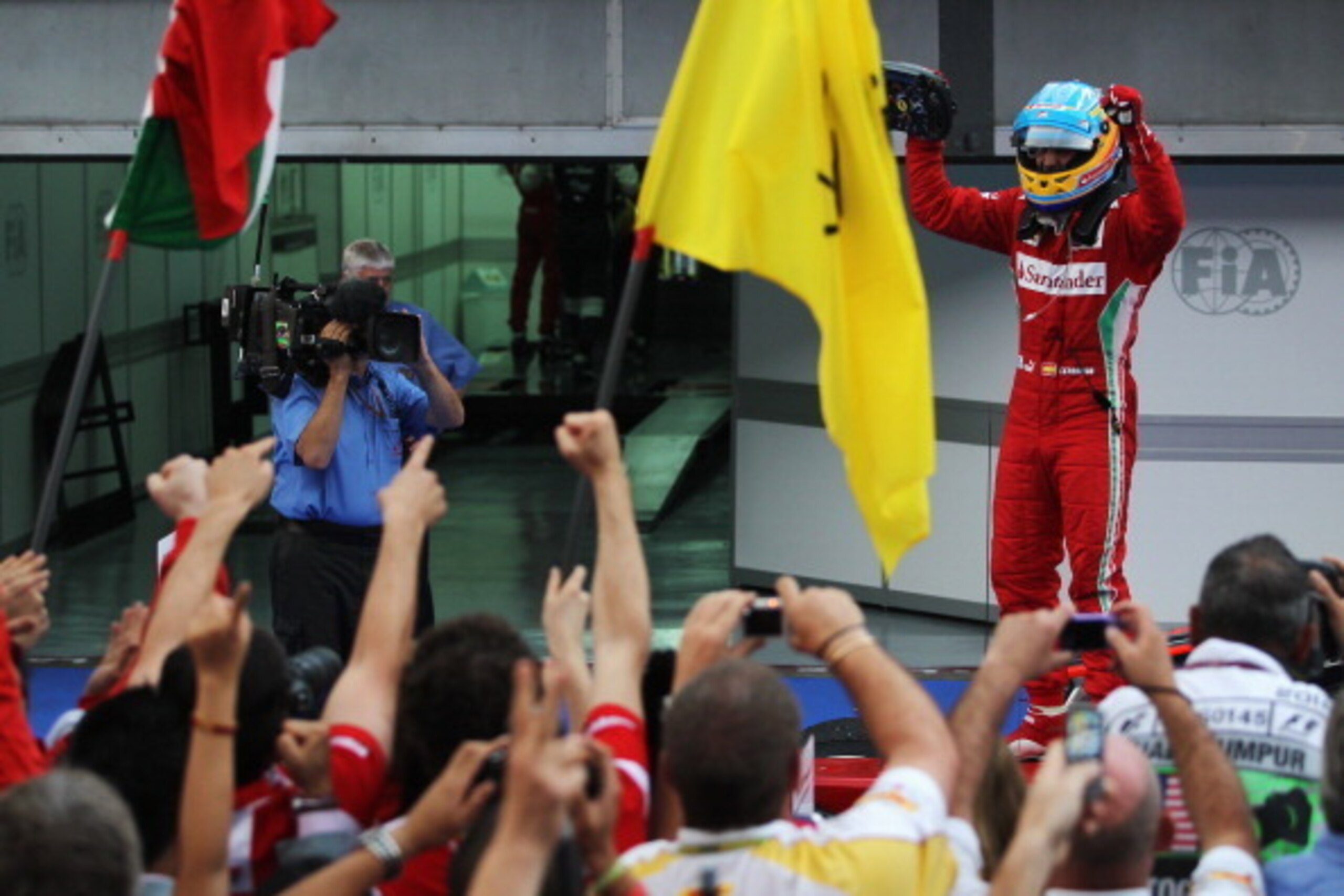
Michael Schumacher, Fernando Alonso and Sebastian Vettel are the most successful drivers to race at Sepang, having claimed three victories each.
Schumacher took his three wins at the height of his dominant spell with Ferrari in 2000, 2001 and 2004, while Alonso has triumphed at the track for three different teams in Renault (2005), McLaren (2007) and Ferrari (2012).
Vettel's trio of victories in 2010, 2011 and, of course, the Multi-21 affair of 2013 has made Sepang something of a stomping ground for world champions, with Giancarlo Fisichella the last non-title winner to win at the venue in 2006.
Of the current grid, Kimi Raikkonen (2003, 2008), Jenson Button (2009) and Lewis Hamilton (2014) are also winners in Malaysia.
Given the successes of Schumacher, Raikkonen and Alonso over the years, it is unsurprising that Ferrari are the most successful team at Sepang with six wins in total.
The Prancing Horse won the inaugural Malaysian GP with Eddie Irvine in 1999.
Importance of Qualifying
3 of 5
Qualifying on pole position is not vital at Sepang, but it does help.
In the last 10 races in Malaysia, the pole-sitter has gone on to win the grand prix on six occasions, including the 2013 and '14 events.
The lowest starter to win in Malaysia is Fernando Alonso, who began the 2012 race in ninth but was offered a helping hand with the intervention of rain and the misfortune suffered by those in front.
With an extremely long run to the first corner—the start line and Turn 1 are separated by 660 metres, according to McLaren's official website—and the eternal threat of rain, the pole-sitter can be overhauled at Sepang.
.jpg?w=2560 "Chiefs Giants Football")
.jpg?w=2560 "Titans Colts Football")

Built on a Swamp
4 of 5
The Sepang International Circuit, according to Sky Sports, is built on a 260-hectare swamp, which goes some way to explaining why it is among the most unique venues on the calendar.
The track surface, which is more abrasive than most other circuits and therefore produces multiple-pit stop races, has developed a number of natural bumps over the years, adding to the driving challenge.
As well as producing unpredictability at ground level, Sepang's former life also has an effect in the skies.
Such is Malaysia's unpredictable climate that hot, bright conditions can suddenly be followed by the most severe thunderstorm, which can cause havoc.
The 2009 race was abandoned after just 31 laps due to a mid-race downpour, which resulted in half-points being awarded, while the 2012 event was suspended for almost an hour after heavy rain.
According to Pirelli's race preview, the weather forecast for this weekend's grand prix predicts "temperatures between 24 and 34 degrees centigrade and 80 per cent humidity, with a high risk of heavy rainfall during the late afternoon."
Main Grandstand and Capacity
5 of 5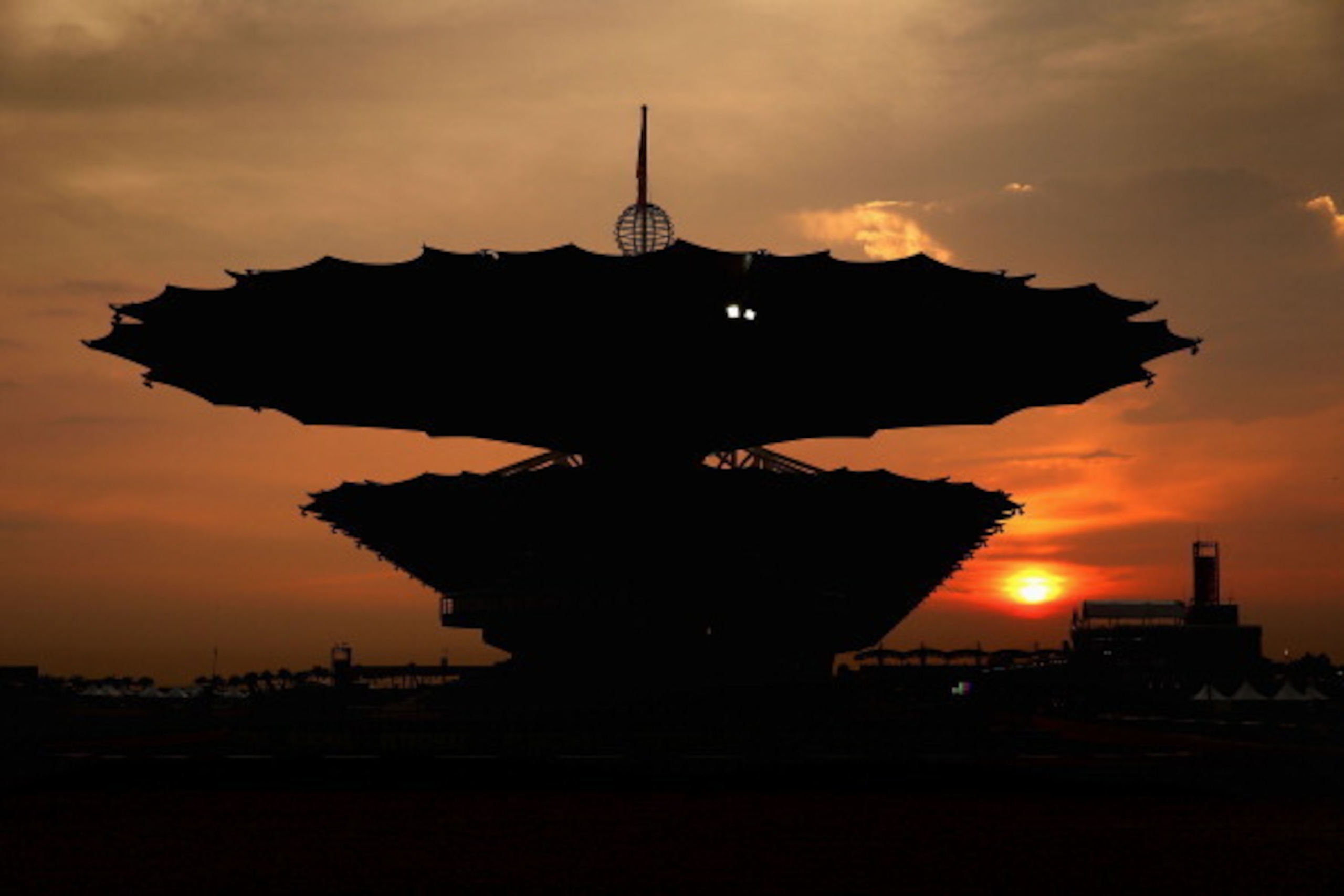
Among the most striking aspects of the Sepang circuit is the huge double-frontage main grandstand, which stretches from the back straight, around the last corner and down much of the pit straight.
According to the track's official website, the structure is 1.3 kilometres long and "constructed along the east-west alignment to ensure shade from the sun’s glare at all times," with the roof presumably providing adequate shelter from those pesky rain showers.
At Turn 15, the grandstand roof—according to RedBull.com—is shaped like the National Flower of Malaysia, the Hibiscus.
The venue's capacity, as per SepangCircuit.com, is 130,000, with more than 5,000 palm trees lining the circuit.

.jpg?w=2560 "Colts Football")
.jpg?w=2560 "Baker Gets Glove From Rays 🧤")

.jpg?w=2560 "NFL investigating Eagles")

