

5 Key Reasons Behind Liverpool's Improved Form
Liverpool head in to the last nine games of the season in a great position to challenge for a top-four finish in the Premier League, as the English top tier's most in-form side.
After second-placed Manchester City lost 1-0 away to Burnley on Saturday, Reds manager Brendan Rodgers talked up his side's chances of rising up the table, via BBC Sport.
"Manchester City's result at the weekend gives us an opportunity to finish second," Rodgers said. "Our mentality, the run and confidence we have at the moment we're just going to take that into every game and see where it takes us."
After a miserable start to the season, it is remarkable that Liverpool are now in a position to retain last season's league finish of second.
But how has Rodgers turned it around?
The Ulsterman believes that, as relayed by Oliver Todd for MailOnline, November's 3-1 loss away to Crystal Palace was the "turning point" for his side, but a switch to the hugely successful 3-4-2-1 formation in December's ultimately encouraging 3-0 loss away to Manchester United is more accurate.
Within this 3-4-2-1 switch, here are the five key reasons behind Liverpool's improved form this season, rounding off with a positional conversion for Raheem Sterling.
Finding the Right Defensive Balance
1 of 5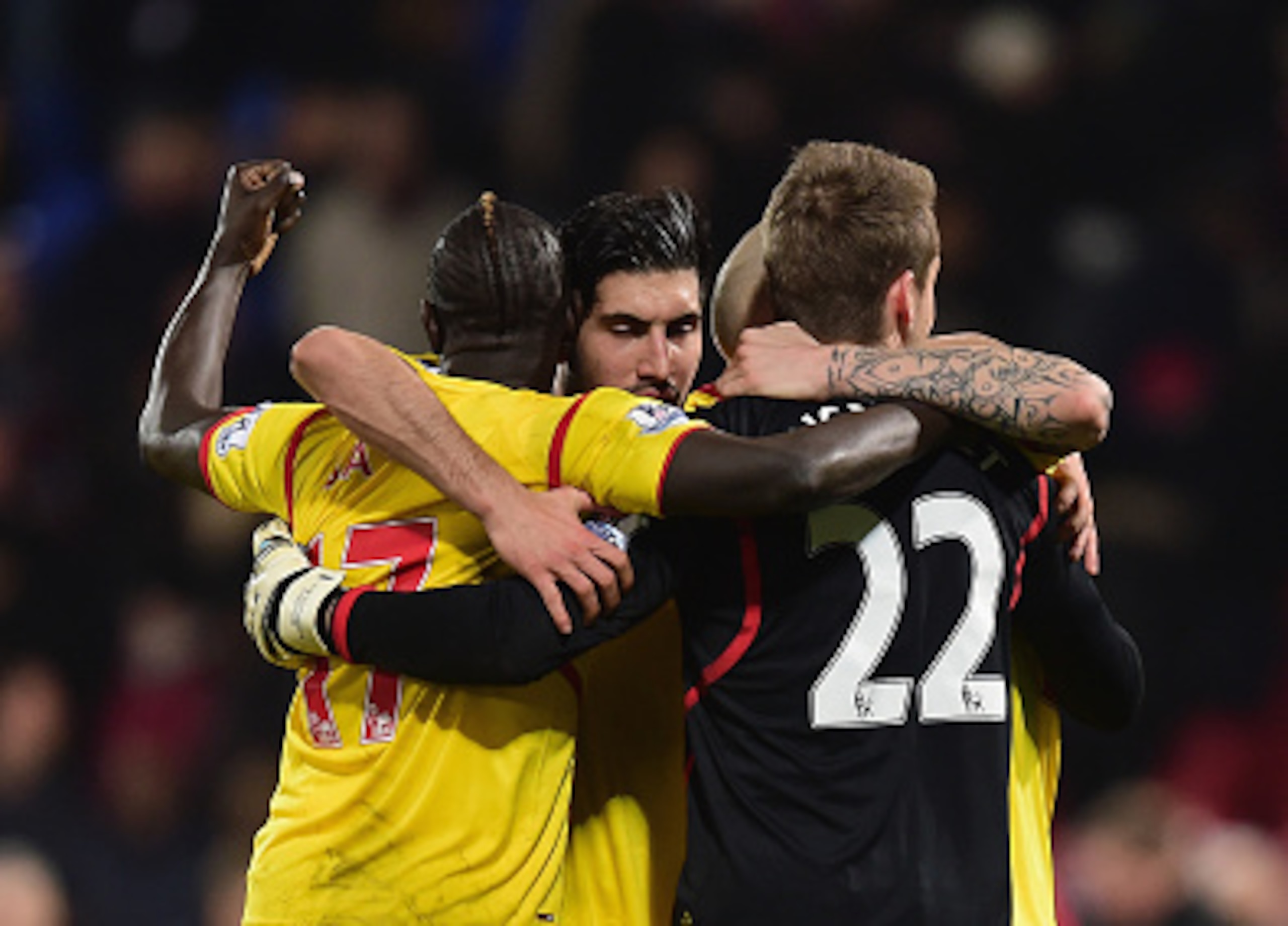
In the first half of the season, Liverpool's defence was a shambles.
The likes of Dejan Lovren, Glen Johnson and Jose Enrique were regular features in Rodgers' starting lineup, and the Reds struggled with a lack of cohesion and unity at the back.
Partnering Lovren on most occasions, Martin Skrtel suffered immensely—before Liverpool's season-changing mid-December loss to United, Skrtel had made four defensive errors, while Lovren had made five.
This calamity also spread to Simon Mignolet in goal, with the Belgian making three defensive errors up to that point.
Rodgers' switch to a back three in that Old Trafford clash, and a brief exile for Mignolet, has now lead to supreme defensive stability for Liverpool.
This has largely stemmed from the balance provided by Emre Can and Mamadou Sakho alongside Skrtel; Can and Sakho's composure and ball-playing abilities perfectly complement Skrtel's raw defensive prowess.
In eight games together in the Premier League, Can, Skrtel and Sakho have conceded just three goals.
Behind the trio, Mignolet has improved drastically, and the side have kept six clean sheets when all four have played together.
Use of Attacking Wing-Backs
2 of 5
After the summer signings of Adam Lallana and Lazar Markovic, Rodgers' Liverpool squad boasted a plethora of high-quality options in attacking midfield—something which the manager struggled to exploit in the first half of the season.
Add to that group the primarily attacking full-back Alberto Moreno and Rodgers needed to find a system that would take advantage of his squad's thrust.
This came with the 3-4-2-1, with this formation enabling Liverpool to make the most of their squad.
Before the switch to the 3-4-2-1, Moreno struggled in a regular left-back role, making an average of five defensive actions per game, but also contributing three errors in this position, including two which led directly to a goal.
In a more advanced role, Moreno has improved—focussing on his attacking duties—with just two defensive actions per game, making no defensive errors.
The wing-backs in Liverpool's new system work to stretch the opposition, providing Rodgers' central players more space and helping to overload in attacking situations.
Jordon Ibe has most succinctly demonstrated this for the Reds on his recall from a loan spell with Derby County in January; Ibe has made the second-most dribbles on average per league game for Liverpool this season, with 2.8, and this has provided Rodgers with a supremely confident, devastating outlet on the right flank.
The 19-year-old's thrilling display in Liverpool's 3-2 win at home to Tottenham Hotspur in February is the perfect example of Liverpool's wing-back system in motion.
Dropping Steven Gerrard
3 of 5
While Liverpool's fortunes did soar after the loss to United, Rodgers' "turning point" defeat at Palace did seem to persuade the manager of one salient factor: Steven Gerrard was a liability in a defensive midfield role.
His fervour and creativity did lend Gerrard to this position last season, and his long-ball prowess stretched teams struggling to cope with the combined talents of Luis Suarez and Daniel Sturridge, but 2014/15 is a different story.
In 12 appearances in a "regista" role this season, Gerrard helped Liverpool concede 17 goals, at a rate of 1.4 goals per game.
Liverpool also gathered just 14 points in this stretch, at a rate of 1.2 points per game.
After the Palace loss, Gerrard was dropped from a deep-lying role and Liverpool improved, conceding 12 goals and collecting 40 points in 17 league games, at a rate of 0.70 goals and 2.35 points per game.
Gerrard's 2015 announcement of his summer departure has seemingly liberated Rodgers of the burden of his captain's reputation as a supposed match-winner, and Gerrard has been used more sparingly—and, arguably, mercifully—ever since.
Without Gerrard in the Premier League this season, Liverpool have a win ratio of 100 percent; the unbeaten Jordan Henderson is thriving in the captain's role in his stead.
However, as Gerrard's vital substitute's contribution at defensive midfield in the Reds' recent 1-0 win away to Swansea City shows, the captain still has much to offer in a limited role.


.jpg?w=2560 "Cardinals Giants Football")
Philippe Coutinho in a No. 10 Role
4 of 5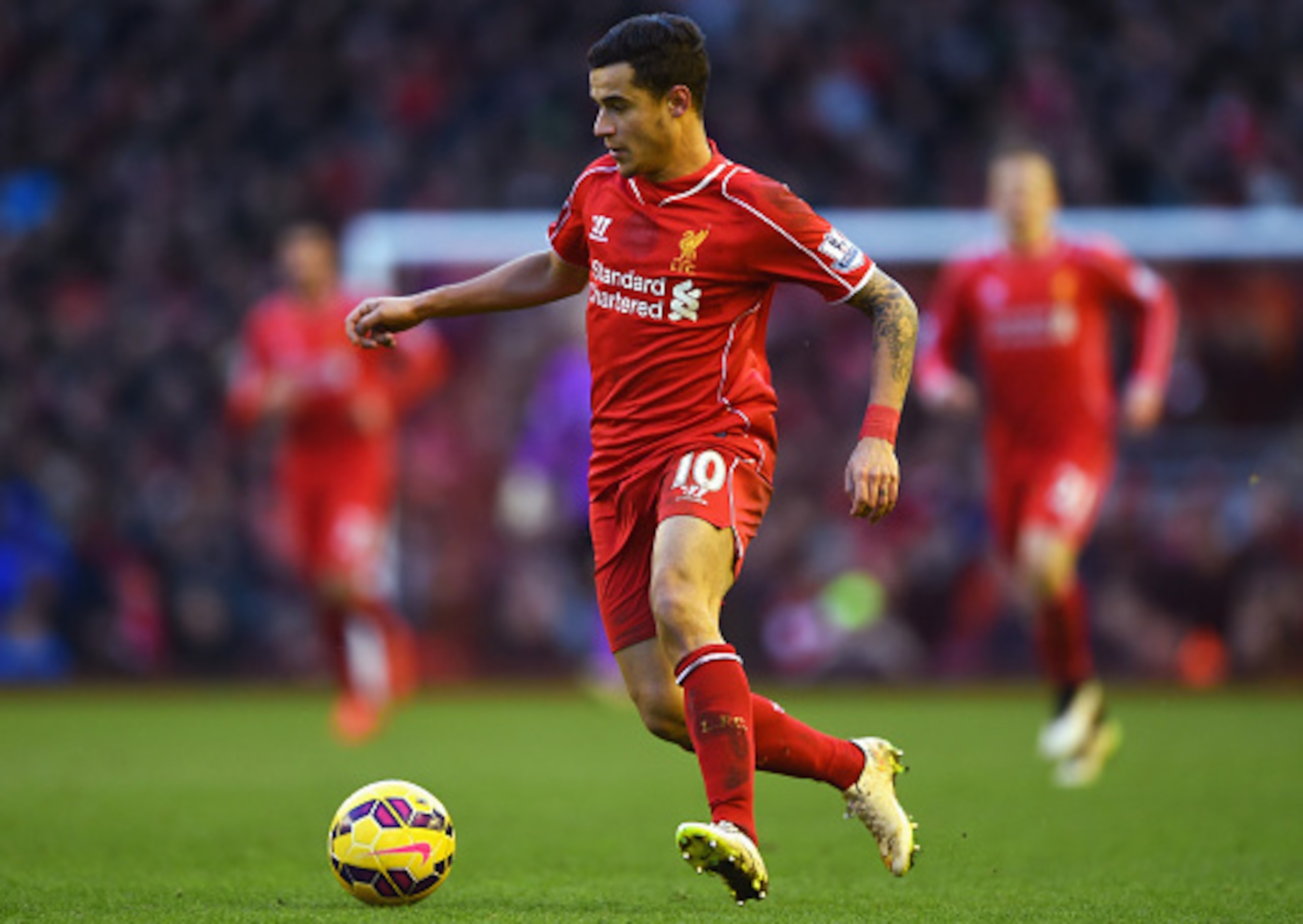
Liverpool's resurgence has seen the side restored to their attacking best, with the Reds having created 12.8 chances per league game after and including the loss to United, compared to 10.3 previously.
Much of this has been down to the switch of Philippe Coutinho into his preferred No. 10 role.
During pre-season, Rodgers told the club's official website that Coutinho was "the brain in our team."
"He is the one that gets the team ticking, gets the movement in front of the ball. He goes and gets on the ball," Rodgers continued. "He's a wonderful technician that has a great idea, tactically, of the game."
It was somewhat bemusing, then, that Coutinho spent much of the first half of the season shunted into a peripheral left-sided role in Rodgers' 4-2-3-1.
Since the switch to the 3-4-2-1 formation however, Coutinho has thrived.
In his 12 league appearances prior to the United loss, Coutinho made just five chances for his team-mates, scored just one goal and made no assists.
From that game onwards, Coutinho has made 14 appearances and been ever-present in a central role, creating 32 chances, including four assists and has scored three goals.
Much of Liverpool's fortunes revolve around Coutinho's rise in form in his natural position.
Converting Raheem Sterling into a Centre-Forward
5 of 5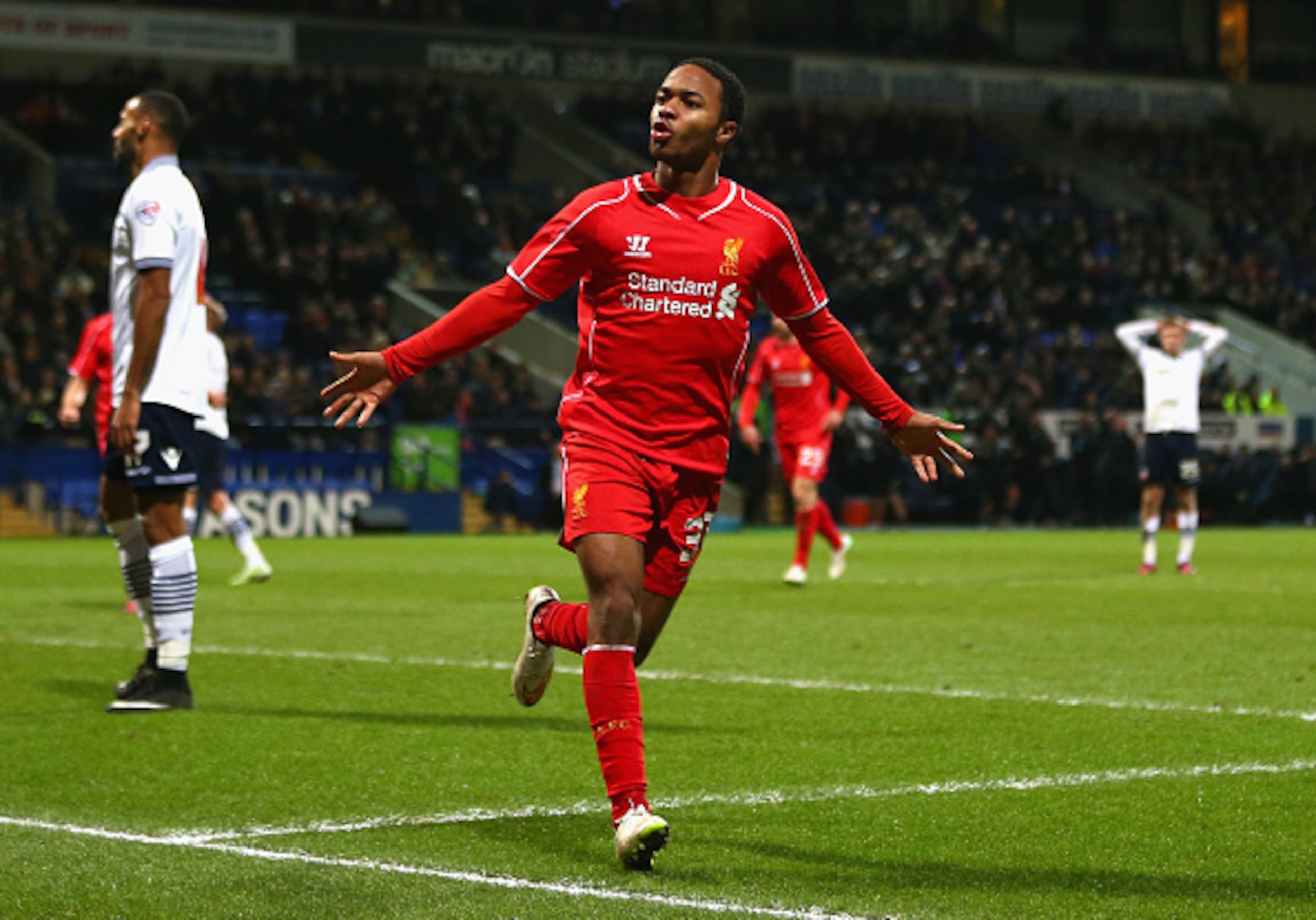
Ahead of Sunday's clash at home to United in the Premier League, former Liverpool midfielder Dietmar Hamann told Neil Jones of the Liverpool Echo that he would start Sterling in a centre-forward's role at Anfield.
"If you think back to the game at Old Trafford, that was the first time we really saw Sterling used as a striker. And though we lost the game, we created more chances than we had all season, really, and he made a big difference," Hamann declared.
Hamann's assertion was correct—in Liverpool's loss to United in December, the Reds created 16 chances, their joint-highest total at that stage of the season, and the Reds have flourished ever since.
Much of this, as the former German international claims, was due to Sterling's deployment as a striker.
"It changes everything when you have that pace up front, because you can stretch the game. We lacked that in the first part of the season when Mario Balotelli or Rickie Lambert were playing up there, but we’ve had it since that Old Trafford game."
Sterling has started nine games as Liverpool's centre-forward, scoring three goals and making two assists.
As Liverpool's most successful dribbler, with an average of 3.1 per league game, and the most prolific defensive striker in the side, with 1.1 tackles per league game, Sterling's ability is tailored to suit Rodgers' 3-4-2-1 up front.
With Balotelli and Lambert struggling to fill in for Sturridge previously, Sterling's conversion to a centre-forward's role has been key to Liverpool's success this season.
Statistics via WhoScored.com and Squawka.com.
.jpg?w=2560 "Tyreek Deal May Come Soon")
.jpg?w=2560 "Ward Nearly Walks Out of Presser ▶️")
