

NBA Draft 2015: 7 Volatile Stocks to Watch During March Madness
For several 2015 NBA draft prospects, the NCAA tournament offers a critical opportunity to win the esteem of scouts and risk tumbling down the board.
The Big Dance is a high-profile audition, a chance to steer their volatile stocks in the right direction. Some are looking to jump from the late-first round into the lottery, while others are scratching and clawing just to stay in the first-round conversation.
A couple of mid-major standouts finally have an occasion to show their chops against upper-echelon programs. Meanwhile, a handful of young studs on marquee squads want to prove they belong in the Association next year.
In addition, keep an eye on talented upperclassmen who need to use this tournament as a final resume-builder before turning pro.
We tabbed these prospects because their potential draft landing spots are wider-ranging compared to most players at this time of year. Their stock could swing anywhere from 15 to 20 picks in either direction depending on how they play in the coming weeks.
An impressive tournament could make a sleeper prodigy a draft-night star. A lackluster showing could send a fringe first-rounder deep into the second round. The results will affect the players' contract situations, NBA role and opportunities.
Prospects listed in order of projected 2015 draft range.
Andrew Harrison, Kentucky PG (6'6", Sophomore)
1 of 7
Potential Draft Range: 30-60
Biggest Question: Can he score efficiently from mid-and-close range?
While Kentucky's big men are cooking up lottery-worthy portfolios, guards like Andrew Harrison are having a tougher time making a compelling pitch to NBA clubs.
Both Harrison twins have volatile stocks, but we're going to focus on Andrew because he's the one with a favorable chance of being drafted. The physically gifted facilitator is widely projected to land mid-second round, and his tournament exploits could be the difference between staying in Lexington or flirting with the first round on draft night.
Despite his ideal frame and penchant for playmaking, Harrison hasn't been able to establish solid draft stock.
He didn't make a huge leap from his freshman to sophomore season, even though he made per-minute gains as a passer, scorer and three-point shooter.
His efficiency inside the arc is underwhelming: 49 percent shooting at the rim and 29 percent on two-point jumpers, according to Hoop-Math.com. Those are concerning marks considering he doesn't lack for size to score over foes.
Fortunately, a grand opportunity awaits him.
As you may have heard (a thousand times), the Wildcats have an elite squad this year and could make a deep run through the brackets. If Harrison is the catalyst for a title run, his stock could see a substantial boost.
Norman Powell, UCLA SG (6'4", Senior)
2 of 7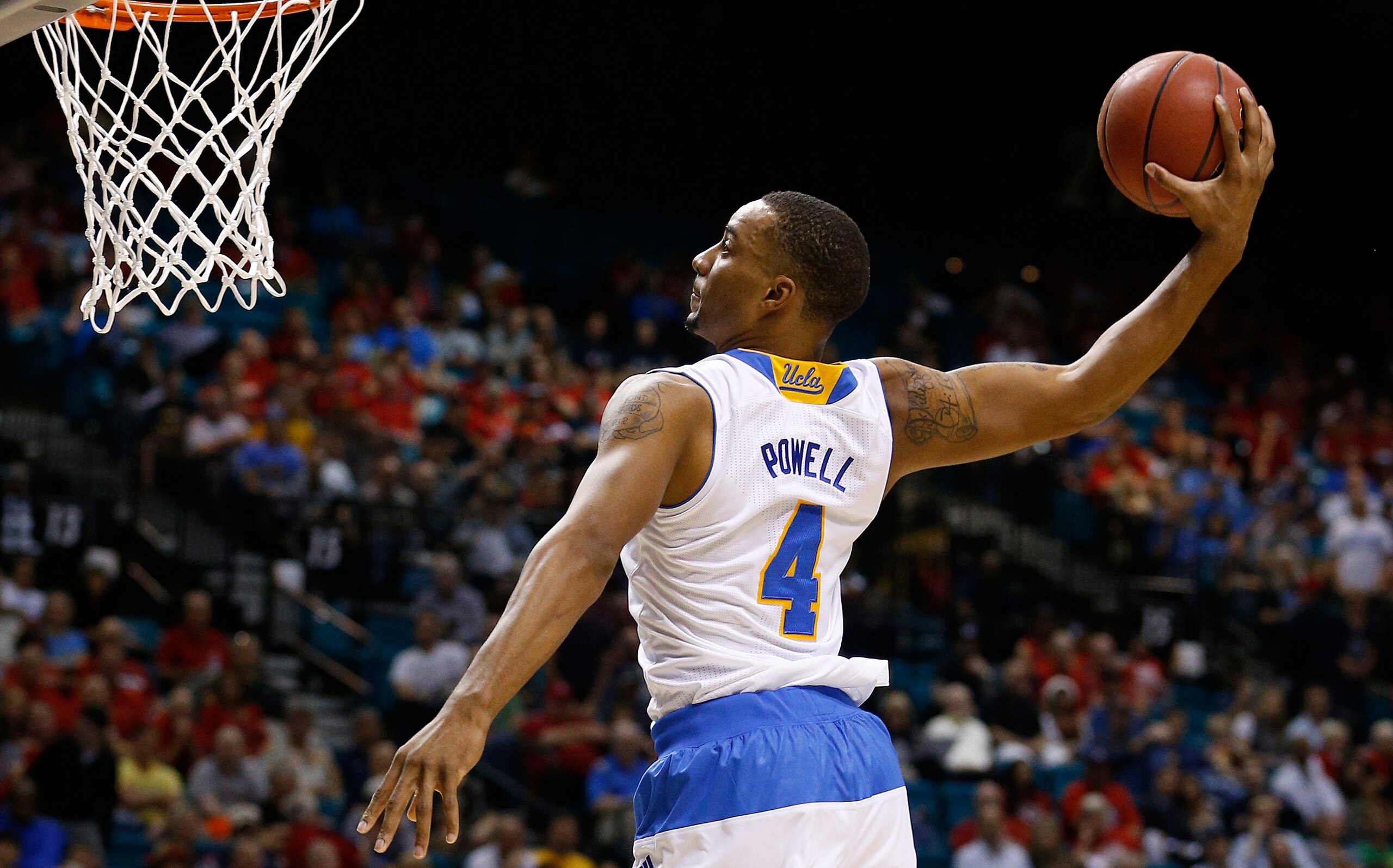
Potential Draft Range: 30-60
Biggest Question: Can he show steadiness?
Like many seniors, Norman Powell's draft stock has its limits, because he'll soon be 22 and doesn't have the developmental upside of underclassmen.
NBA decision-makers aren't going to consider the UCLA guard unless they're extremely confident about his impact. Will he step right into the league and supply two-way firepower off the bench?
We know that he can attack the rim, score and defend stoutly against college opponents, but I'm not sure he can connect from the perimeter at the next level.
He's shooting just 32 percent from long distance this season, which isn't reassuring for a potential NBA 2-guard. That spotty outside stroke has yielded some shaky overall outings against top-shelf opponents this season, including 3 of 11 against Gonzaga, 1 of 13 against Kentucky and 5 of 13 against Arizona.
Ed Isaacson of Hoops Habit broke down the good and bad of Powell's shooting delivery:
"He does a good job getting square to the basket and into his motion quickly, has good lift, but his extension into his release is inconsistent. At times, it is almost like he is double-clutching before he releases, causing the trajectory to be somewhat awkward. The good news is that when he does show a fluid motion, his jumper looks good
"
A balanced, efficient scoring exhibition against Southern Methodist and beyond could be the difference between being drafted in the 30s or 50s.
Terry Rozier, Louisville PG/SG (6'2", Sophomore)
3 of 7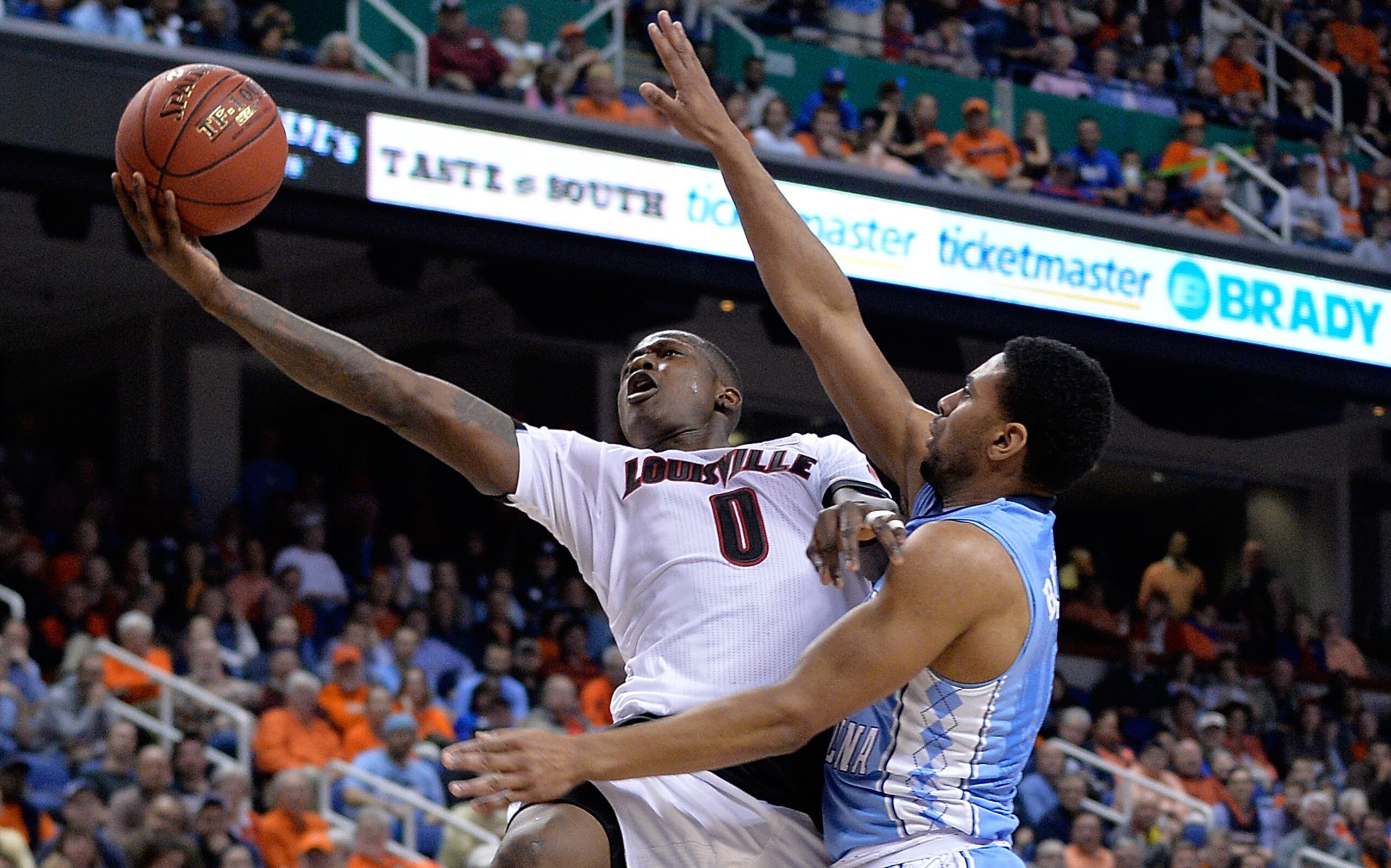
Potential Draft Range: 20-50
Biggest Question: What is his NBA role?
In his first two years at Louisville, Terry Rozier has shown us explosive speed and several flashes of playmaking talent.
But at 6'2", he lacks size to shine as an off-guard in the NBA, and he's not consistent enough as a passer to warrant full-fledged point guard duties. He posted just 3.2 assists per 40 minutes this season, including 4.3 dimes per 40 after fellow guard Chris Jones was dismissed from the team.
His best bet is to try and latch on as an energetic combo guard, provided he shows a little more versatility.
If the Cardinals can get past their first couple of hurdles in the East region, he'll have a chance to strut his stuff against teams like Villanova and Virginia.
Hopefully he fares better in the coming days than he did against ranked opponents throughout the winter. Anytime Louisville encountered a ranked team, Rozier struggled from the field and handled the ball sloppily: 33 percent shooting, 31 assists and 24 turnovers in nine games.
He started out the season as a mid-first-round candidate, but poor shooting and erratic passing put a dent in his stock. If he looks good in a deep run past the Sweet 16, his arrow will point back toward the first round.



Jake Layman, Maryland SF (6'9", Junior)
4 of 7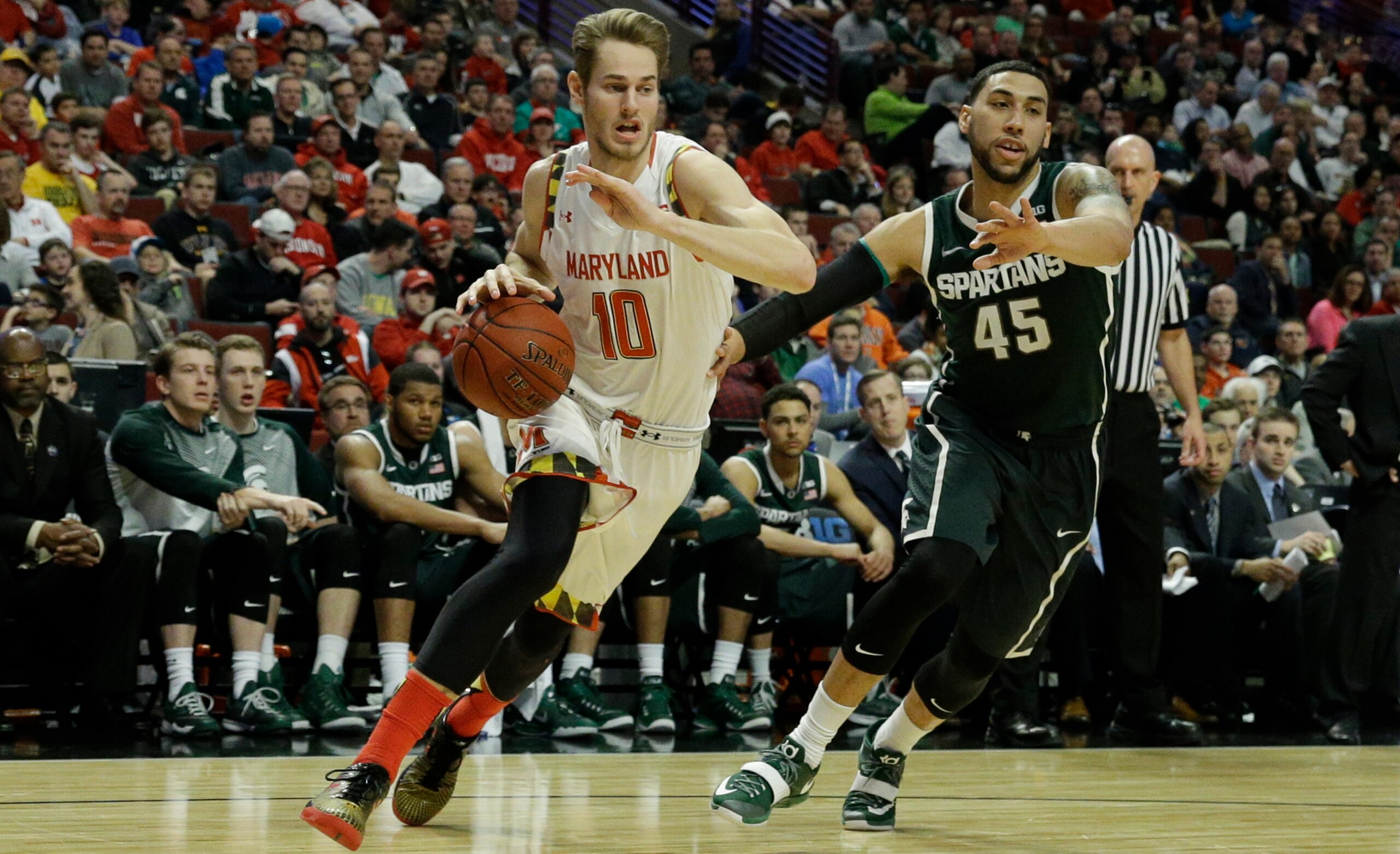
Potential Draft Range: 20-45
Biggest Question: Will he produce inside and out?
Maryland's Jake Layman enters the NCAA festivities with volatile stock, but he has more potential to enhance it than ruin it.
He's currently an early-second-round pick on most draft boards. A strong inside-out display in the tourney could bump him into the top 30.
Layman's magnificence as a multidimensional forward has flown under the radar this season, because he's the Terrapins' third fiddle behind Melo Trimble and Dez Wells. His draft stock has been tricky to pinpoint as he doesn't put up outstanding stats for a junior, nor does he have an eye-catching playing style.
March Madness is a superb opportunity to demonstrate his athleticism, shooting touch, interior scoring and impressive passing ability. Layman's movements and skill set remind a lot of people of Chandler Parsons, who is a great example of a second-rounder who should have landed higher.
Layman talked about the comparison with Marc Tracy of the New York Times:
"I feel like his game fits a little more in the NBA than in the college game, and that’s what I feel like. I think I’m a guy that doesn’t have to have the ball in his hands all the time to really make an impact. I feel like I could be one of those guys that hangs out in the perimeter and just shoots threes and slashes to the basket when he needs to.
"
Role players who become X-factors in the postseason often enjoy a late-season stock surge. Layman could be the next sleeper to vault up the draft ladder.
Domantas Sabonis, Gonzaga PF (6'10", Freshman)
5 of 7
Potential Draft Range: 20-35
Biggest Question: Will his offensive game translate?
Gonzaga's fiery Lithuanian freshman Domantas Sabonis has filled a key role for the No. 2 seed Bulldogs.
He's spent most of the campaign competing against athletically inferior mid-major opponents, and his handiwork against major programs has been good, but not great.
As of right now, I haven't seen enough in his offensive repertoire to label him as a first-round lock in 2015. Most of his buckets come off simple drives or hustle-created opportunities.
However, he owns many of the most desirable traits for a big man. Sabonis is strong, long, athletic enough to play above the rim and he has sharp instincts as a rebounder and defender. His 17.6 points and 12.9 rebounds per 40 minutes are nothing to scoff at.
"Sabonis is quietly drawing major attention from NBA scouts and I can see why," said Chad Ford of ESPN. Ford added that they're drawn to the youngster thanks to his "elite rebounding ability...and high basketball IQ for a player who doesn't turn 19 until May."
All he needs is a deep run and some quality outings in the tournament to elevate his resume and convince scouts he's a legitimate two-way power forward. Gonzaga's potential opponents en route to the Final Four include some worthy competition: Iowa State, Duke, Louisville and Virginia.
R.J. Hunter, Georgia State SG (6'5", Junior)
6 of 7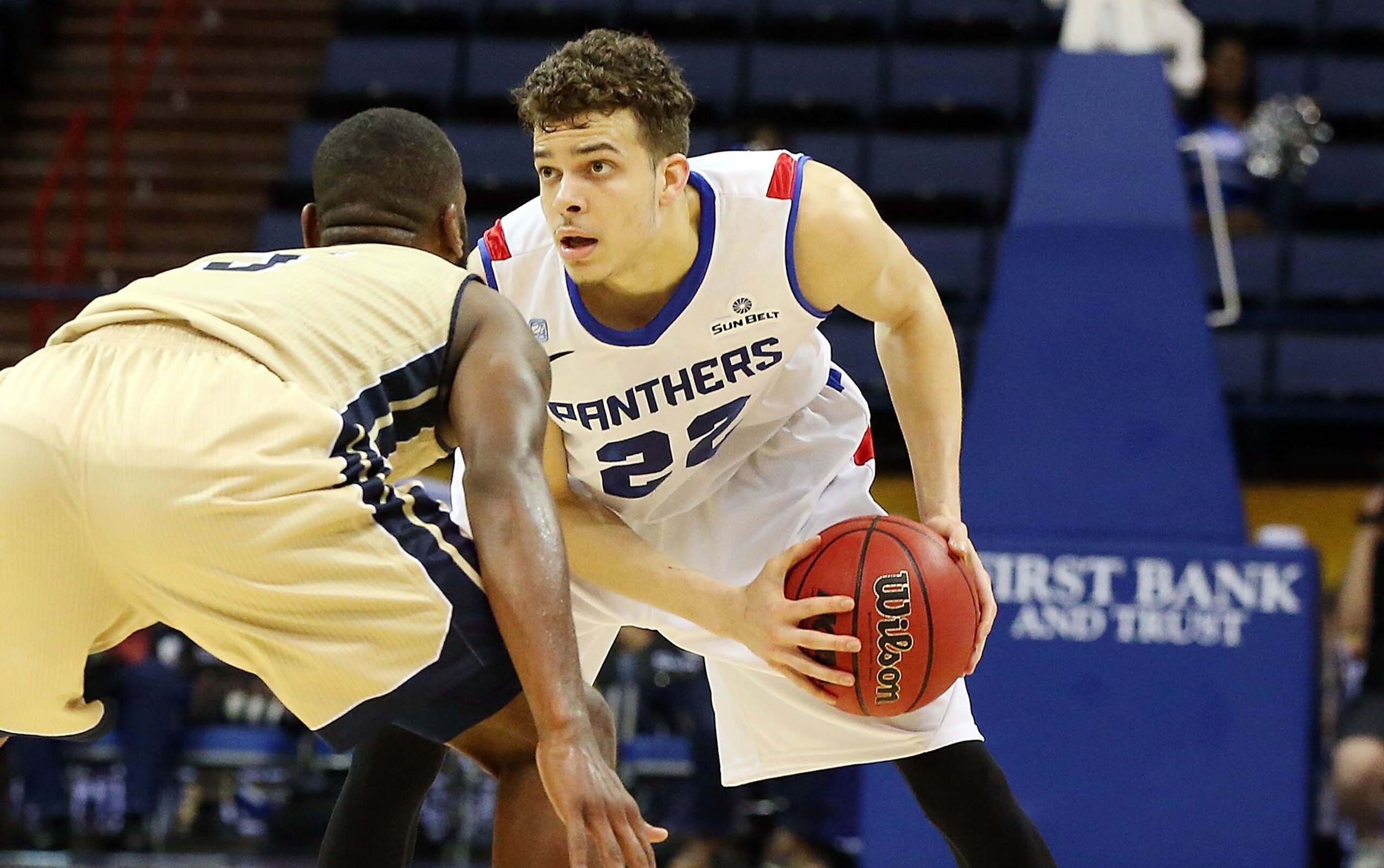
Potential Draft Range: 15-35
Biggest Question: Can he score productively and efficiently?
Given R.J. Hunter's extensive body of work at Georgia State, NBA scouts have a good handle on what his primary strengths and weaknesses are.
However, his stock could climb or slide depending on how he fares against top-tier programs.
The highly skilled, smooth-shooting wing has dominated Sun Belt Conference adversaries for the past couple campaigns, but he hasn't done much against major-conference opponents.
In three years, he's faced just five power-conference foes, shooting a combined 24 of 70 (34 percent) against them. He'll face his sixth big school Thursday, as the Panthers take on the athletically superior Baylor Bears.
A memorable performance in his NCAA tournament debut could go a long way to boost his stock and help him achieve his draft ceiling. Conversely, a feeble showing would reinforce the aforementioned underwhelming stats.
"If he's able to lead his Panthers to an upset Thursday over No. 3 seed Baylor, look for the buzz surrounding Hunter to pick up," said B/R's Jonathan Wasserman.
Kevon Looney, UCLA PF (6'9", Freshman)
7 of 7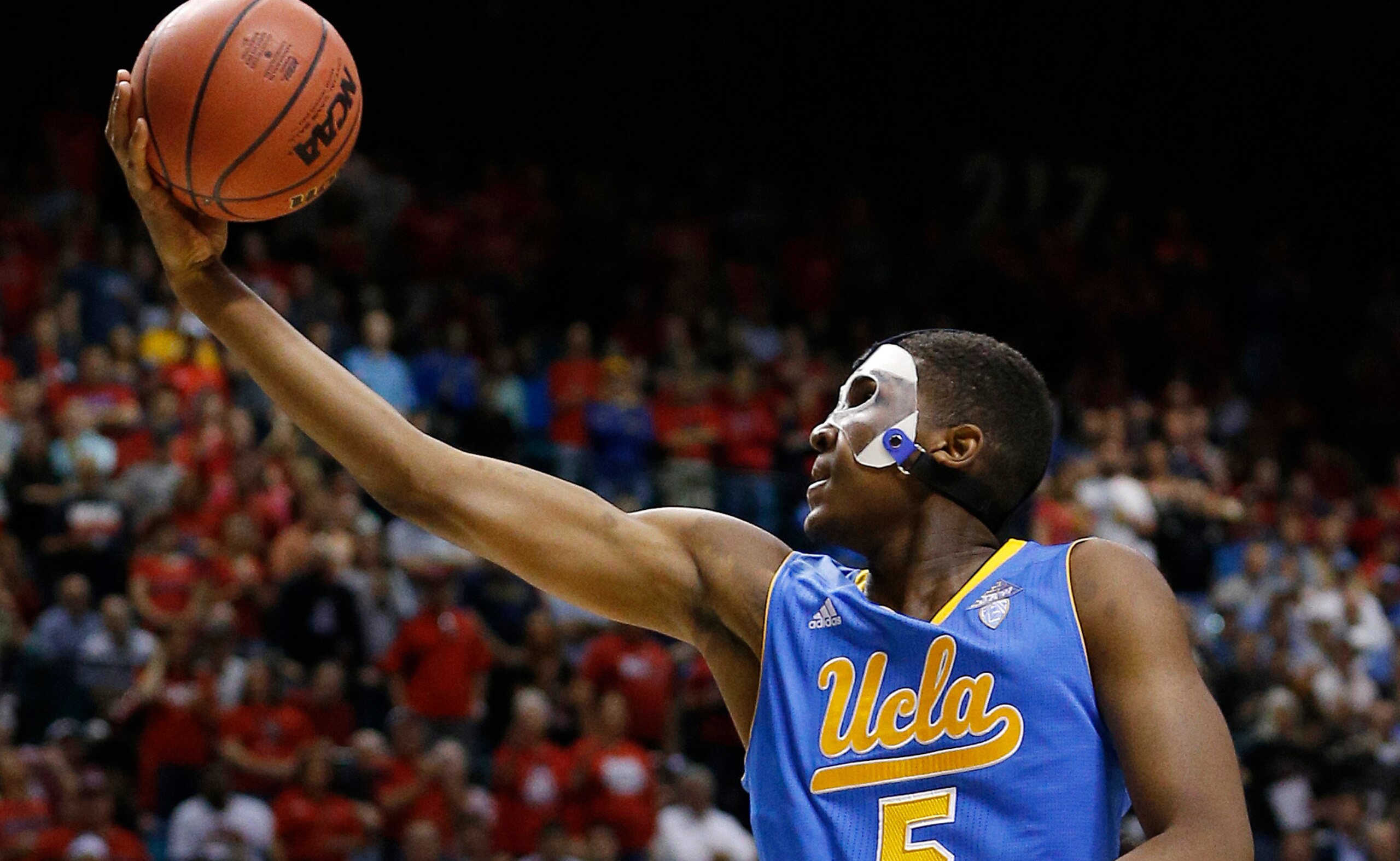
Potential Draft Range: 8-20
Biggest Question: Can he expand his repertoire?
UCLA's Kevon Looney isn't a complete mystery. He's a rebounding vacuum, a promising outside shooter and an above-average ball-hander for a big guy. Those traits will ensure he doesn't fall out of the first round.
But his athleticism is not eye-popping, so his level of NBA stardom will heavily depend on ball skills, footwork and advanced moves.
There's a big difference between being a top-10 pick or into the late teens. Looney's Bruins snuck into the Big Dance as a tenuous at-large bid, and he can greatly enhance his stock if he has some big games.
In three of his last five games, he's failed to reach double digits in scoring. If he continues that quiet production into the NCAA bracket, he'll leave some scouts wondering whether his ceiling is relatively mediocre.
Demonstrating versatility would make executives more comfortable about reaching for him in the top 10 range, whereas a bland performance would make late-lottery teams hesitant to take him.
Note: Unless otherwise indicated, all stats come from Sports-Reference.com/CBB.
Follow Dan O'Brien on Twitter for more NBA draft coverage: @DanielO_BR

.jpg?w=2560 "Mahomes Told Teammate to Leave Meeting")
.jpg?w=2560 "5 Teams Eyeing Jonathan Taylor")

.jpg?w=2560 "Jonathan Taylor Landing Spots 📍")
.jpg?w=2560 "Baker Gets Glove From Rays 🧤")

.jpg?w=2560 "NFL investigating Eagles")
