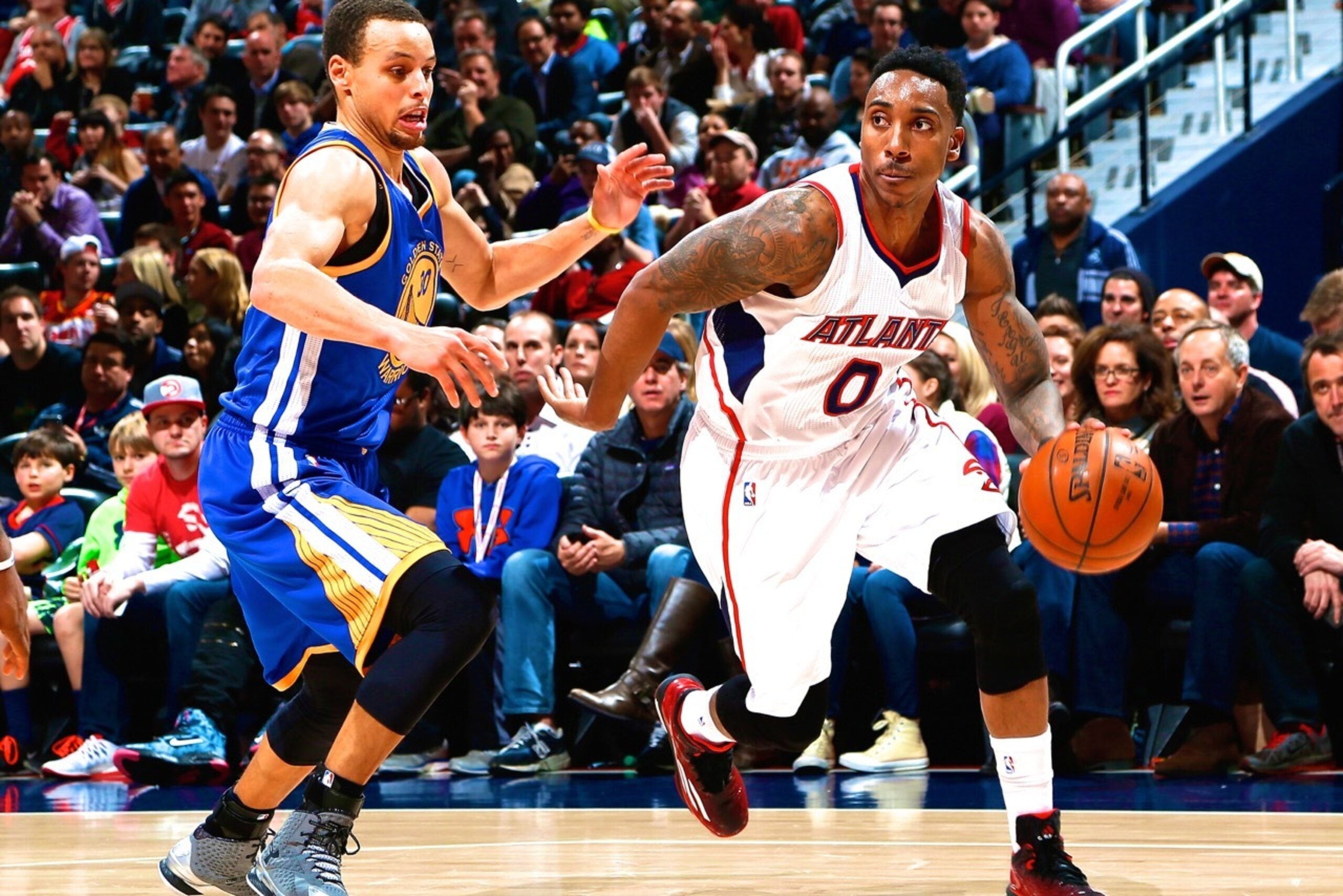

Atlanta Hawks Can Make Statement Against Stacked Golden State Warriors
As a regular season packed with championship statement-making victories and feats nears completion, the Atlanta Hawks can still deliver one last declaration against the Golden State Warriors.
All these months later, with the NBA's second-best record and a firm, irreversible hold on the Eastern Conference, these Hawks have nothing left to prove. But that's just the thing.
Wednesday night's date with the Warriors provides them with an opportunity they don't otherwise have anymore—a chance to face an equal, to test themselves against the lone remaining measuring stick.



Finding these barometers isn't easy for the Hawks. They've basically beaten every foe, inferior or equal, there is to beat, including the Warriors, whom they edged out 124-116 in Atlanta on Feb. 6.
Just three of their remaining opponents, not including Golden State, are 10 games over .500: San Antonio Spurs, Chicago Bulls and Washington Wizards. Only one ranks within the top four of their conference (Chicago).
Within the Eastern Conference specifically, there isn't another team worth comparing them to anymore. Against the Cleveland Cavaliers, who have the league's second-best record since beginning the season 19-20, the Hawks are 3-1. The Toronto Raptors are the only East squad against whom they have a losing record (1-3).
Western Conference outfits haven't provided much more resistance. The Hawks actually own a higher winning percentage (80.8) against the West's teams than they do the East's (78). The San Antonio Spurs are the only one they've yet to defeat, and they'll get a second and final shot at them on March 22.
The Warriors are the Hawks' true remaining challenge.
The same Warriors on course to become just the 15th team all time to win 80 percent of its regular-season games. They also rank first in offensive efficiency (with the Los Angeles Clippers), defensive efficiency and pace.
The same Warriors on track to register the fourth-highest SRS score—cumulative measurement of how a team fares relative to its schedule—in NBA history.
Those Warriors.
Beating them once, at home, is something special.
Taking them down a second time, at Oracle Arena, where they have lost just twice all season, is special. Squared. Times infinity.
Now, this matchup has admittedly lost some of its luster, and by extension, some of its meaning.
Neither team will be at full strength. The Hawks announced on Monday that the sharpshooting Kyle Korver would miss at least the next three games after suffering a broken nose. Klay Thompson is expected to miss the next seven to 10 days with a sprained right ankle, per Rusty Simmons of the San Francisco Chronicle.
Both squads are also in minutes-monitoring mode, with airtight grips on respective No. 1 seeds. Warriors head coach Steve Kerr is keeping a meticulous eye on his starting five's playing time, sitting key contributors when the situation allows. Hawks coach Mike Budenholzer rested three of his starters against the Los Angeles Lakers on Sunday and sat Al Horford in a win over the Sacramento Kings on Monday.
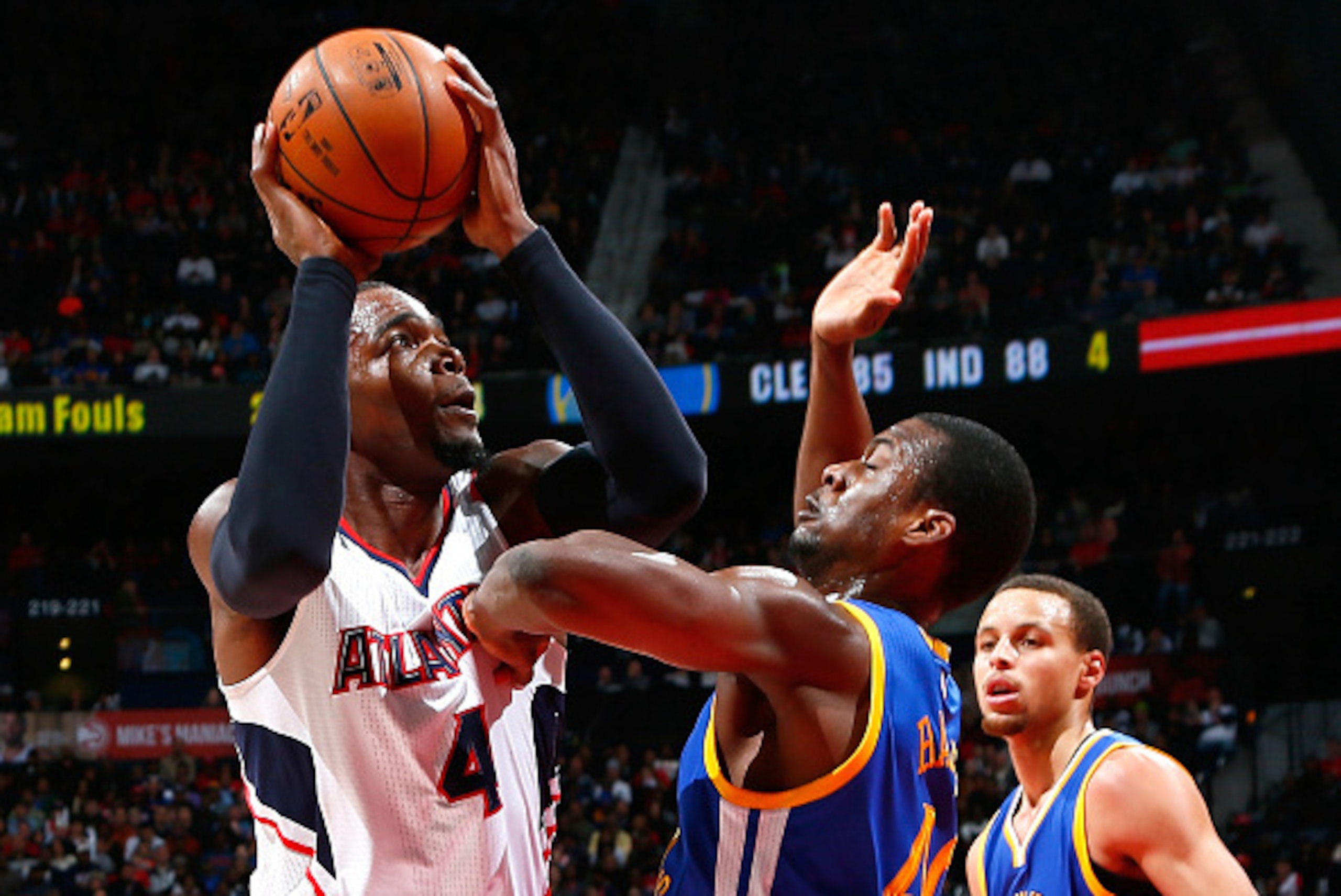
These are important distinctions, especially for Golden State. The Hawks' winning percentage without their everyday starting lineup (77.8) is strikingly similar to that of their success rate with them (79.6). The Warriors are just 11-8 without their normal starting five, as opposed to 42-5 with them.
But this isn't about the Hawks chopping down the best possible version of the Warriors. Again, they've already done that. They're playing for something more, as The New York Times' Jonah Bromwich writes:
"Any N.B.A. fan can recite the conventional wisdom about the playoffs. The game slows down. Defense beats offense. Experience matters. Superstars win championships. If those maxims hold true, then the Warriors and the Hawks will be remembered like Mike D’Antoni’s Phoenix Suns: wildly entertaining teams that were not built to win championships.
"
That final point applies more to the Hawks than it does the Warriors. The latter has a megastar in Stephen Curry, an oft-cited superstar in Klay Thompson and a do-everything Draymond Green generating max-contract buzz.
The Hawks have no such player, a purported void they're not only aware of, but actively embrace.
"It's a beautiful group, no one really cares who gets the shine," Jeff Teague told Reuters' Jahmal Corner (via Yahoo Sports).
"We're not like every other team, we don't have superstars," added sophomore Dennis Schroder. "We're sharing the ball like no one else."
It doesn't matter that the Hawks employ four All-Stars, or that Horford is, without question, a superstar, or that Atlanta is the only other team inside the top six of both offensive and defensive efficiency.
Teague and Horford seldom receive the recognition Curry and Thompson do. Paul Millsap—a prolific scorer, proven passer, raging rebounder and two time All-Star—isn't inciting the same max-contract talk as Green.

In so many ways, these Hawks are still viewed as inferior, as glorified pretenders, as being in a class that falls just below that of the Warriors, a truer, better-built title contender.
This is a chance for the Hawks to take any lingering doubt and squash it one last time, to remind the NBA their selfless, "star-less" system isn't a strength that will fade with the regular season.
Entering Wednesday night, Atlanta is only a half-game behind the Warriors for the Association's best record. Each of the last two teams with league-best records went on to win championships; three of the last seven won titles.
Over the last 20 seasons, 20 of the 23 top-record holders (three ties) made a Conference Finals appearance.
Win Wednesday, and the Hawks will have sole possession of the league's best record. Win, and with the Warriors clearly in cruise control, they may never let that top spot go.
Win, and this game will be seen as not only a possible NBA Finals matchup, but a preview of what could happen once the Hawks get there.
*Stats courtesy of Basketball-Reference and NBA.com unless otherwise cited and are accurate heading into March 18's games.




.jpg?w=2560 "Love's Body Already 'Tired'")

.jpg?w=2560 "Tyreek Deal May Come Soon")

.jpg?w=2560 "Ward Nearly Walks Out of Presser ▶️")