NBA Draft Notebook: Biggest Questions Entering the 2015 NCAA Tournament
For NBA draft prospects, the NCAA tournament is essentially a final on-court audition. It's their last chance to make a pitch and sell scouts on their strengths and potential.
Even the most sought-after prospects still have something left to prove.
And given what's at stake in this win-or-go-home setting, every performance, good or bad, becomes magnified.
TOP NEWS

Buzz: Knicks' KAT Offer $77M Below Max

Surprise Dubs Trade Idea 💡

Projecting New-Look Lakers Rotation 🧐
We're going to take a look at some of the biggest questions in this year's draft conversation heading into the final stretch of the season.
Can Louisville sophomore combo Terry Rozier play point guard?
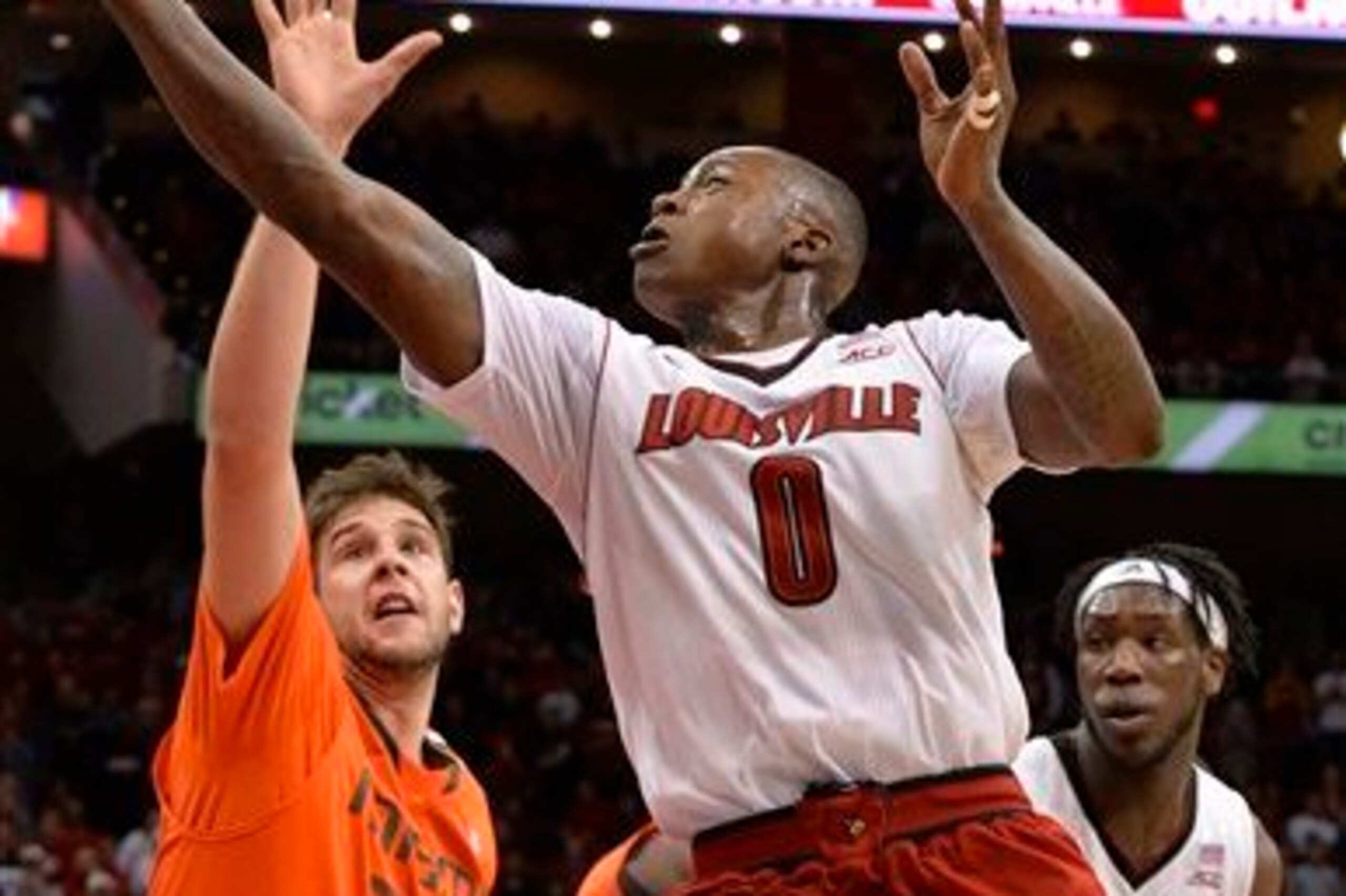
Rozier has put up some big numbers as a sophomore, averaging 17.1 points per game. But you won't find too many NBA teams looking to reach high in the draft on a 6'1" shoot-first scorer.
His 2.8-2.2 assist-to-turnover ratio and minus -0.86 pure point rating, per RealGM.com, are frightening. Against North Carolina in the ACC tournament final, he shot 6-of-20, coughed it up four times and only had two dimes to show for his playmaking.
However, Rozier is an electric athlete, pesky defender and a strong rebounder.
Regardless, with primary ball-handler Chris Jones off the team, Rozier should still get opportunities to score. To really maximize his shot at the first round, he'll have to show scouts he's capable of running an offense and getting his teammates involved.
Can Georgia State junior R.J. Hunter perform against quality competition?
Hunter found the radar last season after nailing 100 threes and averaging 18.3 points per game. This season, he's putting up 19.8 points a game, and he's got Georgia State dancing after winning the Sun Belt Conference Tournament.

However, over the last two years, he's only faced one ranked opponent. Against Iowa State in November, he shot 8-of-20 in a 23-point loss.
In last year's NIT tournament, Hunter was shut down (4-of-16) in the first round by Clemson product K.J. McDaniels, who now plays for the Houston Rockets.
Despite all of his production and a sharp offensive attack, he hasn't shown it against quality competition or in high-pressure environments.
But there's no doubt Hunter can play. He even expanded his game as a junior, having doubled his assist total from a year ago and taken 60 more free throws.
Hunter will get Baylor in the first game of the NCAA's. Expect scouts from across the league to be locked into that one.
Who is Kelly Oubre?
Kansas freshman forward Kelly Oubre was viewed as one of the top projected one-and-done prospects in America before the season began. And on some days, he still looks like one. But Oubre has blended into the background more than he's stood out, whether it's due to coach Bill Self's offense or lazy shot-selection.
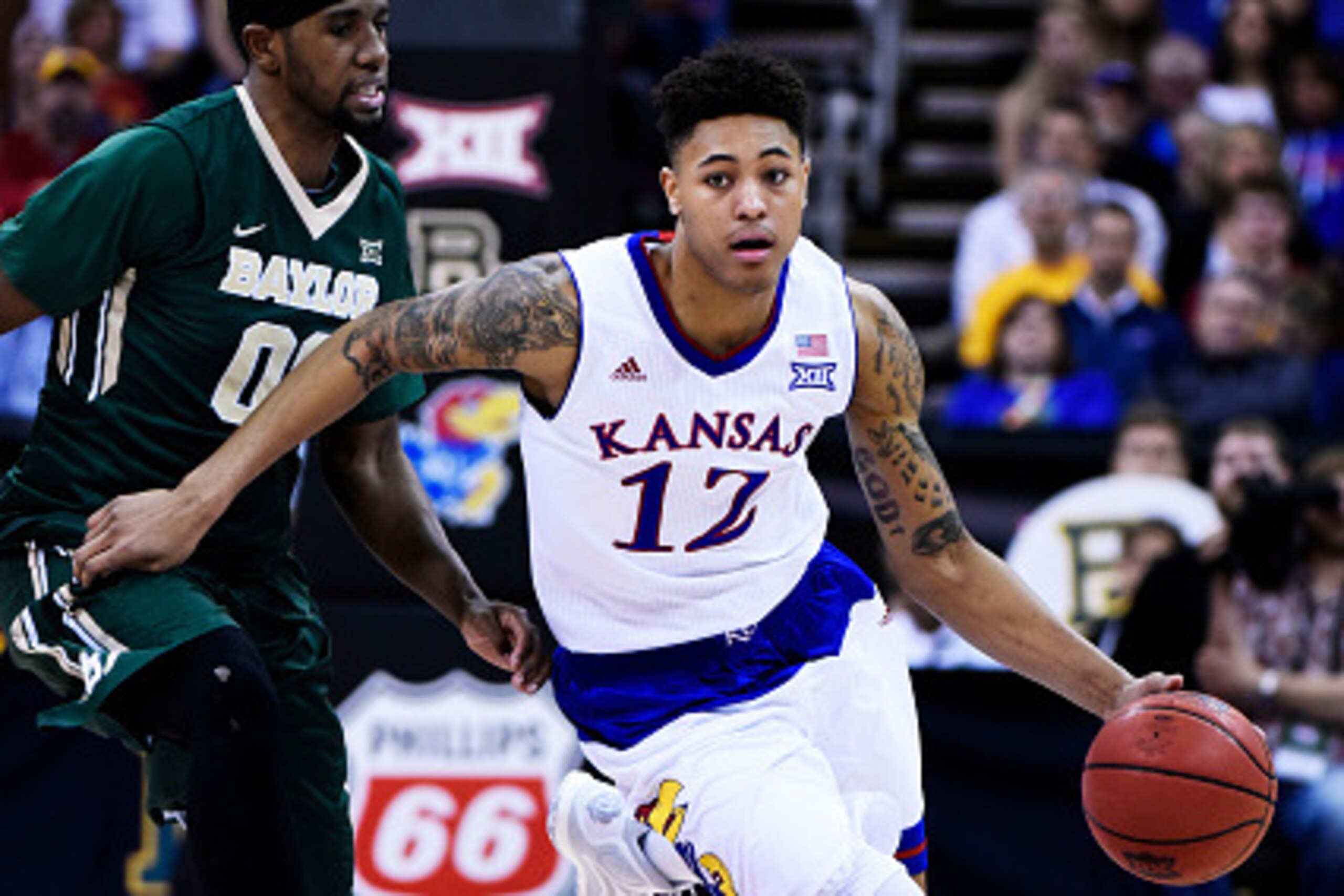
We just saw Oubre go for 25 points and take 19 free-throw attempts against TCU on Thursday—only to follow with a 2-of-6 showing against Baylor and a three-point effort in a loss to Iowa State.
So who is Kelly Oubre? Are we simply talking about an athletic wing with a shooting stroke, something teams can probably find later in the draft? Or are we talking about a versatile scorer who can take over stretches as a top option in an offense?
Kansas isn't going very far with Oubre hanging around the perimeter waiting for jump-shot opportunities. And that approach certainly won't ignite buzz among scouts.
His identity is still fairly unclear at this point in terms of what type of player he projects as.
Leading the Jayhawks on a run as their go-to weapon should ultimately help ease scouts' concerns over his tendency to fade.
Will Kentucky freshman Karl-Anthony Towns become the consensus No. 1?
We've reached the point in the No. 1 overall conversation where I'm not sure we have a favorite anymore. It seemed like Duke freshman Jahlil Okafor was that guy for most of the season, but a late push from Towns appears to have evened the race.
Is this when he pulls ahead?
Given his superior athleticism, defensive instincts and offensive versatility compared to Okafor, scouts are well aware of Towns' higher ceiling. But with fewer opportunities in Kentucky's loaded lineup, and only modest production (9.7 points per game) to show for all the upside, it's been tough to fully buy in—especially with Okafor dominating every night.
But over the past two months, Towns has consistently generated offense and capitalized on his scoring chances. We've seen everything from a back-to-the-basket game and pick-and-pop jumpers to passing, rebounding and rim protection. He is even shooting 81.4 percent from the line.
A few more commanding performances on the way to a national title would certainly help enhance Towns' credibility.
Both Kentucky and Duke are No. 1 seeds with open paths to the Final Four. Seeing Okafor and Towns match up in the title game would ultimately be every scouting department's dream.
How much do Jahlil Okafor's defensive struggles bring down his value?
At this stage of the year, we know Okafor struggles with lateral movement and reading pick-and-rolls. He also isn't a naturally instinctive rim protector. Despite immaculate physical tools, Okafor has blocked just 44 shots in 976 minutes. Towns has 80 blocks in 705 minutes.
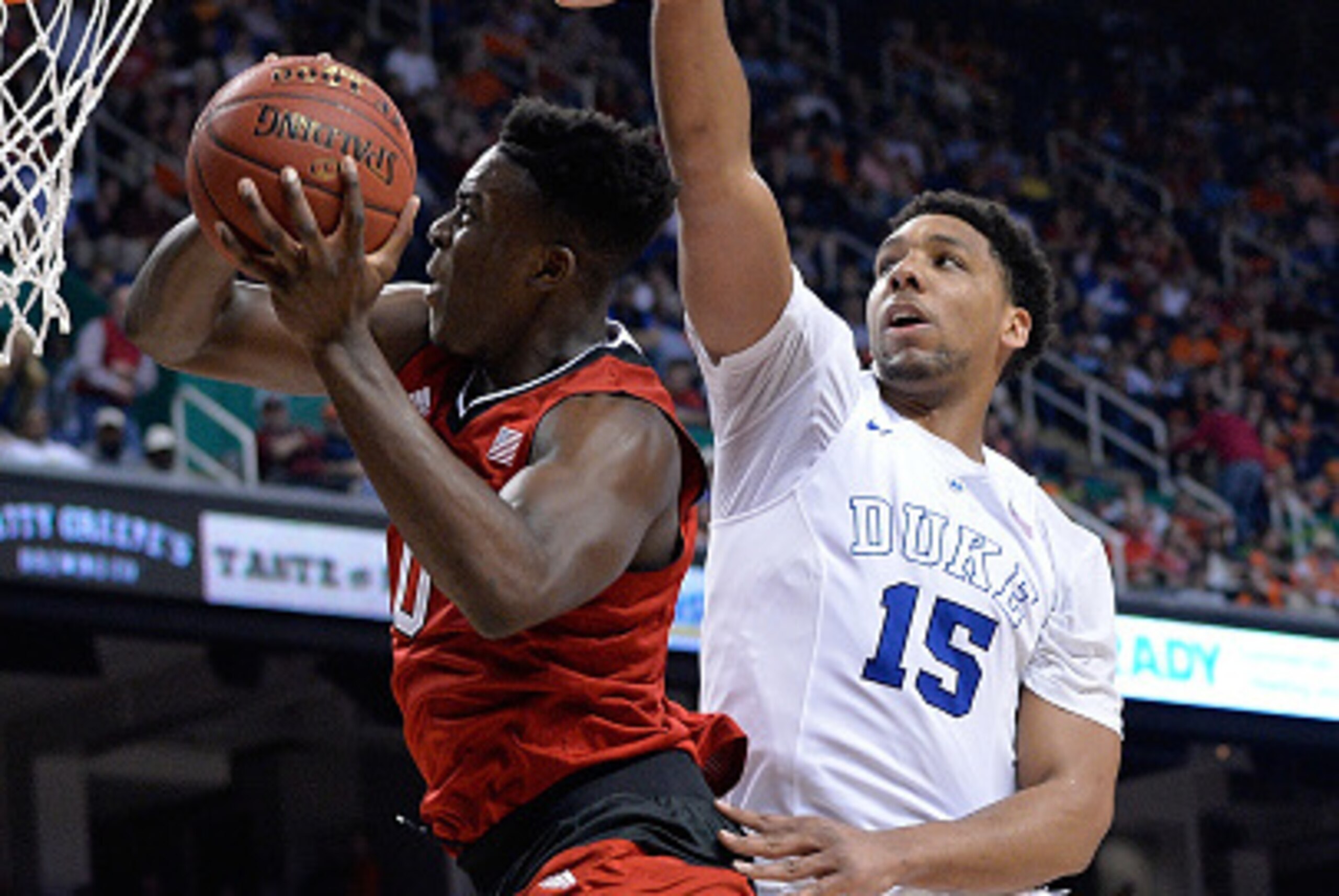
How do we weigh Okafor's current defensive issues with his unstoppable low-post game?
He's as good from elbow to block as anyone we've seen in years. Becoming a 20-point-per-game scorer in the pros seems like a good possibility. But if he doesn't improve defensively, how will it affect his on-court value? Al Jefferson, Brook Lopez and Nikola Vucevic are all terrific offensive NBA players. But they aren't quite franchise centerpieces, and you can probably tie that to their minimal defensive impact.
Is Okafor like one of those players? If so, there might be better options for the eventual lottery winner to choose from.
Then again, his 270-pound body and 7'5" wingspan are built for the interior. If Okafor ends up improving his awareness, effort and mobility, we're going to look back at the 2015 draft conversation and wonder how anyone could have ever thought about passing him up.
How high is Providence freshman point guard Kris Dunn's ceiling?
Kris Dunn's bounce-back year has been a phenomenal story. A highly touted recruit out of high school, he struggled as a freshman before needing season-ending shoulder surgery. When he needed another one just four games into the 2013-14 campaign, he was all but written off as a future NBA player.
“A lot of bad thoughts were running through my head,” Dunn told Sports Illustrated's Brian Hamilton. “I didn’t know if I could play again or not.”
But after returning in 2014-15 to put up 15.8 points, leading the nation in assist percentage, per Sports-Reference.com, and carrying Providence to a No. 6 seed in the NCAA tournament, Dunn has officially entered the discussion.
At 6'3", 205 pounds with terrific quickness and athleticism, he aces the pro eye test. He's even been a difference-maker on defense, ranking No. 4 in the country in steal percentage.
But he's struggled against notable competition, having put up a dud against Kentucky, shot 3-of-9 from the floor against Notre Dame and a combined 9-of-30 in two regular-season games against Villanova.
Dunn has also had trouble with shooting range and consistency (26 made threes on 34.7 percent), and only one other player in the country averages more turnovers.
However, an optimist recognizes room for improvement with the jumper (42.2 percent on two-point jumpers, per Hoop-Math.com) as well as his 27.8 percent usage rate—a possible reason for all the turnovers.
He really looks like a lottery talent if you can overlook strength of schedule and ultimately write off his weaknesses as temporary. But can you? And if so, how much? That's a question likely to be on every scout's mind as draft day approaches.
Is Utah freshman center Jakob Poeltl worth reaching on?
Due to his 7'0" size, mobility and interior instincts in the paint, Poeltl jumped out early as a freshman prospect to watch. His physical tools alone make him draftable in the first round.
But Poeltl takes just 5.3 shots a game and averages 8.7 points, showing very little ability to create in the post or make shots around the key (43.8 percent from the line).
On the other hand, he shoots 67.3 percent from the floor and sports an 18.5 percent rebounding percentage and an 8.1 percent block percentage—both terrific numbers.

He's clearly a few years away from being NBA-ready, but once he is, his presence in the paint should hold plenty of value.
So how high should teams look to select him in the draft?
Poeltl is entering the NCAA tournament on a high note—he's scored at least 16 points in two of Utah's last three games. I'd imagine the buzz will pick back up again if he plays a major role in a Utes run.
But it will be tough to get a feel for his stock if he's quiet and Utah goes down early.
Notables
- I bet scouts wouldn't mind an Arizona-Ohio State third-round matchup that would feature Buckeye freshman guard D'Angelo Russell and Wildcat freshman wing Stanley Johnson. Both are currently in the top-five conversation. Even if Johnson doesn't guard Russell, sophomore Rondae Hollis-Jefferson, an NBA-level defender, very well could.
- If Purdue can win its first game and reach the third round, Karl-Anthony Towns could have his hands full with A.J. Hammons, a 7'0", 261-pound junior playing some pretty good ball. This would ultimately be a huge opportunity for Hammons, who's been trying to sell himself as an NBA prospect for three years now. A good showing against Towns and junior Willie Cauley-Stein could seal the deal.
- Since returning from a hand injury that cost him eight games, Virginia junior wing Justin Anderson has been held without a field goal against Florida State and North Carolina. Virginia obviously needs himif it plans on making a serious run. But he could also use a strong showing for his stock, given his status as a fringe first-round prospect.
- The second-round matchup between Indiana and Wichita State features several guard prospects: junior Yogi Ferrell and freshman James Blackmon Jr. for the Hoosiers and juniors Ron Baker and Fred VanVleet for the Shockers. Blackmon and VanVleet would be better off returning, but all four could be competing for second-round draft position, whether it's this year or the next.
- Will Texas freshman big man Myles Turner show up for the tournament? He's coming in having scored eight points or fewer in four straight games. He plays mostly away from the basket, and therefore doesn't see too many easy-bucket opportunities, a reason for his inconsistency throughout the season. He's a potential top-10 pick, but a zero-impact postseason could leave a sour taste in scouts' mouths entering the pre-draft process.
Jonathan Wasserman is the Lead NBA Draft writer for Bleacher Report. Follow him on Twitter @NBADraftWass


.jpg?w=2560 "Love's Body Already 'Tired'")
.jpg?w=2560 "Tyreek Deal May Come Soon")
.jpg?w=2560 "Ward Nearly Walks Out of Presser ▶️")

.jpg?w=2560 "NFL investigating 2 referees for separate viral exchanges")