

Duke's Blueprint to Win the 2015 NCAA Tournament
Duke always rolls heavily into the March Madness tournament. This season is only a partial exception.
The Blue Devils have done their part, winning 12 straight games before Notre Dame bumped them off Friday in the semifinals of the ACC tournament. They also held the No. 2 national ranking for a good bit of the regular season, which is a testament to their consistency.
The exception lies in the fact that they, along with everyone else, are looking up at a single juggernaut. Can anyone stop the Kentucky Wildcats?
We'll see. But Duke is formidable in its own right, as are plenty of other teams on its horizon. Duke is great but not infallible, and the team will need to be on its game. Something tells me the Blue Devils already know that.
Here's what they'll need to do to survive, advance and, eventually, win the whole dang enchilada.
Overcome the Hack-a-Jahlil
1 of 5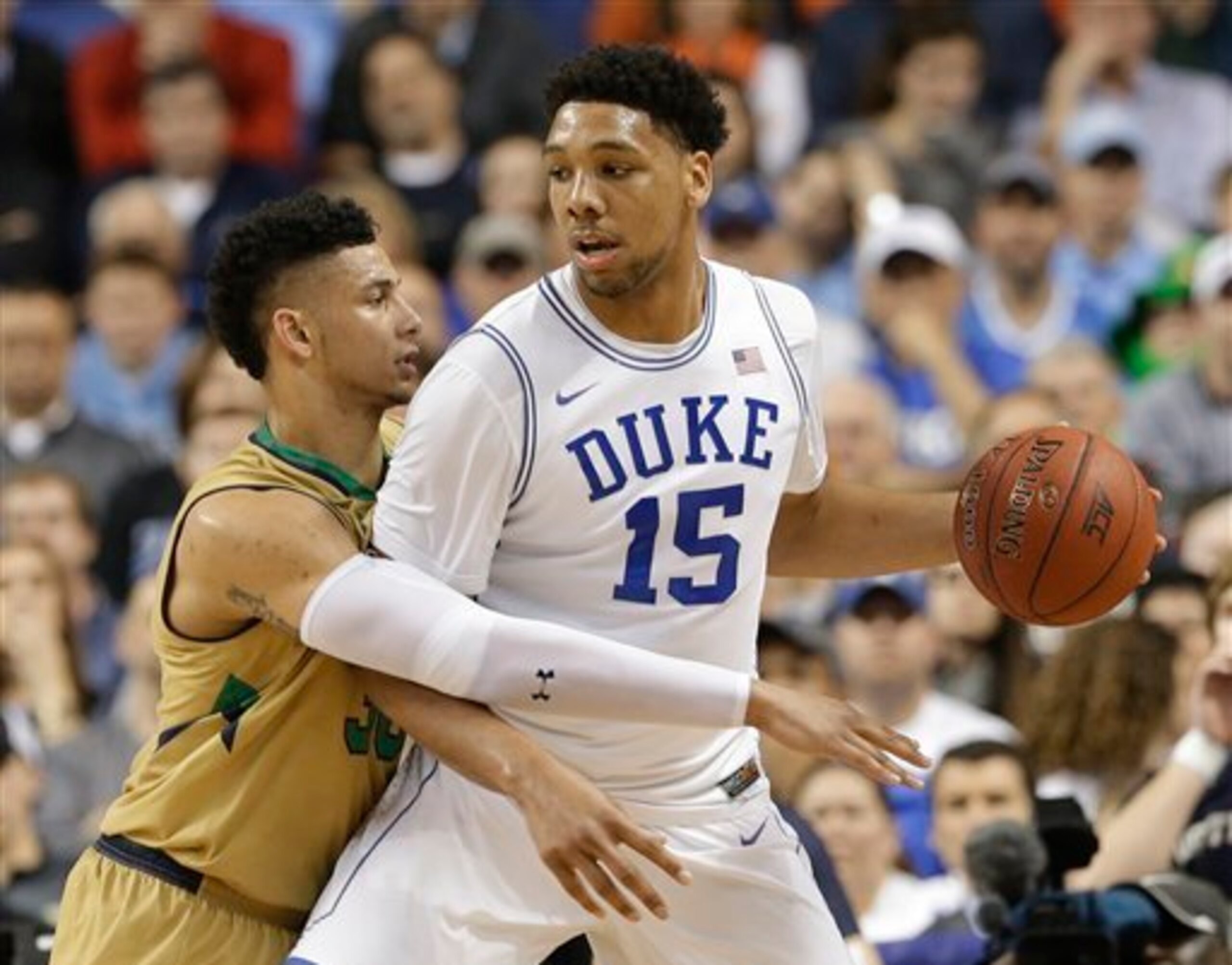
Everyone understands that Jahlil Okafor is the man for Duke. The dominant freshman center leads his team (and a lot of other teams) in scoring (17.7), rebounding (nine) and field-goal shooting success (an astounding 67 percent from the floor). Okafor alone accounts for 22 percent of the Blue Devils' offensive output.
With all those moves and all that power, it's clear he's going to get his. He has failed to break the 10-point mark in only one of his appearances this season.
But even mighty Achilles had a bum heel. Okafor struggles from the free-throw line, averaging a meager 51 percent from the stripe.
Notre Dame neatly exposed that weakness Friday night, sending Okafor to the line several times and watching him hit only two of his eight attempts there.
Teams with a wealth of big bodies can send guys after Okafor in waves. If he starts to warm up, start hacking. As teams and their defenses really screw down, this might start to happen more.
It's unlikely Okafor will magically find an outstanding free-throw stroke at this point, but he'll need to do enough to keep the other guys honest. Meanwhile, his teammates will need to make opponents pay for collapsing on Okafor by hitting their outside shots.
Quinn Cook Gets Untracked
2 of 5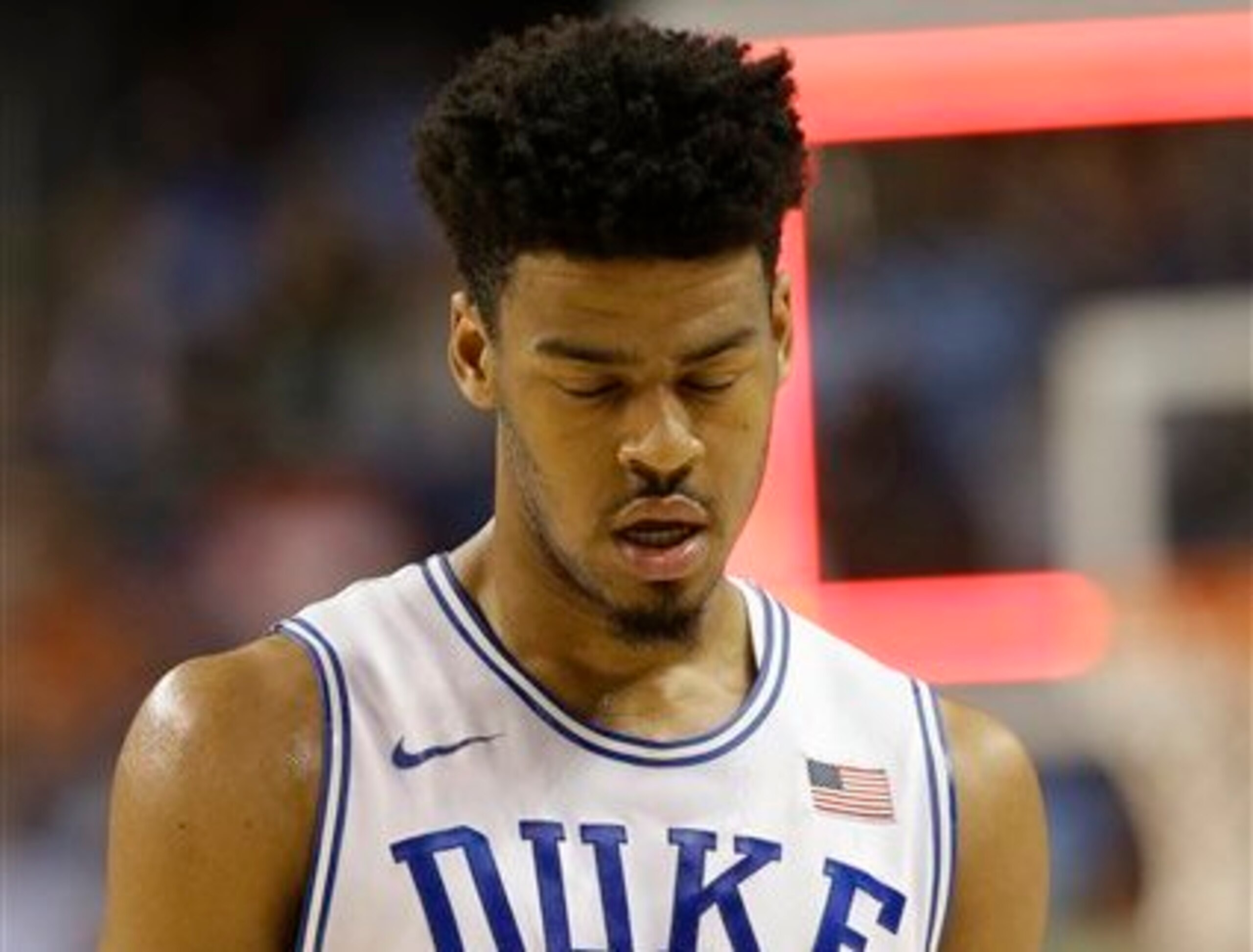
Quinn Cook is relatively unheralded on the national stage. With Tyus Jones now running the team and Okafor a constant in every Player of the Year conversation for which he is eligible, it's easy to forget about Cook.
But the senior from Washington, D.C., is the team's second-leading scorer (15.7 points per game) and a strong stabilizer in the Duke backcourt.
At the same time, though, Cook appears hampered by a mini-slump. Over the past five contests, he has averaged 14.4 points per game. More alarmingly, his shooting percentage is 37 from the field and 31 from three-point range, both significantly down from his season averages of 45 and 40, respectively. That's not a good statistic, particularly for a player and a team that make their living beyond the arc.
Those struggles seem exacerbated by tenacious and/or unusual defenses, like those presented by Syracuse or Notre Dame. The Blue Devils will need him to snap back into top form if they want to pull down this hardware. As Jon Rothstein of CBS Sports observes:
"Cook's willingness to play off the ball, allowing Jones to run the team, has been a key for Duke. ... Jones and Cook never turn the ball over. ... That makes the Blue Devils hard to rally against because they won't beat themselves.
"
Experience and Chemistry
3 of 5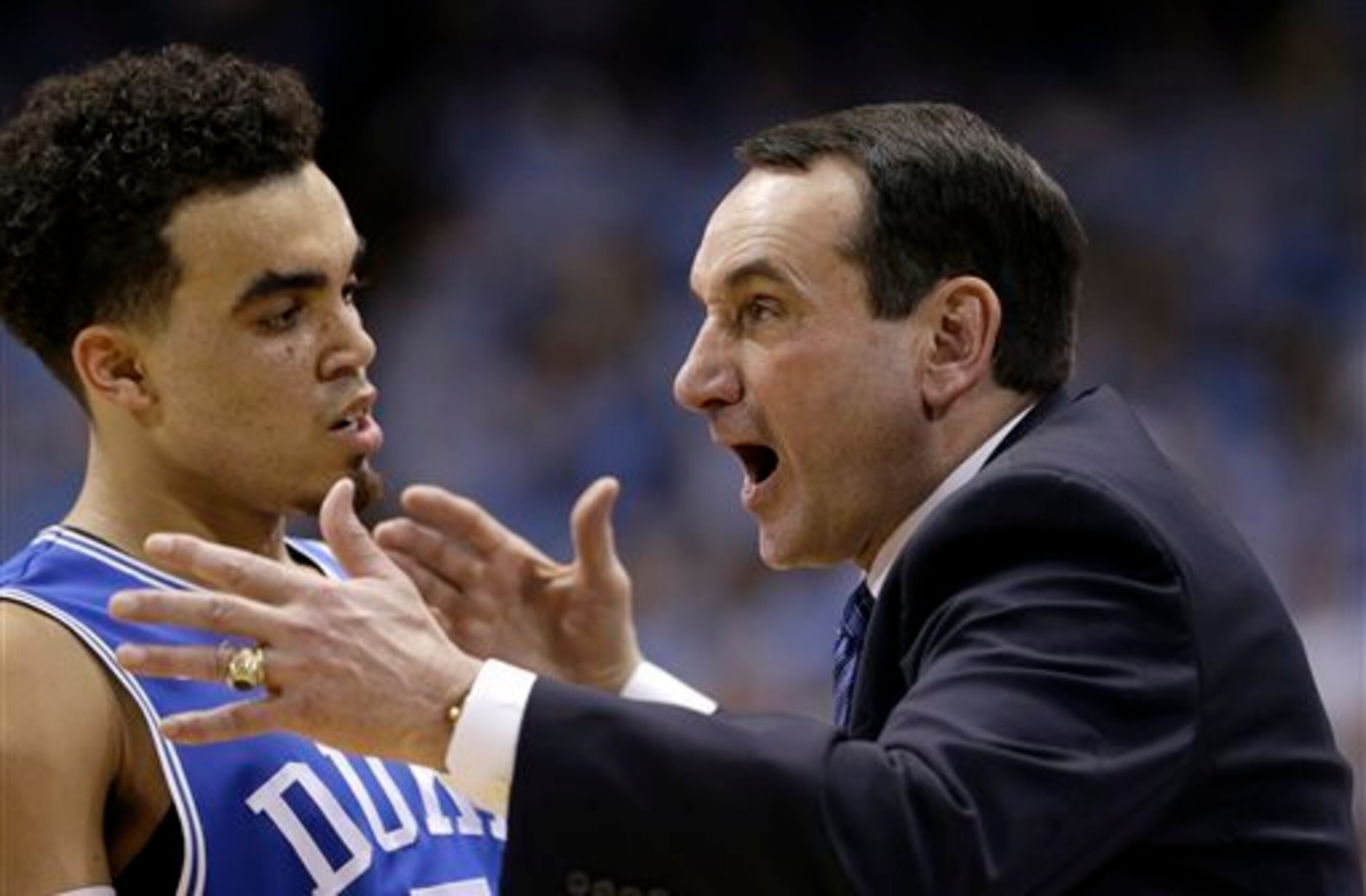
At first blush, this might appear to be an overly "fan" thing to say. And hey, maybe it is.
But Duke follows the same trend as the rest of the sport: Three out of five of its starters (Okafor, Jones and Justise Winslow) are freshmen.
By all accounts, the Blue Devils are a fairly close-knit bunch, getting together for laser tag and other, more formal team-building activities. Having the nation's best college basketball coach in your corner doesn't hurt anything, either.
Still, March Madness has a way of rewarding teams whose members play for the name on the front of their jerseys as opposed to the back. It's a cliche because it's true. It also has a way of rewarding teams with poise and experience.
Okafor and Jones are both almost certainly one-and-done in Durham. There is a ton of talent here. But the fact is, they've never been in this situation before and probably never will be again.
If they remain poised and their chemistry remains intact, Duke players have nothing to worry about here. But if there are any hairline cracks currently invisible below the proverbial armor, this pressure cooker will turn them into full-blown fault lines.


Tighten Up the Defense
4 of 5
As a team, Duke has had trouble stopping other teams.
That's just the way it is.
Sure, the Blue Devils have had a tough schedule, but the 65.6 points they surrender per game on average has them at 146th nationally in that category, behind other ACC also-rans like Clemson and Georgia Tech.
And they are only sixth in the ACC in total rebounds per game with 37.3, and that's despite them having the conference's second-leading individual rebounder in Okafor.
Duke has typically stopped other teams by forcing steals and pressure. But this season, that has come at the expense of consistent on-ball defense in half-court situations. The young players in particular seem to be in over their heads at times and don't have the raw physicality to compensate for those freshman mistakes.
If the Blue Devils want to beat the best teams in the nation, they'll need to shore something up on this end of the floor.
Supporting Cast Takes a Lead Role
5 of 5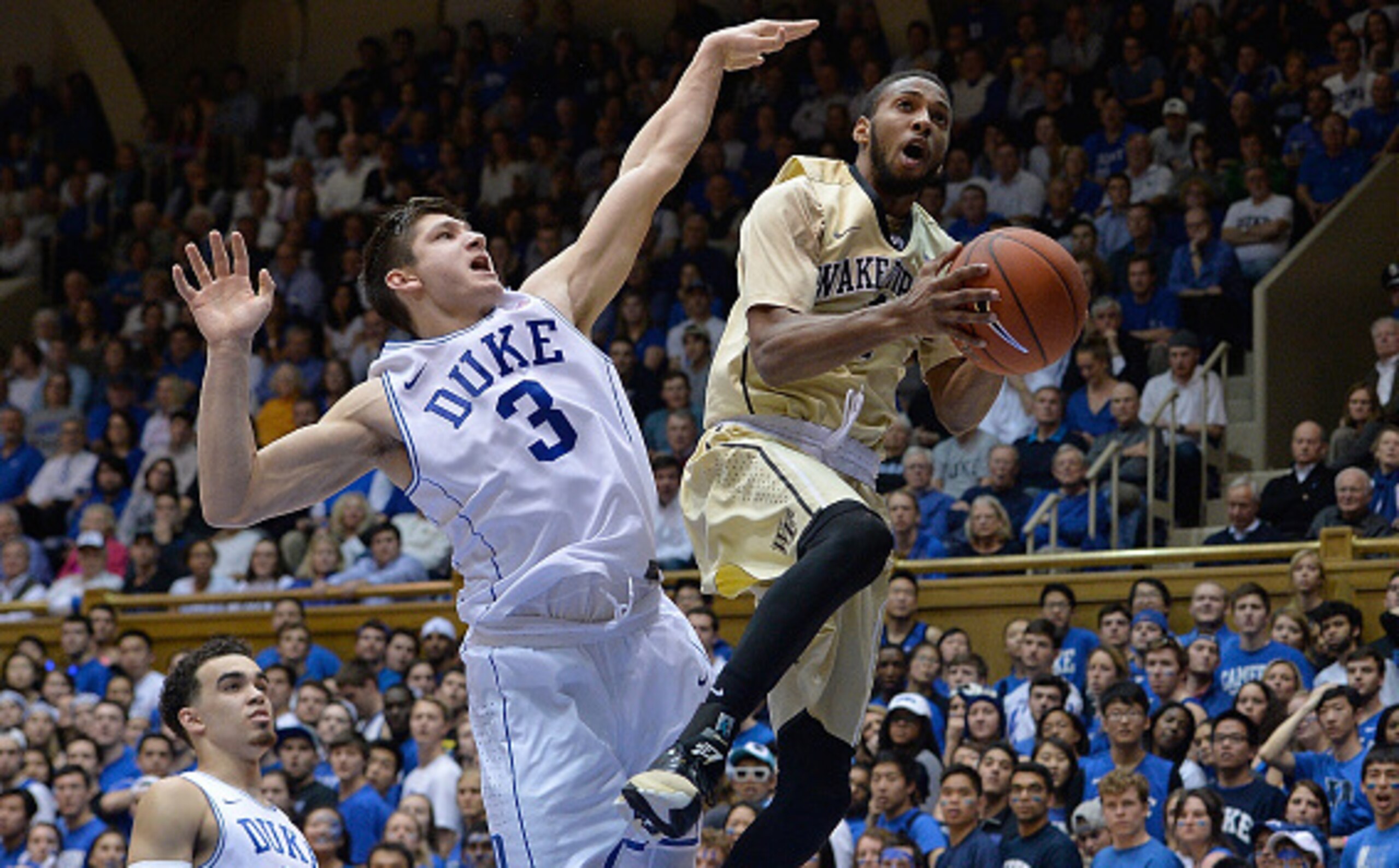
This is not the deepest of Duke teams, especially after guard Rasheed Sulaimon—averaging 7.5 points, two assists and two rebounds in 19 minutes of play per game this season—was unceremoniously dismissed from the team in January.
As it stands, only six players are averaging 20 minutes or more of PT per contest, while 71 percent of the team's scoring comes from just four: Okafor, Quinn Cook, Justise Winslow and Tyus Jones.
That puts plenty of pressure on those who round out that thin rotation, such as freshman guard Grayson Allen and center Marshall Plumlee. They've performed well at times—emphasis on "at times." Allen, for example, exploded for 27 points in a blowout win over Wake Forest, but he went scoreless in the loss to Notre Dame.
"It wasn't really me waiting for a chance. It was just me being able to translate it in the game from practice," Allen told ESPN.com's C.L Brown after the Wake Forest win. "Coach has been giving me opportunities. I was able to capitalize today, and thankfully so. This is the kind of game that can get my confidence going."
If Duke wants to make a run all the way to the end, it will need that confidence (not to mention all the other aspects of the game) to get going again for everyone on the bench. That will not only provide an indispensable production boost, but keep the big hitters from suffering fatigue or the undivided attention of top-level defenses.
Statistics courtesy of ESPN.com.
.jpg?w=2560 "Cardinals Giants Football")
.jpg?w=2560 "Tyreek Deal May Come Soon")
.jpg?w=2560 "Ward Nearly Walks Out of Presser ▶️")
