

Virginia Cavaliers' Blueprint to Win the 2015 NCAA Tournament
Virginia heads into the NCAA tournament with another lofty seed, just like last season, but without the same momentum it had a year ago. The Cavaliers have lost two of their last three, falling in the ACC semifinals after starting out 28-1.
But the records get reset now that the Cavs are back in the Big Dance, and as a No. 2 seed, they're still among the favorites to make the Final Four.
How will that happen? Simple, Virginia just needs to follow this handy road map that we've put together.
Justin Anderson Returns to Form
1 of 5Virginia hasn't been the same team since junior guard Justin Anderson went down with a broken finger. And it's not been much better since he returned last week from that injury and an emergency appendectomy that prevented him from coming back sooner.
Anderson is the Cavaliers' best shooter, particularly from outside, hitting 46.9 percent of his three-pointers. But in his two appearances during the ACC tournament—totaling 26 minutes off the bench—he missed all three three-point attempts and failed to score in either game.
The Cavs shoot 36.1 as a team from three-point range, but without Anderson that rate is down to 33 percent. The finger isn't healed to the point that he can handle the ball as well, but with more time to get used to the bandage on his hand, Anderson should improve.
If not, Virginia's offensive struggles will continue.
London Perrantes Gets Involved
2 of 5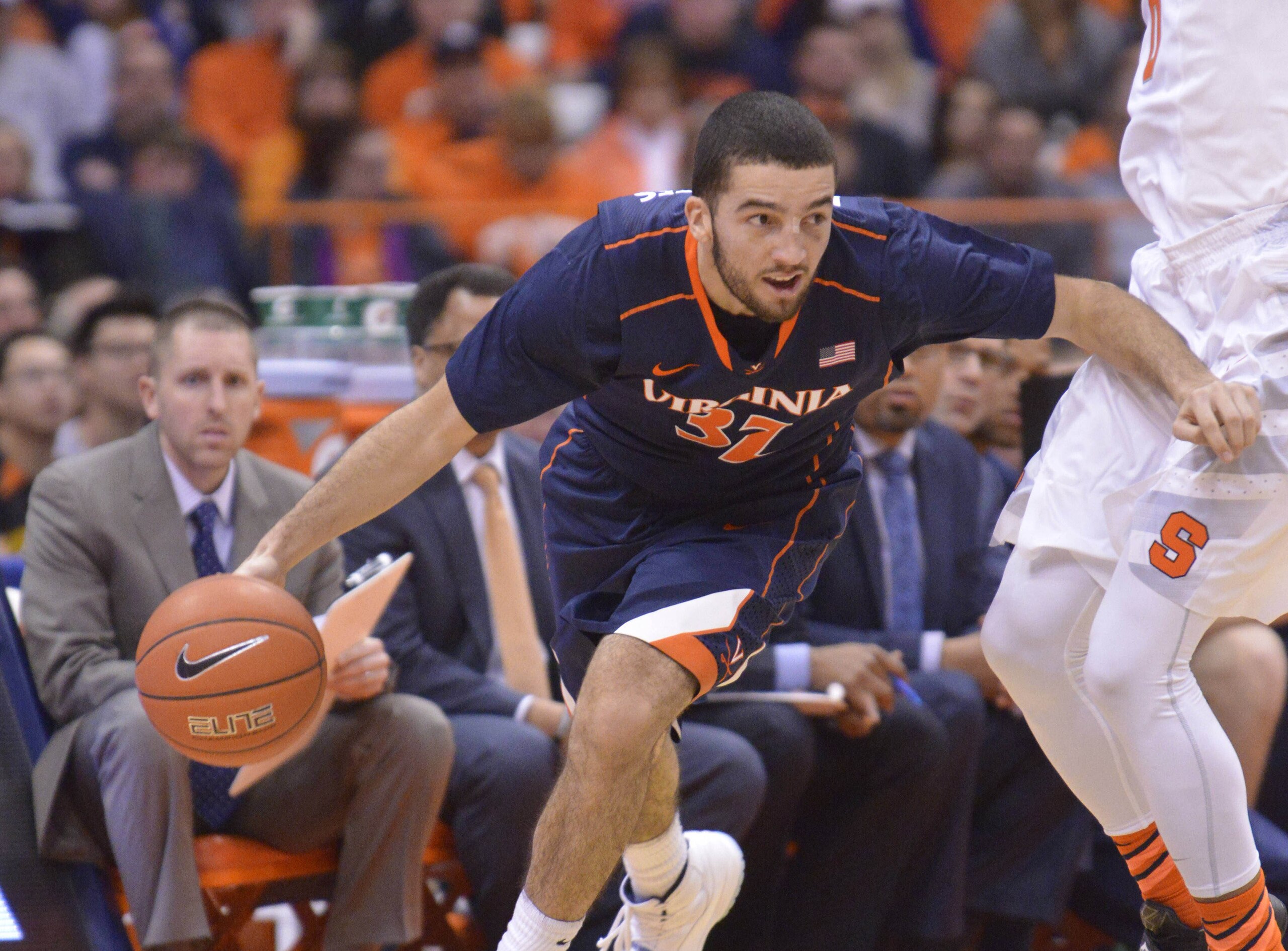
London Perrantes is not a scorer, but he can be. It's just a matter of coaxing Virginia's point guard into looking for his own shot instead of focusing solely on creating for others.
The 6'2" sophomore averages only 6.4 points per game, slightly up from his 5.5 rate as a freshman. He attempts less than six shots per night, compared to the 4.8 assists he contributes as the Cavaliers' leading assist man.
Yet sometimes he busts out a big scoring game, such as when he went for 26 points in a double-overtime win at Miami (after scoring 24 points in the previous nine outings) and went to the line 12 times. He's becoming more involved in that area, reaching double digits six times since the beginning of February and three times in five games since returning from a one-game absence after suffering a concussion and broken nose.
Perrantes' value is best felt as the person who orchestrates Virginia's offense, but the more he can contribute to that overall performance the better.
Malcolm Brogdon Takes Over
3 of 5
Trailing by 13 points early in the second half on Friday, the only way Virginia was going to have a chance to come back against North Carolina was for Malcolm Brogdon to put the team on his shoulders and go crazy.
The Cavaliers didn't win, but it wasn't because of Brogdon. After starting the game 1-of-6 for three points, the junior guard went off for 22 points on 8-of-12 shooting that included three three-pointers. He had all but 13 of Virginia's points over the final 15:34, nearly single-handedly leading the comeback.
At 13.9 points per game, Brogdon is Virginia's scoring leader, but his importance extends far beyond scoring. He's the best of the team's many great defenders, yet when he's able to score in bunches, it takes his game to another level.
Especially with Justin Anderson still coming along slowly in his return from injury, Brogdon's scoring punch becomes even more important. He needs to continue to take games over when the time is right.

Have the Defense Create the Offense
4 of 5
The complaints that college basketball has gotten hard to watch because scoring is down often revolves around teams like Virginia, which has been involved in six games where less than 100 total points were scored. But that's who the Cavaliers are, and why should they change to please others?
With its swarming pack-line defense, Virginia doesn't need to score 70 points to ensure victory each game. It might not be the most exciting style of play, but the Cavaliers have their way and do it better than anyone else in the country.
Yet the desire to be more explosive on offense has led to some defensive breakdowns against up-tempo teams, a formula that won't work. Virginia has gotten this far by imposing its will on opponents, yet when they allow their foe to dictate the pace—and even worse, try to match it—this does more harm than good.
The Cavaliers don't need to try and look as pretty as the other teams in the field, just better. And that will be done with defense, which will lead to plenty of its own scoring opportunities.
Avoid Scoring Droughts
5 of 5
Few teams have had the ability to withstand lengthy periods without any offensive production like Virginia has, but this cannot continue if it wants to win it all. No matter how good their defense is, the Cavaliers must not go through extended scoreless stretches.
In an early-March trip to Syracuse, Virginia registered a whopping two points over the first 13:53, with its first 17 possessions resulting in nine missed field goals, two missed free throws and nine turnovers. The Cavs ended up scoring on their final nine possessions of that first half and won going away.
Don't expect a similar drought in the NCAA tournament to be so easy to come back from. As a higher seed, the non-Virginia fans in the crowd will be rooting for whoever is wearing the other uniform, and if the Cavs aren't scoring, those cheers will get even louder.
Follow Brian J. Pedersen on Twitter at @realBJP.
.jpg?w=2560 "Cardinals Giants Football")

.jpg?w=2560 "Tyreek Deal May Come Soon")
.jpg?w=2560 "Ward Nearly Walks Out of Presser ▶️")
