

Kansas Jayhawks' Blueprint to Win the 2015 NCAA Tournament
Kansas was unable to win the Big 12 tournament, but the Jayhawks have far bigger goals in mind. Despite eight losses, they have a high seed and the kind of talent that can return them to the Final Four for the first time since 2012.
But it will take more than just having good players and running a system that coach Bill Self has converted into more than 550 victories. Kansas has to do certain things—and make sure other things don't happen—in order to avoid another early exit like when it fell to Stanford in the third round of last year's NCAA tournament.
Click through to see what we think are the steps the Jayhawks must take to win it all.
Learn Cliff Alexander's Fate
1 of 6While by no means Kansas' most important player, freshman forward Cliff Alexander has provided valuable minutes at times this season thanks to his rebounding ability and presence on defense. But the Jayhawks haven't had access to those attributes for the past two six games since the team held him out amid an NCAA investigation over improper benefits his family may have received.
The 6'8" Alexander was averaging 7.1 points and 5.3 rebounds in 17.6 minutes, but he hasn't played since Feb. 23.
Kansas coach Bill Self has said he's been preparing as if Alexander won't return, but knowing that for certain could help resolve things and ensure the Jayhawks' plans going forward don't call for his assistance.
"If we have him, it'll be a bonus,'' Self told Dave Skretta of The Associated Press (h/t Yahoo Sports). "But I'm not going to let it be a distraction to the team. It'll be a bonus if we get him, but I'm certainly—after being around the situation the last couple weeks and there hasn't been any movement—I'm not holding my breath."
Without Alexander, Kansas has given more minutes to 6'10" junior Cliff Alexander, an Arkansas transfer, but he's only managed 3.2 points and 2.0 rebounds per game.
Turn to the Veterans
2 of 6
Big-name teams like Kansas rarely have impact upperclassmen, not with the way top players so quickly turn to the NBA. The Jayhawks have a lone senior walk-on and just four juniors, so the use of the term "veteran" is relative.
It more speaks to players who have been through this before, and Kansas has several of those. Despite a freshman- and sophomore-heavy roster, the Jayhawks have veterans who need to step up at this time of the season, starting first and foremost with juniors Perry Ellis and Jamari Traylor.
The 6'8" forwards have had vastly different roles this season, with Ellis leading the team in scoring (13.8) and rebounding (7.0) while Traylor has been in and out of the starting lineup depending on matchups and performance.
Last year each had a performance in the NCAA tourney that greatly contributed to Kansas' fate. Traylor was 7-of-8 from the field and had 14 rebounds in the opening win over Eastern Kentucky and then made just one of 8 shots in the third-round loss to Stanford while Ellis scored 14 with 13 boards in victory and was just 3-of-10 in defeat.
As much as Kansas is dependent on its underclassmen, it needs veteran leadership just as much in order to be successful.
Get Consistent Play from the Point
3 of 6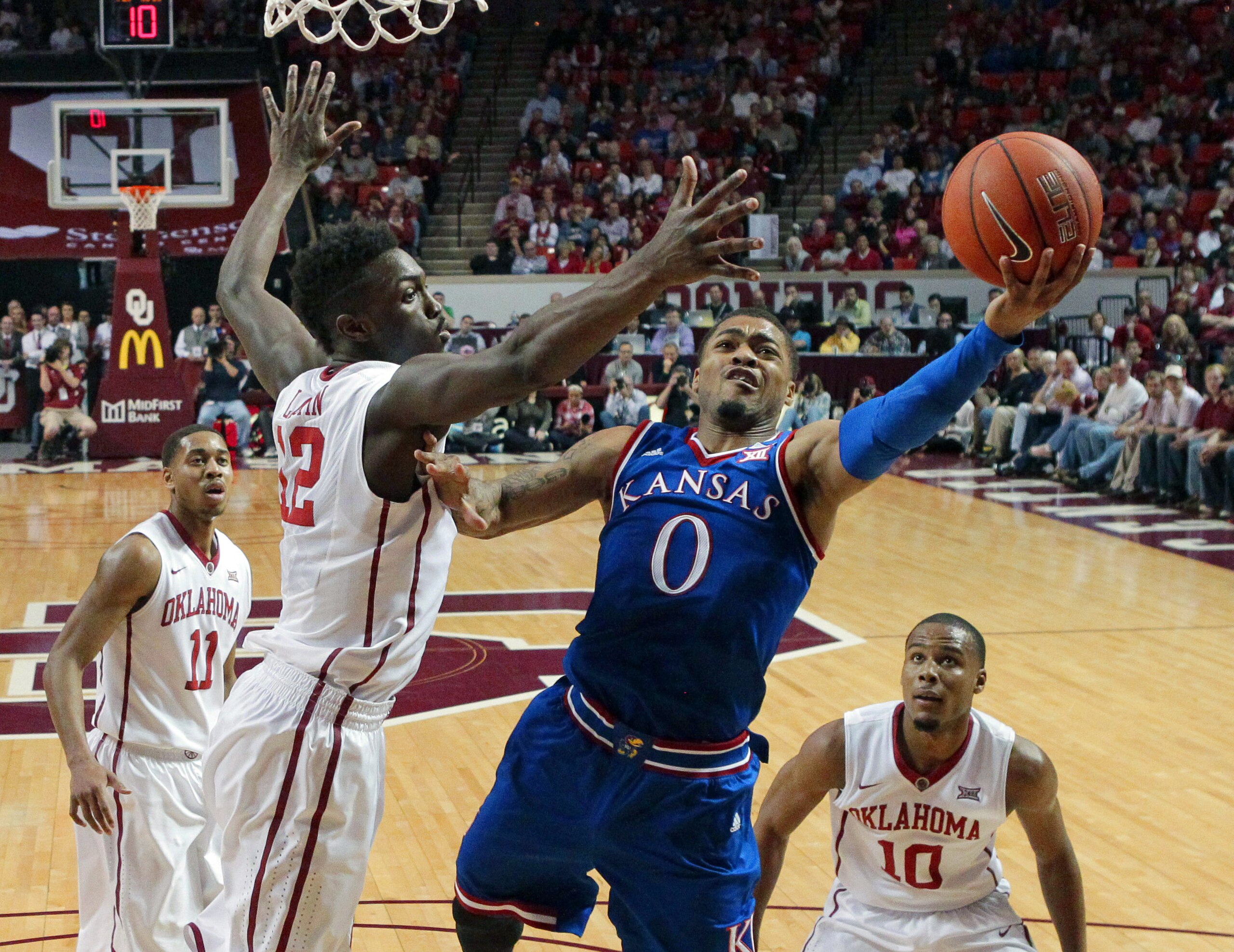
Kansas' biggest weakness is its guard play, particularly at the point. The combo of sophomore Frank Mason III and freshman Devonte Graham have looked good at times and lost in others, and that lack of consistency out on the perimeter has been a key factor in the Jayhawks' struggles this season.
Mason was 8-of-31 from the field during the Big 12 tournament, including 2-of-11 in the title-game loss to Iowa State, and his 4.0 assists per game is the lowest output for a Kansas point guard in any of coach Bill Self's 12 seasons. Graham has been just as inefficient, and his 39.8 percent shooting has been a problem all season.
As the NCAA tournament moves forward, guard play will be more and more important for teams making deep runs. Connecticut, Florida, Kentucky and Wisconsin all thrived in that area to make the Final Four last season, while teams like Kansas who didn't have good ball-handlers were knocked out early.

.jpg?w=2560)

Let Kelly Oubre Take Charge
4 of 6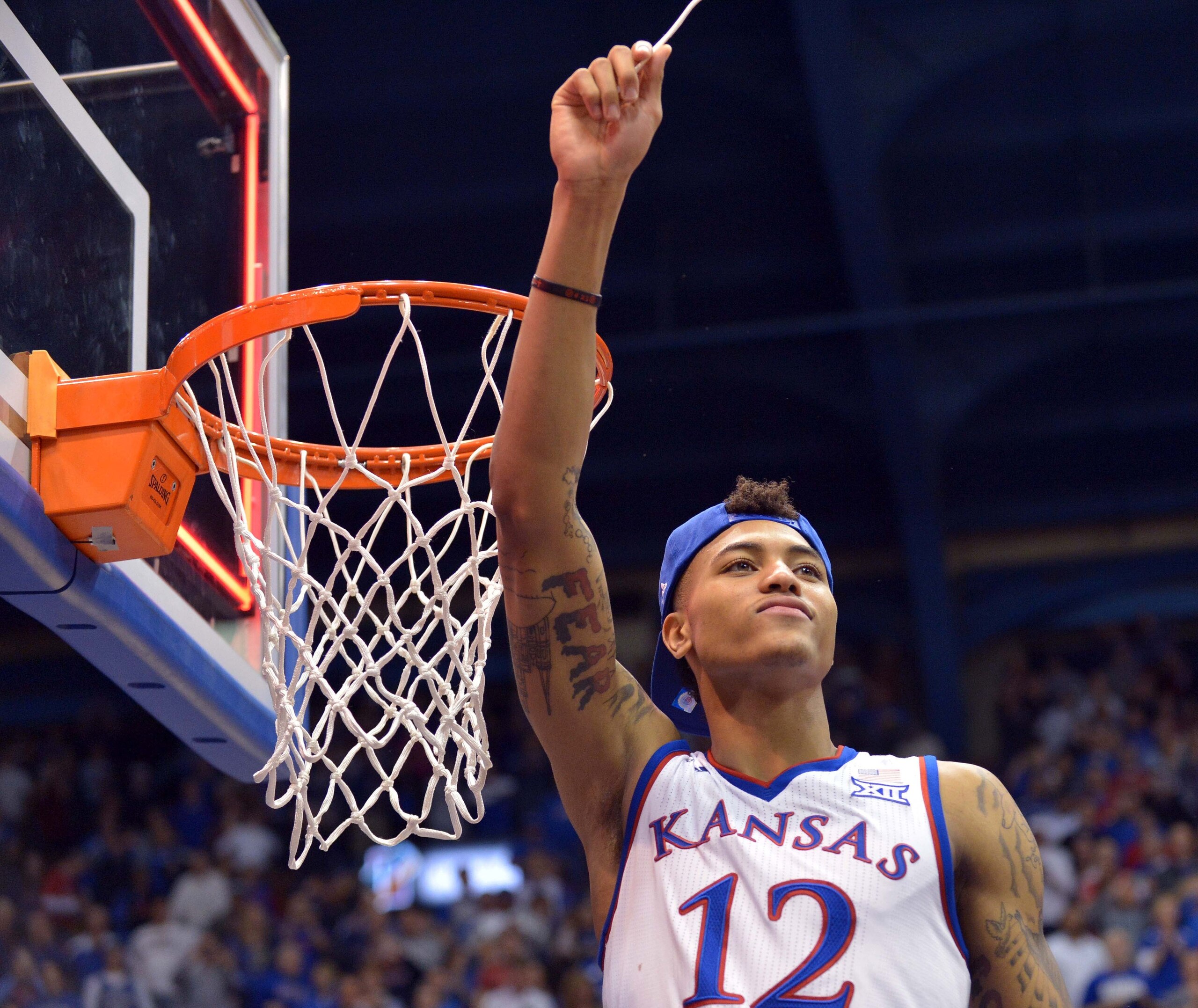
As he hardly played during the first month of the season, all of the expectations that Kelly Oubre came to Kansas with seemed like they were going to come up way short. It turns out Bill Self was just waiting for the highly touted freshman to show he could put in the effort needed to be a key participant, and once he saw that he turned Oubre loose.
Oubre had just 15 points and played only 58 minutes in Kansas' first seven games before breaking through with 23 points in 25 minutes against eventual Patriot League tournament champion Lafayette. Since then it's been a near-constant upward trend for the 6'7" wing, but when he has struggled the Jayhawks have followed suit.
Oubre carried Kansas in its Big 12 quarterfinal win over TCU, going to the line 19 times and making 15 free throws in the 64-59 victory. But he fell off in the next two games with just 12 points combined against Baylor and Iowa State, and he only played 17 minutes in the conference final while going 1-of-3 from the field.
The key for Oubre is showing fire, not just going toward the basket but also fighting for loose balls and showing defensive intensity.
"Oubre's blend of long arms, quick-jumping ability and quick feet make for an ideal combination for a disruptive defender who deflects passes and stops dribbles," wrote Tom Keegan of the Lawrence Journal-World. "Those qualities also give him great potential as a rebounder. But as is the case with most freshmen, consistency has not been his forte."
It's time for any limitations Self still has put on Oubre to be taken off, as he's the guy who can dominate more than anyone else.
Find Brannen Greene's Shooting Touch
5 of 6
Kansas entered Sunday ranked 57th in the country in three-point shooting percentage at 37.5 percent, yet that statistic is quite misleading based on recent performance. They made five of 12 threes in the Big 12 final, but prior to that the Jayhawks had gone 11-of-71 in their previous six games.
Not surprisingly, this has coincided with the worst slump of sharpshooter Brannen Greene's season.
Greene, who makes a team-best 40.9 percent of his threes, is 4-of-28 from outside since Feb. 14. He missed 14 straight over a five-game stretch, including when he was suspended for the regular-season finale at Kansas because of "the culmination of him not being very responsible," according to Bill Self (per Rustin Dodd of The Kansas City Star).
Earlier in Big 12 play, Greene made 17 of 24 threes in a seven-game span when he was establishing himself as a dependable weapon off the bench. That's gone away, and Kansas needs a return to that form if it's going to make a deep run.
Stop Blowing Leads
6 of 6
Even as Kansas dominated the first half of the Big 12 title game then quickly built a 14-point halftime lead to 17, fans who have followed the Jayhawks all season knew not to start preordering those conference tournament championship T-shirts online—not based on how this team has so frequently given up huge leads in 2014-15.
Almost instantly, Iowa State made that 17-point lead disappear, knocking it down to two less than five minutes later before the Cyclones eventually won by four.
It wasn't the first time such a big lead went away so swiftly or even the second instance.
Kansas led by 19 points at halftime at home against Oklahoma on Jan. 19, yet it found itself behind in the second half before winning by seven. And in mid-December the Jayhawks had a 21-point lead against Utah only to have to hold on for a three-point victory. There were several other games where sizable edges went away without much time going off the clock as well.
The Jayhawks have turned it around and done the same too, but as promising as that ability is it doesn't take away from how troublesome allowing such big runs has been.
Follow Brian J. Pedersen on Twitter at @realBJP.



.jpg?w=2560 "Viral Rams Coach Vid 🖕")

.jpg?w=2560 "Injury-stricken Seahawks signing veteran RB")
