

2015 NBA Draft: Playing 'Go Pro' or 'Stay in School' with Fringe Prospects

Every prospect faces a decision at the end of his season. Knowing when to declare for the NBA draft versus when to return to school could ultimately make or break one's career.
Those who come out too early risk wasting important developmental years on the bench. The players who wait too late risk seeing their stock fall below first-round value.
The good news: According to ESPN.com's Andy Katz, there is a proposal in the works that would make that decision a little easier. The proposal would move the withdrawal date for American college players almost five weeks later than the current date late in April.
This would give prospects ample time to gauge their stock and get the proper feedback from the draft committee and teams.
We'll play the part of the committee in this case and offer advice to those who are most likely to be on the fence over the next two months.
Melo Trimble, Maryland, 6'2", PG, Freshman
1 of 12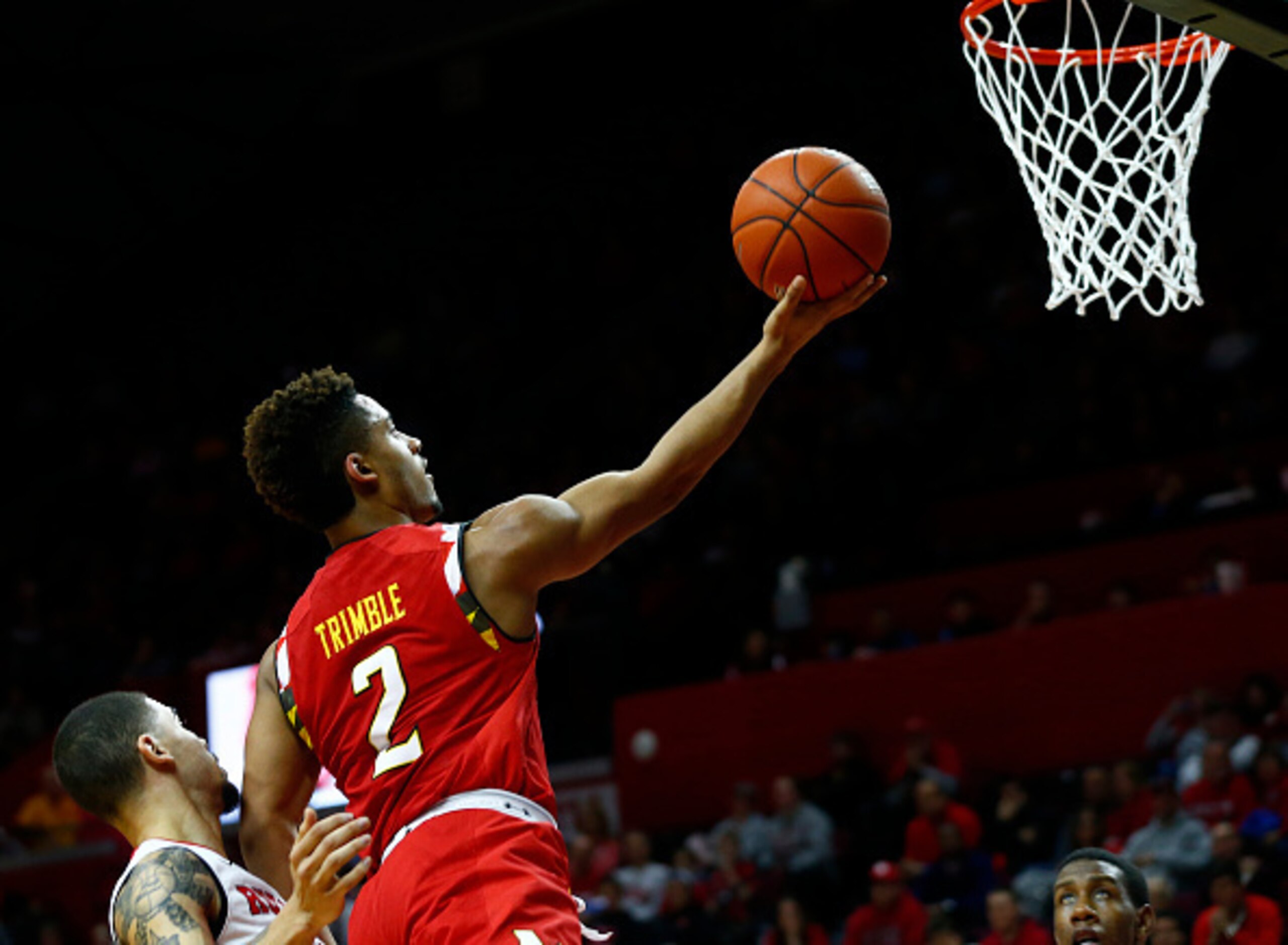
Advice: Stay in school
Despite averaging 16.1 points per game, the fourth-highest in the country among freshmen, and leading Maryland to a top-10 ranking, Melo Trimble still has work to do toward building his NBA draft stock.
Though always in attack mode, Trimble's ratio of 3.1 assists to 2.5 turnovers and minus-1.09 pure point rating, via RealGM.com, aren't exactly attractive statistics.
As tough as an off-the-dribble cover as he's become, he'll need another year to sell scouts on his table-setting ability and instincts. We know he can score—Trimble gets to the line a ton (8.4 times per 40 minutes) and shoots 39.1 percent from three. But general managers will likely be more concerned with whether or not he can pass and facilitate at 6'2", 175 pounds.
One more year at Maryland would allow him the chance to dominate in the Big Ten and improve upon his floor game as a point guard. Trimble would ultimately have 2016 lottery potential if he chooses to return.
Trey Lyles, Kentucky, 6'10", PF, Freshman
2 of 12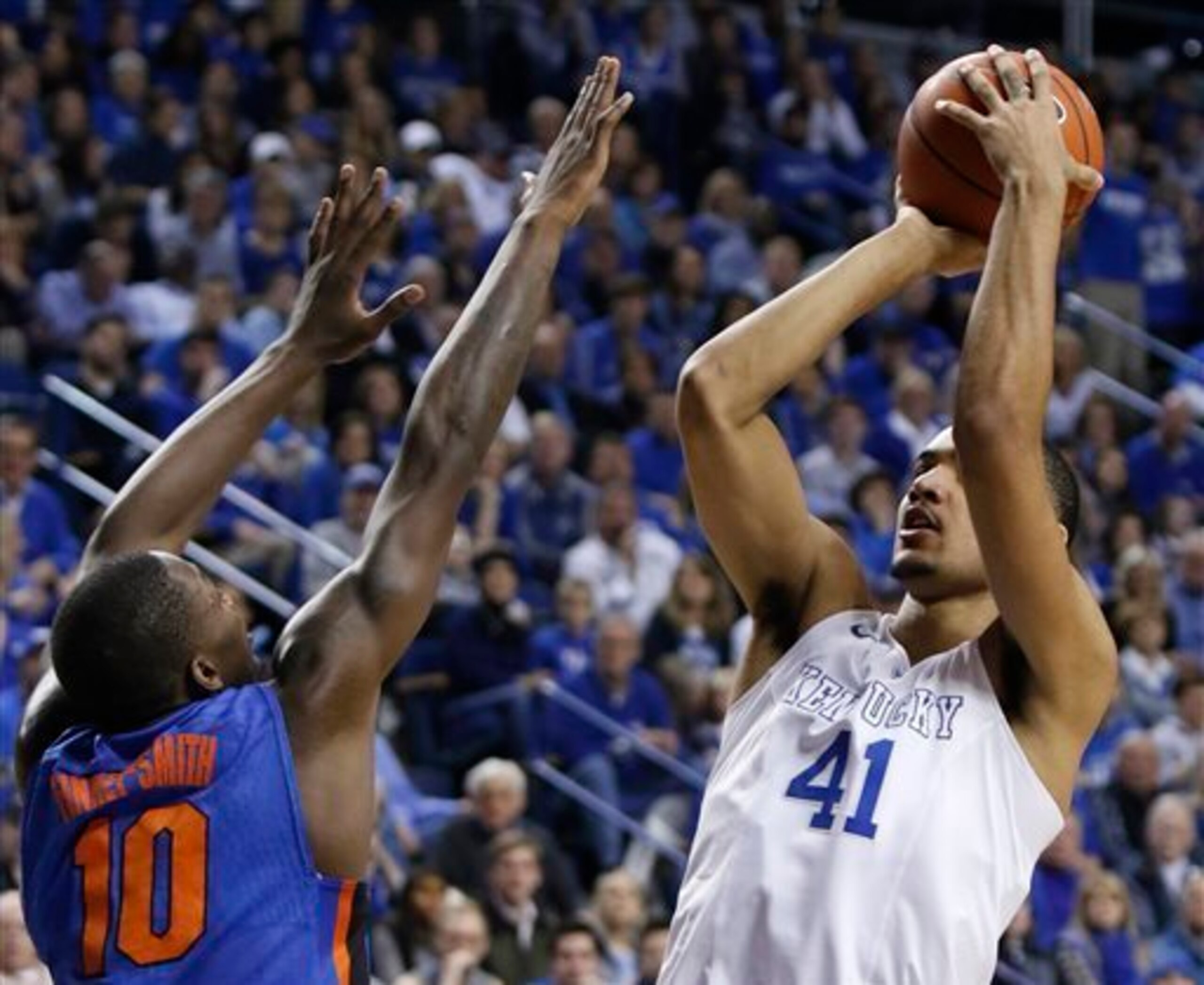
Advice: Go pro
Trey Lyles flashed it all as a freshman, from mid-range shooting and low-post scoring to finishing, passing and rebounding.
The two big knocks or fears when it comes to Lyles are average athleticism and questionable defense. And chances are he won't be able to improve on either too much in one more season at Kentucky.
Lyles would ultimately enter this year's draft with an established identity—a face-up 4 who can catch and shoot, attack closeouts or clean the glass. And maybe the most appealing thing about him is that he can do all those things within the flow of the offense.
Lyles doesn't need isolation or regular touches to be effective. Though he'll have to add muscle, Lyles' size, feel for the game and skill level might allow him to contribute sooner than most projected rookies.
I'm just not sure he has enough to gain by coming back to school. He seems locked into the first-round conversation with room to rise into the late lottery.
Terry Rozier, Louisville, 6'1", PG, Sophomore
3 of 12
Advice: Stay in school
Terry Rozier is having a productive year for Louisville—only his production hasn't come in all the right places.
Though he's averaging 17 points, NBA general managers won't be looking for a 6'1" scorer who takes 14.2 shots per game.
At Rozier's size, for him to maximize his potential, he'll have to show he can create for others and run an offense. And his ratio of 2.8 assists to 2.0 turnovers just isn't convincing.
With a potent blend of athleticism, quickness and strength, Rozier's potential would remain intact if he chooses to wait another year. There isn't much for him to lose by returning, unless, of course, he gets a 2015 first-round guarantee.
"If (Rozier's) going to be a first-round draft choice and it's guaranteed, he'll go. If there's some question, he won't," coach Rick Pitino told The Courier-Journal's Jeff Greer.
However, at this stage, I wouldn't bet on anyone making a promise to Rozier.
But with another year at Louisville—one without Chris Jones, the Cardinals' primary ball-handler before recently being dismissed from the team—Rozier will have a better opportunity to sell scouts on his facilitating and point guard potential.

Cliff Alexander, Kansas, 6'8", PF, Freshman
4 of 12
Advice: Go pro
Get out while you still can.
With questions over Cliff Alexander's eligibility and fit in Bill Self's offense at Kansas, there's no point in delaying his journey to the pros—even if it means declaring unprepared.
Although he's raw and unskilled, an underwhelming sophomore year could destroy his draft stock. Just look what it did to Chris Walker's of Florida. Like Alexander, Walker, a former McDonald's All-American and one-time projected first-round pick, missed time his freshman season due to eligibility issues. He returned as a sophomore, only to disappoint and completely fall off the radar in the process.
Alexander shouldn't take that risk. He should be looking to sell scouts on his athleticism, motor and the belief that at 19 years old, he still has plenty of room to improve.
Alexander might be better off developing and getting minutes in the D-League anyway, where the offense is less systematic.
Domantas Sabonis, Gonzaga, 6'10", PF, Freshman
5 of 12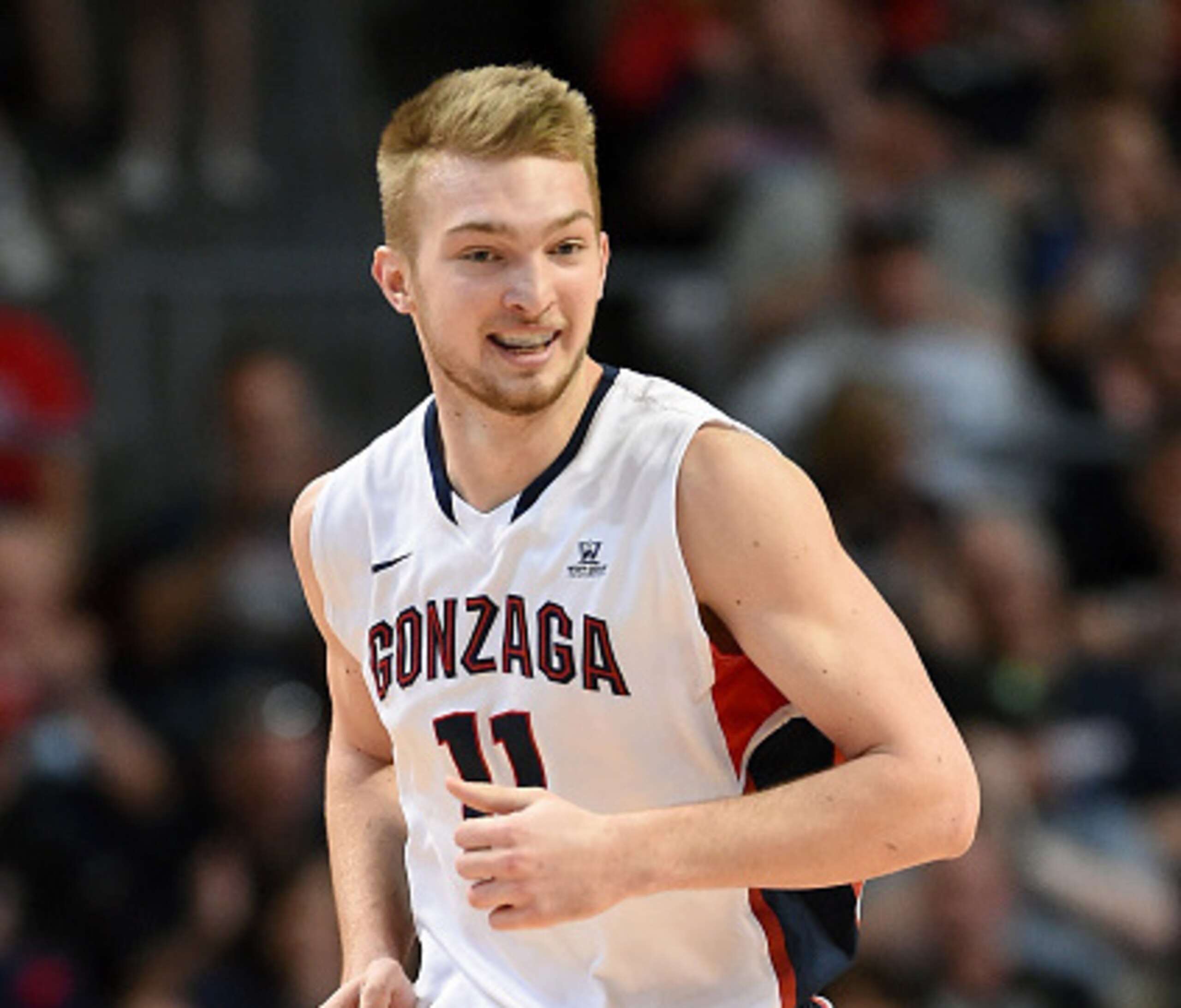
Advice: Stay in school
You can't miss Domantas Sabonis' NBA potential—it's just tough to gauge how much of it there is.
He only averages 5.5 field-goal attempts per game, and that's in the West Coast Conference. Sabonis' overall body of work just hasn't been convincing enough to trigger a first-round guarantee.
But at 6'10" with an attractive blend of athleticism, instincts and basketball genes, Sabonis isn't leaving that first-round radar. He's shooting 67.7 percent from the floor and averaging 12.9 rebounds per 40 minutes. Something tells me we won't have to worry about Sabonis regressing too much as a sophomore.
He might as well take another season to expand his game and improve his standing on draft boards.
I'd call Sabonis a fringe first-rounder midway through March. Adding some versatility to his offensive repertoire (76 percent of his shots come right at the rim, per Hoop-Math.com) could land him in the 2016 lottery.
Caris LeVert, Michigan, 6'7", SG, Junior
6 of 12
Advice: Go pro
If Caris LeVert had been struggling before suffering a season-ending foot injury early on, then maybe it would make sense to return. But he's done enough on the court over his last 55 games to justify first-round value.
At 6'7", he has terrific size and athleticism for a 2-guard, and he's shot at least 40 percent from downtown in back-to-back years. LeVert even led Michigan in assists before going down, having flashed some rare playmaking versatility that ultimately differentiates him from other wings.
LeVert is better off leaving now and taking his chances than he would be returning as a senior, when any minor injury could raise even more questions regarding his durability.
He should take a note from the book written by former teammate and 2014 first-rounder Mitch McGary, who declared anyway despite being lost for the season just eight games into his sophomore year.
"Coming back next year would be very fun for me and very beneficial for me and the team as well," LeVert told Brendan Quinn of MLive.com. "Going to the NBA would also be fun. That's a lifetime dream. It's definitely going to be a tough decision."
Chances are every scout in America is familiar with what LeVert already brings to the table. There is bound to be some general manager who is waiting to pounce on the chance to grab a major talent who slips due to injury.
Troy Williams, Indiana, 6'7", SF, Sophomore
7 of 12
Advice: Stay in school
Troy Williams will be viewed as one of the most explosive available athletes no matter what draft he chooses to enter. He might as well wait until his skill set is up to par.
Though terrific in the open floor and attacking lanes in line drives, Williams struggles to create shots and plays.
And he's still a non-threat from outside, having made just four three-pointers this year after making only six as a freshman. You just don't see many NBA wings who are unable to shoot and stretch the floor.
K.J. McDaniels and Jerami Grant, two talented small forwards from last year's field, both fell to the second round after failing to sell scouts on their jumpers.
Williams' spectacular athleticism, which will always give him first-round potential, isn't going anywhere. Another year at Indiana will give him the opportunity to improve his long-range accuracy, as well as build up his reps as a top option in the Hoosiers offense.
Tyus Jones, Duke, 6'1", PG, Freshman
8 of 12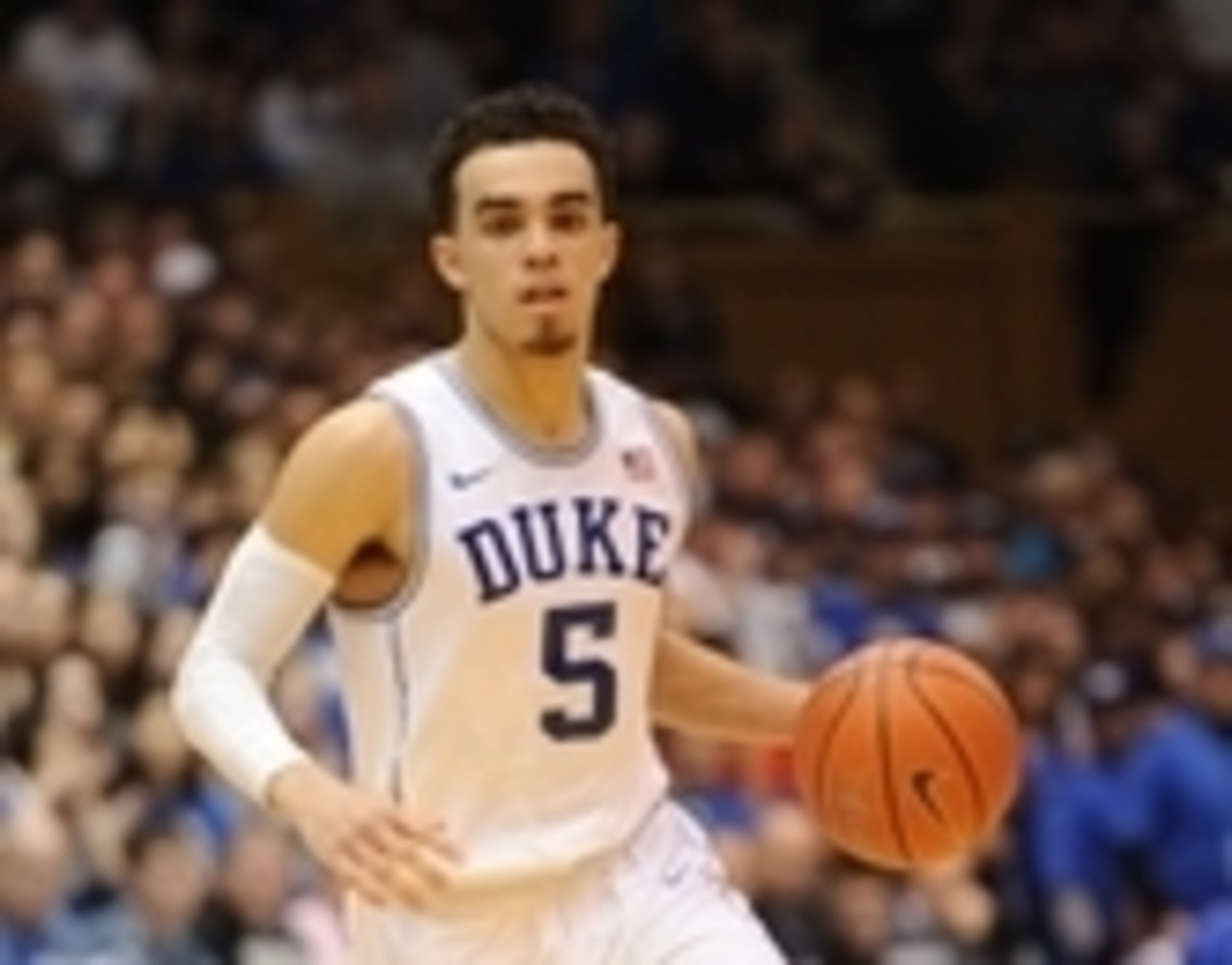
Advice: Go pro
Tyus Jones' ceiling isn't particularly high, given his lack of strength, athleticism and defensive potential. Chances are his upside tops out around backup point guard heights.
I'm not even sure a monster sophomore year would push Jones into the 2016 top-10 or lottery conversation.
His stock isn't likely to get higher than it is now. At 18 years old, he's led a top-five team in assists while playing 33.1 minutes per game.
Jones' skills, from his ball-handling to his 40 percent three-point stroke, and maturity aren't likely to improve much in another year at Duke.
He'll probably go somewhere in the late teens to 20s this June, where he'd likely land in 2016 as a best-case scenario. A down year as a sophomore could knock him out of the first-round conversation altogether.
Sam Dekker, Wisconsin, 6'9", SF, Junior
9 of 12
Advice: Go pro
At this point, scouts are likely well-aware of everything Sam Dekker brings to the table. He's been doing it for three years.
Though he hasn't put up big numbers, NBA coaches won't be asking him to score or create. Dekker is ultimately a player who's going to be more effective as the fifth-best option in the lineup, as opposed to the No. 2 option he is now.
A high-IQ 6'9" wing with a sharp handle, capable jumper and the ability to finish drives and cuts (shooting 62.1 percent inside the arc), Dekker projects as a prototypical do-it-all role player.
He'll likely land somewhere in the mid-to-late first round, which is probably where he'd land next year even if he improved his shooting percentages. Dekker might as well leave now and pick up an extra year of salary.
Jakob Poeltl, Utah, 7'0", C, Freshman
10 of 12
Advice: Stay in school
Though he's beaming with obvious NBA potential, Jakob Poeltl is just too far away from reaching it at this stage in his development.
ESPN's Fran Fraschilla recently tweeted it was a disservice to Poeltl to talk about the NBA.
He averages 8.6 points on 5.2 field-goal attempts, and he's finished with six points or fewer in 12 games this season.
Shooting 41.7 percent from the line without the ability to create in the post, he hasn't given scouts enough reasons to reach this year. Poeltl should wait to declare until his skill set catches up a little bit to his size, athleticism and mobility.
He wouldn't be taking much risk by returning. Even if Poeltl failed to make progress as a sophomore, his physical tools and defensive instincts—both of which will remain intact—should still draw first-round interest.
Cameron Payne, Murray State, 6'2", PG, Sophomore
11 of 12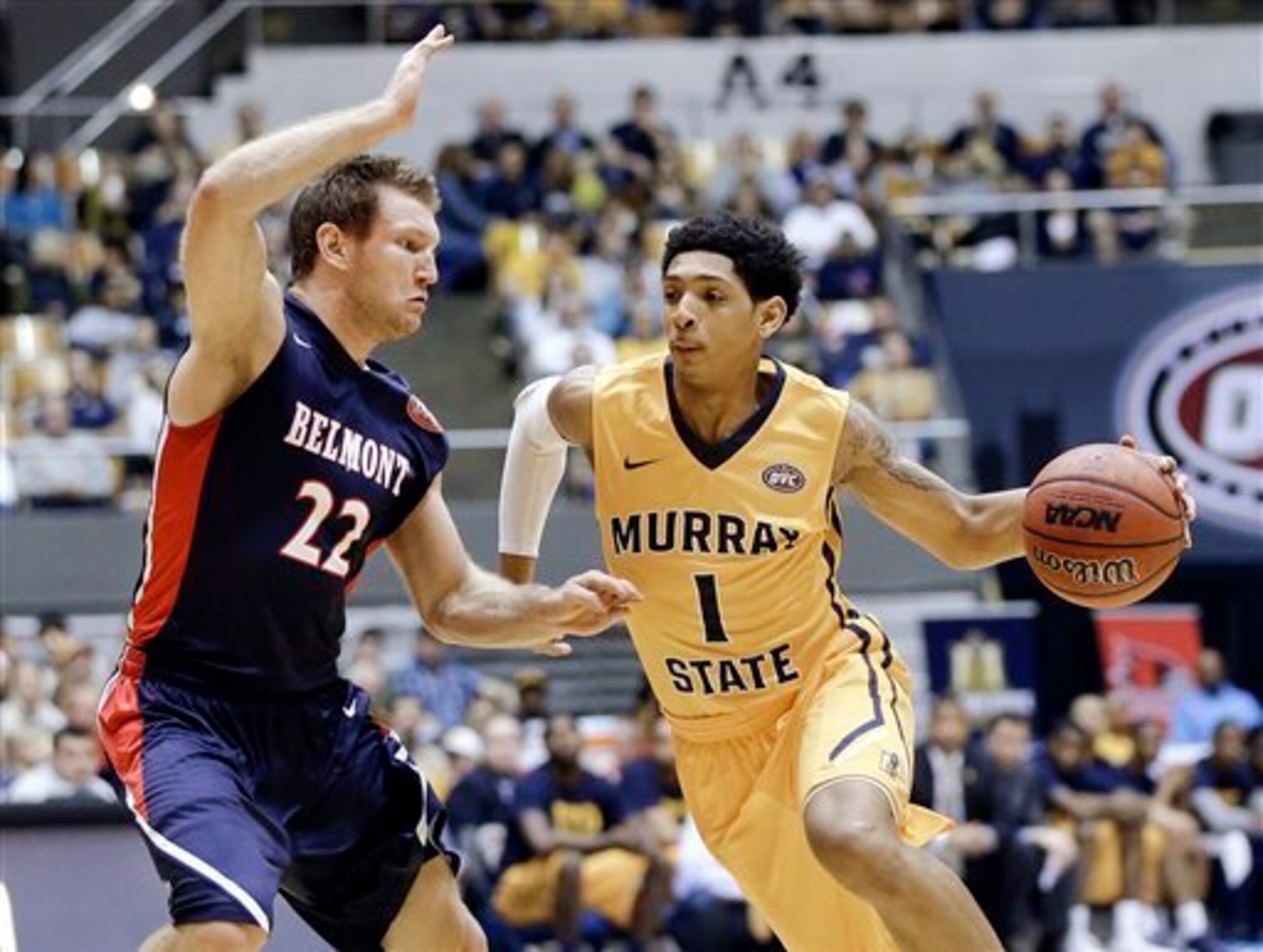
Advice: Go pro
If you're Cameron Payne, you have to think about striking while the iron is hot. He's coming off a year in which he led Murray State to an undefeated regular season while averaging 20.1 points, 5.8 assists, two steals and 2.2 threes made per game.
The potential reward tied to topping his sophomore year isn't worth the risk of failing to do so as a junior. And I'm just not sure how much better of a year he can actually have.
"Every NBA guy knows about the Racers' point guard," ESPN's Jeff Goodman recently wrote.
A breakout season and a few monster games in the Ohio Valley conference tournament have catapulted Payne onto first-round radars. His stock has peaked, and he'd be taking considerable risk by not capitalizing.
Kris Dunn, Providence, 6'3", PG, Sophomore
12 of 12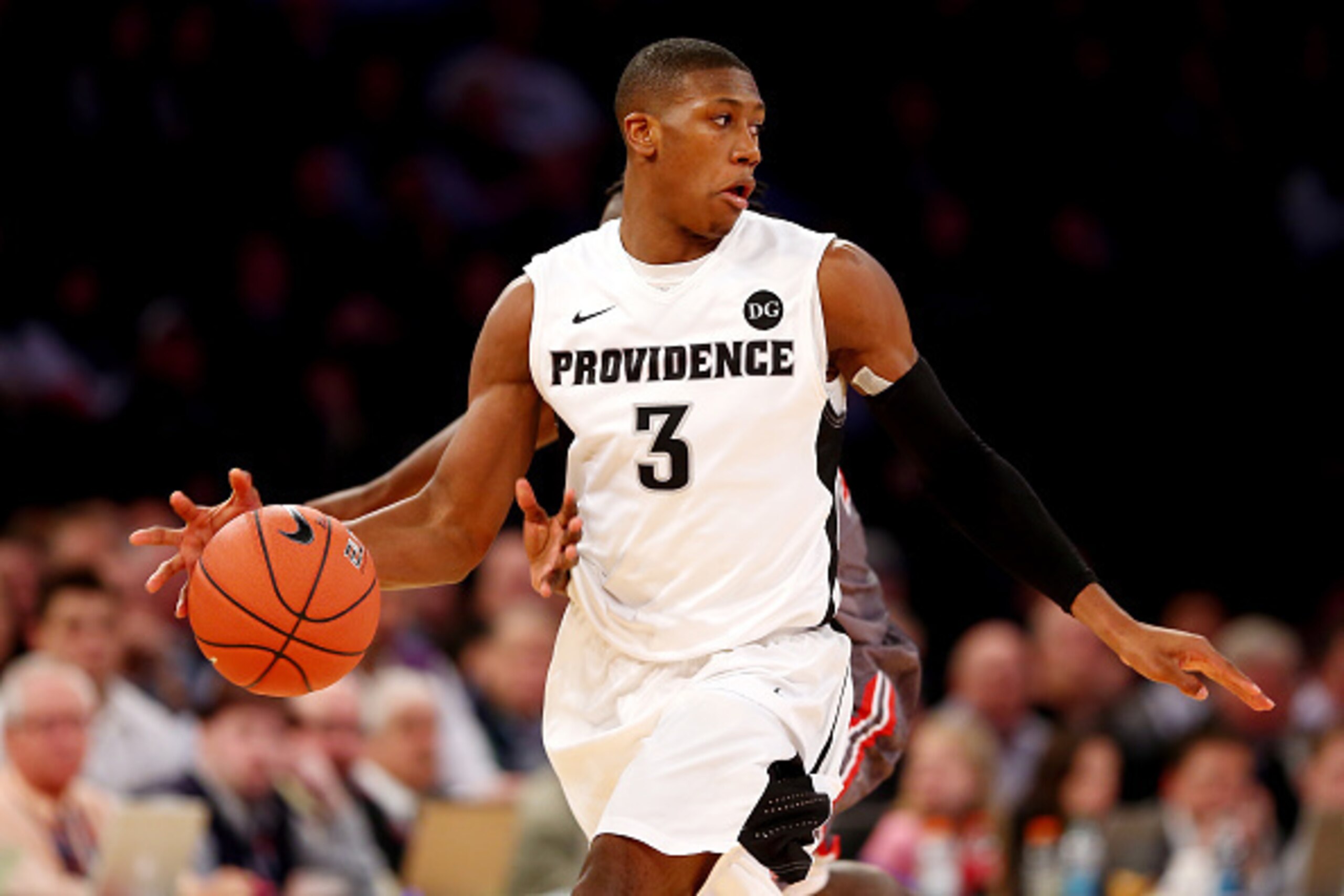
Advice: Go pro
After undergoing back-to-back season-ending shoulder surgeries, Kris Dunn finally had the monster year many were hoping he'd have since 2013.
He'll already be 21 years old by the time of the draft. Dunn would be crazy not to try to capitalize on his stock having peaked after leading Providence to a top-25 ranking and leading the country in assist percentage, per Sports-Reference.com.
Dunn always had every NBA point guard tool in the bag, from size and athleticism to ball-handling, quickness and vision. Now he has the production to show for it (15.5 points, 7.4 assists, 2.8 steals per game), and it's helped restore some of the credibility he lost over the past two years.
If you ask me, he offers enough potential to justify lottery consideration this June. Keep an eye on Dunn after the season. I wouldn't be surprised if he made a similar rise up boards as the one Elfrid Payton made late last year.

.jpg?w=2560 "Mahomes Told Teammate to Leave Meeting")
.jpg?w=2560 "5 Teams Eyeing Jonathan Taylor")
.jpg?w=2560 "Jonathan Taylor Landing Spots 📍")
.jpg?w=2560 "Baker Gets Glove From Rays 🧤")
.jpg?w=2560 "NFL investigating Eagles")
