

How a Generation of Aussie Ballers Established Themselves in the NBA
San Antonio Spurs guard Patty Mills does not spend time idly. He does things with a purpose, and when no purpose readily presents itself, he gets a little antsy.
When he left the Australian Institute of Sport for Saint Mary's College in 2007, Mills' compulsion to work sometimes made him anxious: "There were times where I had free time and I was like 'there's something that's not right here. I need to do something to fill this time,' whether it was ball-handling or stretching or anything."
It turns out the Australian Institute of Sport has a knack for instilling this quality in its athletes, seven of whom are currently plying their trade in the NBA. That core group, forged by one of the world's most unique athletic crucibles, will soon be joined by a new crop of Australian talent.
TOP NEWS

Pic of LeBron's Helicopter Commute 🚁

Surprise Dubs Trade Idea 💡

Duren Calls Out 'False' Rumors
And when that happens, Australian basketball could flourish like never before—leading to new highs in the NBA, massive growth back home and even a long-awaited Olympic breakthrough.
Going to School
Mills calls it the AIS.
Marty Clarke, the head basketball coach there from 1998 to 2012, refers to it as "The Institute."
Randy Bennett, whose Saint Mary's Gaels have recruited more AIS talent than any other program in the nation, describes it as a place where players emerge so thoroughly prepared that they know how to tape their own ankles.

"We run the mile every year for conditioning," Bennett said. "Our guys, they have to make a certain mile time, and these [Australians] crush it. Our best mile times are all those kids from over there. They're in better shape. That's it. They're just in better shape, better prepared.
"You can talk about how much basketball they get...the training...but the most important thing is how their heads are. They don't come over here screwing up. They're coming over here and they know they're representing their country and they've been selected to that program and they're not supposed to screw it up."
The Institute (or at least the idea of it) sounds mysterious, foreign, even a little secretive. Sending 15- and 16-year-old kids who show athletic promise to what is essentially a sport-focused boarding school where they devote their lives to training in their specific field feels a little intense.
It is intense.
It also gets results.
"It's proven to produce players beyond what you'd expect," Clarke explained. "Not everyone lasts. Not everyone can handle it."
Mills, now playing in his sixth NBA season, was one of the players who could handle it.
But he's not alone. The other six active Australians in the NBA this past season—Cameron Bairstow, Aron Baynes, Andrew Bogut, Matthew Dellavedova, Dante Exum and Joe Ingles—all attended the AIS.
| Cameron Bairstow | Chicago Bulls | 1 |
| Aron Baynes | San Antonio Spurs | 3 |
| Andrew Bogut | Golden State Warriors | 10 |
| Matthew Dellavedova | Cleveland Cavaliers | 2 |
| Dante Exum | Utah Jazz | 1 |
| Joe Ingles | Utah Jazz | 1 |
| Patty Mills | San Antonio Spurs | 6 |
"For me personally, it was huge," Utah Jazz wing Joe Ingles said of his time at the AIS. "I still think it's one of the biggest reasons I am where I am today."
Clarke and other coaches at the government-funded Institute focused on getting the most out of the few prospects who showed potential because they knew the talent pool wasn't particularly deep. Resources had to be maximized.
"It was a national approach, rather than leaving it up to the clubs," Clarke explained. "Clubs would develop kids for what they needed, which was to win Friday night's under-16 game."
The Institute takes a longer view.
Clarke recalls seeing a gangly 6'9" project with "unbelievably good hands" and a "mean, competitive streak" and envisioning an ultra-skilled, rangy small forward. And when that gangly kid kept growing and kept getting meaner, he didn't stop working with him on wing skills. He pivoted, adding post moves and interior defense to his training regimen, knowing that he was building a do-it-all center instead—one named Andrew Bogut, who'd become the No. 1 pick in the 2005 NBA draft.

"The training I did leading up, by the time [Institute coaches] saw me, was all guard-type training," Bogut explained. "I was taught to handle the ball at an early age. I was taught to be able to play all five positions as a young fella. Believe it or not, I used to shoot threes at a good clip up until I was 19 or 20, and then I just grew."
AIS builds from the ground up, leveraging immense resources to forge complete players. It's a nurturing environment but not one that coddles. One of the key developmental principles is plunging players into contests in which they're physically overmatched.
"They play against men," Clarke explained of AIS' method of pitting its junior players against senior competition. "The high schoolers in America are playing against high school-aged kids. Those same-aged kids at the Institute are playing against seasoned men. So you learn almost by osmosis how to play against old guys who are bigger and stronger and more experienced.
"It's survival. You don't learn, you don't survive."
And players at the Institute very much want to survive because they view being at AIS as a gift. Scholarships are hard to come by, and getting one means you've been given the best chance to make your basketball dreams reality.
"Growing up as a junior basketballer, you understand that if you want to take basketball to the next level, you've got to try to make the AIS," Mills said. "And that was it."
Players feel fortunate, even honored, to be there, which makes it easier to understand how they put up with such a regimented lifestyle at an age when most of their American basketball peers are practicing for a couple of loosely structured hours a week between AAU tournaments.

"When I was there, I had pretty full days," Exum recounted. "In the weight room from 7:30 until 8, shooting until 9, then off to school until around 3:30 and then back on the court at 4. Then study hall that night. It was pretty long days, long weeks. It was just about finding the time where you could get your recovery."
Players get schooled in nutrition, make their own training appointments and digest plenty of game film and data.
"You do your own washing, you make your own appointments for the training room," Clarke said. "There's no parents there to knock on your door and make sure your chores are done. If you make mistakes, there's penalties for it. You have to grow up."
"If you couldn't organize your s--t, you were in trouble," Bogut explained.
The Be-All and End-All

Bogut remains the most notable AIS attendee in the NBA today. He's a venerated figure, one who Ingles cited as the key to truly reviving Australian passion toward basketball.
The Australian men's national team has never medaled in Olympic competition. Ingles thinks Bogut can help change that.
"For me, and for all of the guys, a medal is the be-all and end-all," Ingles explained. "That's what we're going for, something that's never been done in men's Australian basketball history. We all want to be the first team to do that, and I really think we have the team. One of the biggest missing pieces has been Bogut. To have his commitment now…having him, a borderline All-Star when he's at his best, a defensive player…it's probably something we've missed a little bit.
"We've had great players that have filled in, but having somebody at the level of Bogut is pretty special. Our goal is to medal, and anything less than that is a disappointment to us."
According to Bogut, his commitment to international competition has never been about willingness. Health has been the issue.
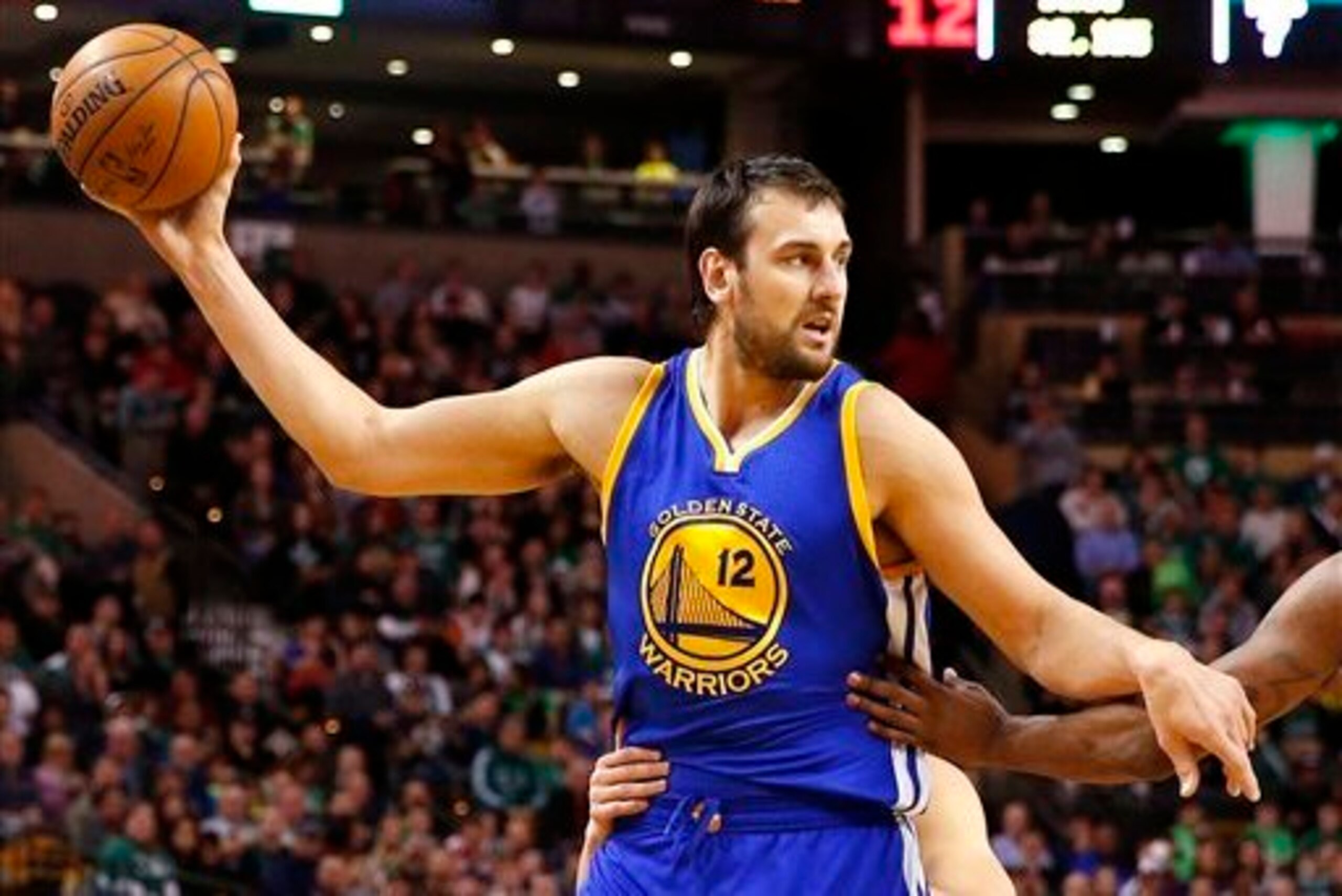
"I've always been committed barring injury, but I've had some car accident-type injuries. I've had a broken ankle that kept me out of one Olympics, then broke my elbow before the Worlds. So I'm committed to playing; it's always that asterisk of whether you're healthy."
He, like Ingles, recognizes the opportunity to take Australian basketball to the next level in the 2016 Olympics.
"In previous Olympics and Worlds, you kind of knew going in that we didn't have the talent to match up with other countries, but if things went our way and we got a bit of luck, we could possibly medal. But now it's getting to the point where we're like, 'hey, we have the talent now.' We'll have six or seven guys on NBA rosters, plus Ben Simmons and a couple of other guys coming along as role players down the road. We've definitely got an opportunity to do something special."
What's Next?

The hope among Australians currently in the NBA is that their notoriety will help grow the sport's popularity back home.
"Basketball was booming back in the days of the '90s and even in the early 2000s," Exum explained. "I think the interest has kind of gone away, and we just need to bring that excitement back."
Ingles sees a path taking shape: "I think this year has helped. It's made more people aware of how well we're actually doing. I think the seven of us that are over here are passionate about making it known back in Australia how special it is. The juniors coming through now are pretty exciting. You throw them into the core group of players that are already over here, and the future looks pretty bright."
Blindingly bright, actually.
LSU commit Ben Simmons has hauled in multiple top honors as the best high school player in the U.S., and he became the first Australian to play in the McDonald's All-American game on April 1. He represents a hybrid path for Australian talent; he spent a short time at AIS but played for Montverde Academy in Florida for his final two high school seasons.
"He's going to be the future," Bogut, who knows Simmons well, said. "He's going to be the face of Australian basketball once he comes out and hopefully goes No. 1. He's going to be the guy. I'll be at the tail end of my career, and you have Patty and Baynesy and Delly and Dante and those guys, but all eyes will be on Ben, especially being the No. 1 pick."
According to Bogut, Simmons' makeup is as promising as the 6'10" wing's do-it-all package of skills.
"I think he's ready. He has a little bit of…not an arrogance, but a confidence...you can't write this, but in Australia, you'd say he's got c--t in him. He's got something in him that's stirring him up, which is great."
In addition to Simmons, there's also Thon Maker.
Of Sudanese descent, Maker grew up in Australia and will be among the most highly sought-after college recruits of the 2016 class after stellar play in Canada. Of course, he may bypass college altogether, opting to spend a year overseas before returning to possibly join Simmons in the lottery.
Now's the Time

With record numbers populating the NBA, the Institute continuing to groom top-level prospects and the potential for Olympic glory on the horizon, it seems Australian basketball is ready to explode.
"I think it's an exciting time for Australian basketball," Bogut said, "and I can't wait to see how it goes."
The time is now.
And if we've learned anything from Mills, Bogut and all the rest, it's that Aussies never waste time.
Quotes obtained firsthand unless otherwise noted.


.jpg?w=2560 "NFL investigating 2 referees for separate viral exchanges")

.jpg?w=2560 "OBJ Calls Out Giants 😳")


.jpg?w=2560 "Ward Nearly Walks Out of Presser 😳")