

NCAA Tournament 2015: Fool-Proof Strategies to Help You Win Your Bracket Pool
In a way, trying to get tips on how to build the perfect bracket is a lot like studying up on how to win the lottery. Your chances for success are about the same.
With that said, it's a little bit easier to handicap the NCAA tournament, and if you're taking part in a bracket pool, you only have to be better than your friends/family/complete strangers.
All Your Bracket Essentials



Over the years, a few general trends have emerged when it comes to filling out your bracket. Always having the No. 1 seeds winning in the first round and picking a No. 12 seed to upset a No. 5 are among the tried and true standards.
Here's a look at this year's bracket.
Below are three strategies you should consider when you fill out your NCAA tourney bracket.
Don't Pick Kentucky
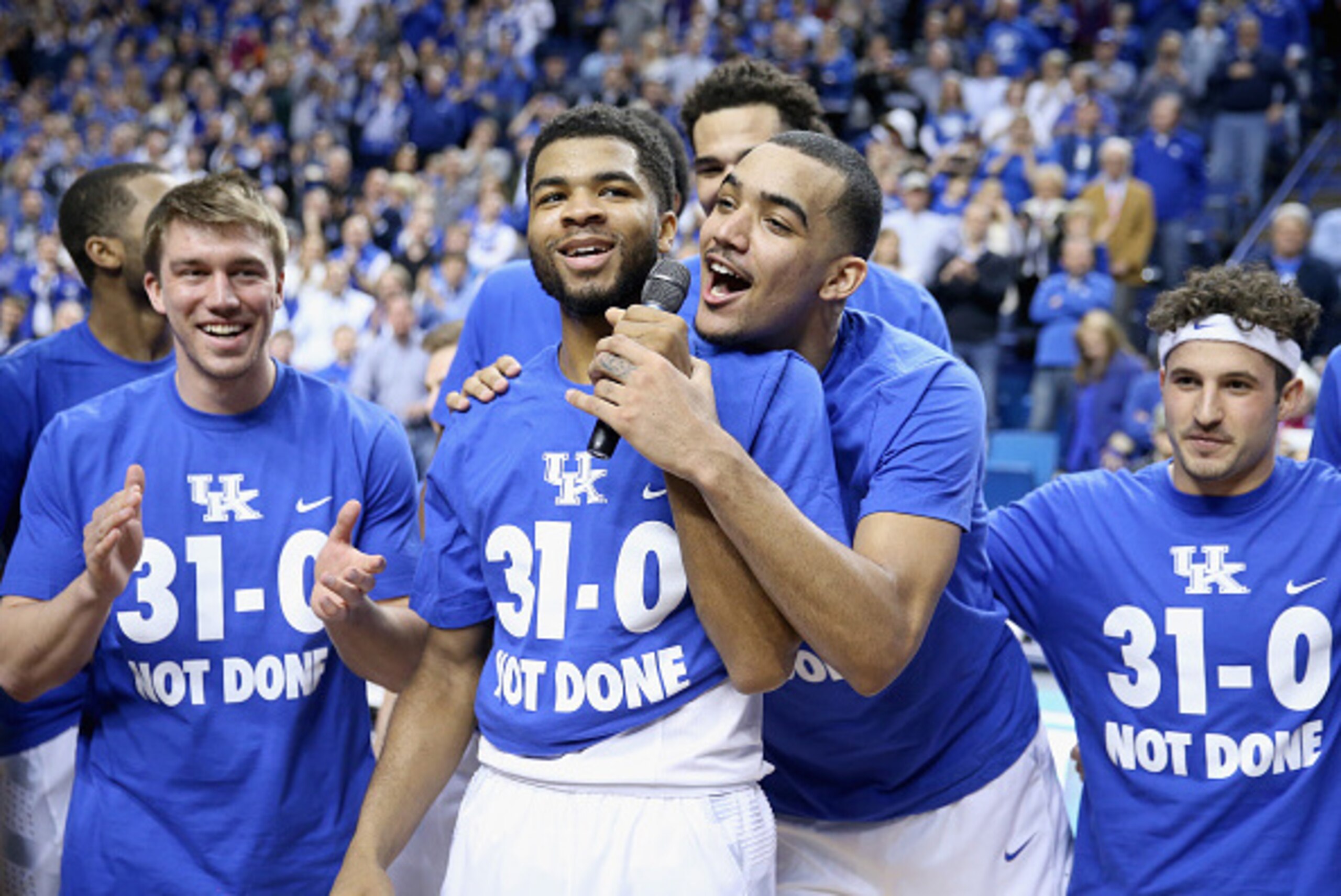
It will be extremely tempting to pick Kentucky. The Wildcats are undefeated and have gone to the Final Four in three of the last four seasons. According to Odds Shark, they're far and away the favorites to win it all.
One aspect that you have to love about this team looking ahead to the NCAA tournament is the overall balance. John Calipari has used his platoons to perfection. Aaron Harrison and Devin Booker are the only players averaging double digits in scoring, but Kentucky still has the fifth-best offense in the country, according to KenPom.com.
"It's a unique group. The strength is in the pack more than any team I've ever coached, and everyone's stepped up at different points," said Calipari, per Nicole Auerbach of USA Today. "And I'll be honest with you, everybody's also stepped back at different points. And when they stepped back, someone else stepped up."
Playing the Wildcats is like fighting a hydra. You cut off one head and two more grow back.
That kind of strength in depth is key in the NCAA tournament, since Kentucky's chances don't hinge on one single player. But the Wildcats have talented stars who can take a game over if necessary.
With that said, the top overall seed has been a bit of a poisoned chalice in the past. Here's a look at how the top overall seed has performed over the last 10 years:
| 2005 | Illinois | Runner-up | #1 North Carolina |
| 2006 | Duke | Sweet 16 | #3 Florida |
| 2007 | Florida | National Champion | ------ |
| 2008 | North Carolina | Final Four | #1 Kansas |
| 2009 | Louisville | Elite Eight | #1 North Carolina |
| 2010 | Kansas | Second Round | #1 Duke |
| 2011 | Ohio State | Sweet 16 | #3 Connecticut |
| 2012 | Kentucky | National Champion | ------ |
| 2013 | Louisville | National Champion | ------ |
| 2014 | Florida | Final Four | #7 Connecticut |
It's a mixed bag in terms of final results. Sure, top seeds have gone on to win national titles, but more often than not, they've failed to cross the final hurdle.
As if that's not enough of a deterrent to backing Kentucky, only seven teams have gone through the regular season and NCAA tournament unbeaten—the last being Indiana in 1976. History isn't exactly on the Wildcats' side, no matter how good they are.
Also, the problem with picking the prohibitive favorite is that everybody else is doing it. It's hard to actually win a bracket pool when following the crowd.
In the event Kentucky does get eliminated, a lot of people's brackets will be completely ruined. Winning a pool is almost impossible if you don't land the national champion.
By picking somebody like Arizona, Wisconsin, Duke, Virginia, etc., you're taking a big risk, but it could pay off if the majority of your competitors are lamenting Kentucky's exit.
Hitch Your Wagons to At Least One Mid-Major
The gap between the haves and have-nots only continues to close in college basketball. The country's most storied programs no longer enjoy the dominance they once owned against the minnows.
As a result, it's a good idea to pick at least one mid-major team this year to advance to the Sweet 16, and potentially the Elite Eight.
Gonzaga will be a trendy pick, but the Bulldogs have been eliminated in the second/third round in each of the last five years.
A lot of Gonzaga's chances will hinge on forward Kyle Wiltjer. He's averaging 16.6 points and 5.9 rebounds a game and is a finalist for the Wooden Award. However, Wiltjer shot a combined 8-of-27 for 27 points in the Zags' two regular-season losses.
If an opponent can take Wiltjer out of the game, then it's cutting the Bulldogs' legs out from under them.
The Davidson Wildcats will be a team to watch. Head coach Bob McKillop boasts plenty of NCAA tournament experience, so he knows what it takes to win in March. The Wildcats also have two dynamic scorers in guards Jack Gibbs and Tyler Kalinoski.
The San Diego State Aztecs will also be a tricky opponent in March. Their offense is pretty pedestrian, but their defense ranks fourth in the country, according to KenPom.com. Between its suffocating defense and methodical tempo, San Diego State is built for the NCAA tournament.
Still, Your National Champion Should Come from a Major Conference
There will be a day when somebody like Wichita State, Davidson, Virginia Commonwealth or Gonzaga wins a national championship. Until that time arrives, it's too risky to pick a mid-major to win the whole thing.
You want to go off the beaten path somewhat when deciding your national champion, but don't go so far off that you're essentially lighting your bracket on fire.
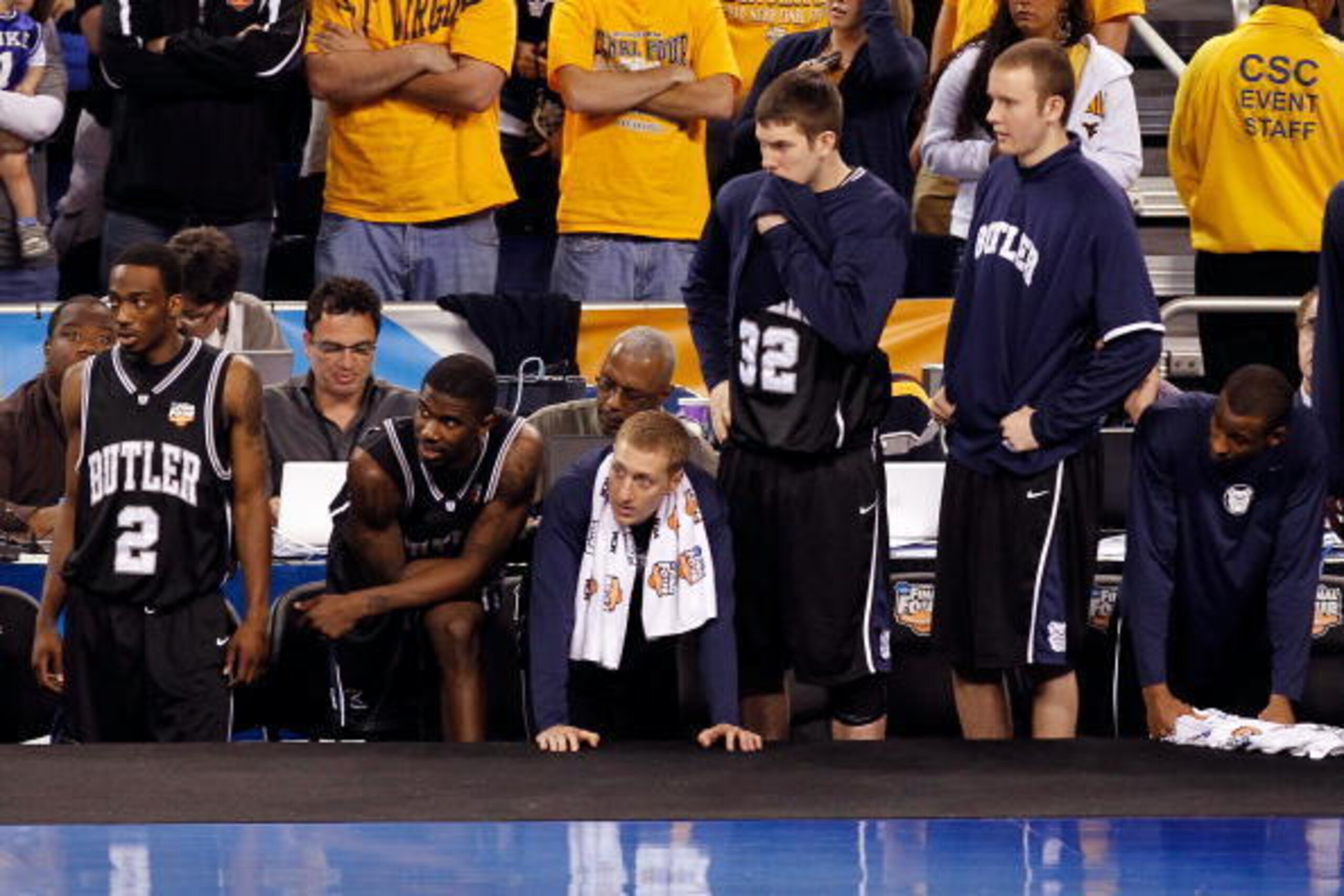
Depending on your opinion of UNLV and Memphis' standings as mid-major teams when they made their runs in March, Butler is the only "mid-major" to sniff a national title. The Bulldogs came within inches of beating Duke in the national title game in 2010.
Butler is evidence of the shifting paradigm, but the pendulum hasn't swung all the way toward the relative minnows of college basketball.
Don't Try to Get Too Cute

I'll never forget picking 15th-seeded Vermont to upset Connecticut in the first round of the 2004 NCAA tournament. I thought I'd be ahead of the curve and pick the biggest shock nobody saw coming. When the Catamounts won, my friends would anoint me a genius for life.
Unfortunately, the Huskies blew Vermont out of the water, winning by 17 points en route to an eventual national title. Each game UConn won made me look more and more foolish.
I learned a valuable lesson that year: Taking risks isn't a bad thing, but those risks should at least be within the realm of reason. Otherwise, you're throwing points away.
In other words, have some fun and sprinkle a few somewhat substantial upsets throughout your bracket. Maybe Cincinnati or Purdue beats Kentucky in the third round. Perhaps North Carolina reaches the Elite Eight or the Final Four.
Just don't pick a No. 16 seed to topple a No. 1 in the second round, and don't have the Albany Great Danes going to the Final Four, where they'll meet the Buffalo Bulls in the national championship.
.jpg?w=2560 "Cardinals Giants Football")

.jpg?w=2560 "Tyreek Deal May Come Soon")

.jpg?w=2560 "Ward Nearly Walks Out of Presser ▶️")