

Chelsea's Eden Hazard Has Qualities to Win Ballon d'Or but Will Still Need Luck
Almost certainly following their manager’s lead, it is clear that Chelsea’s players have developed a remarkable ability to always shift focus to the next game, the next challenge; the next trophy, rather than the last one.
Less than a week after lifting the Capital One Cup at Wembley, it seems the celebrations have already been put firmly to one side, with the Blues back to concentrating on the training ground as they look to finishing strongly in both the Premier League and Champions League.
"It's a trophy that is viewed as important here in England,” as Cesar Azpilicueta told Marca this week, seemingly switching gears after the excitement of that win over Spurs in an instant. “We see it as the reward for our efforts over the course of the season so far and it makes us feel that we're on track for more success."
TOP NEWS
Live Highlights and Viral Moments 🍿

Final Men's Ballon d'Or Rankings 📊

Carrick Replacement Options 📝
That has all the hallmarks of a Jose Mourinho mantra, the man who claimed on Sunday he “feeds himself with trophies,” yet only seems to get even hungrier with each one he wins.
Chelsea might already be “on to the next one,” to paraphrase Jay-Z, but Azpilicueta still had time to lavish a little praise on his team-mates. Azpilicueta clearly has the highest of respect for Eden Hazard, for one, going on to tell Marca (h/t the Express) that he expects the Belgian to win the Ballon d’Or at some point during his career.
"I think in the future he could win the Ballon d'Or, he has the quality to do it, but I see more focus on titles than achieving individual trophies," Azpilicueta said.
"But yes, he has great quality and I think in the future we will see [him] with the trophy in his hands."
Of course, the difficulty at the moment is supplanting Lionel Messi and Cristiano Ronaldo, two players who have served to raise the bar—and perhaps redefine the criteria—for winners of the most prestigious individual prize in football.
“We are talking about two monsters of football today,” Azpilicueta acknowledged. "Eden is a great player, younger than them, and therefore has more capacity for improvement."

Hazard, 24, certainly has age on his side, and he is certainly already in the discussion about the world’s best players. The title of “world’s third-best player” seems to have become one of real debate in recent times, thanks to the clear supremacy of Messi and Ronaldo, and Hazard has long been a frequent name mentioned in that particularly heated discussion.
Alongside the likes of Paul Pogba and Neymar, Hazard looks well-placed to ascend to the throne when Ronaldo and, eventually, Messi succumb to the inevitabilities of age.
Last week, in fact, Hazard acknowledged in an interview with Sam Wallace of The Independent that he would like to win the Ballon d’Or, although he first needs to improve “two or three stages” in order to do so.
Wallace, it seems, expressed his incredulity at the suggestion that such significant improvement was needed.
“Well, maybe just one!” Hazard acknowledged. “It sounds better to say two or three! It is not the primary objective but it would be great.”
It is that comment—“it is not the primary objective”—that perhaps underlines one of the most significant obstacles to the Belgian’s Ballon d’Or chances. He is perhaps too unselfish on the pitch, too willing to subjugate his performance for the needs of the team to shine in the individual way the award seems to require.
This is the hallmark of a great player (not just a Mourinho player but one who truly understands what it takes for a team to give itself the best chance to win).
Performances like the one against West Ham United on Wednesday—when every ball hit at him seemed to stick to his feet, relieving the pressure on his team even as he took kick after kick—underline his deep value to his team. But it is the other part of that performance, his winning goal, that tends to catch the eyes of Ballon d’Or voters in a post-Ronaldo and Messi landscape.
Chelsea need Hazard to be the outlet, the brilliant ball-handler capable of occupying two or three defenders at a time, more than they need him to be the goalscorer (they have other players for that).
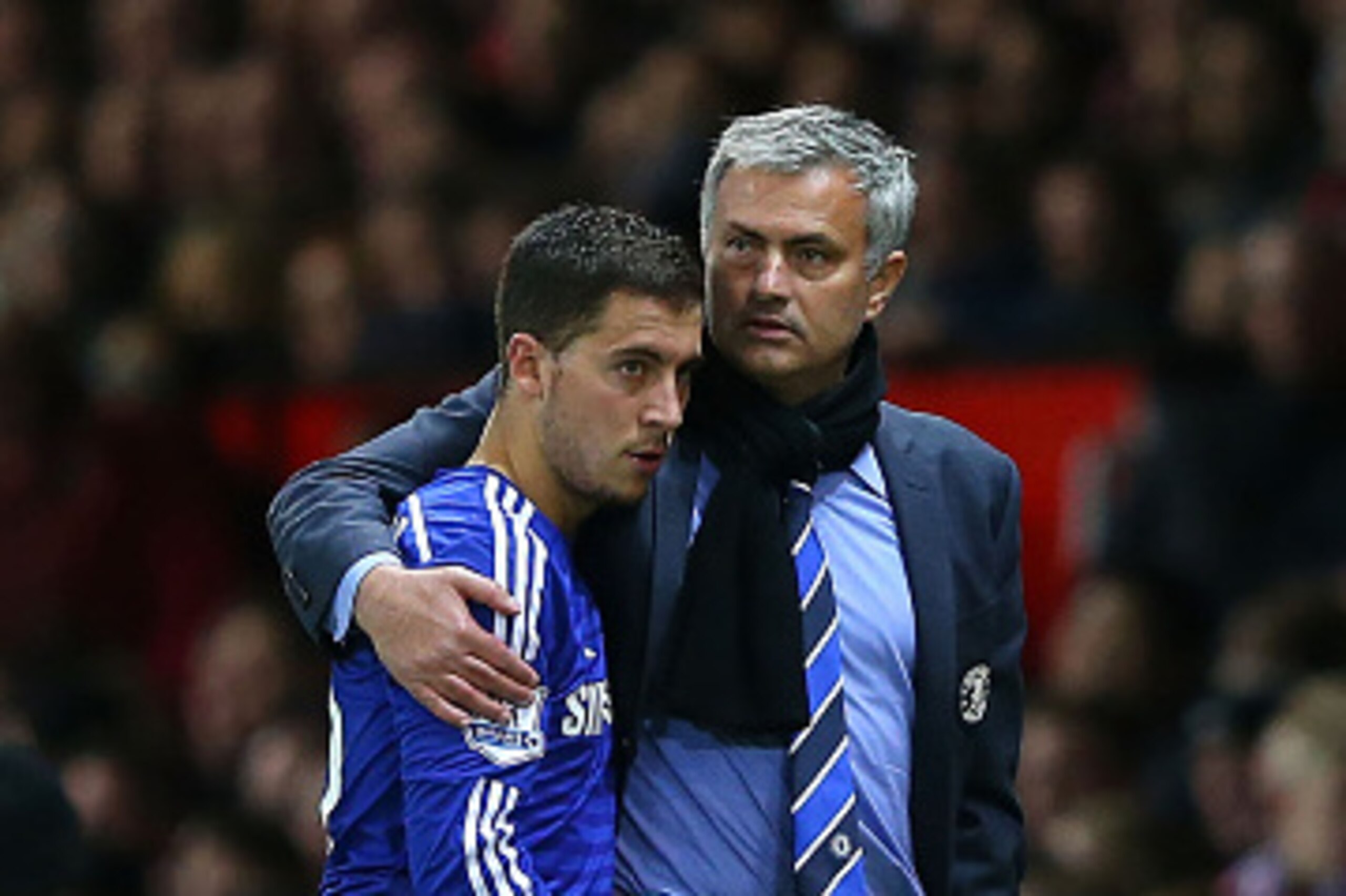
That is another of the Mourinho influences—the Portuguese puts the team above everything (it is worth remembering the hard time he gave Hazard in the early months of working together, a case of tough love seemingly designed to mold him into a team-oriented player first and foremost).
Not that Hazard necessarily sees it that way:
"It’s true we do have a special relationship. What is good about him as a coach is that he lets us play. He lets me play. He is not always on at me and I really appreciate that. If it isn’t good he says so, if it is good he says so. He is always direct.
But I don’t think he has changed me. He has taught me to become more professional and to be better on the pitch. I don’t think I have changed my mentality. You can’t change that. I am who I am. He has always taught me to get the best out of myself.
"
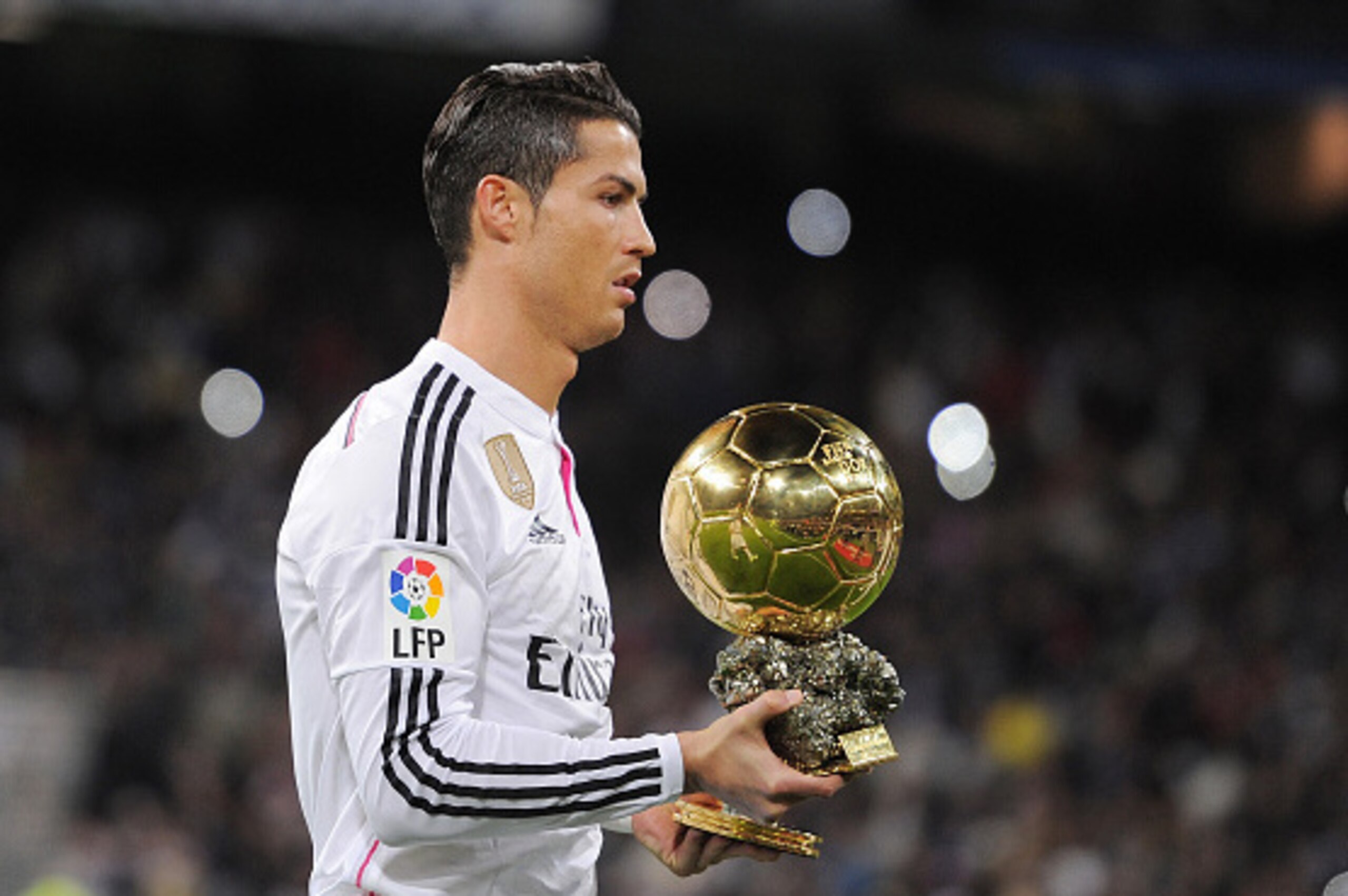
He has also helped Hazard adapt even more expertly to the Premier League, although that might be another obstacle to Hazard’s eventual Ballon d’Or run(s). Not since Ronaldo in 2008 has a Premier League player lifted the trophy, and since 1968 only one other England-based player has been victorious (Michael Owen in 2001).
It is hard to identify all the reasons for this; the relatively poor quality of the English game for much of that period is probably a key reason, but the style of play is another factor.
Hazard is the most-fouled player in perhaps the most physical league in Europe, something he has embraced whole-heartedly but something that may nevertheless constrain him somewhat when the individual awards are being handed out.
“Well, that is what characterises English football,” Hazard conceded to Wallace. “Obviously, there are more rugged defenders but that is also the beauty of English football—as long as it does not get too much.
“Of course, there are defenders who are typically English. It’s up to me to adapt to them. That’s how I always play against a defender. I try to adapt to his character so the more that they foul me the more I want to succeed on the pitch. So, in fact, maybe it’s a good thing to get fouled!”
Nevertheless, that abrasive style of defending might harm him in the long run. It will certainly prevent him from scoring the volume of goals he might require to persuade voters to look his way.
Even so, Mourinho might ultimately be the biggest obstacle to Hazard’s Ballon d’Or chances. It is perhaps worth noting that Ronaldo never won the big prize while Mourinho was his manager at Real Madrid (he won in 2013, but Mourinho left the club halfway through that year).
The Portuguese tactician is an expert at winning trophies, but that often seems to be as a result of erring heavily on the defensive side in the biggest games of all. The Capital One Cup final was a case in point; Hazard was generally a diminished attacking presence as Mourinho’s tactics demanded a safety-first approach (one that was ultimately vindicated).
The Blues ended up lifting the trophy, but it was their defence that ended up being credited for the success. This is a perception that pervades the general sense of the club (with Hazard, Diego Costa, Oscar and Cesc Fabregas they have brilliant attacking options, but still remain perceived as a pragmatic side), one that will hurt individuals come award season.
Hazard is clearly an incredibly talented footballer, and a huge asset to Chelsea (or any team he plays for). Azpilicueta is right to label him as a future Ballon d’Or contender, but, as with anything in life, he will still need an element of luck if he is ever to actually lift the famous gold trophy.
.jpg?w=2560 "Chiefs Giants Football")
.jpg?w=2560 "🚨 Week 8 AP Top 25 Poll")
.jpg?w=2560 "Baker Gets Glove From Rays 🧤")
.jpg?w=2560 "5 Teams Eyeing Jonathan Taylor")

.jpg?w=2560 "Steelers Roll Saints in Paris")
.jpg?w=2560 "NFL investigating Eagles")
