

Louisville Basketball: Teams That Cardinals Want to Avoid in the NCAA Tournament
Louisville basketball has made the NCAA tournament for eight consecutive seasons, and this year would push that number to nine, given that Rick Pitino is wrapping up yet another successful regular season with the Cardinals ranked at No. 16 in the Associated Press poll and holding a 23-6 overall record.
During those eight previous runs in March, the Cardinals have compiled a 19-7 record that included two trips to the Final Four and one national championship. In order to get back there, however, there needs to be a little bit of skill as well as luck of the draw involved.
Matchups are vital in the world of college basketball, especially during the postseason. And for Louisville, who will most likely end up being a fourth or fifth seed, getting the right opponents could go a long way in determining just how far this team can advance.
Here is a look at some of the teams that the Cardinals would want to avoid in March Madness.
Teams That Can Shoot from the Perimeter
1 of 5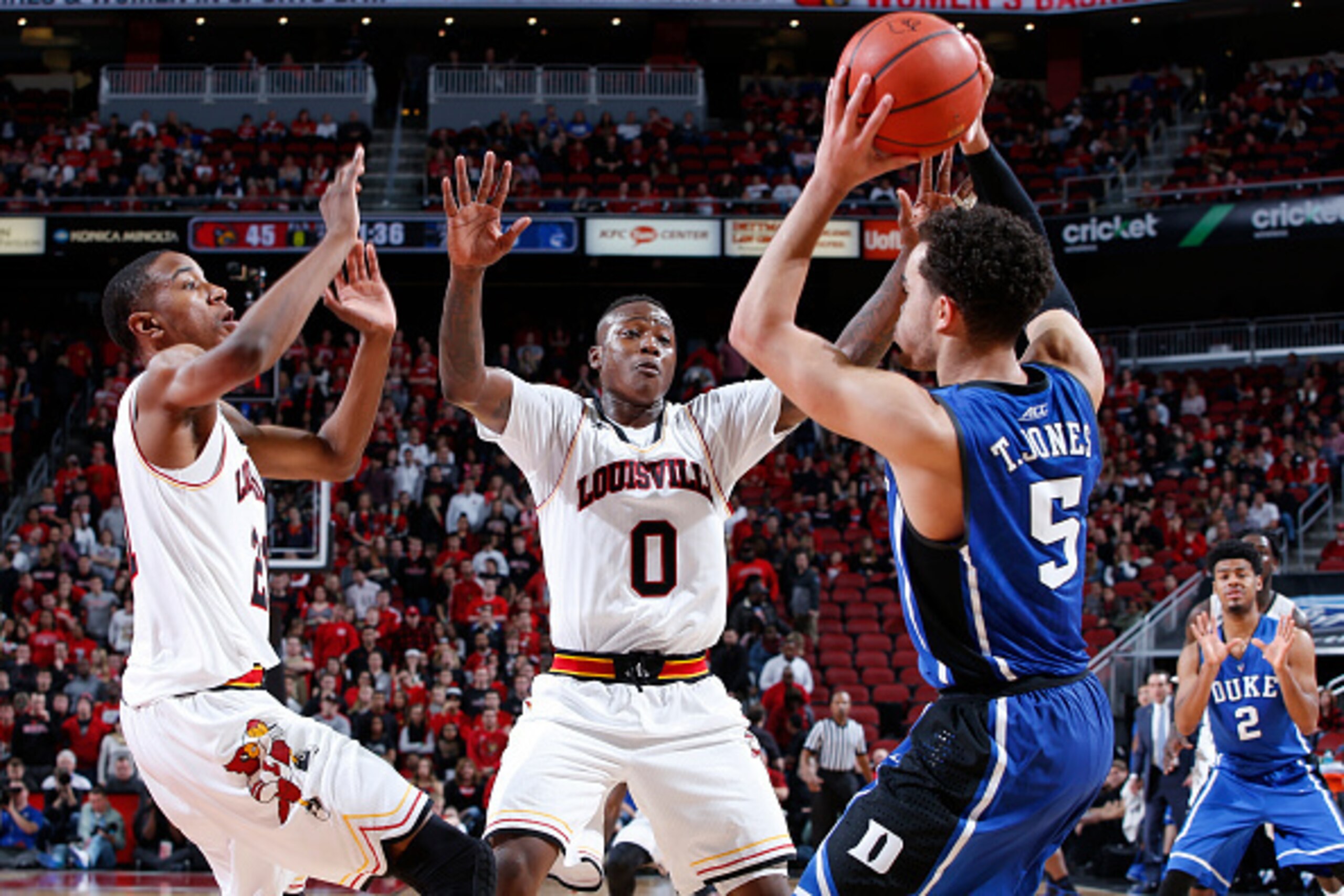
Louisville still employs one of the best zone defenses in the country, and it shows with an 88.3 adjusted defensive efficiency that ranks sixth among all Division I schools, according to KenPom.com.
However, there seems to be a magic number when it comes to beating the Cardinals, and 38.1 appears to be the threshold.
That is the average shooting percentage by Louisville’s opponents this season, and in five of the Cards’ six losses, the winning teams shot over 40 percent from the field.
Anyone who knows anything about basketball would tell you that good shooting is the best counter to good zone defense. And if Louisville runs into a team with great perimeter shooting, it has a chance to cause some concerns for Rick Pitino and company.
Teams that fit the mold: Gonzaga (40.3 percent), Utah (40.0 percent), Northern Iowa (39.9 percent), Notre Dame (39.4 percent), Villanova (38.9 percent), Duke (38.7 percent), BYU (38.7 percent)
Teams That Excel in Zone Defense
2 of 5
Ironically, Louisville’s biggest strength could also turn around and be its biggest obstacle as well.
The Cardinals are shooting a woeful 30.9 percent from range, and that ranks at No. 304 out of the 351 teams in Division I.
Add in the fact that their best three-point shooter, Chris Jones (33.9 percent), has been kicked off the team, and the problem only compounds for the Cardinals.
Louisville failed to shoot above 32 percent from beyond the arc in five of its six losses, and its inability to stretch the floor could allow its opponents to pack the paint and zero in on the low post. That would cause some problems for the Cardinals’ only remaining weapon in Montrezl Harrell, and playing one-dimensional is not a recipe for success in the postseason.
Teams that fit the mold: Duke, Baylor, Kansas, West Virginia, Texas
Teams That Have Size Inside
3 of 5
Speaking of Harrell, there is no doubt that he is one of the most physically imposing figures in college basketball.
At 6’8” and 240 pounds, he gives the Cardinals an advantage down low every time he steps onto the court—that is, unless there is someone else just as big on the other side to neutralize that.
Karl-Anthony Towns of Kentucky, Jahlil Okafor and Amile Jefferson of Duke, Kennedy Meeks and Brice Johnson of North Carolina, and Rakeem Christmas of Syracuse all have either matched up or outplayed the Cardinals on the inside this season.
Chinanu Onuaku and Mangok Mathiang are the other two Louisville big men, who, despite being both 6’10” and solid defenders, don’t provide quite as much on the offensive end. Therefore, going up against a team with size in the frontcourt may negate one of the Cardinals’ biggest strengths.
Teams that fit the mold: Kentucky, Duke, Texas, North Carolina, Wisconsin, Arizona
.jpg?w=2560 "Chiefs Giants Football")
.jpg?w=2560 "AP Poll Top Five Week 9")
Teams That Have Depth
4 of 5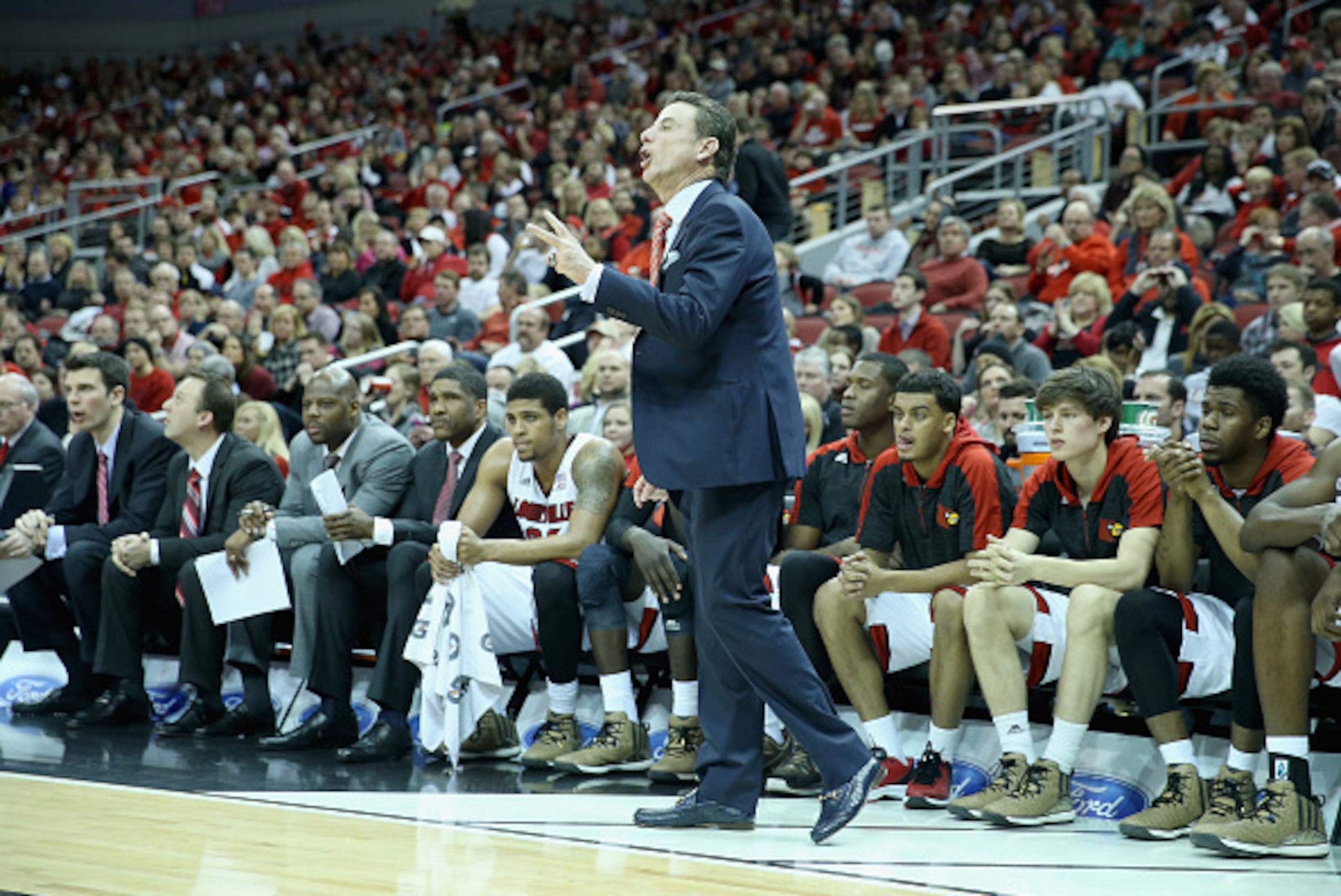
When Chris Jones was still on the team, the Cardinals had four solid double-figure scorers in him, Harrell, Terry Rozier and Wayne Blackshear.
With Jones now gone, Rick Pitino needs to find a way to replicate the guard’s 13.7 points-per-game output, but there may not be a possibility for him to do so.
Why? Because the drop-off in production for the Cardinals after the four (now three) top scorers is staggering, as Onuaku is the next in line with just 3.3 PPG.
The second unit’s lack of contribution has been a problem for the Cardinals all season long. In four games this year, the Louisville bench has been held scoreless, and its most recent output of 22 points against Florida State was the most in its past 23 games.
If Louisville cannot get enough production from its bench, then it’ll only increase the burden on its starters, which is not a good thing to have happening in the postseason when games come in waves.
Teams that fit the mold: Kentucky, Villanova, Arizona, Gonzaga, Notre Dame, Utah
Teams That Take Care of the Ball
5 of 5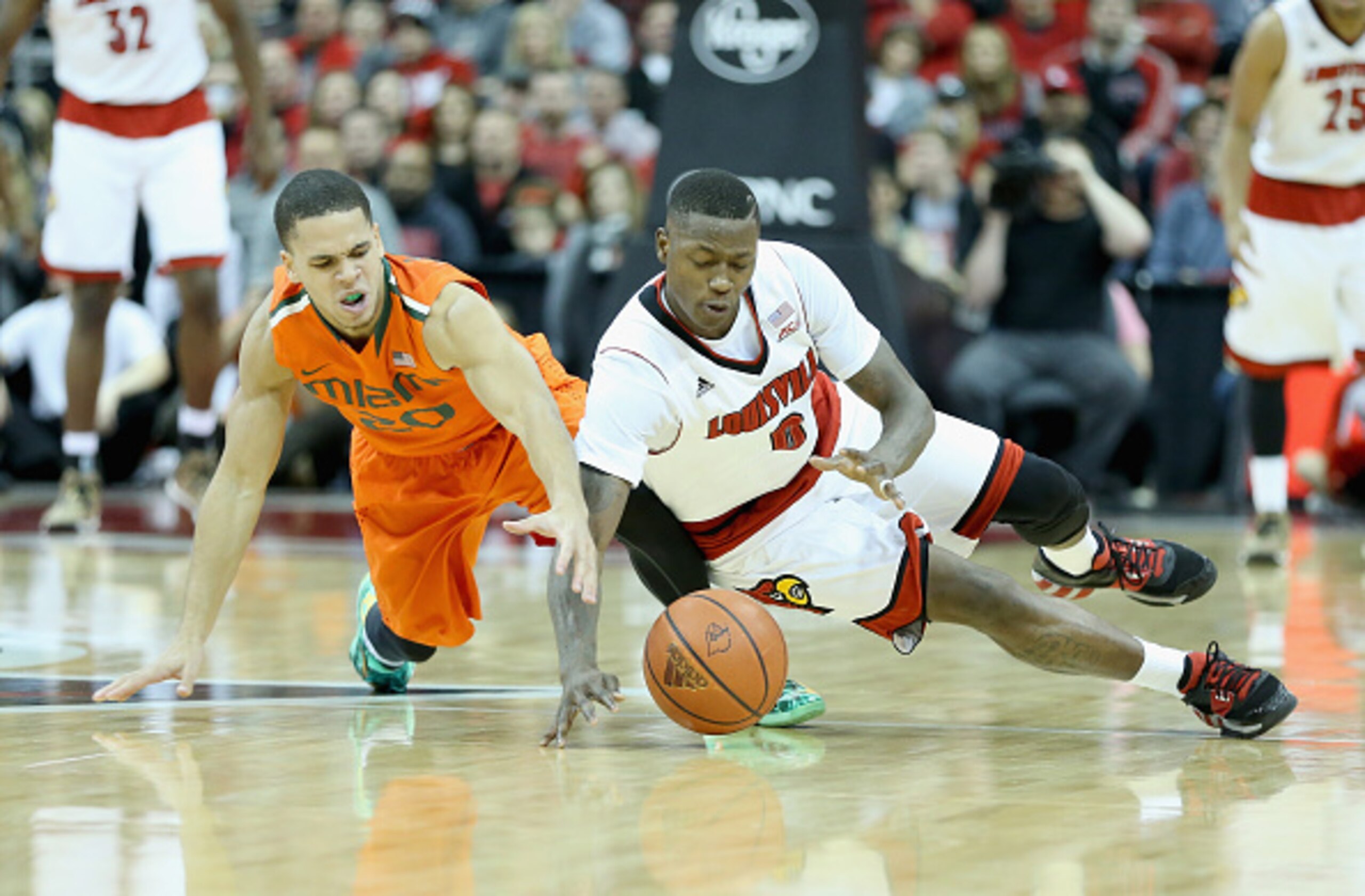
To be quite honest, Louisville’s defense is the main reason why the Cardinals have had as much success as they had this season, considering their offensive struggles at times.
Terry Rozier has been a pest on the other side of the ball, and so was Chris Jones when he was still playing. The two averaged 2.0 steals per game, and the team ranked 15th in the nation in that category.
The Cardinals wisely use that aspect of their game to their advantage, as they have posted a plus-2.9 margin in turnovers this season.
What’s even more impressive is that Louisville has averaged 15.9 points per game off opponents’ turnovers, which accumulates to 443 of its total 2,037 points on the season. That’s 22 percent.
With this much dependency on generating offense from its defense, if Louisville runs into a team that takes care of the ball well, it could struggle to find ways to put up points again.
Teams that fit the mold: Wisconsin (7.5 TO PG), Virginia (9.1), Notre Dame (9.3), Boise State (10.0), Stanford (10.5), Gonzaga (10.6), Kentucky (11.0), Villanova (11.0)

.jpg?w=2560 "Steelers Buccaneers Football")
.jpg?w=2560 "5 Teams Eyeing Jonathan Taylor")

.jpg?w=2560 "Steelers Roll Saints in Paris")
.jpg?w=2560 "NFL investigating Eagles")
.jpg?w=2560 "Updates from EVERY Game")