

What Separates Top RBs in the 2015 NFL Draft Class?
For the first time since 2012, a running back could be selected in the first round of the NFL draft. The 2015 class is as deep as it is star-studded and has been called the “rebirth” of the position. With such depth available, what makes teams more willing to select a running back early?
The recent trend of teams going toward running backs by committee is perpetuated by the reality that star backs are dwindling. Looking across the league, Adrian Peterson and Marshawn Lynch are approaching 30 years old. DeMarco Murray had 392 total touches in 2014 and is hitting free agency after the heavy workload. Arian Foster has had injury woes, and LeSean McCoy lost some of his electricity.
Sure, there are some young backs like Le’Veon Bell, Eddie Lacy and Jamaal Charles, but teams should be salivating at the influx of talented young runners available in the 2015 class. Young running backs have a longer shelf life than a running back older than 27, as ESPN.com’s Kevin Seifert has explored. Not only are younger backs able to produce more, but they are also much cheaper. For example, 2014 second-round pick Carlos Hyde carried a cap hit of just $667,000 in his rookie season.
The demand for game-changers who are affordable is at an all-time high. The 2015 class offers depth, but it’s really the top of the crop that will deliver on the hype. What separates the players likely to be selected in the middle or late rounds from the players who are most likely Day 1 or Day 2 picks?
We’ll look at six different running backs who are dynamic and dangerous with the football. Each of these players is projected to go no later than the second round by CBS Sports, and they will be expected to start sooner than later in their NFL careers.
Todd Gurley, RB, Georgia
1 of 6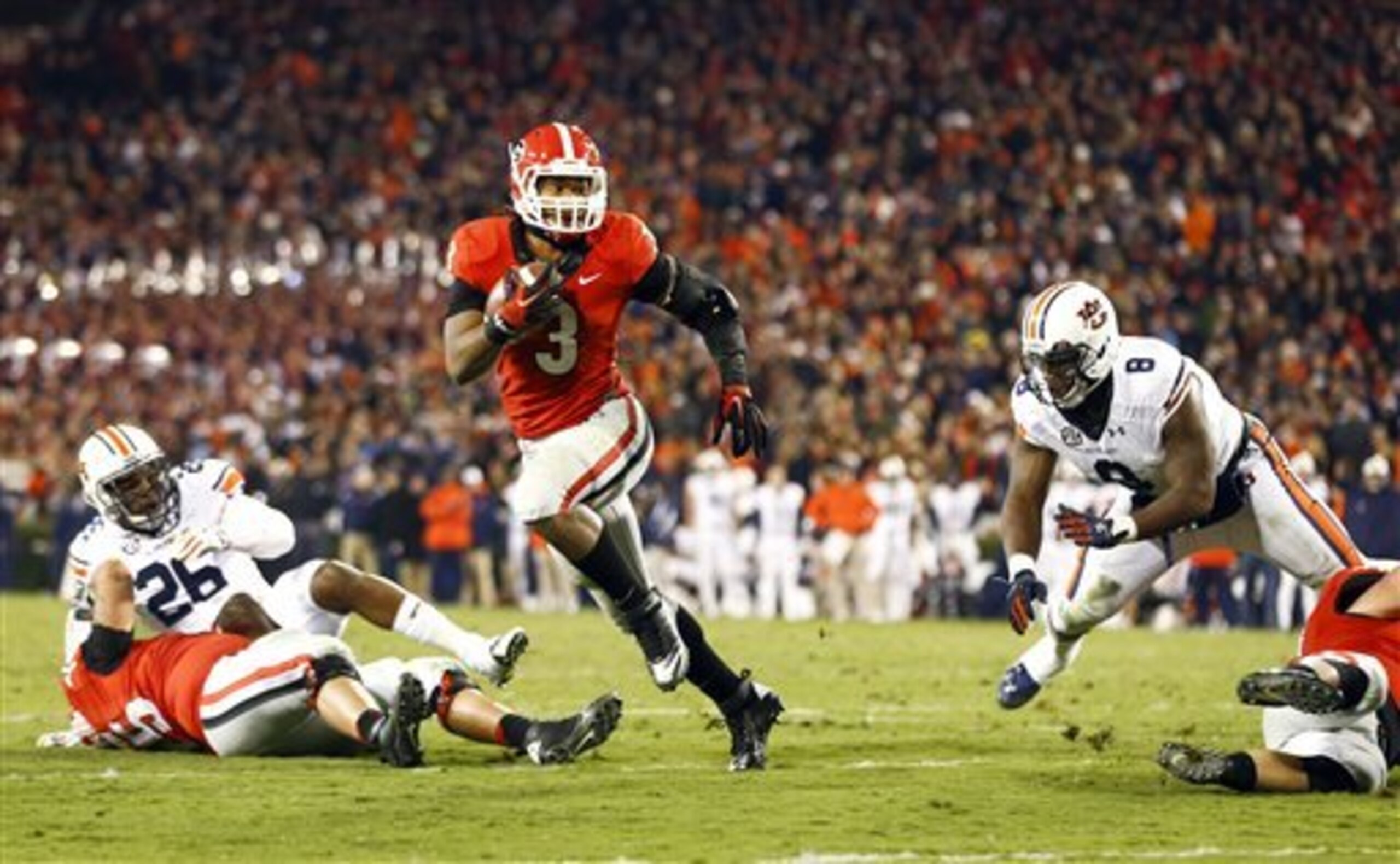
Armed with excellent size, balance and quickness, former Georgia Bulldog Todd Gurley is the top running back prospect in the 2015 class. He suffered a torn ACL last fall, but the NFL is full of great players who came back from the same injury and have had successful careers. Denver’s Von Miller and Chris Harris, New England’s Darrelle Revis, Kansas City’s Eric Berry and Arizona’s Tyrann Mathieu are all elite players who have torn their ACL at some point.
What is important for Gurley is that he isn’t rushed back. He’s not as elite of an athlete as Adrian Peterson, so it’s not fair to expect him to be ready Week 1 of the 2015 season. That’s not a slight on Gurley, as he compares to a potential Hall of Famer in Steven Jackson quite well. His ability to get up to top speed and demolish would-be tacklers is certainly special and something that mid-round backs don’t offer an offense.
The gap from Gurley to an “average” running back prospect is huge, even when considering the torn ACL. His upside is so good that a team would be wise to invest a late first-round pick on him and let him fully heal before he sees the field. Once he’s ready, he is sure to be effective and highly productive.
Melvin Gordon, RB, Wisconsin
2 of 6
Like Gurley, Melvin Gordon is projected to be a first-round pick. Considering that all of his knee tendons are healthy, he very well could be the top back selected in 2015. His level of acceleration, short-area quickness and overall build make him special.
Gordon was productive with the Wisconsin Badgers, totaling 2,587 yards in his junior year alone. For many other players, that’s a total you’d likely see over two or three seasons. But he has a number of traits that helped him produce such insane numbers on a weekly basis.
Once Gordon finds the open field, he is hard to bring down. He plays with great power, keeping his pads low. He’s also evasive enough to juke defenders. At 6’1” and 215 pounds, he’s bigger than most secondary defenders, but he’s quick enough to force members of the front seven into bad angles, and he can shake those tackles because he has the leverage needed to break free.
The concern with Gordon is that his vision is somewhat questionable. When there is a clear running lane, he rarely passes it up, and he can create chunk plays with ease. But when he has to create his own space, he always looks to bounce runs to the outside corner. He got away with this often in college because he’s a great athlete. The NFL will likely be less forgiving, so he’s going to have to trust his eyes and make quality runs happen between the tackles.
Ameer Abdullah, RB, Nebraska
3 of 6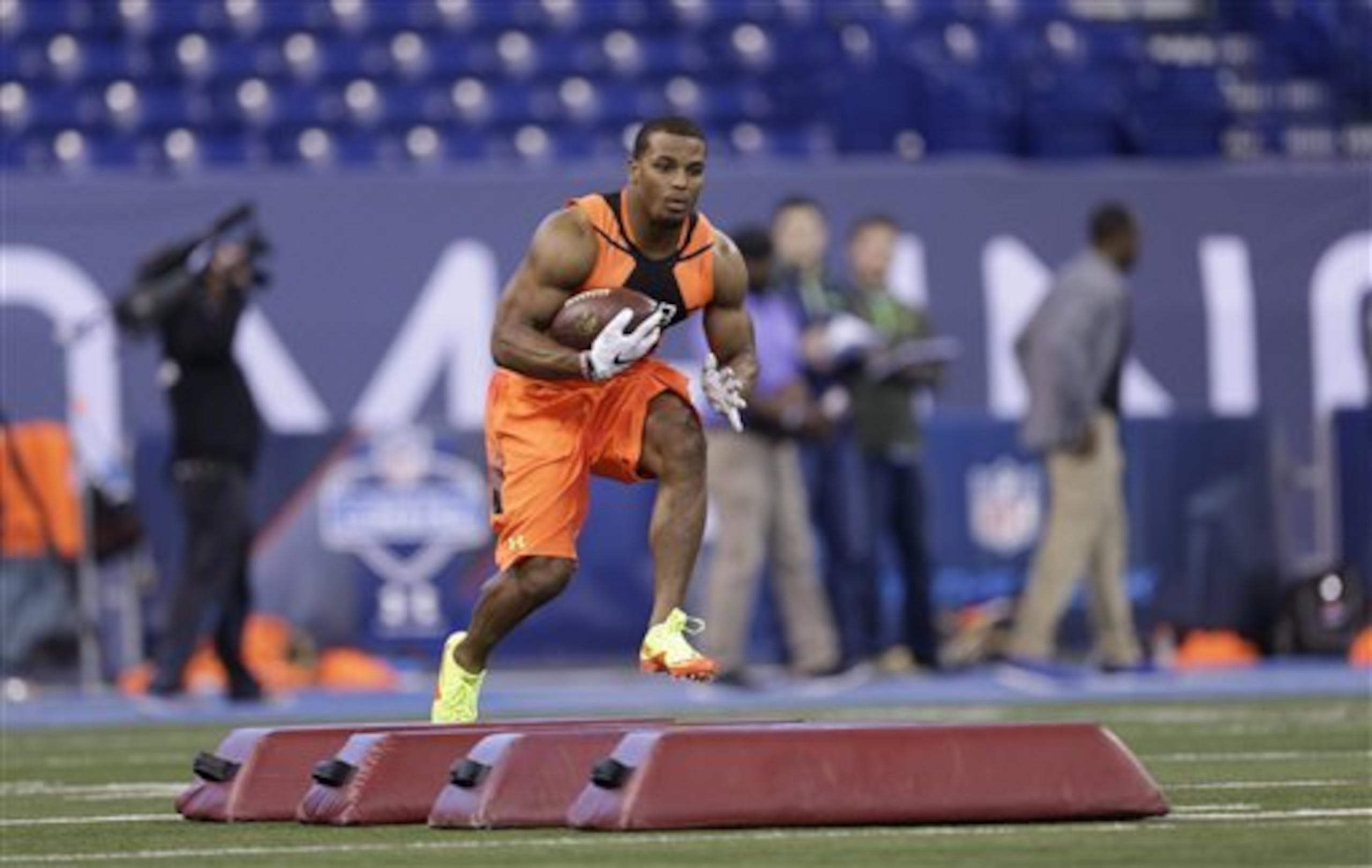
Ameer Abdullah of Nebraska is only 5’9”, but he isn’t small. At 205 pounds, Abdullah delivers a jarring blow to defenders who dare to square up and hit him. His pad level is so low and his balance so consistently good that he is much harder to bring down than many undersized backs are.
There is a risk of categorizing Abdullah as a scatback or third-down specialist because of his size, but that would be a mistake. He carried the ball 813 times in his career, averaging 5.6 yards a carry for a total of 4,588 yards and 39 touchdowns. His production was no accident, and the Nebraska passing game did him zero favors.
He may not become a 25-carry-a-game back, but he doesn’t need to get the rock that often to be effective. He’ll have value whether he’s getting the ball five times or 20 a game. His combine tests show he’s an elite athlete despite any pigeonhole that he’s placed into on account of his size.

.jpg?w=2560 "Cardinals Giants Football")
.jpg?w=2560 "Jets Dolphins Football")
Jay Ajayi, RB, Boise State
4 of 6
Seemingly an under-the-radar talent during the college football season because he played in the Mountain West conference, Jay Ajayi checks all the boxes as a potential stud running back. The former Boise State Bronco has excellent size and explosiveness for his position, and he proved it at the NFL Scouting Combine. His vertical jump of 39” and 60-yard shuttle time of 11.1 seconds each were in the 90th percentile of all running back scores since 2005.
The benefit of having such impressive times is that Ajayi stands 6’0” and 221 pounds and still has the lower-body explosion to break off big runs. His 3,796 career rushing yards and 50 touchdowns were a result of his great physical traits and solid vision. In a zone-running scheme, Ajayi has the recognition and burst to cut back when the weak side of the play opens up. He’s as quick as he is fast and has shown good power.
Ajayi has had troubles with fumbles for stretches of his career. He averaged a fumble almost once every three games, which is not something that can continue in the NFL. He keeps the ball too far from his body when contact arrives, so he’ll have to adjust his arm angle and bring the football in closer to avoid these issues.
Duke Johnson, RB, Miami
5 of 6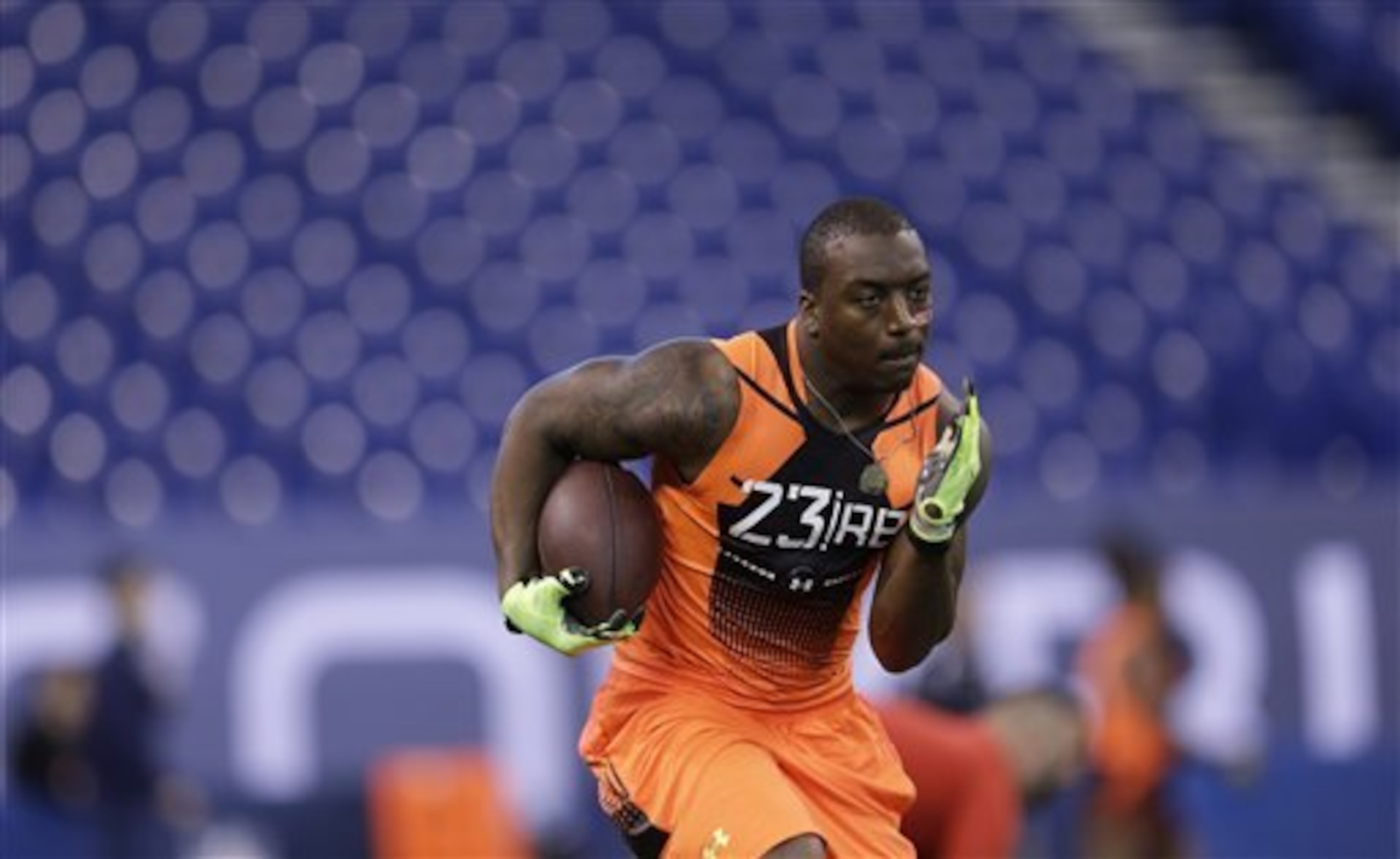
One of the best downhill runners in the class is Miami’s Duke Johnson. His ability to hit home runs forced defenses to account for his presence every snap. Despite posting a pedestrian 40-yard dash time at the combine, Johnson is potentially the fastest player amongst the top-tier backs in the class, no matter what the stopwatch said.
But speed isn’t the only way Johnson threatens a defense. He’s decisive and has great vision. Miami ran both zone- and gap-blocking schemes, and he excelled in each. His footwork is so efficient that he can effortlessly change directions and leave defenders thinking that he’s still headed in his original pathway.
The former Hurricane described his playing style to Newsday's Kimberley A. Martin, saying, "I play football unpredictable, I would say. Just because at any given time I can score. Any given time, I can make a big play. You never know."
Like the aforementioned Abdullah, Johnson has to overcome size stigmas. He possesses a muscular frame at 5’9” and 207 pounds. He has a history of injuries throughout his career, but his 2014 season showed he is capable of staying healthy. Johnson had six contests with 19 or more carries and totaled 1,652 yards. That’s the type of reliability NFL teams expect out of this game-changing back.
Tevin Coleman, RB, Indiana
6 of 6
After Tevin Coleman’s sophomore season with Indiana, it was fair to wonder whether he could replicate his 7.3 yards per carry when he assumed the starting job in 2014. His junior season, however, yielded an average of 7.5 yards per carry on 270 touches, which totaled an incredible 2,036 yards. The former Indiana Hoosier running back had one of the best breakout seasons in recent years, and his draft projection is soaring.
Coleman has good but not great size for the position at 5’11” and 206 pounds. His upright running style is reminiscent of Murray. He’s not going to plow through many defenders, but he has the speed to force advantageous angles and blow past any challengers.
Coleman stands out from the rest of the pack for his natural movement, vision and speed for his build. He looks bigger than his listed size when he’s on the field, and he’s tough to bring down. With the speed, size, vision and toughness boxes checked, he deserves to be in the conversation for the top five backs in this class.
All stats used are from sports-reference.com.
Ian Wharton is an NFL Draft Featured Columnist for Bleacher Report, contributor for Optimum Scouting and analyst for eDraft.

.jpg?w=2560 "Ward Nearly Walks Out of Presser ▶️")
