
Fraser's New and Improved National Hockey League: Part Two
This is Part Two of my three-part article on how I would make the National Hockey League a more profitable and how I’d return the league back into the big four major sporting leagues. In this section, I will look at some new locations to move teams as well as to use as expansion site.
Let’s get started. First up are the nine areas of the United States that could support the NHL.
1) Houston is situated in Southeast Texas, just west of the Golden Triangle.

.jpg?w=2560 "Golden Knights Blues Hockey")
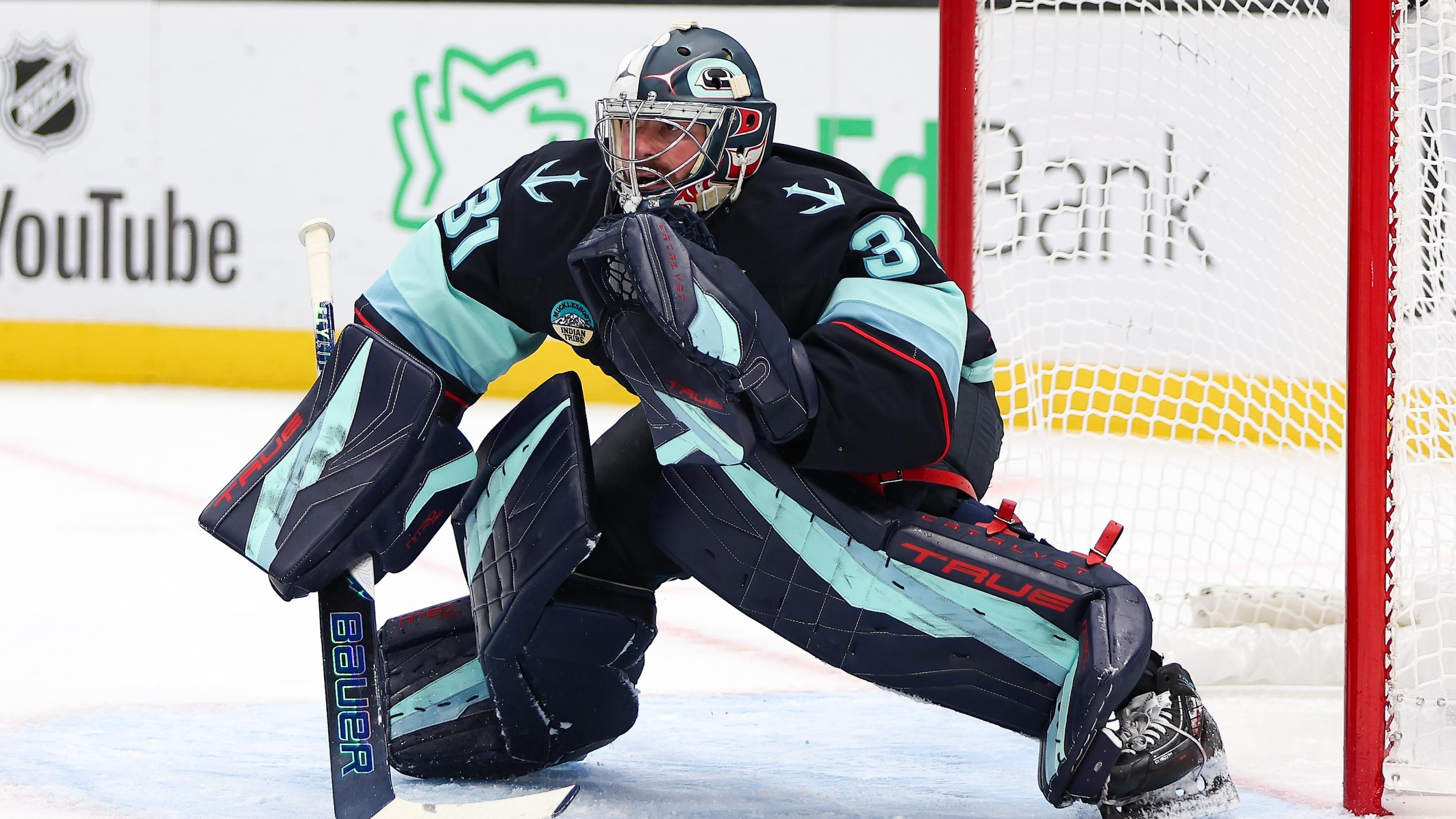
Houston is among the fastest-growing metropolitan areas in the United States. From 2000 to 2030, the metropolitan area is projected by Woods & Poole Economics to rank fifth in the nation in population growth—adding 2.66 million people.
Houston has had professional hockey teams in the city in the past. The Houston Aeros played in the World Hockey Association from 1972-1978. The franchise won two league championships and former NHL All-Stars that played for Houston include the Howe family, father Gordie and his sons, Mark and Marty.
Other players, including Rich Preston, Morris Lukowich, and four-time Stanley Cup champion John Tonelli, have all called Houston home.
Houston has made several applications in the past for an NHL expansion franchise but circumstances seemed to derail the bid each time. Based on the above population for Houston, the area could have a calculated hardcore fan base of approx. 29,000 and could support at least one, possibly two clubs.
2) The San Francisco Bay Area, commonly known as the Bay Area, encompasses the metropolitan areas of San Francisco (12th largest in the country) and San Jose (31st largest in the country), as well as four other smaller, surrounding metropolitan areas. When defined as a Combined Statistical Area, the Bay Area is the sixth largest in the country, including over 7.2 million people.
The Oakland Coliseum was home to the California Golden Seals of the NHL from 1967-1976.
The San Jose Sharks began to play in the 1991–92 season and were allowed to take a certain number of players from the North Stars to their new club. In return, the North Stars would be allowed to participate as an equal partner in an expansion draft with the Sharks.
The Bay Area has a long history of supporting two major sports teams in different leagues: the San Francisco Giants and the Oakland A’s of Major League Baseball and the San Francisco 49ers and the Oakland Raiders of the National Football League.
Based on the above population for the Bay Area, the area could have a calculated hardcore fan base of approx. 32,000 and could support at least two clubs.
3). Seattle Washington, has an estimated population of 3,344,813, making it the 15th largest United States Metropolitan Statistical Area.
Based on commuting patterns, the adjacent metropolitan areas of Olympia, Bremerton, and Mount Vernon, along with a few smaller satellite urban areas, is grouped together in a wider labor market region known as the Seattle-Tacoma-Olympia Combined Statistical Area (CSA).
The population of this wider region is 4,087,033. The Seattle CSA is the 13th largest CSA in the country.
The city of Seattle either has been or is home to major sports franchises. The Supersonics of the National Basketball Association, the Seahawks of the NFL, and the Mariners of the MLB have all made Seattle home.
Seattle's professional sports history began at the start of the 20th century with the PCHA's Seattle Metropolitans, which in 1917 became the first American hockey team to win the Stanley Cup.
The city of Seattle also currently has a hockey franchise; the Seattle Thunderbirds have been in the Western Hockey League of the Canadian Hockey League since 1977.
Seattle is also only 173 kilometres from Victoria, B.C. and 226 kilometres from Vancouver, B.C. Remember in the last article I said the Vancouver market could support two franchises.
Seattle has made several applications in the past for an NHL expansion franchise but circumstances seemed to derail the bid each time. Based on the above population for Seattle CSA, the area could have a calculated hardcore fan base of approx. 21,000 and could support at least one.
4) Cleveland is located in northeastern Ohio on the southern shore of Lake Erie, approximately 60 miles west of the Pennsylvania border.
Cleveland is part of the Cleveland-Akron-Elyria Combined Statistical Area, which in 2000 had a population of 2,945,831, and ranked as the country's 14th largest.
Cleveland has a rich and diverse sporting history. Currently, Cleveland is home to the Browns of the NHL, the Cavaliers of the NBA, and Indians of MLB. The tradition of professional hockey in Cleveland started with the original Cleveland Barons in 1937.
Cleveland iced an NHL team, also called the Cleveland Barons, from 1976 to 1978, which was later merged into the Minnesota North Stars (now the Dallas Stars). Cleveland's current hockey team is the American Hockey League’s Lake Erie Monsters, which began play in 2007.
The city has had other major and minor-league hockey teams in the past including the Cleveland Lumberjacks of the International Hockey League and the Cleveland Crusaders of the WHA.
Based on the above population for Greater Cleveland, the area could have a calculated hardcore fan base of approx. 15,000 and could support at least one franchise.
5) The Portland–Vancouver–Beaverton Metropolitan Statistical Area (MSA), the 23rd largest in the United States, has a population of 2,159,720. Of them, 1,595,704 live in Oregon, while the rest live in Washington.
Portland, Oregon has a rich sporting history. It is the home of the Portland Trail Blazers of the NBA, since 1970 and also the Portland Winter Hawks, a junior hockey team in the WHL, since 1976.
Based on the above population for Greater Portland, the area could have a calculated hardcore fan base of approx. 11,000 and could support at least one franchise.
6). Kansas City is the largest city in the state of Missouri. The city also serves as the anchor city of the Kansas City Metropolitan Area, second largest in Missouri, and largest with territory in Kansas.
As of February 6, 2009, it was revealed that the U.S. census had underestimated Kansas City's population, and re-released it to be 475,830, with a metro area of 2,053,928.
Kansas City plays host to Royals of the MLB and the Chiefs of the NFL. In 1974, the NHL ended its first expansion period by adding teams in Kansas City and Washington, D.C. Although they were better than their expansion brethren, the Washington Capitals, the Kansas City Scouts began to suffer from an economic downturn in the Midwest.
For their second season, the Scouts sold just 2,000 of 8,000 season tickets and were almost $1 million in debt. Due to their various on- and off-ice disappointments, the franchise moved to Denver and was renamed the Colorado Rockies and later transferred to New Jersey and are now called the Devils.
Based on the above population for Greater Kansas City, the area could have a calculated hardcore fan base of approx. 11,000 and could support at least one franchise.
7) Milwaukee is the largest city in Wisconsin and 23rd largest in the United States. Milwaukee is the regional center of the seven counties Greater Milwaukee Area, with an estimated population of 2,014,032.
Milwaukee has a rich history of involvement in professional and nonprofessional sports, going back to the 19th century. Milwaukee is home to the Bucks of the NBA, the Admirals of the AHL and the Brewers of the MLB. Between 1933 and 1994 the Green Bay Packers of the NFL split their home games between Green Bay and Milwaukee.
Based on the above population for Greater Milwaukee, the area could have a calculated hardcore fan base of approx. 11,000 and could support at least one franchise.
Now, let's take a look at some markets in Canada that could support the National Hockey League. Here are four that I examined closely.
1) Regina, Saskatchewan is probably not the first city you all thought you’d see but I wanted to look at them because of the Saskatchewan Roughriders. For those of you not aware of the Roughriders, they are Saskatchewan’s one and only professional sports team and they play their home games at Regina’s Taylor Field.
The "Riders" are a community-owned team with a loyal fan support base; every game in the 2008 season was sold out; out-of-town season ticket holders often travel 300-400 kilometers (200–250 mi) or more to attend home games.
The province of Saskatchewan is home to five of the six teams in the East Division in the Eastern Conference of the Western Hockey League. The Saskatchewan Junior Hockey League is a Tier II Junior A ice hockey league under Hockey Canada, a part of the Canadian Junior Hockey League.
Out of the SJHL's 12 teams, eleven of them are based in Saskatchewan. A major attraction in small-town Saskatchewan, the SJHL draws 400,000 fans each season, nearly half the population of the province.
I put Regina on my list because of recent news that the Saskatchewan Roughriders were looking into the possibility of building a doom-stadium to house their home games, at an estimated cost of $300 million.
The team may be the richest team in the Canadian Football League with a cult-like following that spreads all across Canada and makes them a merchandise sales leader not only for the CFL but every major professional sporting organization in North America.
The population of the Metro city of Regina is 206,700. The province of Saskatchewan has a population of 1,023,810 with most living in the southern half of the province.
Based on these population numbers and the habits of the Saskatchewan sporting community, the area could have a calculated hardcore fan base of approx. 20,000 and could support at least one franchise.
2) Winnipeg Manitoba, is located near the longitudinal centre of North America, in south central Canada, near the eastern edge of the Canadian Prairies. The Winnipeg Metropolitan area is Canada's 8th largest Census Metropolitan Area, with 694,668 inhabitants (739,000 including the capital region), and the City of Winnipeg is Canada's 7th largest municipality.
The Winnipeg Jets played in both the World Hockey Association (WHA) and the National Hockey League (NHL) from 1972 to 1996. Due to mounting financial troubles, in 1996 the franchise moved to Phoenix, Arizona and became the Phoenix Coyotes. The Jets were a storied franchise for the limited time they were in existence.
Hockey Hall of Famers like Bobby Hull, Dale Hawerchuk, and Phil Housley at one time all called Winnipeg home. Anaheim head coach Randy Carlyle also played for the Jets. A number of former Jets remain active in the NHL; as of the 2008–09 season, these include Nikolai Khabibulin, Teemu Selanne, Keith Tkachuk, and Kris Draper.
Shane Doan, the current captain of the Coyotes, is the last Jet to remain with the Winnipeg-Phoenix franchise.
Based on the above population for the city of Winnipeg, the area could have a calculated hardcore fan base of approx. 15,000 and could support at least one franchise.
3) Quebec City is the capital of the Canadian province of Quebec. It is the second most populous city in the province, after Montreal, about 233 kilometers to the southwest. As of the 2006 Canadian Census, the metropolitan area has a population of 715,515.
The Quebec Nordiques were a professional ice hockey team based in Quebec City, Quebec, Canada. The Nordiques played in the World Hockey Association (1972–1979) and the National Hockey League (1979–1995). The franchise was relocated to Denver, Colorado in 1995 and renamed the Colorado Avalanche.
Hockey Hall of Famers like Michel Goulet, Peter Stastny,and future HHOF’s Joe Sakic and Peter Forsberg all called Quebec City home. Only three players who suited up for the Nordiques are still active: Mats Sundin of the Vancouver Canucks, Owen Nolan of the Minnesota Wild, and Adam Foote of the Colorado Avalanche.
Based on the above population for the city of Quebec City, the area could have a calculated hardcore fan base of approx. 15,000 and could support at least one franchise.
4) Hamilton Ontario, has become the centre of a densely populated and industrialized region at the west end of Lake Ontario known as the Golden Horseshoe.
The Golden Horseshoe is a densely populated and industrialized region centered on the western end of Lake Ontario in Southern Ontario, Canada, with outer boundaries stretching south to Lake Erie and north to Georgian Bay.
With a population of 8.1 million people, it makes up slightly over a quarter (25.6 percent) of the population of Canada and contains approximately 75 percent of Ontario's population, making it one of the largest population concentrations in North America.
The region is projected to grow to 11.5 million people by 2031. In terms of population, the Greater Horseshoe is the sixth most populated greater urbanized area in North America just behind the Baltimore-Washington-Northern Virginia CSA.
If you take the population of the Greater Toronto Area out of the calculation, the Golden Horseshoe region adjusted population is roughly 3 million people. Hamilton has had an AHL franchise called the Bulldogs, since 1996.
Based on the above population for the area, the area could have a calculated hardcore fan base of approx. 60,000 and could support at least three franchise clubs.



.jpg?w=2560 "WWE Raw Live Grades 🔠")
.jpg?w=2560 "Chiefs, Steelers Eye WR Trades")
.jpg?w=2560 "Multiple NFL Trades Predicted")
.jpg?w=2560 "🚨Jay-Z Headlining Super Bowl")


.jpg?w=2560 "JT's Projected Trade Cost")