

Duke Basketball: Teams That Blue Devils Want to Avoid in the NCAA Tournament
Duke's road to its first national championship since 2010 is paved with plenty of potential potholes. Though at this point none of them have specific names, they do have certain styles of play—the kinds that won't mesh well with how this year's Blue Devils team operates.
While Duke has only lost three games this season, it has struggled in several others—often because of what the opponent has done. There's an endless supply of video from these near-losses, something that the teams that get matched up against Duke in the NCAA tournament will undoubtedly study.
What kinds of teams does Duke hope to avoid when the NCAA tourney gets going in just over two weeks? Scroll through to see our list of potential opponents that the Blue Devils would be best served to avoid.
An Experienced Team
1 of 5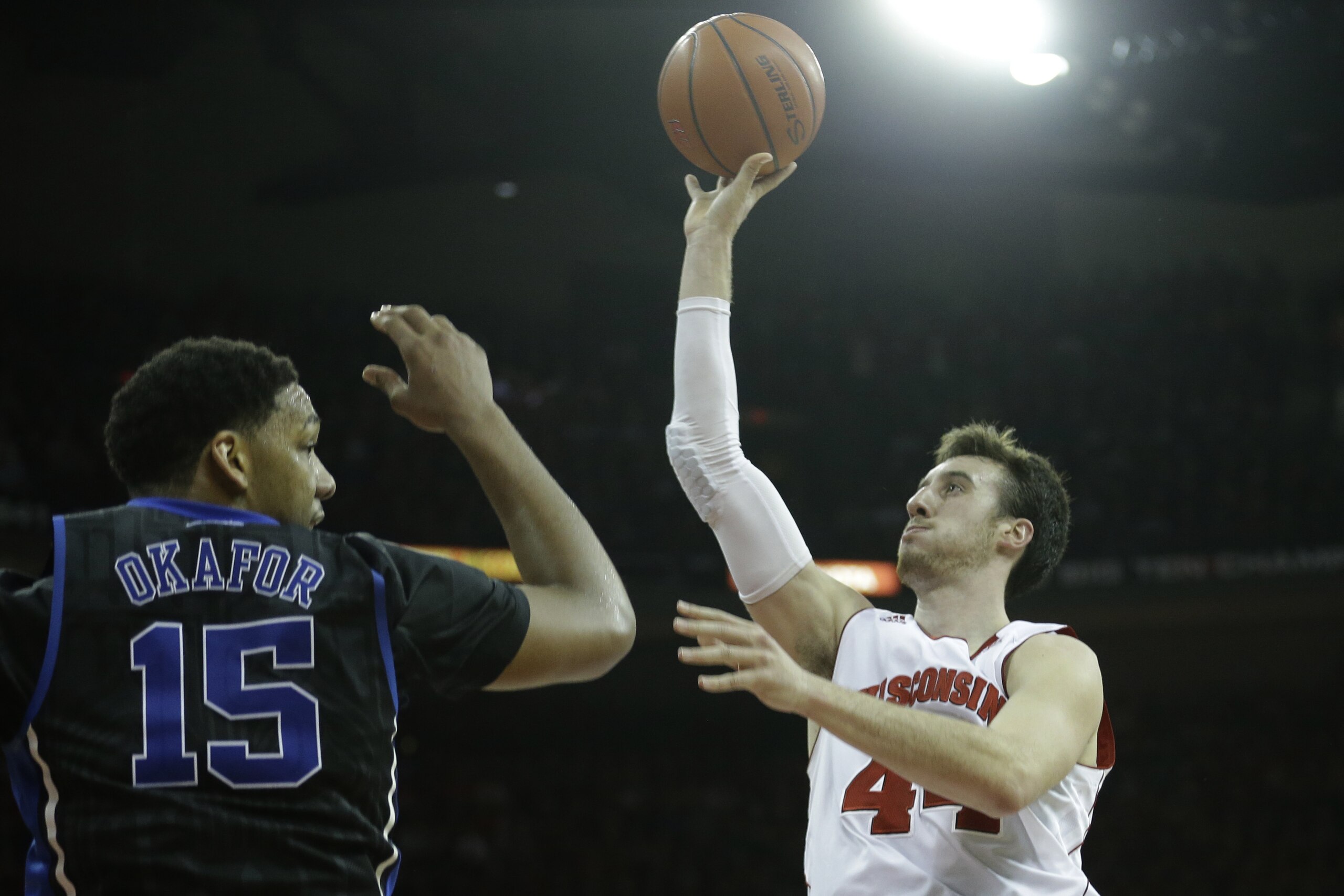
If there's one thing Duke's starting lineup is sorely lacking in, it's experience. Three starters are freshmen, and the maturity they've shown this season doesn't make up for the fact that they'll be heading into their first NCAA tournament in two weeks.
Quinn Cook is the Blue Devils' only senior contributor, and with sophomore Matt Jones replacing junior Amile Jefferson in the starting lineup, they've managed to skew even younger as of late. According to StatSheet.com, Duke is the 27th-youngest team in Division I.
The NCAA tourney is a one-and-done situation, a time when experience and headiness can be great weapons to use in clutch situations. There's a premium put on veteran-laden teams, and if Duke runs into one of those on the wrong night, it could spell an early end to the Blue Devils' March Madness.
Teams that fit this description: North Carolina Central (oldest team in Division I), Charleston Southern (fifth-oldest), Georgia State, Gonzaga, Ole Miss, Wisconsin, Yale
A Dominant Post Team
2 of 5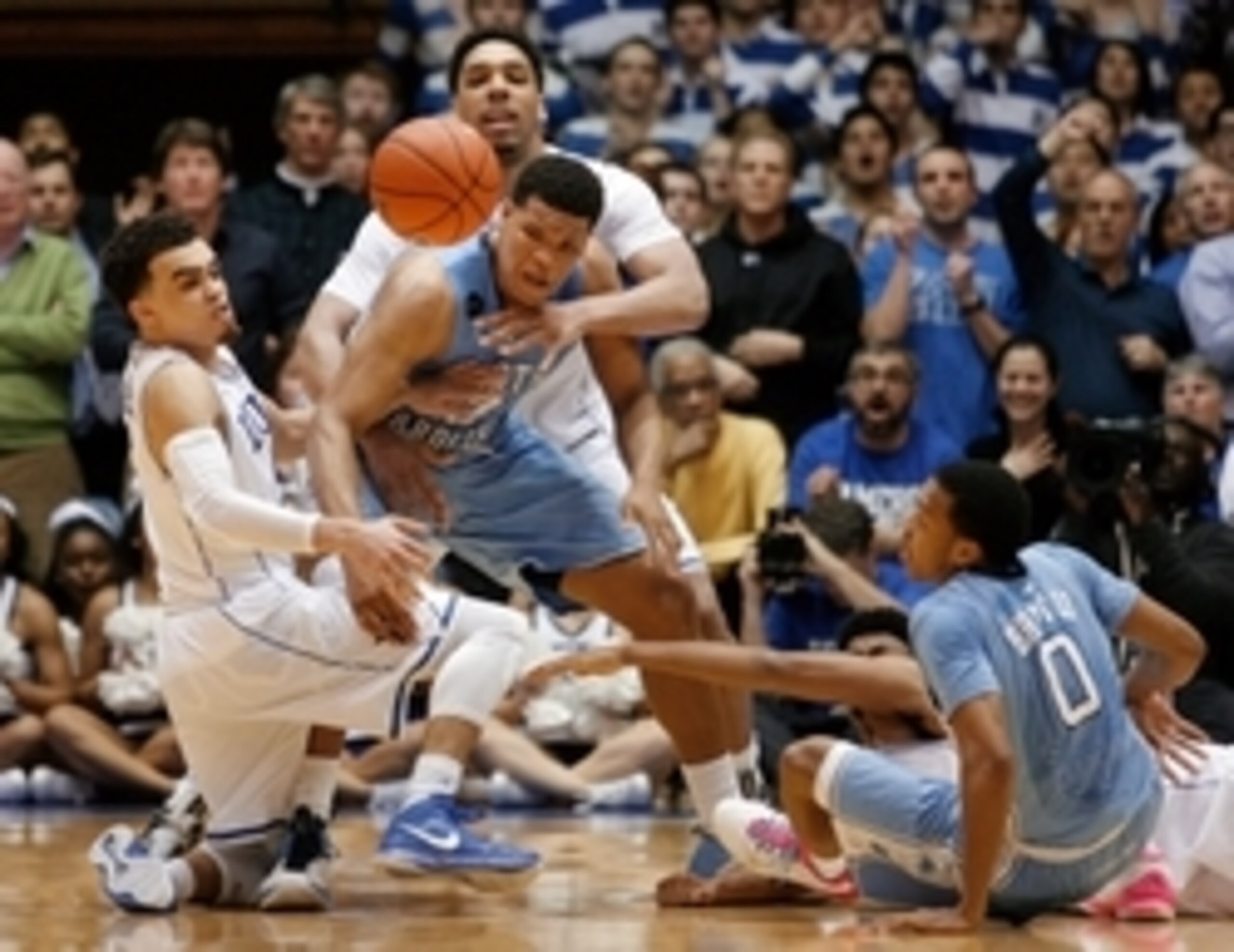
Jahlil Okafor is Duke's best player and will most likely win numerous player-of-the-year awards. But he's only one man, and if he has any limitation (besides shooting 52.5 percent from the foul line), it's his defense.
Though Okafor has blocked 40 shots and altered numerous others, defense is not the strongest part of his game. While he has been able to get the best of post players when he has the ball, he's also struggled to contain strong interior scorers.
And with Duke lacking any viable second option inside—Marshall Plumlee doesn't count—it will be up to Okafor to handle the interior defense on his own. That's music to the ears of teams that rely on strong post play on offense, especially if they have more than one strong interior scorer.
Teams that fit this description: Arizona, High Point, Kentucky, LSU, Wisconsin, Xavier
A Team That Draws Lots of Fouls
3 of 5
Duke shoots an average of nine more free throws per game than its opponents and outscores its foes by just over six points per game at the line. The Blue Devils are shooting 68.4 percent from the line, compared to 68.6 percent by opponents, so that statistic is mostly a wash.
That's unless the fouls start stacking up against Duke to the point where foul trouble forces coach Mike Krzyzewski to tap into a bench that's sorely lacking in options.
The Blue Devils are basically down to a six-man rotation, with Plumlee and guard Grayson Allen both averaging fewer than 10 minutes per game. Since ACC play began, they're playing 8.4 and 7.4 minutes per game.
Duke commits fewer than 16 fouls per game, but a shrewd foe will find a way to draw fouls. Not only will that lead to more opportunities at the line, but it will also wreak havoc on Duke's thin rotation.
Teams that fit this description: BYU, Gonzaga, Kentucky, Maryland, Villanova, West Virginia, Xavier


A Defensive-Minded Team
4 of 5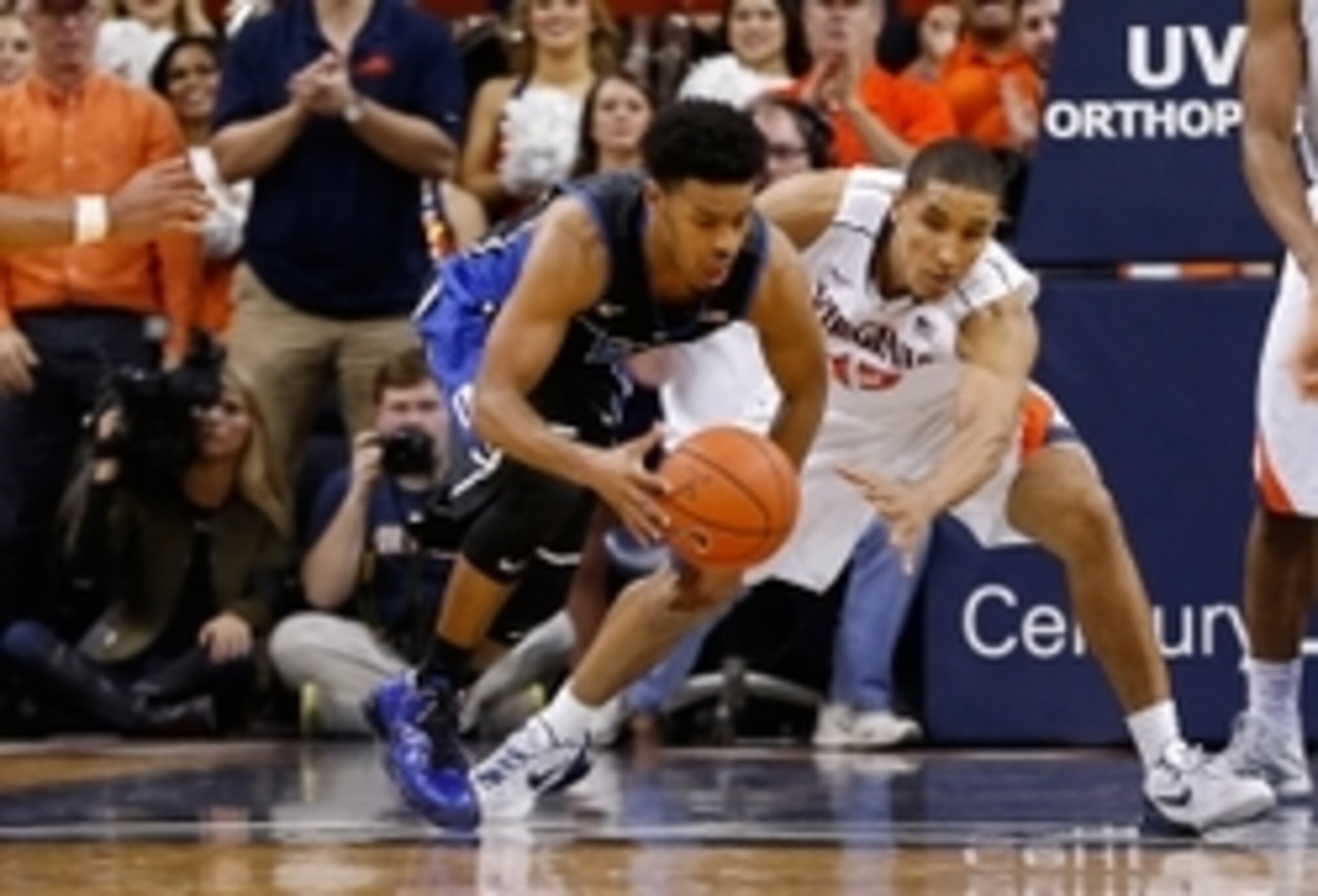
Duke is currently fifth in Division I in scoring at 80.7 points per game, and its 50.1 shooting percentage is third best in the country. When the Blue Devils want to score, they score, with few exceptions this season.
Even when facing Virginia and its vaunted pack-line defense, Duke found ways to score at will by pushing the ball in transition and driving to the basket. It shot 50.9 percent in that game—against a Cavaliers team that holds opponents to 35.2 percent shooting.
But defense becomes even more of a factor in the NCAA tournament, and scoring isn't as prevalent. It becomes harder for an uptempo team like Duke to assert its will on others as the defensive side of the game takes more control.
While all three of Duke's losses this season have come in games in which the team's own defense broke down, in the postseason the Devils may end up not being able to solve someone else's defense.
Teams that fit this description: Cincinnati, Georgia State, Gonzaga, Kentucky, San Diego State, Valparaiso, Utah
A Scrappy Underdog
5 of 5
This is the point in the slideshow where sensitive Duke fans should turn away—because we're going to talk about the past. And that means discussing the Blue Devils' shortcomings in recent years in the NCAA tournament.
Duke was knocked out of the tourney after one game in two of the past three seasons, and both times were against the same kind of opponent: an underdog that was given little chance to succeed. In 2012, it was 15th-seeded Lehigh, and last year it was No. 14 seed Mercer.
According to Odds Shark, Mercer was a 13-point underdog last year, while three seasons ago Duke was favored by 12.5 points. In 2013, Duke was a 21-point favorite over Albany and only won by 12.
The Blue Devils will be favored heavily against whichever team they face in the first few rounds of this year's tournament. They could be the favorite all the way into the Final Four. It's that first game, though, that seems to be the biggest problem, especially when it comes against a team that (on paper) seems far outmatched but is unwilling to play the role of pushover.
Teams that fit this description: Bucknell, High Point, New Mexico State, North Carolina Central, South Dakota State
Follow Brian J. Pedersen on Twitter at @realBJP.
.jpg?w=2560 "Cardinals Giants Football")
.jpg?w=2560 "Tyreek Deal May Come Soon")

.jpg?w=2560 "Ward Nearly Walks Out of Presser ▶️")
