

UNC Basketball: Reasons to Buy and Sell Tar Heels as Title Contenders
Can North Carolina win the NCAA title this season? It depends on what factors you put the most weight on.
The Tar Heels have a talented roster but have failed to play consistently. They have a veteran coach who has cut down the nets before but no players who have been involved in a prolonged postseason run. And their best player, while capable of taking over a game at any moment, has seemed reluctant to do so this season.
There are reasons to both buy and sell UNC as a legitimate championship contender, and every basketball fan/shopper has different tastes and preferences for what he's willing to put his money on.
With the NCAA tournament just over three weeks away, here are some of the key arguments for and against Carolina as a viable option for slotting through your bracket onto the winner's line.
Buy: Depth
1 of 6
Even with freshman Theo Pinson having missed the past eight games with a foot injury, North Carolina's depth remains strong. In fact, it's among the best in the power conferences, as coach Roy Williams has regularly used nine or more players for quality minutes.
Though coaches often try to thin out their rotation when the postseason begins, choosing to stick with the most dependable players, if an injury happens or players get in foul trouble there's no plan B to turn to. UNC has looked to avoid these problems by sticking to a deep lineup—one that has featured seven different players starting and 10 who average at least nine minutes.
The trio of forwards, Isaiah Hicks and Joel James and guard Nate Britt have been especially valuable over the past few weeks, with Hicks shooting 69 percent from the field and averaging 12.5 points over the last four games. Britt has provided valuable minutes in the backcourt, and overall the bench has prevented the starters from having to wear down or become a liability because of fouls or lack of productivity.
Sell: Defensive Breakdowns
2 of 6
It hasn't really mattered which five Carolina has had on the floor the past month; whoever is out there has been sorely lacking when it comes to making defensive stops.
UNC allows 68.9 points per game on 39.6 percent shooting for the season, but in ACC play those numbers have swelled to 72.4 points and 43.7 percent. In its losses, Carolina's opponents average 81.4 points and shoot 49.2 percent.
The low point was when Pittsburgh, a team that's shooting 45 percent this year, shot 64.9 percent in a runaway victory over the Tar Heels. It was the highest field goal percentage for any foe against UNC during Roy Williams' 12-year tenure in Chapel Hill.
Postseason games tend to be more predicated on defense than scoring punch, and UNC hasn't shown enough of that to think it's something it can accomplish during the NCAA tournament. The recent overtime loss at Duke had some flashes of strong defensive play, with Duke shooting only 33 percent for much of the second half before making 9-of-12 shots over the final four minutes and in OT.
Buy: Marcus Paige's Potential
3 of 6
North Carolina's biggest win this season, against Louisville, was paced by balanced scoring late, though the game-winning shot came from its clutch star. Marcus Paige shook off an ankle sprain to put in the driving floater with less than 10 seconds left for a one-point victory, giving us a glimpse of the Paige that so often took over games late during the 2013-14 season.
Though his numbers are down across the board from a year ago, the 6'1" junior is still the Tar Heels' most dangerous weapon and the player that every opponent game-plans to stop. Duke kept Quinn Cook on him like a wet blanket last week, refusing to give Paige even the slightest bit of room to get free, and this led to other players being more open for scoring opportunities.
For UNC to make a push, though, Paige needs to do whatever it takes to get his shots or make his presence known. In Saturday's easy win over Georgia Tech, he did this by posting his first career double-double with 13 points and 10 assists to bounce back from a pair of poor shooting games against Pittsburgh and Duke.
Paige was hot all season a year ago, but he really heated up in March. Over his last four games, including in the ACC and NCAA tournaments, Paige hit 14 three-pointers and averaged 22.3 points.



Sell: Marcus Paige's Performance
4 of 6
As mentioned in the previous slide, there haven't been many instances of "second half Marcus" from North Carolina's best player this season. And while some of that is because the Tar Heels aren't as much in need of him taking over, it's also because he's either been incapable of or unwilling to do so.
Some of it might be lingering injuries, including a bout of plantar fascitis, as well as the product of how teams guard him. But it's also his own doing, and far too often Paige has looked tentative and lacking in confidence, an unsettling development for a team whose upperclassmen (including fellow juniors Brice Johnson and J.P. Tokoto) have struggled to perform consistently.
Paige is shooting worse despite shooting less, his field goal percentage dropping from 44.0 in 2013-14 to 39.8 this year while averaging about two fewer shots per game.
The setup in which Paige is both the primary ball-handler and the go-to scorer just isn't working for UNC this season, so unless someone else steps up and begins to hit shots from outside, or either Joel Berry or Nate Britt becomes a legitimate point guard option, then Paige will continue to be splitting his concentration between two roles.
He must be a one-job guy for Carolina to go far.
Buy: Roy Williams' 743 Wins
5 of 6
Roy Williams is one of 31 coaches in Division I history with more than 740 victories, and with four more he will pass legendary Kansas coach Phog Allen (746) for 29th place. He has two NCAA titles and seven trips to the Final Four.
With that kind of a track record, even when things look down in terms of on-court performance there's value that comes from what Williams has done and is capable of doing.
Admittedly, during the 2005 and 2009 seasons that led to North Carolina titles, the Tar Heels didn't face the adversity of injuries and inconsistent play they have this year. But this has popped up in other seasons, and though UNC has failed to make it out of the first weekend of the NCAA tournament, both of those years saw the team look, at times, like one that could be destined for the NIT.
Williams-coached teams don't spiral downward. When struggles come about, his experience and tutelage become great motivators, and all of those "dadgums" he spouts during interviews take over.
Sell: No Extended Win Streaks
6 of 6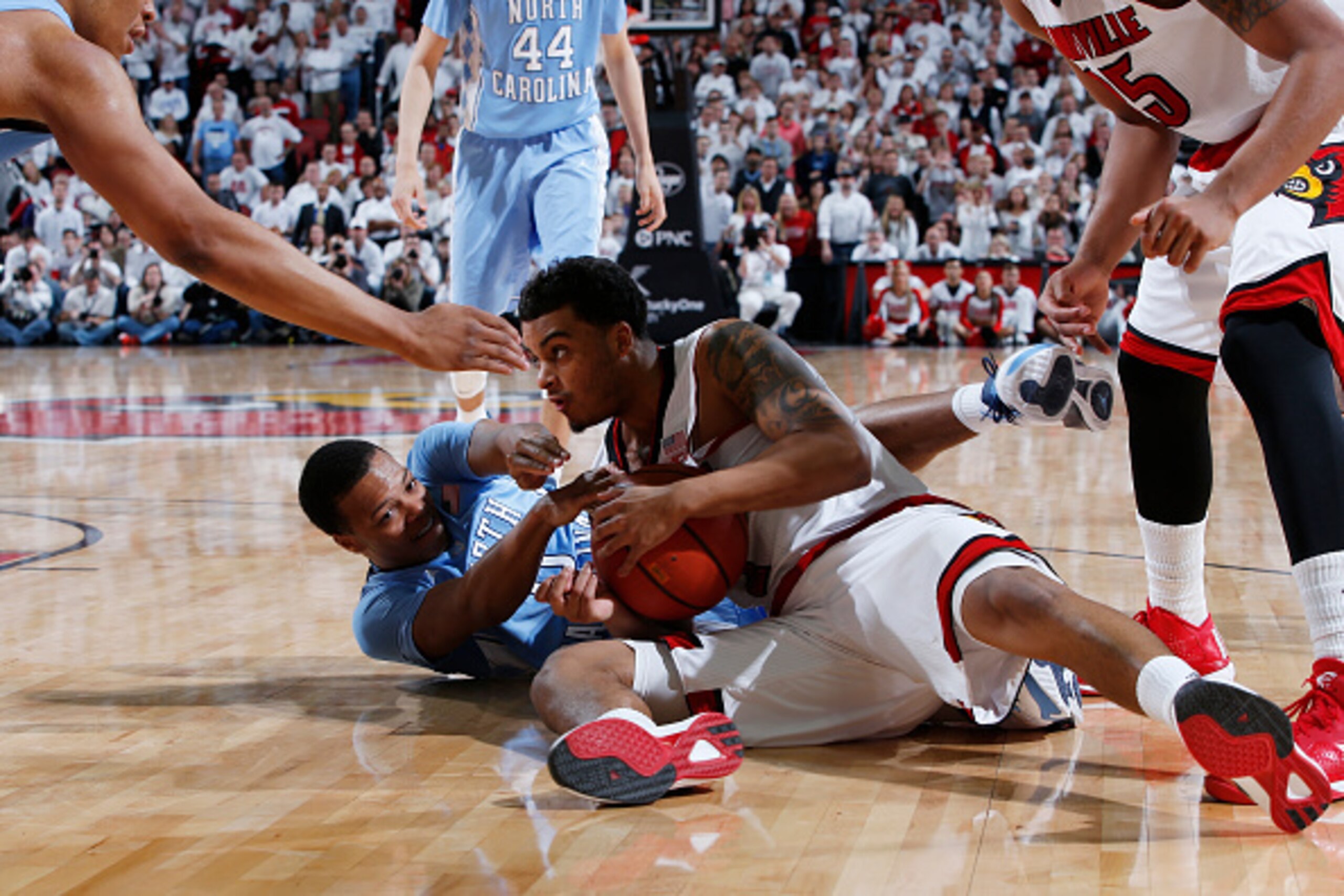
Since it only takes six consecutive wins to claim the NCAA title—seven if a team has to play in one of the opening-round games, but so far none of those have made it past the second weekend—a team only has to be able to show it can keep it all together for a few weeks to get the job done.
Yet the last team to win a championship that didn't have at least an eight-game winning streak during the regular season was Michigan State in 1999-2000. The Spartans ended the year winning their last 11, including the Big Ten and NCAA tourneys, but before that hadn't won more than five straight at any point in the season.
UNC has a six-game win streak, starting with its Jan. 10 win against Louisville and ending Jan. 31 in overtime at Louisville, but that's it.
There are four regular season games left, plus the ACC tournament, for the Heels to try to put together another run.
Follow Brian J. Pedersen on Twitter at @realBJP.
.jpg?w=2560)
.jpg?w=2560 "Rams Eagles Football")
.jpg?w=2560 "Bijan's INSANE 1st Half 🤩")
.jpg?w=2560 "Injury-stricken Seahawks signing veteran RB")

.jpg?w=2560 "2 NFL Officials Suspended")

