
The Minnesota Vikings' Round 1 Big Board Before Combine
On the eve of the NFL combine, the Minnesota Vikings and the rest of the NFL are setting their draft big boards and preparing to change them after extensive testing and interviews over the course of the next five days.
While the Vikings' board certainly won't be set at this point, it provides one of the first opportunities for coaches to watch the players they'll eventually be picking and gives them a good sense of who can do what. This is valuable even if some smart people declare that the NFL Scouting Combine is overrated.
Significant research into what events can provide leading indicators of NFL talent are beginning to emerge, and it's no secret that the Minnesota Vikings are one of the teams that put great stock in athleticism. They'll just have to make sure they don't "double count" the results—rewarding a player they know is athletic for having the kind of combine everyone expected him to have.
Regardless, before the combine starts, there are nine players the Minnesota Vikings should consider in the first round. With a number of positions out of consideration, like quarterback, it's almost guaranteed that the Vikings will be able to select one of the following players.
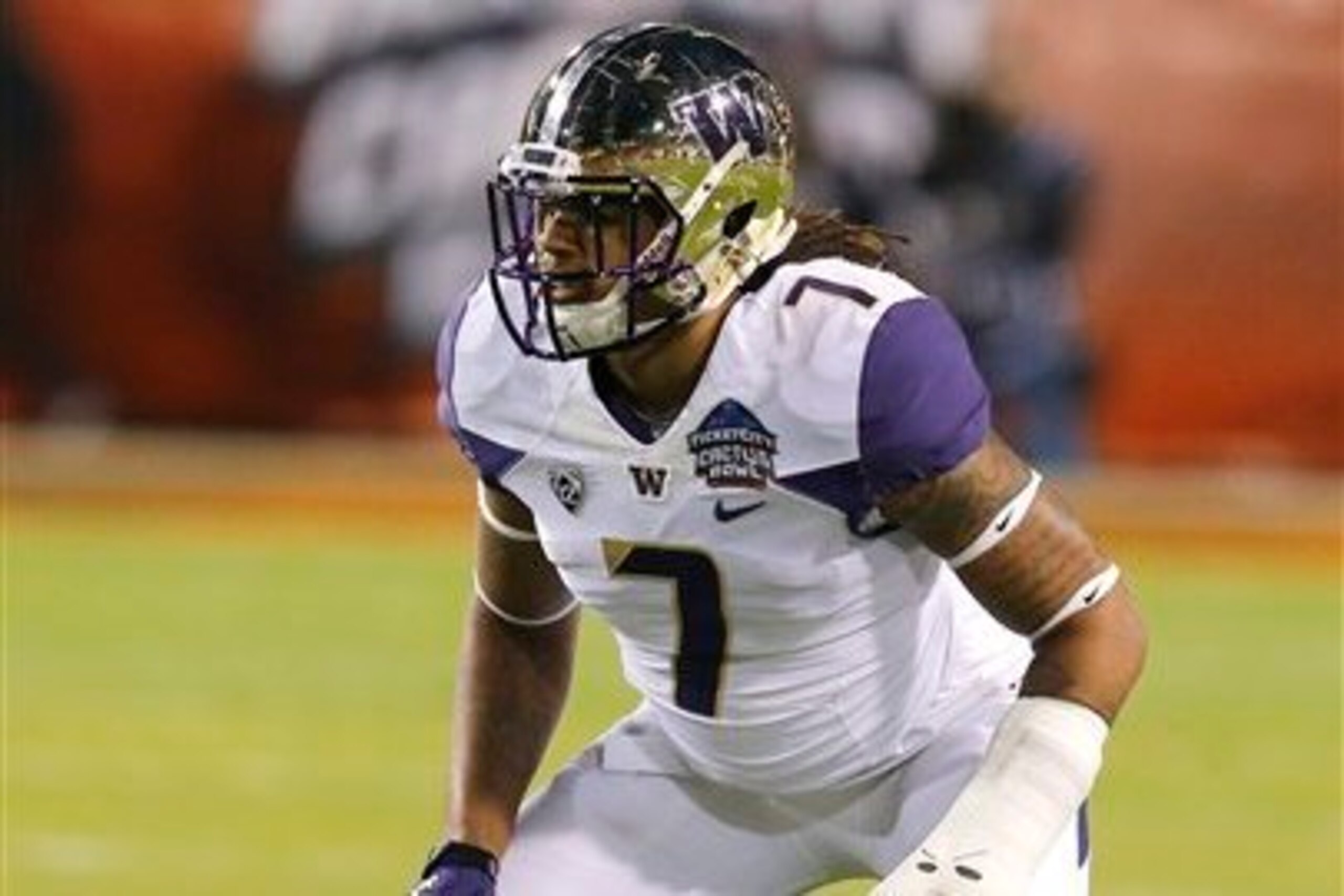
9. Trae Waynes, CB, Michigan State
1 of 9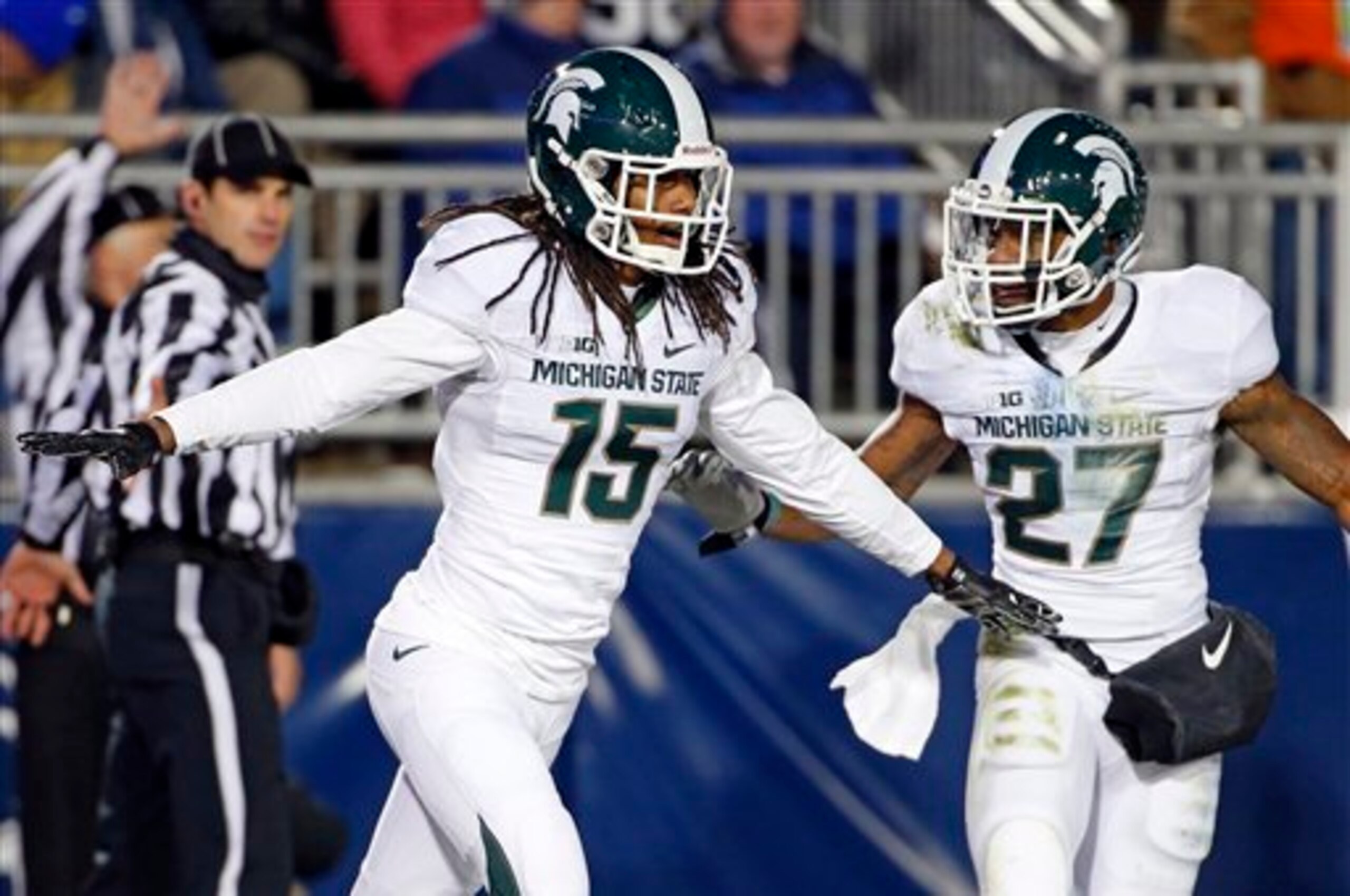
It shouldn't be much of a surprise that Darqueze Dennard's former teammate ends up on the Vikings' board. After all, Dennard was a perfect scheme fit for the Bengals, who snatched him up after he dropped due to injury. A perfect scheme fit for them means a great many things for working in Mike Zimmer's defense in Minnesota.
That said, this may be a little high for Waynes. While healthy, he is probably not as naturally gifted as Dennard was—and Dennard went a bit later last year. Still, the Vikings could either trade down and target Waynes or acknowledge that this class simply isn't as talented as last year's, and take whoever they think can best help the team at pick 11.
None of this means Waynes is a bad cornerback—he was absolutely stellar for Michigan State and can provide immediate help to the defense.
Waynes has the kind of length that will allow him to clog passing lanes much like Xavier Rhodes does, and has a natural feel for the position. Not only does he track receivers well, he can create positions on the field that squeeze passing windows tight and make life difficult for quarterbacks. With excellent awareness and a good degree of speed, Waynes has the ability to keep up with even the speediest receivers as they make their way downfield.
Unfortunately, he won't have the ability to fix the Vikings' real problem at cornerback: the slot. Waynes doesn't have the requisite fluidity to deal with slot receivers in the NFL and made up for it with exceedingly physical play in college. While he jams receivers with the best of them, it won't always work at the next level, and he may find that his stiffness leaves him exposed.
He has strengths and weaknesses against timing offenses, with the ability to disrupt route-running and bully receivers at the line of scrimmage. Unfortunately, he's a little slow at the route stem. Though he has good awareness regarding the geometry of the field, he needs to read receivers a little better and do a better job of keeping tight to the scheme.
As receivers leave their break, Waynes has to rely on his (excellent) recovery speed, and that creates opportunities for well-oiled offenses who rely on timing.
Still, his physicality (which may be even more of an issue in terms of penalties for him than it was Rhodes) can give the Vikings a uniform skill set across the secondary and make it difficult for receivers to survive the whole game.
8. Benardrick McKinney, ILB, Mississippi State
2 of 9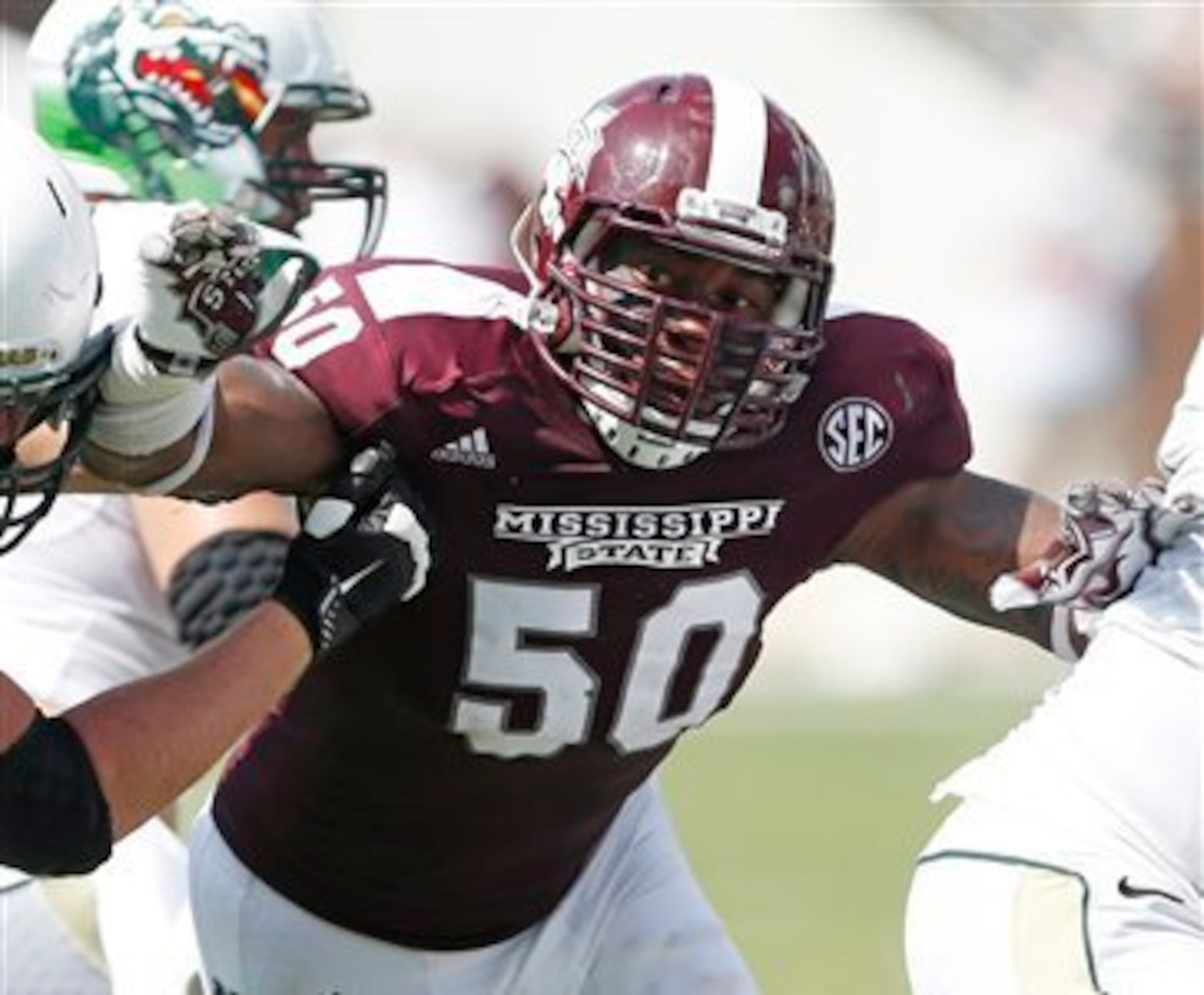
McKinney is here more because of his potential than his top-10 level of play. He will have to make good on the rumors of his athletic prowess at the combine. He will also have to show signs of improvement in his game over the course of the entire offseason process.
If McKinney doesn't live up to his billing as a pure athlete, he could drop off this board entirely. Though there are a lot of positive signs to his game, the negatives could be deal-breakers without the kind of potential that screams "investment."
McKinney may top all the other great choices for athletic linebackers (though he is not necessarily a great draft for linebackers). He has the ability to run obscene times for a 240- to 250-pound man in the 40-yard dash and post explosive scores in the broad jump and vertical leap.
Unfortunately, that may be paired with stiffness on the field. If he doesn't show flexibility and agility, the "complete" athletic package will be missing a few pieces.
The good news is that McKinney's issues aren't ones of on-field intelligence or instincts, but technique and leverage. McKinney has a good understanding of offensive schemes and has a nose for the ball-carrier. He understands pass drops well, and though he has issues closing over the middle against athletic receivers, he still possesses the wherewithal to break on routes.
Sadly, all of that is masked by bad footwork and poor leverage. He'll be washed out in the run game by attacking blockers who are too high and on the wrong side of the helmet, leaving running lanes open. He does tackle well when he gets to the runner, and he has excellent hand usage, but the issue stems from how he moves.
If he doesn't show improvement in this area in private workouts, he may tumble down draft boards.
Still, the Vikings need linebackers. If they can manage to have two of the most athletic young linebackers entering the NFL, it may seem like the Vikings are cheating by playing defense on a smaller field.
7. Marcus Peters, CB, Washington
3 of 9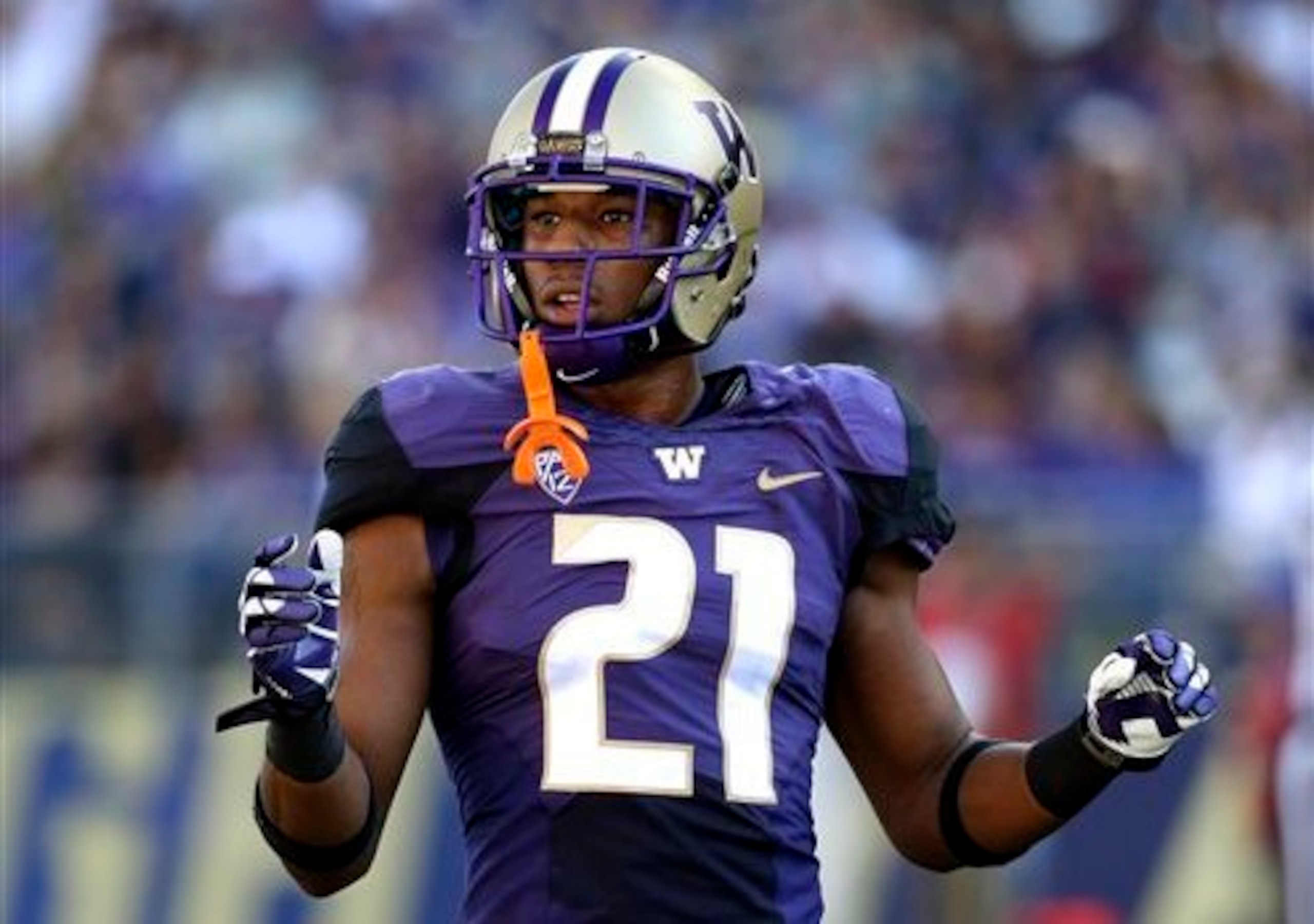
The combine carries different levels of importance for different players depending on the kind of baggage and expectations they bring with them to the event. In the case of Marcus Peters, the issue is not so much his talent level—he may be the most talented defensive back in the draft by a wide margin—but his character.
To that end, the combine holds value for him not in the physical workouts—which he will still have to excel in—but in the interviews, where he can expect team after team to grill him about his past and his dismissal from the Washington squad this last season.
Peters seems aware of the issue. In fact, he told Tom Pelissero of USA Today that he, too, would have kicked himself off the Washington team. He'll have to answer questions about why he was able to get along with coach Steve Sarkisian (where there were reportedly no problems) but couldn't manage to work with Marques Tuiasosopo with any level of harmony.
Reports of Peters choking out an assistant coach seem off-base, but his suspension evidently arose as a result of a combination of events, including poor communication with the coaches, disrespectful body language and tardiness to meetings.
Still, there are a lot of incidents attributed to Peters. Though he laughs off a number of them as untrue, there is enough evidence that the Vikings or any other team will want to question him. Among the things cited in the Pelissero story are reports that he argued with coaches during games (he said he was joking with a graduate assistant) and missed practices (he said it was one practice that was excused while he dealt with a traffic ticket).
It may be the case that Peters is never a leader in the locker room, and that's not damning; not every player can be. On film, he's a supremely talented player who can do well in any scheme. Smart, instinctive, fast and fluid, Peters could have been set for an unrivaled season as a defensive back.
He plays physically at the line of scrimmage, in the air and downfield in routes, but he doesn't draw penalties with overtly grabby play. His ball skills are up there with some of the NFL's best, and he tackles well against players of every size.
Peters isn't perfect—he plays a little too loose at times and is often overconfident in his ability, which can lead to open spaces when he opens his hips too early or plays with awkward footing. He doesn't have "amnesia" like the top corners are purported to, either, and it may be the case that bad plays early in a game plague him for the rest of the contest.
He also isn't an elite physical talent, though he has more than enough functional speed and strength to obviate most of that. He'll still need seasoning in any scheme in order to fulfill his potential, and that's no guarantee.
Still, with instincts and football intelligence like that, along with a prototypical frame and more than enough athleticism, he's a tempting player for the Vikings.

.jpg?w=2560 "Falcons Saints Football")
.jpg?w=2560 "Rams Eagles Football")
6. Ereck Flowers, OT, Miami (FL)
4 of 9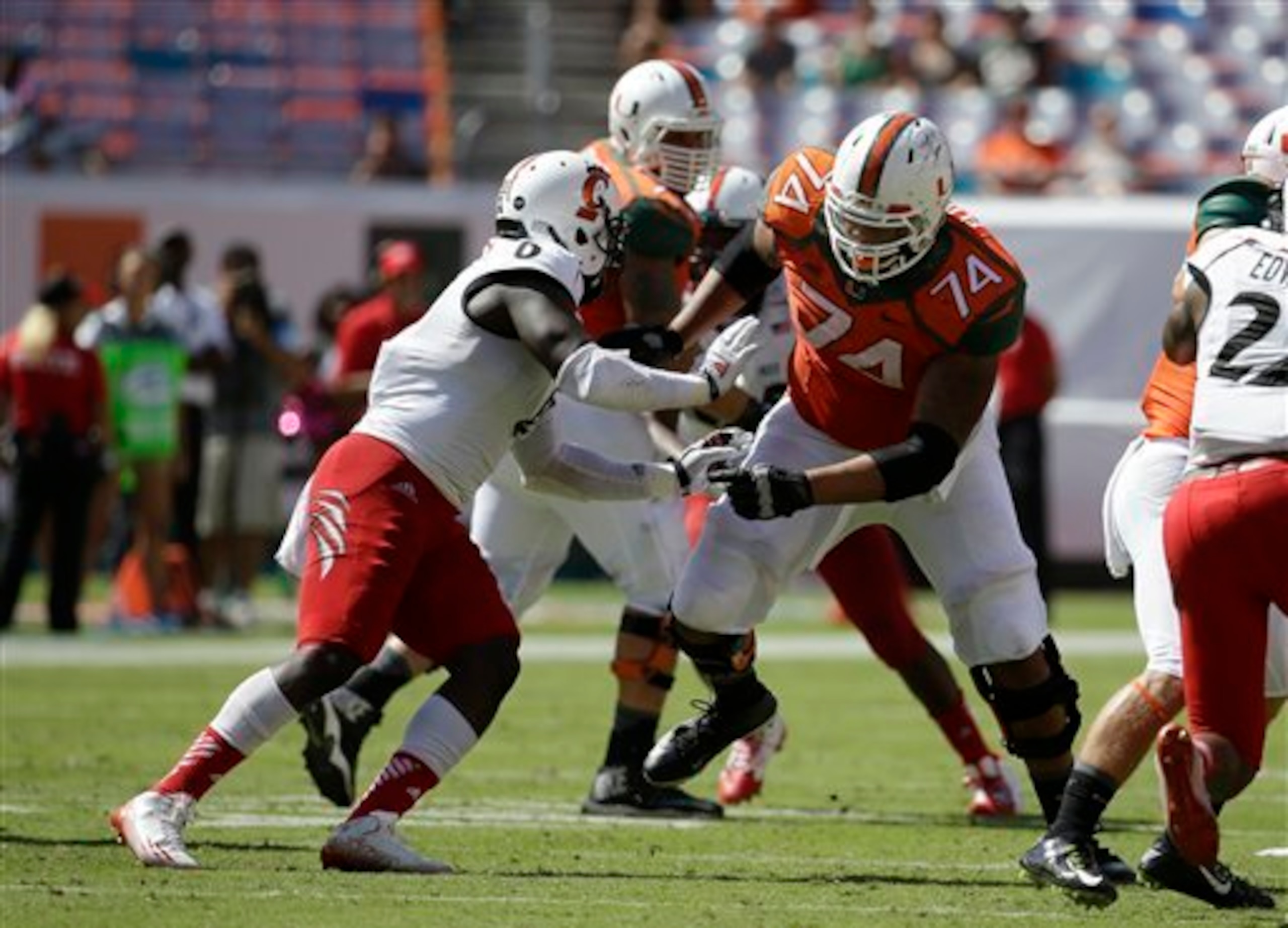
Massive and long, Ereck Flowers is rising up draft boards and has the opportunity to build on that at the NFL combine.
Not quite as polished as other offensive tackles in the NFL, Flowers—along with many others in this year's draft—could take the "Greg Robinson" route of developing as a guard before kicking out to tackle. In his case, this could happen if current left tackle Matt Kalil doesn't exhibit the kind of improvement the Vikings need from him.
The Vikings have a big hole at guard, and Flowers could more than adequately fill it if he demonstrates the potential he seems to have.
Flowers is an inconsistent player who happened to dominate one of the better pass-rushers in the draft, Randy Gregory, in their meetup earlier this year. He also stonewalled Florida State.
Flowers moves like a man who weighs 50 pounds less, and his 320-pound frame could add even more if a team asked him to (not that they should). He plays with incredible strength and has the ability to create all kinds of problems for defenses in the run game. Given how diverse the Vikings' offense is in that regard, that is a big plus.
He can drive block well, using his leverage, length and strength to wall off defenders or even take them to the ground. He has the kind of attitude scouts love to see in an offensive lineman. He has the quickness, both laterally and front-to-back, to play as an excellent pulling guard or a solid zone-blocking OL.
Like David Yankey, Flowers has balance issues that stem from footwork and a narrow base. Those types of issues need to be cleaned up by an offensive line coach before he can play at tackle or possibly guard. Those balance issues leave him open to counter-moves in particular, but they also limit his effectiveness as a pass protector and power blocker at the second level. While he has the intuition and feel to be a good combo blocker, he needs to continue driving with proper balance and keep his feet under him as he blocks.
Further, he needs to work on his pad level and leverage. Though he often wins in the trenches by getting his punch in first, he has exceedingly poor recovery when he doesn't, and he needs to shore up that side of his game.
His pass protection, thankfully, improved over his time in Miami. That kind of on-field improvement, combined with strength and shocking quickness, make him exactly the kind of player the Vikings will want.
5. La'el Collins, OT, LSU
5 of 9
The Vikings could consider Ereck Flowers and count on his development, or they could get a more refined, less athletic version of him in La'el Collins from Louisiana State.
Also lanky and big, Collins carries his weight with a little more deliberateness (which is not necessarily a bad thing). Like Flowers, Collins has a mean attitude that allows him not just to win at the snap, but to finish blocks emphatically in the run game. He also seems to possess more strength than Flowers does, and he uses that strength to paper over other issues in his game, punching even well-balanced defensive ends out of the play.
Collins has likely heard the criticism about his foot quickness and general agility all year, and may be able to allay many of those concerns with an excellent showing at the combine. Even if he's only functional there, he's certainly a skilled tackle and deserves serious consideration.
The key to winning any pass protection battle isn't necessarily getting to a spot faster than the opposing pass-rusher, but taking away his tools to get to the quarterback. Collins has an intuitive understanding of how pass-rushers operate and can consistently maintain leverage against them. That doesn't just mean getting low; it also means directing their center of balance away from the edge and out of the play, which he does with his power and technique.
Still, he doesn't have perfect balance, and pass-rushers come a mite faster in the NFL than they do in the vaunted SEC West. While he may have been able to cover for his limitations in college, the NFL may expose him.
4. Shaq Thompson, OLB, Washington
6 of 9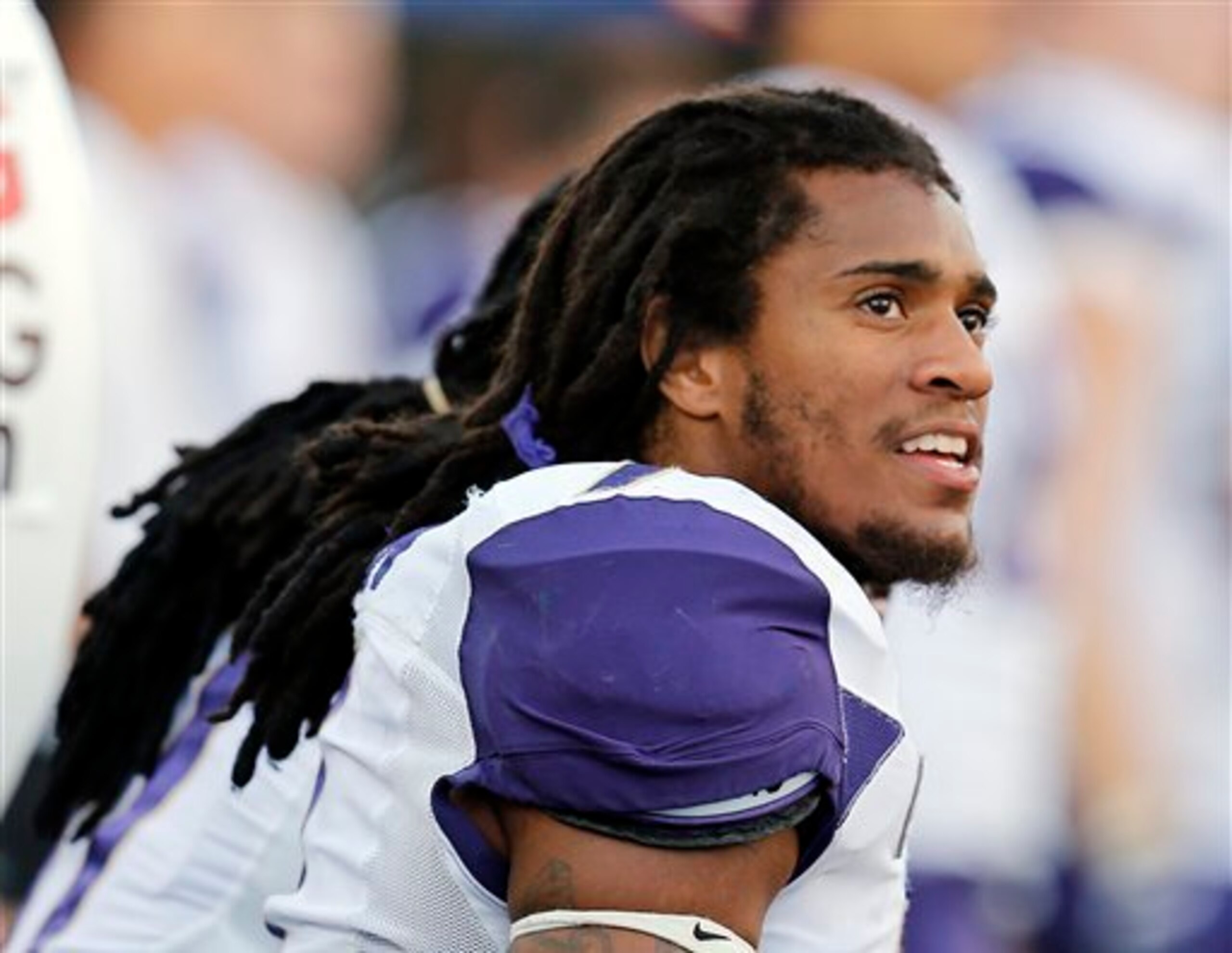
It may be a bit of a surprise to fans just coming into the draft that Washington had a mid-level defense in a power conference known for its physical play. That said, the struggles of a Huskies team that underachieved shouldn't bother those looking to draft linebacker (and former "worst player in baseball") Shaq Thompson.
Thompson's ability to move changed the nature of the Washington defense. It encouraging a free-wheeling kind of play that allowed Thompson to carry the defense behind a stellar defensive line. That kind of movement and cleanup ability may be exactly what the Vikings need to potentially replace franchise cornerstone Chad Greenway, whose age has been showing in the past few years.
Thompson's 6'1", 228-pound frame isn't ideal for a linebacker. He does have room to grow (though admittedly not into a prototypical 250-pound thumper). This remains the biggest red flag on his resume, but it's the kind of resume that demands attention regardless.
Having played as a safety, linebacker and running back at Washington, along with a number of positions as a minor league baseball player in the Red Sox system, Thompson's versatility, fluidity, speed and instincts could remind Vikings fans of Anthony Barr, a surprise pick at ninth overall designed to revive a moribund Vikings defense.
Slated for another position in the linebacker corps, the former Washington linebacker is naturally a better fit for Gerald Hodges' position as the weakside 'backer, playing above the three-technique defensive tackle. (It's an interesting coincidence that Hodges, too, was both a safety and linebacker at Penn State.)
Thompson doesn't possess the strength of Barr or even Greenway, but he does play with technique and intelligence borne of astounding instinctiveness and adaptability. Despite his size, Thompson's balance and technique have allowed him to navigate through tackles and guards with 100 pounds on him to get to the running back. He has a sophisticated understanding of the defense, and he knows when to freelance or stay at home. He has a natural understanding of how to react to running backs pressing the lane or quarterbacks in play-action.
He's seamless in coverage and can cover even the quickest running backs out of the backfield, making him the three-down linebacker the Vikings desperately need.
Sometimes Thompson's size issue becomes obvious. It will be a bigger problem at the next level, when the offensive linemen he squares up against aren't just big, but quick as well. He won't always win the leverage battle and sometimes overcorrects for that fact, losing control of the play.
But there's no question that the right defense can make him shine, and the Vikings have a spot waiting for him.
3. Brandon Scherff, OT, Iowa
7 of 9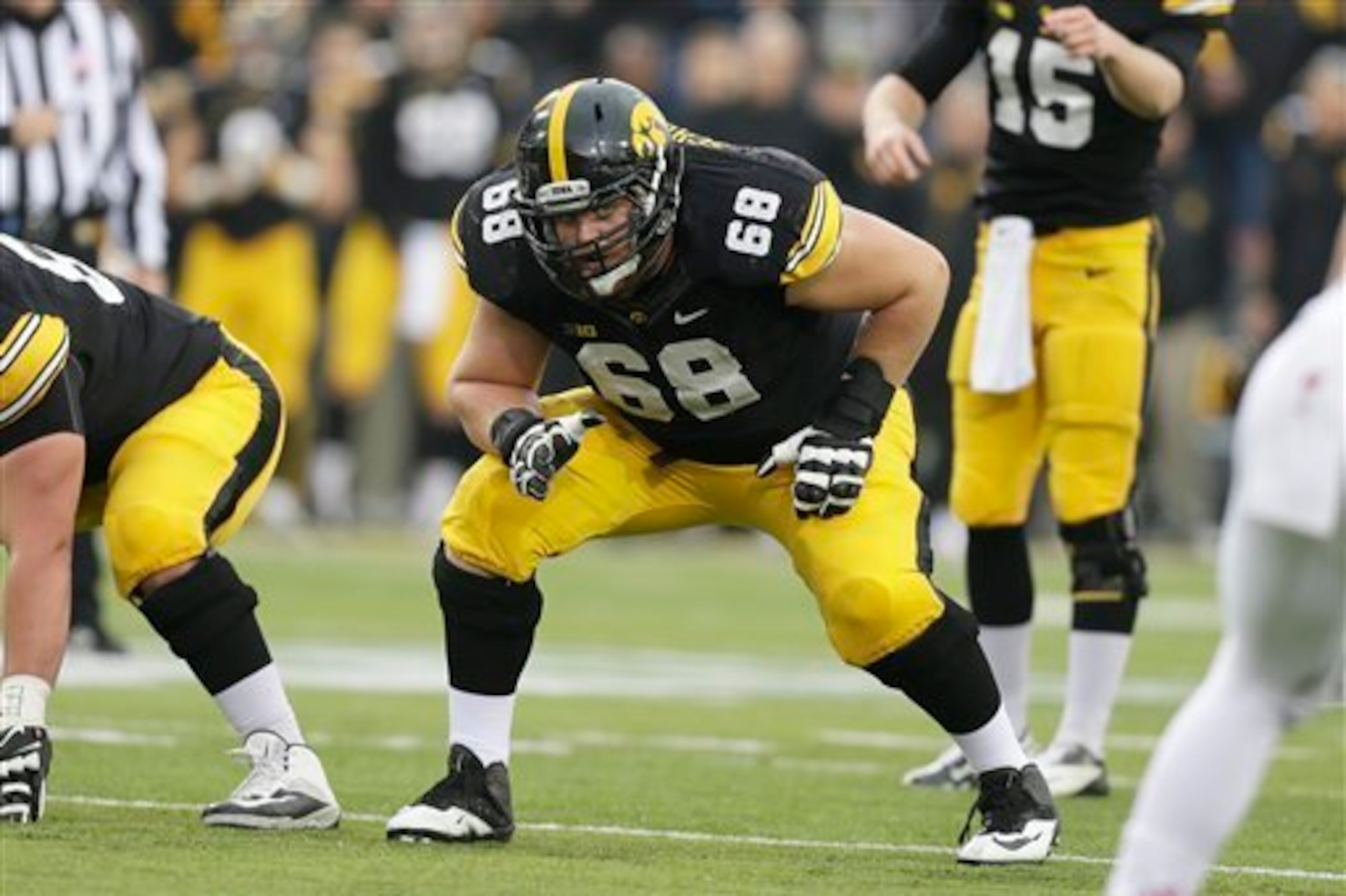
With the injury-plagued struggles late in the season out of the way, the long view has been kind to the top tackle in the draft. Brandon Scherff doesn't just possess uncommon strength—he has the kind of gym and field presence that puts Iowa's famed strength and conditioning staff in awe.
His exploits are well-known to Iowa fans, and fans of the NFL draft are becoming familiar with them as well, including a famous video of his 410-pound hang clean.
But it's not just lifting highlights on YouTube that make Scherff a standout prospect in the NFL draft—it's how his ridiculous physical presence translates to his play on the field. Unlike the other tackle-guard converts listed so far, Scherff plays with outstanding balance consistently and is rarely caught out of place or with his feet out from under him.
He knows how to use his hands and arms to create separation and has a feel for pass-rushers and how they win. That combination of instinct and strength makes it difficult for players to get past him, and he knows how to use his weight, either as a weapon or an obstacle depending on the situation.
Scherff is difficult to push back and is rarely beaten on bull rushes, which is why his underrated quickness is such an asset. Opponents resort to deception and speed rushes more than anything else in order to win, and he has enough functional ability there to counter the more predictable pass rushes he forces defenders to use.
Like Collins, he can end pass rushes with his punching ability and take people out of plays early, but he's harder to dip around and can do much more as a tackle on the edge, even as many in the NFL still target him as a guard.
Scherff's quickness also allows him to be a dominant blocker in any run scheme, and he can operate as a pulling guard or zone-blocking tackle, however the NFL wants to use him. Obviously, his biggest strength is as a power-scheme run-blocker, but any team would be happy to have him in its running game.
That said, it's not elite quickness, and there's good reason to think the faster edge-rushers in the NFL may have a step on him. He has less to clean up than the other tackles on this list in terms of technique and the ability to recover from that, but it would be misleading not to point out that he will have to recover and keep up against speed-rushers, especially those lined up wider or with flexibility.
If he can't win on first contact, that lateral movement may create problems in the passing game.
He has injury concerns as well, and they may drop him out of the top 10 (or, if his combine medicals go poorly, out of the first round entirely). He's had the opportunity to demonstrate his toughness (he played through a torn meniscus and returned to practice a day after surgery to repair it, playing in next week's game against rival Iowa State), but the bigger concern is availability, not toughness.
With a history that includes a dislocated ankle, a broken leg and knee issues, the appeal of a player like Scherff may be restricted by the specter of injury.
2. Amari Cooper, WR, Alabama
8 of 9
When it comes to the best players in the draft, it becomes a little to easy to overthink it. The Vikings are not necessarily strong at receiver, but whether they have a need there is a complicated question at best.
Pair that with the fact that Amari Cooper, the Alabama receiver who spent his sophomore year struggling as his team's leading receiver, seemingly doesn't have the upside of a player such as former Teddy Bridgewater teammate Devante Parker or Larry Fitzgerald imitator Kevin White, and it seems to be the case that having Cooper as the second player on the board isn't necessarily sound draft policy.
Poppycock.
The best receivers are those who haul in passes and help you score, and Cooper is exactly that.
Amari Cooper may not end up being the fastest receiver drafted in the first round, or match the height of Devante Parker, but there's no question that Cooper is the most sophisticated and most instinctive receiver in the draft.
Separation is the name of the game, and Cooper can create it in spades, using subtle route moves to find himself wide open at the break against some of college football's best cornerbacks (he only played one game against an FBS opponent where he hauled in fewer than eight catches—in the SEC West).
Cooper plays with suddenness that does more for a receiver than top-end speed typically does, especially because he can play fast at any point in the route, a rare skill even in the NFL.
Route running is about storytelling, and Cooper is a dream weaver, getting cornerbacks off their stance and out of position before breaking free anywhere on the field. He has established himself as a threat everywhere on the field, from vertical routes 30 yards down from the line of scrimmage to slants and quick outs designed to move the chains.
Furthermore, Cooper is suffering by comparison to elite attributes without credit for his high-level ability in those same traits. Though he won't run a 4.33 40-yard dash, by every account, he's a fast player who can burn by corners and safeties with consistent and explosive speed. He's not 6'5" like Michigan's Devin Funchess, but to turn that into a negative would be selling the 6'1" Crimson Tide alum...well, short.
He has length, timing, speed and quickness and pairs that with functional on-field strength to win jump balls at the catch point. He has a good understanding of positioning and can do more to save a bad throw on a five-yard slant than those with a large catch radius on a jump ball on a fade route.
Cooper has it all, and it's not particularly close. He would help the offense, and sometimes evaluation is as simple as that.
1. Leonard Williams, DT, USC
9 of 9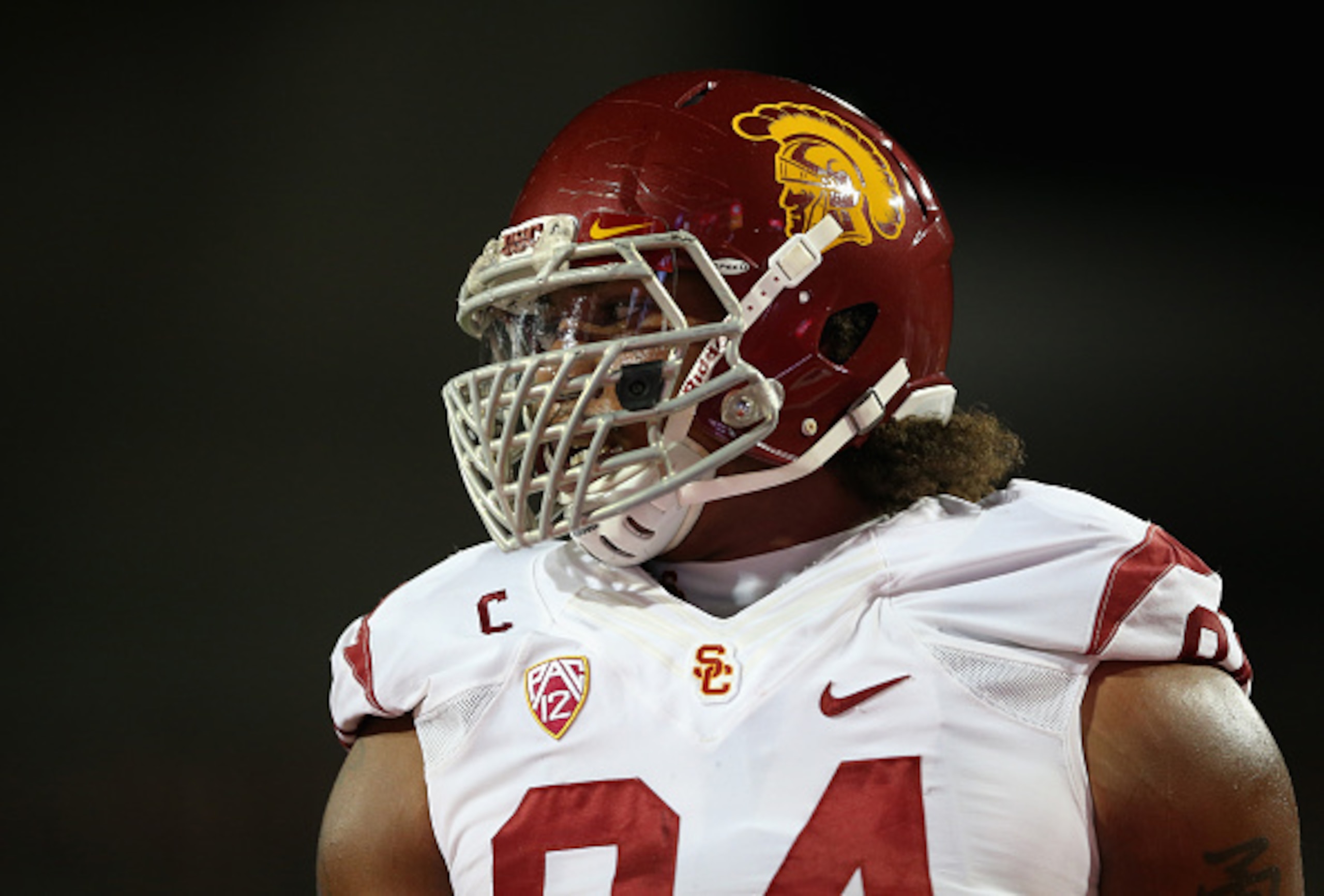
Consider me an advocate of need-based drafting—one who is willing to sacrifice serious value in order to improve a team where it has holes. With that in mind, there should be nothing stopping the Minnesota Vikings from grabbing Leonard Williams if he somehow manages to fall within striking distance.
The Vikings don't need a defensive tackle, and with a deep defensive tackle class in this year's draft, Minnesota can afford to wait until the middle rounds to make waves on the defensive line.
But that doesn't matter when a player of William's size, speed, strength and skill becomes available. Just like Minnesota pursued Henry Melton in the offseason after signing Linval Joseph and demonstrating faith in Sharrif Floyd, so too can the Vikings find a way to incorporate a player such as Williams into a young defensive line stacked with talent.
Typically a fan of heavy rotation, Minnesota would have the opportunity to punish offensive lines with a constant barrage of fresh, energetic and strong interior defensive linemen and even flip the script on what it means to win the war of attrition in the trenches.
With 2,000 or so snaps to distribute every year among two defensive tackle spots, it should be easy to make sure that Floyd, Joseph and Williams attack offenses on a consistent basis.
Compared to another Williams Vikings fans should be familiar with by an NFC director of scouting, the USC alum draws praise from just about anyone who watches him. While two-gapping at USC, Williams was able to demonstrate superior pass-rushing ability, and he should be able to hold down any defensive line as a two-gapping defensive end or as an under tackle or nose tackle in a 4-3 scheme.
While he doesn't shoot gaps in the same way the most aggressive one-gap schemes do, he possesses that kind of ability with room to spare. Every year, players draw accolades at the NFL combine by dominating athletic events while carrying a hefty load, but Williams should be able to glide past competitors this year in the size-speed-strength department.
Williams has a natural understanding of the space he plays in and not only instinctively plays with good leverage but solid hand placement despite clear rawness as a hand-fighter along the line. He has shown the ability to throw aside powerful offensive linemen at will and finishes as well as any edge-rusher you'll see—but he can do it as a nose tackle.
He disrupts zone running with his physical presence and strength and finds himself in the backfield often, ruining play design and causing nightmares. He's even demonstrated the ability to rush from the edge, despite playing with a frame that could clearly add more weight. Standing up, he looks like a 3-4 outside linebacker despite having a tackle's weight and strength coiled underneath him, and he's this year's "freak" on the defense.
Williams is difficult to move when he's asked to anchor the line and difficult to stop when he's asked to move, all the while showing progress this year from a technical standpoint.
No matter what the circumstances are for the Vikings roster, he should sit atop the board.
.jpg?w=2560 "Texans-Mixon Released Football")

.jpg?w=2560 "Grading WWE Raw 🔠")


.jpg?w=2560 "2 NFL Officials Suspended")
