
NFL Draft Combine 2015: Position-by-Position Primer
With the Senior Bowl in the books, the combine is the final nationally relevant televised event during the draft process before the draft itself. Stripped down to what is essentially underwear, the prospects get poked and prodded as they go through weigh-ins and medical checks.
When they're done with that, most will spend the week running in drills or shuffling between hotel rooms, where they interview with teams. Anything from a rise due to whiteboard skills to a drop due to a poor bench press is possible during the week.
Some question the importance of the combine, which began as a giant medical check. It's since expanded to a made-for-TV event that sucks in viewers from all 32 teams who get to see the game from a scout's perspective, if only for a couple of hours.
Some teams will lean on drill performances more than others. Some will lean on the interviews. That being said, there's something for everyone in Indianapolis.
As soon as the NFL released its full participants list, draft season had hit 100 miles per hour. Entrenched in the offseason now, we take a look at storylines and what to look for at each position.
Quarterbacks
1 of 9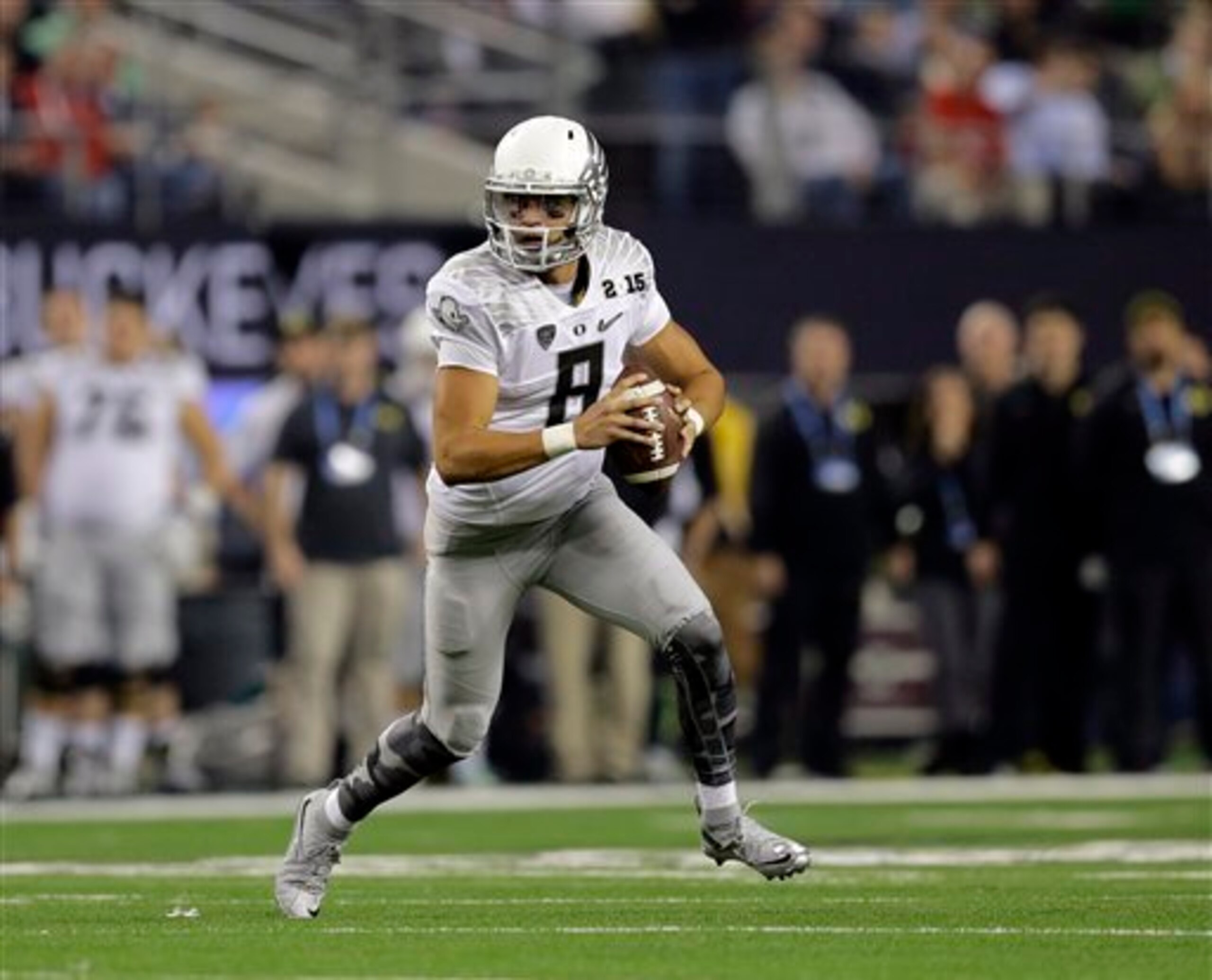
Battle for No. 1
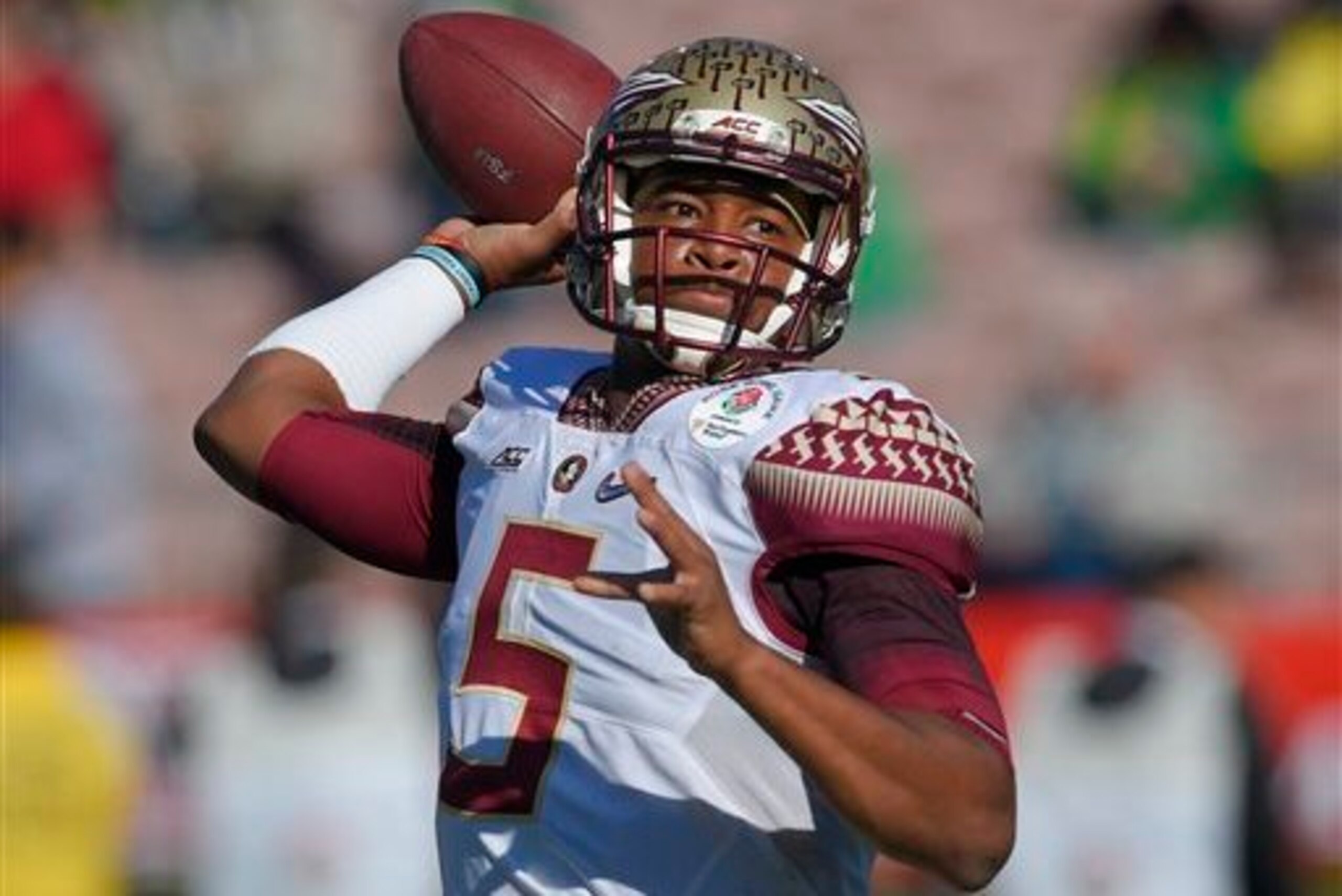
By all accounts, it's a two-man race at the top for the quarterback class between Oregon's Marcus Mariota and Florida State's Jameis Winston. After that, there's a pretty clear drop-off.
According to NFL.com's Chase Goodbread, NFL Network's Mike Mayock thinks the Buccaneers are leaning toward drafting Winston first overall. This is a logical move, as the Tampa Bay primary starter in 2014, Josh McCown, was recently cut by the squad.
The biggest factor for this race may not be on-field drills. Photos of "fat Jameis" have surfaced over the past couple of days on social media, but much like Eddie Lacy's incident with a poor camera angle, it probably won't matter. Instead, the interviews may be the largest deciding factor for which way the Bucs go when they're on the clock. Mariota comes off shy, and some may question if he can lead a team.
If he tests well in conversations in Indianapolis, that could vault him over Winston, who is known for his outgoing personality. At least statistically, Mariota was vastly superior in 2014, even winning their head-to-head matchup in the Rose Bowl.
Does Throwing Matter?
Every year a couple of quarterbacks pull out of the throwing drills, opting to participate at their pro days with receivers to whom they're used to throwing. No one blames them for that, but there doesn't seem to be a difference between passing in Indianapolis or a college facility. The question becomes, "Does any of this really matter?"
Last year, Teddy Bridgewater and Johnny Manziel were among the quarterbacks who pulled out of combine. Bridgewater ended up being scorched by the NFL media and league sources regarding how poorly he threw the football at his pro day in shorts and a shirt. On the other hand, Manziel, with a helmet, shoulder pads and camo shorts on, was perceived to do well at his.
Bridgewater would go on to have one of the best rookie seasons for a quarterback in recent memory. Manziel finished the season with a 42.0 passer rating, barely completing more than half of this throws.
If you're looking at recent trends, throwing against air doesn't seem to have the rewards you'd believe it does. Does passing at the combine matter? I'm not sure, but it does to the NFL apparently, right or wrong.
Bryce Petty Could Be the Riser
After Mariota and Winston, the third quarterback in the class by most is UCLA's Brett Hundley. That fourth slot, though, is anyone's guess. Some take a liking to Shane Carden of East Carolina, for others it's Garrett Grayson of Colorado State, a fifth-year player who played in an Alabama-style offense. Another option, and possibly the most intriguing, is Baylor's Bryce Petty.
The importance of Petty's combine will begin early. According to The Dallas Morning News, he had two cracked transverse processes in his back as a result of his first game of 2014. Back issues are no joke, and his medical clearance, the original purpose of the combine, will weigh heavy on his value as a prospect.
From there, he should test well. Every year, Fox Sports' Bruce Feldman compiles a list of amazing collegiate athletes and tabs it the "Freak List." He had Petty on his 2014 preseason edition.
"But we're going with the Bears’ Heisman candidate. The hulking Petty has linebacker's size (6-3, 238) and a tailback's burst and athleticism. He vertical jumps 38 inches, broad jumps 10-feet, 5.5-inches, squats 510 pounds and runs a 4.62 40. Over the weekend, Petty provided even more proof of his Freak merits to anyone around the Elite 11 camp in Oregon. Part of a series of challenges run by Team RWB, a group of Special Forces and career military men, Petty was a sight to see toting heavy sandbags up a hill back-and-forth for over a half-hour straight.
"
The teams who are interested in being involved in the "new wave" of dual-threat quarterbacks may opt toward picking Petty in that middle tier of passers, if they should miss on Mariota or Hundley.
Running Backs
2 of 9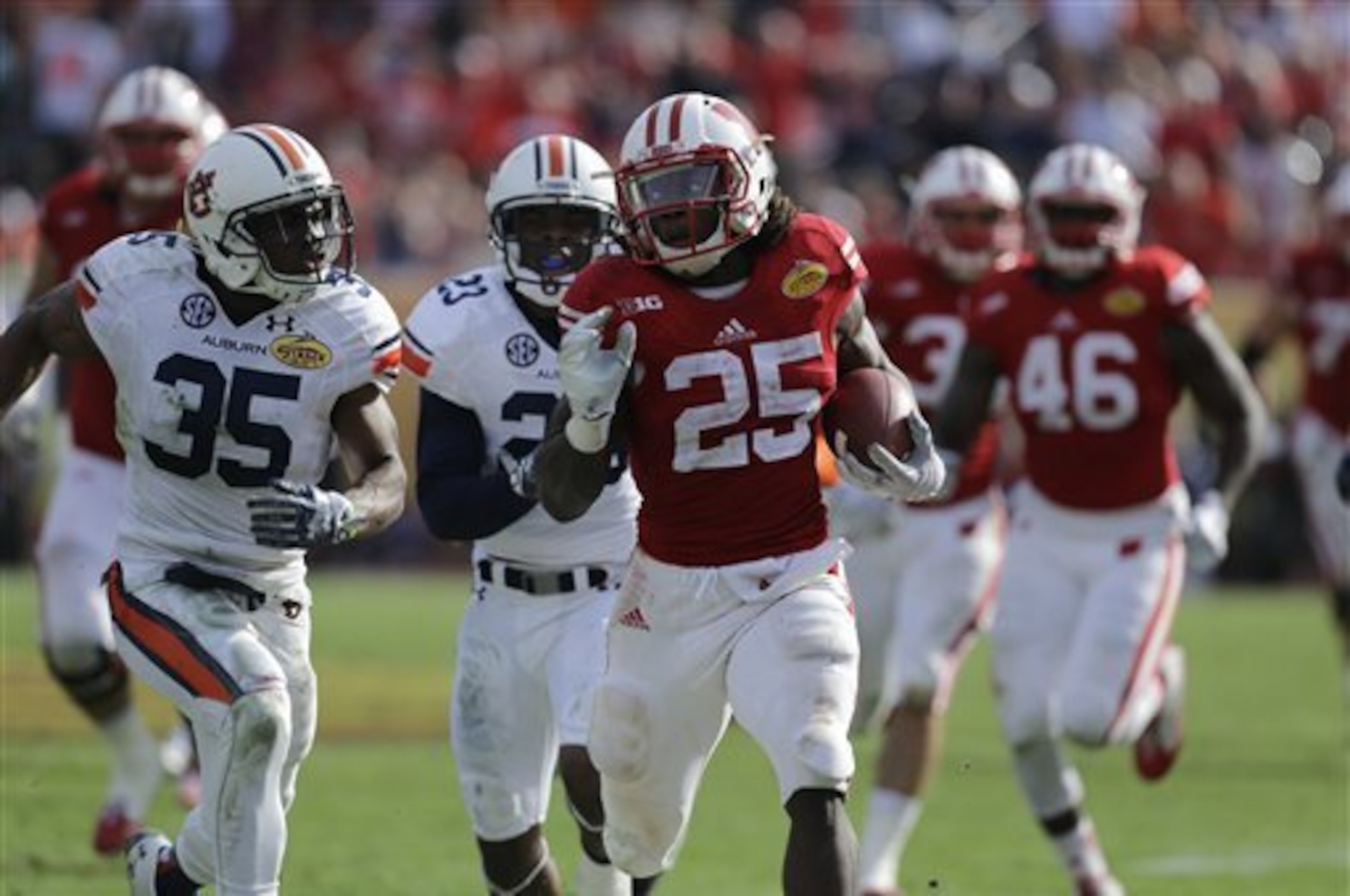
Can Gordon Push to be the Top Back in the Class?
Wisconsin's Melvin Gordon was one of the most popular players in college football last season. Finishing the year with 2,587 yards and 29 touchdowns, he complied 4,915 rushing yards and 45 rushing scores in his college career. Bouncing from Wisconsin a year early, people question if he's going to be the next Jamaal Charles, an All-Pro back, or Giovani Bernard, a highly regarded rotational runner.
With Todd Gurley of Georgia out due to a knee injury, Gordon could push to be the first running back taken. His biggest question marks are his ability to catch the football, as he had only 22 receptions in his college career, 19 of which came last season, as well as his function as a pass-protector.
The pass-protection question will still probably linger after the week, but there is a way to prove his hands, though. There are various receiving drills in which he can participate. If he displays soft mitts and does enough to have teams not question the athleticism he showed on film, he's more than likely going to be the best healthy back going through with a full workout. That alone puts him in the conversation as the best tailback in the draft.
Watch the Drills That Matter
When watching the combine, you can skip over certain events for specific positions. At the end of the day, there's no real purpose to know how many times a punter can bench-press 225 pounds. There's no reason to know a quarterback's vertical jump.
For running backs, though, there are some times you're absolutely going to want to see. Take DeMarco Murray for example. He was a third-round runner from Oklahoma in 2011, but he showed outstanding athleticism at the combine. According to Mock Draftable, he ranked in the top 3 percent for the broad jump at the position as well as in the top 5 percent for the 40-yard dash.
What this meant was he possessed an elite trait that may have been lost on film: forward explosion. The broad jump is an event where a player loads up and powers through, trying to gain as much ground as possible. The 40-yard dash is pretty self-explanatory, a timed event in which a prospect tries to finish those 40 yards the quickest.
Murray proved during the combine weekend of 2011 that he not only could quickly get through space, but that he could eat up more grass than the vast majority of players in one explosive motion. This translated well on the field. Keep your eyes out on players who do well in both drills.
Small-School Gems
The running back position has been going through a struggle for years now. With top backs being devalued due to the new collective bargaining agreement and shifting offenses, more and more juniors and sophomores are declaring, trying to get to that second contract as soon as possible. This leaves a weaker and weaker senior class as time goes on.
Because of that, though, we're seeing more FCS runners getting shots as real prospects, as the combine and all-star games still need a certain amount of bodies at their events. This year, it's North Dakota State's John Crockett, Northern Iowa's David Johnson and South Dakota State's Zach Zenner who were the big small-school names throughout the 2014 season.
Some others have risen onto the scene, such as Yale's Tyler Varga, who went from unknown to sleeper stud during his week at the Senior Bowl in Mobile, Alabama. While the top-end talent may not be what it used to be with rawer and rawer backs entering each new class, the hidden diamonds at the position may be seeing more light now than ever.
Wide Receivers
3 of 9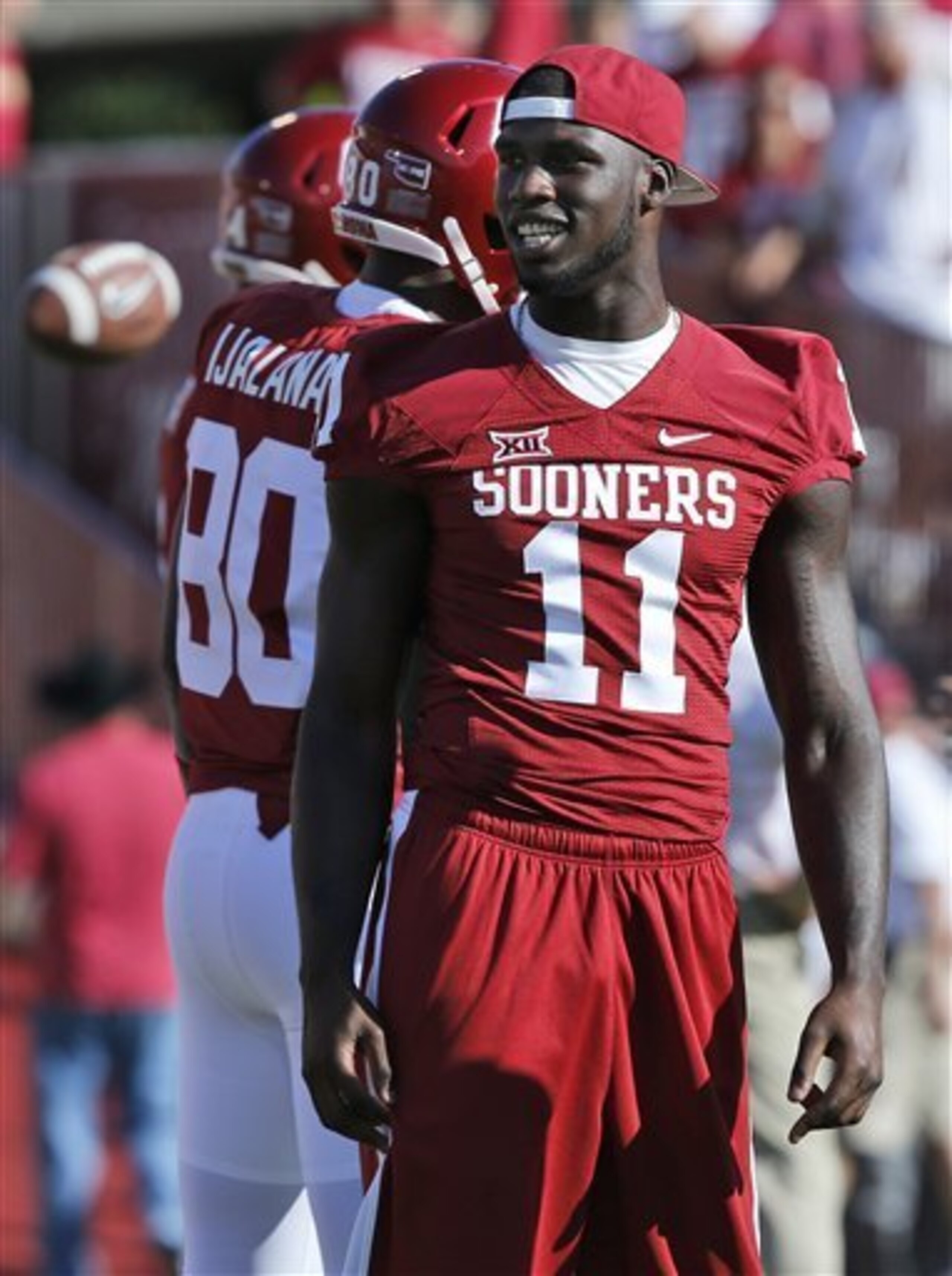
40 Times Matter
Before the 2014 combine, there was debate about who was the best LSU receiving prospect at the time: Odell Beckham Jr. or Jarvis Landry. They were both very productive for the Tigers in 2013, putting up good enough numbers—with help from quarterback Zach Mettenberger, who is now slated as the Tennessee Titans' current starter—to push the team to a double-digit-win season through a tough SEC conference.
Close on film, their combine performance set them apart. In the 40-yard dash, Beckham Jr. ran a 4.43 to rank seventh in the receiving class. Ahead of him were sleeper breakout players such as Martavis Bryant of Clemson and John Brown of Pittsburgh State, as was Brandin Cooks, a first-round selection. Beckham would eventually go 12th overall to the New York Giants.
Landry ended up with a 4.77 mark, which, according to Mock Draftable, ranks him in the bottom quarter of receivers. This reflected on draft weekend, when Landy was picked 63rd, 51 slots behind his teammate. It also reflected on the field, where Beckham Jr. netted seven more touchdowns and 547 yards on just seven more catches than Landry in 2014. To put that into perspective, to even up their numbers, Landry would have had to score seven 78-yard touchdowns on top of what he already did for the Miami Dolphins.
Numbers can help put a player on a relative scale of talent. It seems that judging this position by the 40-yard dash, with Bryant, Brown, Cooks, Beckham Jr. and Landry as recent examples, is warranted.
Agility Performances by Slot-Types
The 40-yard dash is a huge deal for boundary receivers or slot receivers who are vertical threats, but the majority of inside pass-catchers are about a feel for space more than straight-line speed. When was the last time you saw Wes Welker run a 40-yard go route?
There are other drills to consider when you're looking at these slot receivers. The agility drills, both the three-cone and the 20-yard shuttle, are good measurements for how a player moves in space, as they're largely quantifying his ability to change direction.
This can help unearth some of those hidden gems that no one knows about. For example, Julian Edelman did very well in those two drills when he was coming out of Kent State as a quarterback. Ranking in the top 6 percent in the three-cone and the top 3 percent in the shuttle, he was a perfect candidate to transition into a slot role, at least on paper.
The problem was he had never played the position before. That didn't stop forward-thinking Bill Belichick to draft the unknown talent in the seventh round. In 2014, Edelman led the postseason in receptions and receiving yardage and also caught the game-winning touchdown pass in the Super Bowl.
Can Dorial Green-Beckham Go in the First?
Once thought of as the top high school recruit in the country, Dorial Green-Beckham's had a mighty fall from the mountain he once stood on. At the University of Missouri, he did well, looking on tape like a Plaxico Burress-type talent as a college player. His sophomore season, he managed to put up 883 yards and 12 touchdowns on the year, making his career mark at Missouri, in just two seasons, 17 touchdowns.
He then transferred to Oklahoma in 2014, but he had to sit out a season, per NCAA rules. Before playing a down for the Sooners, he declared early for the NFL draft.
Why Green-Beckham had to leave Missouri is his biggest red flag.
According to ESPN's Edward Aschoff, a woman alleged that Green-Beckham threw her down "at least four stairs." In a statement after the incident, he seemed remorseful, but that couldn't undo the damage he had already done.
"Don't blame my girlfriend or her friends for anything. I am not looking for sympathy. I thank those who have given me concern. I have been young and dumb. I want to be better. During my suspension I'm entering counseling. With help, I know I can be stronger emotionally and spiritually.
"
The NFL has been trying to scrub away the bad publicity it has been stained with since the Ray Rice incident, which the league handled poorly, at least in the public eye. How high is a team going to consider taking the receiver? Green-Beckham can be Burress or Randy Moss, but he could also prove to be a wasted pick in a couple of years.
His entire draft value is going to depend on interviews, where the teams will make a decision on whether they think he's reformed.

.jpg?w=2560 "Rams Eagles Football")
.jpg?w=2560 "Falcons Saints Football")
Tight Ends
4 of 9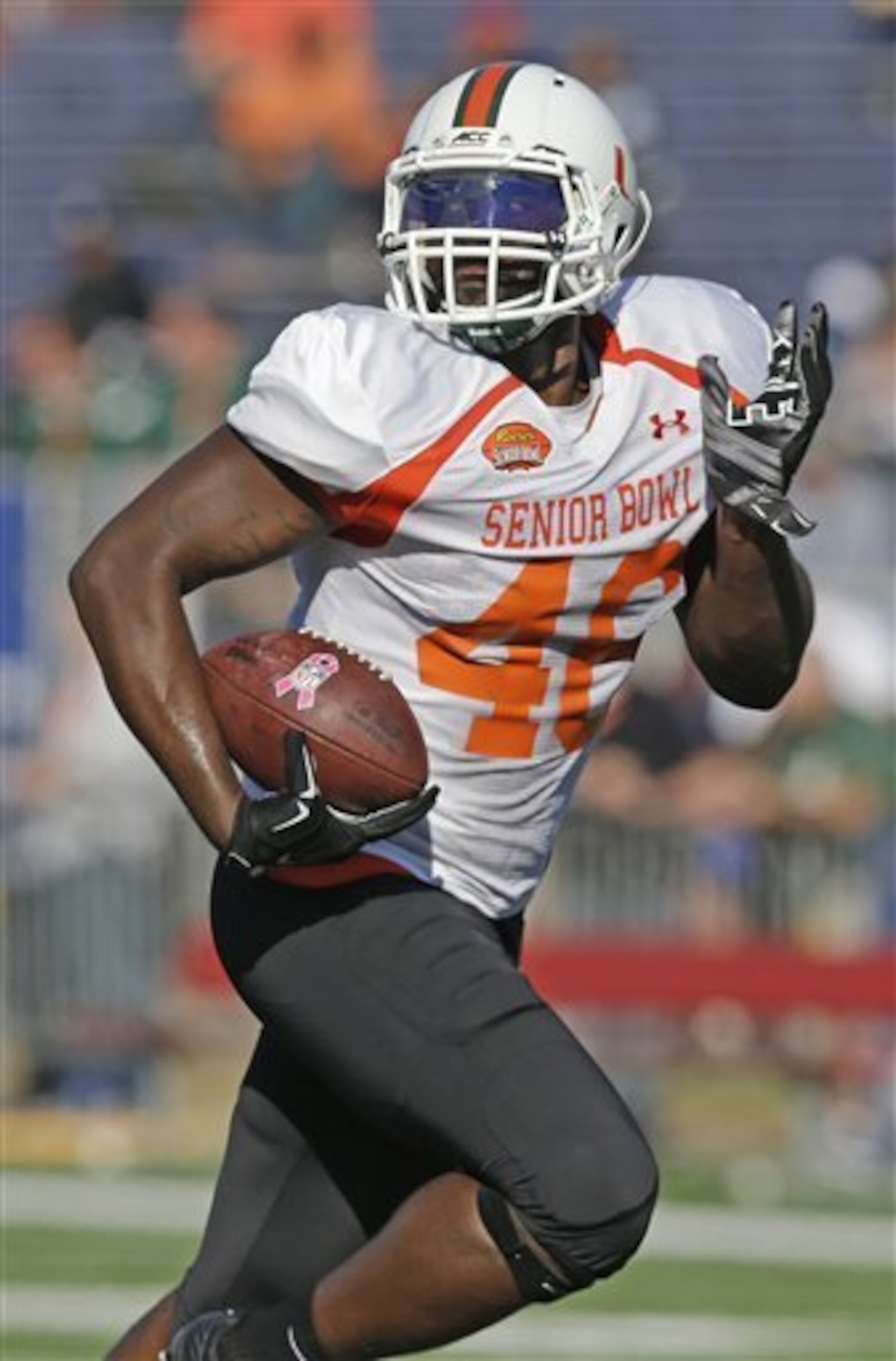
Vertical Explosion Matters
Tight end is an odd position, because as the NFL specifies more and more, this is the one place that is still multiple. Built similarly to edge-rushers, many tight ends in high school end up on the defensive side of the ball. Clemson defensive end Vic Beasley is a great example of this. As a high school recruit, he was looked at as a tight end, but he ended up on defense in college.
Because of the lack of blue chips at the tight end position, which is due in large part to tight ends having a smaller impact on a game than pass-rushers, there are few elite talents. The Jimmy Graham, Rob Gronkowski and Julius Thomas types are more outliers at the position than what you demand out of a starter.
That being said, all three of them showed one similar trait when they were put through the gauntlet: vertical explosion. Whereas running backs need forward explosion to gain ground for their position, tight ends need to get up and high-point the ball. Because of that, their vertical jumps are important, as are their 40-yard dashes and the splits that come from them—a measurement of how quickly they can get going off the line of scrimmage—which is another way to test lower-body burst.
Graham, Gronkowski and Thomas all score above average in the 40-yard dash and vertical jump. They each took some time to come along, as the versatile position has a lot of nuance to it, but if you're going for an "upside" selection, they almost always have to do well in those two drills if they're going to "hit."
Scores May Be Overrated for Mid-Level Prospects
If you're just trying to piece together an offense with a serviceable tight end, like most squads are, then numbers may not be your best bet. While the "upside" guys always have to do well in events, there's inherent risk at taking a player who needs to be developed. There are some "safe" picks, who lack upside, that go undervalued every season.
A good example from last year is Richard Rodgers, who declared early from California. He was picked in the late third round and was viewed as a "reach" at the time. The son of an NFL coach, Rodgers mentally had developed well already for a player who switched between tight end and wideout at the college level.
Because of his advanced feel for space, a trait both tight ends and slot players utilize, he was able to start five games as a rookie for the Green Bay Packers in 2014. He finished sixth on the team in receptions, yardage and touchdowns through the air. He's good, but not great, but most starters at this particular position are limited.
At the combine last year, the only drill at which Rodgers even tested above average was the broad jump. For everything else, he was run-of-the-mill at best. Don't spurn a prospect because his lack of on-paper potential; just accept his physical limitations.
The Confusion About the "Jumbo Slot"
This year, like last year, will feature a debate around where the line for tight end and receiver is drawn. In today's NFL, we're seeing this "jumbo slot" role rise, where slot receivers aren't always undersized and quick, but some are giant targets, like Marques Colston, who in his prime was working the center of the field at 6'4".
Jimmy Graham brought up those issues when he was franchise tagged by the New Orleans Saints as a tight end instead of as a receiver, which would have given him more money. Jordan Cameron calls himself a "pass-catcher" on his Twitter account, making it known to everyone that the Cleveland Brown sees his position as ambiguous.
Last season it was Kelvin Benjamin, a Florida State prospect who went at the end of the first round to the Carolina Panthers. A large receiver in college who at times struggled with weight, some thought he would become a "move tight end" in the pros, but he ended up sticking with his original position, boundary receiver.
In 2015, the name is going to be Devin Funchess, who played both positions at Michigan. At 6'5" and 236 pounds, he has the body of a skinny tight end or a very large receiver. He's about in the same boat as Benjamin. This debate will be solved by each team individually, so there's nothing to say he will have the same fate as Benjamin, but just know there's going to be points on both sides for which position he should be considered at.
Offensive Linemen
5 of 9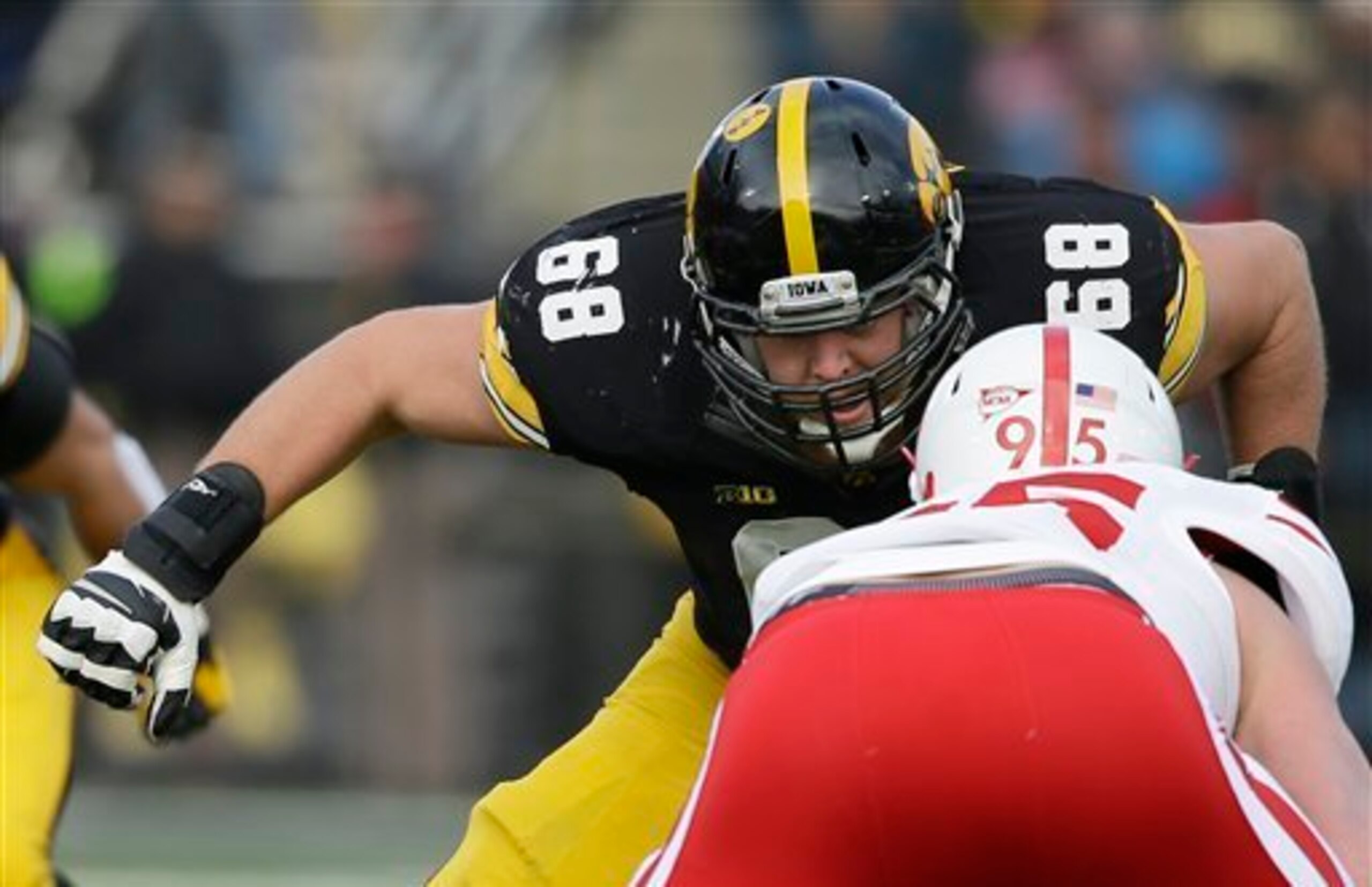
Agility in a Booth
Interior offensive linemen are close to action when they get off the snap, so it's only natural that their positions, a preventive one, is based around in some part the attribute of taking on defenders quickly. At center and guard, there's more likely to be players trying to quickly cross your face on stunt attempts, attempting to get you off balance and slide another pass-rusher by you than on the outside.
Basically, any change-of-direction drill, such as the three-cone and the shuttle, or a burst drill, like the jumps, measure short-area potential. In what looks to be a weak center class, those could be crucial drills for players like Florida State's Cameron Erving or Oregon's Hroniss Grasu, who are battling to be the top A-gap blockers in the class.
Overall Athleticism for Fringe Tackles
This offensive tackle class doesn't have many ready-to-go studs, but it has a lot of potential. The problem is that without those day-one starters, there's a shot that those potential Pro Bowl tackles never even end up playing tackle, instead moving their raw talents to guard.
La'el Collins of LSU and Brandon Scherff of Iowa are being looked at similarly to Zack Martin, who was a left tackle for Notre Dame but was drafted last season and was an All-Pro player as a guard for the Dallas Cowboys. Collins is a semi-limited athlete who is very good in the ground game. Scherff is the same way in the ground game, but looks to have short limbs, which means he has to do everything quicker to win on the edge, and his level of competition is already going to get kicked up when he makes the jump from the Big Ten to the NFL.
Because of those attributes, the league could look at Collins and Scherff, two of the biggest names in the draft, as interior players or right tackle-only prospects after this week, pending their scores.
The Weigh-Ins
Some look at the NFL's meat-market type approach to the weigh-ins as something that can be skimmed over, but it puts all the drills into perspective. The difference between someone who is running a 4.48 at 5'10" and 177 pounds is much different than if someone is 6'0" and 235 pounds. Using that same logic, the nuances of density-based scores can be applied to offensive linemen.
For example, D.J. Humphries, who is very agile on tape, is probably going to open some eyes in Indianapolis, potentially even ranking first in a couple of categories. The issue is that he looks well under 300 pounds, maybe even 20 pounds under that, so you have to begin to ask, "What will he be able to do with 25 to 30 pounds on top of what he's already got?"
Some linemen even go out of their way to test at much lighter times at the combine, giving teams a bit of a mirage. Everything comes back down to "playing weight." For undersized players, like Humphries, though, they need to prove to everyone that they can put more on their frame, as they can't last in the league at their current size.
Defensive Linemen
6 of 9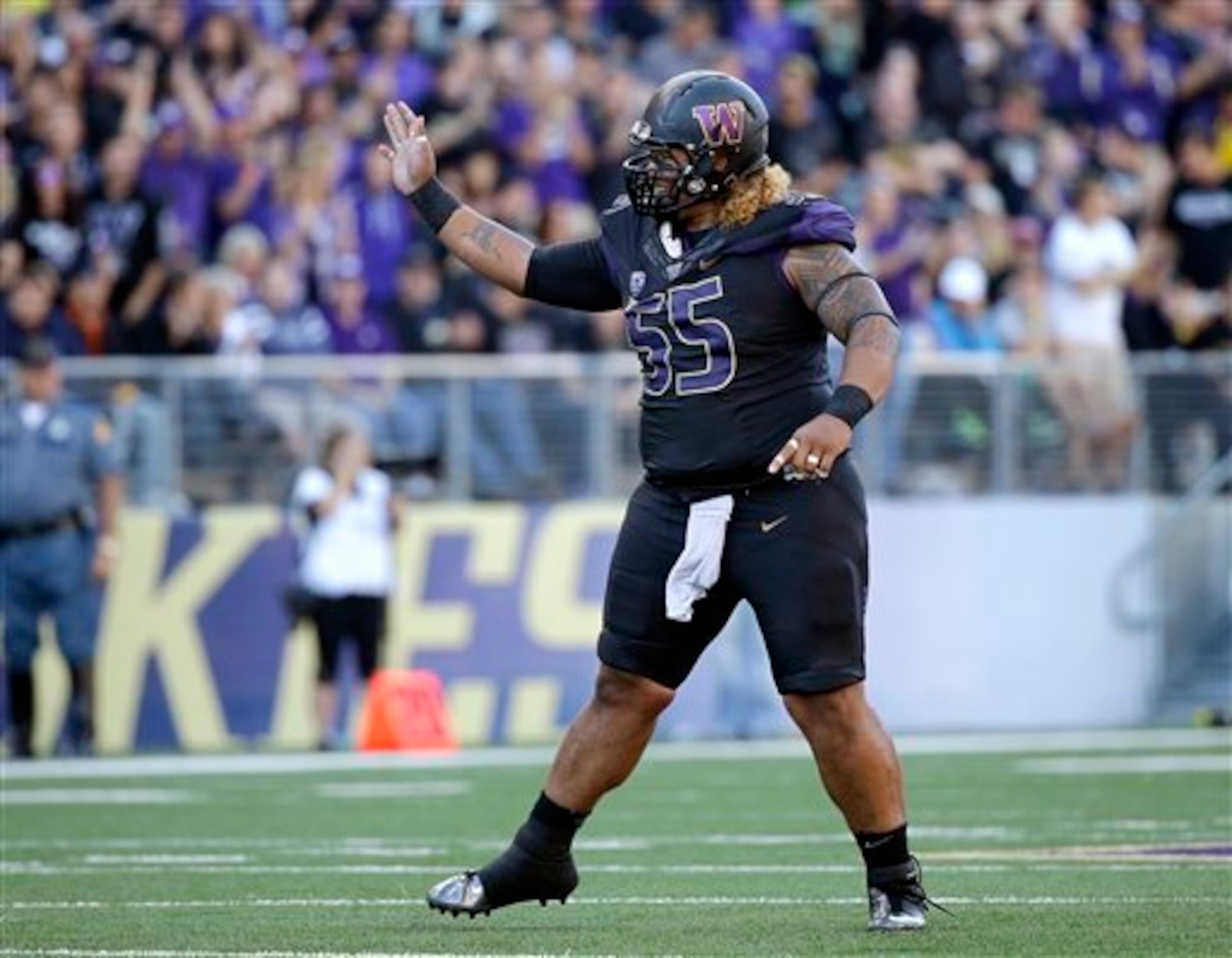
Explosive Power and "Projects"
Throughout the years, there's been a strong trend of project defensive linemen hitting when their vertical jumps, broad jumps and 40-yard dashes match up well for density. Be it a nose tackle like Dontari Poe, a jumbo 3-4 defensive end like Haloti Ngata or a pass-rushing 3-4 defensive end like J.J. Watt. These mid-first-round selections end up turning out more times than not, despite being raw.
Defensive line play is a grown man's game, and it's not all too surprising that 21-year-olds and 22-year-olds aren't ready to compete with professionals out of the gate. Players like Danny Shelton from Washington, though, have a shot to dispel critics this week.
Shelton, like Ngata, has questions about conditioning coming out of the Pac-12. Against Oregon, Shelton looked gassed, and that has raised questions in the community. In an NFL weight room, he can turn out correctly, as did the former Oregon defensive tackle. During his combine appearance, Ngata scored in the top quarter of defensive tackles in both jumping categories and was just shy of being middle of the pack for his 40 time, despite coming in at almost 340 pounds, per Mock Draftable.
If Shelton, or anyone else for that matter, can put up a performance that impressive, it'll be hard for the NFL to bet against him.
Bench-Press Relevancy
For most positions, the bench press is pretty irrelevant, if we're going to be completely honest. Other than when skill players are near the line of scrimmage, which they aren't often, arm strength matters very little to them.
On the other hand, interior linemen on both sides of the ball, and even edge players, need to be strong. In the trenches, it's a strength-on-strength battle, and winning inside hands typically gets you named victor on a snap-by-snap basis.
Oregon State defensive end Stephen Paea had the best mark since 1999 with his 49 repetitions of 225 pounds. He was drafted in the second round of 2011, and in 2014 he was good enough to warrant some Pro Bowl consideration.
For defensive linemen, especially the bigger guys, arm strength is crucial to keep your foot in the door long enough to actually develop in the league. Even for players like Paea, it could take until the end of your rookie contract to "break out." Combine scores at least show enough potential for teams to keep a player around.
The Different Traits of Edge Players
Not every player wins the same way as a 3-4 outside linebacker or a 4-3 defensive end, but for the most part each individual trait can be quantified. If a player is a speed-to-power converter, he'll typically own the 40-yard dash and jumps. All of that is lower-body-strength based. A player like Jadeveon Clowney or Julius Peppers comes to mind.
If a player is an edge bender, like Clay Matthews or Von Miller, he'll typically show very fluid movement in the agility drills, both the three-cone and the shuttle. Really, the only trait that can't be quantified is elite hand technique. The best example of this is Aldon Smith, who didn't have a great combine and went onto tear the league apart with his developed game.
The combine for pass-rushers is a cross-checking exercise. However a player "wins," be it with power, speed or bend, you should be able to check off the box and see reflective numbers in Indianapolis. If not, that's when it's time to go back to the tape.
Linebackers
7 of 9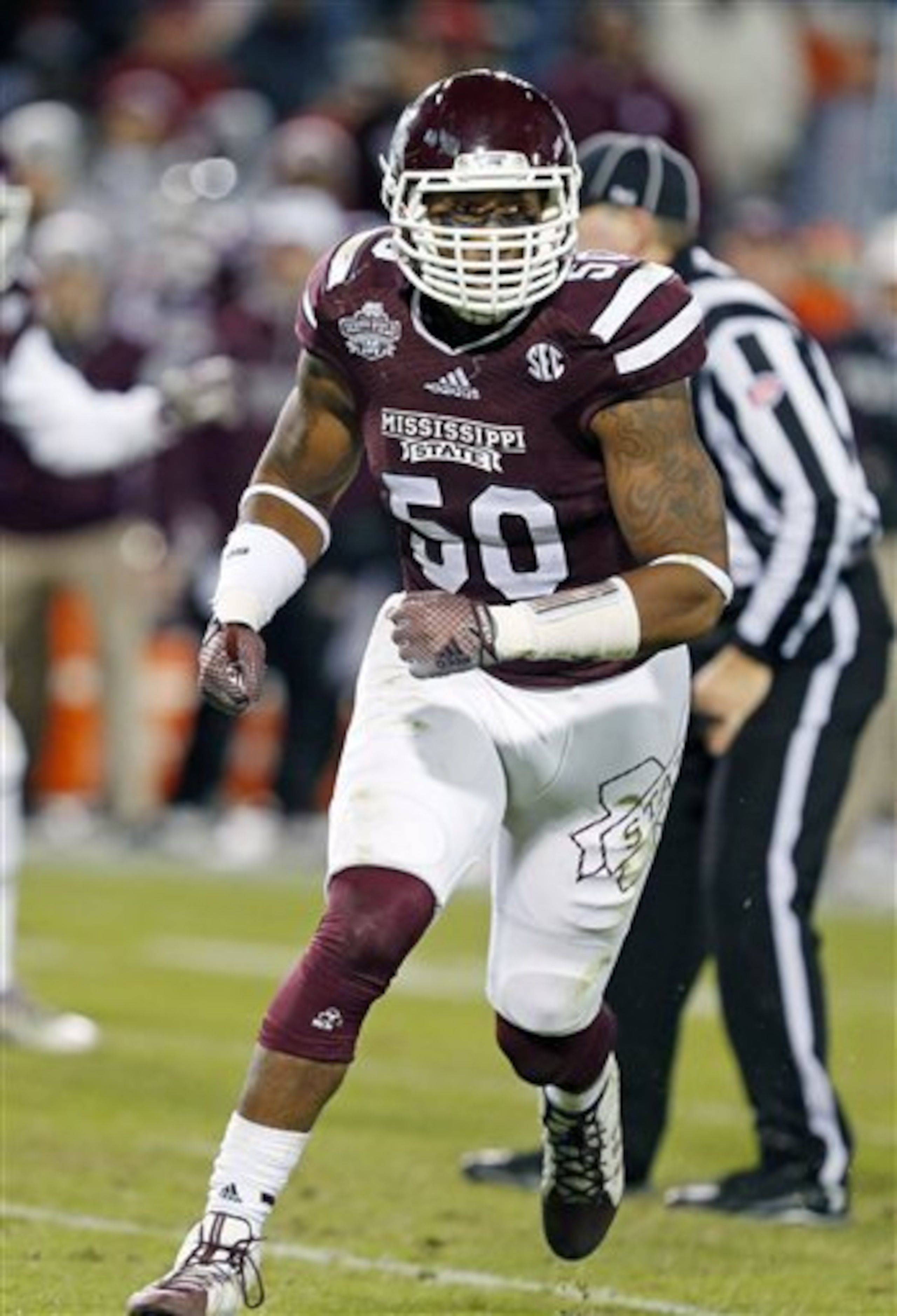
It All Comes Down to Tape
Linebackers, like tight ends, have to play very versatile roles. On some plays, you're reading run; on some, you're dropping back into coverage; and on some, you're blitzing quickly. In the end, the elite linebackers typically test like so, but there's value at getting a serviceable linebacker who can stay in on all three downs instead of a freak linear athlete who can play two.
What separates the two is on-field play. Last class, for example, there were three notable off-the-ball linebackers who were beloved in college who didn't test well. They were Shayne Skov of Stanford, Max Bullough of Michigan State and Chris Borland of Wisconsin. Borland's tape surpassed his physical limitations, which led to the San Francisco 49ers drafting him in the third round.
Borland complied 108 tackles in only eight starts (14 games) in 2014. The other two linebackers weren't so lucky, totaling one tackle together after both going undrafted. At the end of the day, functional starters can be found on tape at the position, devaluing inside linebacker and/or middle linebacker roles.
Look at the Position
You may not need athletes on the inside, where they're playing in a booth, but you absolutely want them on the outside. Players like Washington's Shaq Thompson, and other undersized weak outside linebackers, absolutely have to put up impressive overall numbers, not just run a nice 40 time.
Inside linebackers and middle linebackers, despite not needing great numbers, should be asked to perform decently in the jumps and 40-yard dash, just to show that they have lower-body explosion to hit the hole quickly and violently between the tackles.
On the strong side, you're looking for someone who is a borderline 3-4 outside linebacker, an on-the-ball talent. He should almost be held to the standard of an undersized defensive end. For teams that are going to run the 4-3 under, like Seattle, Jacksonville and Atlanta, as a base defense, those Sam linebackers are actually on the line of scrimmage.
It's easy to call players "linebackers"; the number of different roles they play are vast, almost like on the defensive line, where you can see a 260-pounder next to a 330-pounder.
Benardrick McKinney: What Should We Expect?
Benardrick McKinney could be one of the strangest storylines at the combine because of this preconceived notion that he's an incredible talent. Talked about by some as a first-round talent, his tape rarely showed those flashes during Mississippi State's historic run in 2014.
On Bruce Feldman's Freak List, he's said to have jumped 34 inches and ran a 4.5 40-yard dash at 6'5" and 250 pounds. That's crazy, but for some reason players never seem to do as well in Indianapolis as they do at their school facilities. Maybe they like to embellish a little bit.
If McKinney truly has that type of talent, he'll be the talk of the week there. Linebackers his size are rare, let alone all-world athletes. If not, though, this could begin the start of a fall during the "process" of the draft for the junior declaree.
Defensive Backs
8 of 9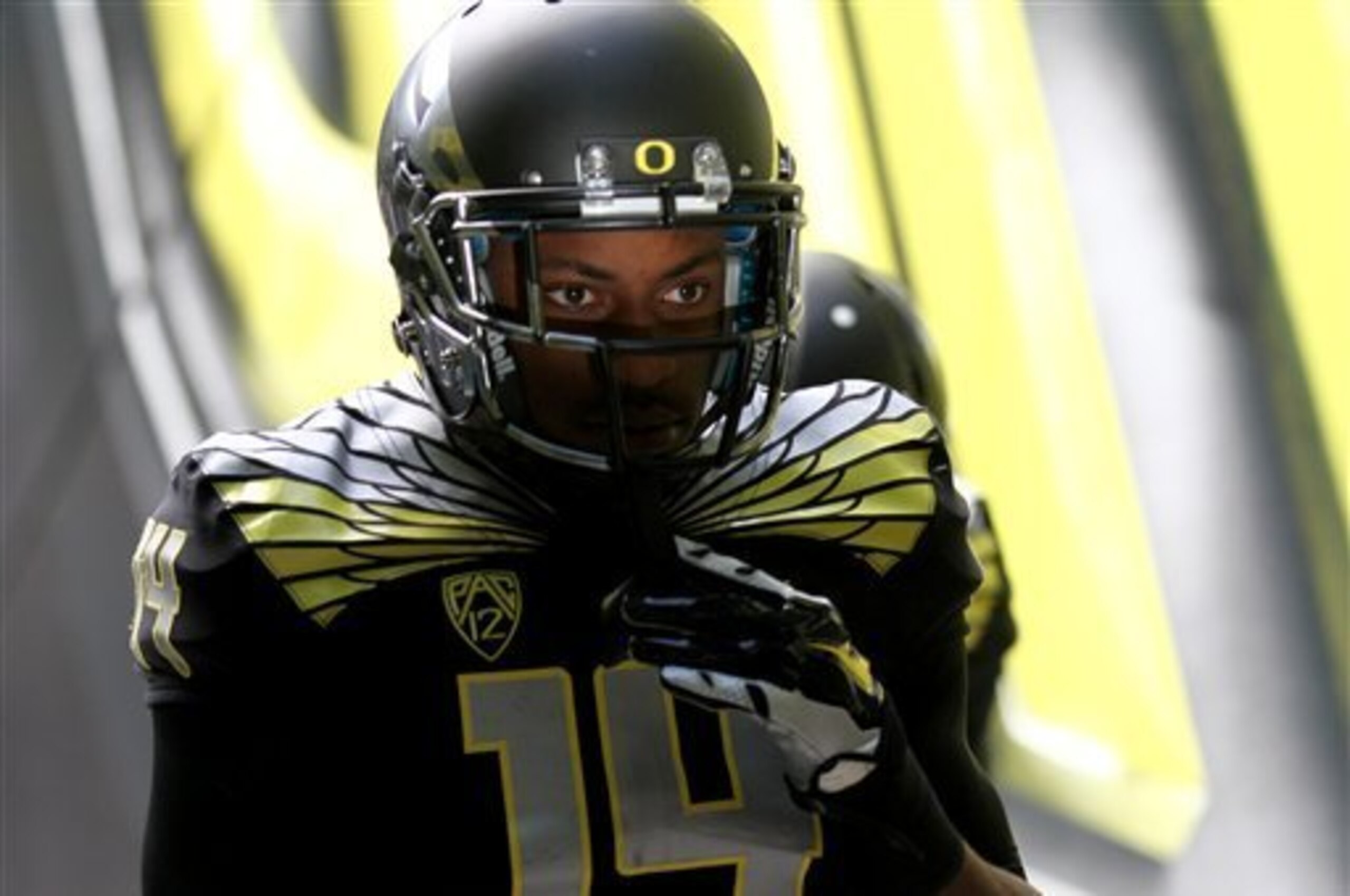
Height and Speed
When the Seattle Seahawks won the Super Bowl for the 2013 season over the Denver Broncos, the new trend in the NFL had officially kicked off. Taking advantage of the market for long cornerbacks, the Seahawks largely built their defense around their secondary with Richard Sherman, a Day 3 selection, and Brandon Browner, who was undrafted out of Oregon State and spent time in Canada before playing for Seattle.
Since then, the importance of length and speed for boundary corners has increased in the eyes of many. In part, this is also due to defenses having to catch up to offenses, too. Corners now spend more time on islands by themselves than in the past.
This week, watch for the 40 times of players such as Marcus Peters from Washington, Trae Waynes of Michigan State and even potential first-round sleepers like Quinten Rollins of Miami (Ohio). They're all on the longer side of the position, and if their speed matches their game film, they could all go higher than expected.
On the Watch for Fluid Hips
Defensive backs, like offensive linemen, play a preventative position, meaning they need to be ready to pick up anything an offense throws at them at any time. Because of that, their change-of-direction skills are stressed more than any other unit on the defense.
This is especially true for slot backs, who need to cover more side-to-side responsibilities than boundary backs, who try to jam receivers at the line of scrimmage before sucking their men to the sideline. If a cornerback is shorter than 5'10" at this point, his bread and butter must be in the slot, and he needs to do well in the three-cone or shuttle so teams can sleep easy at night knowing where they stand on him. If you're lacking agility and size, there's not much room for you in today's NFL.
The Possibility of Conversion
At the top of this safety class is Landon Collins, an early declaration from Alabama. After him, it's hard to pin down when the next safety will come off the board and who it will be. It wouldn't be a shocker if Collins went in the first half of the first round and there wasn't another safety taken until the middle of the third round.
The league, due to the recent rule changes, is also trying to build up talent at the position, which might be the weakest in the league across the board. Because the NFL wants lengthy cornerbacks, this is the perfect market for the shorter corners to slide into. Some players could easily transition from corner to safety and make much more of an impact in base sets now, instead of playing only in the slot in nickel and dime looks.
One player who is perfect for this is Ifo Ekpre-Olomu, a three-time All-Pac-12 performer from Oregon. He's recovering from an injured knee, so it's unlikely that he'd participate in drills, but keep an eye out for smaller cornerbacks who show great closing speed and have a background in the run game. They could rise with talks of conversion this week.
Specialists
9 of 9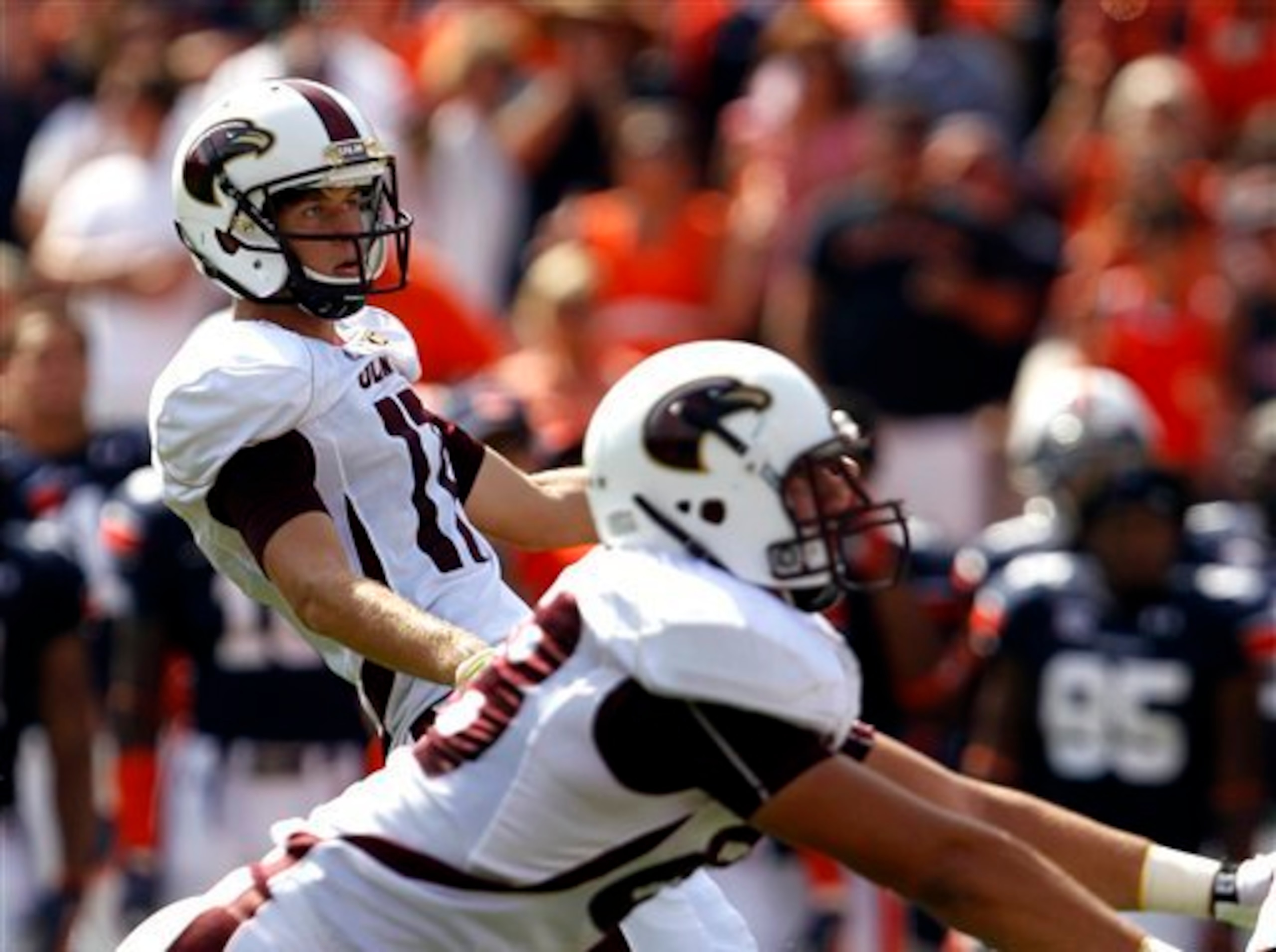
It's a Crapshoot
While they may seem like safe picks, punters and kickers aren't usually. It would make sense that the best punters and kickers would have low risk in the transition to the pro game, as their performances are mostly isolated, but that's not the case.
Players like B.J. Sander, a third-round punter who was selected in 2004, find their way out of the league quickly. Plus, the two whom many consider the best specialists in college, Florida State kicker Roberto Aguayo and Alabama punter JK Scott, aren't even in this class. Overall, the chances of hitting on a specialist doesn't seem to outweigh the risk of taking one when a majority of combine invites at both kicker and punter will end up as free agents.
The More You Can Do
One way a player can show value for a team is by being versatile. A team has 53 spots on the roster, three of which are typically dedicated to specialists.
A player like Justin Manton from Louisiana-Monroe could provide a team's need at both kicker and punter, though, saving it a roster spot. That alone could push him up board. In his time in college, Manton kicked field goals, punted and attempted kickoffs. It's not crazy to think an "innovator" like Chip Kelly could try to pull a fast one on the NFL by freeing up a roster spot for another offensive or defensive player.
.jpg?w=2560 "Texans-Mixon Released Football")
.jpg?w=2560 "Commanders Eagles Football")
.jpg?w=2560 "Grading WWE Raw 🔠")



