

What Does Halt of Santiago Bernabeu Redevelopment Mean for Real Madrid?
"Is this the Real life? Is this just fantasy?"
Playing on the lyrics of Queen's iconic "Bohemian Rhapsody"—"caught in a landslide, no escape from reality"—that was the question asked by Chris Clements of Estadios de Espana, the sister website of Inside Spanish Football, regarding the Madrid Supreme Court of Justice's ruling to block the planned redevelopment of Real Madrid's stadium, the Santiago Bernabeu, per the Guardian.
It's a significant occurrence, both for Real Madrid and European football.

.jpg?w=2560)
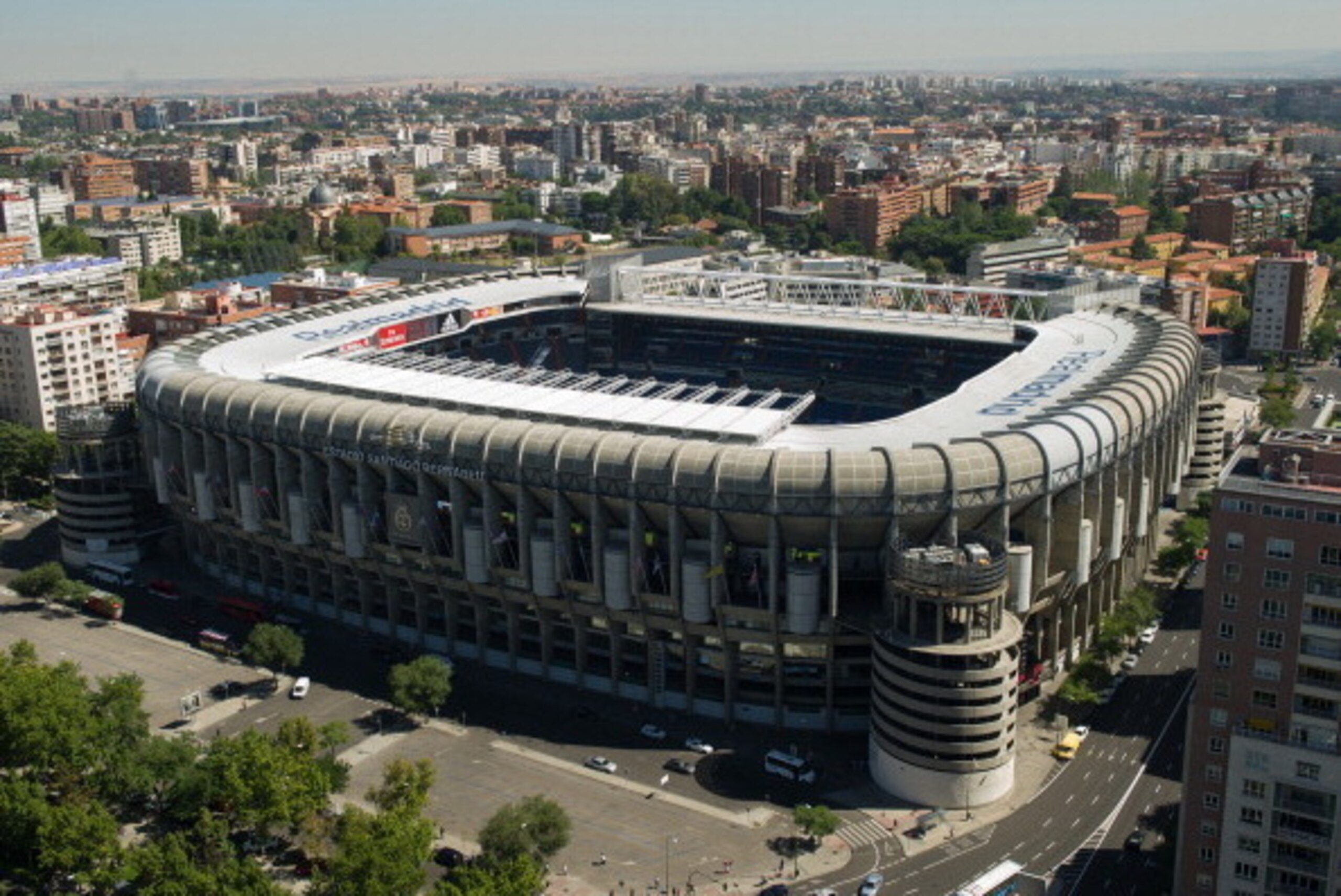
Little more than 12 months ago, the project—which planned to revamp the venue's exterior, incorporate a shopping complex and hotel into the stadium and add a roof—was being described by club president Florentino Perez, via Sky Sports, as a step to "make the Santiago Bernabeu the best stadium in the world," one that would allow the club to "continue to lead in an environment of increasing competition" and a redevelopment that would "enhance our image, brand and city."
Now, it's a project with an unclear future, halted until further notice while being investigated in regard to State aid laws (also related to financial fair play) and rules surrounding public-land dealings governed by the European Commission and Spanish law.
So is the project still a possibility? Or is it just a fantasy?
And what does it all mean for Real Madrid?
The issue's origins stretch back 17 years to 1998, regarding an area of land in the north of Madrid known as Las Tablas—land that was given to Real Madrid by the city council as part of a payment to the club.
Sam Wallace of The Independent, who first broke the news of the investigation in April 2013, explained the basis of the situation in early February:
"The EC [European Commission] investigation into Real centres on the packet of land known as Las Tablas, passed into the ownership of the football club by the city council in 1998 as part of a deal to settle debts between the two parties. When, in 2011, the council discovered—and “discovered” is a generous assessment—that legally it could not cede Las Tablas, the land was valued at €22.7m—its 1998 valuation was €488,000. In lieu of payment, the council gave Real land of equivalent value around their stadium crucial to the new development.
"
It's the stadium's footprint that needs to expand, and the European Commission will determine if it will be allowed to do so. But "if," as Wallace notes, "the transaction is declared null and void no amount of compensation will bring the land back into the club's ownership." The reason? Under Spanish law "public land can only be exchanged for public land."
In December 2013, the European Commission released its own statement regarding its investigation into the land swap, with the only aspect of the statement differing to Wallace's report being the original value of Las Tablas: "Real Madrid, appears to have benefited from a very advantageous real property swap with the City of Madrid. This swap was based on a re-evaluation of a plot of land at a value of EUR 22.7 million, instead of its earlier supposed value in 1998 of EUR 595 000."
The European Commission, the executive body of the European Union, is involved because football clubs, in this era of intense commercialisation, are treated exactly as what they are: international businesses.
As noted by Richard Craven of LawInSport:
"The commercial presence of football has evolved rapidly, with clubs listed on the stock market, multi-million Euro player transfers, and lucrative television rights, merchandising and advertising deals. The likes of Real Madrid and PSV, clubs at the centre of State aid allegations, are international businesses in competition with each other on a variety of football markets. EU interference is thus warranted and it is well established that professional sports clubs may be “undertakings” for the purposes of EU competition law.
"
The same message was given in a joint statement released by the European Commission's Joaquin Almunia and UEFA's Michel Platini in 2012, while outlining the objectives of financial fair play:
"The main idea behind State aid control is that European undertakings should compete on a level playing field, where no operator is given special advantages by any layer of the government. In this respect, the financial regulations by UEFA and the State aid rules by the Commission pursue broadly the same objective of preserving fair competition between football clubs.
"
In short, the European Commission's investigation will have to decide whether the land needed for the Bernabeu's redevelopment was acquired within the law and whether the project on that land—"expected to add a further €12m to the annual revenue earned by the stadium alone," as noted by Wallace—would constitute as a special competitive advantage aided by the local government, thus infringing EU State aid law.
Real Madrid insist the club hasn't received state aid.
Yet, the latest news of the Madrid Supreme Court of Justice's ruling comes at a delicate time for Real Madrid.
Though Spain is slowly emerging from the depths of the recession, according to the Financial Times, the country is now facing the "fresh threat of sustained deflation." And with unemployment affecting almost one in every four people, per the BBC, the left-wing political group Podemos, led by Pablo Iglesias, and with an "uncompromising message against austerity and corruption," is gathering momentum in Madrid ahead of the municipal elections in May and a general election in November.
Spanish prime minister Mariano Rajoy believes Podemos "will not succeed," but tens of thousands joined the group's "March for Change" in Madrid in January, indicating it has substantial support.
According to Wallace, "Perez is an obvious target for Podemos" and that the group's supporters "believe time is running out for the old order, like the PP [centre-right Popular Party] politicians who are regulars in the VIP areas of the Bernabeu."
The Madrid city council has backed Real Madrid, and in December 2013, Spain's foreign minister Jose Manuel Garcia Margallo said, per BBC Sport, "The government will fight to defend Spanish clubs because they're also part of the Spanish brand," leading to Wallace's point that "one could surmise that many in power believe what is good for Real Madrid is good for the country."
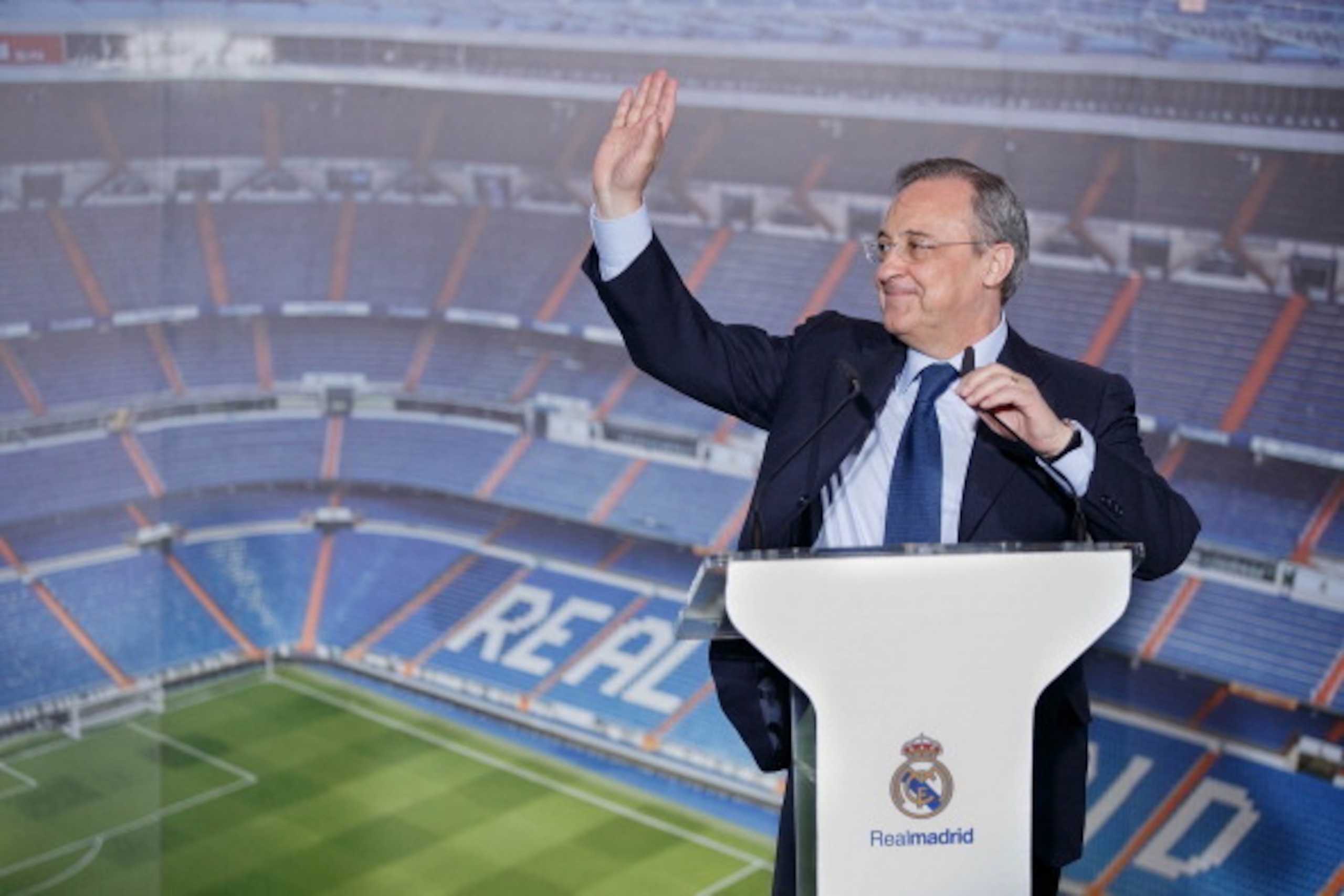
Though a drastic change in the country's political situation may appear unlikely to some, the fact that it's possible means there's a chance (even if it's small) that the club could lose some of the public support that has been given to it by those in government—"Podemos is a vocal critic of the offshore Castor gas storage project that Perez's construction company ACS was involved in," notes Wallace.
Such a situation might be damaging to Real Madrid, because any new council at all influenced by the left-wing group wouldn't be compelled to lobby for the club and would be unlikely to highlight any potential upsides the redevelopment may have, such as creating new jobs.
Of course, it's the European Commission that will determine the outcome, but if the result of the investigation was unfavourable for Real Madrid, it would be a huge blow to the club's perpetual quest for commercial dominance under Perez.
Across in Catalonia, Barcelona announced their own plans to redevelop the Camp Nou last January (the same month as Real Madrid did so for the new Bernabeu), with members approving of the move in April.
The work, which is set to begin in 2017, is expected to be completed by 2021, and according to Andy West of BBC Sport, the upgrade will help to boost the club's matchday revenue:
"A key factor behind Barca's desire to update the Nou Camp is their need to take greater advantage of the opportunities available in the highly lucrative corporate hospitality market.
Barcelona is one of the world's most popular destinations for big-money trade shows, and the chance to attract more high-paying business customers is a major potential revenue stream for the club.
The current Nou Camp's facilities in that regard are woefully inadequate, and it's notable that the plans released by the club on Monday include 'a new ring of boxes, restaurants and other VIP facilities' with the addition of 3,500 new corporate seats.
"
According to the Deloitte Football Money League report, Barcelona's matchday revenue in 2013-14 was €116.8 million—slightly higher than Real Madrid's at €113.8 million.
Despite that, the capital club's overall revenue of €549.5 million was still more than €60 million greater than Barcelona's (€484.6 million), due to stronger broadcasting and commercial income streams. (The figures announced by both Real Madrid and Barcelona are both slightly higher than those identified by the Deloitte Football Money League report, but the difference is almost the same.)
However, if Real Madrid's ability to update the Bernabeu was hampered and Barcelona are able to proceed redeveloping the Camp Nou, the revenue gap between the clubs could close significantly—or even draw level—on the back of Barca's increased seating capacity (expected to be boosted to 105,000), increase in premium seating and any further commercial opportunities that could become possible.
At this stage, it's also unclear how Real Madrid's deal, as reported by the Guardian, with the International Petroleum Investment Company "understood to be worth €3 million (£2.25 million) a year until Madrid begin work, when Ipic would pay €20 million a year," for the stadium's naming rights might be affected.
Of course, the possible alteration to the financial landscape between the clubs would take significant time to eventuate, given that Barcelona will invest €600 million in the revamp of the club's stadium. But, even if it's a possibly that's only remote, as illustrated by Sid Lowe's outstanding Fear and Loathing in La Liga: Barcelona vs Real Madrid, it wouldn't sit well with Madrid's quest for bigger and better:
"The clubs are embarked on a constant search for supremacy and have a burning need to outdo each other—and the rest of the world.
Witness their centenaries: Barca visited the Pope, making him a soci or member; Madrid visited the King, the UN and the Pope. The very fact that they can is significant. Barca celebrated by playing Brazil; three years later Madrid celebrated by playing the whole wide world.
"
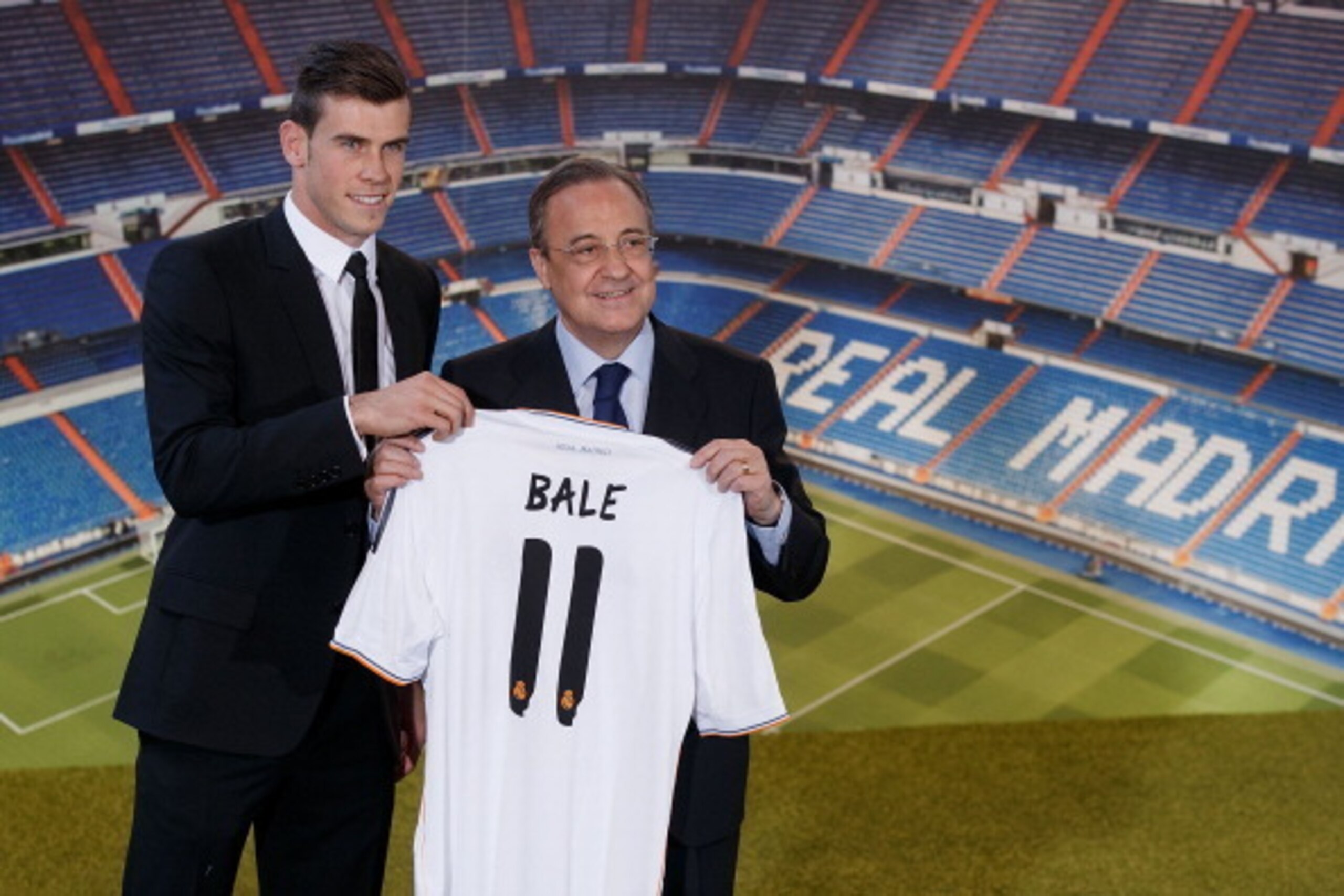
The same pattern has been seen recently in the transfer market. In June 2013, Barcelona signed Neymar; that September, Real Madrid signed Gareth Bale. In July 2014, Barcelona signed Luis Suarez; one week later, Real Madrid signed James Rodriguez.
For Real Madrid, beating Barcelona is the No. 1 priority. In terms of importance, everything else comes after that.
And for Barcelona, it's just the same.
It's one of the major reasons why the redevelopment of the Bernabeu is so pivotal in Perez's vision of Real Madrid; a revamp of the arena—originally scheduled for completion in 2017, the year work on the Camp Nou will begin—would allow the club to keep pushing ahead of the Catalans in terms of revenue and commercial success.
And pushing ahead of Barcelona financially means pushing ahead of the rest of Europe, too, such is the dominance of Spain's footballing aristocracy.
The European Commission will decide whether that will be the Real life or whether it will be just fantasy.




.jpg?w=2560 "Viral Rams Coach Vid 🖕")

