
UNC Basketball: What Tar Heels Must Prove in Final Regular-Season Stretch
Seven games. That's all North Carolina has left before the regular season is over and the real work begins.
There's no doubt the Tar Heels are going to make the NCAA tournament, aside from the slim possibility of a massive collapse in these final weeks. But just making that event isn't the goal for this program. Instead, it is to end its longest Final Four drought in a quarter-century.
Wanting something and being able to make it happen are two different things. UNC still has a lot to prove before we can start thinking a deep tournament run is probable instead of just possible.
Take a look at some areas where the Heels still have work to do during this final stretch of regular-season games.
NOTE: All statistics are current as of Feb. 10.
Marcus Paige Doesn't Need to Wait
1 of 5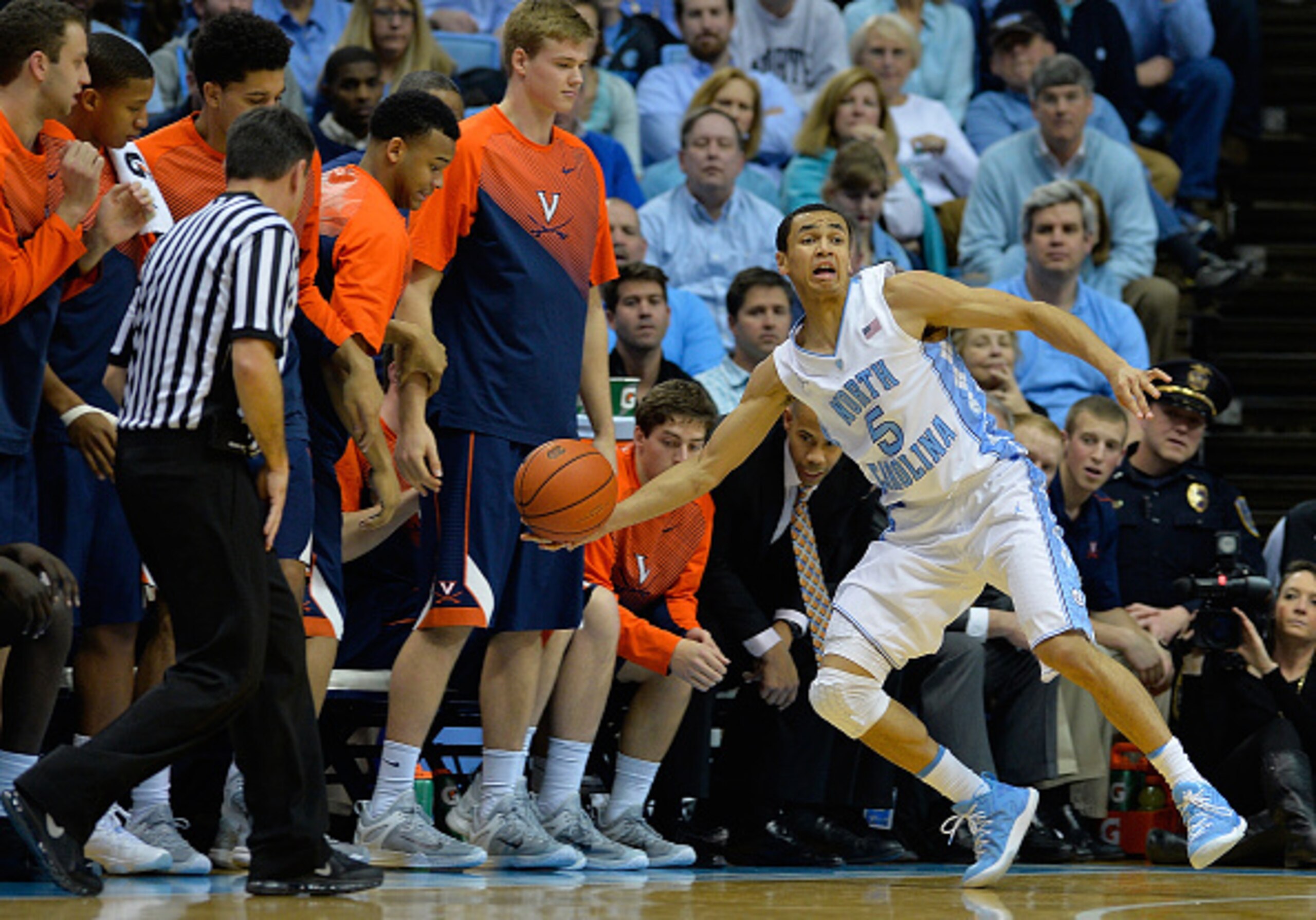
Marcus Paige developed a reputation as a second-half star for North Carolina last season, and the team needed that from him. Not so this year, with more diversity on offense and a greater selection of players who can be depended on late in the game.
Yet Paige still finds himself scoring more in the second half than before halftime—the result of him seeming to show reluctance to score early and then a need to make up for that as the clock winds down. He's averaged 16.3 points over UNC's last four games, with 12.3 coming in the second half or overtime.
The last time Paige scored more before halftime than after was Jan. 24, when he had 10 in the first half and nine in the second against Florida State.
Second-half surges happen all the time, but making it a habit is just setting things up for failure. If Paige can spread out his production it can only help.
The Juniors Can Lead by Example
2 of 5
Veteran experience is far less common in college basketball nowadays, especially among teams in the power conferences. So the fact North Carolina starts three juniors should be a luxury, yet of late those upperclassmen have been the source of much frustration.
Beyond Marcus Paige's scoring imbalance noted in the previous slide, fellow juniors Brice Johnson and J.P. Tokoto have been, by far, UNC's most inconsistent players this season.
The 6'9" Johnson is third in scoring, at 12.2 points per game, and leads UNC with 8.0 rebounds per contest. Tokoto, a 6'6" wing, averages 8.7 points, 5.0 rebounds and 4.1 assists.
Emphasis is put on the word average, as both Johnson and Tokoto have struggled to string together consecutive good games lately. Johnson had 17 against Syracuse, then scored two against Louisville before rising up to score 14 against Virginia. Tokoto had 11 against Louisville, slipped to a single point against Virginia and then had nine against Boston College.
Following the Virginia loss on Feb. 2, Paige eluded to chemistry issues on the team by telling Andrew Carter of the News & Observer, "We've got to have guys look in the mirror and decide they're going to change, buy in, and then some good things will happen."
If such problems exist, it's up to the veterans to get them fixed. That responsibility falls not just on Paige but also Johnson and Tokoto.
Nate Britt Can Consistently Shoot
3 of 5
North Carolina needs a second reliable outside shooter in order to be able to make a deep run. Paige can't be the only one who is not only making three-pointers at a good rate, but also taking enough to make that accuracy of note.
Nate Britt is shooting 38.5 percent from long distance, just a hair behind Paige's 38.6 percent, yet he's taken just 52 threes compared to Paige's 153. He's made seven of his last 12 attempts, yet last game against Boston College he didn't even try a three.
That was the fifth time this season he didn't attempt one, along with two other games where he only put up one three-point shot. He started UNC's most recent outing and played 20 minutes, yet only took two shots (making both) from inside the arc.
Britt's ability to shoot from outside is a necessity for a prolonged postseason run. Even if he doesn't make most, just having that be something for defenses to deal with helps open up opportunities for other Tar Heels scorers.

.jpg?w=2560)

The Frontcourt Is Truly a Strength
4 of 5
So much has been made this season of Kentucky's great depth, particularly in the frontcourt, but UNC is pretty deep in that area as well. Starters Brice Johnson and Kennedy Meeks are both 6'9", while reserves Isaiah Hicks (6'8") and Joel James (6'10") are playing valuable minutes.
Hicks got a spot start on Feb. 7 at Boston College and responded with a career-high 21 points on 7-of-10 shooting. He also made 7-of-11 from the free-throw line, forcing the issue and throwing his body around like post players are supposed to do.
This hasn't been a consistent thing for UNC's frontcourt, though, as no player is averaging more than 3.9 foul shots per game. Meeks has only taken 10-plus free throws in a game once this season, and Johnson has yet to do so.
If UNC's forwards can score consistently without getting fouled, so be it. But plenty of points can come at the line as the result of being aggressive, and that remains an area where the Tar Heels were hoping to excel but have mostly underachieved.
It Won't Fold Down the Stretch
5 of 5
Tied at 36 at the half against Boston College in its last game, North Carolina turned it up in the second half to shoot 66.7 percent and win by 11 on the road.
This was a complete reversal to the previous two games, losses at Louisville and Virginia, when the Tar Heels were outscored by a combined 33 points in the second half or overtime. That included blowing an 18-point second-half lead at Louisville, a collapse that came so quickly it was like the Heels had given up once their opponent started rallying.
UNC has outscored opponents by an average of 8.5 points in the first half but only 2.9 in the second half or OT. That's a dangerous trend to have continue into the postseason, when the urgency to keep a season from ending will prompt teams to push hard down the stretch.
Follow Brian J. Pedersen on Twitter at @realBJP.
.jpg?w=2560 "Rams Eagles Football")

.jpg?w=2560 "Injury-stricken Seahawks signing veteran RB")

