
Is Syracuse Taking the Easy Way Out with Self-Imposed Postseason Ban?
Sometimes, a postseason ban in college sports is the "sheep in wolf’s clothing" version of a punishment.
The Syracuse basketball program self-imposed a postseason ban Wednesday “in response to an ongoing NCAA investigation into potential past infractions by the team,” as ESPN.com news services noted. The case centers on academic concerns that were self-reported as potential violations, although all of the misconduct occurred before 2012 and did not involve any current student-athletes.
While the investigation also includes the football team, the basketball squad is the one that makes the headlines in Syracuse. It won’t be playing in the NCAA tournament, ACC tournament or NIT this season.

.jpg?w=2560)


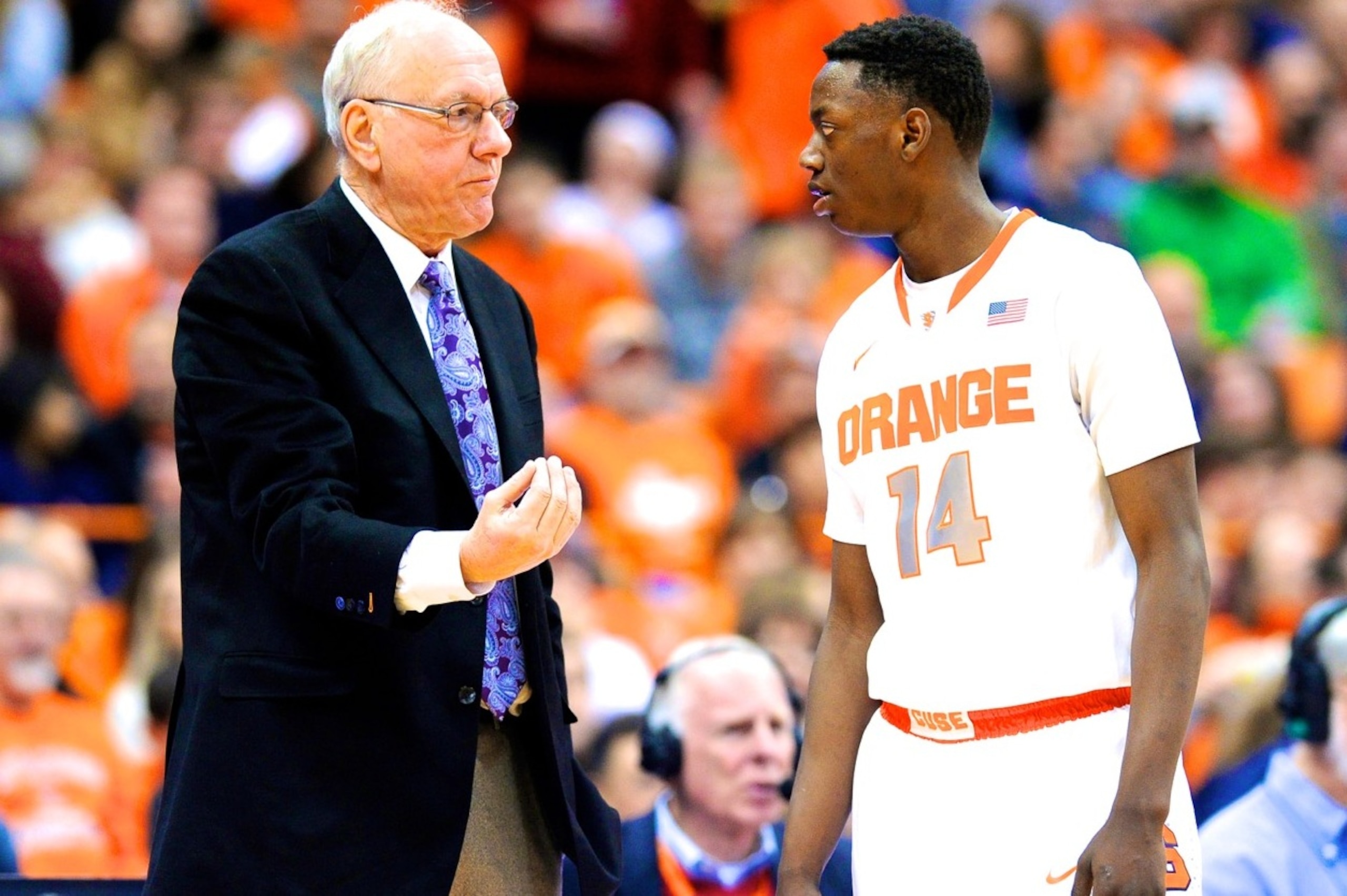
Head coach Jim Boeheim commented on the punishment, via ESPN.com: "I am very disappointed that our basketball team will miss the opportunity to play in the postseason this year. However, I supported this decision, and I believe the university is doing the right thing by acknowledging that past mistakes occurred."
Now, the question—especially for NCAA cynics—is whether Syracuse is actually taking the easy way out with this punishment.
Boeheim would never admit it, but this is probably easier to swallow considering the Orange are 15-7 and in the midst of an ACC slump (three losses in the past five games) than it would be if his team were 20-2. Syracuse only has eight scholarship players available thanks to injury issues, so it’s not as if the immediate future was incredibly bright.
This was not a team on a direct path to the NCAA tournament.
From a subjective standpoint, Syracuse’s best win was probably its November victory over an unranked Iowa squad, and it lost three contests at Michigan, at Villanova and at North Carolina in which it could have made national statements. The road ahead certainly doesn’t get any easier with two games against Duke, a clash against Virginia and showdowns against Notre Dame and Louisville.
It’s difficult to envision many wins in that stretch for the Orange, and multiple losses would virtually guarantee them a spot on the outside looking in on Selection Sunday.
Eamonn Brennan of ESPN.com didn’t exactly paint a pretty picture when it came to Syracuse’s chances at the Big Dance before the postseason ban:
"Syracuse fans should hope the selection committee is more brand-conscious than it professes to be. Otherwise, the Orange -- with their 7-7 record against the top 150, no top-50 wins and marginal schedule numbers -- face long at-large odds. Actually, the best hope lies on the schedule: Syracuse will get Carrier Dome cracks at Louisville, Duke and Virginia before the regular-season is out.
"
If it seems as if the Orange are trying to build goodwill with the NCAA in a season that probably wouldn't have included a tournament appearance anyway, that's because it's likely exactly what's happening.
Perhaps this gesture will rescue Syracuse from a postseason ban in the years ahead, especially after Boeheim’s 2015 recruiting class—which currently ranks No. 8 in 247Sports’ composite rankings—arrives on campus.
Good days are on the horizon for the basketball program, but a postseason ban would certainly be one way to put a screeching halt to that. Ideally, this self-imposed ban will convince the NCAA not to swing its unpredictable and inconsistent hammer of justice Syracuse’s way.
There is actually some recent precedence for self-imposed postseason bans working.
The Miami football program self-imposed bowl bans for the 2011 and 2012 seasons and refrained from appearing in the 2012 ACC title game. As a result, the sanctions were deemed “unprecedented,” and the NCAA only revoked nine scholarships over three years instead of imposing more postseason bans.
While losing out on a chance to play for the ACC championship was difficult, the Hurricanes finished a mediocre 7-5 that season.
These were not the Hurricanes of old, but by imposing bowl bans amid down seasons, they were off the hook in the future and able to attempt a quick rebuild.
What’s more, the NCAA continuously made blunders during the investigation and actually came out looking like the bad guy in the whole process, as ESPN’s Dana O’Neil pointed out.
This is not to suggest that the NCAA will mangle the Syracuse investigation like it did Miami, but isn’t it a good idea from the Orange’s perspective to take some of the power out of the hands of an organization that's proved capable of incompetence during previous investigations?
The self-imposed ban does just that.
It is also risky to sit back and hope for the best when you are sinking fast during what appears to be a throwaway season.

Just look at what happened to Ohio State. Like Syracuse basketball, Ohio State football is a blue-blood program and brand name that moves the needle in fan interest and television coverage. None of that mattered in the eyes of the NCAA, though.
Ohio State elected not to self-impose a postseason ban when it was under investigation during the 2011 season and went to the Gator Bowl with a miserable 6-6 record. The next season was Urban Meyer’s first at the helm, and the Buckeyes were a perfect 12-0.
The only problem was, the NCAA banned them from postseason play, which may have cost Ohio State a chance to win the national championship. While a self-imposed ban in 2011 would not necessarily have guaranteed circumvention of a ban in 2012, that is a chance Buckeyes fans would likely love to take in retrospect.
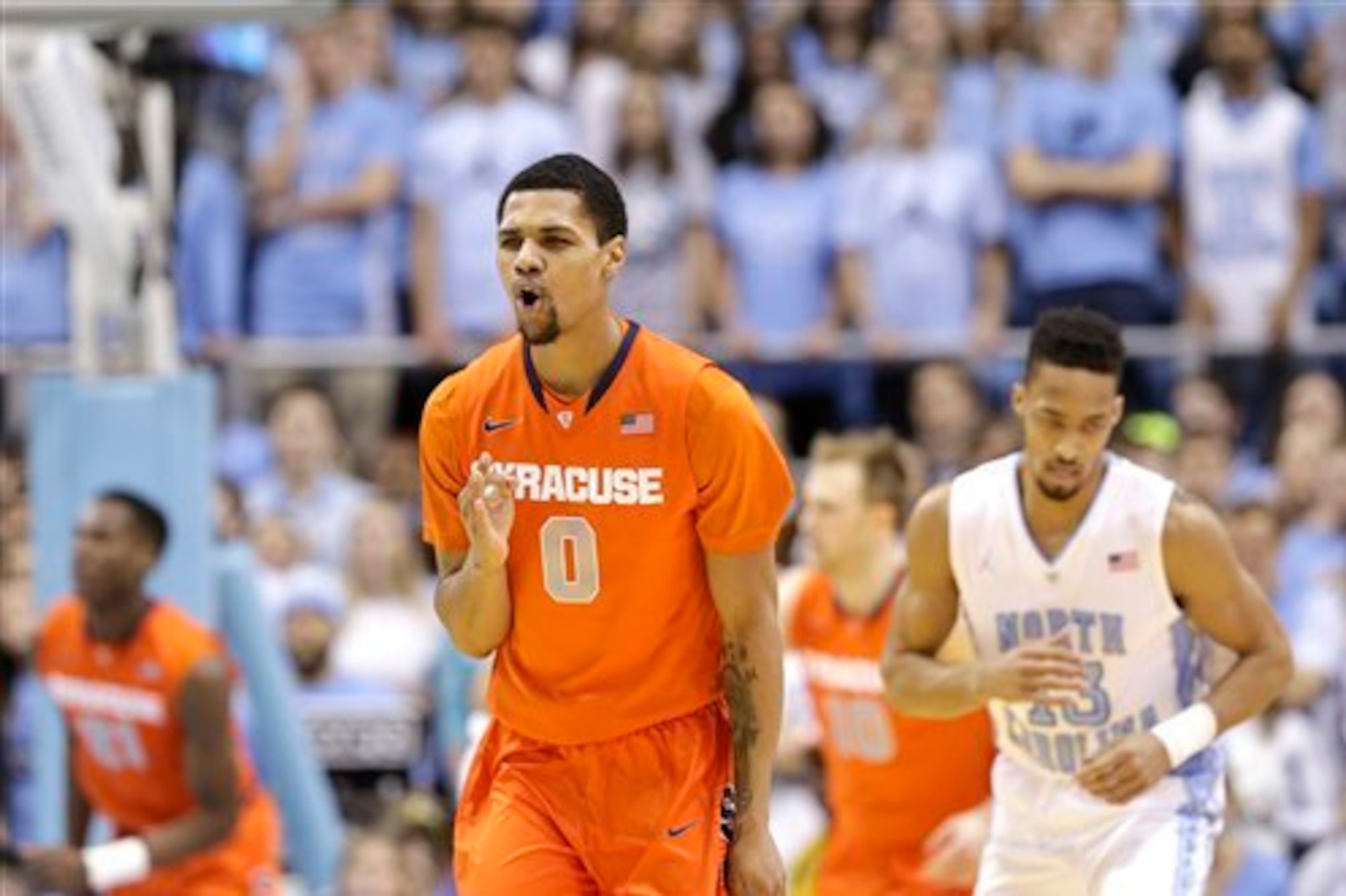
There are few programs in the country with as rich a tradition as Syracuse, and Boeheim is still in charge of the team. It is not difficult to envision a scenario where the Orange are playing at a typical Syracuse level as soon as next season (like the Ohio State example), particularly with the highly rated incoming recruiting class.
The biggest problem with the self-imposed ban is that the current players are essentially collateral damage in a case that does not directly involve them. While that is certainly unfortunate, that would also be the reality if and when the NCAA imposes harsher punishments in the future. The idea is that the self-imposed ban at least limits that damage to only one mediocre season.
If the decision to self-impose a postseason ban during this mediocre campaign removes the black cloud hovering over the program and frees the Orange to return to the NCAA tournament next season, then it's the right move.
Ultimately, that's more important than if they took the “easy way out” or not.
Follow me on Twitter:
.jpg?w=2560 "Falcons Saints Football")
.jpg?w=2560 "Rams Eagles Football")
.jpg?w=2560 "Injury-stricken Seahawks signing veteran RB")


.jpg?w=2560 "2 NFL Officials Suspended")
