

Adaptability Makes Jordan Henderson Lead Contender for Steven Gerrard's Crown
It’s remarkable to think now what scepticism there was about Jordan Henderson when he first signed for Liverpool.
He was only 20, and it’s true that he was far from being a polished performer—and he understandably took time to adjust from being a dominant figure at Sunderland to dropping back among the ranks. Still, in retrospect, his potential appears obvious.
Perhaps most significant was his capacity to learn. He had first emerged at Sunderland as a right-winger—an experience that has helped his rapid adjustment to playing at wing-back—but Steve Bruce saw the possibilities in him on a pre-season tour of Portugal and shifted him into the centre of midfield.


.jpg?w=2560)
Henderson made his debut at Birmingham City and was dreadful—overwhelmed and overpowered.
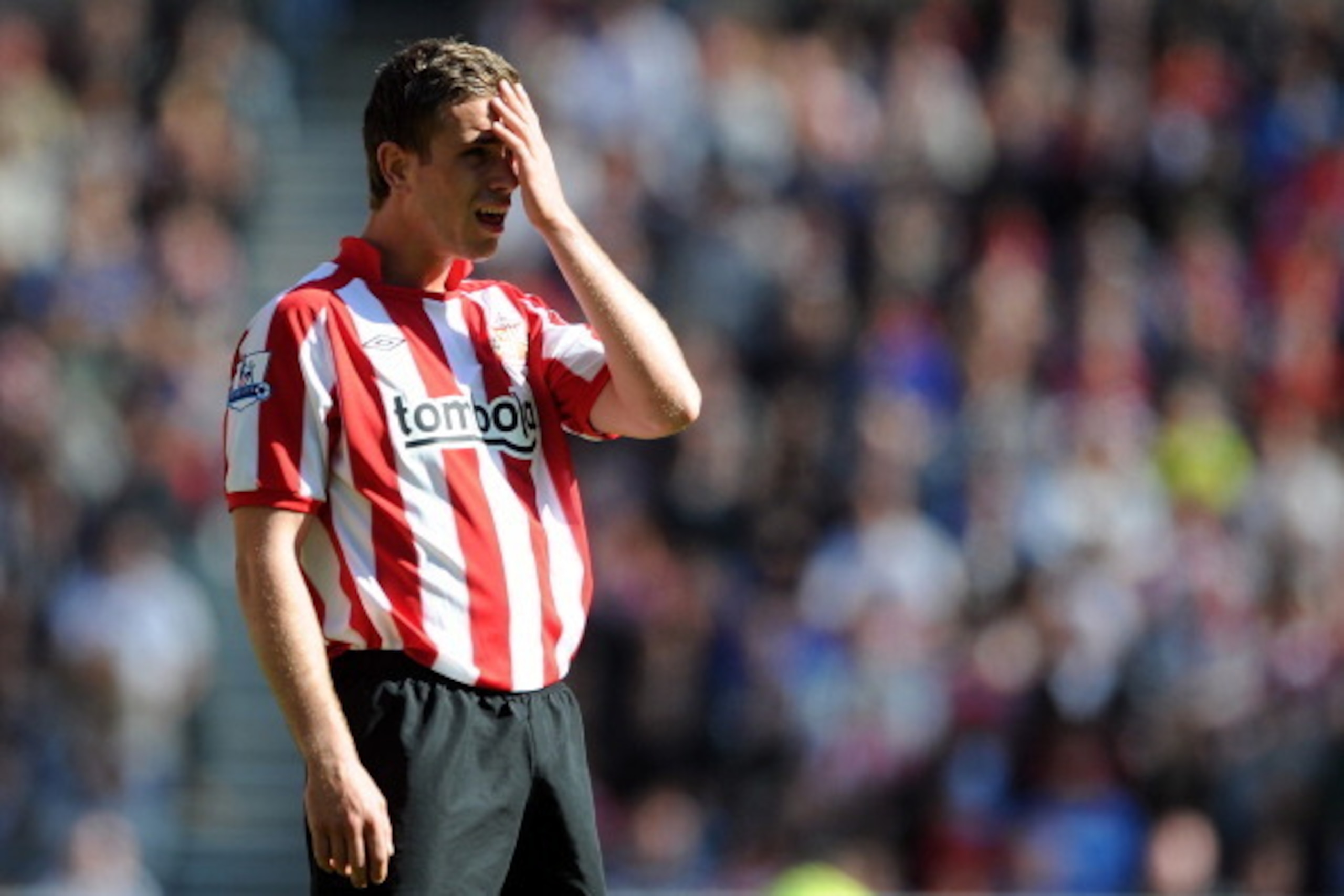
Sunderland supporters, as Liverpool fans would later do, wondered why on earth he had been so favoured.
He was gawky, ran strangely and was forever thrusting his neck forwards. What did he do? What was he for?
But he soon became a regular, and when he dominated a 3-1 win against Tottenham Hotspur, in which Sunderland missed two penalties and had a goal wrongly ruled out, his talent was obvious. He was hard-working, prodigiously so, and while not exactly deft, could find space and pick a pass.
Yet, his England debut, against France in November 2010, was a disaster. Fabio Capello, who only went to Sunderland once during his reign as England manager, seemed to have little idea what sort of player he was and used Henderson deep in midfield.

In time, perhaps he would have adjusted, but at that moment, his chief asset was an ability to work the length of the pitch for the entirety of the game, precisely the sort of positional fluidity an anchor has to eschew.
As ever, there were plenty of critics who emerged to pronounce that Henderson was not international class or ready for the international game as though such issues were absolutes and a player could be found wanting in the same way a car may not be able to achieve certain speeds or a crane to lift certain weights.
The truth, rather, was that, like so many other players quickly written off by England, he had simply been asked to perform a role for which, at the time, he wasn’t equipped.
Where Brendan Rodgers differs from many managers is that he sees players as bundles of attributes rather than necessarily by position.
For him, Henderson is not a holding or central midfielder but a player with a good right foot who can work diligently for 90 minutes and whose understanding of space is advanced enough that he can adapt to playing in a variety of roles.
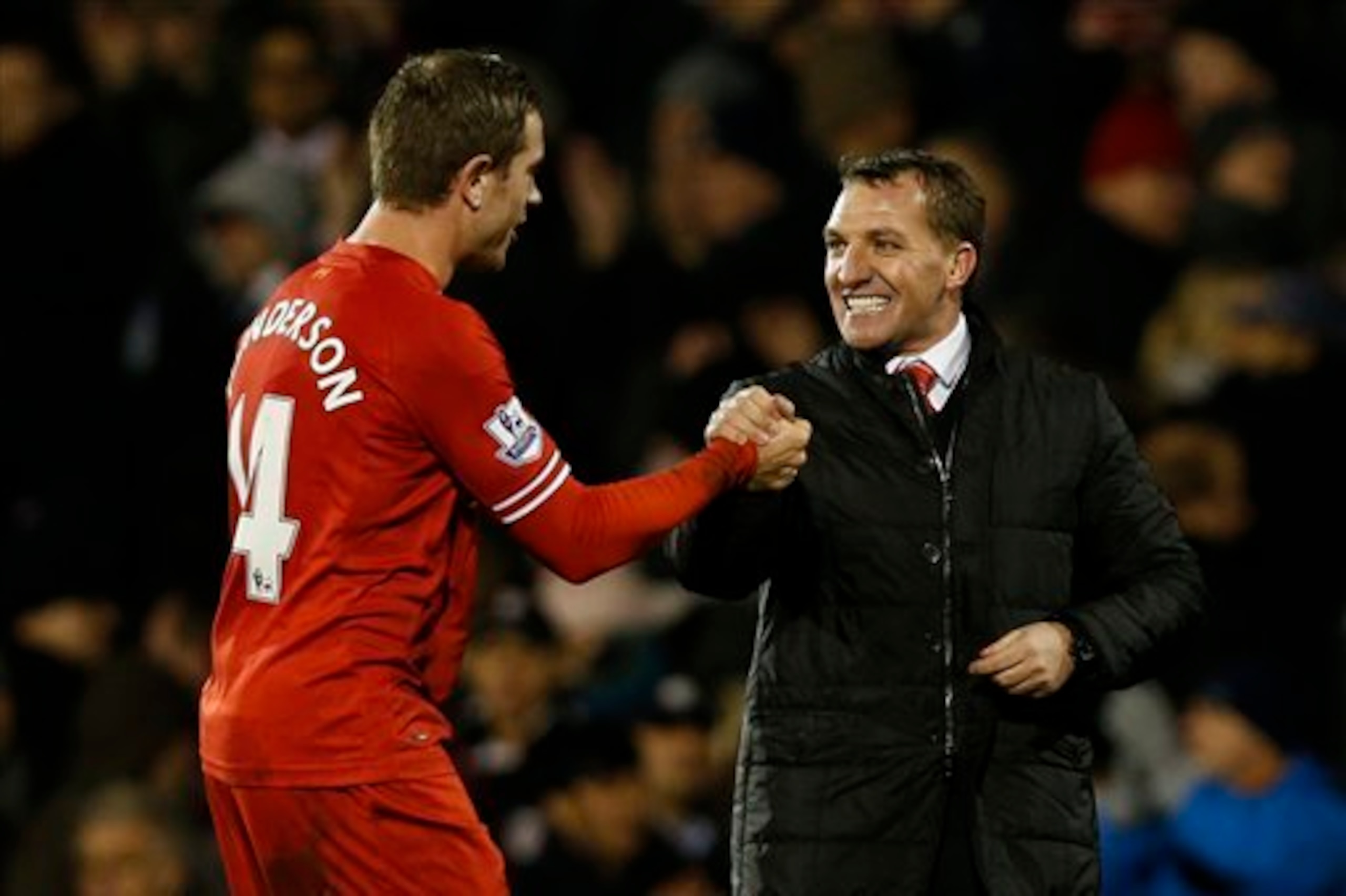
Although Henderson has switched back to the middle over the past month, he also played superbly at right wing-back when Rodgers first switched to a 3-4-2-1.
In fact, given his capacity to cross a ball, there’s an argument that by playing him centrally, Liverpool are missing out on one of Henderson’s key attributes.
On the other hand, his energy means the midfield has great balance, with Lucas Leiva sitting deep, filling space in front of the back three and allowing Steven Gerrard, whose engine has started to falter this season, to play further up the field.
Henderson can link the two, preventing the two halves of the team from becoming separated, which can be a danger with that shape.
There’s an onus on both the wing-backs and at least one of the midfielders to bridge the front and back, and Henderson is superb at that.
Henderson looks like succeeding Gerrard as captain. He’s not as naturally gifted a player, and he certainly won’t score as many goals as his Anfield team-mate, but he is a player who is perhaps more adaptable—somebody who will follow tactical plans rather than his own instincts more closely, and that gives him his own value.

.jpg?w=2560 "Rams Eagles Football")
.jpg?w=2560 "Bijan's INSANE 1st Half 🤩")

.jpg?w=2560 "Injury-stricken Seahawks signing veteran RB")

.jpg?w=2560 "2 NFL Officials Suspended")
