
Lockdown Defenders Who Could Make an Impact During March Madness 2015
One standout offensive player with a hot hand can carry a team through a round or two of the NCAA tournament almost by himself. That's why teams need a lockdown defender to counter that type of one-man offensive scheme.
A lockdown defender is a player the coach can assign to guard the opponent's star, knowing that he's all that's needed to prevent that opposing player from putting up huge numbers. In a single-elimination event like the NCAA tournament, one spectacular offensive game by an opposing player can end your season.
Big men who block shots typically win the defensive awards these days, but they generally are not the lockdown defenders.
The player who can take the challenge of a one-on-one defensive assignment against a standout offensive player and turn it into an advantage for his team with tough, on-ball defense is the lockdown defender. Lockdown defenders are usually perimeter players, while the big men swat away shots in help defense.
A number of players who are outstanding defenders, such as UCLA's Norman Powell and Tennessee's Josh Richardson, were not included because they are unlikely to play in the NCAA tournament. The players listed here will be counted on to impose their defensive will in the postseason.
The players are ranked in ascending order based on the importance of their defense to their team's postseason success.
12. Kentucky Big Men
1 of 12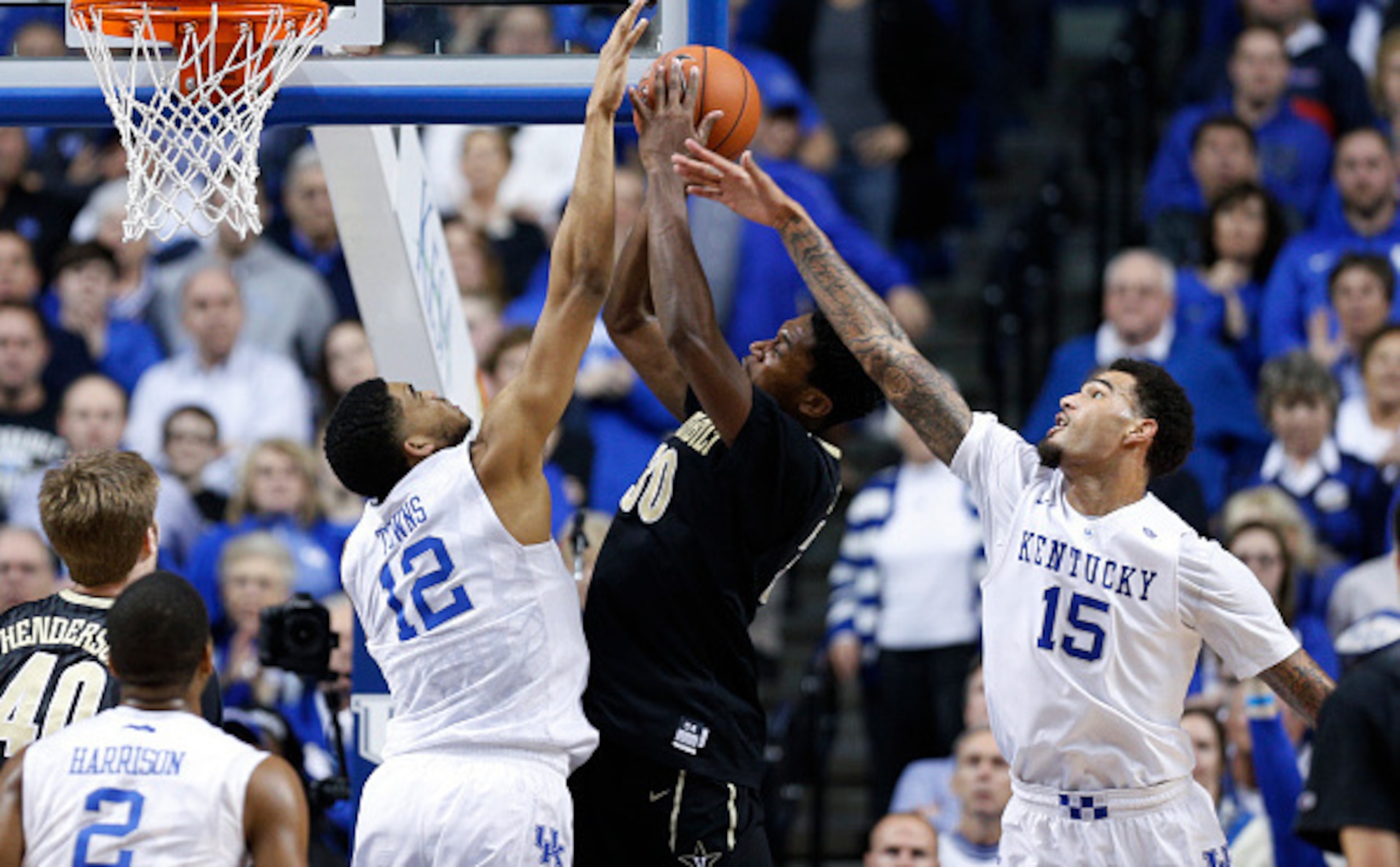
We realize that Kentucky's three-man shot-blocking machine of 7-footers Willie Cauley-Stein and Dakari Johnson and 6'11" Karl-Anthony Towns doesn't fit the strict definition of a lockdown defender. One-on-one defense is not the forte of these intimidating big men.
However, these three need to be included in any discussion of postseason defenses because they are the main reason Kentucky leads the nation in field-goal percentage defense at 32.9 percent. That would be a single-season Division I record if the Wildcats maintain that pace.
None of the three averages more than 26 minutes a game, but they combine to average 4.9 blocks per contest.
It's no coincidence that Kansas' top big man, Perry Ellis, went 1-of-6 for four points against the Wildcats. Texas starting center Cameron Ridley and 6'11" freshman Myles Turner were a combined 1-of-7 for seven points against them, and powerful Louisville big man Montrezl Harrell managed just nine points in 40 minutes of court time against the Wildcats.
Providence forward LaDontae Henton averages 20.4 points, but against Kentucky's intimidators, he went 1-of-8 for three points. UCLA's two starting frontcourt players, Tony Parker and Kevon Looney, combined for just 11 points on 5-of-24 shooting in the face of Kentucky's long and athletic big men.
When the NCAA tournament rolls around, the first mission of any Kentucky opponent will be to figure out how to deal with the Wildcats' shot-blocking triumvirate. Foes may decide not to take the ball inside at all, which means Kentucky has won half the battle before it starts.
11. Briante Weber, Virginia Commonwealth
2 of 12
You may wonder what Virginia Commonwealth guard Briante Weber is doing on this list. Yes, we know he is out for the season after suffering a torn anterior cruciate ligament on Jan. 31.
He is included because his absence will be noticeable in the postseason. Weber led the nation in steals at the time of injury, averaging 3.9 per game, and was just 12 shy of setting a Division I career record for steals. Weber is the linchpin of VCU's chaos-creating full-court press that has made the Rams an AP Top 25 team.
VCU lost its first-round NCAA tournament game against Stephen F. Austin last year, but Weber had six steals in that two-point loss.
Without an effective press, VCU is an ordinary team. Without Weber to spearhead that press, the Rams may struggle in the NCAA tournament.
10. Anthony Hickey Jr., Oklahoma State
3 of 12
Oklahoma State's defense received a major boost when point guard Anthony Hickey transferred from LSU to join the Cowboys this season. His quickness at the point of the Cowboys defense sets up everything they do at that end.
Before the season, coach Travis Ford challenged Hickey to be "the best defender in the country," according to Mark Cooper's Tulsa World article, and Hickey looked like the best when Oklahoma State faced Baylor on Jan. 27.
Baylor point guard Kenny Chery came into that game riding a hot streak, averaging 17 points over his previous five games. But against Hickey's defense, Chery managed just six points on 3-of-13 shooting while committing six turnovers in the Cowboys' victory.
"That is what he’s here for, that is what he’s capable of doing," Ford said of Hickey after that game, per Terry Tush of GoPokes. "Anything less than that, he’s underachieving, and our team will underachieve."
Oklahoma State still has some work to do to make it to the NCAA tournament, at which point it will need Hickey to be a defensive stopper to advance.

.jpg?w=2560)

9. Demarcus Holland, Texas
4 of 12
Texas' 6'2" Demarcus Holland doesn't really have a position when it comes to defense. He simply is matched up against the opponent's best player, whether it be a small forward, a point guard or a shooting guard.
He limited Kansas forward Andrew Wiggins to seven points on 2-of-12 shooting last season.
Texas is playing a lot of zone defense this season, so Holland's one-on-one defensive skills are not as noticeable. However, he was a chief reason California point guard Tyrone Wallace went 5-of-17 from the field against Texas this season and a reason West Virginia guard Juwan Staten had a 1-of-7 three-point effort against the Longhorns.
Come tournament time, if Rick Barnes needs someone to shut down a hot opponent, Holland will get the call.
The Longhorns' concern now is just making it to the NCAA tournament. Four straight losses have put their postseason berth in jeopardy.
8. Shannon Scott, Ohio State
5 of 12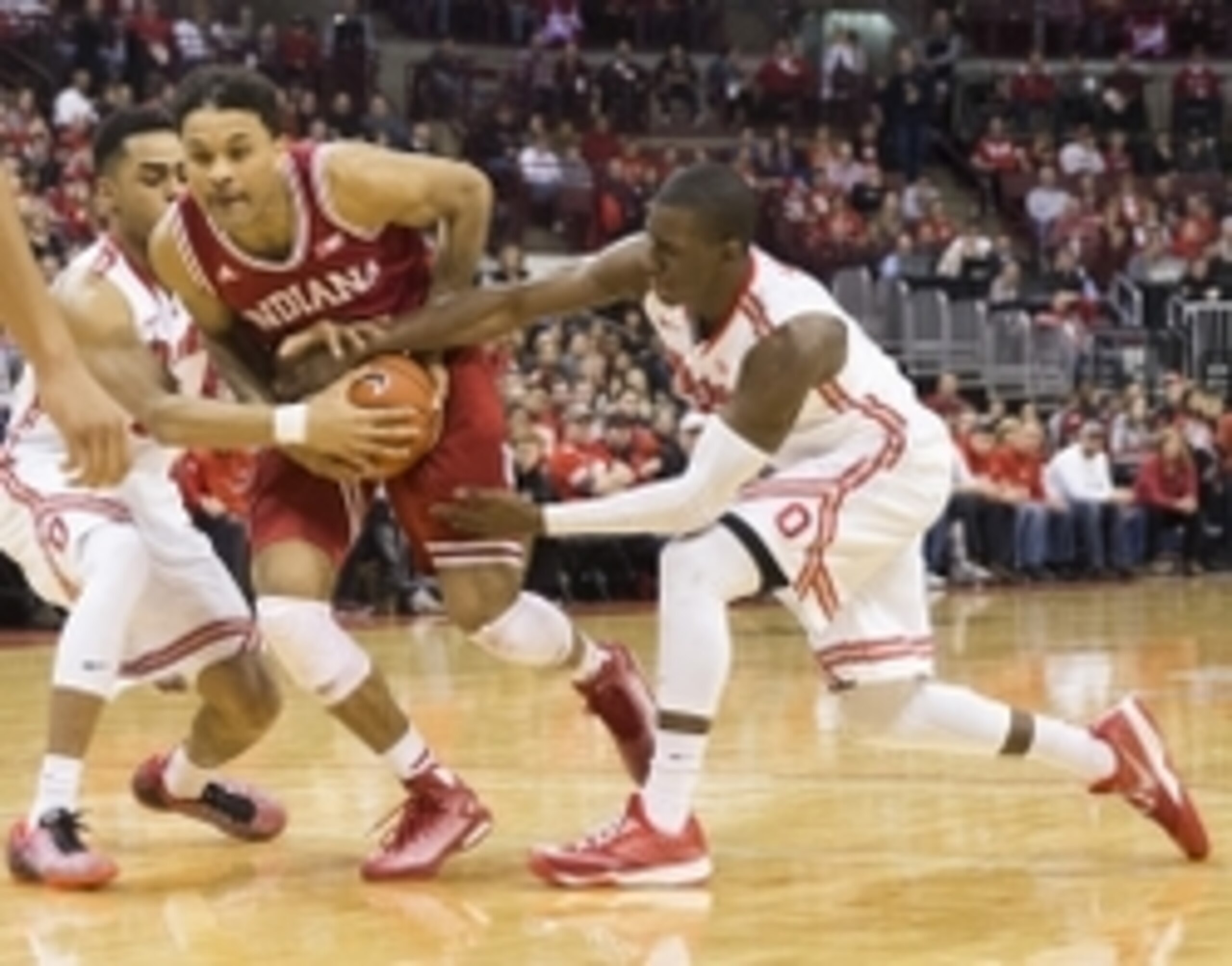
Although he was twice named to the Big Ten All-Defensive Team, Ohio State point guard Shannon Scott was overlooked as a defensive standout because of the presence of teammate Aaron Craft, perhaps the best one-on-one perimeter defender in the country last season.
Now Craft is gone, and Scott is the defensive star for the Buckeyes.
Scott got the call last season when coach Thad Matta needed someone to check a quick guard. This season Scott is charged with disturbing the playmaking of the opposing point guard, a skill that is priceless in the postseason.
Scott averages 1.9 steals per game, although he had only one over the past four games.
The Buckeyes played quite a bit of zone early in the season but have returned to their traditional man-to-man lately. The switch has paid off, as Ohio State won three straight, including two against ranked teams, before the disappointing loss to Purdue.
Ohio State's 80-56 victory over Maryland last week was the Buckeyes' best performance of the season, and part of the success was the fact that Scott helped limit the Terps' Dez Wells to 4-of-14 shooting.
Scott's defense will be even more important if Marc Loving's suspension lasts more than a few games.
7. Delon Wright, Utah
6 of 12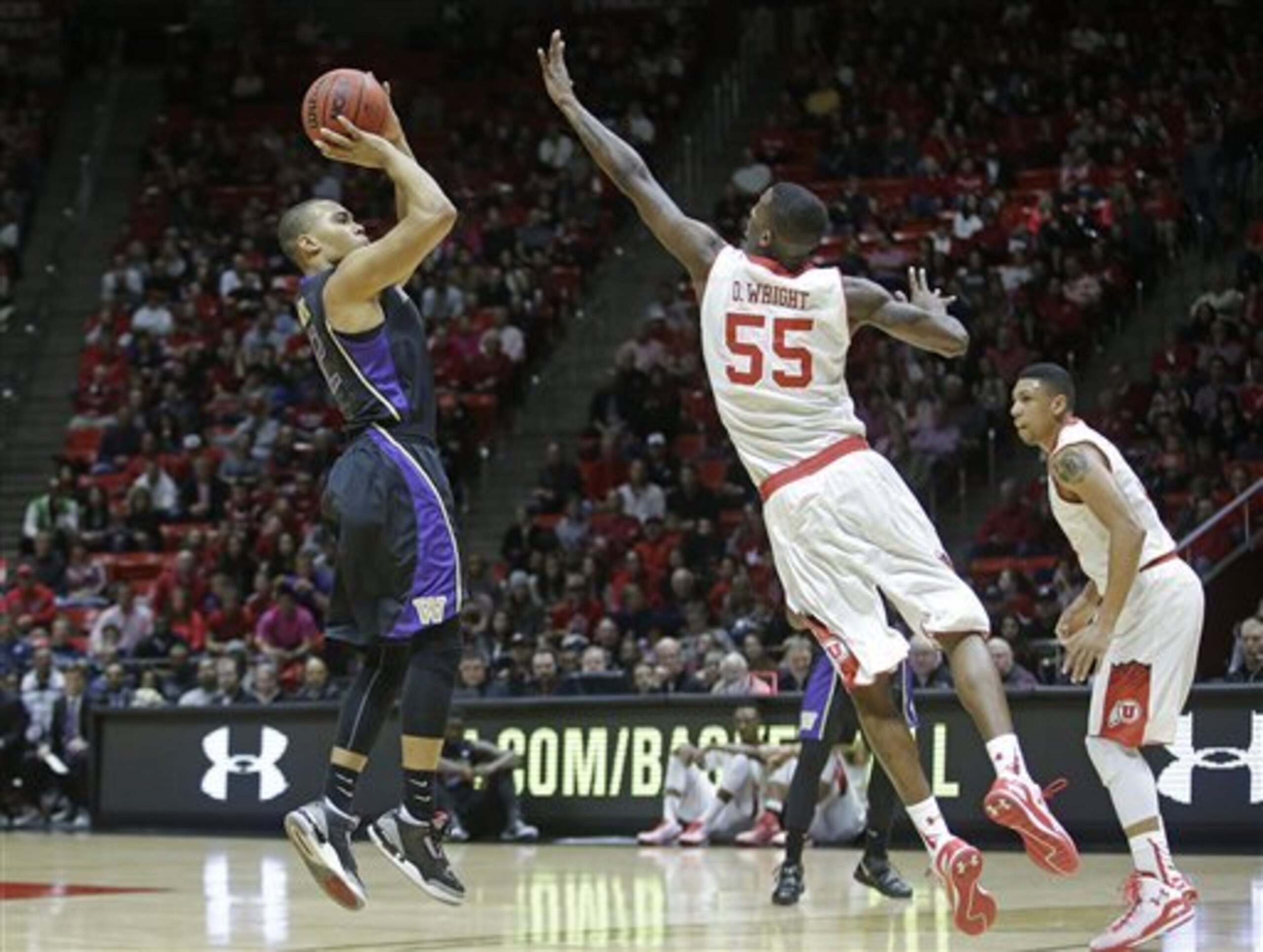
Versatility and length are what make Utah point guard Delon Wright a lockdown defender. The 6'5" Wright is always assigned the opponent's best offensive perimeter player, and his athleticism, height and long arms make life particularly difficult for opposing point guards.
Wright is one of the nation's best shot-blockers among perimeter players, although he's not blocking as many shots as he did last season, when he averaged 1.2 blocks per game.
In his January assessment of the top candidates for National Player of the Year, CollegeBasketballTalk's Rob Dauster called Wright "a defensive menace against opposing ball-handlers."
In the postseason, Utah coach Larry Krystkowiak needs only to identify the opponent's top perimeter scorer and assign Wright to him, knowing Wright will keep him under control. That makes game-planning a lot easier when facing a team with which you are unfamiliar.
6. Branden Dawson, Michigan State
7 of 12
Michigan State's Branden Dawson is long and strong, giving him the physical qualities needed to be an excellent defender. But what distinguished him on the defensive end is his motor and versatility.
The 6'6" Dawson has an endless supply of energy, making him a constant pest for whichever player he is covering. And he can guard almost anyone. He defends anyone from a guard to a power forward, and he could probably do an adequate job against a center as well.
A fractured wrist kept Dawson out of two games in December, but he has been productive lately at both ends of the floor.
In one three-game stretch early in the Big Ten season, Dawson limited Maryland's Jake Layman to four points, held Indiana's Troy Williams scoreless and allowed Iowa's Aaron White to score just eight points on 2-of-4 shooting.
Penn State's D.J. Newbill, the Big Ten's leading scorer, was lighting up Michigan State for 27 points in their Jan. 21 meeting. But Spartans coach Tom Izzo gave Dawson the defensive assignment on Newbill in the closing minutes, and Dawson came up with two key blocks in the Spartans' 66-60 victory.
"They got the stops when they needed them," Newbill said, according to The Associated Press (via ESPN). "Dawson was huge down the stretch, getting rebounds and blocking shots."
Dawson leads the Big Ten in defensive rebounding, averaging 6.8 boards at that end, and coaches will tell you the defensive rebound is the final piece of a good defensive possession.
Dawson's defensive skills and versatility make him a major weapon in the postseason.
5. Kenneth 'Speedy' Smith, Louisiana Tech
8 of 12
Louisiana Tech guard Kenneth "Speedy" Smith gets most of his publicity for his playmaking, and since he leads the nation in assists at 7.9 per game, it's easy to see why.
Often overlooked, however, is his defensive ability, both as an on-ball defender and as an off-the-ball nuisance who can zoom into the passing lanes to create turnovers.
Smith was the Conference USA Defensive Player of the Year last season, and with the Bulldogs at 17-5 overall and tied for the conference lead at 8-1, the nation may get to see Smith's defensive skills in the NCAA tournament. The Bulldogs have not been to the NCAA tournament since 1991, but Smith could lead them there this season.
He is averaging 1.9 steals this season, down a bit from last season's 2.5 average, but he remains a thorn in the side of opposing offenses.
"Speedy Smith is a pest, and that's exactly how Louisiana Tech head coach Michael White likes it," said ESPN Insider Fran Fraschilla (h/t the Louisiana Tech website).
Smith has a knack for disrupting opposing point guards. Syracuse point guard Kaleb Joseph committed eight turnovers when he ran into Louisiana Tech and Smith this season, and Western Kentucky's T.J. Price turned it over seven times against the Bulldogs.
Look for Smith, a factor who can destroy a foe's offensive scheme, to make life difficult for opposing playmakers in the NCAA tournament.
4. Chris Jones, Louisville
9 of 12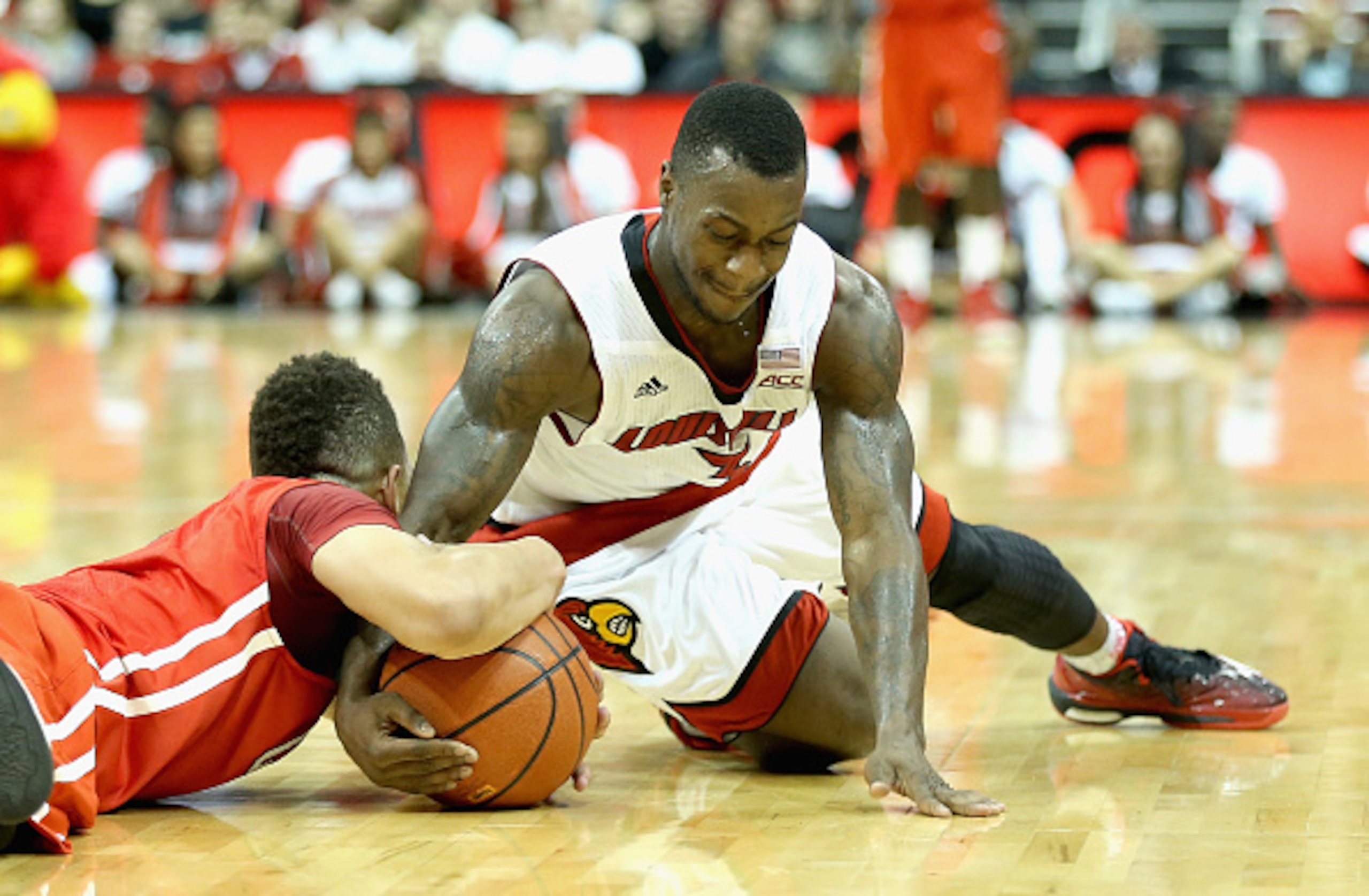
The speed and quickness of Louisville guard Chris Jones make him a perfect fit for the Cardinals' full-court pressure defense.
Jones has improved his offensive output this season, increasing his scoring average to 13.7. However, it is Jones' defensive prowess that will make or break Louisville's postseason. The Cardinals are just an average team offensively, and they rely on their defense to create turnovers for easy baskets. Jones is the key man in that mission.
Jones had six steals in Tuesday's road victory over Miami and helped limit Hurricanes guard Angel Rodriguez to six points on 2-of-9 shooting.
In a review of Louisville's loss to Kentucky, The Courier-Journal's Adam Himmelsbach noted the following: "The battles between Chris Jones and Tyler Ulis were particularly intriguing. They might be the two best on-ball defenders in the nation."
Ulis is just a freshman who needs some time to prove his defensive value. Jones, a senior, has shown how much he means to Louisville with his defense.
Jones' defensive play in the postseason will go a long way toward determining how far Louisville goes in the NCAA tournament.
3. Rondae Hollis-Jefferson, Arizona
10 of 12
Arizona has two players who qualify as lockdown defenders: point guard T.J. McConnell and forward Rondae Hollis-Jefferson. The choice here is Hollis-Jefferson because of his versatility.
While McConnell is a bulldog who refuses to let opposing point guards gain an inch, Hollis-Jefferson can guard virtually anyone on the floor with his amazing athleticism and superior length. The fact that he is a gritty defender unwilling to allow anything easy completes the Hollis-Jefferson defensive package.
He can play position defense or disrupt with his length and athleticism. He is as likely to take a charge as block a shot, all the while giving the offensive player no room to breathe.
Hollis-Jefferson reflected his versatility in Arizona's biggest win of the season, an overtime victory over Gonzaga. Hollis-Jefferson spent time guarding 6'10" Kyle Wiltjer, who is primarily a perimeter player, and 6'10" Domantas Sabonis, who does his best work in the paint.
But when the Wildcats needed to put the clamps on 6'2" Gonzaga point guard Kevin Pangos down the stretch, the 6'7" Hollis-Jefferson got that defensive assignment.
With Pangos wrapped up by Hollis-Jefferson, the Bulldogs offense suffered. In the final 2:30 of regulation plus the entire overtime period, Gonzaga managed just three points.
"Rondae is one of the nation’s great defenders," Arizona coach Sean Miller said, per CollegeBasketballTalk's Raphielle Johnson. "When you think about it, he guarded Pangos and he’s 6'7". The lion’s share of the biggest moments of the game, Rondae was on Kevin Pangos and he did a really good job of just making the game hard."
A player like that is awfully handy to have around in the NCAA tournament.
2. Tekele Cotton, Wichita State
11 of 12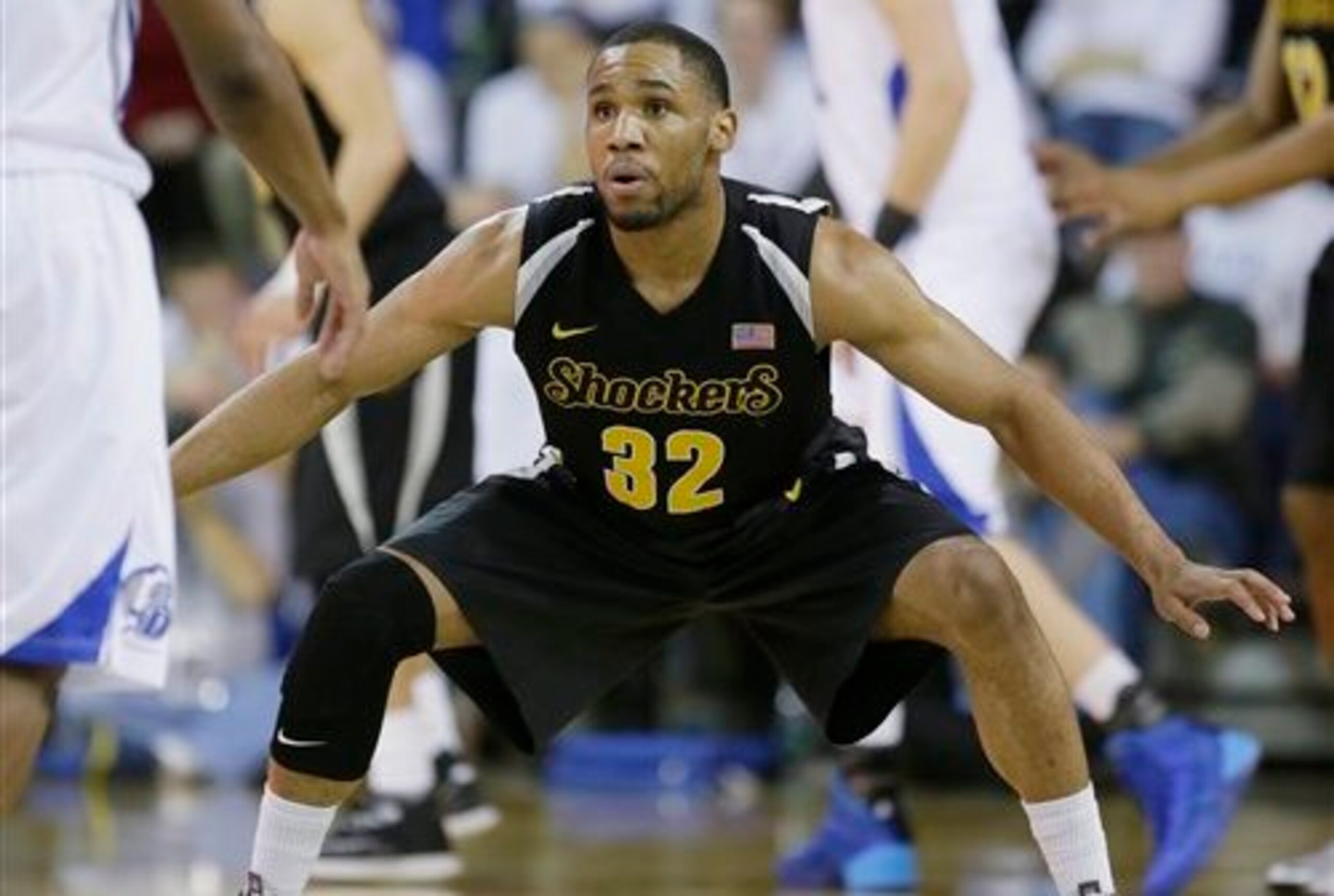
Wichita State guard Tekele Cotton was the Missouri Valley Conference Defensive Player of the Year last season, and he has a chance to repeat.
Ron Baker and Fred VanVleet get most of the publicity for the Shockers, but it is Cotton who epitomizes the tough, physical defense that has made Wichita State a national player.
The 6'3", 200-pound Cotton is strong and long, the qualities needed to be an outstanding one-on-one defender.
"Those three guys (Baker, VanVleet, Cleanthony Early) are terrific players," Northern Iowa coach Ben Jacobson said about last year's Shockers, per The Wichita Eagle's Paul Suellentrop. "The most important player on that team, and it’s hard to separate them, might be Cotton. Cotton is the best defender in the league. He’s not constantly wanting to get shots. You don’t even know he’s out there until he beats you."
Cotton was a vital part of the Shockers' run to the Final Four in 2013. He shut down Pittsburgh guard Tray Woodall in the Elite Eight game, limiting him to two points on 1-of-12 shooting while forcing him into five turnovers in the Shockers' 73-55 blowout win. Cotton might be able to lock down another key player in this year's NCAA tournament.
1. Malcolm Brogdon, Virginia
12 of 12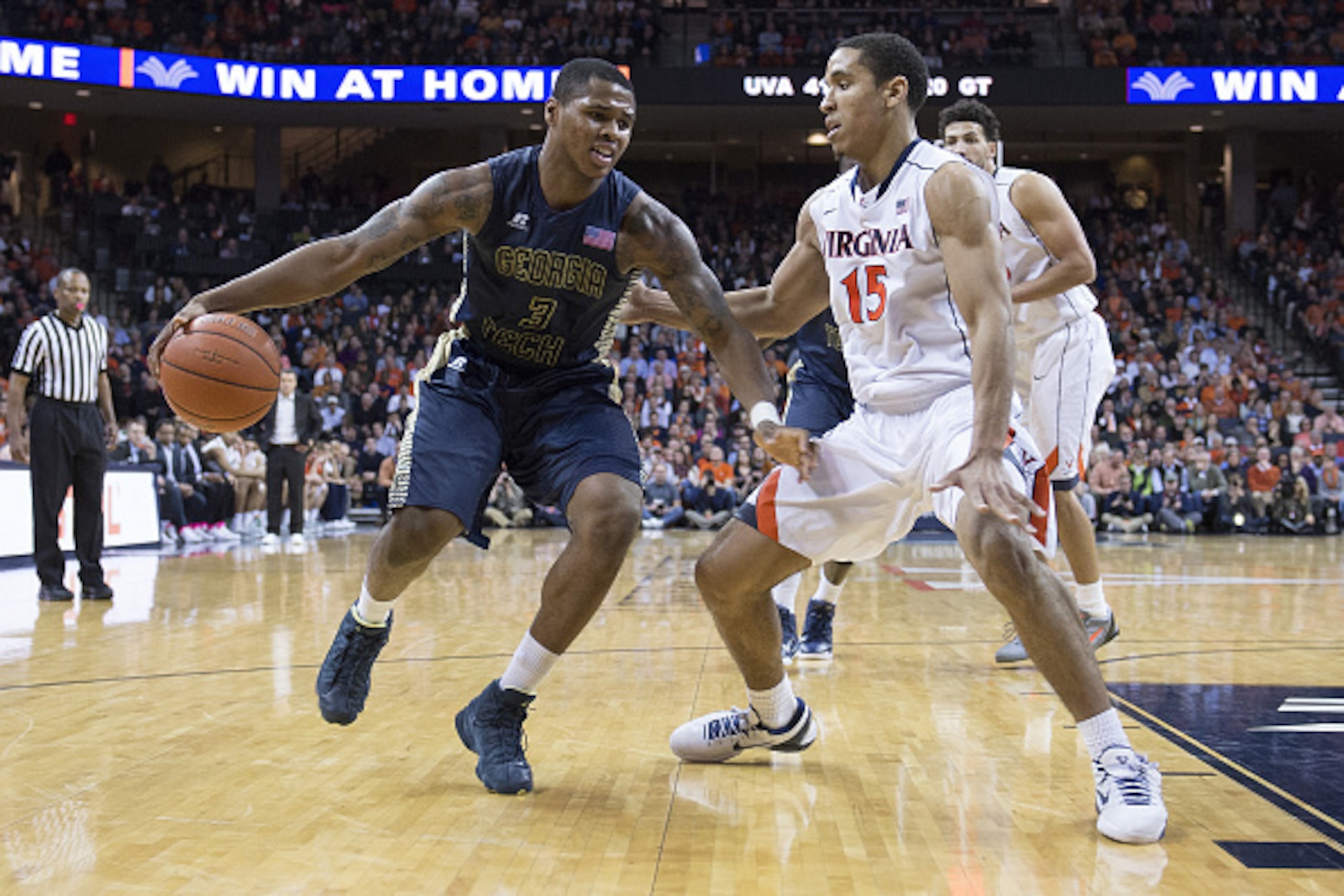
The defensive methods used by Virginia guard Malcolm Brogdon are different from those used by others on this list. He is not the quickest player on the court. Instead he relies on smarts, tenacity and physical strength to overpower any offensive player who tries to attack him.
Few opposing perimeter players have the muscle or stamina to challenge Brogdon's unwavering physical pressure for 40 minutes. At 6'5" and 215 pounds, Brogdon has the ability to defend a point guard or a wing player, often being switched during the game to guard the opponent's hot shooter.
Notre Dame point guard Jerian Grant is one of the best players in the country and is averaging 17.3 points on 51.3 percent shooting from the field this season. But when Grant went up against Brogdon on Jan. 10, he was limited to a season-low six points on 2-of-8 shooting. Grant was shut out in the first half.
When Virginia Tech's Adam Smith hit a series of three-point shots against Virginia, Brogdon switched over to Smith, and that was the end of Smith's run.
"Malcolm’s an excellent defensive player," Smith said to The Washington Post's Isabelle Khurshudyan. "He’s long and strong. He has the size and the length, and that’s everything on defense. He doesn’t have to get too close when he’s guarding quicker offensive players because he’s so long."
Brogdon epitomizes the tough, disciplined defense played by Virginia, which ranks first in the nation in scoring defense and third in field-goal percentage defense, allowing foes to shoot 35.5 percent.
The Cavaliers don't score a lot of points, and if Virginia is to go deep into the NCAA tournament, Brogdon must lock down the opponent's top perimeter player.
.jpg?w=2560 "Rams Eagles Football")

.jpg?w=2560 "Injury-stricken Seahawks signing veteran RB")

.jpg?w=2560 "Bijan's INSANE 1st Half 🤩")
