
Imagining Manchester United If Sir Alex Ferguson Had Retired in 2002
Each year, February marks the anniversary of one of the most monumental decisions in Manchester United history.
Ahead of the 2001-02 season, Sir Alex Ferguson announced that he would quit as manager of the Red Devils at the end of the campaign, completing a historic 16-year stint as manager of the Old Trafford giants.
However, as United began to falter after he made his decision public, Fergie made a U-turn in February 2002 that would change the destiny of the club forever.
The boss carried on in his position for a further 11 years—continuing United's domination of the Premier League and reaching three Champions League finals.
But what would have happened to United if Fergie had walked out in 2002?
Here we imagine what might have come next.
How Many Trophies Would United Have Won?
1 of 6
When imagining what would have become of Manchester United if Sir Alex Ferguson had left in 2002, the first question to ask is, would the team have been successful?
And we can look to the past and the modern day for our answer.
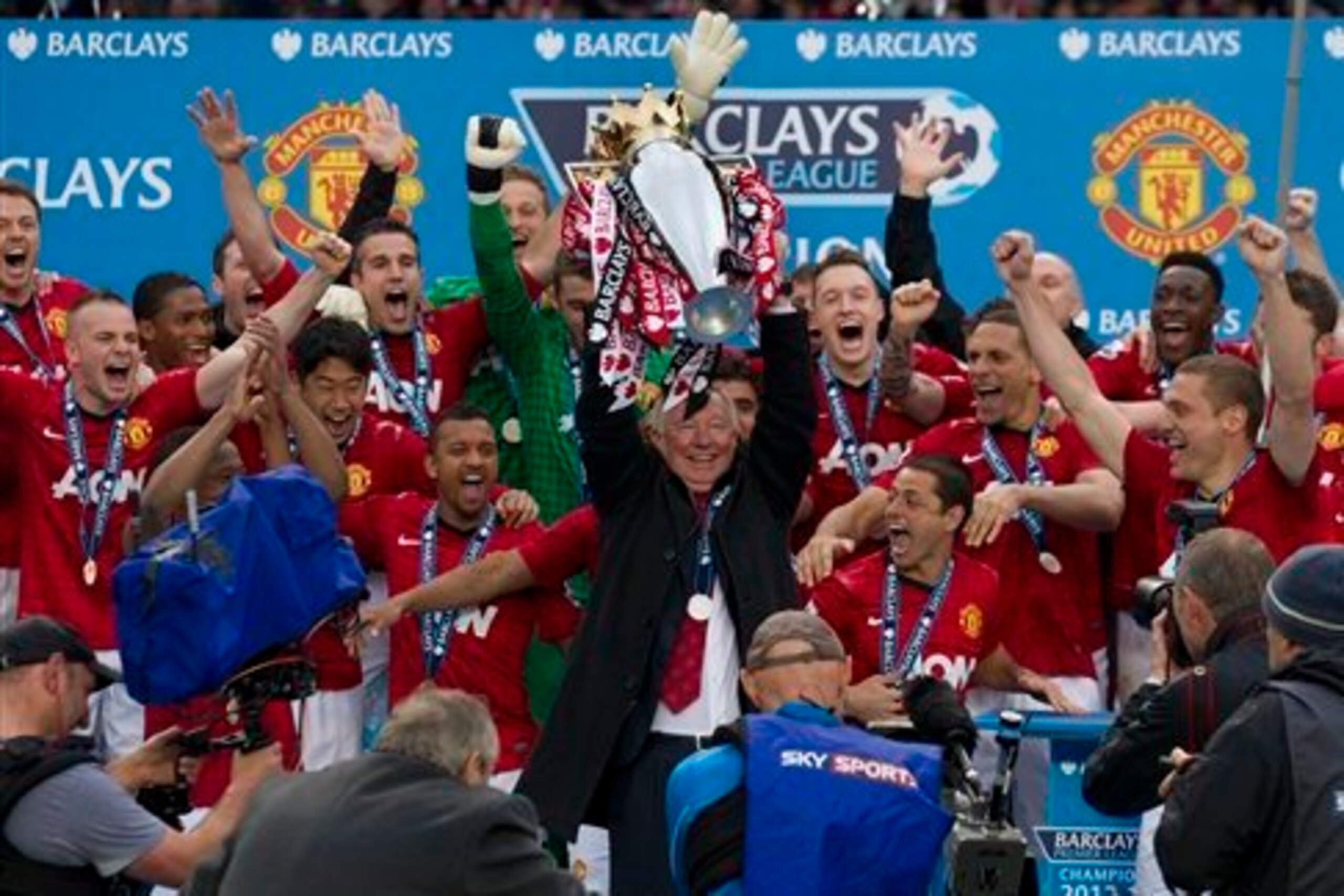
United have struggled since Ferguson's last crowning glory at Old Trafford, when he was presented with his 13th Premier League trophy on the pitch, as the Red Devils took the title back from their noisy neighbours.
But since the day, on which Fergie told United fans to "stand by their new manager," life has been very difficult for the faithful.
After Sir Alex decided to remain at Old Trafford in February 2002, United continued to devour titles like a great white shark.
No fewer than 17 trophies were won over the period, per BBC Sport, including six Premier League crowns.
It is a valid point of argument that United would not have won any of these honours had Ferguson left his job in 2002.
A succession of managers failed to bring success to Old Trafford after the retirement of Sir Matt Busby, and the team's future coaches may find a similar scenario playing out now Fergie has moved on.
The football club we know today might well have been starved of success since the turn of the millennium, resembling the fall of Liverpool after their last championship triumph in 1990.
3 More Premier League Trophies for Chelsea and 1 for Liverpool
2 of 6
Fergie's departure would have benefited one club more than any other: Chelsea.
The west London side chased United's tails more than any other team during the noughties, with Ferguson's domination stopping the Premier League trophy returning to Stamford Bridge on a more frequent basis.
Chelsea finished runners-up to United in 2006-07 and 2007-08, accumulating huge totals of 83 and 85 points for the campaigns. The Blues also finished second place in 2010-11, meaning they might have been three EPL titles richer had Fergie exited in 2002, doubling their haul in the modern era.
And had Carlo Ancelotti won the championship in 2011—a failure he was eventually sacked for—then Jose Mourinho might not be the Chelsea manager today.
The team Fergie knocked off their perch would have also broken their league title duck with a first Premier League trophy win.
Liverpool would have been crowned champions in 2008-09, when their Fernando Torres-inspired team finished behind United on a whopping 86 points, winning 10 of their last 11 matches of the season.
The Anfield club finished just four points behind United. Who is to say that the Red Devils would have even challenged that season if Fergie were not in charge?
Stats via ESPN FC.
No Cristiano Ronaldo or Wayne Rooney
3 of 6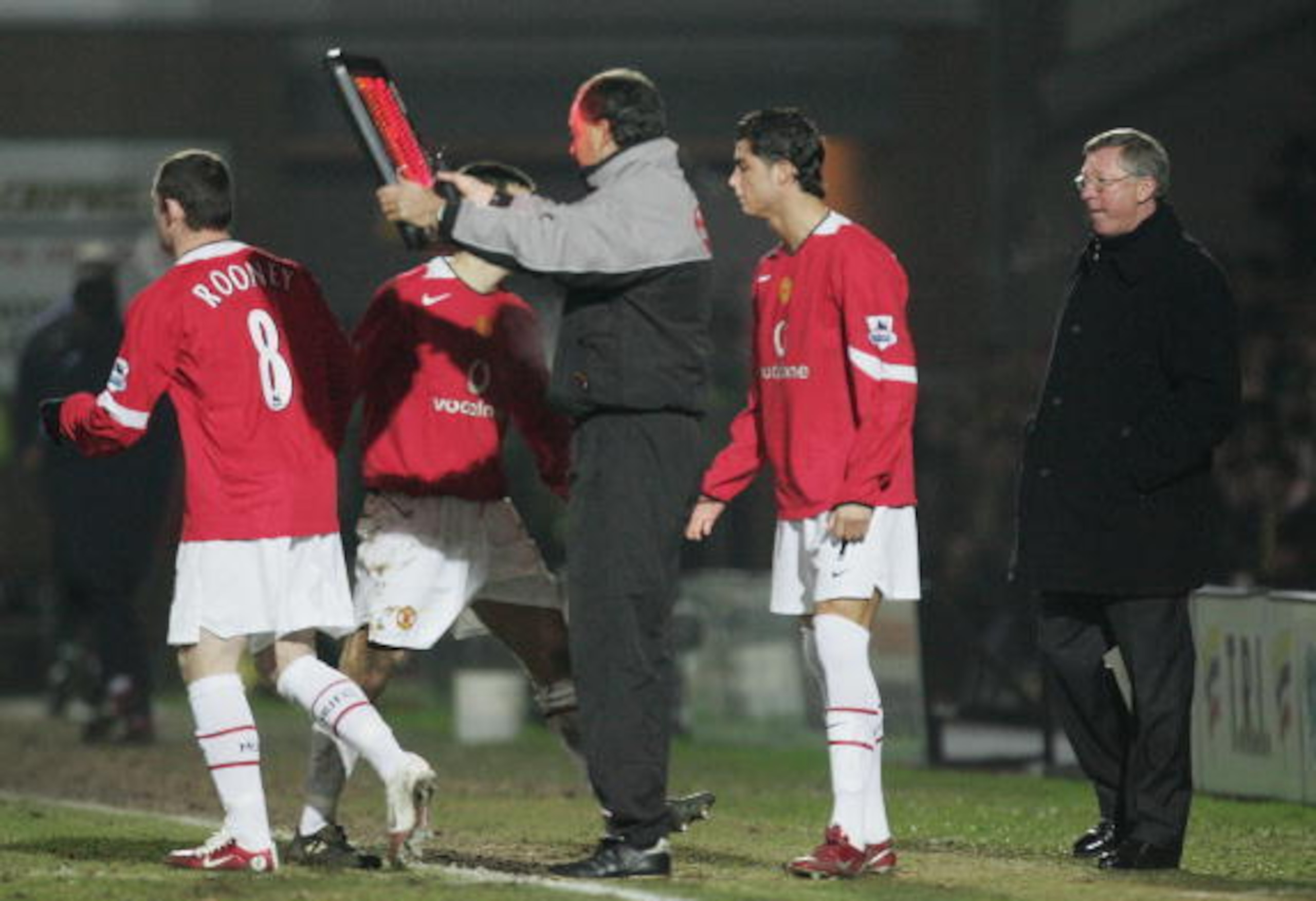
Manchester United's post-2002 alumni are a collection of world-class individuals and superstar players.
However, if Ferguson had decided to spend his years watching his horses race instead of working at Carrington every day, United might not have seen two of his most famous signings grace the Old Trafford pitch in the club's shirt.
Cristiano Ronaldo and Wayne Rooney will always be synonymous with the success United had in the years following Fergie's managerial U-turn, with CR7 arriving in 2003 followed by the "White Pele" one year later.
Of course, the two may still have ended up at United if Sir Alex had not been in charge, but it is highly unlikely, as both were young players who were very much in demand and attracted to their future employers by Ferguson's allure.
It is unnecessary to mention the successes of both players after their arrivals at United, and both will be considered as club legends once their careers are over.
But what would history say now if Ronaldo had joined Arsenal and if Rooney had signed for Newcastle United?
The shape and destiny of both players would have been very different in their alternative realities.
And without Fergie, United fans may never have seen Rio Ferdinand, Nemanja Vidic, Edwin van der Sar or Patrice Evra play for the Red Devils.
But then again, there would also have been no Anderson, either.


.jpg?w=2560)
Would David Beckham Have Stayed?
4 of 6
Ferguson's decision to stay at United in 2002 had huge ramifications for one player in particular.
David Beckham was shown the Old Trafford exit door just one year later, forced out of English football by the manager who had guided his whole career.
Beckham said that he was "disappointed and surprised" when he learned United had accepted a bid from Barcelona for him, per Daniel Taylor of the Guardian, but it became clear Ferguson had grown tired of the bandwagon that followed the player.
Beckham eventually became Real Madrid's next Galactico—with United's No. 7 refusing to join the Catalan team.
But what would the then-England captain have done if Fergie had left before him, giving the midfielder further power at the epicentre of United?
It is likely the vast majority of United managerial candidates would have kept Beckham at Old Trafford at the time, with the player still only 28 years old and a long-time supporter of the club.
His iconic status and global branding would also have appealed to the Glazers after their 2005 takeover of the business.
Beckham might have conceivably finished his career at Old Trafford, but that is not to say United would have seen further success.
The Glazers May Never Have Bought United
5 of 6
In March 2003—a little over a year after Ferguson's decision to stay at Old Trafford—U.S. tycoon Malcolm Glazer bought his first stake in Manchester United.
Glazer purchased a £9 million stake in the club, equating to 2.9 percent of the business, which began one of the most famous takeovers in world football history.
There is no doubt that Ferguson's post-2002 success was a contributing factor in the Glazer family's aggressive acquisition. United were in free fall during what was to be Sir Alex's last season, and if that had continued, the team would have been a much less attractive commodity.
But as Fergie drove United toward sustained dominance, Glazer upped his stake and took complete control in 2005.
A success-starved United would have been a sadder place for the faithful, but there is a chance the club would have had a different kind of owner.
The grass is always greener on the other side.
Just three years later, Sheikh Mansour bin Zayed Al Nahyan purchased Manchester City. Who is to say he wouldn't have bought United had the club been floundering in a post-Ferguson apocalypse?
Reshaping United to Van Gaal's Philosophy in 2002
6 of 6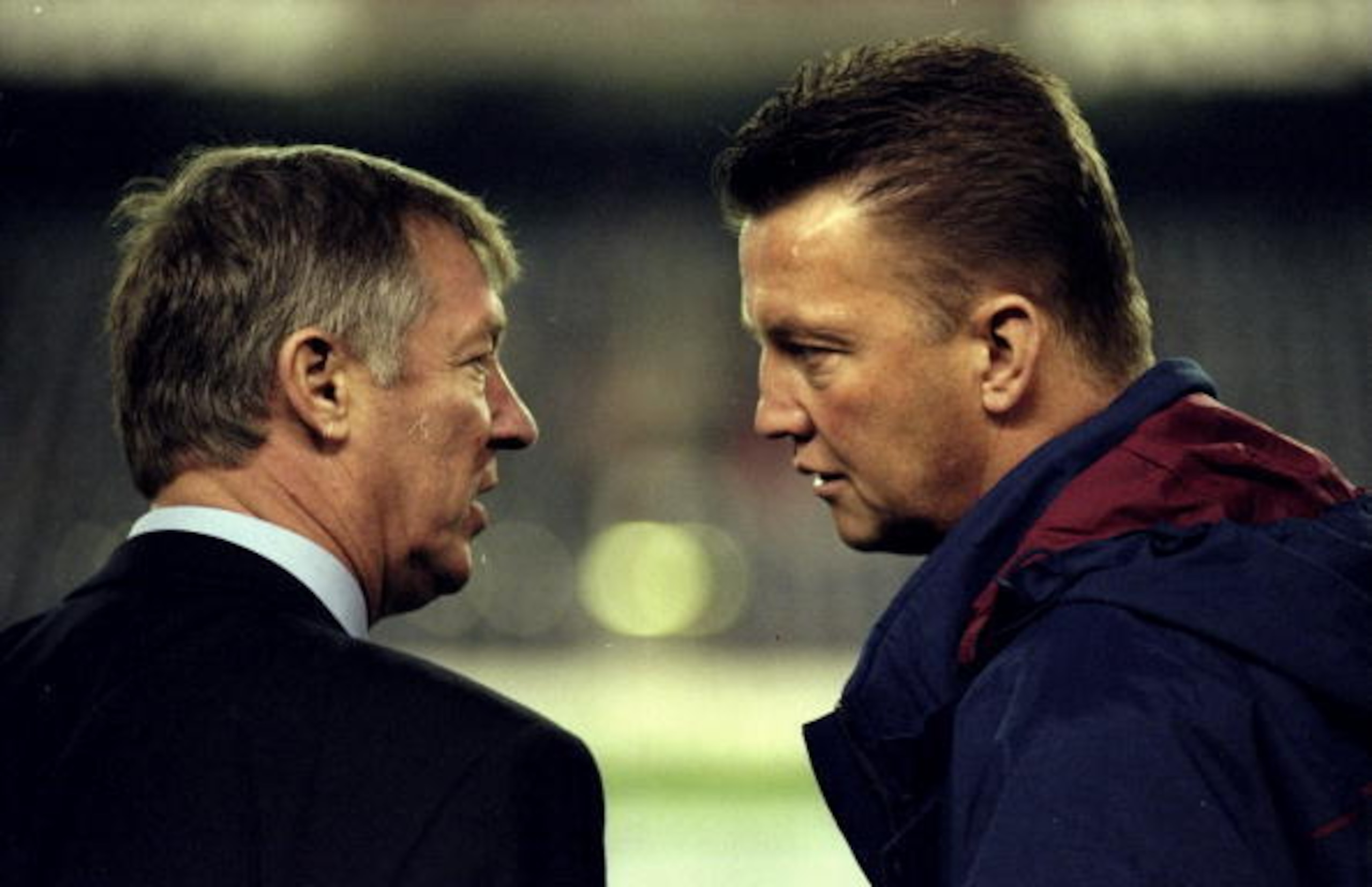
The arrival of Louis van Gaal at Manchester United in the summer was widely greeted with optimism and hope.
The tenure of David Moyes had stripped away the success of Sir Alex Ferguson in a matter of months, and United have been fighting to get back on their pedestal since Moyes' dismissal in April 2014.
After it was revealed he would take over as United manager, LvG admitted on Dutch TV that he was in line to succeed Ferguson in 2002, per Alex Young of Goal.
Instead, the Dutch coach took the vacant manager's job at Barcelona, returning to the post he occupied between 1997-2000.
Under Van Gaal, the noughties would have been a very different era for the Red Devils, featuring a different, more continental brand of football to Fergie's famed 4-4-2.
It is impossible to say how successful Van Gaal would have been after the decorated Scotsman, but his spells at AZ Alkmaar and Bayern Munich suggest he would not have done too badly.
The challenge for LvG is to bring the glory days back to United and create a legacy to rival the greatest manager in the history of English football.
.jpg?w=2560 "Rams Eagles Football")
.jpg?w=2560 "Falcons Saints Football")
.jpg?w=2560 "Injury-stricken Seahawks signing veteran RB")

.jpg?w=2560 "2 NFL Officials Suspended")

