
New Jersey Devils' 5 Biggest Areas for Improvement Entering February
The New Jersey Devils are 6-2-2 in their last 10 games, their best record over any 10-game stretch this season. Yet, it is plain to see that there is still an enormous amount of work to be done for the team.
In Saturday's win against the Florida Panthers, the team managed only four shots in the last two periods. On Friday, Cory Schneider stole the team a point against the Pittsburgh Penguins in a game in that New Jersey was outshot, 43-14.
Essentially, the team has improved its play to a certain extent, but more than anything, it has learned to better get points from games it does not play well in. While this is a valuable skill, the Devils still need to improve their play.
This list will look at the top five things New Jersey needs to improve upon to find more success for the remainder of the season.
5. Continue to Get Points at Home
1 of 5
New Jersey's recent improvement in results has come largely on the back of the team's ability to get points at home.
Since the coaching change on December 26, the Devils are 5-1-2 at home. Prior to the change, though, the Devils were a putrid 4-6-5 at home.
Of the team's 32 remaining games, 18 are at home, including a six-game homestand later this month with games against struggling Buffalo, Carolina and Phoenix.
If the Devils are to continue to improve, they must find a way to beat struggling teams at home, as they have against Toronto and Florida in the last week. But more than that, they must play well against those teams, showing for 60 minutes that they are the superior group.
4. Find Forward Lines That Work
2 of 5
Co-head coach Adam Oates has had mixed results since joining the Devils and taking charge of the team's forwards.
In four of the team's last seven games before the All-Star break, the Devils managed to score at least four goals. New Jersey had not had that kind of scoring since the team's three-game winning streak to start the season.
But since the All-Star break ended, the forwards have looked totally out of sync, with the team scoring only five goals in its last three games (one of which was an empty-netter).
As a result, the top line of Adam Henrique, Scott Gomez and Jaromir Jagr has rightfully been broken up. Additionally, Michael Ryder has been benched.
The line of Patrik Elias, Travis Zajac and Martin Havlat has been arguably the team's best line over the last three games, but the trio has not exactly had a ton of competition for that title.
For the team to improve, lines that have some chemistry have to be found. This has been a problem for New Jersey all season. It surely reflects the team's lack of depth and talent at forward. That being said, it is up to Oates to find the best possible combinations, ones that will take more shots and break out of the defensive zone more cleanly.
3. Play Smarter at Even Strength
3 of 5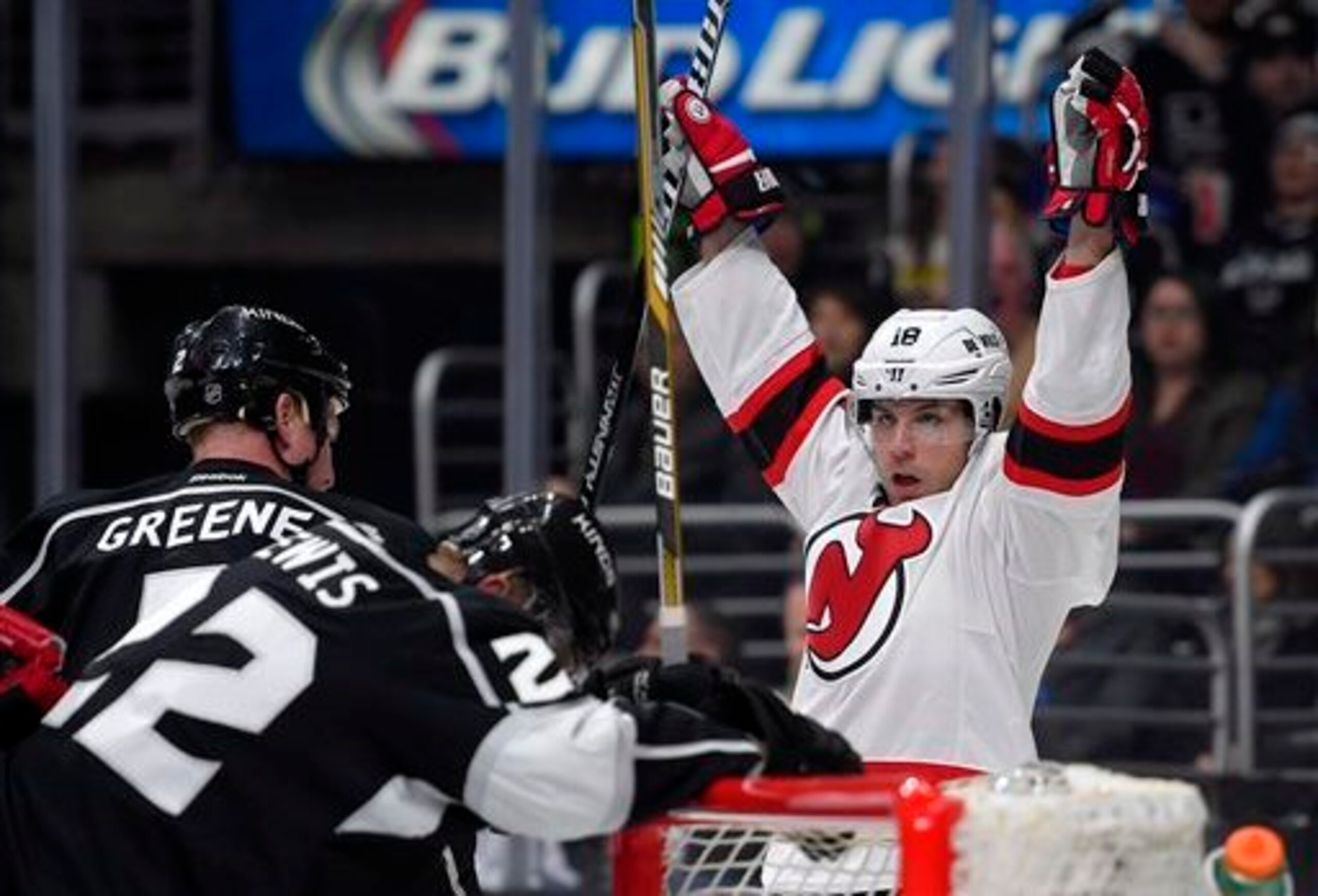
Asking a team to play smarter could encompass several improvements, but here I will focus on two simple and easily defined aspects of the Devils' play.
New Jersey, for the most part, has been good on special teams recently. The team's power-play efficiency is ninth in the NHL, impressive considering that the team has been allergic to goals for much of the season. The Devils' penalty killing is 22nd in the league, but their efficiency is up to 80.1 percent. Given how poor the team was shorthanded early in the season, that percentage is something to be happy with.
Yet the Devils have set themselves up for failure in both special teams areas by their five-on-five play.
New Jersey averages 2.84 power-play opportunities a game, the third-lowest in the NHL. Conversely, the Devils have been shorthanded 176 times, tied for fourth-most in the league.
Both of these numbers indicate that New Jersey lacks speed, which cannot be worked around with the current roster. But it also shows that the team is not playing smart. A team that is only going to be average at even strength—like the Devils—needs its players to be putting themselves in the right positions both offensively and defensively. That helps draw penalties and avoid taking them.
On a team with as much experience as New Jersey (with players like Jaromir Jagr, Patrik Elias, Dainius Zubrus and Scott Gomez), players should be doing a much better job of playing smart hockey.
The Devils cannot help at this point that they are slow, but they can help how they deal with that. Smarter play and better positioning in all three zones at even strength will help the team utilize its special teams more effectively.


2. Take More Shots
4 of 5
Devils fans were hoping when Peter DeBoer was fired and a new coaching staff took over that the team would show some signs of offensive improvement.
As noted in a previous slide, there was an increase in goals for a brief period that seems to have now dried up, but even before the All-Star break, the Devils were not getting anywhere near enough shots.
Since the coaching change, this is how the team has done in terms of shots on goal:
- 20.5 shots on goal per game
- one game with more than 30 shots
- eight games with 20 shots or less
- five games with 15 shots or less
There is no way to sugarcoat these figures. The Devils have done a horrendous job of getting the puck to the net.
Some of these issues are related to problems getting time in the offensive zone (which will be discussed further in the next slide), but there also seems to be a general hesitance to put the puck on net from the Devils.
Perhaps there are confidence issues in the team (with the way this season has gone, who could blame them?), or perhaps the roster is just full of pass-first players. In any event, New Jersey's players must move past the issue and simply put the puck on net.
A look at the few goals the Devils have scored since the All-Star break highlights the need for shooting.
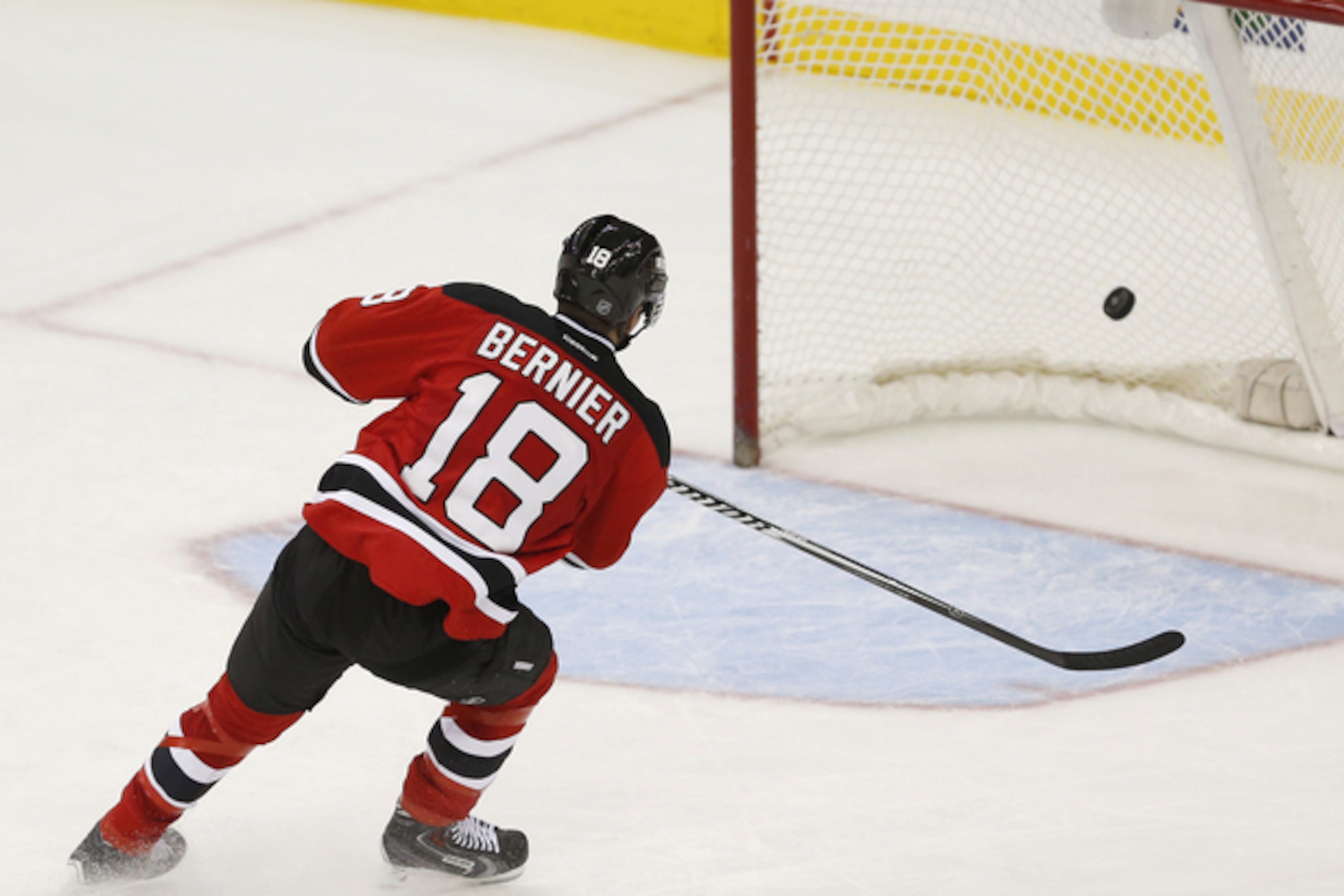
Adam Larsson's goal against Toronto, New Jersey's only goal of the game, came from an ordinary wrist shot from the blue line. Steve Bernier's goal against Pittsburgh came from driving to the net and jamming the puck home. Jaromir Jagr's goal against Florida came from a quick wrist shot.
Admittedly, Michael Cammalleri's goal against Florida came from a beautiful passing play, but it is still clear that the Devils need to simply shoot the puck when given the chances, as that is where the majority of their recent goals have come from.
1. Clean Up Breakouts
5 of 5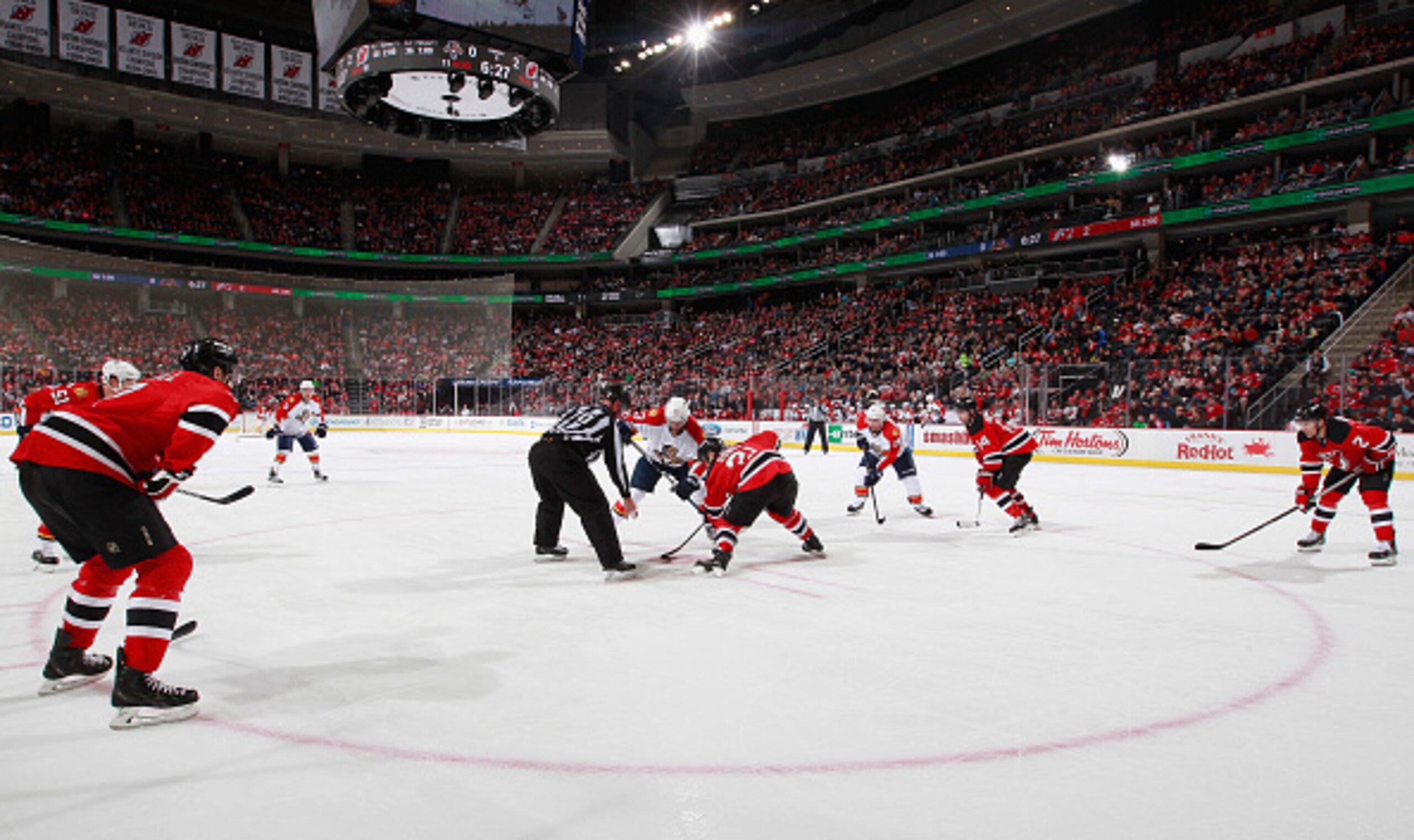
If I could put this area of improvement in all five slides, I would.
In truth, this aspect of the game is in every slide here, either implicitly or explicitly, as it has been the Devils' Achilles' heel all season.
The breakout is the transition from the defensive zone into the neutral and offensive zones, one of the most important parts of hockey. Good teams master the transition by minimizing turnovers in the defensive and neutral zones and as a result, spend most of the game in their offensive zone.
But if a team struggles with the breakout, it turns the puck over constantly in bad places on the ice, ultimately spending most of the game in its defensive zone.
Obviously, the Devils fall into the latter category.
It is the inability to transition from defense to offense that is a prime culprit in New Jersey's inability to get shots on a regular basis—and the cause for the Devils' fall from a great possession team to a poor one.
Corsi, which measures the number of shots a team takes against the number of shots it allows, is a metric used to rate how well teams possess the puck. In the last two seasons under DeBoer, the Devils were among the best possession teams in the NHL.
According to Stats.HockeyAnalysis.com, in 2012-13, the Devils were second in Corsi, while in 2013-14 they were third. The issues for DeBoer and the Devils in both of those seasons were not related to keeping the puck but having the players to convert chances after the departure of Zach Parise and Ilya Kovalchuk.
This season, under both DeBoer and the new coaching triumvirate, New Jersey's Corsi reflects the team's inability to cleanly move the puck from defense to offense. The Devils are 25th in Corsi this season, per Stats.HockeyAnalysis.com.
How do the Devils improve on this crucial aspect of the game then? In the end, it all comes down to execution.
Neither DeBoer nor the new coaching trio are stupid. Surely both parties focused on cleanly getting out of the defensive zone repeatedly in practice, so it falls on the players now to make it work on the ice.
At times, the issue has been the positioning of the forwards as the defensemen try to move the puck out from deep in the defensive zone. If the forwards are not open for the breakout pass along the boards, often the defensemen have to ice the puck.
In other instances, the passing from both the defensemen and forwards has been simply sloppy, leading to turnovers. If the team is mid-breakout when this happens, two or three forwards may be already up the ice, leading to odd-man rushes against.
Can the Devils fix this problem with the roster they currently have? It is unclear. They have worked on this problem all season, getting only mild improvement at best.
Either way, cleaning up the breakout is the area in which the New Jersey Devils need the most improvement right now.

.jpg?w=2560 "Grading WWE Raw 🔠")

.jpg?w=2560 "Bijan's INSANE 1st Half 🤩")
.jpg?w=2560 "Viral Rams Coach Vid 🖕")
.jpg?w=2560 "Injury-stricken Seahawks signing veteran RB")


.jpg?w=2560 "2 NFL Officials Suspended")
