

NBA Draft Notebook: Better Point Guard Prospect, Delon Wright or Jerian Grant?
They're not just National Player of the Year candidates. Senior point guards Delon Wright of Utah and Jerian Grant of Notre Dame should be earning first-round looks from general managers selecting in the 2015 NBA draft.
We knew Wright would be in the conversation after breaking out last year at Utah. It's Grant who's been the bigger surprise, having previously raised questions for missing Notre Dame's final 20 games with academic issues in 2013-14.
Both veterans have been the catalysts behind their respective teams' top-15 rankings. Regardless of how much stock you put into advanced stats when it comes to scouting, their win share totals should at least reflect their value and individual impact:
TOP NEWS

LeBron's Special Helicopter Deal

MJ Makes Record-Setting Donation 🙌
Shams: KAT, Hart Could Be Trade Names
| 1 | Jerian Grant | 5.4 |
| 2 | Delon Wright | 5.3 |
| 3 | Frank Kaminsky | 5.1 |
| 4 | D'Angelo Russell | 5.0 |
| 5 | Ty Greene | 4.8 |
| Jerian Grant | 17.3 | .513 | 6.3 | 3.0 | .343 | 1.7 |
| Delon Wright | 14.4 | .541 | 5.6 | 4.4 | .286 | 2.2 |
Teams won't be looking at these guys as projects with potential. They'll each be 23 years old by the time the 2015-16 NBA season begins. The fact that Grant and Wright are producing as lead guards for contenders enhances their appeal as more NBA-ready options.
Their size for the position doesn't hurt, either.
Physical Tools, Athleticism
Both prospects have exceptional physical tools for ball-handlers, most notably the 6'5" size they share.
For Grant, it plays to his offensive versatility and fuels the mismatch he poses against smaller point guards. He's also big enough to slide off the ball and operate as a 2.
Wright uses his size in just about every area of the game, from scoring and facilitating to rebounding and defense.
Offensively, though not overly quick or explosive, he makes up for his average athleticism with height, body control and instincts. Wright isn't a blow-by playmaker, but his ability to change speed and direction allows him to get to his spots on the floor, where he can make plays over the top of the defense.
The physical tools of both players could also be tied to their offensive efficiency inside the arc. For guards, they're shooting incredible percentages on two-pointers and shots taken at the rim.
Of the 30 names we included in our most recent midseason 2015 mock draft, only Jahlil Okafor, Montrezl Harrell and Sam Dekker have been more efficient two-point scorers.
| Prospect | Two-point percentage | |
| Jahlil Okafor, Duke, C | .664 | |
| Montrezl Harrell, Louisville, PF | .636 | |
| Sam Dekker, Wisconsin, SF | .630 | |
| Jerian Grant, Notre Dame PG | .623 | |
| Delon Wright, Utah, PG | .610 | |
| Robert Upshaw, C | .597 | |
| Willie Cauley-Stein, Kentucky, C | .593 | |
| Christian Wood, UNLV, PF | .587 | |
| Mario Hezonja, Croatia, SG/SF | .582 | |
| Frank Kaminsky, Wisconsin, C | .575 | |
| Jake Layman, Maryland, SF | .574 | |
| Bobby Portis, Arkansas, PF | .565 | |
| Cliff Alexander, Kansas, PF | .561 | |
| Kristaps Porzingis, Latvia, PF | .546 | |
| Emmanuel Mudiay, China, PG | .545 | |
| Trey Lyles, Kentucky, PF | .543 | |
| Damian Jones, Vanderbilt, PF | .538 | |
| Jordan Mickey, LSU, PF | .536 | |
| Devin Booker, Kentucky, SG | .525 | |
| Karl-Anthony Towns, Kentucky, C | .523 | |
| Stanley Johnson, Arizona, SF | .510 | |
| R.J. Hunter, Georgia State, SG | .503 | |
| D'Angelo Russell, Ohio State, PG/SG | .497 | |
| Myles Turner, Texas, PF/C | .496 | |
| Kelly Oubre, Kansas, SF | .494 | |
| Kevon Looney, UCLA, PF | .486 | |
| Tyus Jones, Duke, PG | .481 | |
| Justise Winslow, Duke, SF | .478 | |
| Caris LeVert, Michigan, SG | .430 | |
| Terry Rozier, Louisville, PG | .422 |
Grant is shooting a ridiculous 78.5 percent at the rim, per Hoop-Math. He's shown a knack for being able to finish at awkward angles after avoiding contesting arms and bodies.
It should bode well for him in terms of projecting to the next level, given the tighter NBA rim protection. The same goes for Wright, whose 68 percent mark at the rim isn't too shabby either.
Of the two, it's Grant who gets a little more lift and elevation. We saw it against Georgia Tech early in the season on what was arguably one of the top dunks of the year:
Wright plays mostly below the rim and relies on touch, finesse and instincts. You don't see as many of the same easy buckets that Grant picks up.
It's worth noting that both guards struggled scoring in recent showdowns against more athletic NBA-caliber defenders. Wright finished with 10 quiet points against Rondae Hollis-Jefferson in a brutal loss to Arizona on January 17. Grant shot just 1-of-8 against J.P. Tokoto and North Carolina on January 5.
Neither guard possesses the burst that typically powers NBA upside. But we've seen plenty of point guards get by without it, and there's no denying their skill and overall feel for the game.
Playmaking, Scoring
Grant's playmaking, along with the wins he's helped the Irish rack up, has been the driving force behind his rise in stock.
He's averaging 6.3 assists, tied for No. 8 in the country. Grant has also taken care of the ball—despite dominating it at times, he's only coughing it up twice a game, giving him a 3.22 assist-to-turnover ratio, tied for No. 11 in the country.
Between the threat he poses off the dribble and his vision, Grant has worked the pick-and-roll and drive-and-kick game like a pro.
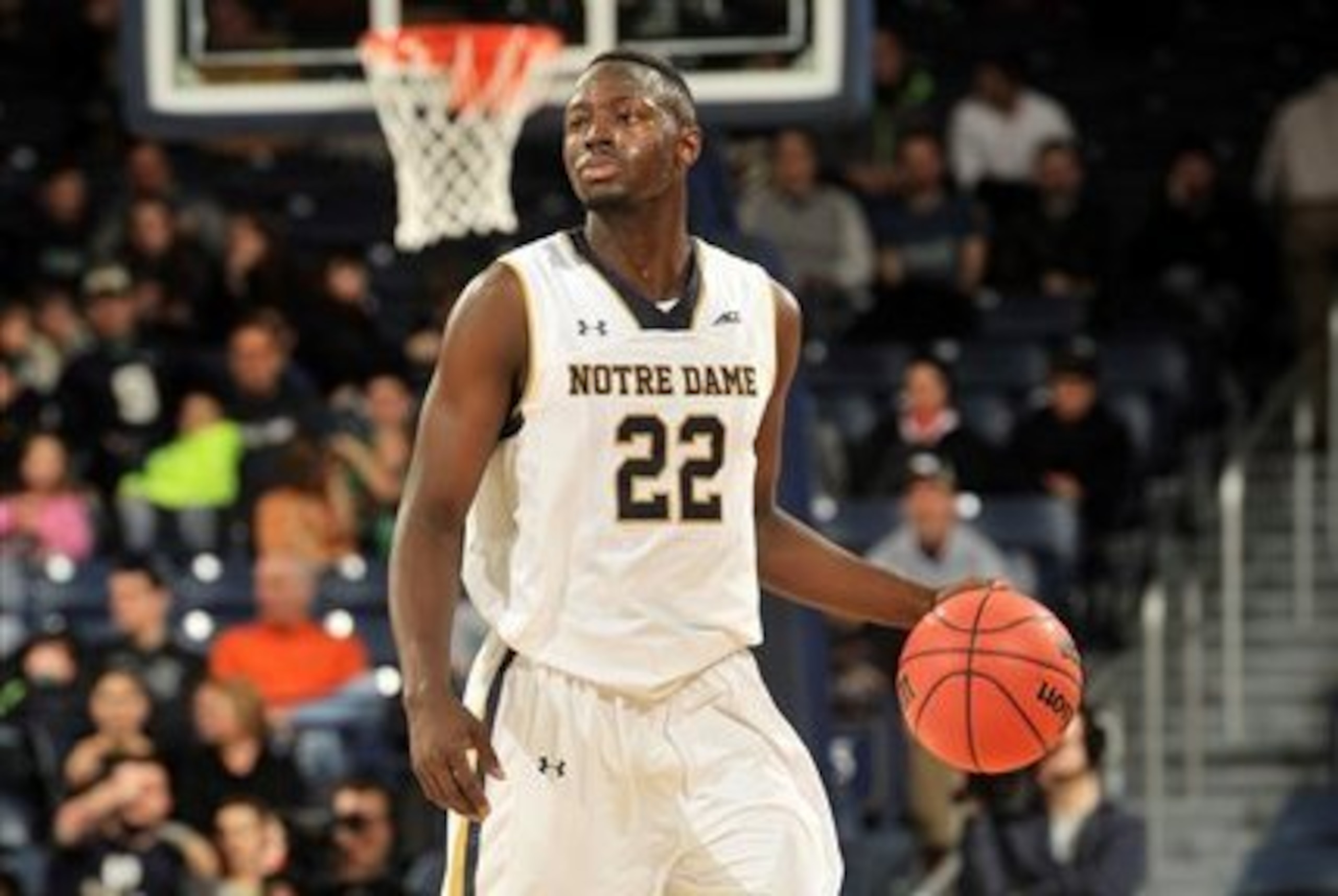
Of the 12 assists Grant piled up in Notre Dame's 77-73 win over Duke on Saturday, six of them came out of pick-and-roll sets, where he either hit the screener or the shooter who'd rotated from the corner to the wing.
Three other assists were off penetration after he'd beaten his man and triggered the collapse.
Grant is the type of guard who coach Mike Brey will isolate in the half court, given his ability to shake his man and make things happen.
Only 9.8 percent of Wright's offense comes out of isolation through 17 games, per DraftExpress' Mike Schmitz. He isn't as quick off the bounce, and a lack of shooting range can allow defenders to sag off.
However, Wright actually sports a higher assist percentage (estimate of the percentage of teammate field goals a player assisted while on the floor) than Grant despite averaging nearly one less assist (5.6 per game).
His head and eyes are constantly looking up for teammates. He's also more of a pass-first guard than a scorer.

Wright's most comfortable operating out of pick-and-rolls, which accounts for 40.4 percent of his offense. With the ability to freeze switching defenders with the hesitation dribble, he's dangerous coming over screens, where he can either dish or score on the move using an array of floaters off one foot.
However, Wright's jumper has been an issue since joining Utah in 2013. He was just 12-of-54 from downtown last year, and though he's already equaled his 2013-14 three-point total by February, he's still shooting just 28.6 percent from long range.
Wright's perimeter-scoring arsenal, from his shot-creating to his shot-making ability, is limited. And considering his age, a lack of improvement can be a bit worrisome.
The good news is he's hitting 79.8 percent of his free throws, a number that suggests he has some touch to work with moving forward. One scout spoke to Bleacher Report's Jason King regarding Wright's jumper and room for optimism:
"He's got everything that you need, other than he doesn't shoot it well. I've seen so many guys get better at that when they get in the league, though. He doesn't have a broken shot. Mechanically, it's OK. He just needs reps. So I think he's got a chance to be good.
"
Meanwhile, Grant has hit more threes this year than Wright has over his last two combined. He's no sniper, but he's making 1.6 triples a game, albeit at a 34.3 percent clip.
Grant also has extensive shot-making range and ability as a scorer. We saw it against Duke—he nailed a step-back three-pointer, a 30-foot bomb, a fall-away in the post and a running floater from the elbow.
Averaging 17.3 points per game, Grant can separate one-on-one in order to create shots from just about every spot on the floor. And when he finds the zone, he's capable of putting up points in bunches.
Defense
While Wright has a number of things going for him, it's his defensive tools and instincts that might ultimately hold the most NBA value.
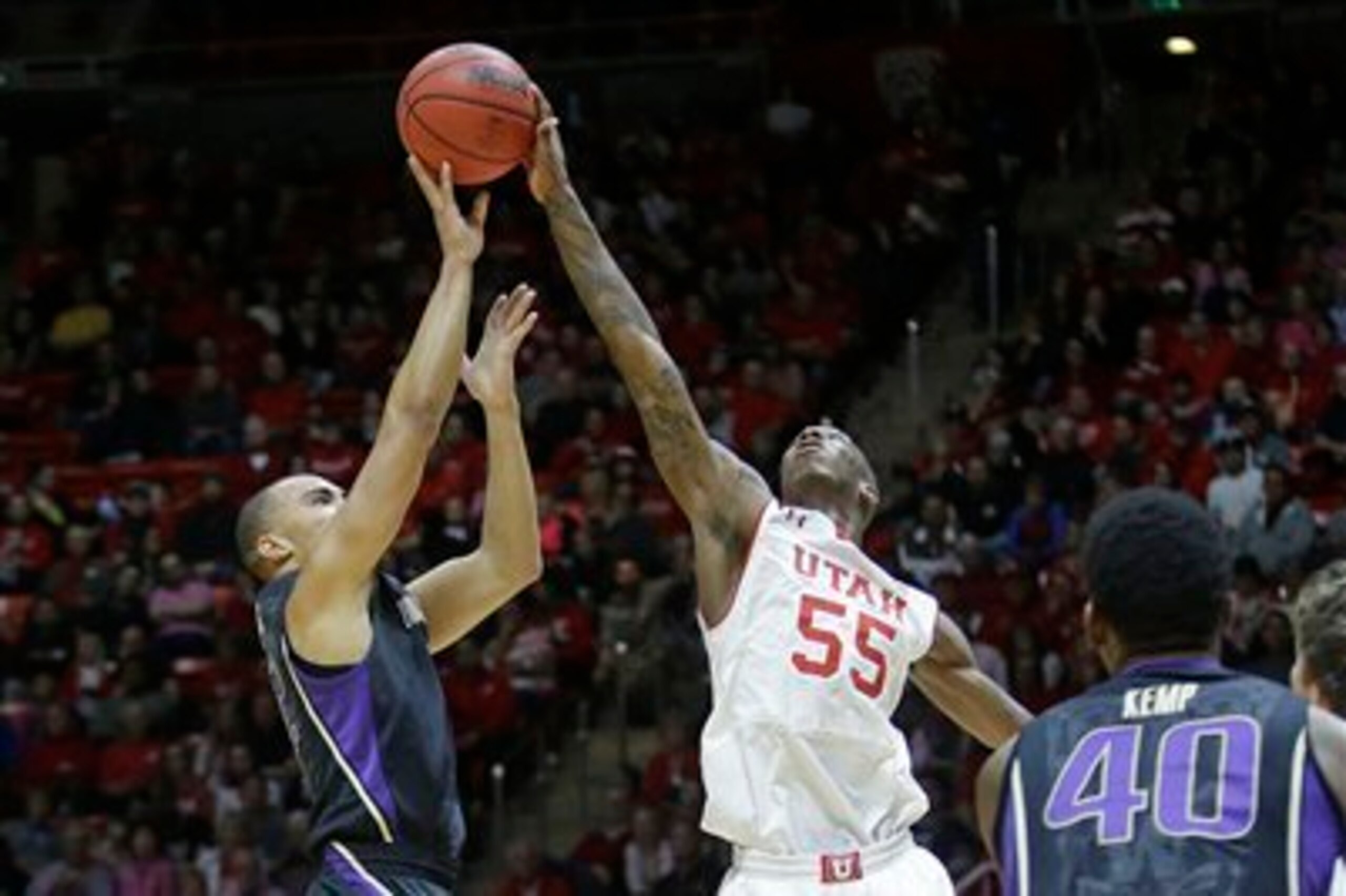
He's averaging 2.2 steals a game after averaging 2.5 last season. Wright's anticipation and reaction time are extraordinary, while his size at the next level could allow him to guard both backcourt positions.
"He's as good of a defender as I've seen. He'll guard the ball, he'll guard off the ball, he's quick, he anticipates, he's got good hands, one scout told King.
Grant also projects favorably on defense, though, it doesn't come as naturally. He averages 1.7 steals per game and has shown he can lock down when engaged.
Grant Versus Wright
Once all the flashy names are off the board, NBA teams seeking backcourt depth will turn to guys like Grant and Wright, who actually both have brothers currently playing in the league (Dorell Wright, Portland Trail Blazers and Jerami Grant, Philadelphia 76ers).
So who's the better option?
At this point, if all else fails, Wright's ability to defend and set the table should act as his life preserver keeping him afloat. I'd like to think he can last a long time in the league with that combination, even if it's in a backup role off the bench.

But I'm giving the overall edge to Grant, who offers a little more bounce and offensive firepower. It's also tough not to admire his consistent clutch play down the stretch of games, whether it was against Michigan State on December 3, when he nailed a go-ahead three with just over a minute left in overtime, or most recently against Duke, when he made a few game-winning plays in the closing minute.
Still, it is Grant's floor game that has helped move the needle. He's emerged as one of the nation's top setup men while maintaining efficiency and volume production as a scorer.
Both Grant and Wright should expect to see plenty of NBA interest over the next few months, with the mid-to-late first round as more of a baseline projection.
Notables
- Croatia's Mario Hezonja, a potential top-10 pick this June, put on a shooting clinic Sunday against La Bruixa d'Or Manresa, finishing 8-of-8 from behind the arc. The 24 points were a season high. Hezonja is as gifted as any forward in the projected 2015 field. Though the production isn't consistent, it's flashes like these that have had scouts buzzing since 2011.
- Virginia senior wing Justin Anderson has finally started cooling off. He'd erupted onto the radar following a sizzling start from downtown, but after shooting 1-of-6 from deep against Duke on Saturday, he's now made just four of his last 17. Keep an eye on Anderson's shooting stroke, which wasn't a threat prior to the year.
- Arkansas big man Bobby Portis has been a monster on the glass after averaging less than seven rebounds his freshman year. He's now racked up six double-doubles over his last seven games. Portis isn't overly explosive, but he's exceptionally skilled. His recent rebounding numbers should eliminate one of the few red flags that surfaced in 2013-14.

.jpg?w=2560 "Grading WWE Raw 🔠")

.jpg?w=2560 "Bijan's INSANE 1st Half 🤩")
.jpg?w=2560 "Viral Rams Coach Vid 🖕")
.jpg?w=2560 "Injury-stricken Seahawks signing veteran RB")

.jpg?w=2560 "2 NFL Officials Suspended")