

Can Roberto Di Matteo Fire Schalke's Ambition Ahead of Bayern Munich Trip?
That familiar, impenetrable regard of Roberto Di Matteo has barely changed since his playing days. He will again appear unmoved when he leads his Schalke team into their Tuesday night confrontation with Bayern Munich at the Allianz Arena, despite it being his first return there since he led Chelsea to Champions League final glory in May 2012.
The former Italy midfielder has been through a lot in the intervening period, which is quite an achievement seeing as for almost two years of it—between November 2012 and October last year—he was out of the game, considering his next move.
Popular perception was that Di Matteo was taking the easy option, continuing to be paid a hefty salary by Chelsea after his dismissal while enjoying an extended sabbatical. Yet if all he was interested in was an easy life, he wouldn’t have touched his current job with a lengthy bargepole.
TOP NEWS
EPL Transfer Window Grades 🔠

Adams Named USMNT Captain 🫡
Sullivan, Hall Lead USMNT to Big Win 💥
Schalke were the original, pre-Bayern behemoths of German football, winning seven domestic championship titles from the 1930s. The last was in 1958, five years before the foundation of the modern Bundesliga and thus full-time professionalism in the German game.
History weighs heavy in this traditionally industrial area of north Rhine-Westphalia. The club museum next to the Veltins Arena is full of legend of those glory years, and steps into Europe that predate the creation of the European Cup.
Every other week, over 60,000 fans turn up at the Veltins expecting the club’s colours to be honoured. In Europe, only their near-neighbours Borussia Dortmund, Manchester United, Barcelona, Bayern and Real Madrid get more fans through their turnstiles on average.
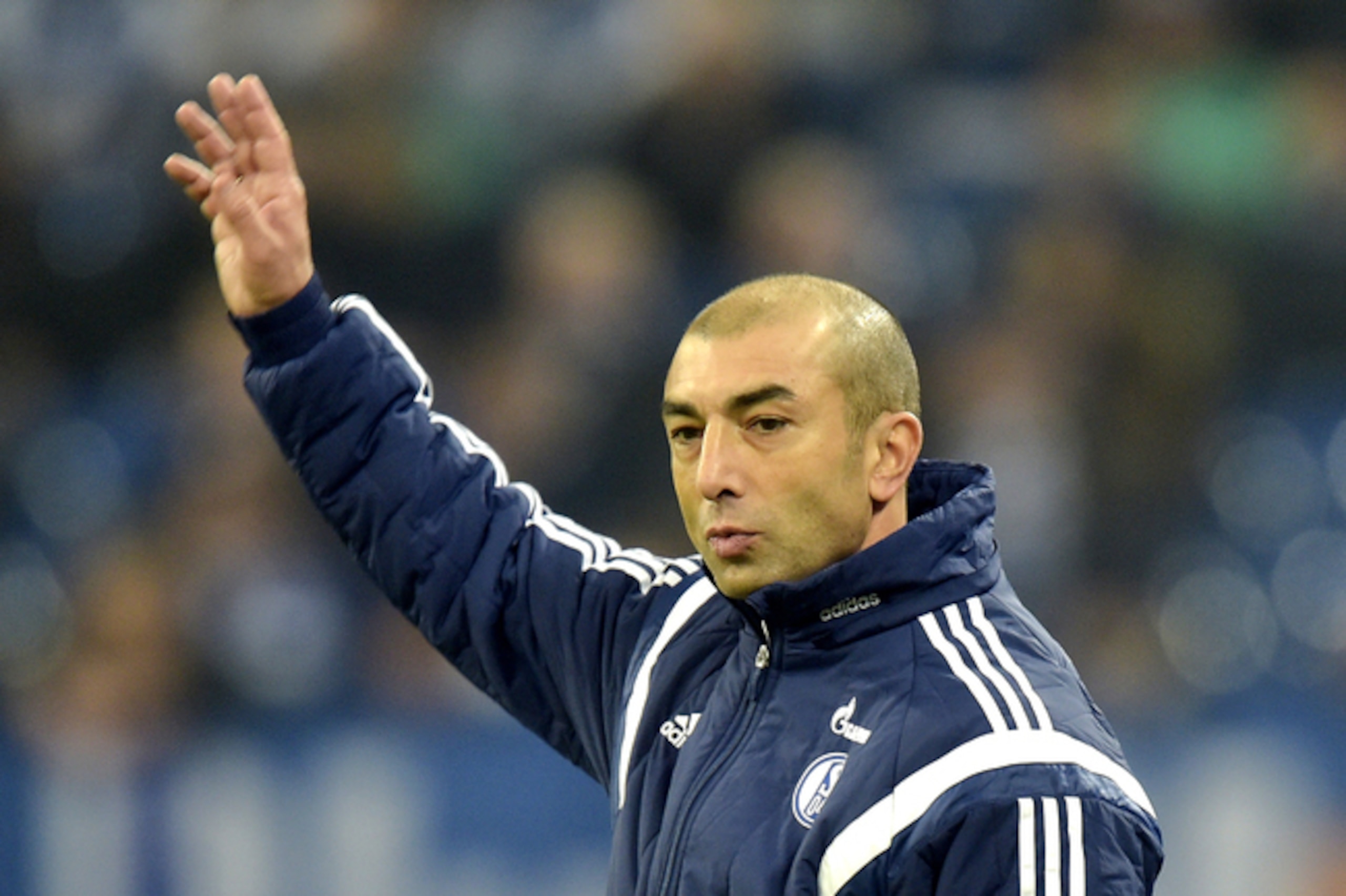
Di Matteo made clear in his debut press conference that he knew what the club’s history meant, but it must be said that the faithful have been slow to warm to him. The style of football has, perhaps inevitably, not been as attractive as they would have liked in an environment where aesthetics matter.
He has been here before, of course. With his coaching credit pumped up to an all-time high by the Champions League win in 2012, he was expected to integrate a raft of new signings including Eden Hazard and Oscar into the Blues’ lineup while seamlessly commuting the team’s game into a new, attractive style. It looked like an impossible task, and it was.
Yet if Di Matteo found it hard to adjust to changing demands in his previous (and clearly his biggest) post at Stamford Bridge, he has shown himself to be at least willing to be flexible since arriving in Germany.
Saturday’s scratchy win over Hannover saw Di Matteo again use the 3-5-2 that he debuted before Christmas; a big departure from the 4-2-3-1 relied on by his predecessor Jens Keller, but an attempt to make Schalke solid while giving them the width to attack. In patches, such as the first half of the 3-2 win over Wolfsburg in November, it has shown real promise.
There is nobody in Gelsenkirchen under any illusions that the trip south on Tuesday night will be anything but a titanic task. Even if Pep Guardiola’s side were humbled at Wolfsburg on Friday night, they remain feared, and Schalke have lost their last four visits to Munich in the Bundesliga by an aggregate of 15-2. They will also have to do without star striker Klaas-Jan Huntelaar after his red card on Saturday.
Yet there is hope. In just the second game of the season, Die Konigsblauen (then still under Keller) eked out a gutsy 1-1 draw with Bayern at the Veltins, despite going a goal down to Robert Lewandowski’s first goal in red after only 10 minutes.
Moreover, playing Bayern matters so much; not only because they are the yardstick by which all German clubs with ambition must measure themselves, but because they were the team that denied Schalke when they were closest to breaking their Bundesliga title duck.
Fans were already on the pitch at the old Parkstadion celebrating and hailing their champions after beating Unterhaching on the final day of the 2000-01 season, when news filtered through that Bayern’s Patrik Andersson had equalised in the fourth minute of stoppage time at Hamburg. The goal sent the title to Bavaria instead and broke Schalke hearts. They have never been as close since.
So Di Matteo has a mountain to climb to fulfil lofty hopes—but he knew that all along.

.jpg?w=2560)




.jpg?w=2560 "Viral Rams Coach Vid 🖕")

.jpg?w=2560 "Injury-stricken Seahawks signing veteran RB")
