


At first sight, the statistic seems damning: Manchester City haven’t won a league game without Yaya Toure since April, when they beat West Bromwich Albion.
In reality, it’s not quite as bad as all that. Toure has only missed five league games this season, and City have produced, arguably, their two most impressive results of the season—the 3-2 win at home to Bayern Munich and the 2-0 victory away to Roma—without him.
Still, it’s the recent trend which is most worrying. In the three games since Toure departed for the African Cup of Nations—where he has been far from his best, twice being substituted—City have drawn at Everton, lost at home to Arsenal and lost at home in The FA Cup to Middlesbrough.
TOP NEWS
Alexia Wins Ballon d'Or 🏆
Live Ballon d'Or Ceremony Winners 🎉

Final Men's Ballon d'Or Rankings 📊
After all the talk of him having an indifferent season—which was justified in August and September—it has become apparent just how well he played in that run of nine wins in 11 games, which closed the gap on Chelsea at the top of the table.
The problem is Toure’s set of skills is not easily replicated. He is a playmaker with the capacity to thread a pass through the eye of a needle and to score spectacular goals both with long-range shots and sudden moments of tight, technical skill.
But he also has a prodigious engine, which means he is capable of starting in a far deeper position than a playmaker usually would, accelerating over the ground like a graceful midfield runner.

The tactical evolution of the game has meant central midfielders these days can usually be categorised as either a holder or an attacker; Toure is both.
He clearly prefers to play higher up the pitch, but even when deployed like that with two holders behind him, he can drop back and offer defensive cover or link the back half of the team to the front.
City, perhaps, have become reliant on his ability to do that. Far too often this season, they’ve played as a collection of individuals rather than as a team, a moment of magic from Toure or Sergio Aguero or David Silva salvaging a game in which they’d played poorly.
That’s one of the advantages of having so many great individual talents, of course, but it’s not a way of playing that is going to bring the sort of consistent form necessary to win the title. And when Toure isn’t there, City suddenly seem lacking in drive and cohesion.
The signing of Fernando hasn’t been a success. It’s not clear exactly what he does. He’s scored once and set one up this season, but he doesn’t seem to have the positional discipline to operate as a pure holder.
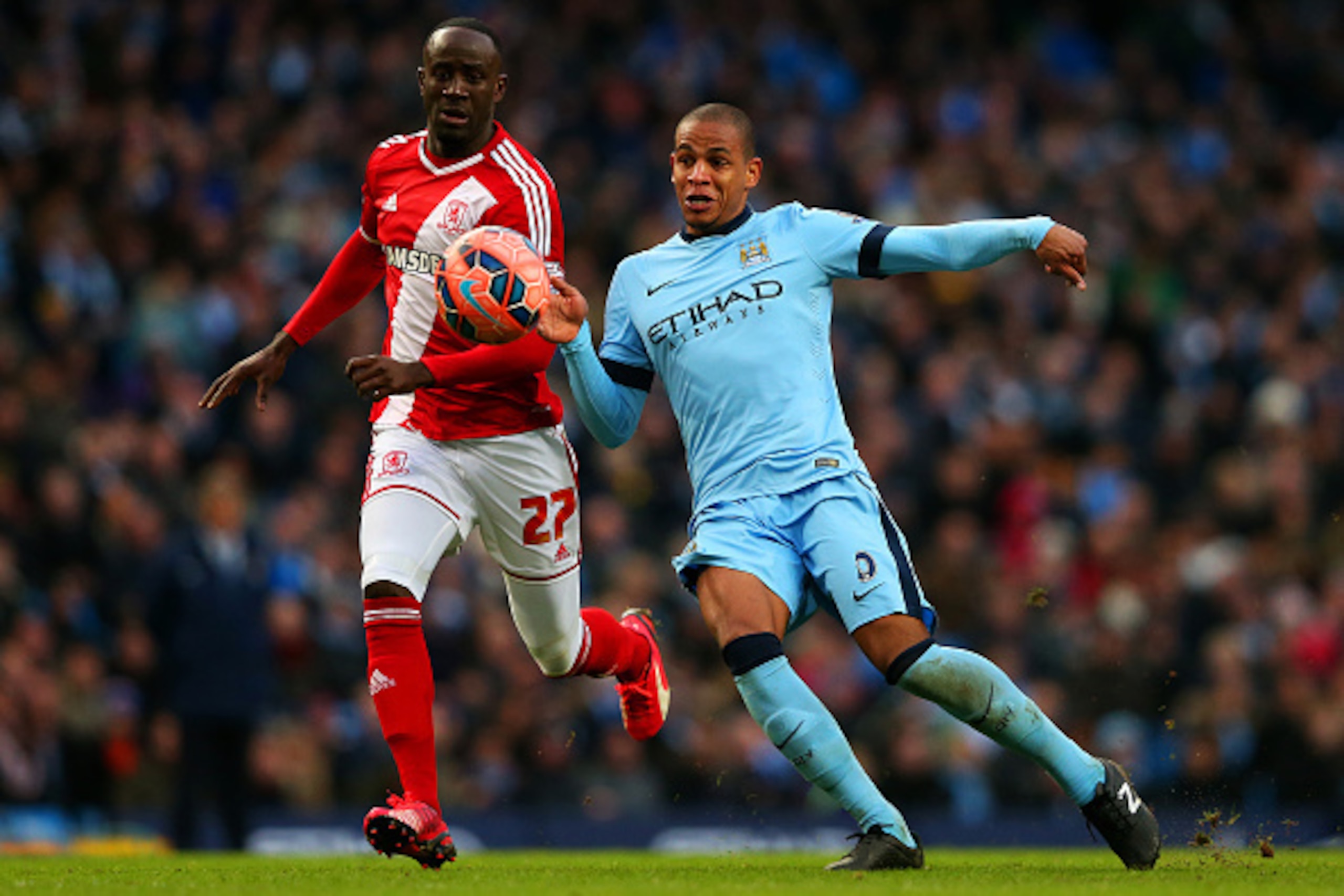
Alongside him, Fernandinho hasn’t been in anything like the form of last season, and when the two are deployed together, the tendency is for the pair to sit too deep so a huge gap opens up to the front of the team, with only the shuttling of James Milner linking the two halves.
Against Chelsea on Saturday—when City can sit deep and look to absorb pressure, before springing the pace of Aguero and Jesus Navas on the counter—perhaps the absence of Toure won’t be felt so keenly. But against weaker opponents when the onus is on City to take the game to their opponents, Toure’s value as a bridge is clear.
Without him, City can appear as a broken team, with a defence and an attack, and not much in between. He can turn a game with a brilliant strike, but more important than that, it’s Toure who offers a sense of integration—turning City from two half-teams into one whole.

.jpg?w=2560 "Seahawks Chiefs Football")





