

Sheffield United vs. Tottenham: Tactical Review of Capital One Cup Game
Tottenham Hotspur progressed to the Capital One Cup final courtesy of a 3-2 aggregate victory over Sheffield United. A 2-2 draw at Bramall Lane, with Christian Eriksen scoring both goals, proved enough to secure passage following their slender win at White Hart Lane.
Formations and XIs
Sheffield United switched from 4-2-3-1 to 4-3-3, playing Michael Doyle in a holding role and attempting to squeeze three attackers into the lineup and higher up the pitch.


.jpg?w=2560 "Seahawks Chiefs Football")
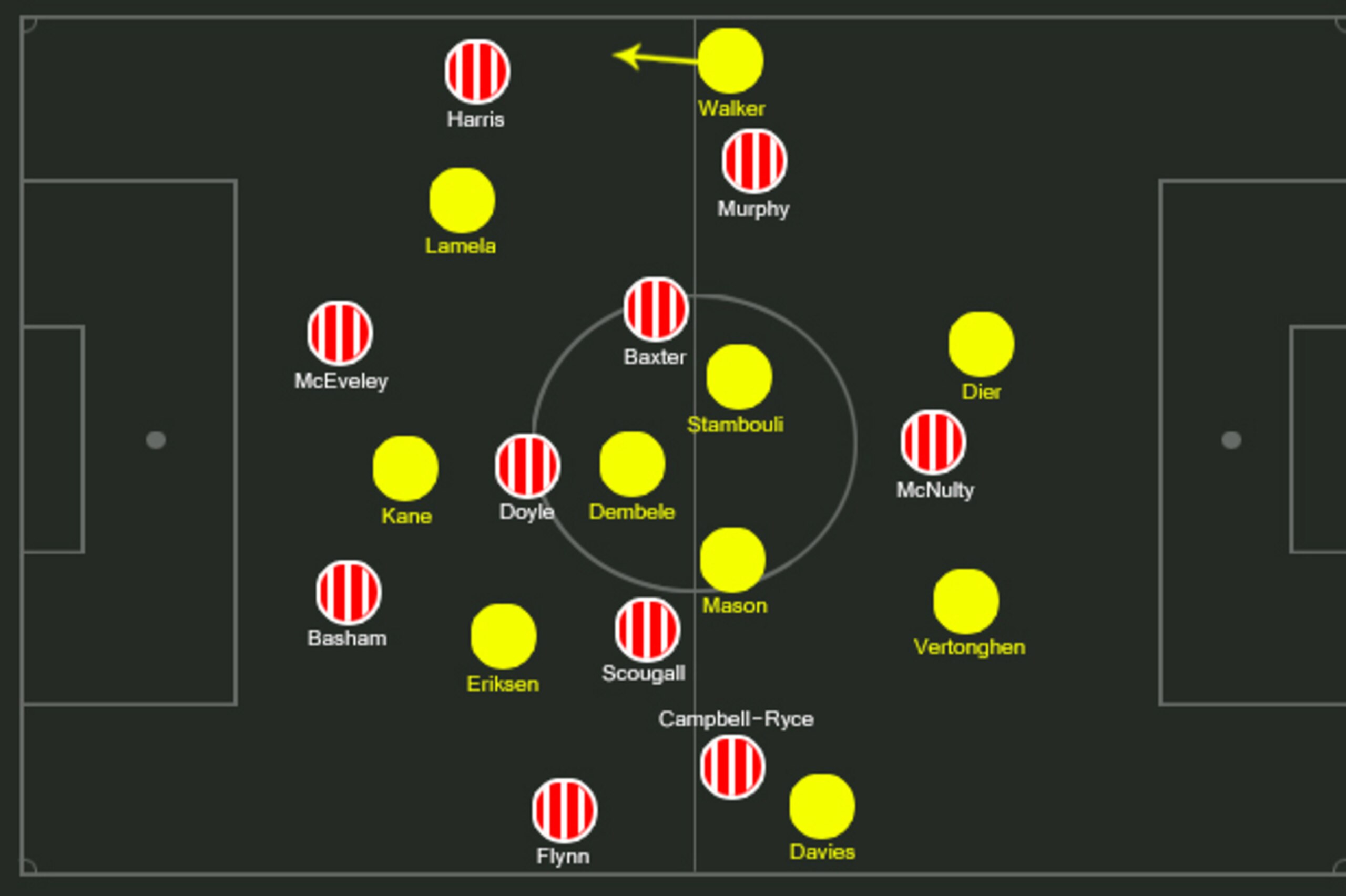
Tottenham also used a 4-2-3-1, with Mousa Dembele the surprise selection in the No. 10 role. Harry Kane played up front, while Benjamin Stambouli and Ryan Mason continued their budding partnership in holding midfield.
1. The Selection of Dembele
Opting to start Dembele signaled Mauricio Pochettino's intentions for this game from the word "go." Playing in the No. 10 role betwixt the striker and holding pair, it was his job to mediate possession and monopolise the ball, creating long spells of pressure for the visitors.
The Belgian rarely showed the incisiveness to dart into space and provide an option for the killer ball because that wasn't his job; it was his job to keep the ball, and he's damn good at that.
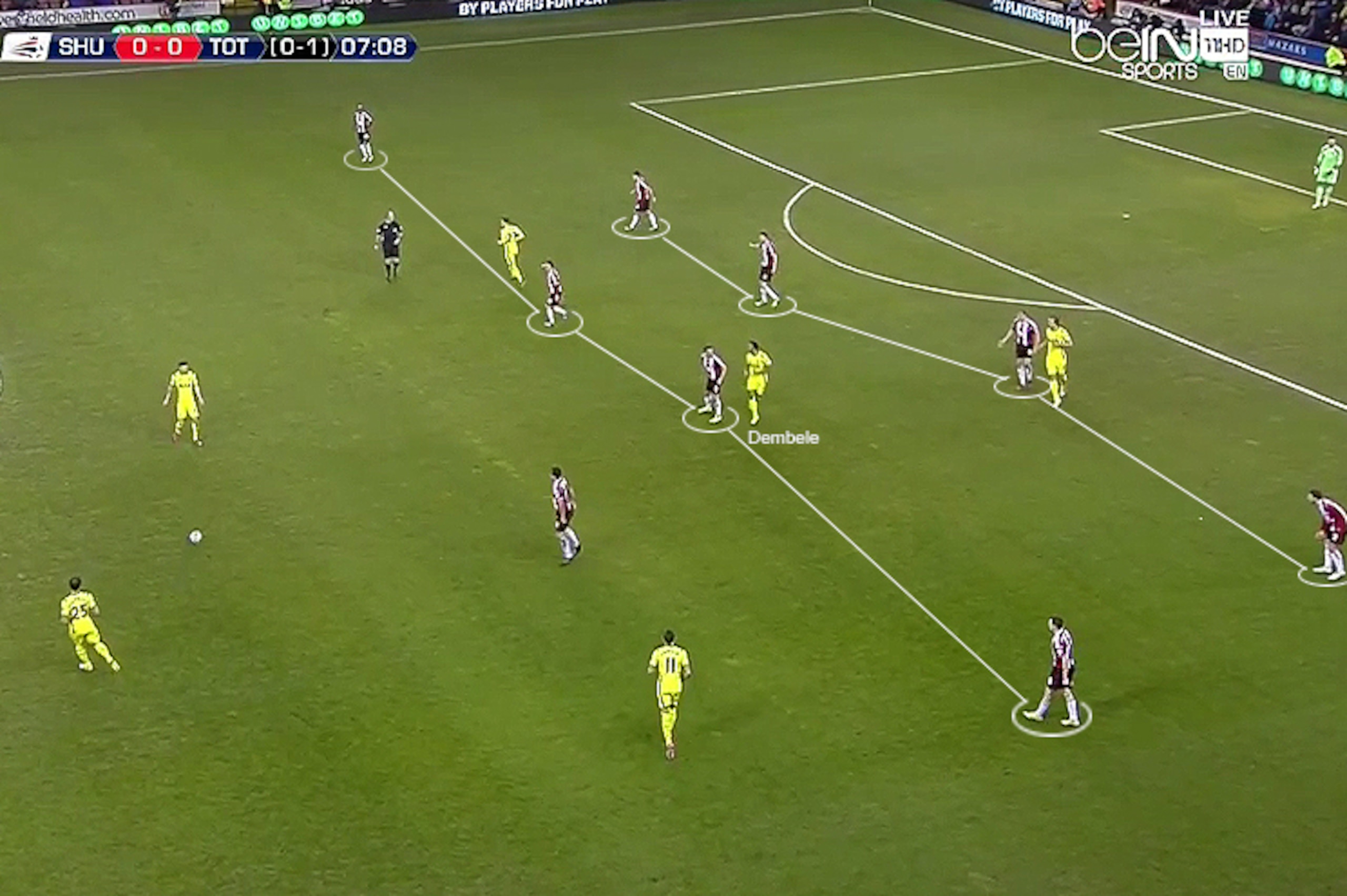
An underrated dribbler, Dembele is remarkably strong at keep-ball. He glides past challenges with aplomb in the centre of the park, and while he may not be the most penetrative player, he was just the right amount of assured here. His five attempted dribbles were all successful, per WhoScored.com.
His calming effect in the final third allowed Spurs to build long spells on the ball, forcing Sheffield United into a low block and encouraging them to force tackles and commit fouls. The game plan was to frustrate, and Dembele set the tone. It's what we call "pointless possession"; except on this occasion, it was entirely with point.
2. Bold but Likely Too Bold
Spurs' patient approach infuriated the home side for obvious reasons: They needed a goal; they wanted to build some momentum. But they couldn't get enough of the ball to turn the tide of the game.
In the first leg Nigel Clough's men were pretty quick to race out and chance an interception high up the pitch, and the Blades lasted about 10 minutes in a low block before getting antsy and chancing high-risk tackles.
The defensive line pushed up, the midfield became aggressive and the passing was direct and aimed behind Tottenham's full-backs in order to initiate faster attacks. Jamal Campbell-Ryce received the first one and sent in a cross that should have been converted, and then the next was for Jamie Murphy who shot wide.
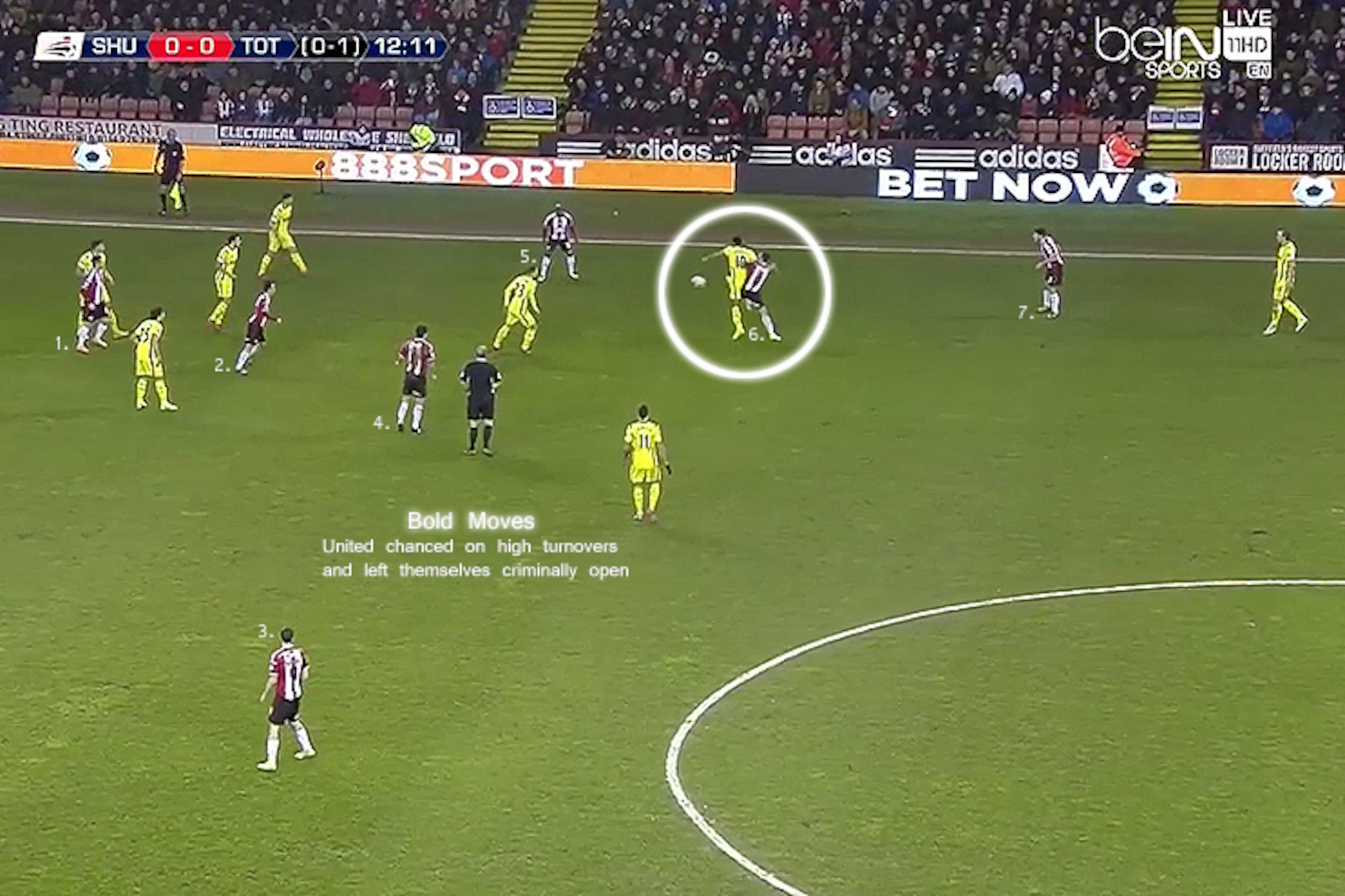
But Spurs adapted and began picking huge holes in United's high defensive line with vertical passes. Harry Kane was sent through—either on goal, roughly between the defenders, or through the channels—at least four times in the first half alone. He squandered a few chances, hit the post and created a shot on goal which a team-mate scuffed.
Yes, the Blades needed a goal, but they switched from mightily reserved to gung-ho in the space of 10 minutes, opening themselves up to easy, scything passes. On another day, the Blades were 3-0 down at half-time; as it was, Christian Eriksen's absurd free-kick stood the difference at the break.
3. Clough's Reaction
The second half started with a bang, as Sheffield United committed forward and left themselves open at the back. Inside the first minute, Dembele had reliably travelled half the pitch and laid on a chance, but it was squandered.
Shortly after, Clough made his first move: bringing on 17-year-old Louis Reed to play in a position approaching the No. 10 role and removing the sole holder in Doyle. The change made very little difference, so he flinched again, bringing Michael Higdon on up front as a focal point and, crucially, trying his luck on 18-year-old Che Adams—recently signed from non-league Ilkeston.
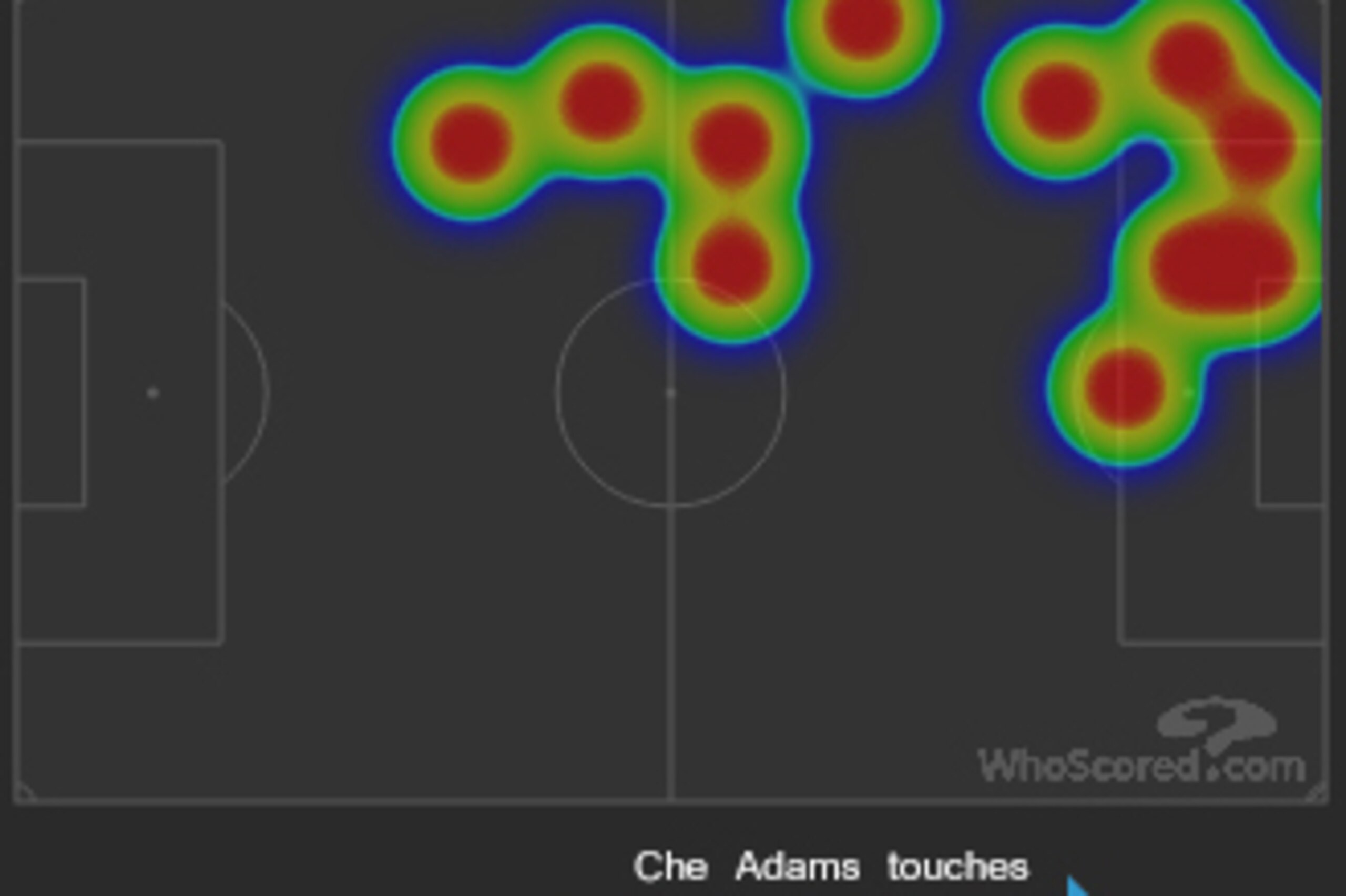
Adams turned the tide; his pace, stride-for-stride a near-match with Kyle Walker, finally gave the Blades a threat on both flanks. They began forcing the ball down the right, crossing and allowing Adams to pick up loose balls as an extra man in the box from the left—Theo Walcott-esque, if you will.
Adams scored twice, turning the game on its head and drawing the crowd to its feet, but again Sheffield United committed a few too many forward and paid the price. Spurs broke up an attack high, played one ball to Kane and another right through the heart of the defence to Eriksen, who finished brilliantly to ice the game.
Odds and Ends
- Pochettino's game plan was hardly eye-popping, but the frustration and monopolisation techniques he used were very effective. United made mistakes, and Spurs preyed upon enough for it to count.
- Stambouli, after a tough start, is coming into his own. His positional play and opportunistic tackling shone on the night.
- Kane's ability as an all-round forward came to the fore once again; it wasn't his night goals-wise, but he was magnificent in every other facet.
- The Blades struggled to gain ground for much of the game, and while Spurs can be praised for this, Higdon as a focal point allowed them to get their foot on the ball far more often.
- Spurs seemed delighted to lure in challenges and win free-kicks outside Sheffield United's box, playing on their eagerness. It soon became clear why: Eriksen's opener was otherworldly, and the Blades gave up plenty more.






